
“Higher Gas Prices Are Hitting Lower-Income Americans the Hardest”
—Latest headline from the petroleum economics journal “Duh!”

“Higher Gas Prices Are Hitting Lower-Income Americans the Hardest”
—Latest headline from the petroleum economics journal “Duh!”
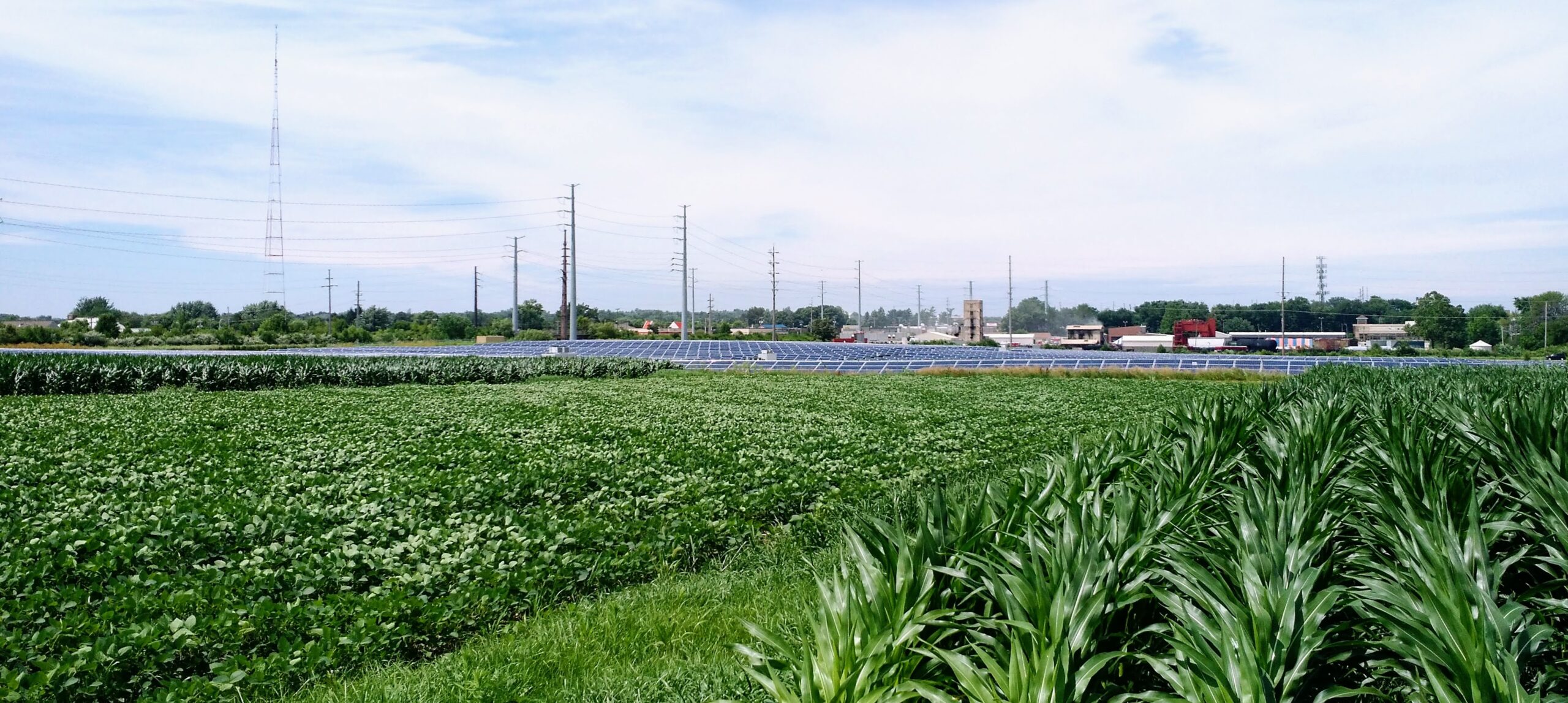
All over Europe, farmers are parking their tractors on bridges, in front of fuel depots, and across from government offices, to protest government policies that are making the economics of being a farmer completely untenable.
It’s not happening so much in the U.S. At least not yet. I guess, as long as people are willing to pretend it’s not welfare, farmers are willing to take government money—even as their livelihoods are being destroyed.
But…
But emergency checks are not farm policy. And without a permanent Farm Bill, the next drought, the next bad harvest, the next crisis, won’t have a safety net waiting — just another extension, and another prayer.
Source: Where’s the Smoke? – Offrange

Prompted by EFF, I sent the following message to my representative:
I strongly oppose government surveillance of U.S. citizens, so I’m asking you to please vote no on any bill that includes a clean reauthorization of Section 702. Real reform is possible and has more support than ever. Several bills would do much to rein in Section 702 surveillance and protect Americans’ privacy, and do so without hurting national security.
We live in a globalized society in which Americans are constantly communicating with people overseas. The Federal Bureau of Investigation (FBI) has proven many times over that they cannot be trusted with discretion to warrantlessly query communications collected under Section 702 of the Foreign Intelligence Surveillance Act. Americans should not lose their constitutional rights to private communications because of a mass surveillance authority that provides federal law enforcement with backdoor access to them.
Please, reform Section 702.
I urge you to urge your representative to work to reform section 702. Here’s a place to start:
A pretty good recent episode of Gil Duran’s Nerd Reich podcast had an odd hole in it.
In the one I’m talking about, the one with Quinn Slobodian, Quinn explains that there’s a reason the many efforts to create a seastead, charter city, network state, and such never go anywhere: They’re unnecessary.
[Y]ou don’t actually need to create a new polity to have your own sense of entitlement and privilege reinforced in every imaginable way, and to have your own economic comfort facilitated by the institutional arrangements of the state in almost every way. With some creative accounting and some use of offshore havens and trusts and so on, you can really game the whole thing very well already, right?
Having said that, they do talk a bit about why, given that there are already tools to protect your property and money (freeports, trust, special economic zones, and the like), anybody would work so hard and spend so much money to create an actual place that’s outside the control of any government. They don’t quite come around to answering that question, which I think is unfortunate, because I think they both know the answer.
The people pushing these efforts want serfs.
They don’t want workers who can join unions. They don’t want software engineers who hesitate to create autonomous munitions or tools for surveillance capitalism. They don’t want maids or pool boys who feel free to resist their advances.
They want the right to be mean to people, in a situation where the people have to just take it.
That’s what places like Próspera offer that you can’t get from a family company incorporated in a special economic zone.
Stephen Miller would have ICE agents (and the rest of us) believe that they have “immunity” to perform their “duties.”
This is, of course, false. Depriving any person (not just citizens) of their rights “under color of law” is its own crime. But it is in that light that we should view their position on face masks as admitting that they know they have it wrong:
The administration’s perceived need for face coverings evocative of Iranian secret police and Russian security agents helps us recognize that assertions of state supremacy and citizen insignificance are claptrap…
Source: All the king’s masked and anonymous henchmen
If they were immune, they’d not hesitate to show their faces. The fact that they feel the need to keep them hidden makes it very clear that they know they’re totally exposed in a legal sense.
Next weekend is going to be pretty cold in Minneapolis. Maybe cold enough to convince some ICE goons that they’d be better off on disability in Kentucky.
I mean, every ICE goon has probably slipped on the ice at least once. Probably every one of those falls could be turned into a disability claim.
I am (just barely) old enough to remember the Black Panthers in the 1960s, when a group of black people tried to carry legal firearms to protect themselves, before they were mostly murdered by the police, the FBI, and one another.
I also remember the 1980s, when the NRA was trying to convince all marginalized groups (blacks, women, lesbians, gays, socialists, etc.), that arming themselves was a great idea. The NRA was sincere, I think—they just wanted more people to have guns.
Most people, especially black people, were well aware of the fact that walking around armed would make it much more likely that they’d be killed by the police. (They remembered what happened to the Black Panthers, presumably better than I did.)
Over the last couple of years, and especially over the last few days, I think perspectives are changing. First, a lot of white people are walking around armed, and even killing people, with minimal consequences. Second, the increasingly fascist police have been killing unarmed people at increasing rates, and looking like they’ll not only get away with it, but looking like they’re glorying in it.
There are definitely some black people thinking once again that being armed is a good idea. I hope they’re not horribly wrong about that.
In the latest news from the Urban Management journal Duh:
perhaps we need to thin the fuel of the community itself.
Oh, sorry, I meant the latest news from this opinion piece in the NYT: Which City Burns Next?
I mean, I understood this in 1986 (as I described in this post, about why I moved out of Los Angeles).
A bunch of people in the AI industry have blithely suggested that it will be fine if huge numbers of people lose their jobs to AI, because we’ll create some sort of universal basic income (UBI) to support them.
I think that’s a great idea, and think we should put their money where their mouths are. Starting immediately, any firm with any significant business producing AI should be taxed 50% of their gross revenue, and all that money should be divided up equally among all Americans as a UBI. (Firms with a “significant” AI business that are also in other businesses as might want to spin off the AI part of the business, so that they don’t have to pay this special tax on the non-AI parts of their gross income.)
This wouldn’t immediately produce a big enough UBI to make it unnecessary for someone to work, but I figure about the time it became impossible for an ordinary person to find a job because they’d all been displaced by AI, the AI industry would be making enough money for half their revenues to fund an adequate UBI.
In a similar vein, every firm paying for AI, rather than paying for workers, should have to pay a tax on all that AI spending equal to what they’d pay in withholding taxes if they were paying that money to an employee.
I don’t think this would produce nearly enough to fund a UBI, but I think it might be enough to go a long way toward shoring up Social Security and Medicare.
Daily gratitude:
*Note: Obamacare is a great program, which came along at a critical time for me, and lasted long enough for me to get on Medicare. My gratitude for the program knows no bounds, and I feel immense sorrow that the Republicans continue to try to ruin it.