I really like summer. I even like the heat, but I especially like long, sunny days. However, even for me, the longest days of summer are kinda. . . . long.
What’s perfect is the day length in, let’s say, July. When the sun rises no later than 6:00 AM, there’s daylight to wake me up when I want to get up. And when the sun sets around 8:00 PM, it gets dark right around the time I’m ready to wind down ahead of getting ready for bed.
As we head on to mid-August, though, although the temperatures are still fine, I’m no longer so happy with the sunrise and sunset times. Today the sun didn’t rise until 6:04, which isn’t much after 6:00, but is a sign of the approaching dark days. Similarly, it’s been a full week since the sun was still up at 8:00 PM—another sign.
This morning I realized that I should refer to these two things—sunrise after 6:00 AM, and sunset before 8:00 PM—as two horsemen of the Darkpocalypse.
Back in the days when I had to work in an office, this mid-August transition would ruin the fall for me. I’d get so wrapped up in dreading the winter, that I couldn’t enjoy the objectively great conditions of the second half of August, all of September, and usually most of October as well. It was very sad to have nearly a quarter of the year ruined that way.
I should probably add a “darkpocalypse” tag, and go back and put them on all my posts about SAD.
Horsemen traditionally travel in groups of four, but if there are two more, I haven’t identified them yet.
Light exposure is good for you. All the different frequencies are good for you. This has led many people to try to tweeze them apart: tanning beds, red-light panels and masks, therapy lights, etc. It turns out, sunlight is best consumed whole, just like food.
I should mention that by inclination, I’m rather vulnerable to getting this wrong. I wrote at some length about how, because of the sort of person I am, I simply like the idea of figuring out all the nutrients I need, and then trying to construct a diet that provides all those things. Similarly, I like the idea of coming up with a perfect workout plan, and then getting all the movement that I need by hitting all the right exercises. But, if you follow that link, you’ll see that I eventually realized the whole notion was just wrong-headed.
There is no need—in fact, no value—in tweezing apart the nutrients in food. Just eat a varied, whole-food diet and your body will get it right. The same with movement. Just engage in a wide range of diverse movement, and your body will become highly capable of moving in all those ways, (and if your “movement diet” is adequately diverse, your body will become fairly capable of all sorts of movements you don’t even practice).
The book is consciously modeled on Michael Pollan’s In Defence of Food, which systematically destroyed the notion that you could build up a diet that optimized all the nutrients. And it’s message is very similar. Sunlight is best consumed whole, just like food.
All of the different frequencies are good for you:
UV (to make vitamin D, and to release nitric oxide from the skin into the blood),
blue (to tell your brain it is daytime, and to tell your subcutaneous fat cells to release fat and signal your brown fat to burn it for energy),
green and yellow (to calm you down—I have written before about my theory of dappled shade, and for vision—you see shades of yellow better than shades of white, which is why yellow glasses are good for driving, shooting, and the like),
red light and infrared light (to boost energy production in your mitochondria and promote wound healing).
“But what about skin cancer!?!?” I can hear you asking from here.
The book is well worth reading, because just the information on skin cancer is worth the price of the book (and it takes half the book to adequately deal with the subject). Because there’s so much of it, it’s not really practical to try to summarize it here, so I’ll just mention that “Don’t get sunburned” is much better advice than “Put on sunbock,” or even “Stay out of the sun.”
I figured this out years ago. I’ll use sunblock if I’m going to be out in the sun so long that I might get sunburned—I needed it for a snorkling trip to Buck Island, for example. Otherwise, I use a combination of changing my clothes, taking advantage of shade, and limiting my time out in the midday sun. But I don’t minimize my time in the sun. I maximize my time in the sun, while making sure not to get sunburned. At this point in the summer (having gotten a modest amount of sun every day since the weather turned warm) I’m okay for up to about 40 minutes of mid-day sun. And I try to get that nearly every day.
Here’s one statistic, that I’ll let stand in for dozens of others about the advantages of sun exposure. The UK Biobank has data on health outcomes for hundreds of thousands of people. A researcher Jacobsen mentions went in and counted:
… in the fifteen years of tracking, a total of 40 people had died from skin cancer attributable to too much UV light, while 2,982 people had died from diseases attributable to a deficiency of sunlight.
The final third of the book is about artificial light, and makes the case that too much light at night is just as bad as too little light during the day.
Again, this is something that I figured out long ago. All the “sleep hygiene” stuff makes it clear that you want your sleeping space to be very dark, and there’s no doubt that getting enough high-quality sleep is probably the best thing you can do for your health, maybe even above good nutrition and plenty of exercise (both of which are easier to get if you’re sleeping well).
The prescription is almost trivially easy: Get outside at dawn. Get as much sunlight as you can without burning during the day. Within a couple of hours after sunset make your space as dark as possible and get some sleep.
“One study he mentions analysed the skin of lifeguards at the start and end of a summer season during which they were heavily exposed to the sun. By summer’s end, their skin was enriched with microbial “beneficial bugs” that protect against UV radiation. A square centimetre of human skin contains millions of microorganisms, some of which produce compounds that kill cancer cells without harming normal ones.”
I mean, really. We know the UV rays are actinic, as are the blue-green rays (tell your brain it’s daytime), and the red and infrared rays (promote healing at various depths of skin and below the skin). I don’t know about all the other wavelengths, but I’m willing to bet that they all do something.
Humans evolved in the sun, and evolved different skin pigmentation that varied with latitude (and, I suspect, varied with other things as well). The idea that our skin can’t handle a perfectly ordinary amount of sunlight is just silly.
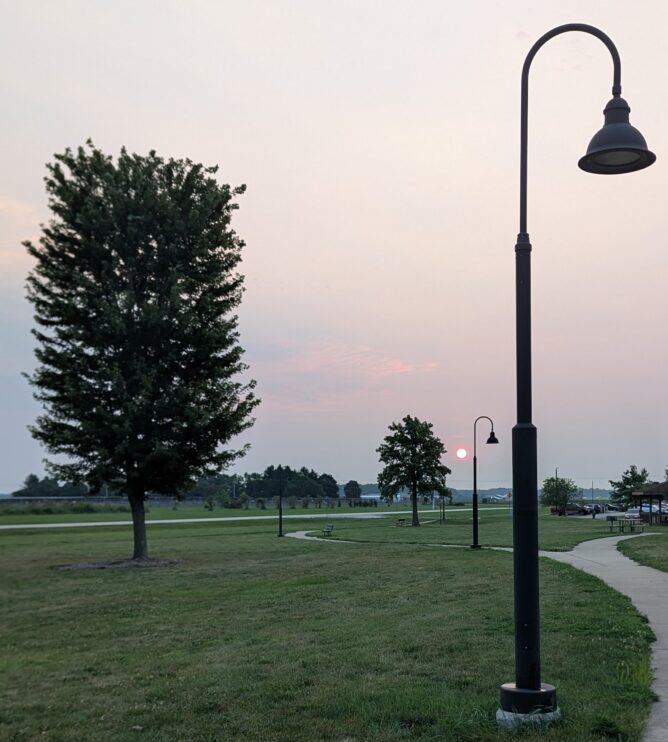
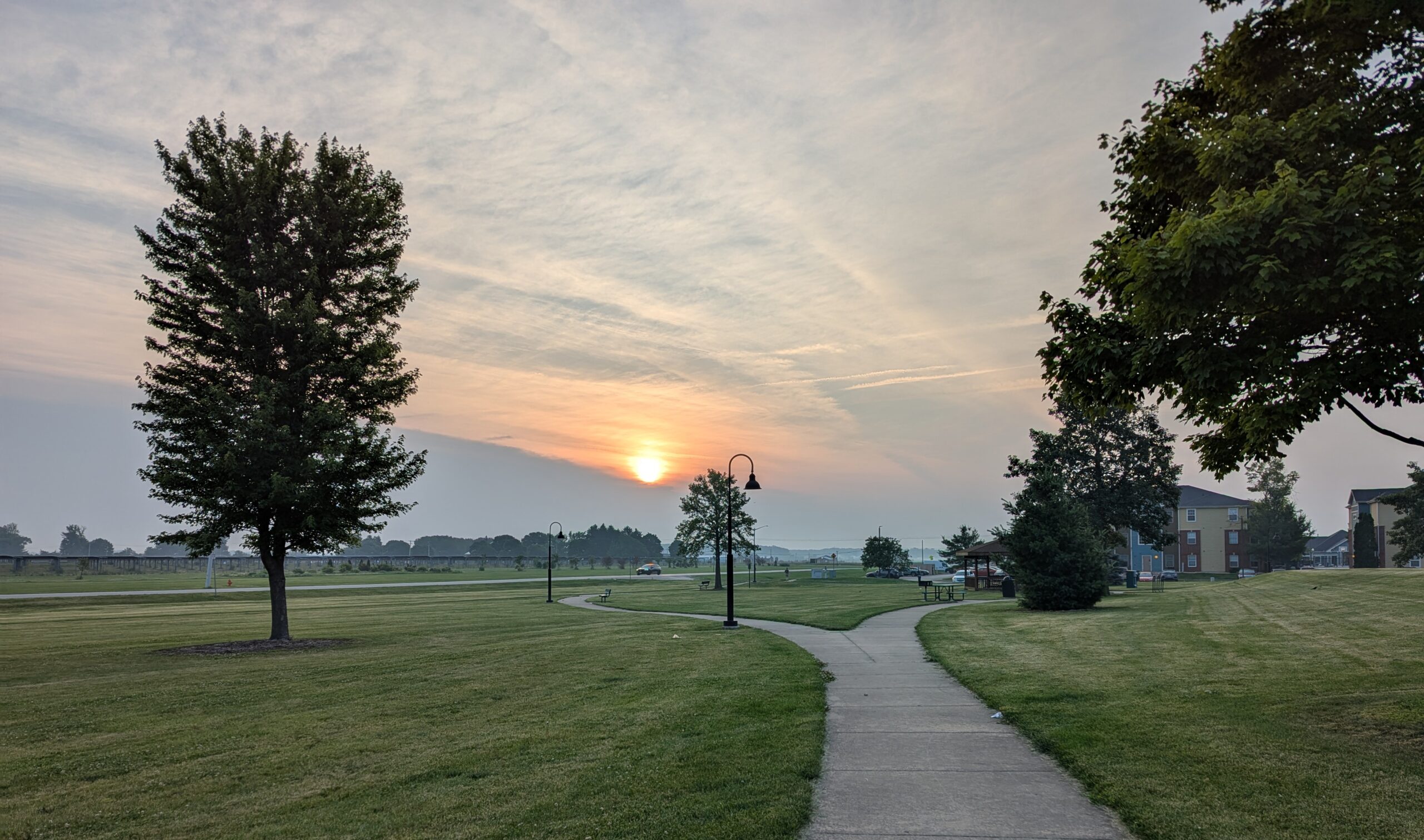
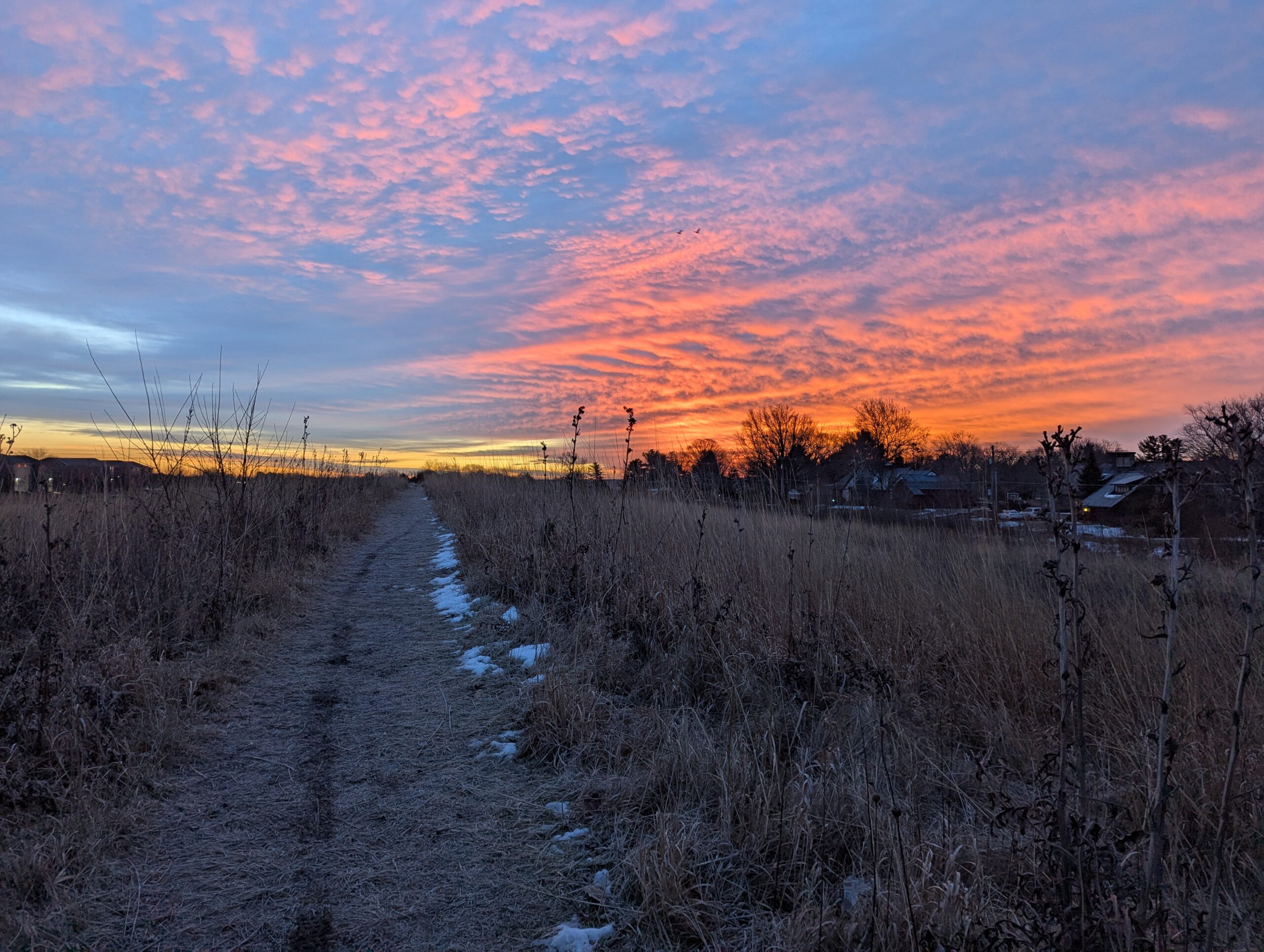
Jackie is working on a tapestry, the title of which is a reference to the effect of the Canadian wildfires on our sunrises and sunsets. With that in mind, here’s a picture of this morning’s sunrise.
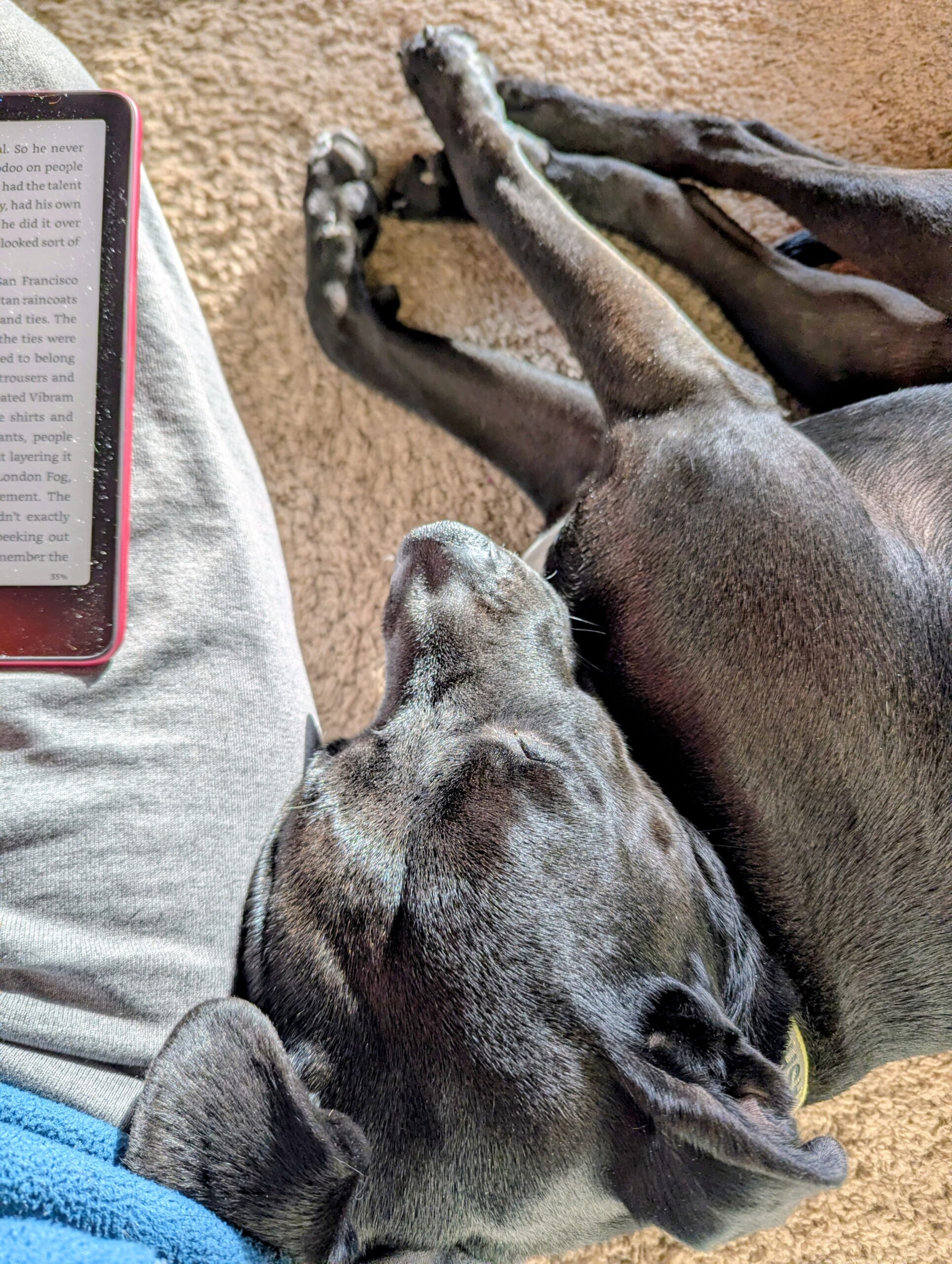
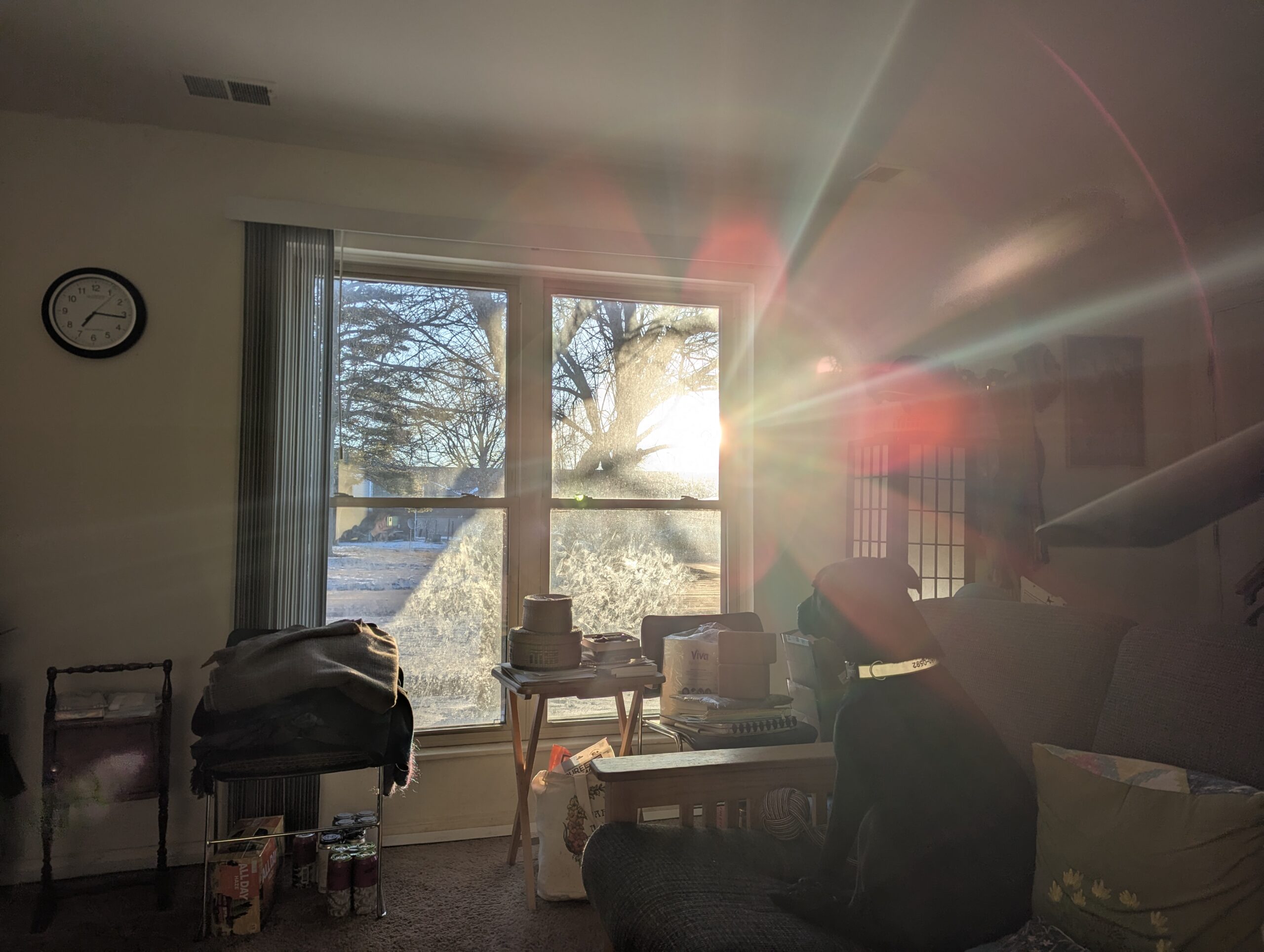
We have reached the time of the year when the sun shines directly into my eyes when I’m sitting in my chair in the living room. Ashley is cleverly sitting just out of the direct sunlight.
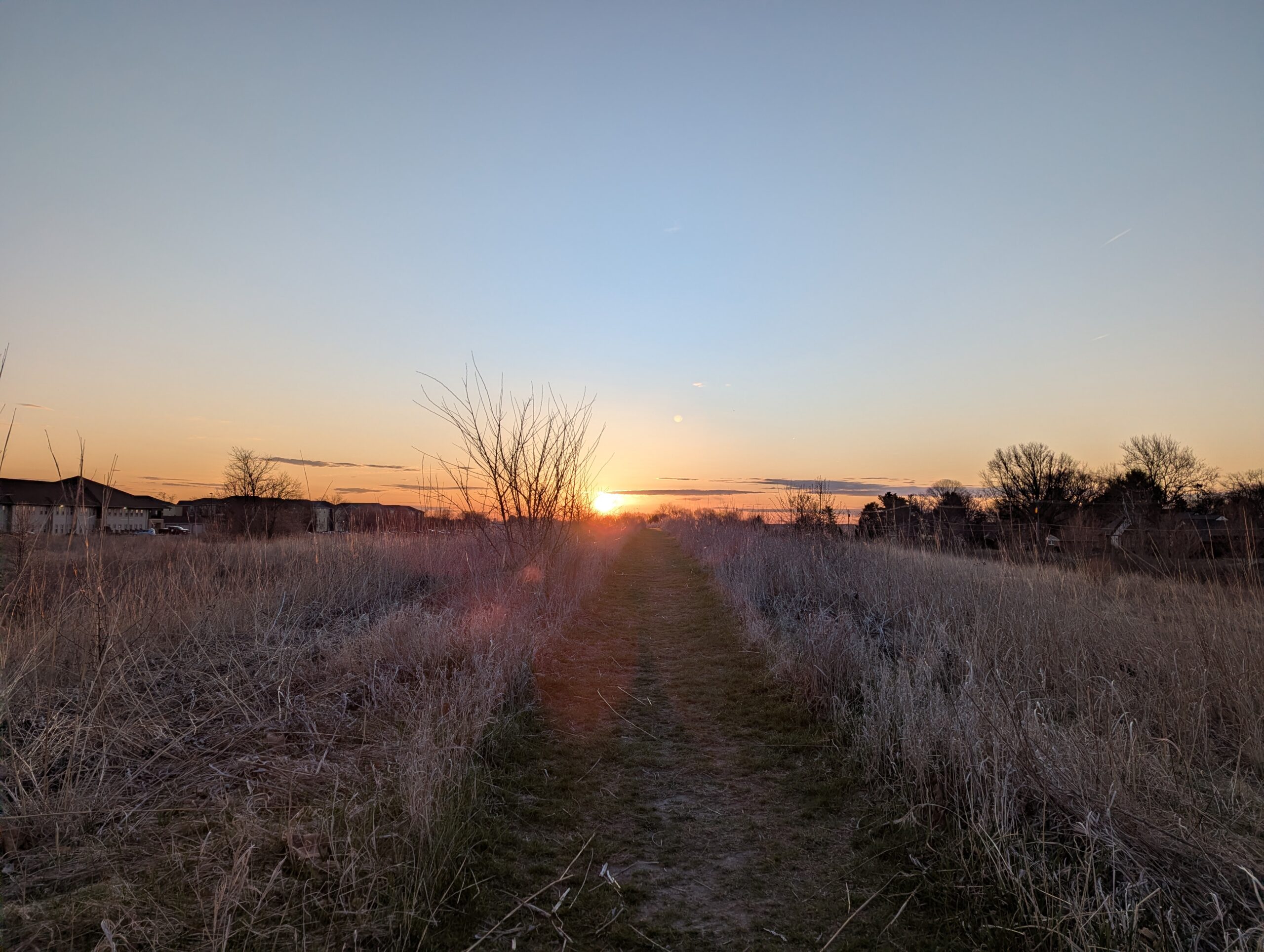
Jackie and I call this path, along the top of the berm along the north edge of our little prairie, the High Road. There used to be a Low Road (down by the creek) and a Middle Way (in between), but they’re no longer mowed.