
Sleeping well is the best revenge. Like they always say.
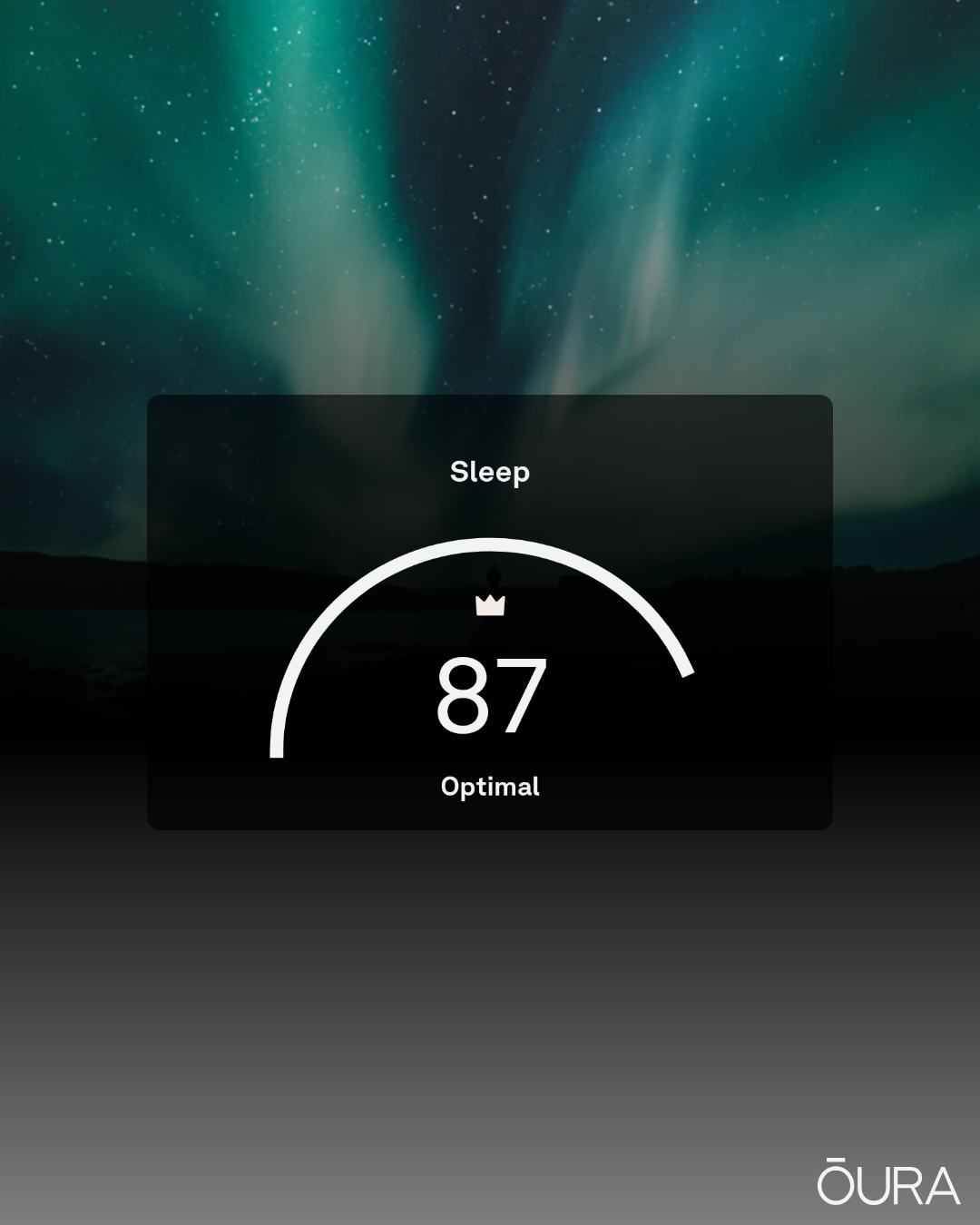

Sleeping well is the best revenge. Like they always say.
It was a very nice day today—moderate clouds, not too hot, no rain—so I decided to go for a run.
I haven’t actually compared it to other runs this summer, but I’m pretty sure it’s my longest and my fastest.
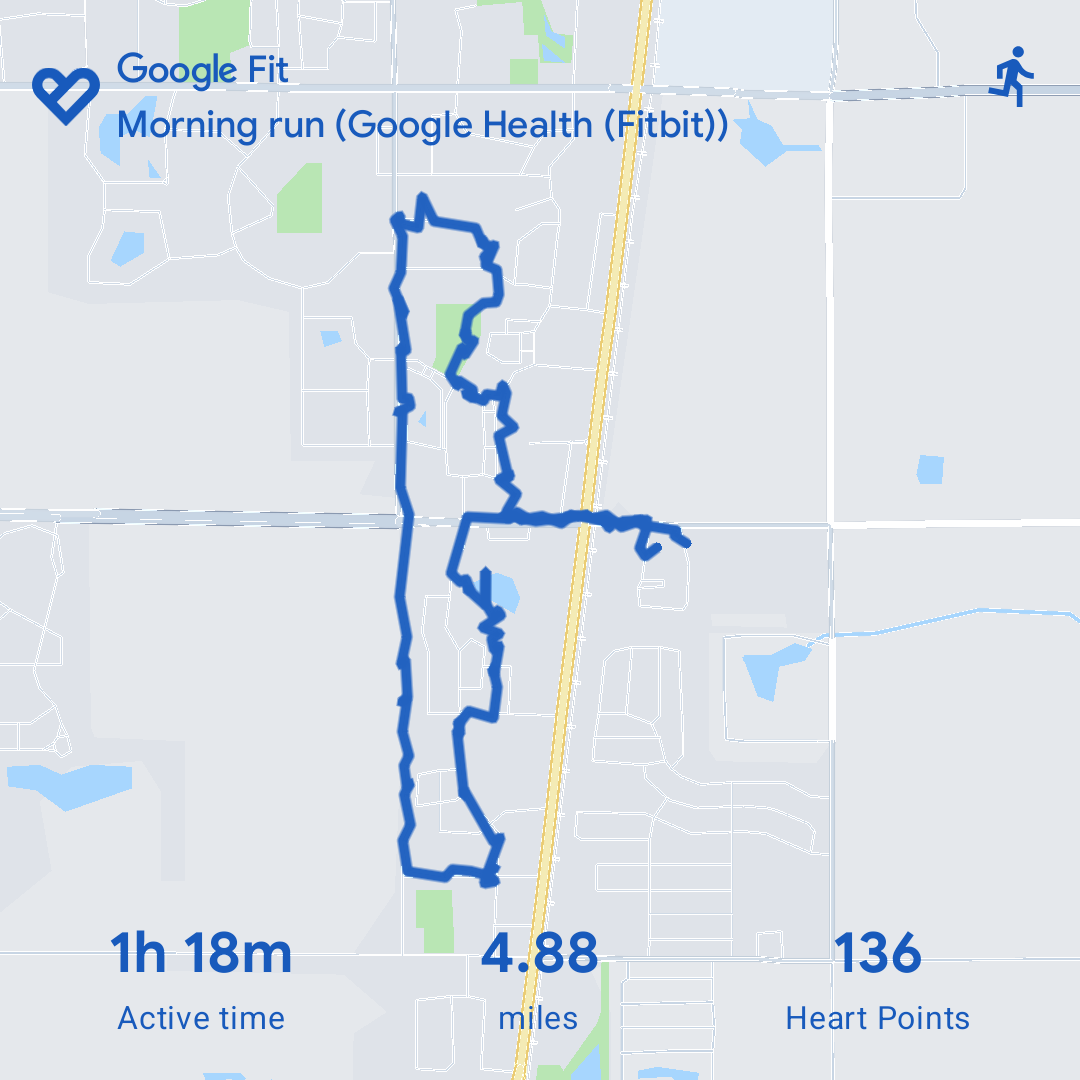
4.88 miles in 1h 18 min.
I really mean to do two runs a week, but I’m probably not managing even half that. But this run still felt okay. I was tired at the end, but not too tired. My joints felt fine during the run.
Basically, it’s all good.
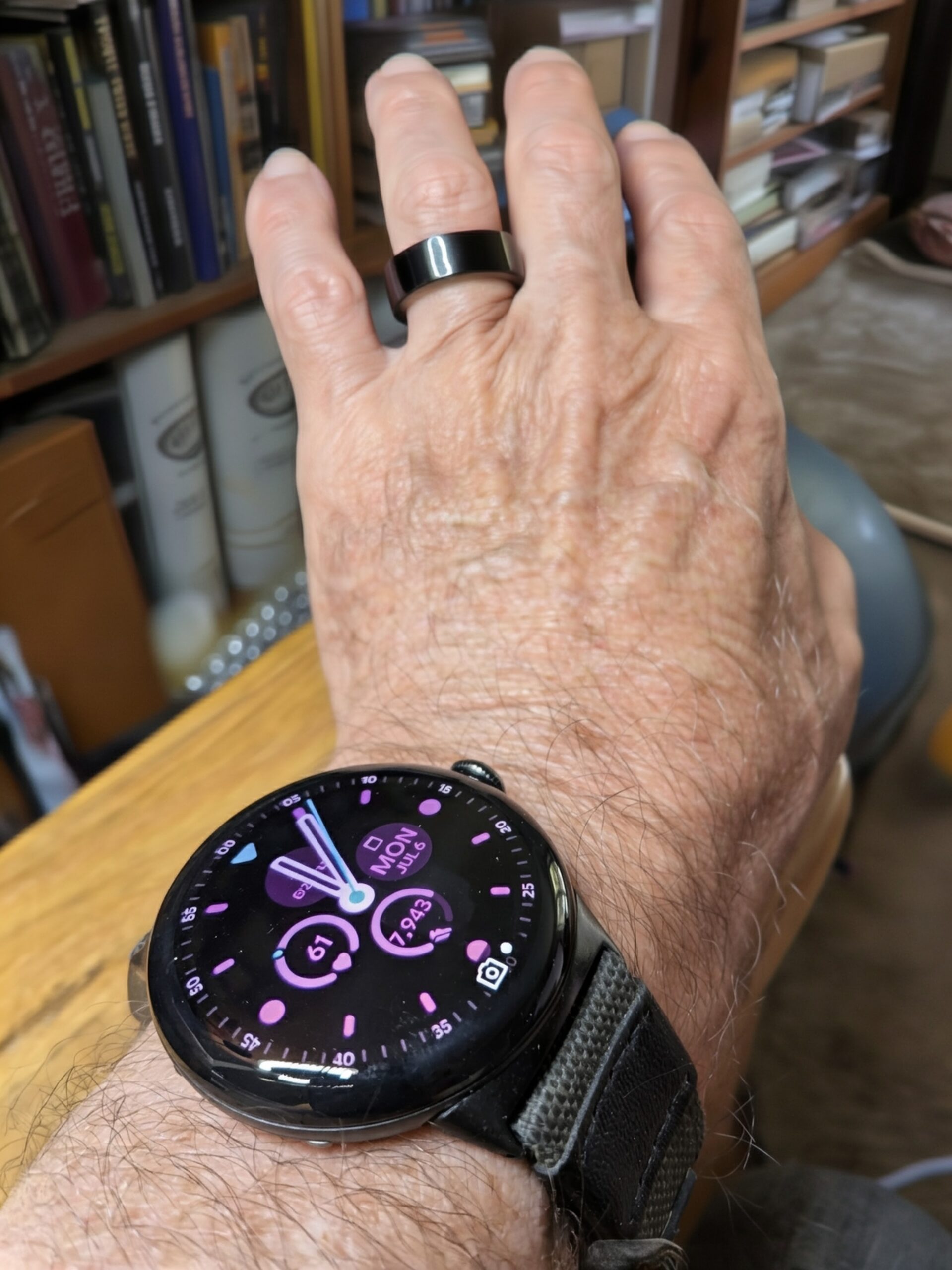
Do you use an activity tracker? I have an Oura ring, a Google Pixel watch, and a phone which runs Google Fit. All of those count my steps, and each one does some additional activity or sleep tracking. I find them all fun and interesting, so I’m always amused when yet another article comes out warning of the dangers of activity tracking.
The article at the moment is this one, sent by my brother: Five hidden pitfalls of fitness tracking, by Sahar Bakr.
I mean, sure. If you’re really foolish, you can be seriously led astray by one of these. But you’d have to be really foolish. It’s like the early days of GPS map software, where they’d be giving you directions and say, “Turn left!” but if you turned left you’d end up in a creek. Sure, you could do that, but all you had to do was look where you were going, and you could avoid it pretty easily.
Although the article has five items, there are, I think, two fundamental issues that Bakr is warning about. The larger one is outsourcing our good sense to some external device. The smaller is an excessive focus on step-count as the measure of fitness activity.
Letting a device tell you to push hard when you’re feeling crappy is just stupid. (It is perhaps somewhat less stupid to let a device tell you to take it easy when you feel great. I have several times decided to push hard because I felt great, even though one of my devices was warning me that I wasn’t fully recovered. More than once when I did that, I ended up having a crappy workout, because the device was right and I was wrong.)
With their fixation on steps (because that’s easy for a device to measure), devices have a pretty limited insight into the full scope of your movement practice. This means that they’re never going to know if your strength training is covering all the major muscle groups, or if your volume and intensity are on point. But that’s not really different from training without a device. Really, it only makes things worse if you’re so foolish as to imagine that it’s got some insight into stuff other than your steps and heart rate (or whatever else its measuring). Just like it doesn’t know enough about your strength training to provide useful advice there, it also doesn’t know much about your skills training or your flexibility training.
A lot of my training is focused on specifically increasing the sort of fitness I need for my HEMA practice. None of my devices even tries to guide me as to whether I should do less lunging practice in favor of overhead pressing practice or vice versa. (And if they did, I wouldn’t pay much attention, unless they’d started getting me to upload my sparring footage. And maybe not then.)
Getting back to the fixation on steps, the device makers want to pretend that step counts gives them some sort of deep insight into a human’s movement practice, with a one-size-fits-all target of 10,000 steps.
Weirdly, I don’t think that’s crazy. I mean, steps are by no means the only aspect of a human’s movement practice that’s important, but it’s actually not a bad proxy.
Over an evolutionarily long period, walking and running have been critical to human success. Running and walking were key to our successes in both hunting and gathering, and probably led directly to our big brains.
All three of my devices count steps. All three track walking and running. (They all try to track other activity—cycling, swimming, gardening, housework—but do so pretty poorly. Walking and running, though, they pretty much have nailed.)
In my mid-20s I was working in an office, but getting out to hike at every opportunity, which didn’t come frequently enough. I remember thinking, “If only I could get out and hike a few miles every day! I’d be in great shape!” That turns out not to be true, but it’s not completely false either.
My point here is simply that step counts are by no means a terrible proxy for one’s overall activity level, and 10,000 steps is by no means a stupid target—it’s mildly ambitious, without being out of reach for anyone with a reasonable level of fitness and some spare time. (I admit that I might well think this because I’m a weird outlier. I’m a walker from way back. I’m retired, so I have all the time in the day to walk if I want to. And I have a dog who likes to walk a lot. The upshot is, my daily steps hit 15,000 nearly every day.)
All of which is to say that I find these devices useful. In particular, they’re good at observing that I’m not fully recovered, meaning I should take it easy, even if I’m feeling okay. I find them (mildly) motivating, in that I pretty much never fail to hit 10,000 steps (unless I’m sick, the dog is sick, or the weather is terrible). I find them somewhat entertaining, especially when their praise is so for stuff I consider pretty minimal. (“You’ve met your activity goal for the day!” My Oura ring will say at 10:00 AM.)
In any case, I find them quite harmless. They don’t make me feel anxious or shamed. I’ve seen no sign that they are prompting disordered eating. I’m amused by their fixation on step counts, but not troubled by it. (I occasionally miss my 10,000 steps, usually when I’ve spent the day sitting in a plane, train, or car. I am not bothered when my devices observe that this is the case.) I care deeply about getting in my mobility work and my strength work, even if the devices don’t track it adequately. I take great joy in my movement—click any of the tags over there with “movement” in the name and find yourself taken to dozens of places where I’ve celebrated my movement practice, starting from before I had any devices, and continuing to this day. Finally, I am merely amused if my device dings me for not doing enough, as my Oura ring does if I sit for more than 50 minutes. (In fact though, these past few years, I can only barely sit still that long anyway.)
The key paragraph from the article:
For users, the first shift is to treat tracking as information rather than instruction. A watch can tell you what it has measured. It cannot tell you what your body needs today.
I mean, I know I’m a movement weirdo, but really? Who would do anything else?
As someone who uses at least two wearables that gather all manner of biometric data about me, I have considerable concern about just how that data is used. I was pretty pleased with Oura’s old privacy policies; I’m not sure how much their most recent changes have compromised them. I’m not so sure about Google’s policies, but since Google knows everything else about me, I’m not inclined to worry a lot extra about the Fitbit data.
Anyway, this post by Bruce Schneier is interesting:
I have often said that surveillance tech is generally deployed first against people with diminished rights: children, prisoners, military personnel, the mentally impaired. This is another early use case with different dynamics. The surveilled are wealthy and powerful, and—in many cases—unionized.
Source: Professional Athletes and Wearables – Schneier on Security
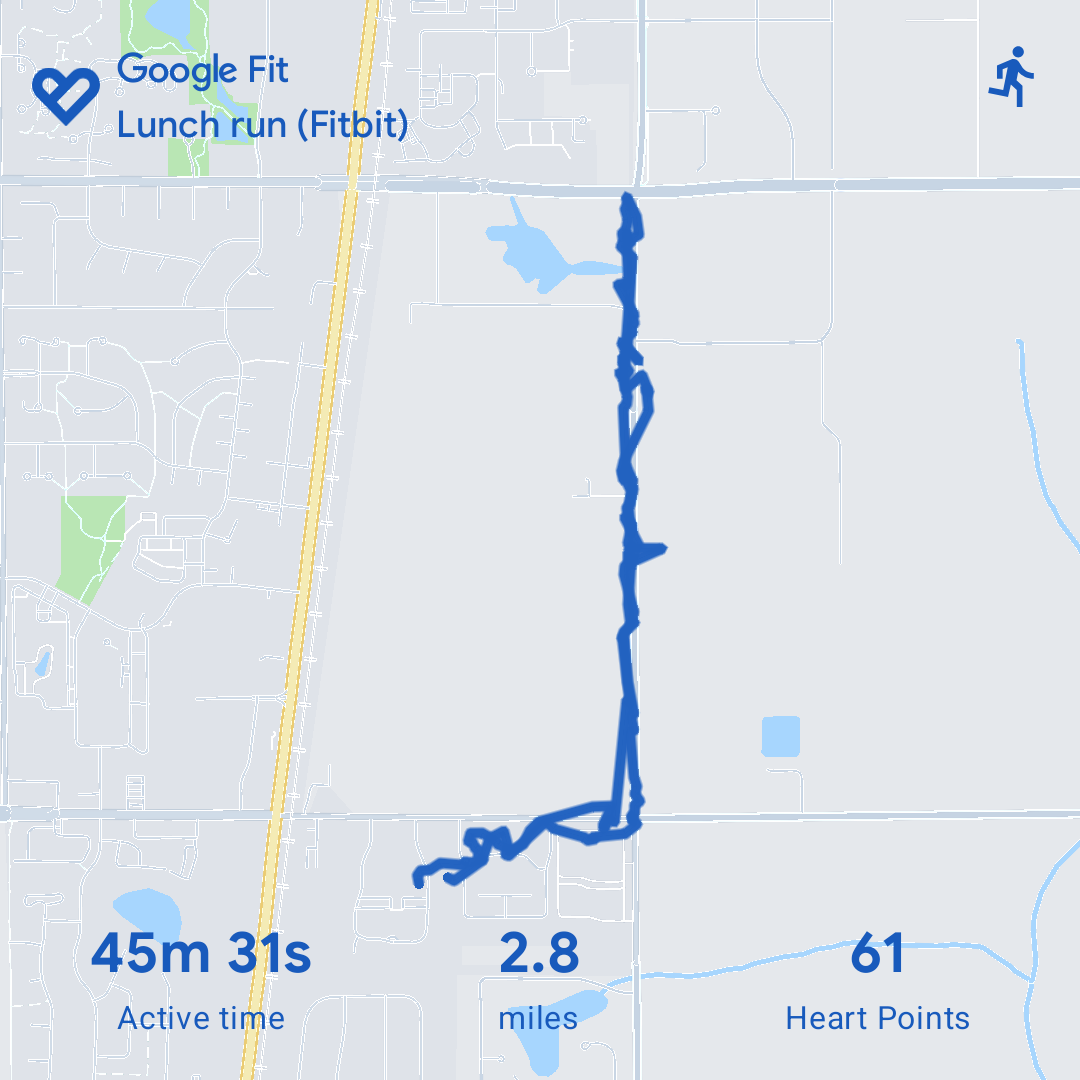
Just a smidgen longer than my previous long run, but this time I added some intervals along about the midpoint, where I ran hard for one minute, and then spent two minutes recovering, and repeated for a total of 5 times. Probably not the smartest choice (embedding that in a long run), but I enjoyed it anyway.
My fitbit says I did 4.75 miles in 1:13:26.
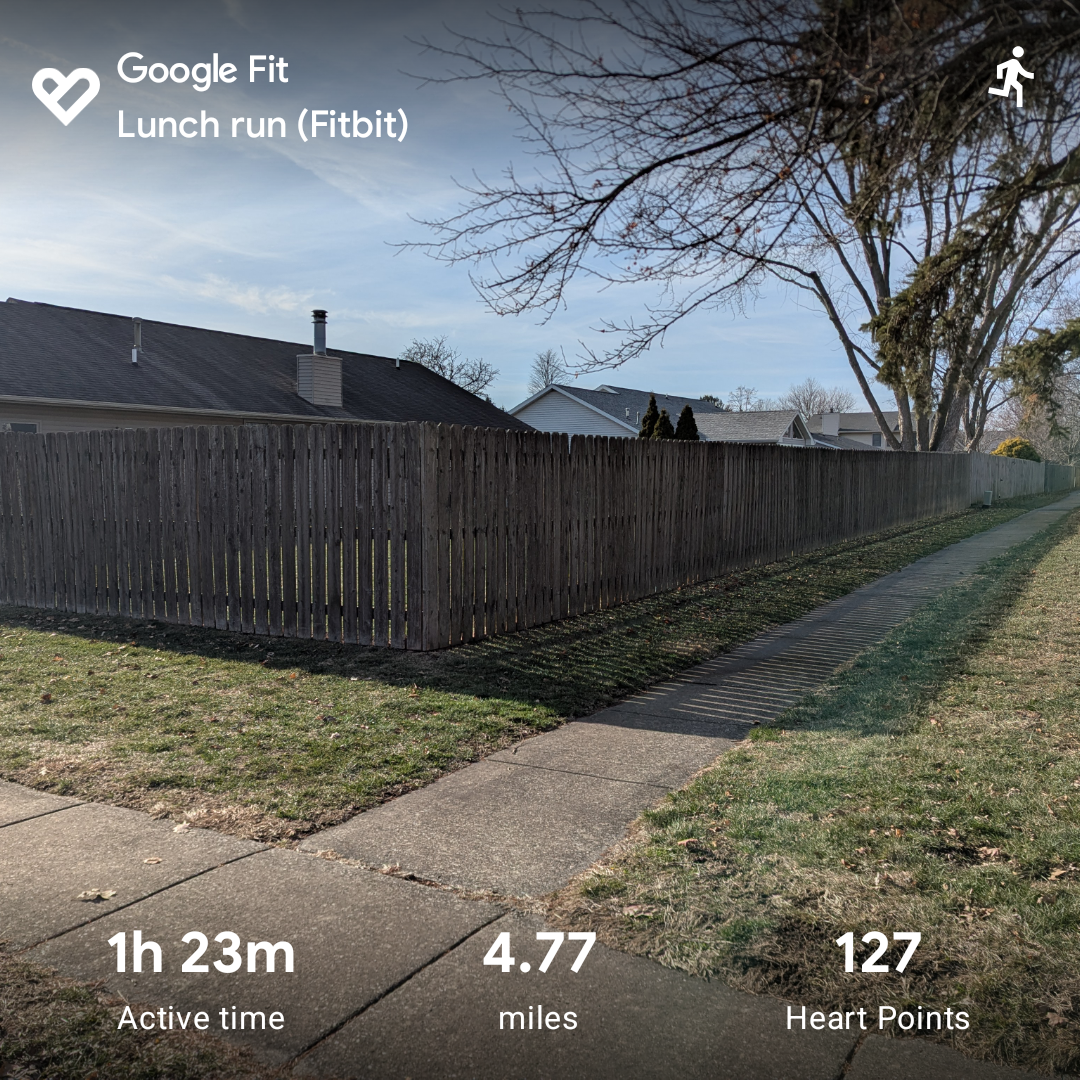
I had decided to do a different, dog-free run, but then at the last minute, Ashley seemed to really want to come along, so I did this run instead, and it was great. Not as far or as fast as I’d have run by myself, but great.
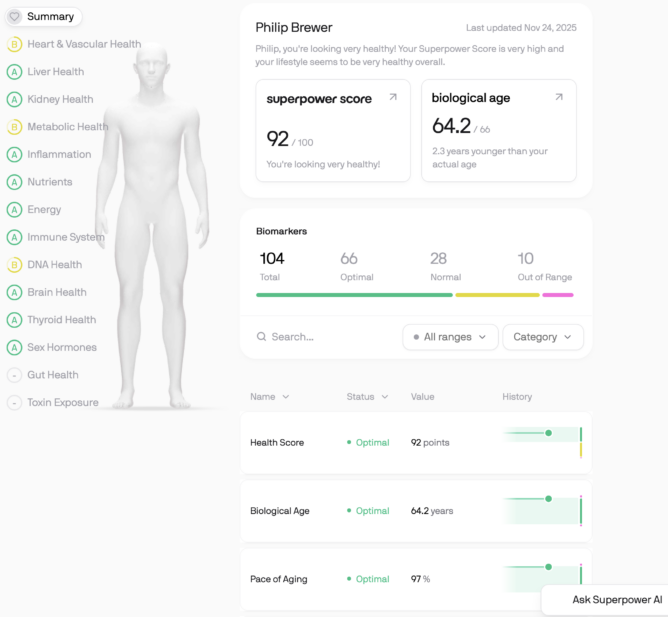
If you’ve been following me for any length of time, you know I’m big on metrics. It’s why I own both an Oura Ring and a Pixel watch. I am similarly interested in the annual blood work I get from my doctor’s office. That last though is often not quite as much or as often as I want, so I was very interested when Superpower reached out to offer me an extensive panel of blood work, if I’d post a review of their service.
This offer came at a particularly opportune time, as I’d been thinking of trying to get at least one specific test run ahead of my next physical. (I’d gotten a result that was slightly out-of-range on my creatinine test. This is common if you’re taking creatine, which I had been, but I still wanted to verify that it wasn’t indicative of a kidney problem. So, I’d gone off creatine, and wanted to re-run the test and be sure that my values had returned to normal.)
Getting a physical scheduled these days takes a ridiculous lead time, so it was going to be months before I got that blood work done. As I said, this made me want some other path to getting that test.
Enter Superpower, which is a way to get a vast suite of blood work done, but it’s much more than that. They have an AI trained on all these tests, with access to your results, that can integrate them together and answer questions about them. The answers are probably very similar to what your doctor could provide, except your doctor isn’t likely to have a couple of hours to go through your results line-by-line, the way I did last night with the Superpower AI.
You could get a reasonable read on any one of these markers just by googling the test name, but the Superpower AI has all your other results at its fingertips as well, so it can relate one value to another. For example, one of the blood tests measured my cortisol levels, and Superpower had this to say:
“Your cortisol level of 11.1 mcg/dL sits comfortably in the optimal physiologic range (10–18 mcg/dL), which suggests your adrenal function and stress response are well balanced.”
That’s roughly what you could get just by doing a google search on cortisol test and looking at the reference range. (Superpower is slightly better, because you won’t have to slog through the high values, the low values, the normal values, or the difference between the reference range and the optimal value.) But Superpower can do even better, because it has all your other data. For example, for me it goes on to say
- This level indicates your hypothalamic–pituitary–adrenal (HPA) axis is functioning normally—not underactive (as in adrenal fatigue or insufficiency) and not overproducing cortisol (as with chronic stress, inflammation, or metabolic strain).
- Given your low hs‑CRP (0.9 mg/L), balanced glucose (A1c 5.4%), and strong energy habits, your body is managing everyday physiological stressors efficiently.
- You also show good DHEA‑S (88 mcg/dL), suggesting adrenal reserve is intact and age‑appropriate. The cortisol‑to‑DHEA‑S ratio is within the healthy range, a good sign of adaptive—not excessive—stress output.
I knew nothing about DHEA‑S, so reading what the Superpower AI said about it was instructive.
There were dozens of other tests (I think 160 in the basic panel), so the part of my brain that wants all the metrics was very happy indeed. If you’re like me, and just want the metrics, Superpower seems great: Lots of metrics and a very useful AI tool to tell you what they mean.
If you’re not like me, and you’re just interested in improving your health and performance, the value of Superpower isn’t quite as clear, but I think there is some value:
That last is a bit uncertain. The doctors I’ve talked to over the years are pretty down on the idea of taking every test and then worrying about every value that’s out of the reference range. There are a few values (blood sugar, LDL cholesterol), where it’s both a clear sign that there’s something wrong that’s likely to lead to specific harms and there are practical treatments available that can reduce those harms. But just because a number is out of range isn’t much of a reason to do anything, unless there’s some symptom that’s plausibly related.
You almost certainly know what you ought to be doing to optimize your health. Eat food. Move a lot. Sleep well. (If not, read my post I’ve spent too much time thinking about longevity, which gives you a very slightly longer version of that same overview.)
Given that you know those things already, what would paying Superpower to run a bunch of blood tests do for your health and performance? That is: who is Superpower for?
First of all, it’s for people like me: People who just like having a bunch of metrics.
Second, it’s for people like me: People with a specific question to ask, like my question about creatinine levels.
Third, it’s for people who have trouble getting their doctor to go through all their test results with them. Of course any doctor who won’t go over any out-of-range results with you needs to be replaced. But ordinary blood work won’t even mention which of your results are in the reference range but outside the optimal range, and even a good doctor isn’t going to have time to go through those results and help you figure out how to improve them. The Superpower AI is a great tool for going through the normal-but-not-optimal results and coming up with a plan for optimizing your health.
Fourth, it’s for people who like the reassurance of being able to say, “Okay, I’ve got that one covered,” when one of the metrics is optimal, while being able to say, “Ah, but this other one could use a little more effort,” when one of the metrics is a little off. And, of course, there’s always the possibility that it’ll clue you in to something serious that you ought to take to your doctor.
So, how did I use it? Well, my creatinine levels had come back normal, so I’ve restarted creatine. My blood lipids are still a little off, even though I started a drug for that, so I have another thing to talk to my doctor about. Other than that, pretty much everything is normal, and most values are optimal, so I’m in that comfortable zone of feeling like I don’t have much to worry about.
How about the future? I just got the basic suite of blood work, and there are several options if I want to pay more money, and some of them are attractive.
For example, I’d be very interested to know about my magnesium levels. (Magnesium is very important in many cellular processes.) It’s not impossible to get enough magnesium from your diet—lots of foods have some magnesium in them—but there’s no one or two foods where you can just say, “Eat a couple of servings of this or that,” and you can be confident that you’ve got that base covered.
As another example, there are several B vitamins that need to be methylated to be turned into their active form, and people have a diversity of enzymes to do that, some of which are better than others. There are genetic tests to see if you have the gene for one of the good enzymes or one of the bad ones, but there are also tests to see if the vitamins in your blood are properly methylated, offered in the Methylation Specialty Panel. That’s another one that appeals to me.
I’ll consider those. If I decide to spring for them, I’ll follow up here in the future.
In the meantime, I’m pretty pleased with what I got: Something just for me.
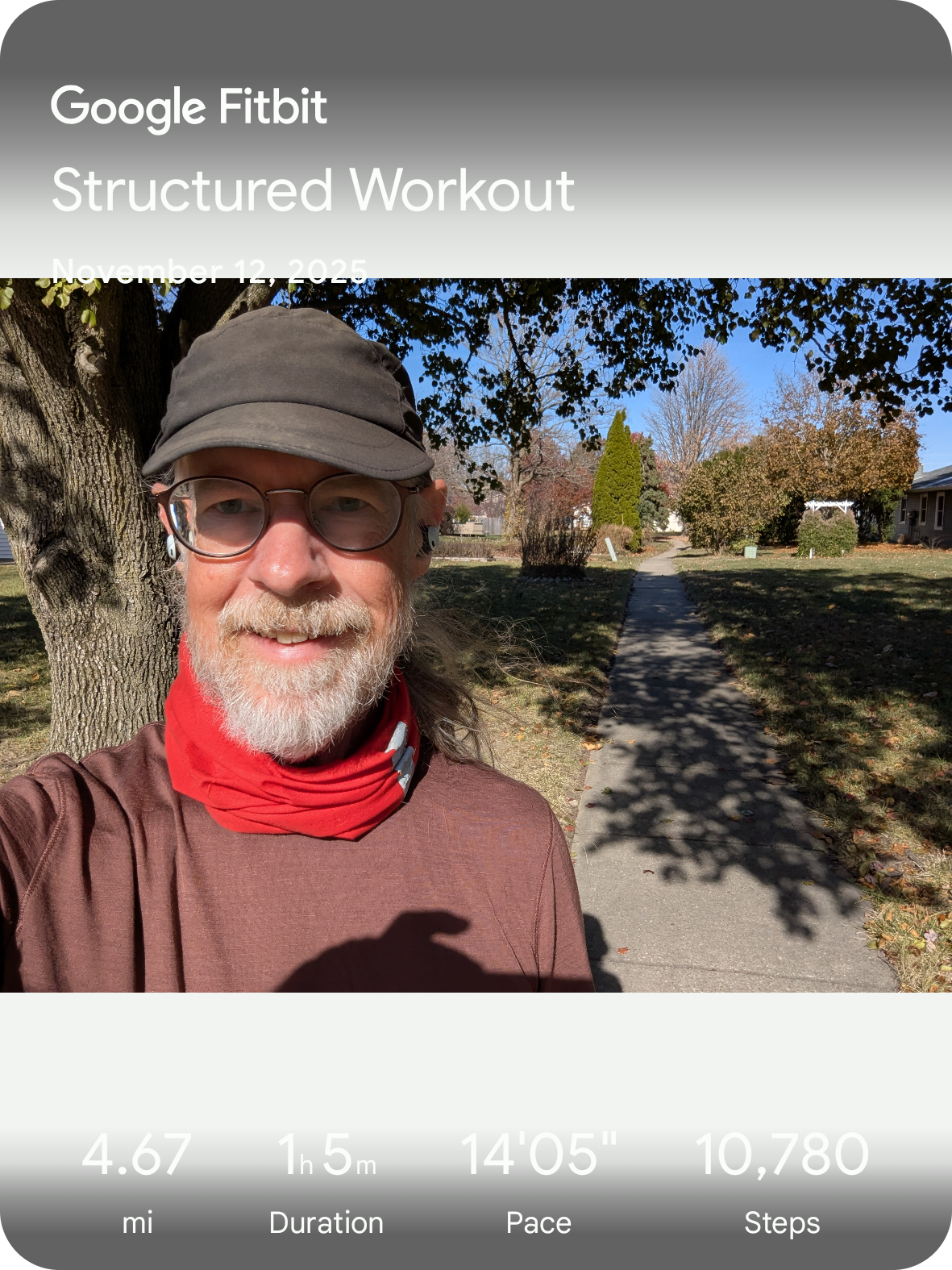
I got in a nice run: 4.67 miles in 1h 5min 51s, for an average pace of 14:05. My Fitbit would have me believe that I spent 59 of those minutes with my heart rate in zone 5, which I’m sure is double-false. That is, I don’t think my HR reached the 200 bpm that the Fitbit recorded, nor do I think my maximum HR is nearly as low as 154, which is what the Fitbit estimates.
Still it was a great run. My fastest and longest in a long time, and I felt great the whole time.
I walk a lot. Because I have a dog, and want to be sure my dog gets the exercise it needs, I take a truly inordinate number of steps per day. (Wait just a moment while I check my Fitbit…) Last week I averaged 14,036 steps per day. The previous week I averaged 17,197 steps per day. Those weeks are quite typical for me; I don’t average much under 15,000 unless I’m sick or the weather’s really bad.
So, when I saw the news recently that walking “3,000 to 5,000 steps per day can help to stave off mental decline,” I’m like, “Okay? Great.” Taking 5,000 to 7,500 steps per day seems to stave off Alzheimer’s disease by around seven years.
I mean, that’s great. Staving off Alzheimer’s disease by 7 years would probably cut the incidence of the disease by close to half (because people would die of something else first).
But really? I mean, yes, my inordinate walking takes a lot of time that most people don’t have. Back when I was working a regular job I’d try to get “enough exercise,” and that generally topped out at an average of a little over 100 minutes per day—and that much only in the summer, and that high only because I’d average in a 3 or 4 hour bike ride over the weekend. Now I probably spend close to 150 minutes per day just walking the dog. I recognize that almost nobody’s got time for that.
And, yes, walking in particular depends on capabilities that not everyone has. Lots of people old enough to worry about Alzheimer’s have bad knees or bad hips or bad feet or bad hearts or bad lungs. Maybe their endurance is very low. Maybe their balance is poor enough that walking is a risk.
But it doesn’t need to be walking. Walking is just easy to measure with a wearable device. Any sort of exercise will do the trick. Lift weights. (They don’t have to be heavy weights, as long as they’re heavy for you.) Ride a bike. Ride a stationary bike. Row. Use a rowing machine. Play almost any sport. Dance the night away.
Related to this, only in terms of how low the bar is set to do an enormous amount of good, a different study looked at whether walks needed to be long in order to provide the benefits, or whether cobbling together a number of shorter walks to add up to the same number of steps was just as good. It turns out longer walks are better. (Risk of being diagnosed with cardiovascular disease within 9.5 years dropped from 13% to around 4–8%.) But the dividing line in the study was that walks of at least 10–15 minutes counted as “long” walks, versus short walks of less then 5 minutes.
If you can walk 5 minutes, I’ll wager you can work up to walking 15 minutes in a very short period of time. And the evidence is now pretty clear that it’s worth doing.
Get some exercise. The bar is pretty low for making a big difference.
I haven’t been running enough, so I went for a run today. The metrics are kinda funny, by which I mean my Fitbit thought it was an insanely hard run. I thought it was interesting enough to post about.
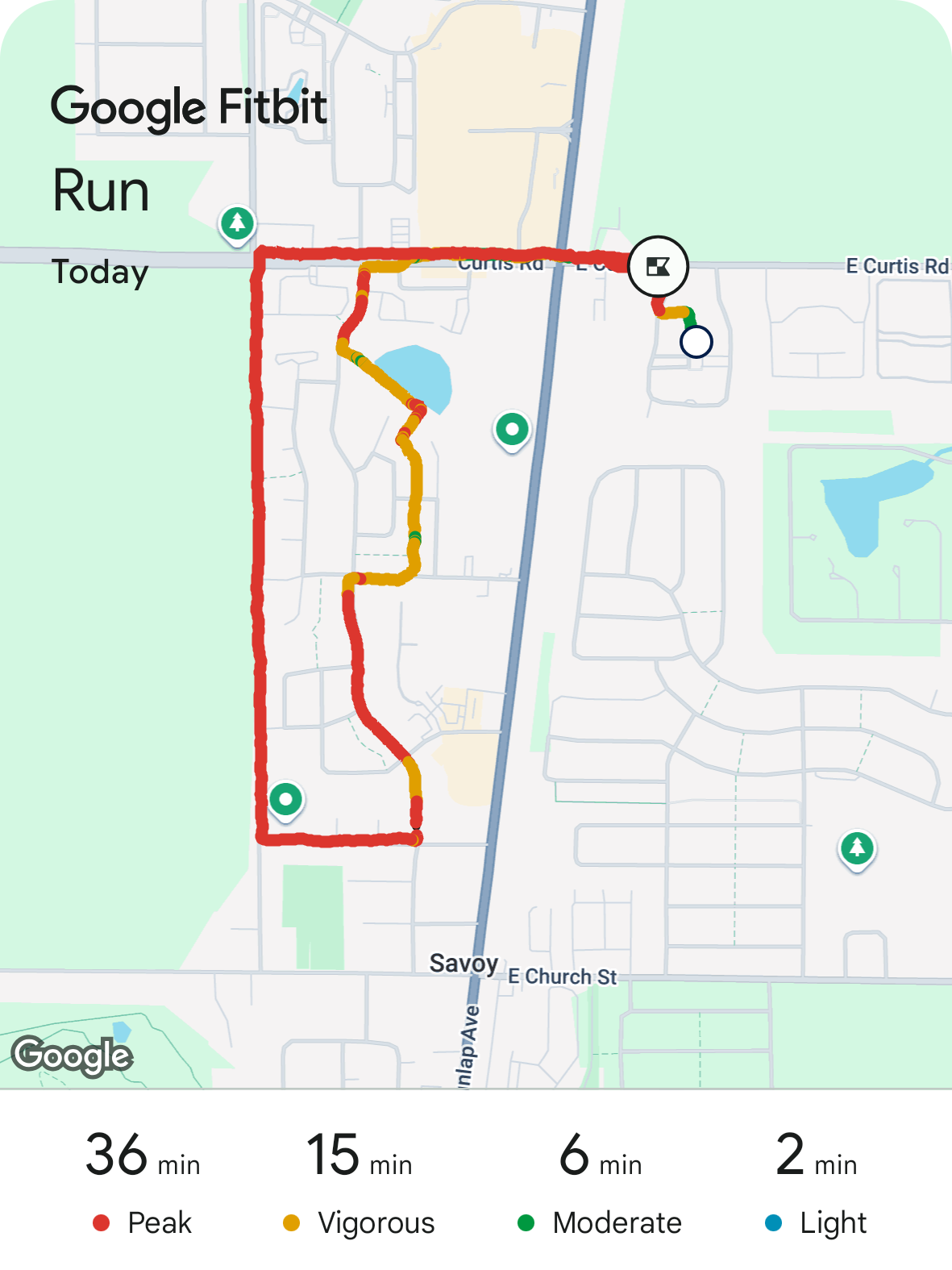
Fitbit calculates heart rate zones based on your “heart rate reserve,” which is your maximum heart rate minus your resting heart rate.
Your resting heart rate (roughly what you’d get if you checked your heart rate right after you woke up, before you started moving around) the device actually measures. My resting heart rate, according to the Fitbit, was 56 bpm. (It actually hit 44 bpm at some point while I was asleep, but your lowest resting heart rate is a different number.)
Your maximum heart rate, though, isn’t measured. Instead, it’s estimated as 220 minus your age. I’m 66, so that comes to 154. So my heart rate reserve is 154 minus 56 equals 98. Then my various zones are calculate as a fraction of the reserve plus the resting rate. Zone 5 (peak activity) begins at 85%, so my zone 5 begins at (0.85 ✖️ 98) + 56, which comes to 83 + 56 = 139. All the parts of my run shown in red in the map above were run at a heart rate at or above 139.
In fact though, my maximum heart rate is way higher than that estimate. I have in the past been somewhat dubious of the maximum readings shown by my Fitbit during a run, because all the wrist-worn devices sometimes sync up at your foot-strike rate, so you get anomalous readings around 180 (a common foot-strike rate). But I also check my heart rate doing other exercises, such as kettlebell swings, where foot-strike rate doesn’t matter. Plus, I get heart rate readings from my Oura ring, which is not wrist-worn, and which doesn’t seem to have the same syncing-with-foot-strike problem. So I know my max heart rate is much higher.
On this run, for example, the maximum heart rate as measured by my fitbit was 169. My Oura ring thinks the peak was 166 (but it averages over 5-minute periods, which smooths out the peaks quite a bit).
Anyway, if you take 166 as my actual maximum heart rate, then my heart rate reserve is 110, 85% of it comes to 94, so my zone 5 range ought to begin at a heart rate of 150, rather than 139.
I find that a lot more plausible. If the Fitbit is right, then I just spent 36 minutes in zone 5, which seems very unlikely. It was kind of a hard run, because I haven’t been running enough, but I not only could have talked while I was running, I actually did sing, which is one of the markers for being in zone 1. (I was listening to and singing along with some Kpop songs.)
So, I think much of that run, even some of the bits shown in red above, were in zone 2 or 3, not zone 5.
Whatever the heart rate metrics, it was a rather slow, rather short run: 3.15 miles in 58min 10s.
Much better than not running.
Updated next morning: I slept great after my run, and woke up feeling great. Legs not sore at all. Overnight heart rate right back down to my current baseline.