Do you use an activity tracker? I have an Oura ring, a Google Pixel watch, and a phone which runs Google Fit. All of those count my steps, and each one does some additional activity or sleep tracking. I find them all fun and interesting, so I’m always amused when yet another article comes out warning of the dangers of activity tracking.
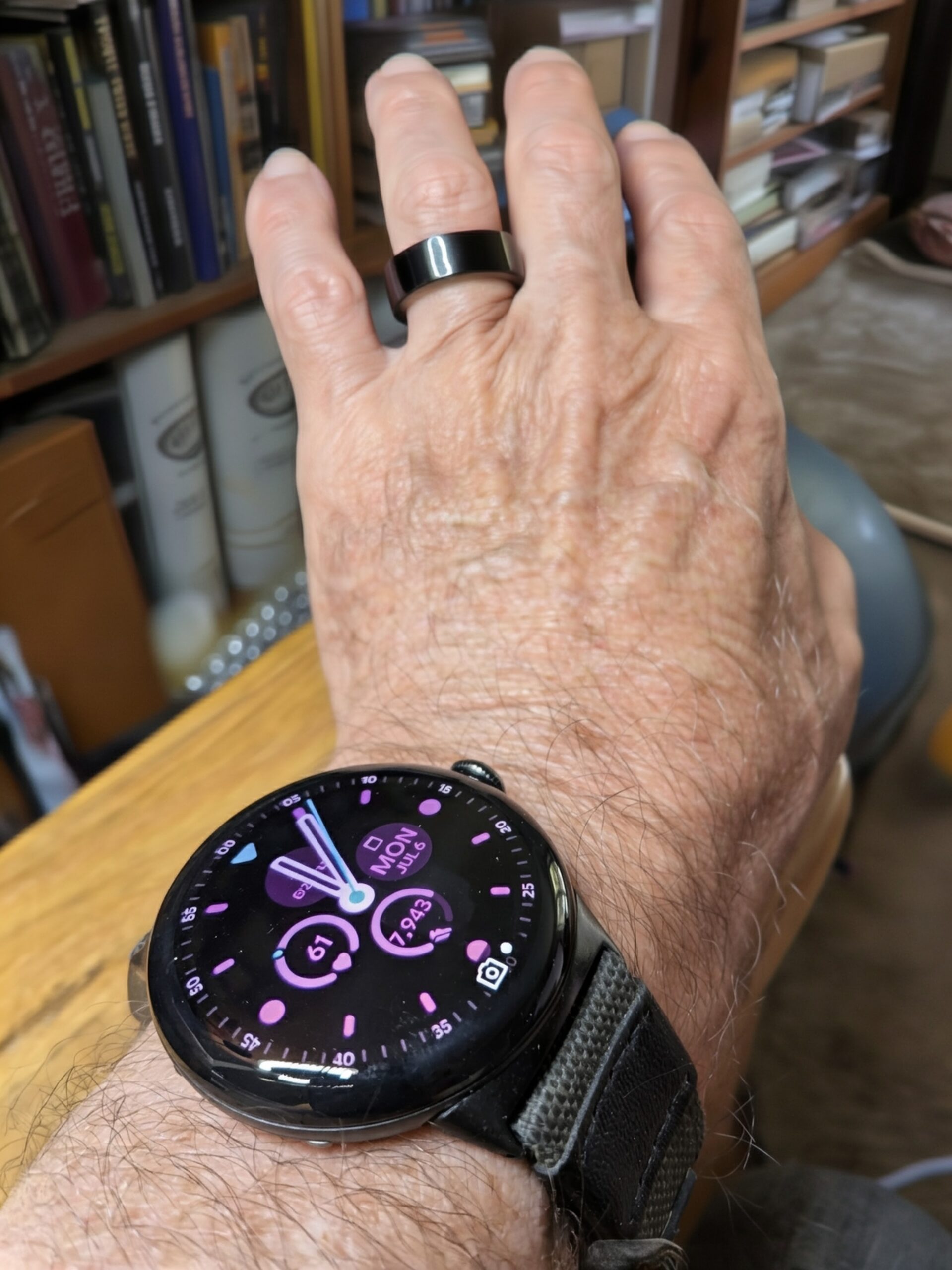
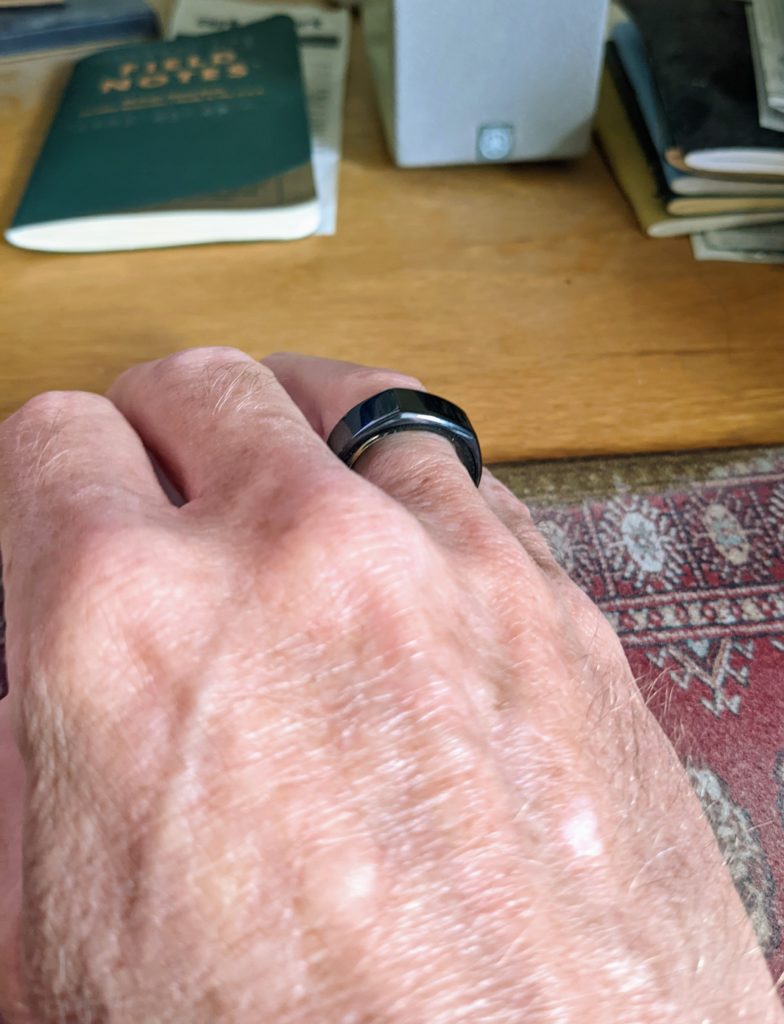
My Google pixel watch and my Oura ring

The article at the moment is this one, sent by my brother: Five hidden pitfalls of fitness tracking, by Sahar Bakr.

I mean, sure. If you’re really foolish, you can be seriously led astray by one of these. But you’d have to be really foolish. It’s like the early days of GPS map software, where they’d be giving you directions and say, “Turn left!” but if you turned left you’d end up in a creek. Sure, you could do that, but all you had to do was look where you were going, and you could avoid it pretty easily.

Although the article has five items, there are, I think, two fundamental issues that Bakr is warning about. The larger one is outsourcing our good sense to some external device. The smaller is an excessive focus on step-count as the measure of fitness activity.

Letting a device tell you to push hard when you’re feeling crappy is just stupid. (It is perhaps somewhat less stupid to let a device tell you to take it easy when you feel great. I have several times decided to push hard because I felt great, even though one of my devices was warning me that I wasn’t fully recovered. More than once when I did that, I ended up having a crappy workout, because the device was right and I was wrong.)

With their fixation on steps (because that’s easy for a device to measure), devices have a pretty limited insight into the full scope of your movement practice. This means that they’re never going to know if your strength training is covering all the major muscle groups, or if your volume and intensity are on point. But that’s not really different from training without a device. Really, it only makes things worse if you’re so foolish as to imagine that it’s got some insight into stuff other than your steps and heart rate (or whatever else its measuring). Just like it doesn’t know enough about your strength training to provide useful advice there, it also doesn’t know much about your skills training or your flexibility training.

A lot of my training is focused on specifically increasing the sort of fitness I need for my HEMA practice. None of my devices even tries to guide me as to whether I should do less lunging practice in favor of overhead pressing practice or vice versa. (And if they did, I wouldn’t pay much attention, unless they’d started getting me to upload my sparring footage. And maybe not then.)

Getting back to the fixation on steps, the device makers want to pretend that step counts gives them some sort of deep insight into a human’s movement practice, with a one-size-fits-all target of 10,000 steps.

Weirdly, I don’t think that’s crazy. I mean, steps are by no means the only aspect of a human’s movement practice that’s important, but it’s actually not a bad proxy.

Over an evolutionarily long period, walking and running have been critical to human success. Running and walking were key to our successes in both hunting and gathering, and probably led directly to our big brains.

All three of my devices count steps. All three track walking and running. (They all try to track other activity—cycling, swimming, gardening, housework—but do so pretty poorly. Walking and running, though, they pretty much have nailed.)

In my mid-20s I was working in an office, but getting out to hike at every opportunity, which didn’t come frequently enough. I remember thinking, “If only I could get out and hike a few miles every day! I’d be in great shape!” That turns out not to be true, but it’s not completely false either.

My point here is simply that step counts are by no means a terrible proxy for one’s overall activity level, and 10,000 steps is by no means a stupid target—it’s mildly ambitious, without being out of reach for anyone with a reasonable level of fitness and some spare time. (I admit that I might well think this because I’m a weird outlier. I’m a walker from way back. I’m retired, so I have all the time in the day to walk if I want to. And I have a dog who likes to walk a lot. The upshot is, my daily steps hit 15,000 nearly every day.)

All of which is to say that I find these devices useful. In particular, they’re good at observing that I’m not fully recovered, meaning I should take it easy, even if I’m feeling okay. I find them (mildly) motivating, in that I pretty much never fail to hit 10,000 steps (unless I’m sick, the dog is sick, or the weather is terrible). I find them somewhat entertaining, especially when their praise is so for stuff I consider pretty minimal. (“You’ve met your activity goal for the day!” My Oura ring will say at 10:00 AM.)

In any case, I find them quite harmless. They don’t make me feel anxious or shamed. I’ve seen no sign that they are prompting disordered eating. I’m amused by their fixation on step counts, but not troubled by it. (I occasionally miss my 10,000 steps, usually when I’ve spent the day sitting in a plane, train, or car. I am not bothered when my devices observe that this is the case.) I care deeply about getting in my mobility work and my strength work, even if the devices don’t track it adequately. I take great joy in my movement—click any of the tags over there with “movement” in the name and find yourself taken to dozens of places where I’ve celebrated my movement practice, starting from before I had any devices, and continuing to this day. Finally, I am merely amused if my device dings me for not doing enough, as my Oura ring does if I sit for more than 50 minutes. (In fact though, these past few years, I can only barely sit still that long anyway.)

The key paragraph from the article:

For users, the first shift is to treat tracking as information rather than instruction. A watch can tell you what it has measured. It cannot tell you what your body needs today.

I mean, I know I’m a movement weirdo, but really? Who would do anything else?

Several times in my adult life I have suffered a bout of very poor sleep, usually due to life stress. One of those times, six years ago, coincided with the Oura ring becoming available. So I bought one.

Buying a ring, of course, doesn’t help you sleep better. The Oura ring just offers metrics on your sleep. It’s up to you to make sensible use of that data.

Besides buying the ring, I went down the rabbit hole of reading about sleep. In particular, I read the book Why We Sleep by Matthew Walker. Based on that book, and a lot of reading of internet articles on sleep, I started trying to get 8 hours of sleep a night, as measured by my Oura ring.

Of course that’s not what the “8 hours of sleep” number ever was. The number was always a “time in bed” number, assuming that you spent an average fraction of that time actually asleep. (Some people might actually need 8 hours of actual sleep per night, but that’s not what the number referred to.)

I conducted various experiments (which is what the Oura ring makes possible), but about the only way I could get 8 hours of actual sleep (besides being really, really tired) was to spend 10 or more hours in bed. Rather pleasant on the right sort of day when you’re in the right sort of mood, but not really a practical lifestyle, even for someone like me who doesn’t need to go work a regular job any more.

I did the sensible thing, which was to mostly not worry about it, and just try to get plenty of sleep. And I did okay. My average sleep score from my Oura ring over the 6+ years I’ve had it has been 84. (That’s one tick below the cut-off for “excellent” sleep.)

Just lately though, I’ve made another tweak to my “sensible sleep” strategy (which will no doubt seem extremely obvious to anyone who has never had an extended period of very bad sleep): I quit trying to extend my time in bed in an effort to try and get 7 or 8 hours of actual sleep.

Like all sensible people, I’m back to just going to bed when I feel sleepy, and getting up when I wake up feeling refreshed.

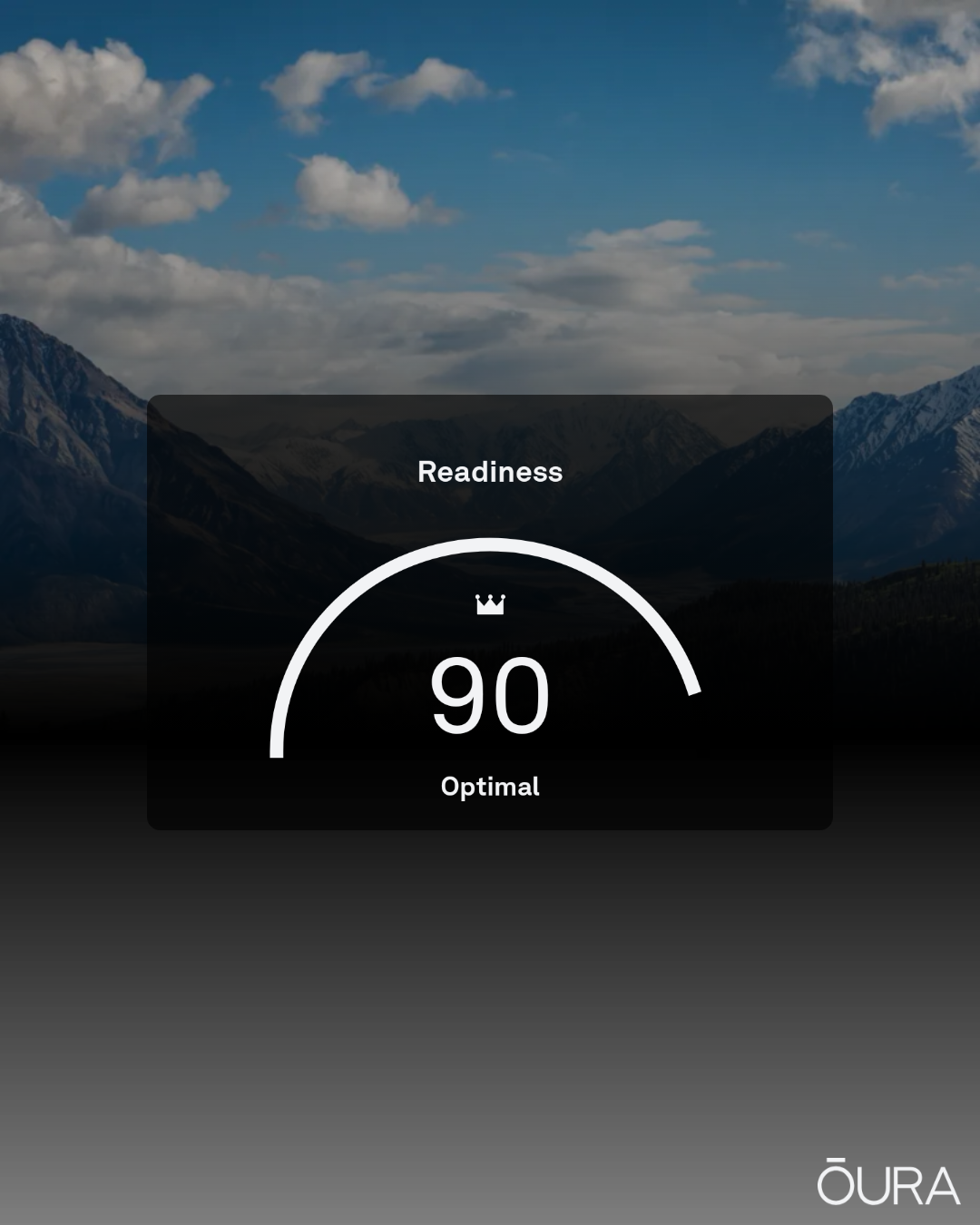
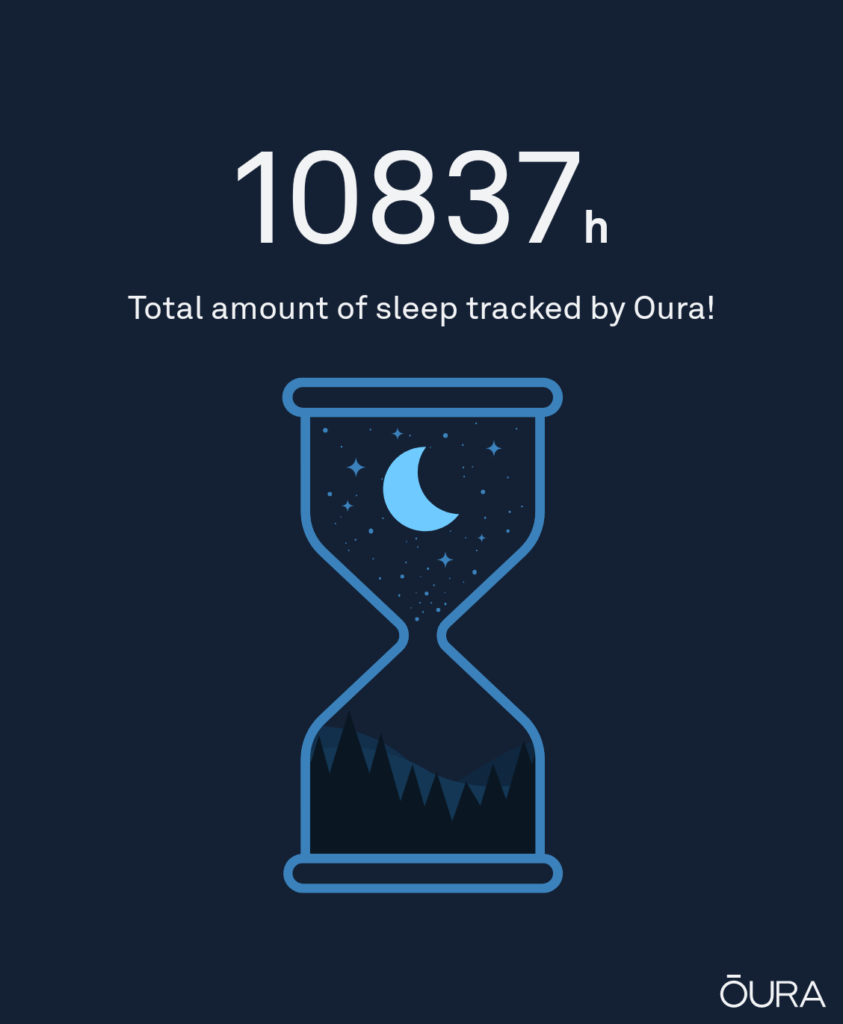
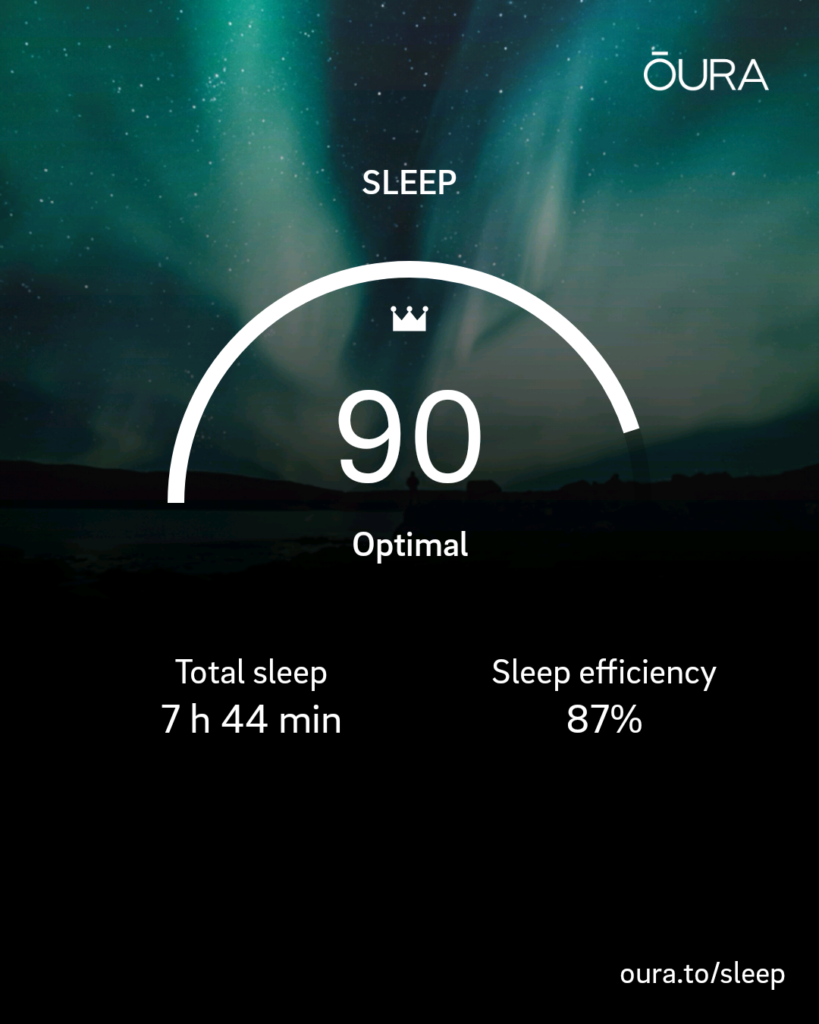
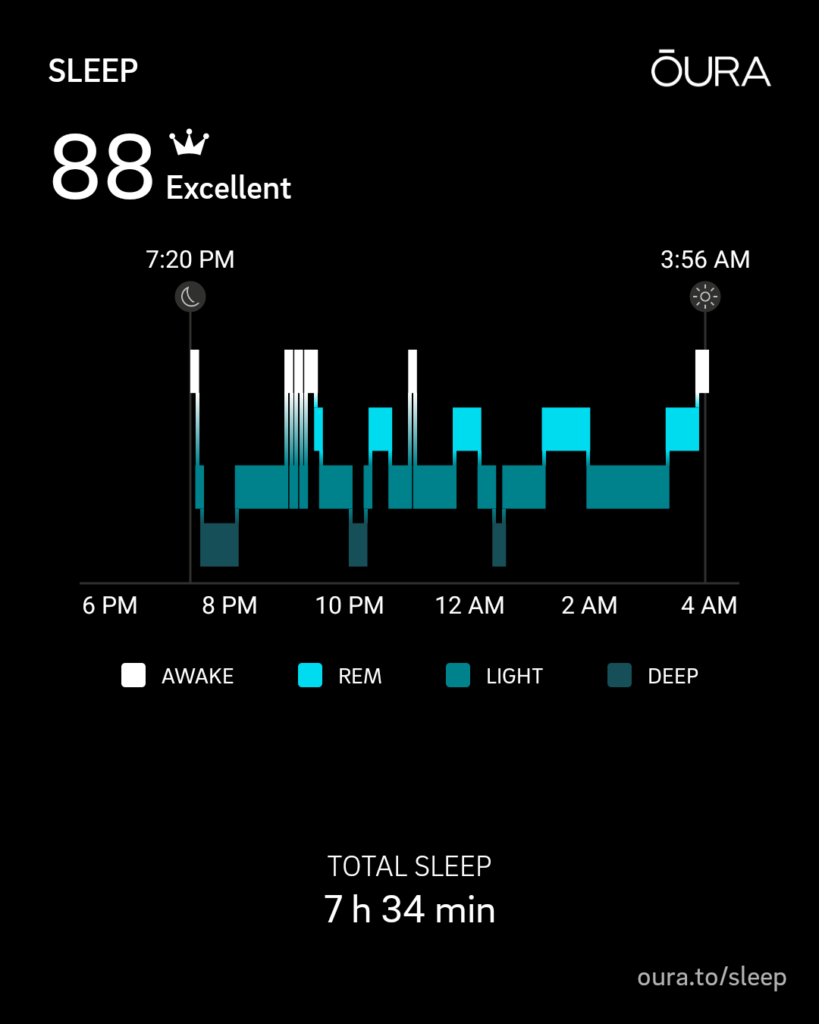
My Oura ring likes the results:

In part this was due to hearing an interview with the author of How to Sleep Like a Caveman by Merijn van de Laar. He reports that Hadza people spend a very typical amount of time in bed, but only spend a little over six and a half hours of that time asleep.

Of course the smart thing to do is to go entirely by feel: If you wake up feeling refreshed, you’re probably getting enough sleep. If you get sleepy during the day, maybe take a nap.

The Oura ring is for when that simple, sensible strategy doesn’t do the trick.

Since we got Ashley, I have been sleeping better. Remarkably better. It’s kind of amazing.

My Oura ring gives me some data to go on.

The place where it’s very obvious is in deep sleep time. In the month or so before I got the dog, I averaged 57 minutes of deep sleep per night. In the month or so since I got the dog, I’ve averaged 1 hour 23 minutes. Other improvements are significant, but not so impressive in terms of numbers. Total sleep has gone from 7 hours 34 minutes to 7 hours 41 minutes, which is enough to make a difference. Sleep efficiency (the percentage of the time in bed that I’m actually asleep) has gone from 87% to 89%, which doesn’t look so impressive, but also seems to make a difference. I’m also getting up much less often in the night.

Of course, this leaves me with the question of why.

I think partially, it’s just that she sets a great example: She comes to bed when we do, lies down between our feet, goes to sleep, and stays asleep—better than I do, anyway.

The other big change, of course, is that I’m walking way, way more than before.

Again the Oura ring provides some data, with “walking” that has gone from 7.3 miles to 11.2 miles per day. That’s misleading though, because the Oura ring reports a “walking equivalent” number. (Based on, I assume, my heart rate during other activity, such as weight lifting.) The FitBit software on my Pixel Watch gives me actual distance data, and the last half of October I was averaging 5 miles per day, while last week I averaged 7 miles.

Dog sleeping in the sun
Ashley sleeps just as well in the sun as she does in bed

I wrote this a while ago, after seeing two articles in two days ragging on fitness tracking devices, and suggesting that they’re bad for you. Both articles warn against outsourcing your intuitive sense of “how you are” to some device. And, sure, I guess you can do that. But if you actually are doing that, I’d suggest that what you have isn’t a harmful device. What you have is a device disorder.

I was going to make an even stronger statement along these lines, comparing a device disorder to an eating disorder. I think the comparison is valid, even though, upon reflection, it weakens my argument. Sure, some people have an eating disorder. But anybody is likely to engage in disordered eating when they eat industrially produced edible food-like substances. Maybe that’s a fair comparison with industrially produced fitness-tracking devices. Unlike with industrial food though, I think the data from fitness trackers can be consumed safely.

“… sometimes I would wake up in the morning and check my app to see how I slept — instead of just taking a moment to notice that I was still tired…”

Source: Opinion | Even the Best Smartwatch Might Be Bad for Your Brain – The New York Times

I get this, because I joke about this myself. My brother will ask how I slept, and I’ll say, “I’m not sure—I haven’t checked with my Oura ring yet.” Or I’ll say something like, “My ring and I agree that I slept well last night!” But I’m just joking. I know how I slept, I know how recovered I am from the recent days’ activities, and how ready I am to take on a physical or mental challenge.

My Oura ring

That doesn’t make the data from the Oura ring useless. My intuitive sense of how I am isn’t perfect. Many’s the time I’ve let wishful thinking convince me that I’m ready for a long run or a tough workout not because I really am, but because the weather is especially nice that day and the next few days are forecast to be cold or rainy. Or because I have some free time that day and the next few days are going to be busy. My Oura ring has been a useful counterbalance to that. If I had a hard lifting session yesterday, but I feel great today and my heart rate lowered early last night, maybe I am really ready for a long run today. On the other hand, if my heart rate took the whole night to get down to its minimum, and its minimum was higher than usual, that’s a good sign that I’m not fully recovered, even if I’m feeling pretty good.

If you have an eating disorder, do your best to avoid triggers that lead to disordered eating. Similarly, if you have a device disorder, it makes good sense to avoid using whatever sort of devices lead to disordered behavior. But that doesn’t make the devices bad, any more than eating disorders make food bad. But any particular device might be bad for you, just like any particular food might be bad for you. (And, I admit, industrially produced edible substances are probably bad for everybody.)

We know hyper-palatable foods are bad for us, and that eating a diet based on minimally processed whole foods—such as a paleo diet—is better. I contend that hyper-comfortable beds are bad for similar reasons, and that the sweet spot for bedding comfort will be a level similar to what a caveman could come up with: a paleo bed.

During a recent run I listened to yet another podcast on the importance of getting enough sleep. (Since a bout of wretched sleep a couple of years ago, this topic has been like catnip to me.) As they almost always do, this one included in its list of tips for improving your sleep, getting “the most comfortable bed you can afford.”

I think this is a terrible idea.

Just so you know where I’m coming from, let me mention that I use an Oura ring, which gives me a “sleep score” every day. After making a few changes (primarily around stress reduction, but also changes to when I eat and a few changes to my sleeping environment), I now sleep pretty darned well. Over the last 3 months my sleep score has averaged 86 (out of 100), on a scale where 85 is the cut-off for “excellent” sleep.

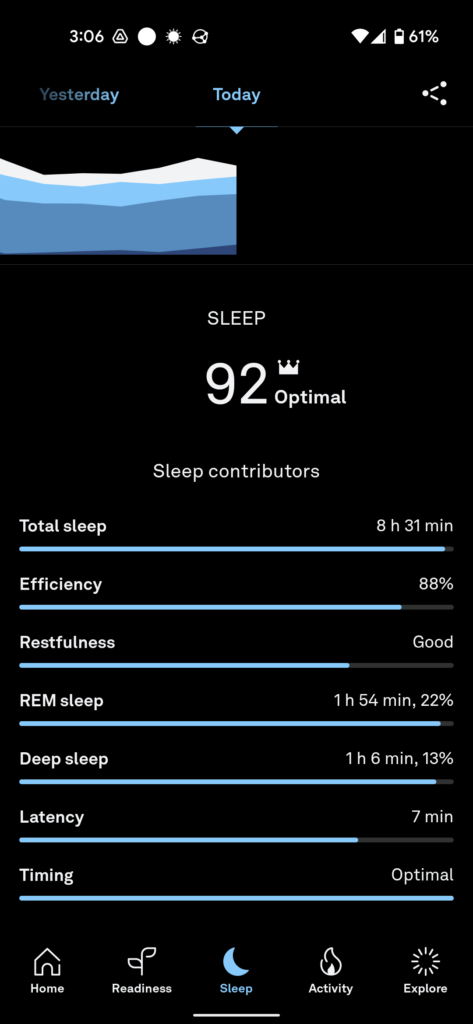
The main reason that I don’t get a better score is due to my “Restfulness” score, which is always low. For example, my last night’s sleep got a score of 92, but my Restfulness was just 76, which as you can see qualifies as “Good.” My average Restfulness score over the past 3 months was 71.

Sleep score detail from my Oura ring

I don’t know exactly what goes into the Restfulness score, but I gather that it is primarily affected by movement. Each time you get up during the night your Restfulness score goes down, but just waking up enough to roll over counts against your Restfulness score (as near as I can tell).

Now, this may be reasonable in a sense: waking up repeatedly during the night almost certainly interferes with the quality of your sleep, and having a more comfortable bed will probably mean that you wake up to roll over less often.

I still think it’s a terrible idea. Spending the whole night lying still is—I strongly suspect, based on no evidence whatsoever—probably just as bad for you as spending your whole workday sitting still.

On a good night I might wake up enough to roll over every 90 minutes or so—that is, after each complete sleep cycle I wake up enough to realize that I’ve been lying still long enough to feel a little uncomfortable, and will roll over to find a new, more comfortable position.

As long as I go right back to sleep every time I roll over, I figure it’s all good. (In the past—when I was suffering from higher levels of stress—I would all too often wake up enough to start worrying about something, and that would keep me from falling right back to sleep, interfering with getting a good night’s sleep. These days I’m doing pretty well.)

Sometimes, such as in fancy hotels, I have slept in very comfortable beds. And it’s true that, lying in a pool of memory foam that conforms perfectly to my body, I often get a very good night’s sleep. But then I wake up achy and sore from having been lying too still for eight hours.

As I see it, the same paleo-lifestyle logic applies to bed as to diet and exercise: We evolved to optimize our overall health sleeping in beds that are as comfortable as whatever our paleolithic ancestors slept on. I don’t know that there’s any evidence as to what that was. I suppose people often slept on the ground. Maybe sometimes in a tree? Presumably they made bedding out of whatever they could find—perhaps a bearskin rug, if they happened to kill a bear and didn’t need the hide for something more important than bedding.

Here’s a proposition for you: If you’re sleeping in something that’s more comfortable than you could improvise out of stuff you could find in nature, you’re making the exact same mistake as people eating hyper-palatable industrially produced food-like substances.

Reject the advice to sleep in the most comfortable bed you can afford! Choose a bed that’s about as comfortable as a paleo bed!

Image source: https://www.loc.gov/pictures/item/98510133/

Very occasionally I wish I were the sort of person who kept lists.

It’s most common that I regret not being a list-keeper when someone asks for book recommendations, especially when they want something in a particular scope—the 10 best books I read this year, or three books that I’ve given as gifts.

I’m always daunted by a request like that, because I have no idea what books I read this year.

Some of my tools—in particular, Amazon and my Kindle—do some amount of list-keeping for me. The public library could, but by default it doesn’t. (For very legitimate historical reasons, librarians worry about their patrons’ privacy, and since they don’t need to keep track of what books you’ve checked out once you’ve returned them, they default to forgetting about them.)

I played around with using a little toy tool called IndieBookClub, which posts the books you enter to your site, but it didn’t do most of the things you’d actually want such a tool to do (associate the books you’re meaning to read, books you’re reading, books you’ve read, and your thoughts about them), so I didn’t find it very useful.

Some people really enjoy the process of keeping lists, but that’s not me. Basically, I don’t want to keep lists, I sometimes want to have kept lists. I sometimes regret not having a list of something, but not in a way that makes me think I should start keeping such a list.

I do track some things—money, exercise, sleep—when experience has shown me that doing so is of great value, but in most areas of life I don’t keep track of anything at all.

Just today—after a year of having this post hanging around in my drafts folder—I saw plans for folks working on IndieWeb stuff to talk about how to do personal libraries in a way that would produce decentralized Goodreads-like functionality. That would really appeal to me.

In the meantime maybe I’ll look around at some list-keeping tools (or maybe start using a few pages in my bullet journal to keep track of books and other things worth tracking).

I’ll keep you posted. Maybe next year will be the year I keep a list of one more thing!

I am a little too prone to use black humor to distance myself from the depressing effects of the long, cold darkness of winter, which sometimes leaves people worrying about me unnecessarily. So I thought I’d mention that despite a bit of anxiety over the inevitable turn of the seasons, my mood is currently pretty great.

Beyond just feeling good right now, I’m hopeful. Over the past decade I’ve been handling winters better and better.

The biggest factor, I think, is that I no longer have a job to lose, so I no longer get into the spiral where seasonal depression makes me less productive, making me anxious about losing my job, making me more depressed, making me even less productive. Sadly, advising others to take advantage of this strategy is not very useful (although I do and will continue to support and advocate for either a citizen wage or a guaranteed job).

Putting early retirement aside as impractical for most people, I thought I’d briefly summarize my other current practices—mostly ordinary coping strategies—both as a reference for myself any time I start to feel my brain chemicals coming on, and perhaps as a resource for other people. Here’s what’s working for me:

  • Taking delight in things. In particular, I take delight in the opportunity to wear seasonally appropriate woollies. I also like to spend time in the Conservatory, go to art galleries or museums, listen to live music, and generally go on artist’s dates.
  • Getting plenty of exercise. Last winter I managed to get out for a run almost every week. As fall approaches I’m getting back to my lifting. (Here’s a great resource on the current science on using exercise to treat and prevent depression.)
  • Spending time in nature. I do that all summer, and it may be part of the reason that my mood is generally great in the summer. But I can do it in the winter too. (I don’t seem to have a post on this topic. I’ll be sure to write one this winter. In the meantime you can find various mentions by clicking on the vitamin N tag over on the sidebar.)
  • Light therapy. I’ve used my HappyLight™ for years, and it does seem to help. Getting outdoors anytime in the first couple of hours after dawn is probably even better—another thing I find easy to do in the summer that would probably help just as much in the winter.
  • Taking Vitamin D through the winter. The evidence for any benefit is scant, but even if it only helps through the placebo effect, it is at least a safe, cheap placebo. (There’s good evidence that people with high levels of vitamin D are healthier, but very little evidence that supplementing vitamin D makes people healthier. It could easily be purely associational—maybe more time spent outdoors both boosts vitamin D levels and makes people healthier and happier.)
  • Anything that boosts neurogenesis. That’s most of the things listed above, but lots of other things too, such as engaging in creative work. Also on the list are calorie restriction and adequate consumption of omega-3 fatty acids.

I have a few new possibilities up my sleeve:

  • There’s recent evidence that sauna bathing is dramatically effective at treating depression, probably through many mechanisms including the activation of heat-shock proteins. (One thing on my to-do list is finding a local fitness center or spa with a sauna and investigating the cost of a three or four month membership.)
  • Related to heat exposure is cold exposure, which activates many of the same protective proteins that heat exposure does. Cold exposure, of course, is trivially easy to achieve in the winter—just wear a coat or jacket one notch less warm than would be most comfortable.
  • Obviously sleep is very important, and with my Oura ring I’m tracking my own sleep carefully. This has already been helpful, and I’m hoping to be able to do more to improve my sleep (and thereby my mood) in the winter as well.

That’s what I’ve got at the moment, but I’m always on the lookout for things to alleviate seasonal depression.