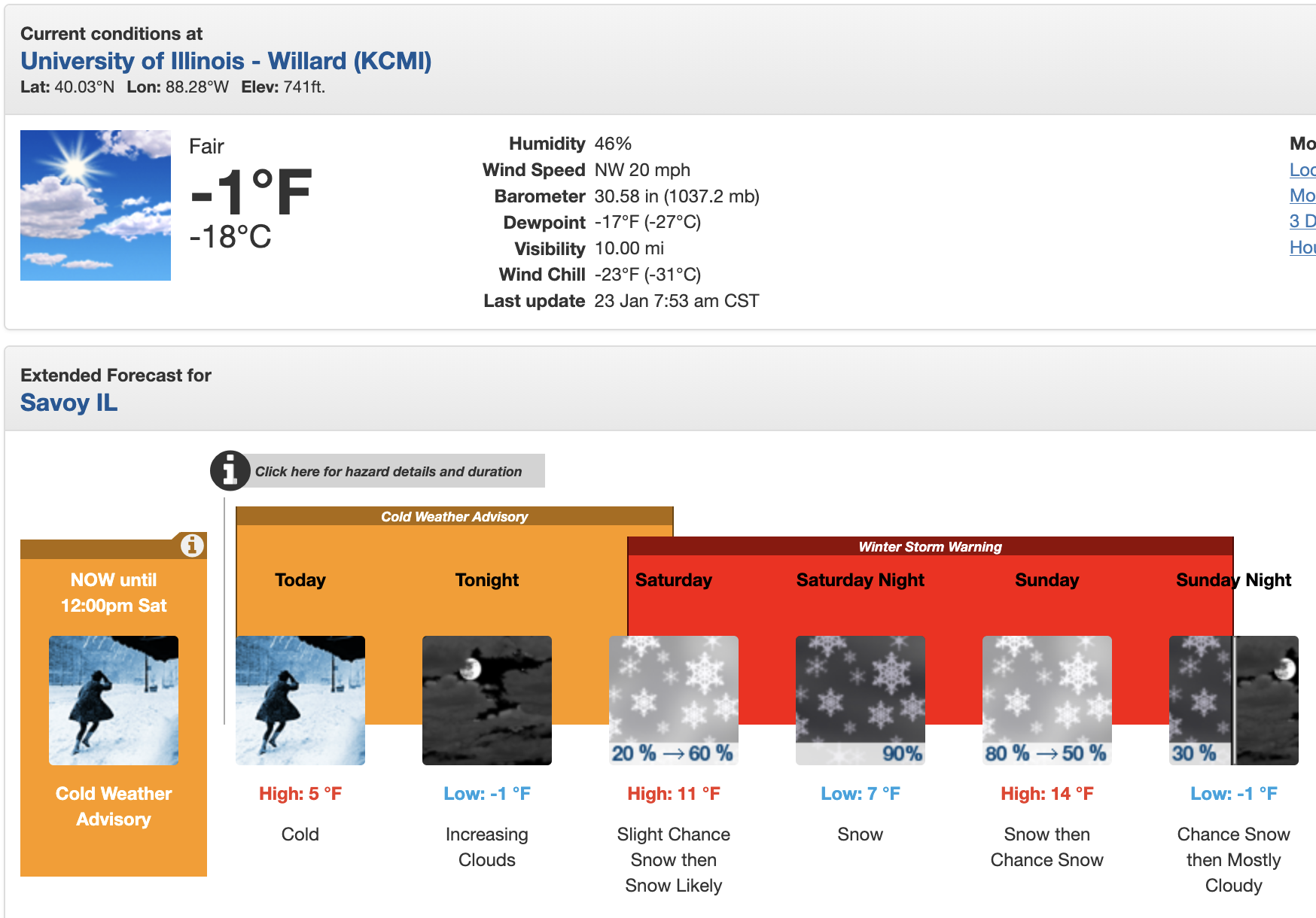
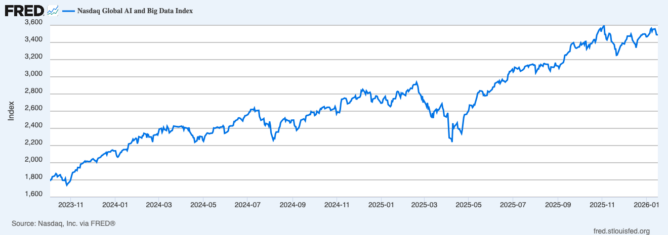
Glad I’m not planning to fly anywhere anytime soon.
Glad I’m not on food stamps.
Glad I’m not on Obamacare any more.*
Glad I don’t travel by boat in the Caribbean.
*Note: Obamacare is a great program, which came along at a critical time for me, and lasted long enough for me to get on Medicare. My gratitude for the program knows no bounds, and I feel immense sorrow that the Republicans continue to try to ruin it.
What if—and hear me out here—instead of trying to bribe women with weird tax credits to try to get them to have more children, we just made it much cheaper and easier to raise a child? Free health care, free education, free day care, mandatory time off to deal with medical or family issues… Stuff like that.
As an annoying privacy/security nerd of longstanding, I’m very pleased to hear this:
Plenty of annoying nerds have been ringing alarm bells since the 90s, going on about code and privacy and open source software and FREEDOM, mostly in annoying ways. And it is genuinely annoying, even to me, to say this, but they were right all along.
We have benefited enormously from the vast economies of scale in the vaccine industry. Because childhood vaccines were mandated, the companies that made them could be confident that they’d be able to sell large numbers. That made it worth both doing the research and investing in capacity.
Even flu vaccines have benefited, because government agencies got a bunch of scientists to come together and produce their best guess as to what strains to vaccinate against each year, so that there only had to be one vaccine that everyone got, and mandating that insurance companies had to pay for it.
But with the current administration in the U.S. suggesting that vaccines are generally bad, I fear we’re going to see less of that: fewer mandates are going to mean fewer vaccines being administered. Obviously that’s going to mean more sick people, which is really bad. But almost as bad, it’s going to reduce the economies of scale, meaning that the per-shot cost of vaccines are likely to rise significantly.
This all got me to thinking, what would a post-mandated-vaccines world look like?
Well, only smart people would buy vaccines, and only rich people would be able to afford them.
How many people are both smart and rich? And how rich would you have to be? Depending on how much prices went up, maybe only the top 50% would be able to afford them, maybe the top 10%, maybe the top 1%.
One small upside might be that boutique vaccine shops could find it worthwhile to make better vaccines—modestly better effectiveness, modestly reduced side-effects—because there’d be vaccine competition.
Really, though, there was always a strong push for that stuff for mandated vaccines, because if you’re going to give out 300 million doses, even a tiny improvement is going to really matter.
Still, I read a year or so ago about a version of the Covid-19 vaccine that produced much longer-lasting immunity being discontinued because they couldn’t sell enough of it, because it wasn’t mandated. That’s the sort of thing that might get better in a post-mandate world.
Won’t be a net win for society. Probably not even a net win for the 1% who can afford whatever bespoke vaccines they want, because it costs billions to research and test a vaccine, and even the 1% can’t afford that, unless they all get together and fund joint projects.
These thoughts brought to you by me getting my Covid shot now rather than waiting until just a few weeks before I go visit my 92-year-old mother—because who knows if it’ll be available then?
I’ve been hearing for years about how much trouble Social Security is in, and how pretty soon there won’t be enough money left in the trust fund to pay everyone’s pensions in full, and how we’ll have to raise taxes or cut benefits. That’s almost entirely false.
The Greenspan commission that restructured Social Security back in 1983 got almost everything right (which is why we haven’t needed to change Social Security tax rates, diddle around with the cost of living adjustments, nor change the age at which people retire for forty years). The one thing they got wrong?
Back then, about 90 percent of all wages were subject to Social Security payroll taxes. Today, that’s dropped to around 82.6 percent as more income has shifted above the taxable maximum.
The most common suggestion for “fixing” Social Security is to get rid of the ceiling on the amount of income subject to the tax, but that’s the wrong way to think about it. Getting rid of the ceiling would decouple the size of the eventual pension from the size of the income that earned it, which would give conservatives yet another hook for criticizing the program.
The right fix is to boost incomes of those at the bottom, so that once again 90% of all wages are under the Social Security tax ceiling.
Making sure that lower-income people earn enough money to live on will fix Social Security as a side-effect.
Clearly the move here is to come up with a large language model that writes really good prose that advocates for the policies that you want.
The draft says the department must greatly expand its use of artificial intelligence to help draft documents, and to undertake “policy development and review” and “operational planning.”
I don’t think of myself as someone who wishes ill for others. I genuinely do not wish for anyone to come to harm. But I’m struggling just a bit with schadenfreude right now.
Take, as an example, the wildfires in California. As I mentioned a couple of weeks ago, these fire events were not just entirely foreseeable; they were actually foreseen forty years ago. And yet, there are tens of thousands of people who apparently made the calculation that the views from a house on a hillside at the urban-chaparral interface were so good it was worth taking the risk—and especially so, given that a large fraction of the costs of fighting those fires, and insuring against financial loss, could be spread to other people. People like me.
I think I’m allowed a bit of, “I hope you are enjoying the entirely foreseeable consequences of your choices.”
By Tuesday, the winter storm will drop freezing rain, sleet and likely several inches of snow onto south Louisiana, including in New Orleans, Metairie, Slidell, Baton Rouge and Lafayette.
I have to admit that when people in red states face an extreme weather event that’s entirely to be expected, a certain part of me thinks, “Well, you could have voted for politicians and policies that would have greatly ameliorated climate change, but you didn’t. Enjoy the entirely foreseeable consequences of those choices.”
And, as a non-climate example, apparently a lot of black and brown male voters refused to vote for Kamala Harris. I suspect many of them will be surprised and saddened by the utterly predictable deportations of friends, family members, neighbors, coworkers, and employees over the next few years. And I will be very sad about that—sad for the people deported and their friends and family, and also about the dreadful police actions that will be required to make them happen. But I hope I will be excused from feeling no sympathy for the bosses who find themselves having to pay up to get workers who haven’t been deported, and very little sympathy for the people who voted for these policies and find that everything they want to buy costs more.
“Welcome to the entirely foreseeable consequences of your actions as well.”
I’m only surprised this doesn’t happen way more often. Surely a lot of people go into health research precisely to try to cure illnesses they have. If they come up with something very promising, why not try it on themselves?
A scientist who successfully treated her own breast cancer by injecting the tumour with lab-grown viruses has sparked discussion about the ethics of self-experimentation.