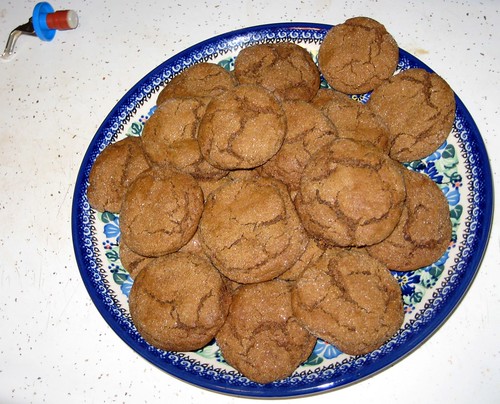

 Today would have been a good day to stay in, but I was obliged to teach my taiji class (and four or five students actually braved the weather to show up, so I was glad I’d made it in).
The weather that needed braving was an hour or two of pretty heavy snow, followed by freezing rain.
On paths that had been cleared, the result was about an eighth of an inch of ice. But since the freezing rain followed hard on the snow, most paths had not been cleared. The result was a thick layer of crunchy crystalline mush—not runny like slush, but otherwise kind of similar.
The weird consistency of the stuff reminded me of a failed effort at fudge or frosting—like a thick paste full of huge crystals, instead of tiny ones.
By the time I’d finished driving home in the stuff, I had an irresistible urge to make candy.
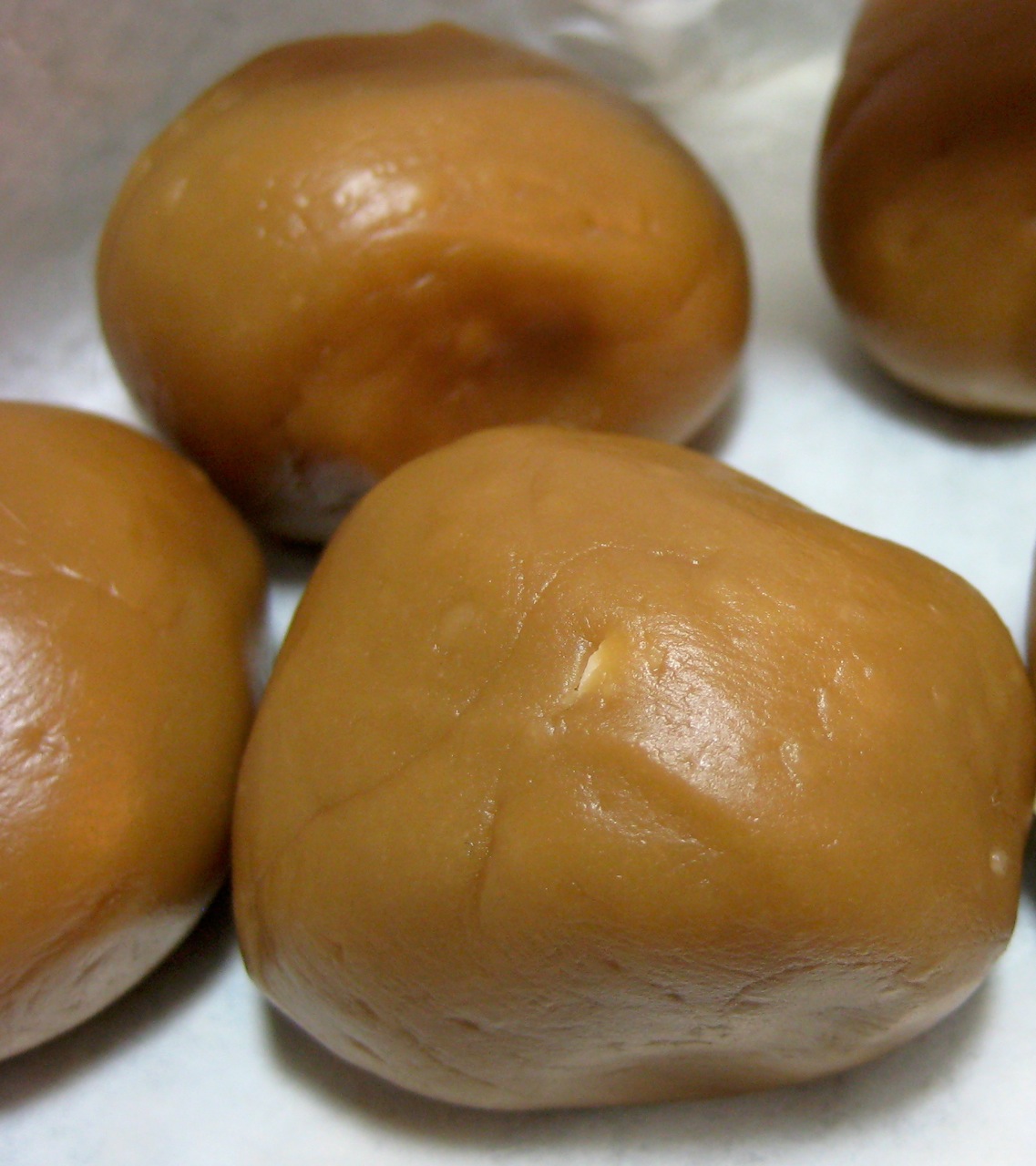
I’d have made fudge, but Jackie was doubtful about us having chocolate on hand, but we did have karo syrup and confectioner’s sugar—which, together with butter and vanilla, is all it takes to make Easy Karo Candy.
So, that’s what I made.
My mom used to make me Easy Karo Candy when I was a kid, so it brought back memories. (Even though it was pretty different, because we had dark Karo syrup instead of the light stuff, so it was kind of like Easy Karo Caramel Candy.)
I felt moved to post this because long ago I learned something from making Easy Karo Candy: I learned what candy is. This stuff is basically platonic candy. It contains fat, sugar, and a little flavoring. What makes it candy is the process—cooking it and then stirring in a bunch of confectioner’s sugar—which prompts the formation of the tiny sugar crystals that give things like fudge their distinctive texture. Basically any (non-hard) candy is the same stuff, just with a different flavoring. (A realization that prepared me for the realization that salad dressing is very similar: fat, vinegar, and a little flavoring.)
As a very picky eater, it was cool to figure this out. I vastly broadened the salad dressings I was willing to try, once I realized that they were really all the same. (I tend still to be pretty picky as far as candies go: Fancy candies are all sneaky, with non-candy stuff hidden in a candy layer. But that’s okay. I don’t see any great need to broaden the range of candies I eat.)