I was interested to read John Scalzi’s thoughts about his wardrobe in Why I Wear What I Do, because his thinking (although not his sartorial choice) mirrors my own. Like him, I’m very aware that any disadvantage that accrues to me from my choosing to dress down is going to be minor and temporary. Like him, I’m aware that this is a privilege that doesn’t apply to everybody.

Sometimes I get hit in the face with a reminder that this issue is real, even if it mostly doesn’t apply to me. A couple instances come to mind. One was being taken for a possible bicycle thief.

Bicycle thief

A couple of summers back, my brother was visiting, and he and I were out walking in the neighborhood of my apartment complex. Our route took us past a Wienerschnitzel fast-food restaurant. Outside the entrance, a bicycle had been left, unlocked, lying on the pavement.

The bicycle caught my eye because of the owner’s alternative to locking it up: He had removed the left pedal and taken it with him. I paused for a moment to think about that. It wouldn’t, I remember thinking, be effective against someone who showed up with a truck to haul off stolen bicycles, but it probably would be effective against the casual thief who simply wanted to ride a few blocks instead of walking. It’d not only be hard to ride, it would be hard even to mount—most people stand on the left pedal as they swing their right leg over the seat. It was a clever minimalist solution, that I wanted to stash in my brain for possible future use, if I needed to leave my bike unattended briefly and was unable to use my lock for some reason.

I’d only had a moment to think about it, when the owner came out of the restaurant, saw me looking at his bike, and began cursing me as a someone who was contemplating theft.

I saw no point in engaging with the guy, so I just walked on, expressing my amusement to my brother, who pointed out that my appearance might well have made me look like a possible thief. I was dressed down—I don’t remember what I was wearing, but it was almost certainly shorts and a t-shirt, possibly ragged. More to the point, I was on foot. (Anyone who isn’t in a car probably has something wrong with them—if they’re not alcoholics who have lost their driver’s license, they’re either poor or they’re some kind of weirdo. And I had to give him that one. I am some kind of weirdo, although not the bike-stealing kind.)

The other instance springs from my habit of letting my beard grow in the winter, which I do because it keeps my face warm.

Taken for a homeless guy

Maybe three years ago, on the coldest evening of a cold winter, I was on my way home from my Esperanto group. Having gotten to the bus stop just after my usual bus home had departed, I decided to take the next bus to the station, so I could wait indoors for the next bus home.

While I was waiting for my bus, a group of volunteers from local non-profit service organizations came in offering hats, gloves, other winter gear, referrals to homeless shelters, and hot beverages. One of them, clearly taking me to be a homeless person, focused on me.

For some reason, I was unable to come up with a response. I mean, I clearly should have just told her that my cold weather ensemble was entirely up to the task, and that in any case I was wasn’t homeless and would be heading home on the next bus. But I couldn’t quite get it out. First, it took me several seconds to realize that she was talking to me in particular, and then several more seconds to understand that she really thought I was an obvious example of her target audience.

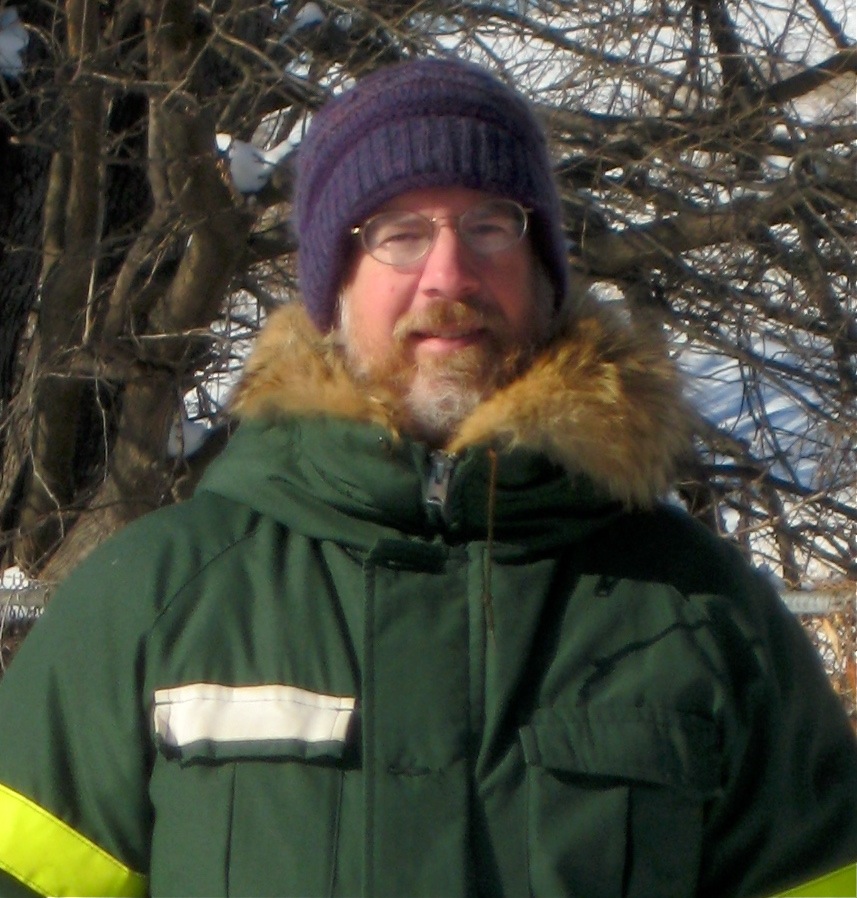
Only then did it occur to me what I looked like. It was a really cold day, so I was wearing my warmest coat:
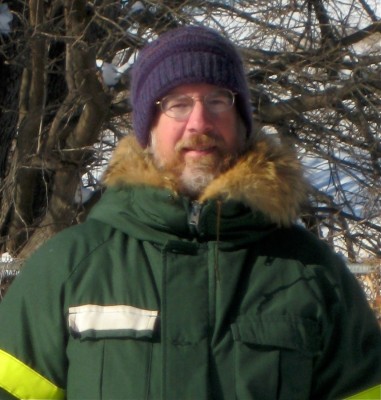
pb-parka

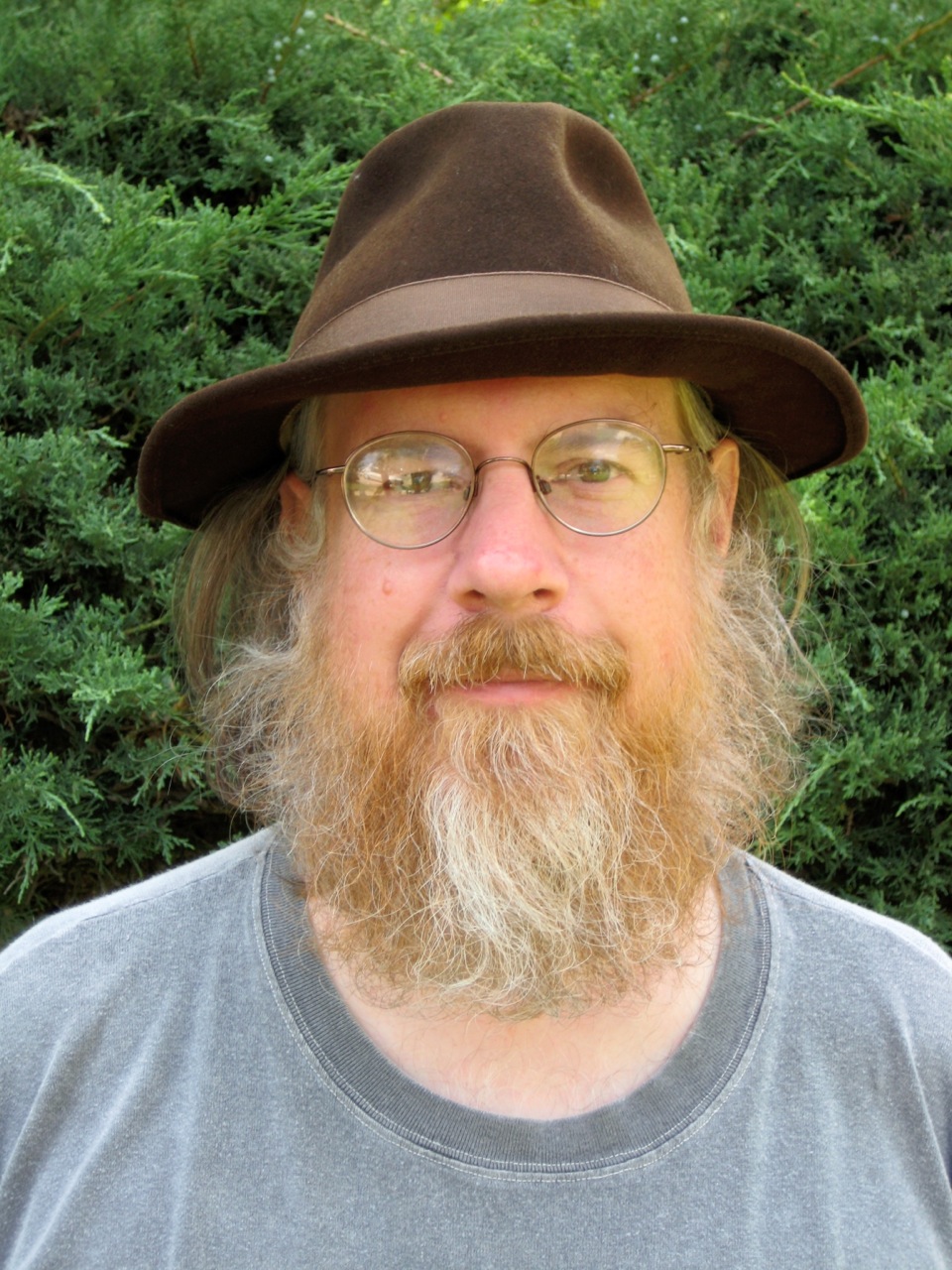
More to the point, it was winter and I’d grown out my beard. The picture above shows me with my neatly trimmed spring beard. At the time of the incident I had grown my beard out to its full winter length, so it probably looked more like this:
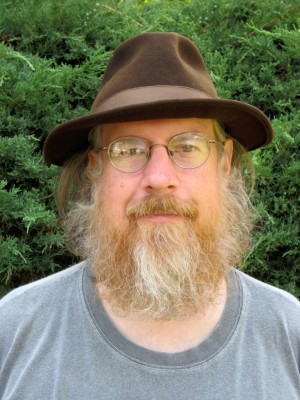
pb-full-beard

So, you know, I can accept being mistaken for a homeless person.

Issue of privilege

In my case, neither of the incidents did me any harm, but either one could have. In the bicycle incident, if circumstances had been only a bit different, the police might have gotten involved. Probably not a problem for me—even dressed down, I’m a middle-aged white guy with an education and some capital—but any interaction with the police has the potential to go badly wrong.

The other incident could have been even more problematic. What if I’d missed the last bus, and decided that rather than call for help or take a taxi, I’d just walk home? That’s something I really might do, even at night, even in the cold. But a scruffy-looking guy out on foot in the bitter cold might well draw more insistent offers of help than those that had rendered me speechless. Maybe a ride to a homeless shelter. Or a psych ward.

By the way, another bit of the internal conflict that kept me from articulately assuring the social worker that I was fine and that she should go look for people who actually needed help was that I was wearing what is probably the warmest coat in the world. My heavy winter parka was designed for workers on the Alaska Pipeline. Purchased cheap when work on the pipeline wound down, it has lasted more than 30 years already, and I expect it will last the rest of my life. I was trying to come up with a polite way to say that what they had in the way of cold weather gear couldn’t possibly measure up to what I already had.

Scaliz’s post was a response to The Logic of Stupid Poor People, an excellent essay on just how subtle the trade-offs are for a poor person deciding what it’s worth spending money on. Having a keen eye for when the right status symbol will open a door that would otherwise be shut (or ensure that an interaction with the police is courteous rather than confrontational) is a third option that I failed to consider when I wrote Not Stupid—Hopeless.

By the way, I used to wear polo shirts a lot, for just the reasons that Scalzi mentions: The collar makes the shirt just dressy enough to raise you above the t-shirt wearing classes, without making it look like you’re trying too hard. At some point, I found that middle-ground was no longer working for me. If circumstances call for something nicer than a t-shirt, I’m more comfortable in a shirt that buttons all the way down the front. My 30-something self would have found that weird. Why, the past few years, I’ve even been known to wear a tie voluntarily! (For a lot of reasons, some very much related to these issues—to manipulate what people think of me when they see how I’m dressed, and to mock the fact that people think that way.)

Red bridge in a Japanese Garden

Jackie and I did another of our very long walks yesterday, going 18.25 miles. We hope to go even farther in a walk in a couple of weeks (we’re tentatively thinking 20 miles), but that will probably be the last time this year that we do a new longest walk ever, simply due to limited daylight as the year winds down.

Like the last couple of very long walks, we stuck with Milo’s as our lunch destination. If you go the shortest way possible, it’s about 14 miles there and back. We were aiming for a bit over 17, so we had to add some short side trips to get the length up. We went by way of the research park and had coffee at the iHotel, went through Meadowbrook Park, and then after lunch briefly visited Crystal Lake Park as well.

I’ve brought my camera on almost all of these walks, but have hardly taken any pictures. This time, I took some pictures.

We’d walked through Meadowbrook Park on a couple of our previous walks, but usually after lunch. This time we did Meadowbrook Park before lunch—and we walked the prairie path, rather than taking the paved paths through the sculpture garden.

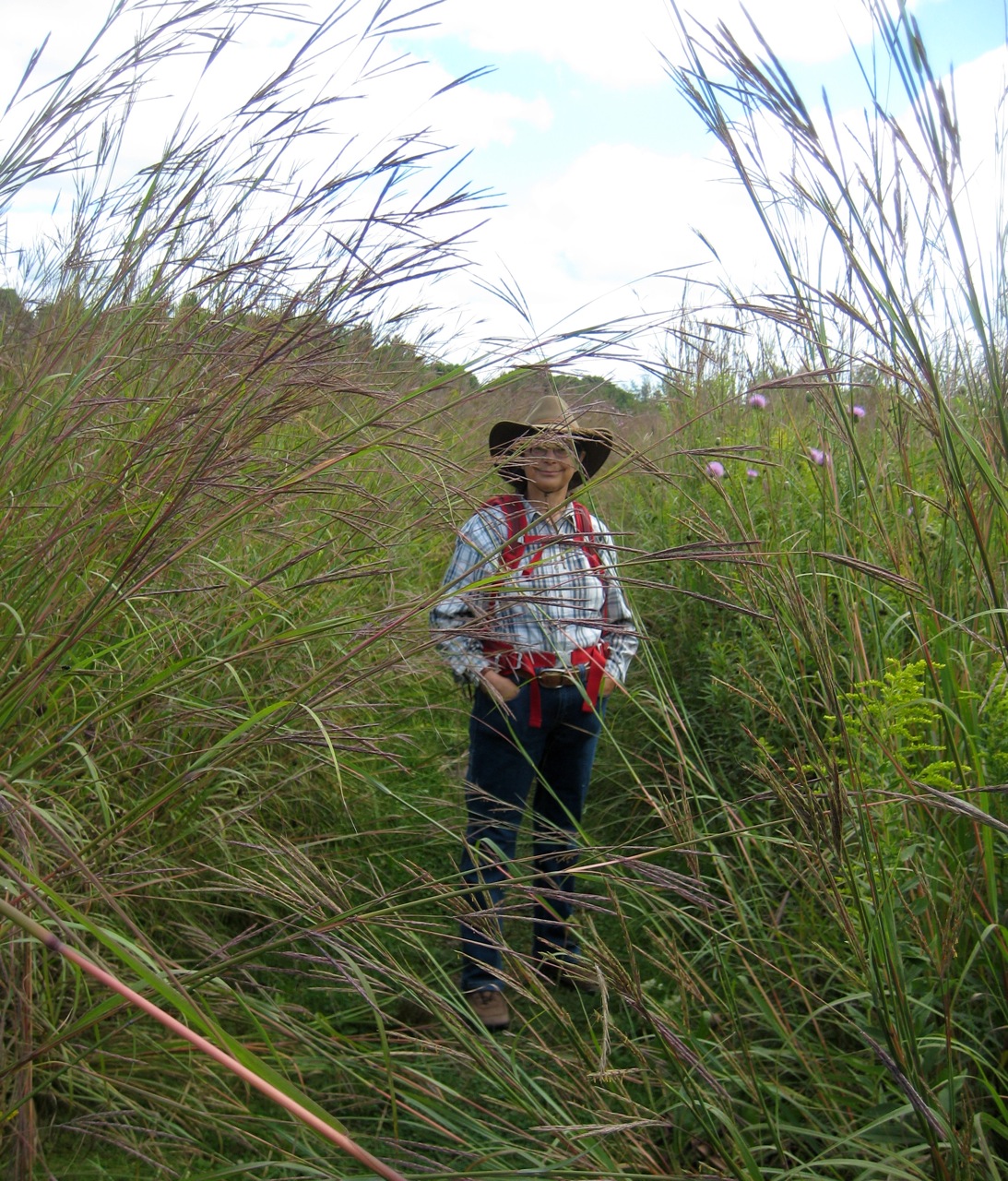
It was fun to see Jackie through the big bluestem.

Jackie standing amidst big bluestem
Jackie in the prairie at Meadowbrook Park

I was also pretty pleased with this picture of a thistle flower, taken just a few yards further down the path.

Thistle Flower
Thistle flower in the prairie at Meadowbrook Park

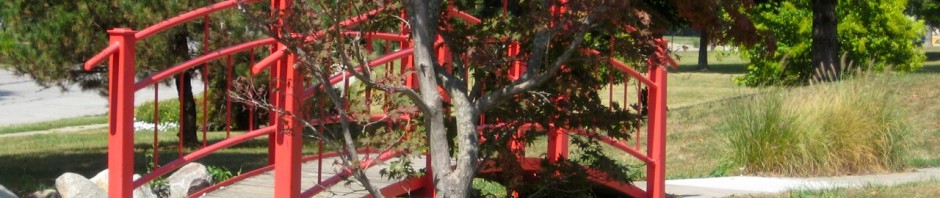
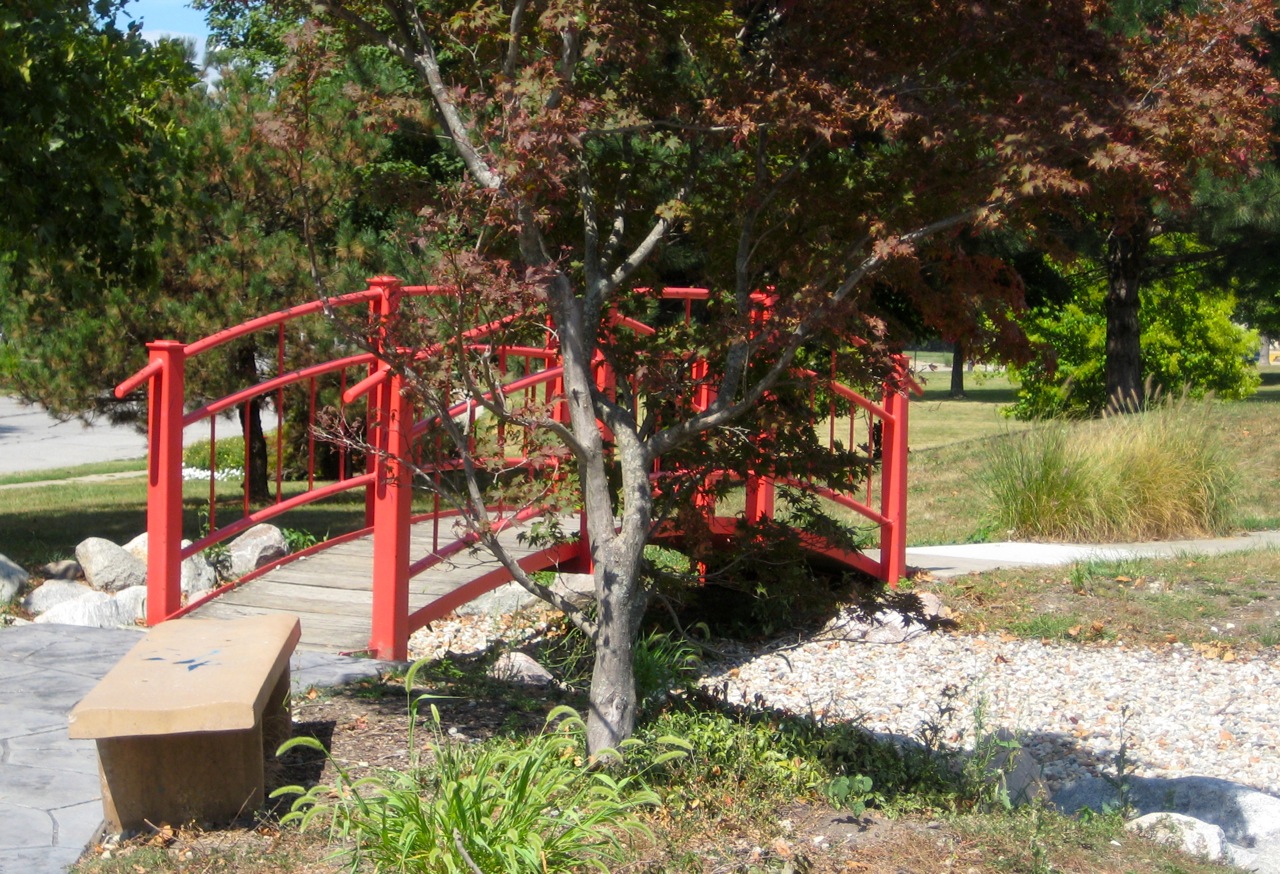
After lunch we proceeded toward Urbana, passing through the neighborhood where Jackie used to live before we started dating. One feature of that neighborhood is a little Japanese Garden. Jackie and I used to visit it pretty often. Eventually the last couple of reasons to visit that neighborhood vanished, and we quit going. I was pleased to get there again, although a little sad to see that they’d given up on the water features, and instead filled the pools with gravel. It’s not the same.

Red bridge in a Japanese Garden
The red bridge at the Japanese Garden near Sunnycrest

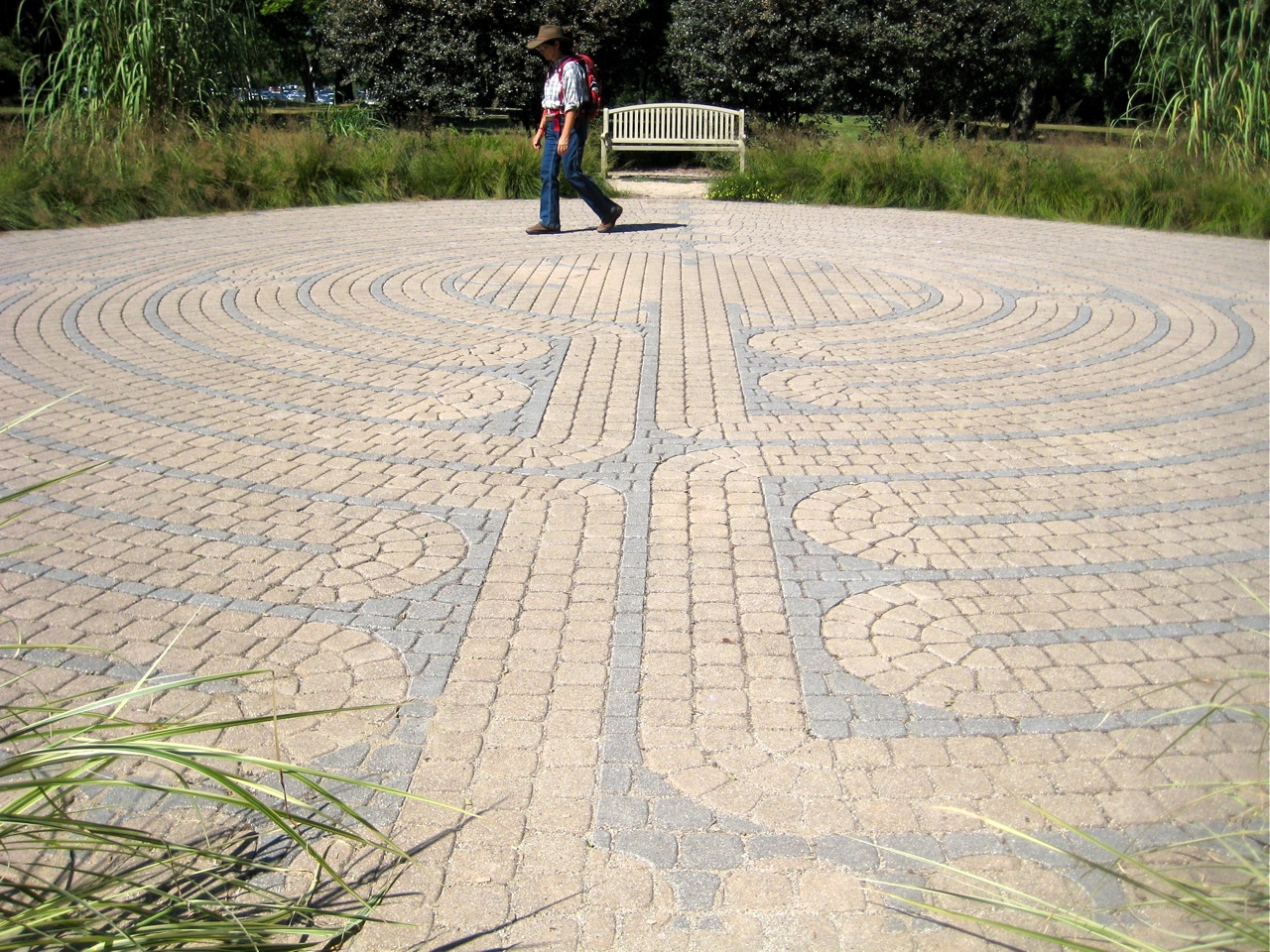
We also did a preposterous thing. In the midst of our very long walk, we paused to walk the labyrinth in Crystal Lake Park. (Endomondo did not seem to give us credit for this extra walking. I suppose at the level of precision possible with GPS, someone walking a labyrinth looks an awful lot like someone sitting at a bench.)

Jackie walking the labyrinth at Crystal Lake Park

For those who are interested in such things, here’s the data on our walk, via Endomondo:

It was a good walk.

jackie-looking-back
Jackie looking back along the trail.

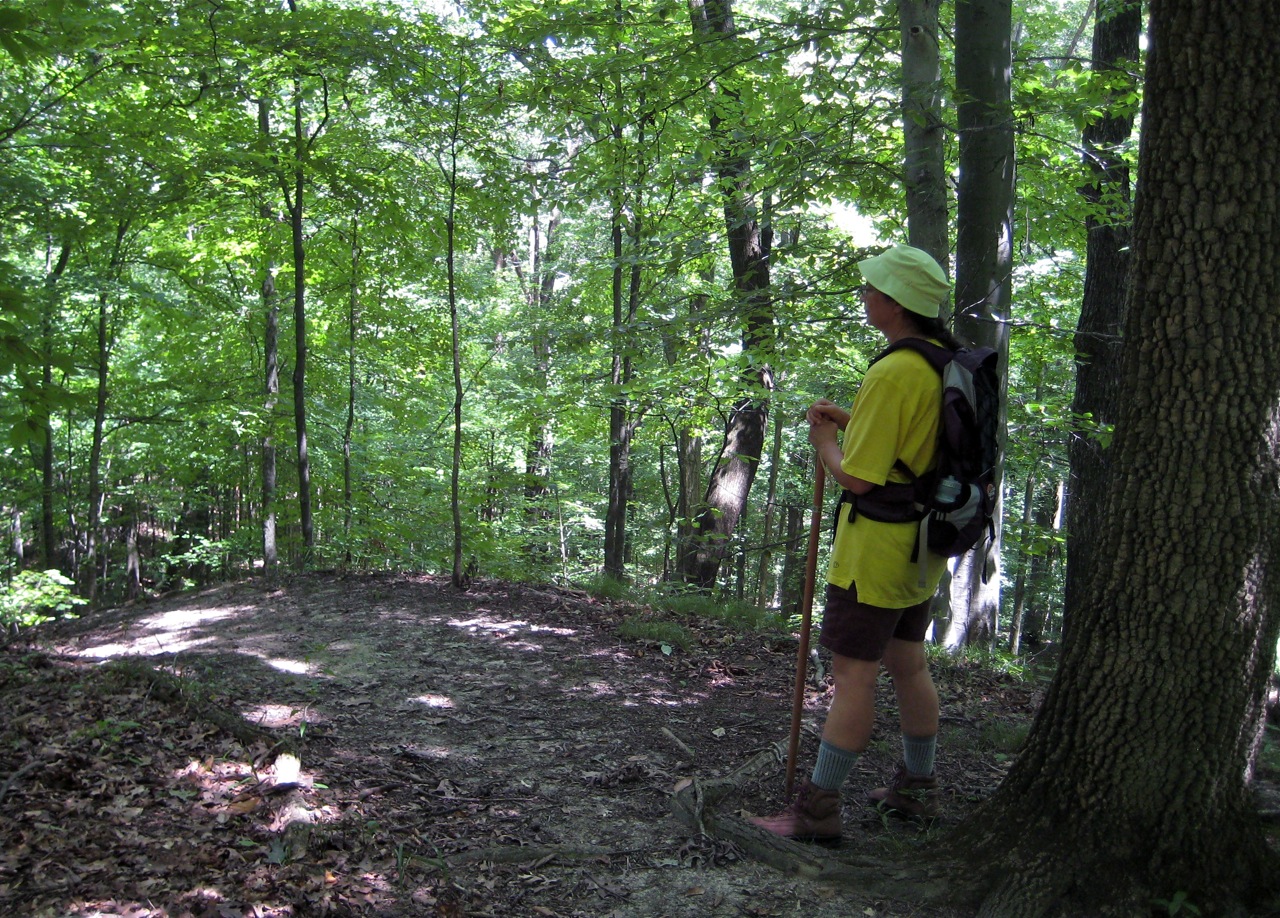
Jackie and I went for a hike at Forest Glen today.

There was a Spinners and Weavers Guild event there, and our plan was to go early, go for a hike that would take 4 or maybe 5 hours, and then get back in time for a late lunch and a couple hours at the event.

Turns out, our timetable was a bit optimistic.

For one thing, having failed to get all packed up the night before, we left an hour later than we’d intended. Plus, getting to the venue took a bit longer than we’d planned. So, instead of starting our hike around 8:00 AM, we didn’t hit the trail until about 9:15. On top of that, our hike ended up taking a full 6 hours, instead of the 4–5 we’d planned.

Our socializing after ended up being with just the last 6 or so die-hard spinners.

jackie-hiking-up
Jackie climbing a ridge.

Still, it was a great hike. Unlike our urban walks, Forest Glen is non-flat.

It’s kind of hard to see in that picture (click through for a larger version), but Jackie is there right in the middle, hiking up the side of the ridge.

There’s not a huge amount of elevation change, but the trail makes good use of what there is. According to Endomondo, we stayed between 407 and 644 feet above sea level, and yet we managed a total ascent of 1330 feet and a total descent of 1287 feet.

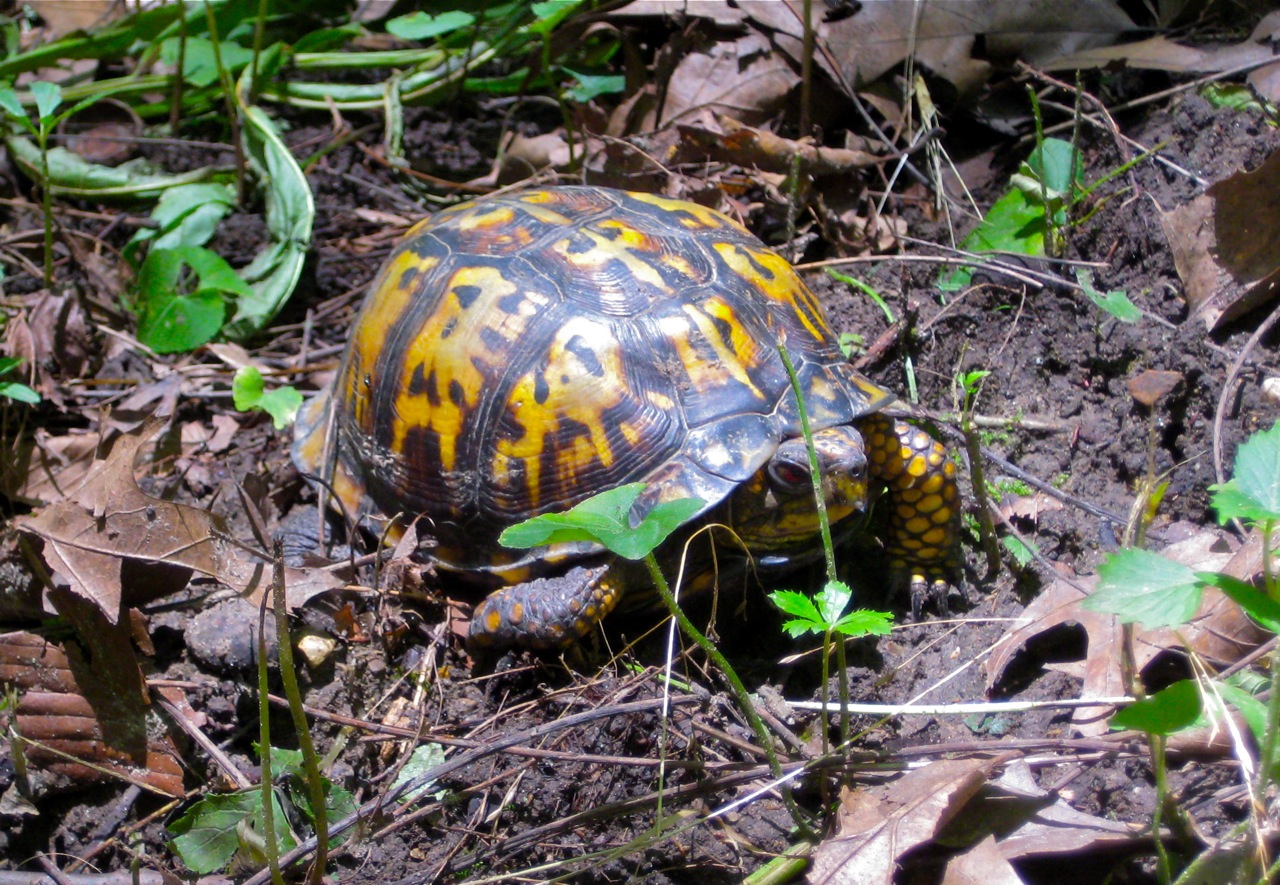
There’s quite a bit of wildlife in and around Forest Glen. In trips past we’ve seen owls, several kinds of woodpeckers, turkeys, vultures, pheasants, and deer. We saw several of those this trip as well, but we also saw something that was common when I was a boy, but has been quite rare in my experience for more than twenty years: a box turtle.

box-turtle-in-forest-glen
Box turtle just off the path at Forest Glen.

Apparently the Forest Glen box turtle population has been at some risk—a few years ago, tens of box turtles were found dead, all in the same area. They’ve done quite a bit of research on what happened without a definitive result, but the best guess is that some infectious disease took them, possibly passed to many individuals when a large number of turtles were caught and then held together for a local charity event that included a turtle race.

Apparently the local organizers have agreed to drop the turtle race, as a way to protect the turtles. (The race had been held for 49 years without incident, but so many dead turtles all at once was a strong sign that there was a problem.)

A great hike, albeit a bit tiring, and some very pleasant (albeit a bit brief) socializing after. Here’s the details on Endomondo:

If you’re familiar with Forest Glen, it might look as though we hiked the backpacking trail, but we didn’t—because that would have been against the rules, which require that you register a week in advance and pay a fee. Instead, what we did is scout several segments (well, all the segments) of the backpacking trail in advance of some future hike. Before trying this trail with a backpack full of camping gear, we thought it would best to know just how rugged it was and how hard it was to follow the markings. (And it’s good that we did. Our urban walking has not quite conditioned us adequately to manage this trail safely with camping gear. We’d have almost certainly made it, but several spots would have been tough—maybe even dangerous—if we’d been carrying heavy packs. Also, we did miss one turn. By the time we’d backtracked and gotten back on the trail, we’d added a good half a mile to our total distance.)

My sore calf never hurt throughout the hike, although I could just perceive the injured spot as slightly tight, slightly tender on some of the more aggressive downhill bits of the hike.

Tomorrow will be a rest day. If today’s activities don’t produce any soreness, maybe I’ll try a short run on Monday.

I recently came upon an old livejournal post about my struggles to get enough exercise.

It had been written in April 2008, some seven or eight months after I’d quit working a regular job, and was about how I’d always blamed the job for keeping me from getting enough exercise, and how I was unhappy that I hadn’t seized the opportunity that came from my new regular-job-free lifestyle to get into better shape. Here’s an excerpt:

The big advantage of not working a regular job ought to be that I can exercise anytime I want.  In the spring, I can run in the afternoon when it’s warm.  In the summer I can run in the morning when it’s cool.  I can pick the nicest day of the week for my long ride (minimize the chance of being caught miles from home in a thunderstorm) and then organize the rest of the week’s workouts around that.

I say “ought to,” because I haven’t taken full advantage so far.  Last summer I was still working until the end of August, and then I was trying to focus on my novel while still cranking out four or five Wise Bread posts a week.  I tried to get the running habit set up in the fall so that I could continue it through the winter, but didn’t really manage it.

Now, though, it’s spring, and I’ve decided to make exercise–that is, fitness–my number 1 priority.

Reading that post, I realized that I have, finally, succeeded. I now get enough exercise.

Brief aside: Except, of course, that I’ve scarcely run in a month, because of my injured calf.

I’ve tried three times to go out for a short run, and each time the result has been re-injury. After the third time, I realized that I was doing more harm than good, trying to get back to running as quickly as possible. I decided to wait until the symptoms were completely gone, and then give it at least a full week for further rest and recovery, before trying to run again. On that schedule, my first run would be roughly Saturday. In fact, it’ll be delayed at least two days further, because Saturday Jackie and I will go to Forest Glen and squeeze in a long hike in the morning, ahead of a spinning and weaving event there. (And not taking a day to recover from a long hike before a short run is how I hurt my calf in the first place.)

Basically, though, my calf is fine. It doesn’t limit either my walking (we walked 10 miles yesterday) or my taiji (I’ve taught my class on schedule every day). It has been completely pain-free, except when I re-injure it—then it hurts for a couple of days.

I wrote two years ago about my winter fitness regimen. (Three times a week I lift weights and then do an hour of taiji; the other four days I try to walk for an hour.) It proves to be satisfactory to maintain my weight and maintain a base level of fitness.

In the summers, I’ve been doing more. I preserve the lifting and the taiji (and much of the walking, which is mostly incidental to getting other things done) and augment it with running—before my injury, I had been running 7–9 miles most weeks—and have also added a weekly very long walk.

That livejournal post has a chart with the amount of time I had been devoting to exercise the last time I’d been in really good shape. Here’s a similar chart for what I’d been doing until a few weeks ago when I had to quit running:

Activity Minutes per workout Workouts per week Minutes per week
Lifting 30 3 90
Taiji 60 3 180
Short walks 60 4 240
Long walks 240 1 240
Short runs 22 2 44
Long runs 60 1 60
Total 854

The first thing that strikes me is just how similar this is to what I was doing in the past when I’ve been fit. I’ve replaced the bike rides with walking a very similar number of minutes per week. I’ve added the taiji, which adds 3 hours a week, and I’ve reduced the number and length of my short runs, to gain back maybe 50 minutes of that time. But the bottom line is that I’m now spending about 120 minutes a day on fitness-related activities.

Now, that’s great. Certainly it feels great—I feel great when I’m getting this much exercise. And having gotten here, I believe I’m prepared to declare victory, and say that getting and staying in shape is a solved problem.

But how could anyone with a regular job manage such a thing? And yet, much less exercise than this would not build and maintain the capabilities I want. If I want to be able to run for an hour, I need to run for an hour pretty regularly. If I want to be able to walk for four or six hours, then every week or two I need to walk for four or six hours.

I don’t really have an answer here for people who find that making a living limits their ability to be fit. I managed it temporarily a couple of times, but only by letting things slide temporarily—things that I couldn’t let slide permanently.

Still, just at the moment, I’m feeling pretty good. Thanks to the taiji, I move with more ease and control than I’ve ever had before. Thanks to the lifting and the endurance exercise, I have more power and stamina than ever before. I’m looking forward to Saturday’s long hike. And I’m looking forward (after a day or two to recover from that) to trying to run again. (Because, as Steven says, “Running is great exercise between injuries.”)

Last week I was perhaps a mile into a short run when I felt a sudden, sharp pain in my right calf. It hurt quite a bit, and hurt more on each of the two steps it took me to come to a stop without falling down.

My brother likes to say, “Running is great exercise between injuries.”

I’ve had pretty good luck with injuries. I did get hurt the first time I took up running, back in 1992. When I pushed my long run up to 6 miles, so I could run in the Allerton Park Trail Run, I upped the distance too quickly, irritating my Achilles tendon. It took over a year to heal completely, and by then I was no longer a runner.

I’ve taken up running several times since then, without injuring myself. When I gave up running those times it was simply because winter came and I couldn’t make myself spend enough time on the treadmill to stay in shape. Spring would come and I was no longer a runner. Some years I managed to get back into running shape. Other years I didn’t.

After I hobbled back home, I did a good bit of internet reading about strained calf muscles. The injury is most often caused by sudden changes in direction, such as in racket sports. My scenario is the second most common: even a very easy run, when the muscle is tired—I had walked 16 miles the day before.

I rested and iced the calf, and it got a lot better right away. By the second day after the injury it didn’t hurt to walk, I was able to lift weights (skipping calf raises), and I was able to teach my tai chi class without pain. After another couple of days, I was able to walk five miles without discomfort. Once the initial pain and swelling had passed, I’d been doing some massage of the injured spot, trying to minimize the adhesions that seem to be a problem for some runners with recurring calf injuries, and that had reached the point of being pain-free as well.

That all misled me into thinking it was more healed than it turned out to be.

On the fifth day after the injury I tried to go for a very short run, just to see if it was going to be okay. And it was. I ran a few blocks—maybe a quarter of a mile—and then back again, all without pain. Then, when I tried to turn onto my street: ouch.

That reinjury seems to be even more minor. A day of rest and icing and I think I’m back to normal as far a non-running activity goes.

Today I’ll try a mediumish walk, going 2 or 3 miles to lunch, with the option to switch to the bus if my calf hurts along the way. If it’s not sore at all after lunch, maybe I’ll walk home as well.

One of the web pages I read about calf muscle injuries said that after 10 days, scar tissue is as strong as muscle tissue. I’ll hold off on more attempts at running until 10 days after the original injury, and I’ll make sure there’s a day of rest after any other strenuous activity before my next run.

Then we’ll see.

Continuing our series of long walks to prepare for a possible through hike of the Kal-Haven trail, Jackie and I walked 16.72 miles today.

We walked to the University of Illinois’s arboretum, and then on through south Urbana to Milo’s where we had lunch. Then we walked to Meadowbrook Park and along the trail that goes along the south and west edges of the park, then through married student housing to the old Motorola building (where OLLI is now) to refill our water bottles, and then on home.

Jackie has asked that I specifically mention that we got a very close look at three juvenile Stufflesbeam (the plural of Stufflebeam, which is what we call ground hogs), just on the west side of the railroad embankment where Stadium Drive crosses Neil. One in particular stood just a few feet away, eating grass with great enthusiasm, close enough to give us a great view of his little nose.

Here’s what my tablet captured via Endomondo:

Jackie and I took a couple of pictures of one another with one of our favorite sculptures. We like this sculpture for various reasons, but one is that the very first time we came upon it, suddenly and unexpectedly as we took a turn in the path, we both had the same thought—and we both knew that the other was having that thought: “Anya wouldn’t like that!”

The picture Jackie took of me is pretty good—that’s what I look like. It’s of some interest to me because we took pictures with this sculpture a few years ago, and I didn’t like the pictures of me because of my weight at the time, and there was no way to crop the picture to hide my stomach and yet keep the rabbit sculpture.

I like this one better.

phil-with-rabbit

And, although Jackie just got an ordinary good picture of me, I managed to get a great picture of Jackie.

jackie-with-rabbit

It’s a perfect picture of the Jackie I know—the Jackie I’ve been married to for 21 years.

Jackie wanted to walk to the Savoy Recreation Center where we take our taiji class, and it was about time for another long walk, so we did.

Our training plan for getting in shape to walk the Kal-Haven trail calls for, I think, a 5-hour walk this week. We didn’t walk quite that far, but if you count the hour we spent doing taiji as part of our workout (which I think is fair, since we’re on our feet for the hour), I think we just about hit the mark.

I was a bit peeved with Endomondo, which seemed to have crashed the Samsung tablet I use to gather the data on our workouts, but I quickly got over it, because it doesn’t seem to have lost the data on our workout. The walk to Savoy Rec and then to Bo Peep’s where we had lunch is shown here:

The tablet rebooted while I was getting it out of my pack at lunch, but once it was up and running again I restarted endomondo and then started a fresh workout to track the walk home. That workout is here:

I paused the app during taiji, and then it turned itself off during the lunch break, so you’d have to add about two hours to the total time of 4:17 (2:40 plus 1:37) to get a comparable time to previous workouts (where I just left the ap running the whole time).

We left home around 7:10 AM just slightly later than planned, and walked the first leg quite briskly, covering each of the 5+ miles to Savoy Rec in under 20 minutes (and the first mile in just 18:04). After lunch we went a little slower, but still kept to a roughly 20-minute pace.

I think we remain nicely on-track for being in shape to hike the Kal-Haven trail sometime in July.

By merest happenstance, Jackie and I both had the same distance as the furthest we’d ever walked: 14 miles. She’d hiked hers at Yosemite. I’d hiked mine in the Uinta Mountains in Utah. On today’s hike, we topped that.

It’s not such a great accomplishment. Jackie had done her previous 14 mile hike carrying a full pack. My previous long effort was made with just a day pack, but was at least done in the mountains. Today’s walk was done on sidewalks, with almost no gear at all—water, sunblock, and my tablet for its GPS tracking. On the other hand, the distance this time (14.12 miles) is a lot more reliable than the distance of my previous long hike, which was probably eyeballed off a trail map—no GPS that time.

Speaking of GPS, here’s the info on today’s effort:

We walked to campus, then through the neighborhoods of southern Urbana to Meadowbrook Park, after which we headed north along Race Street and then back west along Florida. We stopped for lunch at the Yellowfin Restaurant, walked briefly through Hessel Park, along the short linear Harris Park, and then home.

It took almost exactly the same time as our last week’s shorter (12.1 mile) walk, most of the speedup due to not taking coffee breaks, but also walking a bit more briskly.

I’m feeling pretty good. After last week’s hike, my Achilles tendons felt (for a couple of hours) like I might have really injured them. This evening, although I’m pretty tired, I feel fine.

It happened this way: I suggested to Jackie that we might hike the full length of the Kal-Haven trail. She’s a long-distance walker from way back, so she said yes.

The Kal-Haven Trail is a rail trail. It runs from Kalamazoo to South Haven. It’s been around for a while. Steven and I bicycled it back when he was a grad student.

The trail has since been expanded into downtown Kalamazoo, but the part I’m thinking of has its eastern terminus just west of US 131 and runs 33.5 miles west to South Haven.

I thought about taking two days to hike the full length of the trail, but that seemed inconvenient. We do a mile in about 20 minutes, so the full length ought to a bit over 11 hours of walking (plus a couple of hours for lunch and breaks). We could probably find a bed and breakfast somewhere around the midpoint, but then what? Hike 6 hours the first day, check into the B&B, and then hang out for the rest of the day? Even if we had a very restful evening, we’d still be a bit tired and sore the next day, when we’d have to hike another 6 hours. Much better to just hike through in one go.

With that thought in mind, we’ve been doing some long walks to get into shape.

We do walks of 3, 4, 5 miles pretty routinely, so I came up with a plan that leaves those ordinary walks alone, but now includes a long walk each week. We started with a 3 hour walk a couple of weeks ago. The plan calls for adding 30 minutes each week. Today’s hike was supposed to be 4 hours and cover around 12 miles.

I find it easier to motivate myself to go for a long hike if there’s a meal near the midpoint, so we came up with a route that gave us a bit more than 2 hours of walking and ended at a favorite restaurant located where we could walk home in a bit less than 2 hours. And our result matched our plan pretty well:

We walked to downtown Champaign and through West Side Park (and stopped for coffee at Pekara Bakery), then meandered through north Champaign to Douglass Park (and visited the Douglass branch of the Champaign Library), then we made our way to Busey Woods and hiked a bit of the trail there (and paused in the Anita Purves Nature Center), after which we turned south and hiked to Crane Alley where we stopped for lunch and beer. From there we pretty much headed straight home, although we did visit Art Mart in Lincoln Square and pause at the Champaign branch of the Champaign library (where we got coffee again, this time at Latte Da) along the way. (Map and workout info from Endomondo. The datapoint with an altitude of 0 is a glitch of some sort from a point where we lost GPS coverage.)

The total distance was 12.1 miles, right on target. It took us just over 6 hours, including a leisurely lunch plus two coffee breaks, so total time walking was probably right about 4 hours, exactly as planned. Our first miles were done at just under a 20-minute pace while our last miles were done at just over a 20-minute pace, so I figure I’ve got the timing about right.

My plan has us adding 30 minutes to our long walk each week for another 8 weeks, after which our long walk will be 8 hours (and cover about 24 miles). I figure once we do that with some degree of ease, we’ll be in adequate shape to push on and cover the whole 33.5 miles. It’s a low-key sort of plan, though. I only want to hike the trail if it’s going to be fun. If the 6 or 7 hour walks start seeming burdensome rather than fun, or if one of us gets injured, we’ll abandon the plan.

This hike, though, was great fun. A companionable way to spend the day with my wife. And it’s good to know that we’re up for walking over 12 miles if we need to (or even if we just want to).

I’ve lost a good bit of weight over the past 18 months. I haven’t talked about it much here. It’s bad enough when this starts seeming like an exercise blog; it will not become a weight-loss blog.

That’s partly because the topic is so loaded with cultural baggage. I think there’s pretty good evidence that eating a healthy diet and getting plenty of exercise are both associated with better health. There’s a lot less evidence that being thin is associated with better health—and none at all, as far as I’m aware, that trying to lose weight improves your health, or that exhorting someone else to lose weight improves their health.

Having said all that, my weight is something I’ve been paying attention to, so it seems like something I should talk about here.

What prompts this post at this time is that I’ve reached my lowest adult weight. That is, at 179 pounds this morning, I’ve matched the lowest weight for which I have any record.

I have pretty good data on my weight since 1999. For Christmas that year my brother gave me a Palm III and I installed a weight-tracking app called Eat Watch, which I used fairly regularly from early 2000 until mid 2007. At that point there’s a break in the data, because I lost access to the good doctor’s scale at the Motorola office when the site closed. My bathroom scale wasn’t up to the task. In May of last year I finally bought a good digital scale, and since then I have almost daily data.

Although I’ve been heavier than I’d like pretty much my whole adult life, and have often paid attention to my weight, I’ve largely avoided the curse of yo-yo dieting. Really, there are only two other periods when I’ve lost weight.

The previous one began in 2003. Early that year blood work showed modestly elevated blood sugar levels. The idea that I might break my pancreas was upsetting enough that I took steps: I quit drinking soda and I started running again. From February 2003 through September 2004 I lost 40 pounds, getting my weight down to 188. I kept the weight off for a while; at the end of 2005 it was still around 195, but it was already inexorably rising. By the time the Motorola site closed, it was back up over 200 pounds.

I don’t have much data on my weight from before 2000, but the one exception includes the other period I was losing weight. Back in 1991 I started running, and my running log from that period tracked my weight. I don’t have a value for every week, but I weighed 201 in March that year, and got my weight down to 179 by the end of running season.

In my experience, losing weight is either easy, or else impossible. The easy times are generally summer, when I’m getting plenty of exercise. I’ve tended to blame difficulty in getting exercise for the fact that I gain weight in the winter, but I don’t really have data to show that. It could be other things. Maybe in the dark months I burn fewer calories on incidental movement, such as by fidgeting less. Maybe in the dark months I eat more.

It would only have to be slightly more. One thing the data does make clear is just how few calories it takes to make a large difference. Since May of last year I’ve lost 26 pounds. That corresponds to a daily deficit of just 134 calories. Any little thing—an extra soda, an extra cocktail, an extra beer, an extra snack, an extra serving—would have more than wiped out the deficit. An almost imperceptible change in my amount of fidgeting could easily add or subtract more than 134 calories per day.

It’s pretty much impossible to impose that difference by effort, which is, I think, why diets don’t work. There are extremely complex mechanisms in your body for controlling your weight, which bring to bear powerful forces like appetite and satiety. Making a point of eating less is no more likely to be successful than making a point of breathing less. Losing weight requires changing how you live.

Changes like eating a healthier diet and being less sedentary are likely to lead to weight loss. I used to despair of making such changes. Eating more healthily is tough because (unlike Jackie), I don’t really like vegetables. Being less sedentary was tough because so many hours per day had to be allocated to sedentary activities—sleeping and working.

I’ve improved my diet some. Over the past 20-some years I’ve steadily cut back on the amount of fat and sugar I eat. I’ve also learned to pay more attention to how much food I really want, which lets me get those complex mechanisms for controlling my weight working for me, rather than against me.

Not working at a regular job has helped with being less sedentary—more of my hours are my own. I’ve also made a bit of an attitude adjustment: Before I thought that an hour a day was probably more time than I could afford to devote to exercise; now I figure that 23 hours a day is too much time to spend being sedentary.

Last winter I described a fitness regimen that allowed me to maintain a stable weight. Briefly: Three times a week we lift weights and then do an hour of taiji; the other four days a week I try to walk for an hour. It worked. My weight was stable. (Specifically, from the beginning of September last year though the end of March this year I lost weight at the rate of 0.03 pounds a week, implying a calorie deficit of 17 calories a day. And that right there is a crystal-clear instance of those powerful mechanisms working. Imagine trying to match your calorie intake and activity level within 17 calories by counting calories. It’d be hopeless.)

Maintaining a stable weight over the winter was key. It was perfectly ordinary that I lost weight last summer and this summer. What was different was that I put two summers of weight loss back-to-back.

That’s pretty much the extent of my plan for the rest of this winter as well—a stable weight, so that I’ll be starting from here next summer.

I don’t have much data on which to base a longer-term plan. The National Institutes of Health suggest that the highest healthy weight for a person my height is 164 pounds. That seems like a good medium-term goal.

Looking slightly beyond that, I observe that Jackie is looking very trim these days. To match her body mass index my weight would want to be around 144-151.

That target is supported by my only reasonably specific recollection of my weight from longer ago: When I was a freshman in college, I got mononucleosis. The combination of nausea and a very sore throat resulted in eating a lot less for several weeks, producing considerable weight loss. I don’t have any records, but I’m pretty sure I remember my weight dropping under 150 (which is to say, probably down to 149¾). Despite having gotten there by being sick, I was by no means wasted away at that weight. In fact, I remember looking pretty good.

So, that’s my weight loss story. I don’t expect to talk about it much beyond this. “Let me tell you how I lost so much weight” is just not a useful or interesting story. I only mention it at all because I’ve been paying close attention to it. It would seem to make my own story incomplete to leave it out.