
When I was 2 years old, I was in the hospital twice with digestive issues, and came out with a diagnosis of celiac.
This was in the very early 1960s, when nobody knew diddly squat about celiac, and there were no gluten-free baked goods, and no indications on labels or menus that all kinds of ordinary things in restaurants and grocery stores had gluten in some form or another. My mom did the best she could to avoid giving me things with gluten in them, and taught me to explain to people who were trying to feed me that I couldn’t eat wheat, oats, rye, or barley.
I think nowadays people think that oats don’t have gluten, but we didn’t know that then, so we did our best to avoid all of them.
I ate this half-assed gluten-free diet until 1976, when went away for 6 weeks to a National Science Foundation summer program. I was living in a college dorm and eating in a college cafeteria, and found it too difficult to follow my diet. I found that my digestion was about the same as before, and just quit worrying about staying gluten-free. (Until I got married, and my wife thought that, if I had celiac, perhaps I should avoid gluten. And it was much easier in the 1990s to find gluten-free food.)
Fast-forward another decade or so. Blood tests for the antibodies to gluten became available. I got those tests done, and discovered that I’d never had celiac.
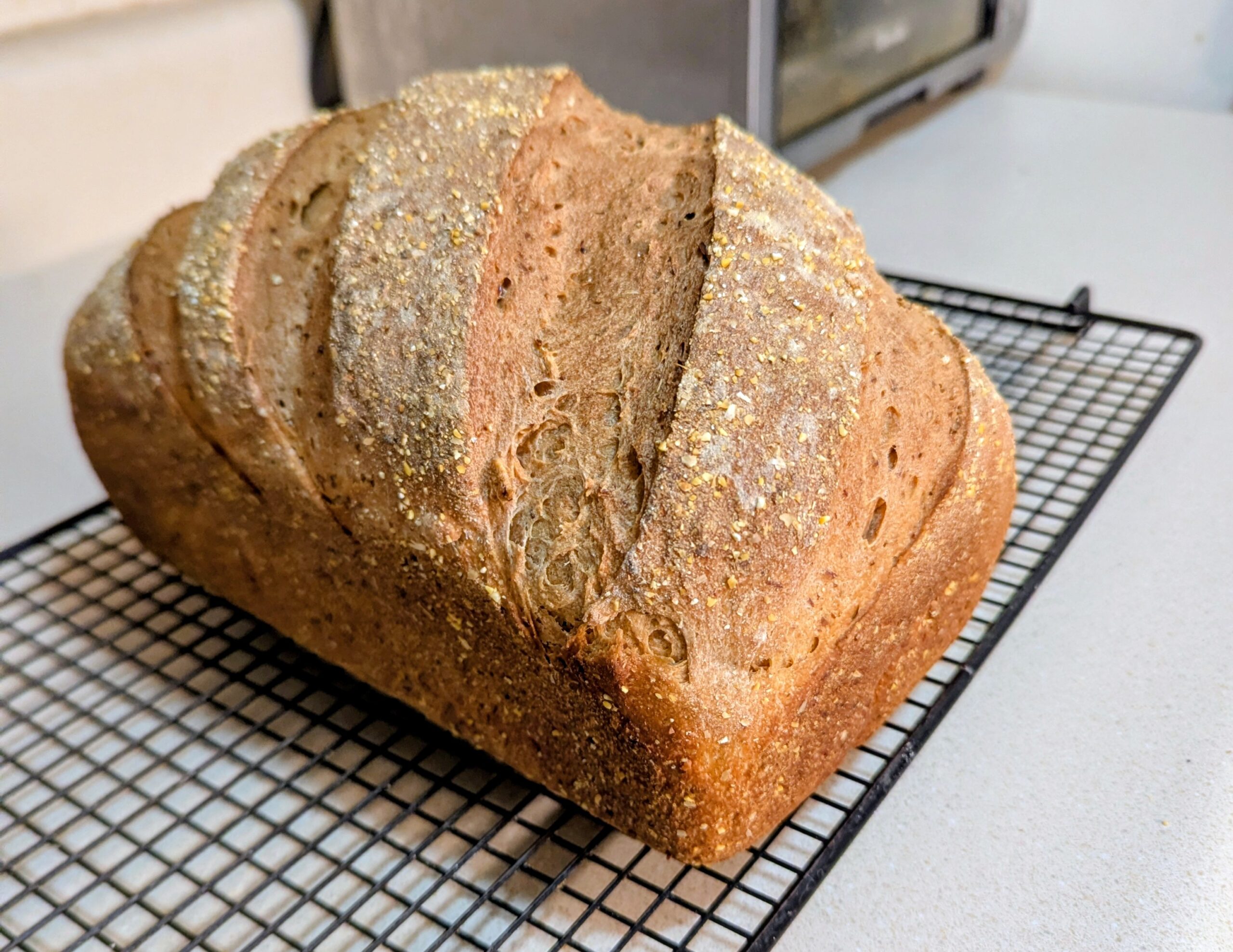
So, one thing I like to do these days is hark back to having to avoid “wheat, oats, rye, or barley,” and subvert it, by baking bread that contains wheat, oats, rye and barley.
Which I did today: