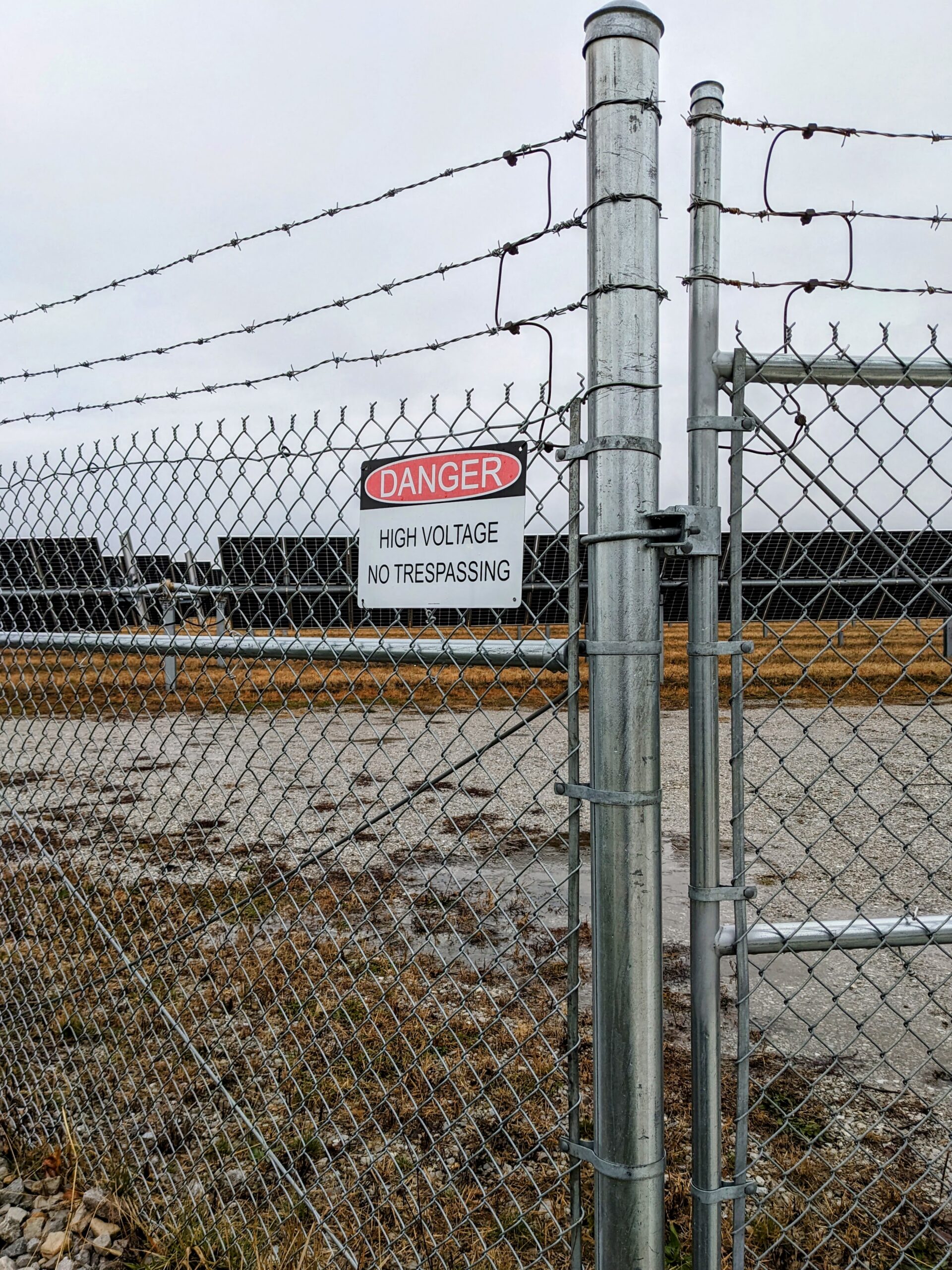
I worked in computer security for most of my career. I worked on Unix security, then phone operating system security, then Bluetooth security. It was largely thankless work.
The issue was that no one wanted to work on a secure computer. Every security feature was a small obstacle to the user getting work done. Security features tended to get turned off or worked around. Certainly nobody was willing to pay more to buy a more secure operating system.
The secure Unix system I worked on was pretty secure. It had great security features that made it easy for users to do their work with considerable confidence that neither outsiders nor other users on their computer could hack their way in.
The federal government required that all computers purchased by anyone for any government office be evaluated to the level of security that our system offered. Over a period of years, our system was the only evaluated system available.
Guess how many we sold?
Zero.
Every government office that was buying computers asked for and got an exception to the requirement that they buy a system like ours.
That’s how much people hate security features in their computers. They slow you down. They make it harder for you to get your work done. They make your system different from other systems, so you have to learn new stuff.
It is from that perspective that I’m dismissive of AI hacking tools. Yes, they can hack computer systems, but that’s because people have preferred computer systems that are hackable. It will take a bit of time to go back and redesign and rebuild those systems with security in mind, but not long. How to do computer security is a solved problem. The knowledge is broadly distributed. It’s just a willingness to put up some minor inconveniences that’s been the obstacle to having broadly unhackable computer systems. Maybe with AI hacking tools quickly hacking into every insecure system out there (which is virtually all of them), people will finally be willing to accept the cost and inconvenience of secure systems.
At any rate, it’s no reason to regulate AI. Just a reason to enforce our regular laws.
I am almost completely unconcerned about the “dangers” of AI that I’m hearing about.
In particular, I’m completely unconcerned about the danger that terrorists (or bored high school students) are going to use AI to make a bioweapon. I guess the concern is that AI will be able to try thousands of changes in the time a human could try three? That is different from what evolution has been doing for two billion years in no way whatsoever.
Similar only in that it is another AI danger that’s easily ameliorated, is AI-facilitated hacking, which the AI firms want us to come up with regulations for.
The fact is, we scarcely need any new regulations at all. Just an ordinary legal structure where, if someone using AI does something improper, the legal and criminal liability falls equally on the person prompting the AI and on the company that wrote the AI.
Of course, if the harm passes through someone else who’s supposed to be taking due care (such as your bank or broker) that person also has ordinary responsibility. (So if an AI helps someone steal your retirement account, the broker holding your retirement account has to make you whole, just as if they had handed your money over to someone who hadn’t used AI. About the only AI-related regulation needed is something making it clear that the broker can not only sue the criminal who stole it, but also the AI firm whose tool was used to effectuate the crime.)
My point is that all those supposed horrible dangers are perfectly ordinary, and there is no need to do anything special at all.
What’s really interesting is why are the AI firms and AI scientists trying to gin up all this worry? Could it be that they can see that without some buy-in from governments the companies are all going to collapse in short order?
Many Americans want fewer immigrants, primarily because they worry that immigrants are competing with native-born U.S. citizens for jobs. There are of course other reasons. Some people are racists. Some people imagine that immigrant populations will include radicals or terrorists. But I think the jobs one is the big one.
I think I see a good way to fix this particular problem. A good enough way that we probably don’t even need to have visas, or immigration checks at the borders. Most important, we wouldn’t need to have a police state with ICE agents sweeping up brown people and demanding to see their papers.
My idea is simple: add a tax surcharge—perhaps 15%—on companies, on the payrolls of immigrants, legal or not. (Plus a twist I’ll mention in a minute.)
This fixes several problems at once.
First, it means people can quit arguing about whether companies are hiring immigrants because of their skills, or just because they’re cheaper or more willing to work long hours, or whatever. If companies are willing to pay an extra 15%, they’re definitely in need of the skills. (Maybe the ideal rate is 10% or 20%. It should specifically be enough that companies will hire native-born workers if they’re capable of doing the job, because they’re cheaper than foreign-born workers after taxes. A bit of experience will show us the ideal rate.)
Second, it’ll raise wages and salaries for Americans, because even a big raise would be cheaper than hiring an immigrant.
Third, it’ll greatly reduce the cost and trouble of the numerous visa programs. In fact, we can probably just get rid of visas. Anyone can come to the U.S. and work, as long as their employer pays the surcharge.
Of course this only works if employers actually pay the surcharge—and why would they do that, if they’ve been cheating on employing illegal immigrants all along?
Well, the twist I mentioned above is to solve that: Make the statute of limitations on this tax ridiculously long. Maybe 35 years. Add on some severe penalties for non-payment as well—double the original bill, plus interest and the ordinary penalties for unpaid taxes.
Oh, and spread the liability around. If the immigrant is technically employed by a contractor, but he or she works at your site, you’re also liable for the surcharge. (I don’t expect it would be possible, but I’d like to see the CEO be personally liable for the surcharge, in cases where the corporation went bankrupt somewhere along the line.)
With a policy like this in place, employers—instead of looking the other way when they suspect someone is an illegal immigrant—now really want to know. Because they either have to pay the surtax now, or else they’re on the hook for double that money for years into the future.
I’m thinking of 35 years, because it’s long enough that the immigrants might be reaching retirement age about then. If we throw in a little incentive—perhaps 10% of the tax collected—they might be willing to report all their former employers when they’re ready to retire. Remember: They don’t owe any extra tax—the liability is all on their employers. But they can collect that little 10% as a boost to their retirement by ratting out three decades of tax-cheating employers.
I think this solves everything.
Since everyone is legal, there’s no need to worry about whether someone is “documented” or not. No need to worry about visas. No need to check anyone’s papers.
Oh, there’ll still be a need for papers—employers will want to be sure a potential employee is a citizen—there’s just no need for the police to check them. And of course, some citizens might have trouble coming up with papers. But those problems are no worse than they are already, with the bonus that they can be sorted out at leisure in ordinary courts, rather than in special immigration courts with people in detention. Citizens can show they’re native born all sorts of ways, just like they do now if they need to get a passport, but don’t have a birth certificate. Naturalized citizens have naturalization papers, plus there are other records.
Companies can copy and maintain the documentation to show that their employees were citizens, or else pay the taxes.
Nobody is “illegal.” Anybody can call the police, get a drivers license, get car insurance, send their kids to public school, go to the doctor, all without any worry that they’ll be deported. (Of course, they might not stay long, if they don’t have skills that justify their employer paying an extra 15% tax to employ them, but that’s okay too.)
We can save a bunch of money on border security, because anybody can come into the country, as long as they’re willing to compete with the locals at a 15% disadvantage.
My main interest here is in getting rid of the need for police-state behaviors on the part of the government. If everybody is legal, there’s no need for them. My secondary interest is in living in a more diverse community. I like having foreigners around. I like living among a diverse ethnic population. I think it could be awesome.
As a bonus, those extra taxes will fund quite a bit of extra government spending. Maybe even makes some headway on the national debt.
If you have a podcast, no one can disable it. You can host it anywhere, and if your host makes you stop, you can just get another host and point your URL there. Anyone can listen to it. All they need is a podcast app. Or even just a web browser. No one can stop you from posting episodes, and no one can stop your listeners from listening to them.
But that’s only true if you have a podcast. If you have a YouTube channel instead…. Well, in that case, YouTube can stop you.
As someone who uses at least two wearables that gather all manner of biometric data about me, I have considerable concern about just how that data is used. I was pretty pleased with Oura’s old privacy policies; I’m not sure how much their most recent changes have compromised them. I’m not so sure about Google’s policies, but since Google knows everything else about me, I’m not inclined to worry a lot extra about the Fitbit data.
Anyway, this post by Bruce Schneier is interesting:
I have often said that surveillance tech is generally deployed first against people with diminished rights: children, prisoners, military personnel, the mentally impaired. This is another early use case with different dynamics. The surveilled are wealthy and powerful, and—in many cases—unionized.
Prompted by EFF, I sent the following message to my representative:
I strongly oppose government surveillance of U.S. citizens, so I’m asking you to please vote no on any bill that includes a clean reauthorization of Section 702. Real reform is possible and has more support than ever. Several bills would do much to rein in Section 702 surveillance and protect Americans’ privacy, and do so without hurting national security.
We live in a globalized society in which Americans are constantly communicating with people overseas. The Federal Bureau of Investigation (FBI) has proven many times over that they cannot be trusted with discretion to warrantlessly query communications collected under Section 702 of the Foreign Intelligence Surveillance Act. Americans should not lose their constitutional rights to private communications because of a mass surveillance authority that provides federal law enforcement with backdoor access to them.
Please, reform Section 702.
I urge you to urge your representative to work to reform section 702. Here’s a place to start:
A pretty good recent episode of Gil Duran’s Nerd Reich podcast had an odd hole in it.
In the one I’m talking about, the one with Quinn Slobodian, Quinn explains that there’s a reason the many efforts to create a seastead, charter city, network state, and such never go anywhere: They’re unnecessary.
[Y]ou don’t actually need to create a new polity to have your own sense of entitlement and privilege reinforced in every imaginable way, and to have your own economic comfort facilitated by the institutional arrangements of the state in almost every way. With some creative accounting and some use of offshore havens and trusts and so on, you can really game the whole thing very well already, right?
Having said that, they do talk a bit about why, given that there are already tools to protect your property and money (freeports, trust, special economic zones, and the like), anybody would work so hard and spend so much money to create an actual place that’s outside the control of any government. They don’t quite come around to answering that question, which I think is unfortunate, because I think they both know the answer.
The people pushing these efforts want serfs.
They don’t want workers who can join unions. They don’t want software engineers who hesitate to create autonomous munitions or tools for surveillance capitalism. They don’t want maids or pool boys who feel free to resist their advances.
They want the right to be mean to people, in a situation where the people have to just take it.
That’s what places like Próspera offer that you can’t get from a family company incorporated in a special economic zone.
Stephen Miller would have ICE agents (and the rest of us) believe that they have “immunity” to perform their “duties.”
This is, of course, false. Depriving any person (not just citizens) of their rights “under color of law” is its own crime. But it is in that light that we should view their position on face masks as admitting that they know they have it wrong:
The administration’s perceived need for face coverings evocative of Iranian secret police and Russian security agents helps us recognize that assertions of state supremacy and citizen insignificance are claptrap…
If they were immune, they’d not hesitate to show their faces. The fact that they feel the need to keep them hidden makes it very clear that they know they’re totally exposed in a legal sense.
Next weekend is going to be pretty cold in Minneapolis. Maybe cold enough to convince some ICE goons that they’d be better off on disability in Kentucky.
I mean, every ICE goon has probably slipped on the ice at least once. Probably every one of those falls could be turned into a disability claim.
I am (just barely) old enough to remember the Black Panthers in the 1960s, when a group of black people tried to carry legal firearms to protect themselves, before they were mostly murdered by the police, the FBI, and one another.
I also remember the 1980s, when the NRA was trying to convince all marginalized groups (blacks, women, lesbians, gays, socialists, etc.), that arming themselves was a great idea. The NRA was sincere, I think—they just wanted more people to have guns.
Most people, especially black people, were well aware of the fact that walking around armed would make it much more likely that they’d be killed by the police. (They remembered what happened to the Black Panthers, presumably better than I did.)
Over the last couple of years, and especially over the last few days, I think perspectives are changing. First, a lot of white people are walking around armed, and even killing people, with minimal consequences. Second, the increasingly fascist police have been killing unarmed people at increasing rates, and looking like they’ll not only get away with it, but looking like they’re glorying in it.