Tai Chi flyerI’m going to be teaching a Tai Chi class this summer for the Champaign Park District. Classes will be 8:30–9:30 AM Mondays, Wednesdays, and Fridays. There’ll be a first session running from June 3rd to July 26th and then a second session from August 5th through September 27th. (This update to my post of a week or two ago is because the Park District has produced some fliers with class info: Tai Chi fliers.)
We’ll learn some moving Qigong exercises, an 8-movement form, and provide an introduction to meditation.

The class is appropriate for beginners, although other students are also welcome.

Register at the park district website or at any park district office.

Update 3 June 2013: The class has started, but the Park District is keeping registration open for another week or two, hoping to pick up another student or two.

By merest happenstance, Jackie and I both had the same distance as the furthest we’d ever walked: 14 miles. She’d hiked hers at Yosemite. I’d hiked mine in the Uinta Mountains in Utah. On today’s hike, we topped that.

It’s not such a great accomplishment. Jackie had done her previous 14 mile hike carrying a full pack. My previous long effort was made with just a day pack, but was at least done in the mountains. Today’s walk was done on sidewalks, with almost no gear at all—water, sunblock, and my tablet for its GPS tracking. On the other hand, the distance this time (14.12 miles) is a lot more reliable than the distance of my previous long hike, which was probably eyeballed off a trail map—no GPS that time.

Speaking of GPS, here’s the info on today’s effort:

We walked to campus, then through the neighborhoods of southern Urbana to Meadowbrook Park, after which we headed north along Race Street and then back west along Florida. We stopped for lunch at the Yellowfin Restaurant, walked briefly through Hessel Park, along the short linear Harris Park, and then home.

It took almost exactly the same time as our last week’s shorter (12.1 mile) walk, most of the speedup due to not taking coffee breaks, but also walking a bit more briskly.

I’m feeling pretty good. After last week’s hike, my Achilles tendons felt (for a couple of hours) like I might have really injured them. This evening, although I’m pretty tired, I feel fine.

Every year I look forward to the point when I’m in good enough shape to go for open-ended runs—that is, the point when I can just run off in whatever direction I like, confident that intuition will let me know when I need to turn around, and confident that I’ll be able to run on back home after I do.

Just before I declare myself ready to take on open-ended runs, I like to do a more carefully planned long run that I think of as my “safety” long run, as a test that I’m really up for running the distance. I’ve got a route that I’ve used for this purpose before that goes out and back along McNalley’s Alley, then in a figure-eight around Centennial Park.

Despite covering a bit over 4 miles, this route never has me much more than a mile from home, so if it turns out I’ve misjudged some aspect of my fitness and have to bail on the long run before it’s over, it’s not a big deal to just walk home.

So I did my “safety” long run today, and hereby declare myself fit for open-ended runs. It’ll be nice to get out and run wherever my fancy takes me.

It happened this way: I suggested to Jackie that we might hike the full length of the Kal-Haven trail. She’s a long-distance walker from way back, so she said yes.

The Kal-Haven Trail is a rail trail. It runs from Kalamazoo to South Haven. It’s been around for a while. Steven and I bicycled it back when he was a grad student.

The trail has since been expanded into downtown Kalamazoo, but the part I’m thinking of has its eastern terminus just west of US 131 and runs 33.5 miles west to South Haven.

I thought about taking two days to hike the full length of the trail, but that seemed inconvenient. We do a mile in about 20 minutes, so the full length ought to a bit over 11 hours of walking (plus a couple of hours for lunch and breaks). We could probably find a bed and breakfast somewhere around the midpoint, but then what? Hike 6 hours the first day, check into the B&B, and then hang out for the rest of the day? Even if we had a very restful evening, we’d still be a bit tired and sore the next day, when we’d have to hike another 6 hours. Much better to just hike through in one go.

With that thought in mind, we’ve been doing some long walks to get into shape.

We do walks of 3, 4, 5 miles pretty routinely, so I came up with a plan that leaves those ordinary walks alone, but now includes a long walk each week. We started with a 3 hour walk a couple of weeks ago. The plan calls for adding 30 minutes each week. Today’s hike was supposed to be 4 hours and cover around 12 miles.

I find it easier to motivate myself to go for a long hike if there’s a meal near the midpoint, so we came up with a route that gave us a bit more than 2 hours of walking and ended at a favorite restaurant located where we could walk home in a bit less than 2 hours. And our result matched our plan pretty well:

We walked to downtown Champaign and through West Side Park (and stopped for coffee at Pekara Bakery), then meandered through north Champaign to Douglass Park (and visited the Douglass branch of the Champaign Library), then we made our way to Busey Woods and hiked a bit of the trail there (and paused in the Anita Purves Nature Center), after which we turned south and hiked to Crane Alley where we stopped for lunch and beer. From there we pretty much headed straight home, although we did visit Art Mart in Lincoln Square and pause at the Champaign branch of the Champaign library (where we got coffee again, this time at Latte Da) along the way. (Map and workout info from Endomondo. The datapoint with an altitude of 0 is a glitch of some sort from a point where we lost GPS coverage.)

The total distance was 12.1 miles, right on target. It took us just over 6 hours, including a leisurely lunch plus two coffee breaks, so total time walking was probably right about 4 hours, exactly as planned. Our first miles were done at just under a 20-minute pace while our last miles were done at just over a 20-minute pace, so I figure I’ve got the timing about right.

My plan has us adding 30 minutes to our long walk each week for another 8 weeks, after which our long walk will be 8 hours (and cover about 24 miles). I figure once we do that with some degree of ease, we’ll be in adequate shape to push on and cover the whole 33.5 miles. It’s a low-key sort of plan, though. I only want to hike the trail if it’s going to be fun. If the 6 or 7 hour walks start seeming burdensome rather than fun, or if one of us gets injured, we’ll abandon the plan.

This hike, though, was great fun. A companionable way to spend the day with my wife. And it’s good to know that we’re up for walking over 12 miles if we need to (or even if we just want to).

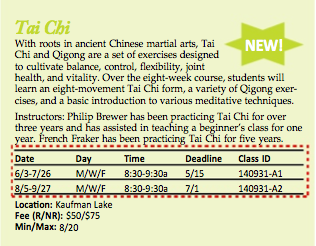
I’m going to teach a Tai Chi class for the Champaign Park District this summer.

Screen grab of the Tai Chi course description.

The park district doesn’t put their course descriptions on the web except in the form of the pdf file of the course catalog, which wouldn’t be so bad, except that they also don’t put the pdf file on their website, but instead offers it through Scribd—which makes it excruciatingly difficult to download the file. Otherwise, I’d go ahead and link to something. But, as I can’t find anything useful to link to, I’ll just paste in this screen grab from their on-line catalog.

I’d encourage any local folks who are interested in an introduction to Tai Chi to sign up. It costs $50 for park district residents and $75 for non-residents. The first session runs from June 3rd through September 26th. The second session runs from August 5th through September 27th.

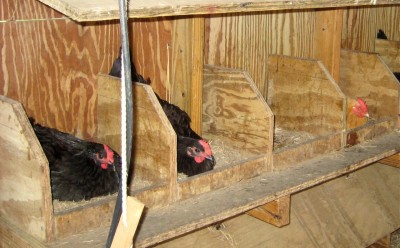
more-st-croix-chickensThe News Gazette had an article yesterday saying that the Champaign City Council has agreed to “schedule a study session” on the topic of legalizing backyard chickens.
Tom Bruno, who was the guy who offered me some encouragement when I inquired earlier seems ready to support the idea. Other members of the council sounded more ambivalent. The comments on the News Gazette article are decidedly mixed as well. (The people who object not because they think the chickens would actually cause any sort of problem, but because they’re afraid that it would make the area seem too “redneck” surprise me.)

So, it’s by no means a sure thing. Time to get organized.

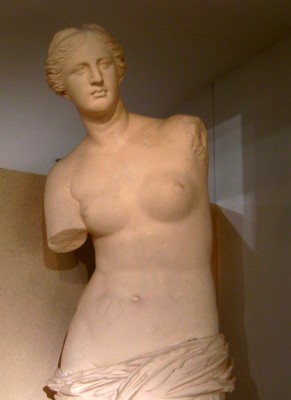
Plaster copy of Venus de Milo.

A hundred-odd years ago, a lot of towns and cities had their own museum. In those days, international travel was beyond the reach of ordinary people, and museums saw it as part of their mission to bring the great artistic and cultural works of the world to a place where ordinary people could see them. To support that, a whole industry existed making molds of the great works of European sculpture, and then casting plaster replicas of those works to be displayed in museums.

After all, the Venus de Milo can only be in one museum, but should only people who can get to the Louvre be able to see it?

A few decades later, fashions changed. Air travel and other changes made it possible for ordinary people to get to Europe after all, so they could see the great works of European art and culture. Rather suddenly, it no longer seemed like a great service to show people copies of the greatest works of art and culture.  Museums decided that they should show people originals—even if they could only afford 3rd rate originals.

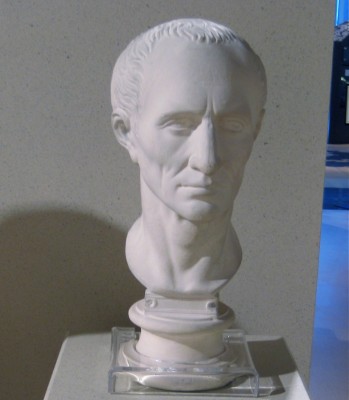
julius caeser
Plaster copy of bust of Julius Caeser

Thanks entirely to great good fortune, at the time that this shift was at its peak, a budget crunch at the University of Illinois had virtually shut down the museums that are now known as the Spurlock Museum. They had so little money, they were unable to hire a director, meaning that there was no one in authority to throw out the plaster copies of the great works and replace them with 3rd rate originals.

At museums all over the country, an incredible number of these excellent copies—quite literally museum quality—were simply thrown away. But not those belonging to the Spurlock Museum.

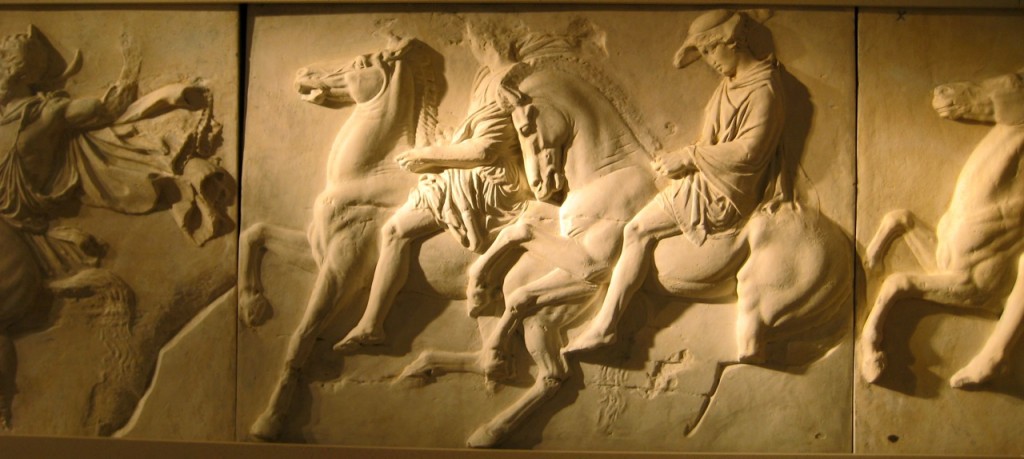
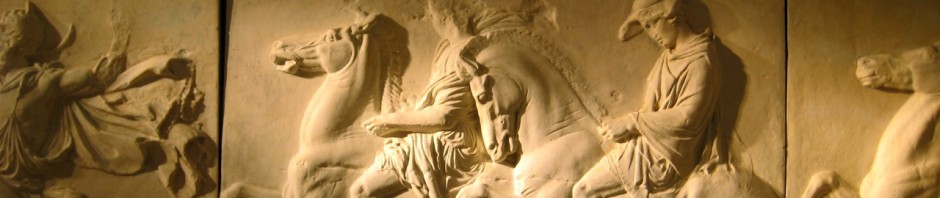
Among other things, we have a fairly complete set of replicas of the Elgin Marbles, made from molds taken before an ill-fated attempt at cleaning did serious damage to the originals. Scholars come from all over the world to study our copies.

elgin marbles
Plaster copy of frieze blocks from the Parthenon

I was going to the Spurlock Museum today, to attend a meditation class by Mary Wolters (an excellent workshop, by the way), and decided to catch an earlier bus so I’d have half an hour to look around the collection. I’d several times wished I had a picture of one or another items from their collection to use to illustrate a Wise Bread post, and I figured this would be a good chance to get a few photos.

Having taken a few, I thought I’d share some here.

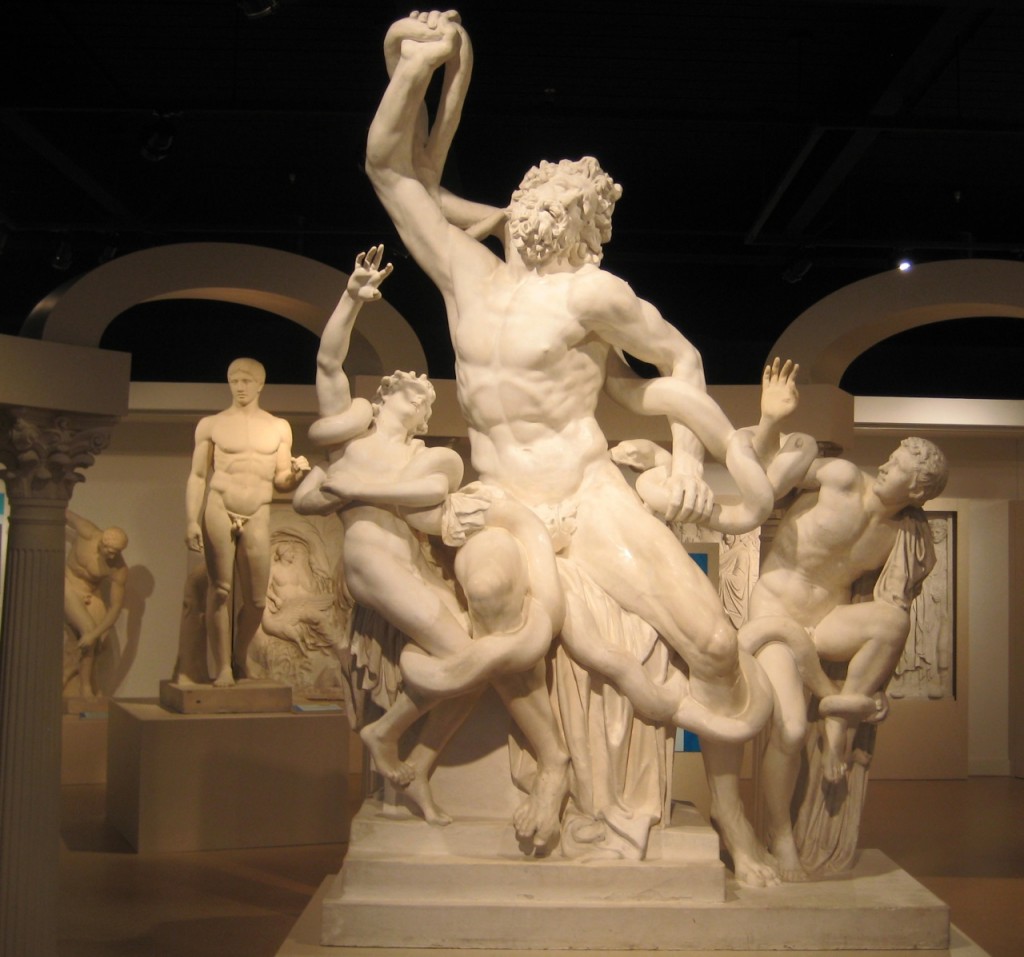
spurlock scupture

If you’re local, don’t miss the wonderful Spurlock Museum.

Corner of the Morgan Craig exhibit at the Parkland Art Gallery

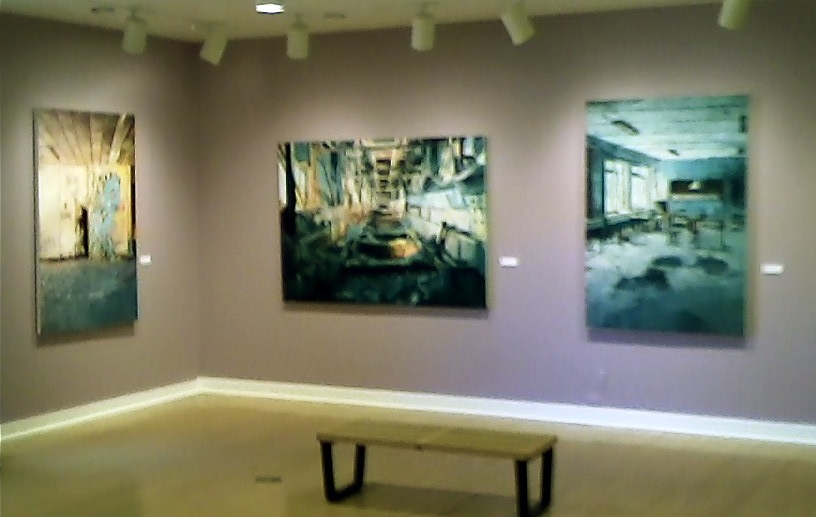
Jackie and I were over by Parkland College to do the final harvest at our garden plot, and took the opportunity to visit the Parkland Art Gallery, where the current exhibit is a set of large oil paintings by Morgan Craig.

I’ve been meaning to mention Parkland’s art gallery for a long time. It’s an excellent small gallery that shows a wide range of art. Students, faculty, local artists, and internationally known artists are all featured. It is one place that, despite our straitened  condition, we donate to. That’s not only because we want to support this great resource for the community, but also because they respect and appreciate even their small donors. Our $50 donation to the Parkland Art Gallery makes us patrons. A $50 donation to the Krannert Art Musuem doesn’t even make you a friend (maybe a passing acquaintance).

Sorry for the crappy camera phone image of the art, it really doesn’t do it justice—check out the exhibit link above or Morgan Craig’s artist site to get a better idea of the art, which shows great mastery of line, mass, and perspective. (The leftmost picture in my image, for example, is foolish thing desire.)

I wanted to put the picture up, though, to talk about the color pallet. Most of these pictures are rich in teal and orange. It’s a striking paring. (For one thing, the colors are complementary—that is, opposite one another on the color wheel—so they pop when viewed together.) These pictures of urban decay use them well: the teal for unrusted metal and the orange for the rust, the orange for daylight and the teal for shadows. But a little goes a long way, and as you can see from my crappy little picture, this exhibit was really heavy on the teal-and-orange, something that I’ve been perhaps over-sensitive to since reading the article Teal and Orange – Hollywood, Please Stop the Madness. (Don’t click through to that post unless you want to be similarly sensitized.)

Anyway, given my own interest in the theme of urban decay, I found this a great little exhibit. If you’re local, you should definitely check it out. Visiting it has reminded us that we really ought to go see every exhibit at the Parkland Art Gallery. It’s so close, and the exhibits are so often excellent, that it would definitely reward the minor effort involved.

Jackie and I made good use of the Bike Project last week.

I’m not quite sure how to describe the Bike Project. Let’s try this: It’s a group of people and a collection of tools, using space in the Independent Media Center, serving as a resource for people who want to repair their bikes, or learn how to repair bikes.

We needed to make use of it because I broke Jackie’s front shifter last week, during a test ride after cleaning her chain.

With help from the folks at the Bike Project, we found a similar shifter in a bin of scavenged parts, ran a new cable through it, and swapped that out for the broken shifter and cable on Jackie’s bike. We paid $6 for the parts.

Among the things that I learned:

  1. The front shifter is not supposed to come apart. (Jackie’s had, and I’d assumed it was supposed to—that you were supposed to open it up to thread the cable through. That turns out not to be the case—once it’s opened up, it’s probably done for.)
  2. Getting the cable tension right is pretty easy, at least if your derailleur has previously been adjusted correctly. (All we did was pull the cable snug, cut it off, and crimp on a cable-end, at which point it pretty much just worked. I may have given the barrel adjuster a turn.)
  3. Grip shifters are mostly crappy plastic items that can be expected to fail if you actually use them.

Overall, it was a great experience. The place was full of people fixing their bikes, and there was a lot of positive energy in the shop.

They have a Build-a-Bike program, where you pick out a scavenged frame and then build it out with scavenged components (buying new components where desired). It was a key idea behind the project when it was being founded, and I’m sure you can still do it if you want to, but they also have a bunch of rebuilt bikes available for purchase, and I’ve heard that they tend to guide people interested in Build-a-Bike to those.

There were some downsides. In particular, one of the big advantages is supposed to be that they have stands to use while working on your bike, but the stands were 100% occupied for the whole 90 minutes we were there. Still, we’ll certainly join the Bike Project next time we need to get some work done on our bikes. It was a lot cheaper than going to a bike shop, and despite taking that 90 minutes, it was still a lot quicker than making an appointment at a bike shop to get the work done in a week or two.

Yesterday, I went on my first open-ended run of the season.

On earlier runs, I pretty much knew how far I was going to go and what route I’d follow. Occasionally there’d be a bit of room for variation—I might think, “If I’m feeling good, maybe I’ll add a second lap around Kaufman Lake,” or “Maybe I’ll add the leg out to Bradley and back.” But by and large, I knew to within a few tenths of a mile how far I’d run before I took my first step.

The reason was that every run would take me a large fraction of as far as I could run. There was no chance I’d just decide on a whim to go a few miles further, because I couldn’t run a few miles further.

So, it was a great treat yesterday, to head out for a run with only a general idea of where I’d be running, and with no specific plan how far I’d go.

I knew I’d run halfway down O’Malley’s Alley (the short bit of rail trail that I call McNalley’s Alley), and then cut over into the neighborhood south of there. But I’d had only a vague, somewhat aspirational notion that I’d continue on as far as the trail through Robeson Park. But I knew that the trail would cross several different roads, and that I’d be able to head for home on any one of them, if I decided that I’d run as far as made sense.

In the end, I headed home when I got to Crescent. On some future run, I’ll push on as far as Mattis, and maybe continue on down the Simon trail before heading home.

This run, according to my GPS thingy, came to 4.84 miles, which I ran in 54:15, for an average pace of a bit over 11 minutes per mile. And it was a great run. My feet didn’t hurt, nor did my ankles, knees, hips, or any other bits. I did get pretty tired by the end, but not over-tired. In fact, after a bit of a rest and rehydration, I had enough energy to bicycle 9 miles, lift weights, and do an hour of taiji. (The lifting, I must admit, was a rather feeble effort.)

At over 50 minutes, it was definitely a long-enough endurance effort to produce significant levels of endocannabinoids, which I presume is the reason that my memory of the run is mainly just a strong sense that I was having fun and feeling good. There are only a few spots where specific details are sharp and clear—the spot where I had to back up and run on the grass next to the trail, to avoid a muddy patch, the spot where I thought, “There’s a hill here? How did I not know there was a hill here?” and the spot where I slowed to a walk so I could look back over my shoulder and read a street sign, so I’d be able to make a map.

Speaking of which, here’s a map of the run: