
National Weather Service: “Destructive 80 mph winds.”
Jackie, wanting to be clear: “Not the constructive kind.”
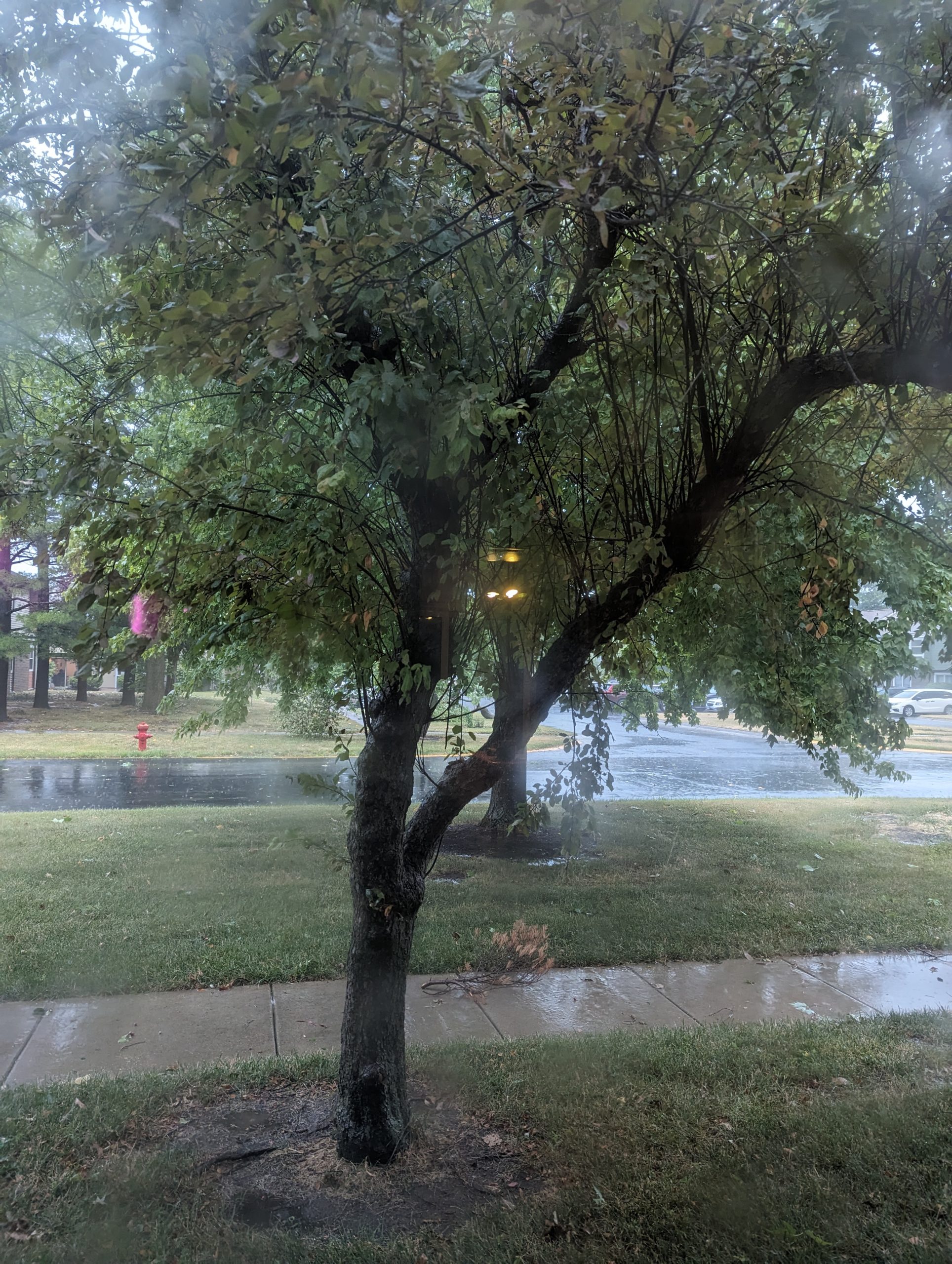

National Weather Service: “Destructive 80 mph winds.”
Jackie, wanting to be clear: “Not the constructive kind.”
Other times when the #airquality has been “bad” according to some metric or another, I’ve generally found it no big deal. This time that’s not true: the air quality here is legit terrible. And there aren’t even any forests burning up here in Illinois.

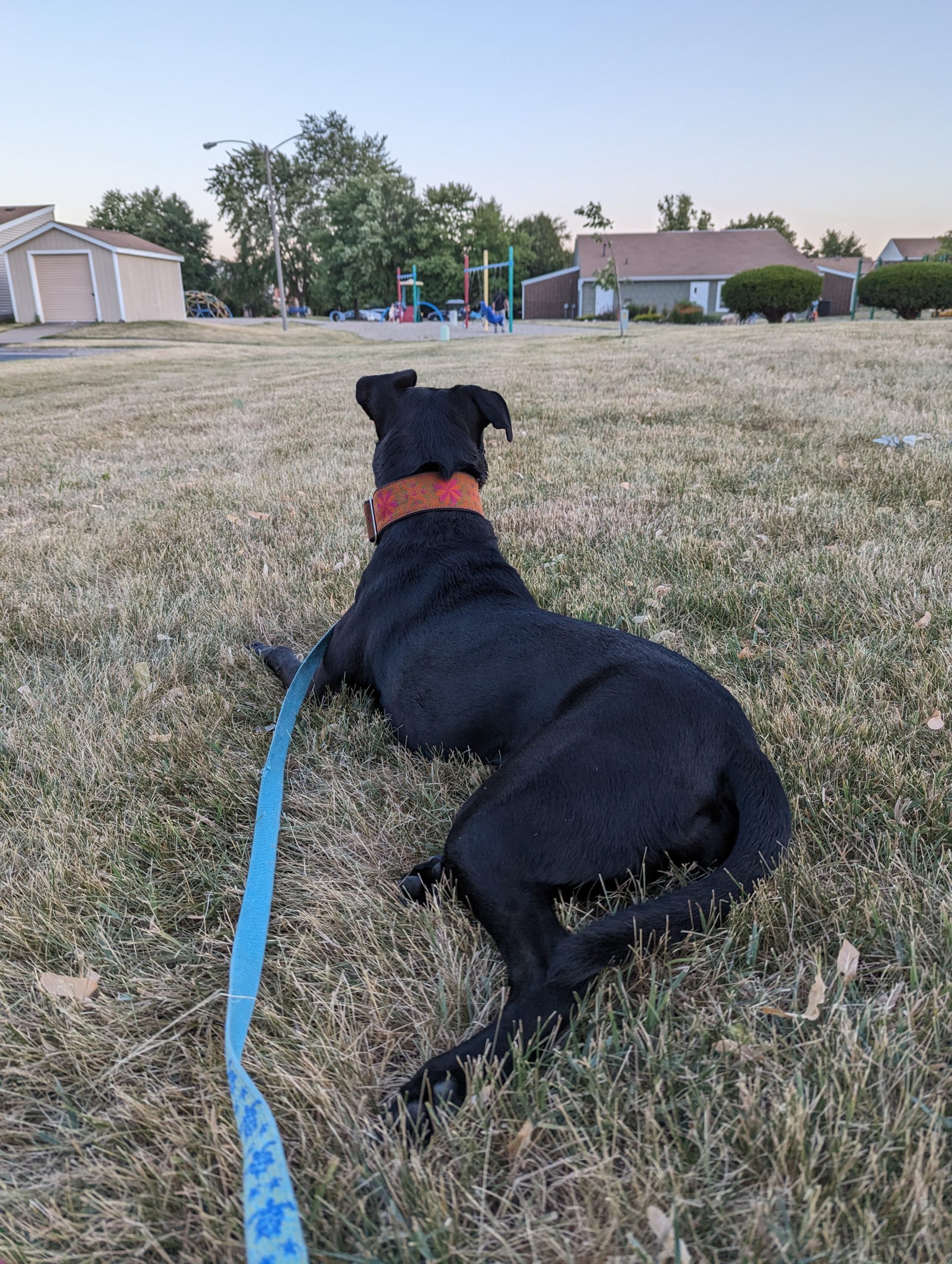
The pose in this picture reminded me of the famous Andrew Wyeth painting of the girl reclining in the grass facing a farmhouse. Here Ashley is reclining in the grass facing Winfield Village’s office and community room. #dogsofmastodon
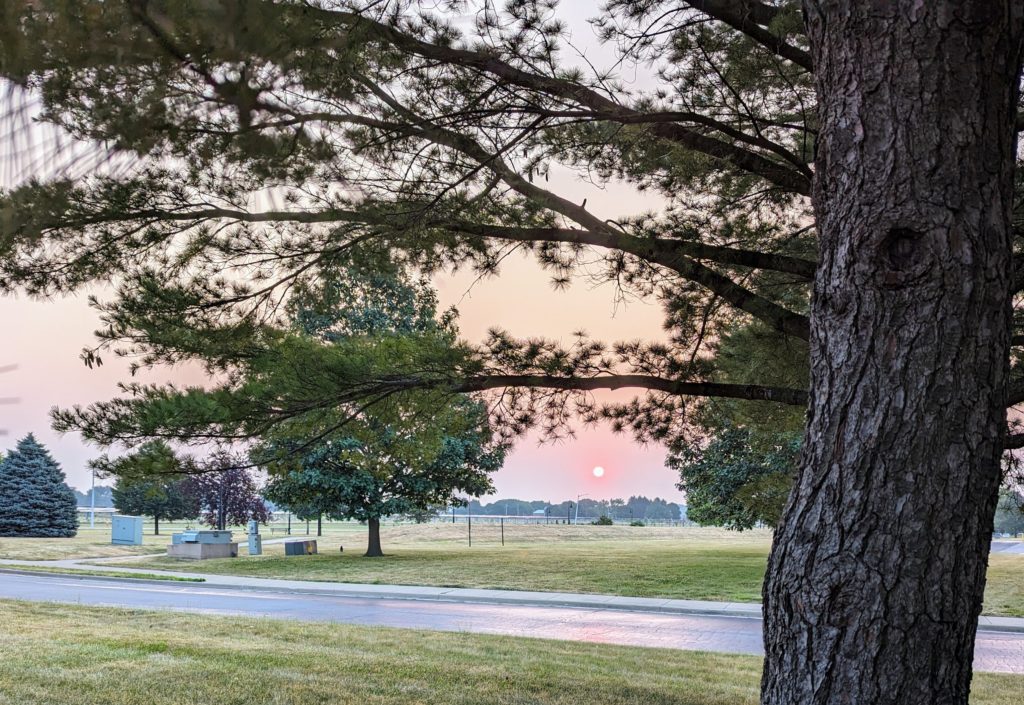
One of the many nice things about having a dog is getting up in time to see the sunrise almost every day.
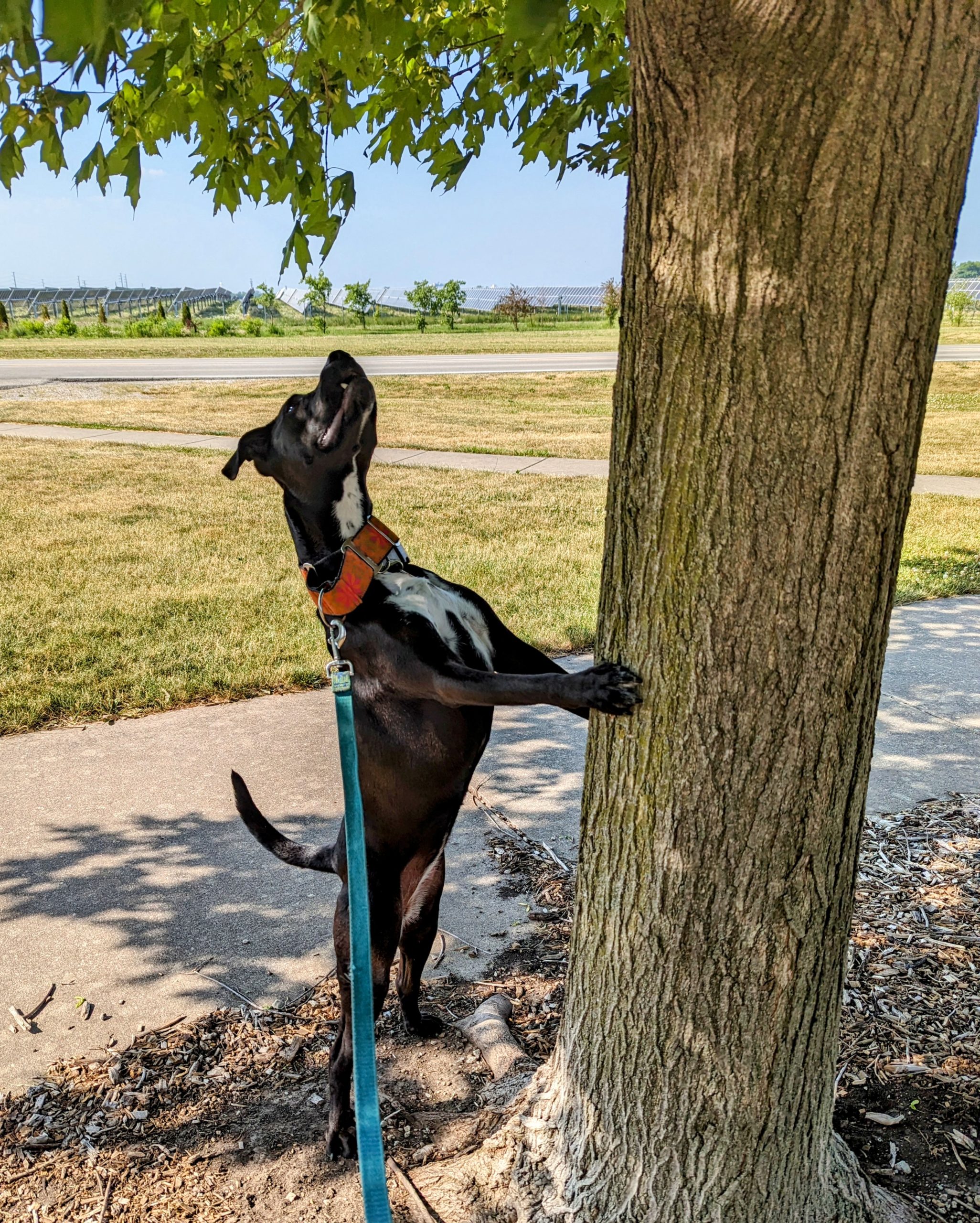
There is a squirrel up that tree. #dogsofmastodon
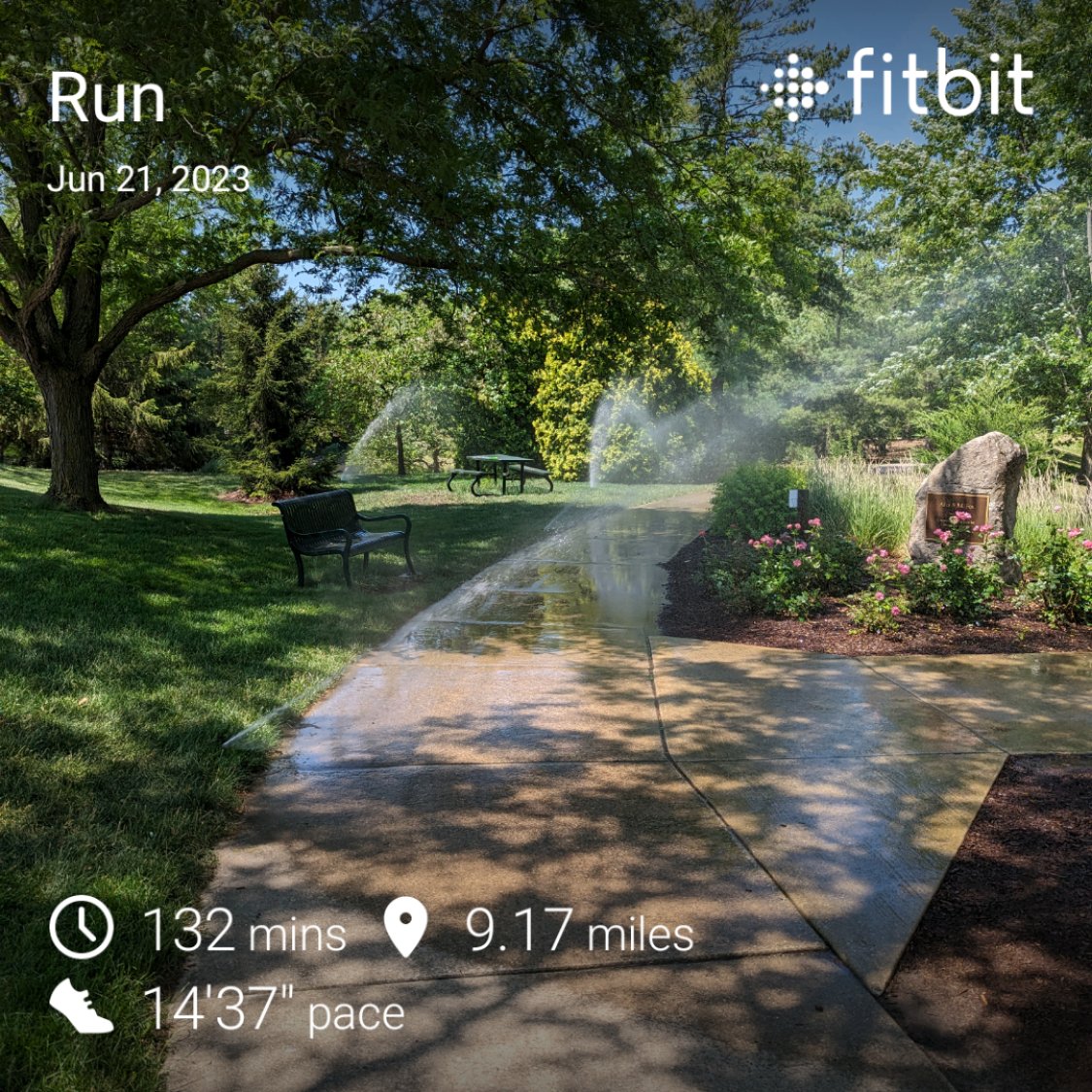
If I’d realized that this run would be 0.01 miles less than my longest run ever, I’d have run another 0.02 miles. I did run it three minutes faster, though, despite the heat. #run 🏃🏻♂️
It may not be obvious from the picture below, but those sprinklers are not only blocking the sidewalk; they cover the entire right-of-way from the detention pond to the drainage creek. To get around it I had to walk through a parking lot, down the street, and back through two more parking lots.
Any time spent asleep is time well spent. #dogsofmastodon

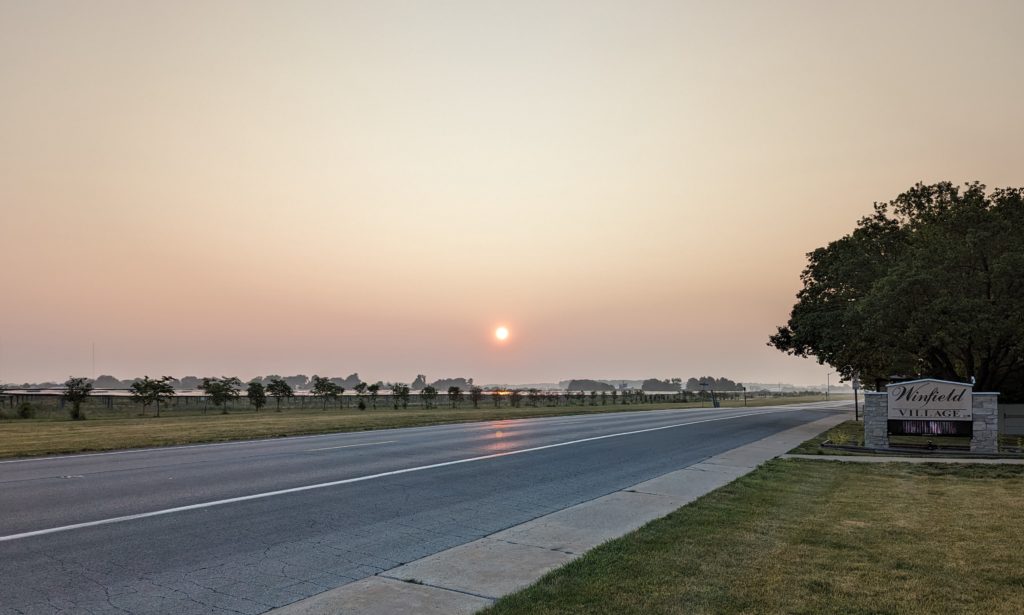
Dawn is pretty early this time of year—too early for me to see the sunrise, but not too early for me to get this picture.
About one minute after I took this picture, the solar arrays started to turn to point east.
Just a month or two after we got Ashley we happened to have the bad luck of walking right under the siren used for tornado warnings when they did their monthly test. (Something they do on the first Tuesday of every month at 10 AM.)
Ashley started howling along, which made me laugh. But then Ashley looked a little embarrassed, and I couldn’t have that.
So I started howling along with the siren myself, to assure her that it was entirely appropriate behavior, and she joined back in.
We’ve done that every month since then, but I had failed to capture it on video until a couple of days ago with this month’s test.
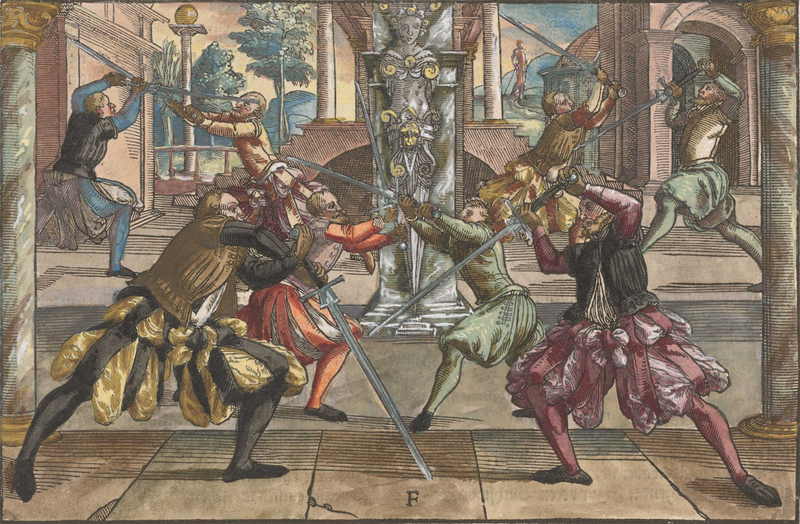
In my workout yesterday, in the “lower body” slot where I’d usually do either some type of squat or some type of lunge, I decided to practice stepping for longsword fencing. As soon as I started, I realized there was all sorts of nuance to how to do it, with a lot of details I wasn’t sure of.
I posted a question to the group discord, asking when to pivot the foot. (That is, the front foot is pointed straight ahead and the back foot is turned out 45 to 90 degrees. After you step forward with your back foot it’s easy enough to just put it down pointed straight ahead. But your new back foot needs to turn out at some point.) I also wanted to know whether people did a toe-pivot or a heel-pivot.
A couple of people responded to say that they did toe-pivots, and that they did them at the end, after establishing the new front foot. Good to know.
When I got to today’s class, Christopher Lee French (one of the intermediate HEMA students, but also an instructor in sport fencing at The Point Fencing Club & School of Champaign) gave me a whole master-class in stepping. He made a series of excellent points.
(Let me pause just for a moment here to make it clear that all the following is my understanding informed by what he was telling me. It’s certainly not his fault if I’ve gotten some things wrong here.)
Here’s a short list:
He demonstrated many of these, and his example steps also helped me make sense of the (to me) odd use of a toe-pivot described by others in the discord. He tended to finish a quick step with his back foot not yet pointed out. Instead it was pointed forward, with the heel off the ground. When I asked about why he wasn’t turning it out, he said, “Fix that when you have time.” And the way you’d fix it would be to do a toe pivot, and then put your heel down.
None of this really has much to do with Meyer’s text. That is, I’m not trying to figure out how to step. Rather, I’m thinking about what to train to be able to execute what Meyer’s text documents.
Specificity would suggest that the way to train for fast, smooth, even steps would be a lot of stepping. But I know from experience that it’s always worth breaking these things down and checking to see if any of the pieces is posing a limitation.
To pick a not-so-random example, I’m limited by my leg strength for single-leg standing in a very low stance. Things to train for leg strength with bent knees: wall sits, single-leg wall sits, single-leg standing. Those first two I’ve done before, but I can emphasize them a bit for a while. I can add some bent-knee single-leg standing. And, because specificity is still a thing, I’ll also practice executing passing steps and gathering steps as smoothly and rapidly as possible.