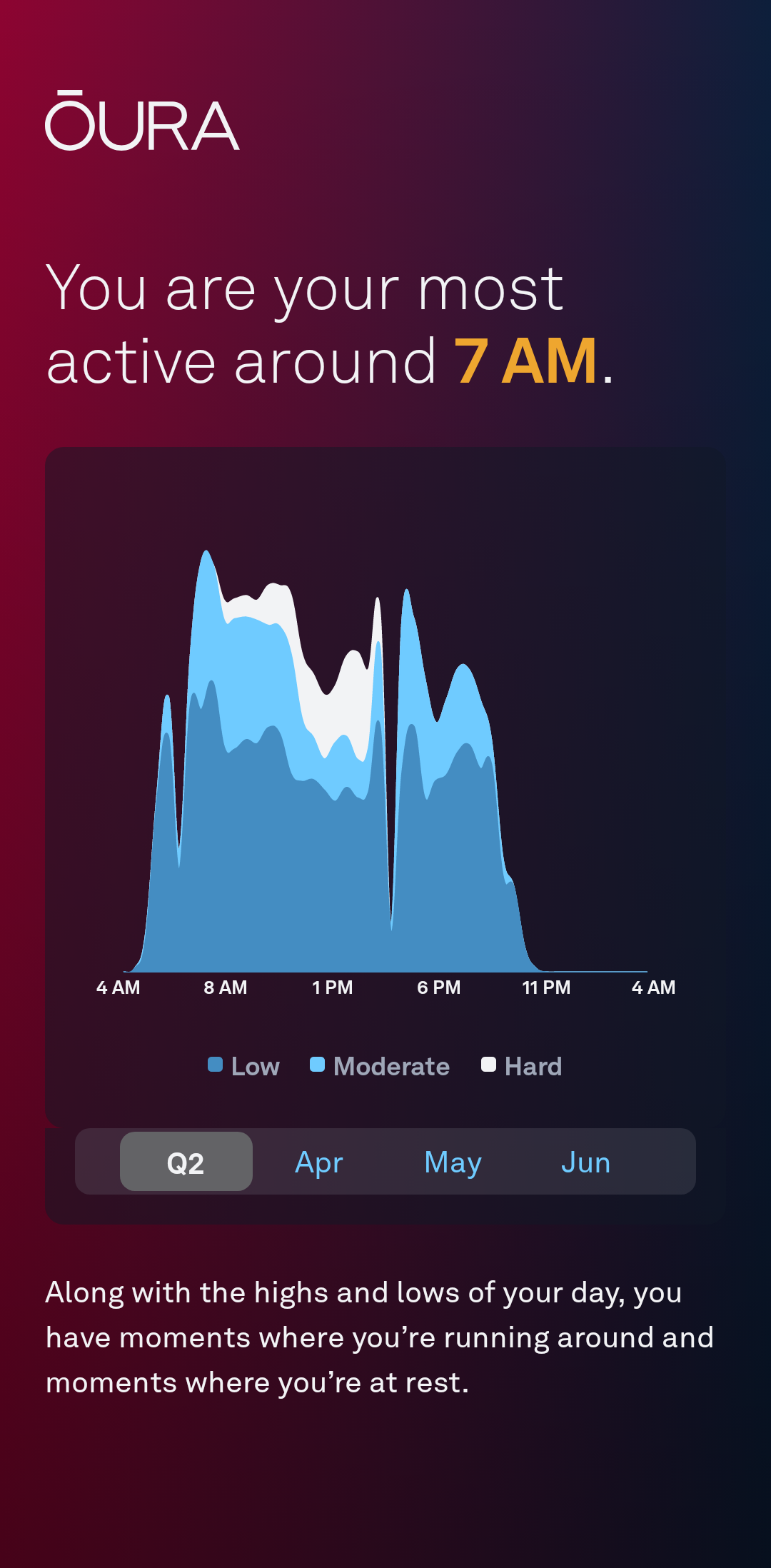
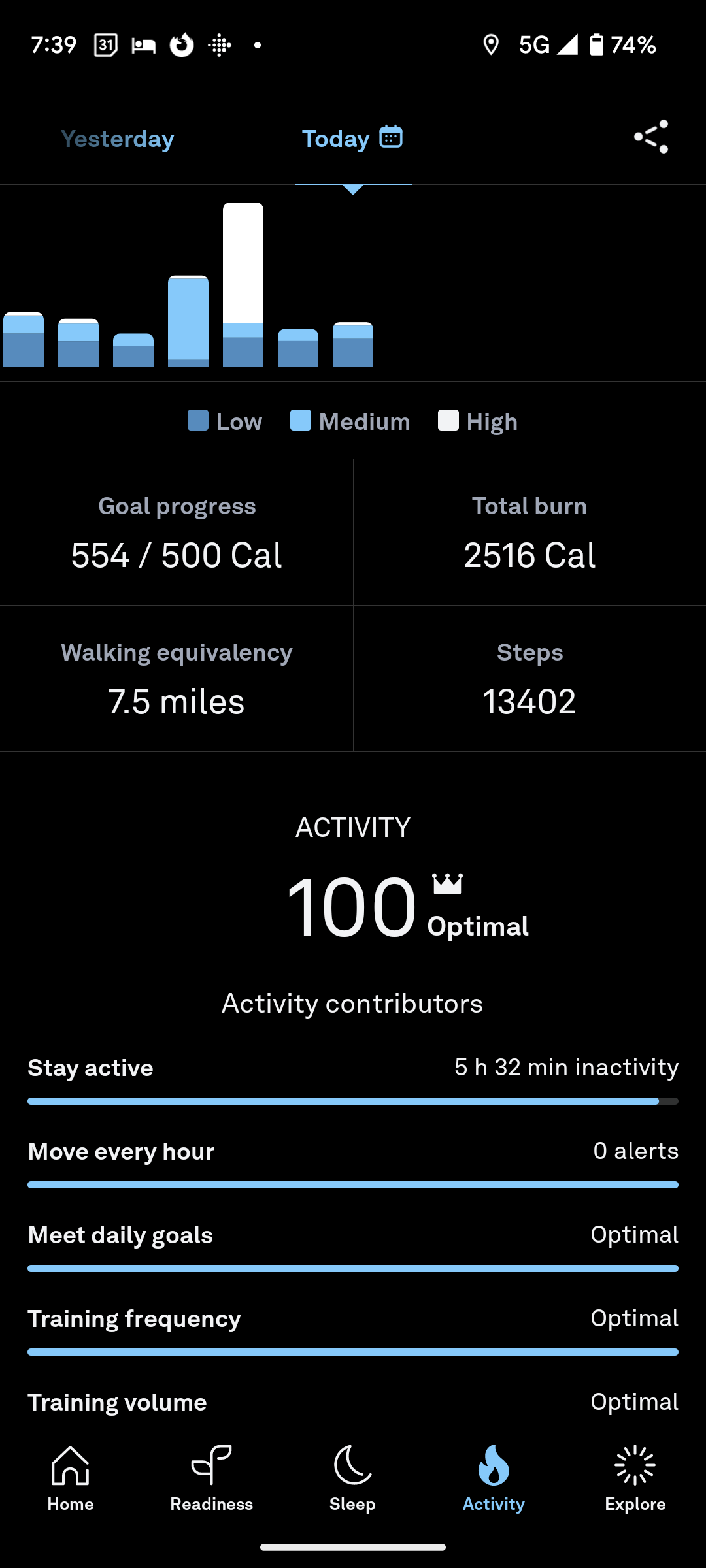
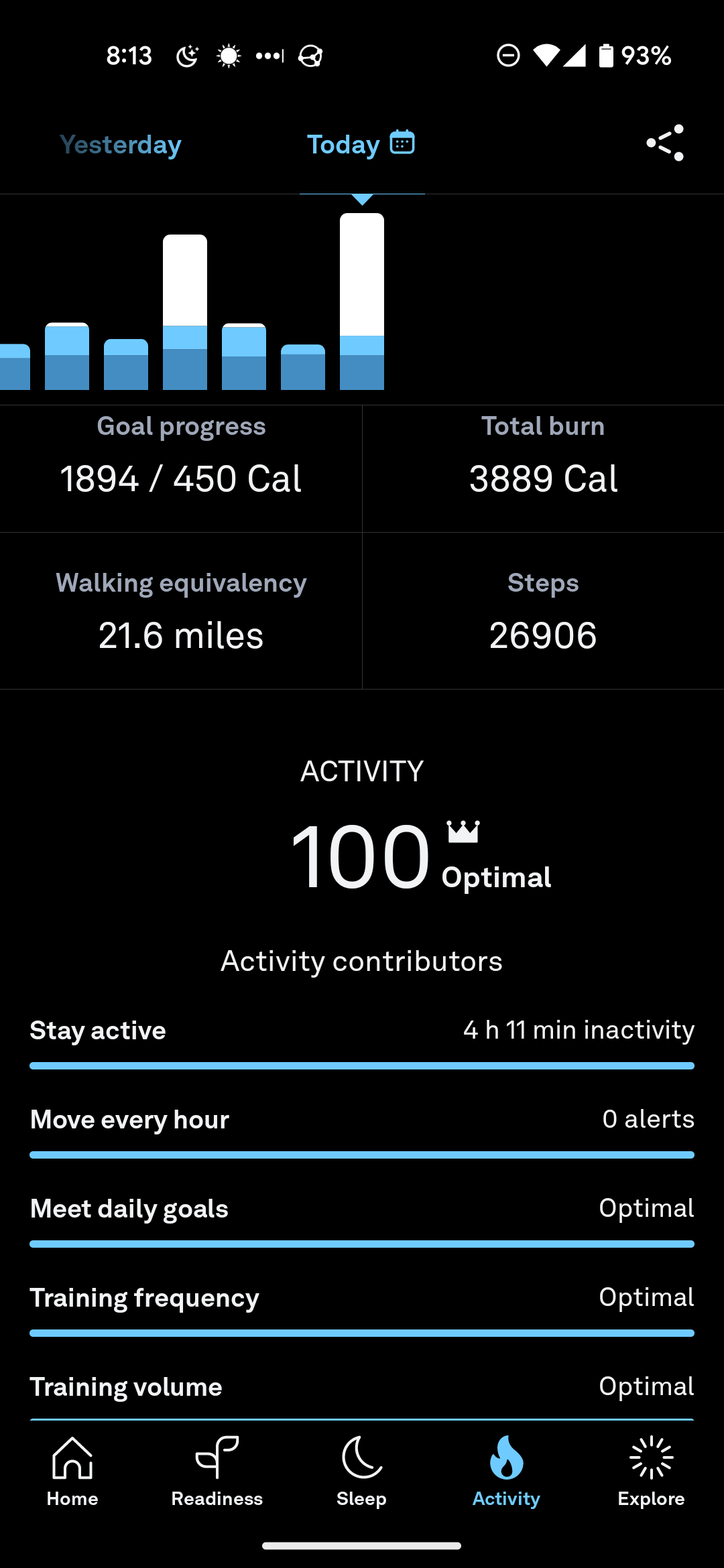
Mildly amusing. Low peak for the first dog walk, notch for drinking coffee and Jumbletime, then my most active time is 7:00 AM, for the second dog walk.
Before I got a dog, my most active time was 11:00 AM, because that’s when I finally get to my workout.
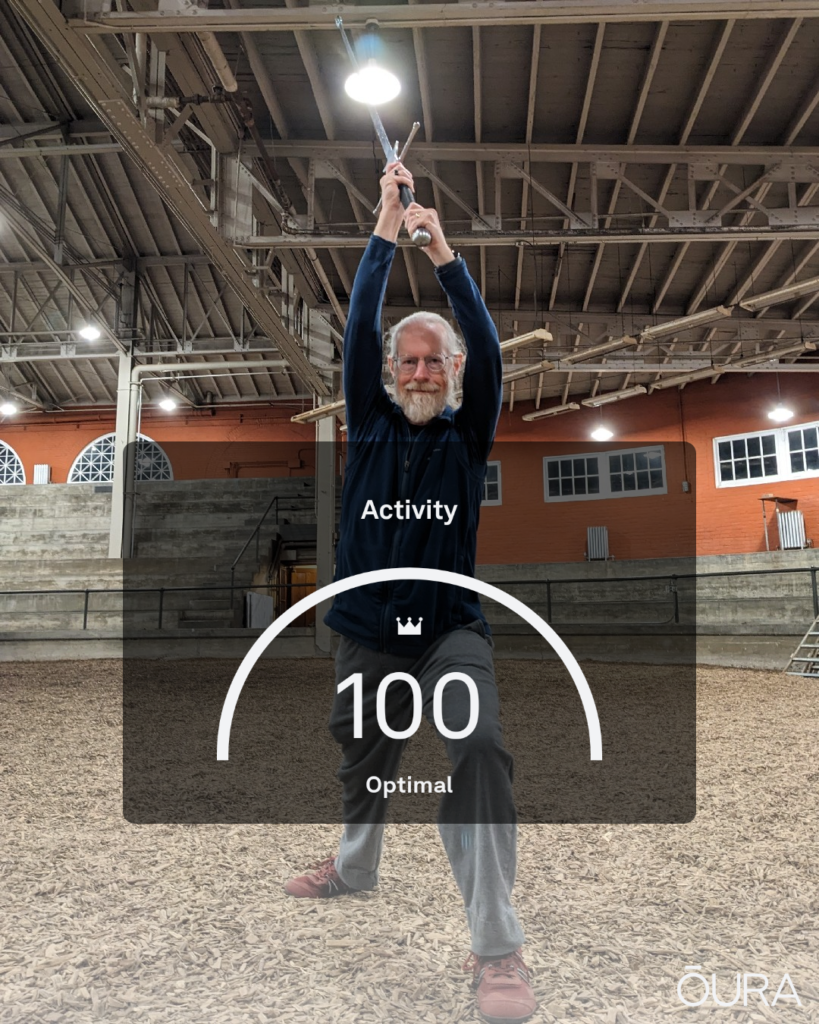
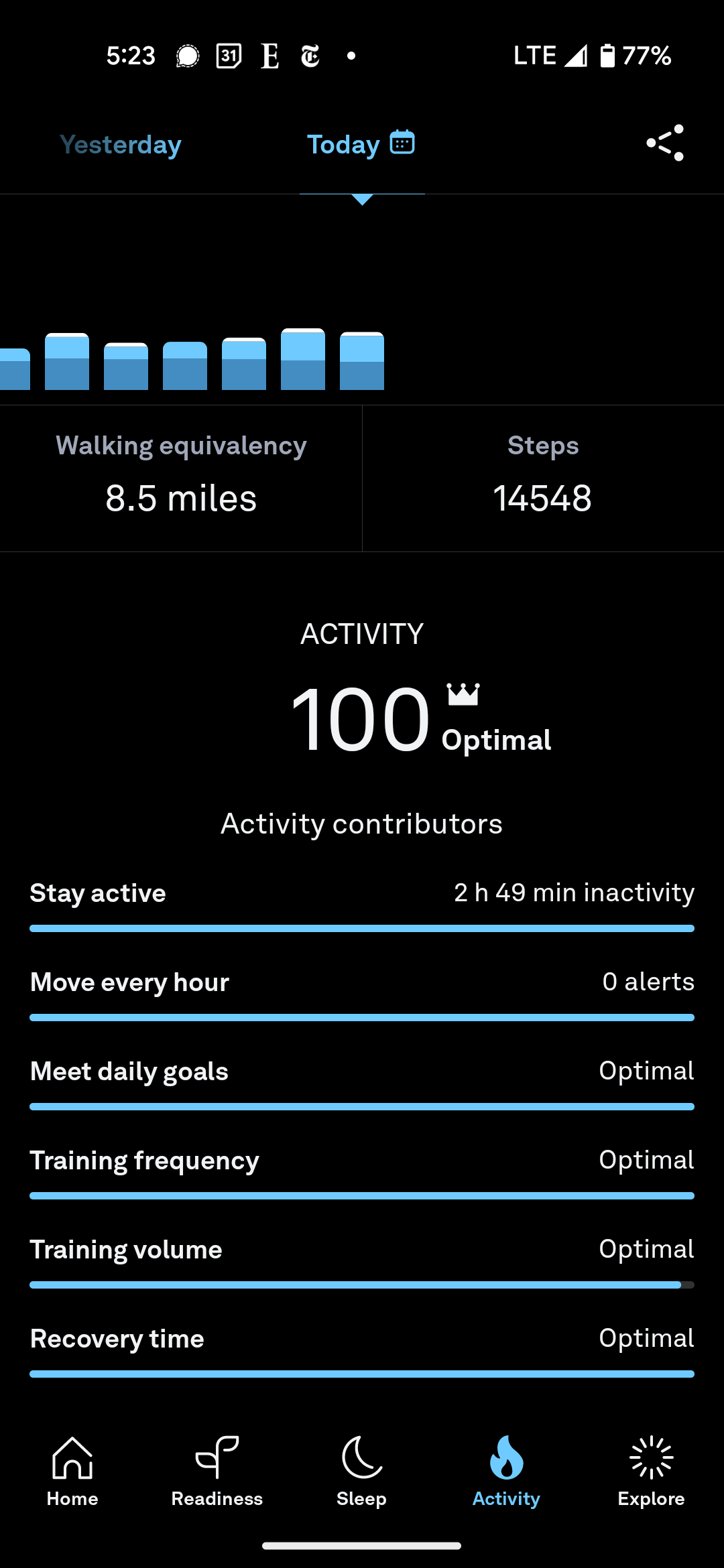
I get scores in the upper 90s pretty often, but scores of 100 less so. Today I kept my “inactive time” nice and low, which I think is what made the difference.
My Oura ring prepared an annual summary of the data it has gathered. One interesting bit shows the dramatic change in my activity since getting Ashley
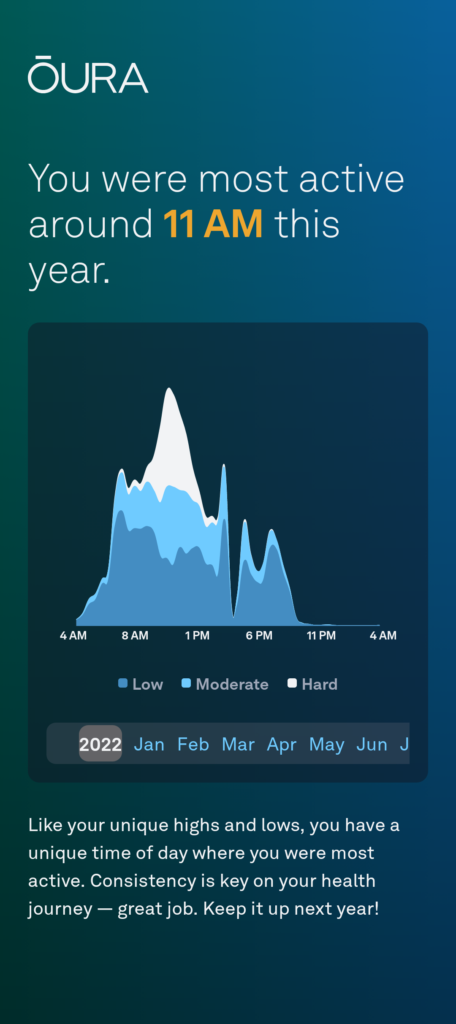
This shows my activity levels across the day, averaging the whole year together:
The white area shows when I was engaging in “hard” activity—basically running, high-intensity interval training, and (if I was really going at it) lifting weights. I did quite a bit of those things for most of the year, and the Oura ring is interested to observe that it was largely between about 10:00 AM and noon.
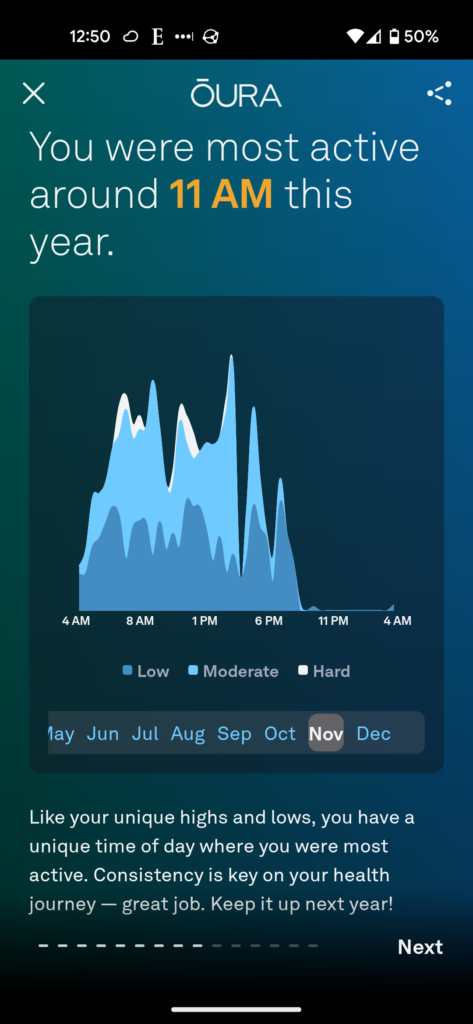
That graph averages the whole year together. This graph shows the same thing, but just for the month of November (we got Ashley on November 2nd):
I had only a modest amount of hard activity, mostly early in the morning and then again at mid-day. (I assume those are bits where Ashley wanted to run and I tried to keep up with her, something that I quit doing after tripping, falling, and splitting the skin across my knee.) Basically, I replaced nearly all my hard activity with lots and lots more medium activity.
Just as an aside: My 4:00 PM cocktail hour really shows up on these graphs, with modest spikes in activity that I think have gotten larger now that I get the dog out for pre- and post- cocktail hour walks.
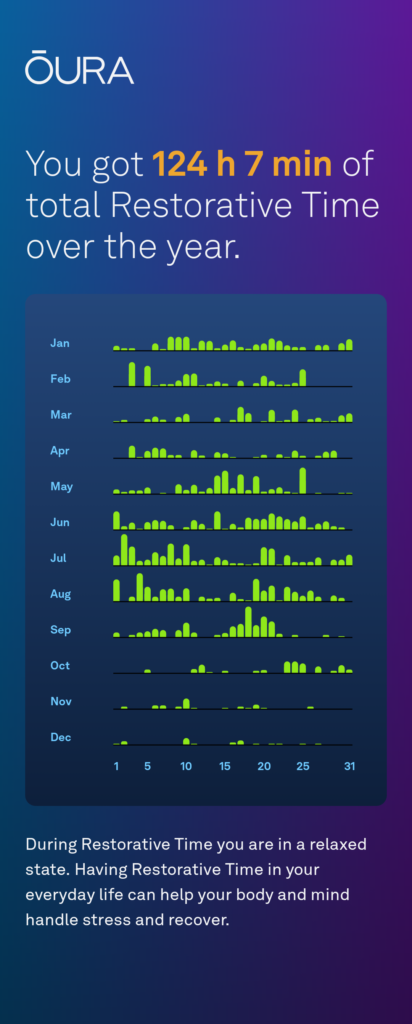
One other tidbit that changed with the dog has been my “restorative time,” periods of low activity where the heart rate falls quite a bit. You can see the difference between the first ten months of the year and the last two here:
I used to get at least some most days, but since I got the dog my restorative time has really dropped off. I think that’s partially just because my periods of low activity are shorter (because pretty soon I have to take the dog out again), and maybe also because, since I have less hard activity, I don’t feel the same impulse to really slow down when I get a chance to do so.
One of the first things my Oura ring helped me figure out when I got it 4 years ago, was that if I eat a meal in the 4 hours before bedtime it interferes with my sleep. The effect was dramatic enough that Jackie and I switched to eating just two meals a day: breakfast an hour or two after we get up, and then our main meal of the day around 2:00 PM. Since that change, I’ve slept much better.
Sometimes though… life intervenes. Yesterday was one of those days. My local Esperanto group had its annual Zamenfest, and I brought pizza and cookies to the meeting, and ate a lot of both. (In fact, I not only ate several of the ginger sparkles I bought, I also ate some green star-shaped sugar cookies and some peanut butter cookies brought by other members of the group. It was a real cookie fest, as well as a Zamenfest.)
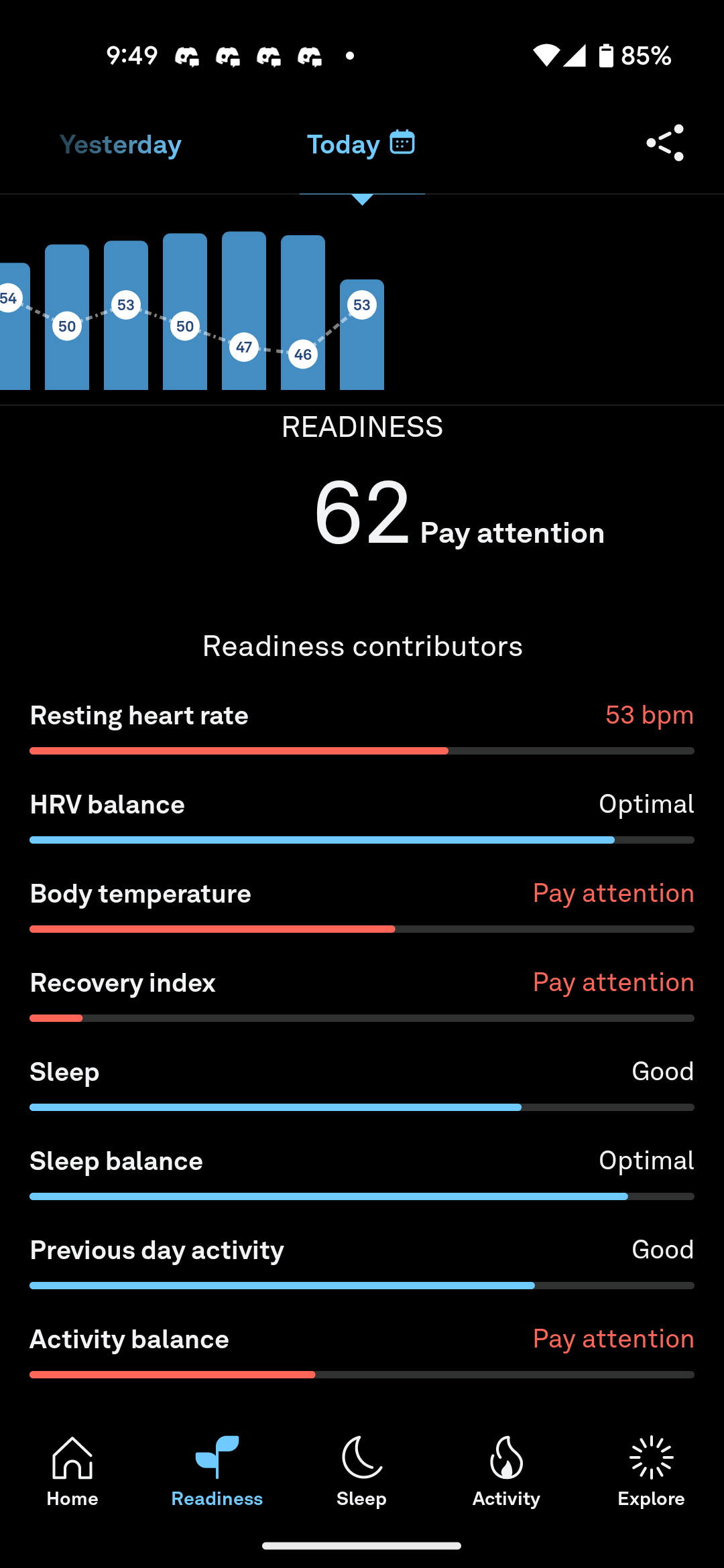
Unsurprisingly, I saw a repeat of the various issues that showed up 4 years ago, as can be seeing from looking at my Readiness metrics from my Oura ring:
The “Recovery index” basically means that my heart rate remained elevated until shortly before I woke up. That’s on top of the fact that it only got down to 53, which is rather high for me. My body temperature was 1.1℉ above baseline, which is probably just that my body was very active digesting food, rather than being a fever due to an infection or something.
A single day of this is no problem. Today I’ll eat on my usual schedule, and I expect I’ll sleep very well tonight. But I thought it was an interesting example of the sort of thing that the Oura ring is good at alerting the user to.
I didn’t get a picture of yesterday’s cookies, but here’s some from a prior year’s batch:
Since we got Ashley, I have been sleeping better. Remarkably better. It’s kind of amazing.
My Oura ring gives me some data to go on.
The place where it’s very obvious is in deep sleep time. In the month or so before I got the dog, I averaged 57 minutes of deep sleep per night. In the month or so since I got the dog, I’ve averaged 1 hour 23 minutes. Other improvements are significant, but not so impressive in terms of numbers. Total sleep has gone from 7 hours 34 minutes to 7 hours 41 minutes, which is enough to make a difference. Sleep efficiency (the percentage of the time in bed that I’m actually asleep) has gone from 87% to 89%, which doesn’t look so impressive, but also seems to make a difference. I’m also getting up much less often in the night.
Of course, this leaves me with the question of why.
I think partially, it’s just that she sets a great example: She comes to bed when we do, lies down between our feet, goes to sleep, and stays asleep—better than I do, anyway.
The other big change, of course, is that I’m walking way, way more than before.
Again the Oura ring provides some data, with “walking” that has gone from 7.3 miles to 11.2 miles per day. That’s misleading though, because the Oura ring reports a “walking equivalent” number. (Based on, I assume, my heart rate during other activity, such as weight lifting.) The FitBit software on my Pixel Watch gives me actual distance data, and the last half of October I was averaging 5 miles per day, while last week I averaged 7 miles.
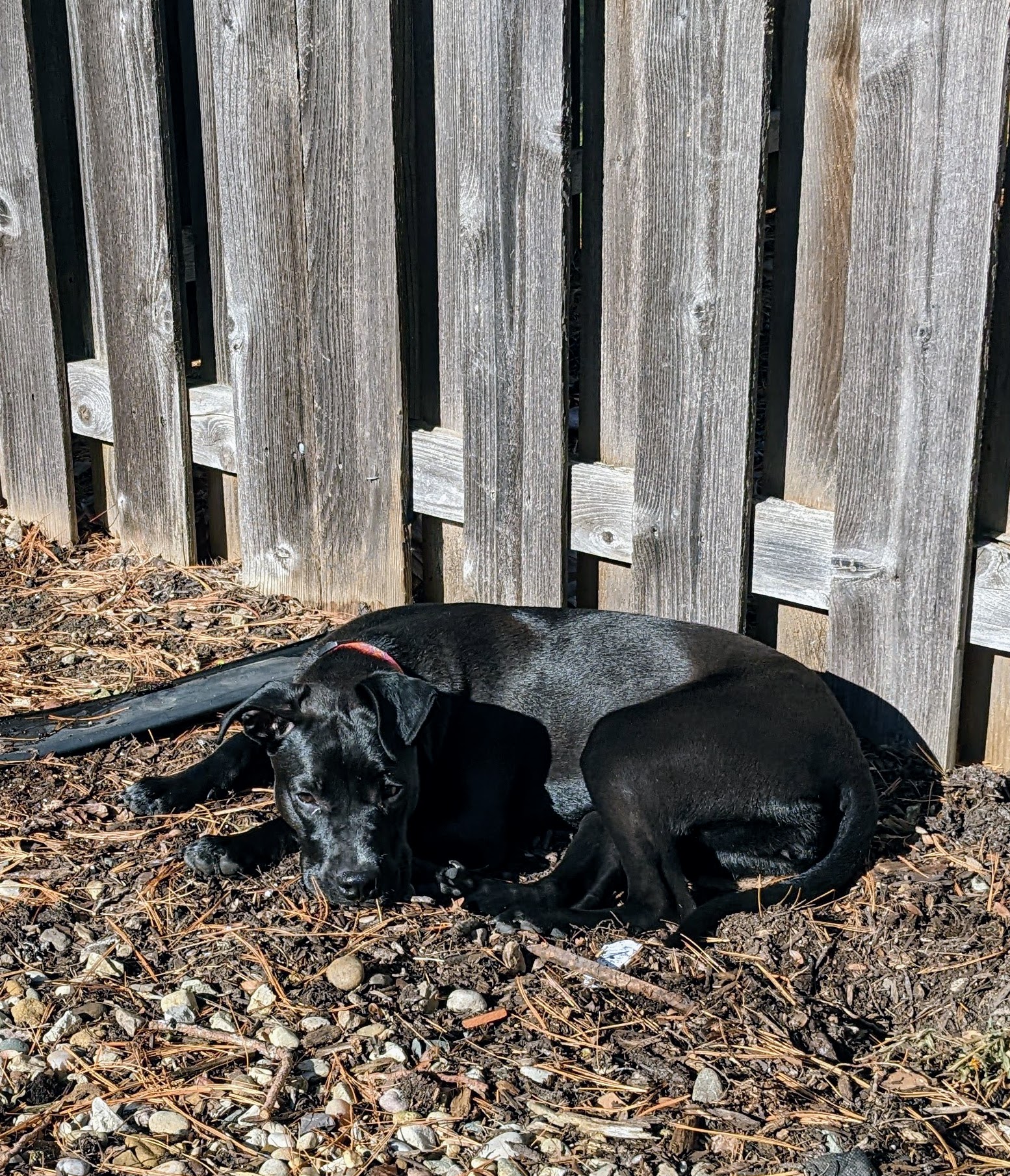
Ashley sleeps just as well in the sun as she does in bed