

Why has the Fed been able to produce asset inflation but no price inflation for past 10 years? My guess: lack of union power and globalization are blunting transmission into wages and prices. But I don’t see an easy way to test that hypothesis.
Tag: policy
Why isn’t the 1% in a tizzy?
I marvel that the 1% is being so indifferent to the large and widening leftward political shift in the U.S. and elsewhere. It seems to me they should have already started telling their politicians, “Give the poor folks 20% of what they want, quick! We need to nip this in the bud!”
Of course, maybe they’re right and I’m wrong.
They got away with globalization, after all. And then they got away with the financial crisis. And so far they’ve gotten away with Trump’s tax cut.
Now, I can understand the first two. Globalization, despite how it crushed many individuals, families, and communities, did make people better off on average. Having the average person end up better off makes a policy supportable at some level. I can see it providing enough political cover for them to get away with it. Who doesn’t like buying cheap crap at WalMart? Nobody but freaks and weirdos like me.
The financial crisis is harder to understand, which I think is due mainly to it being harder to understand. There was a real sense that our whole economy could implode—and it was a real sense because it was actually true. The technocrats managed to save the economy, so they get some credit for that. They did it in a way that crushed homeowners, which is bad. They did it in a way that subverted the rule of law, which is bad. And they did it in a way that crushed a whole generation, which is also bad. But they did save the economy.
But now we’ve got multiple cohorts of people who have already turned against the system. It’s no longer just the freaks and weirdos who care about their local community and the natural systems that support life. It’s no longer just former homeowners whose homes were seized to save the banks. It’s no longer just millennials who graduated into a job market so bad that they’re a decade behind their parents’ generation in things like family formation (and further than that in preparing to retire).
Now it’s basically everybody except the 1% who is being harmed, and they’re being harmed right now, every day.
The Trump tax cut is just a naked grab at wealth by the wealthy. It didn’t help anybody else. Trump’s tariffs aren’t even that—they don’t help anything but Trump’s ego.
I cannot imagine that any amount of voter suppression and gerrymandering—even with the structural anti-democratic features of our constitution—will keep the supermajority of people being harmed by our current system from making some major changes.
If the 1% had any sense they’d have thrown some bones to the people already. I can’t imagine that the smart ones haven’t figured this out already.
Sure, there are plenty of dumb ones who figure that they can build a survival bunker in Alaska or New Zealand and survive the ensuing revolution and climate catastrophe. But are they really all that dumb?
Evidence so far suggests they are.
Or maybe they’re right and I’m wrong.
The luxury of ownership
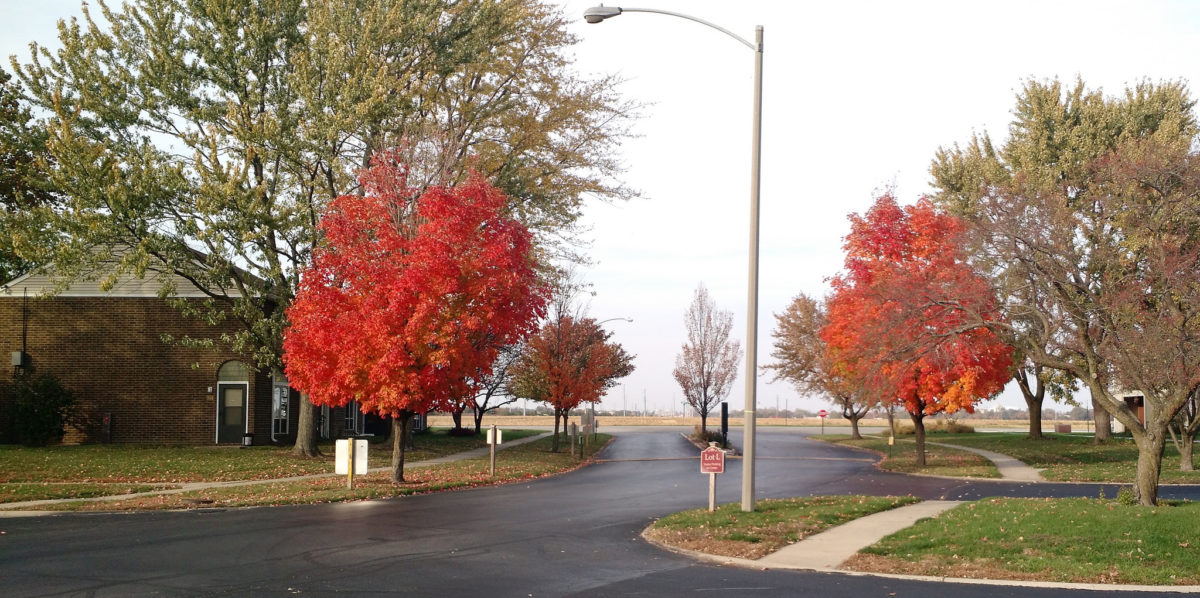
Being a member of the Winfield Village Cooperative, I’m technically a home owner and not a renter. In fact, more then technically: I’m actually a home owner.
On a day-to-day basis, living at Winfield Village is a lot like being a renter. I pay a monthly housing charge that feels a lot like a rent payment when I pay it. There’s an office staff that shows units to prospective new owners, and a maintenance staff to fix things (plumbing, appliances, etc.), and keep up the grounds—all very similar to what you could expect at an apartment. But there are differences, and most of the differences are luxuries.
There are a few differences that are financial. For example, I’m entitled to deduct my share of the property taxes and mortgage interest that Winfield Village pays.
One that I hadn’t thought of before was made especially apparent to me a few weeks ago, when a friend mentioned having to sign the next-year’s lease for his apartment, and I was reminded what an annoyance that always was.
Every year when we used to live at Country Fair, we’d get a call from the office asking if we wanted to renew our lease for the following year. Every year the rent went up a little, which was just to be expected.
More annoying was that every year we had to read the new lease. Most years it was the same or nearly the same—the office staff would go through and indicate changes—but we still felt like we ought to read it, because we’d still be agreeing to any changes that the office staff failed to point out. I think twice there was a complete re-drafting of the lease, so we had to read it all the more carefully.
Even years when it was still (mostly) the same, after we read it we then had to go through the whole thing with the office staff, because there were a dozen places we had to initial specific provisions, and then we had to sign three originals.
Although it was just an off-hand comment, my friend mentioning his lease re-signing brought up a whole bunch of stressful memories, such as deciding how to deal with the provisions that were so badly drafted as to require us to do preposterous things. (One I remember was a provision intended to reduce the chance of pipes freezing that seemed to require that we leave a trickle of water running anytime the temperature was below freezing, which would basically be all winter here in lovely central Illinois.)
There are other ways in which we are owners. We can repaint. We can buy our own appliances, or make other upgrades to our kitchen. (But we don’t have to. If our stove or refrigerator fails, maintenance will come fix it, or replace it if necessary.)
Until my friend brought it up, it hadn’t occurred to me that I haven’t had to go through the whole stressful lease-signing process for three years now! Instead of a lease, I have an occupancy agreement. That agreement hasn’t changed in three years, so I haven’t needed to re-sign. The housing charge hasn’t gone up either. And because it’s a co-op, I’ll have a vote on any major changes that do come up.
Ah, the luxury of ownership.
Voting is a constitutional right
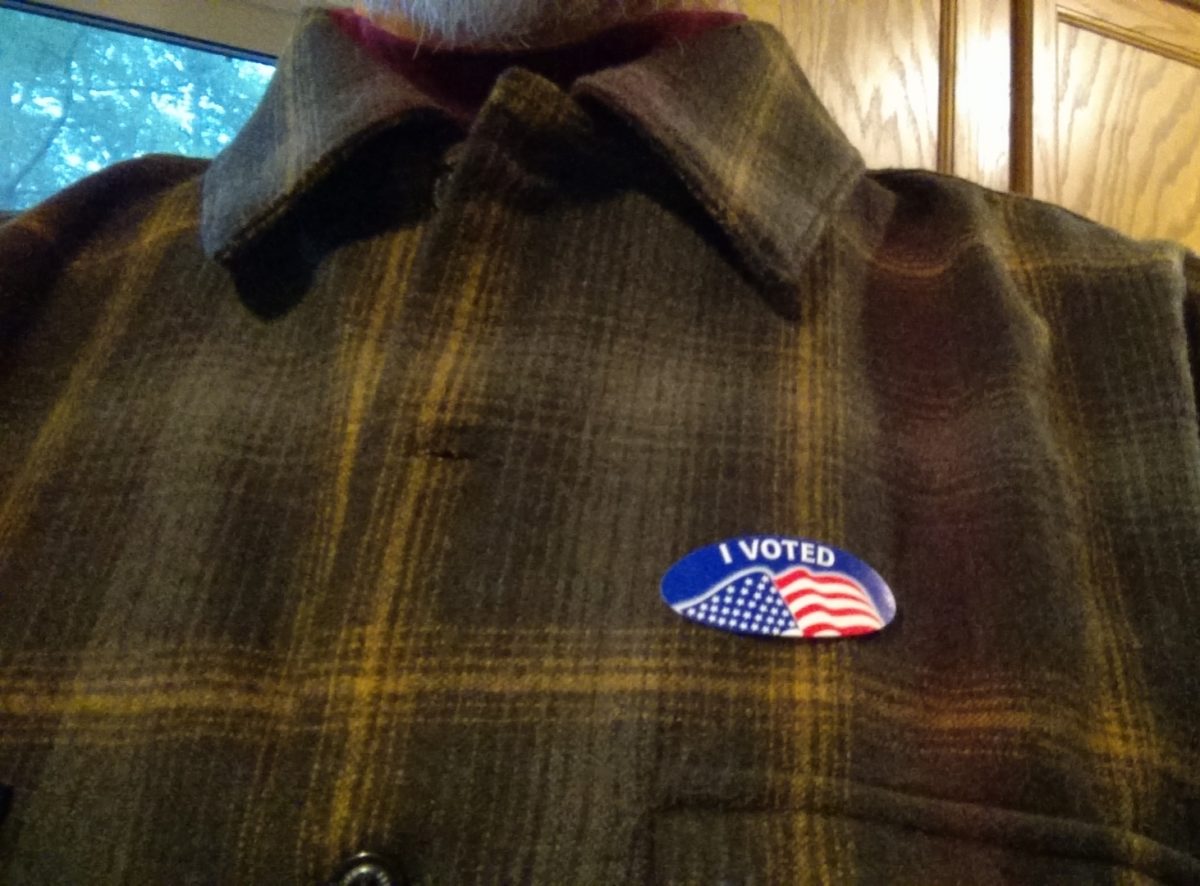
The right to vote is a constitutional right. It should not be abridged. In this way it is like all constitutional rights.
There is one important difference between the right to vote and most other constitutional rights. Most constitutional rights apply to “the people,” while the right to vote is a right of citizens. Because of that difference, it makes sense to verify that people registering to vote are citizens. But waiting until someone is at the poll and then demanding that they prove they’re a citizen is backwards.
It is, to use another constitutional right as an example, backwards exactly the same way it would be backwards to take your property for public use, and then make you run all over town for documentation to prove that you own it before you can get it back. Instead, we have a property registry to keep track of who has ownership rights, and then a process called eminent domain whereby the government has the opportunity to present to a court evidence that there is a public need for your property according to well-established rules, and to establish fair compensation. You have the opportunity to dispute that evidence, and to argue for a different interpretation of the rules or for higher compensation.
I would suggest that as being the right model for voting rights as well: We should have a voter registry to keep track of who has the right to vote, and then a court process whereby the government has the opportunity to prove that someone on that list does not have the right to vote according to well-established rules (not a citizen, not over 18, not residing in the precinct, dead). You should have the right to appear at the hearing and dispute both the evidence and the interpretation of the rules.
Nobody should ever be struck off the voter rolls without such a hearing—to my mind it would be just as unconstitutional as taking your property without a hearing.
If that is the standard—as it should be—then there is no need to present an identity document at the polling place. All you need to do is prove that you are the person who registered, which is easily done by comparing your signature when you request a ballot to your signature when you registered to vote.
In any case: The right to vote is a fundamental right of the citizen. Denying it without due process is wrong, and there should be substantial sanctions on anyone who does so (or attempts to do so).
The Republican Party
The Republican Party has not “made a pact with the devil.” They have become devil understudies, dressed up in devil drag, and are standing in the wings hoping to be picked as next devil.
Wrote an article pitch policy
It won’t do any good, but I have written and posted an article pitch policy to discourage people from sending me pitches for article ideas.
In the past few of years, I seem to have gotten on mailing lists for any number of PR flacks (and others), who are constantly offering me reports from their experts on this or that aspect of the economy, results of polls that they’ve done, press releases about new upcoming books, invitations to webinars, etc. None of that stuff is ever of any interest to me.
I’ve never written an article based on anything I received in email. I’ve never linked to someone’s infographic because he sent me email suggesting that my “readers might be interested” in it. In the past I did a few times accept free copies of books for review, but (with one exception—a book by a former fellow Wise Bread writer) I quit doing that back when Wise Bread did its last big structural change.
Don’t want to brag
Don’t want to brag, but I totally called it on a nuclear North Korea way back in 2003 (except that I’m surprised W is dodging the blame):
Think of all the harm
Think of all the harm the Republicans could be doing if they weren’t spending all their time trying to repeal the ACA. Current situation terrifying, but so far worth it.
2017-04-28
We would all be better off if everyone had paid more attention to Jimmy Carter when he was president. He’s still worth paying attention to now: http://www.theage.com.au/federal-politics/losing-my-religion-for-equality-20090714-dk0v.html
Congressman Rodney Davis Limerick
With a district that’s spread ‘cross the prairie
Rodney Davis is really quite wary
Town halls he won’t hold
(For he’s not very bold)
And he finds his own voters too scary.
(Shared yesterday on Facebook, but I wanted to be sure to capture it here as well.)