Ashley is teaching me how to stalk squirrels. First lesson: When the squirrel’s head is down, creep forward; when the squirrel raises his head, freeze.
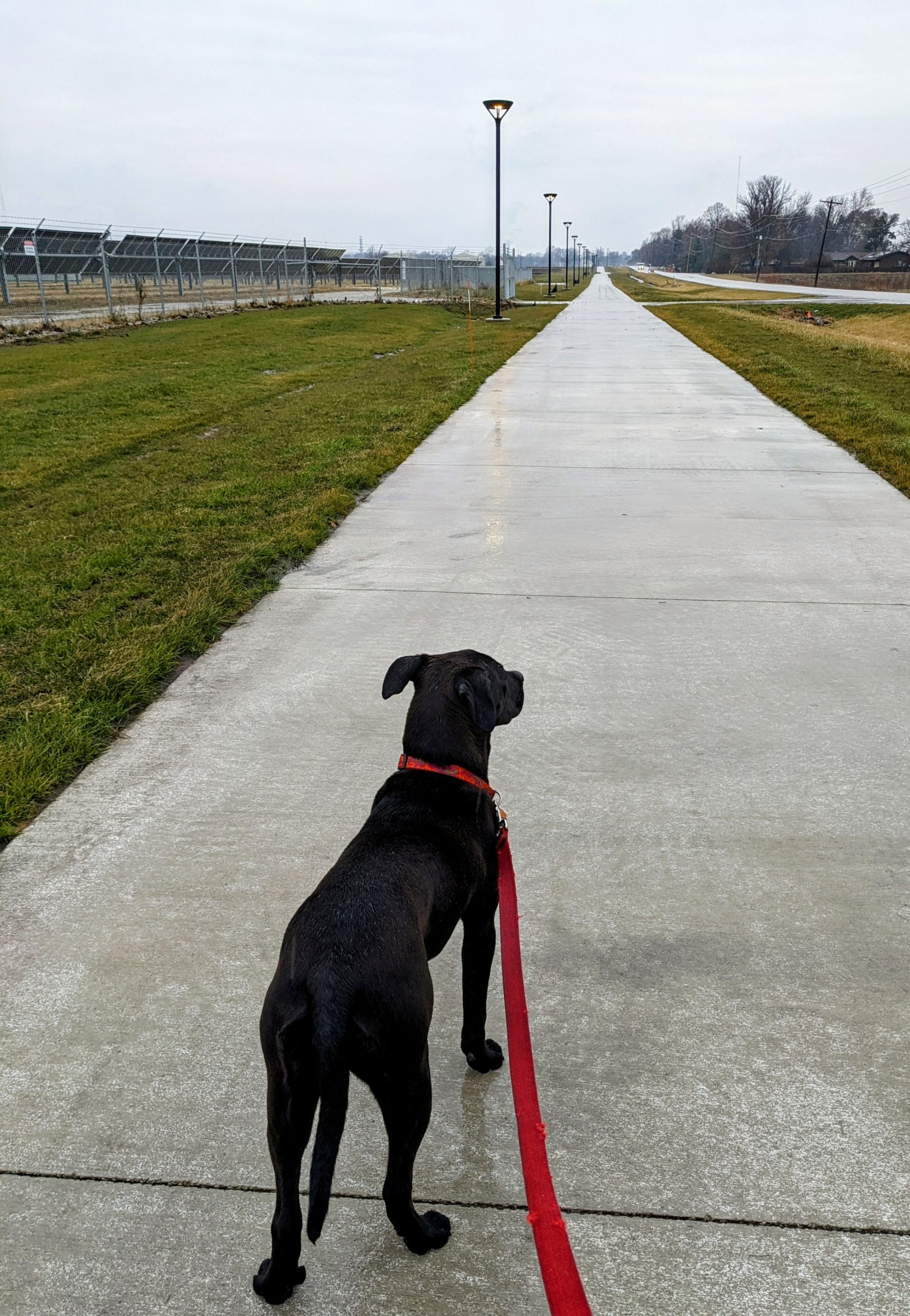

Ashley is teaching me how to stalk squirrels. First lesson: When the squirrel’s head is down, creep forward; when the squirrel raises his head, freeze.
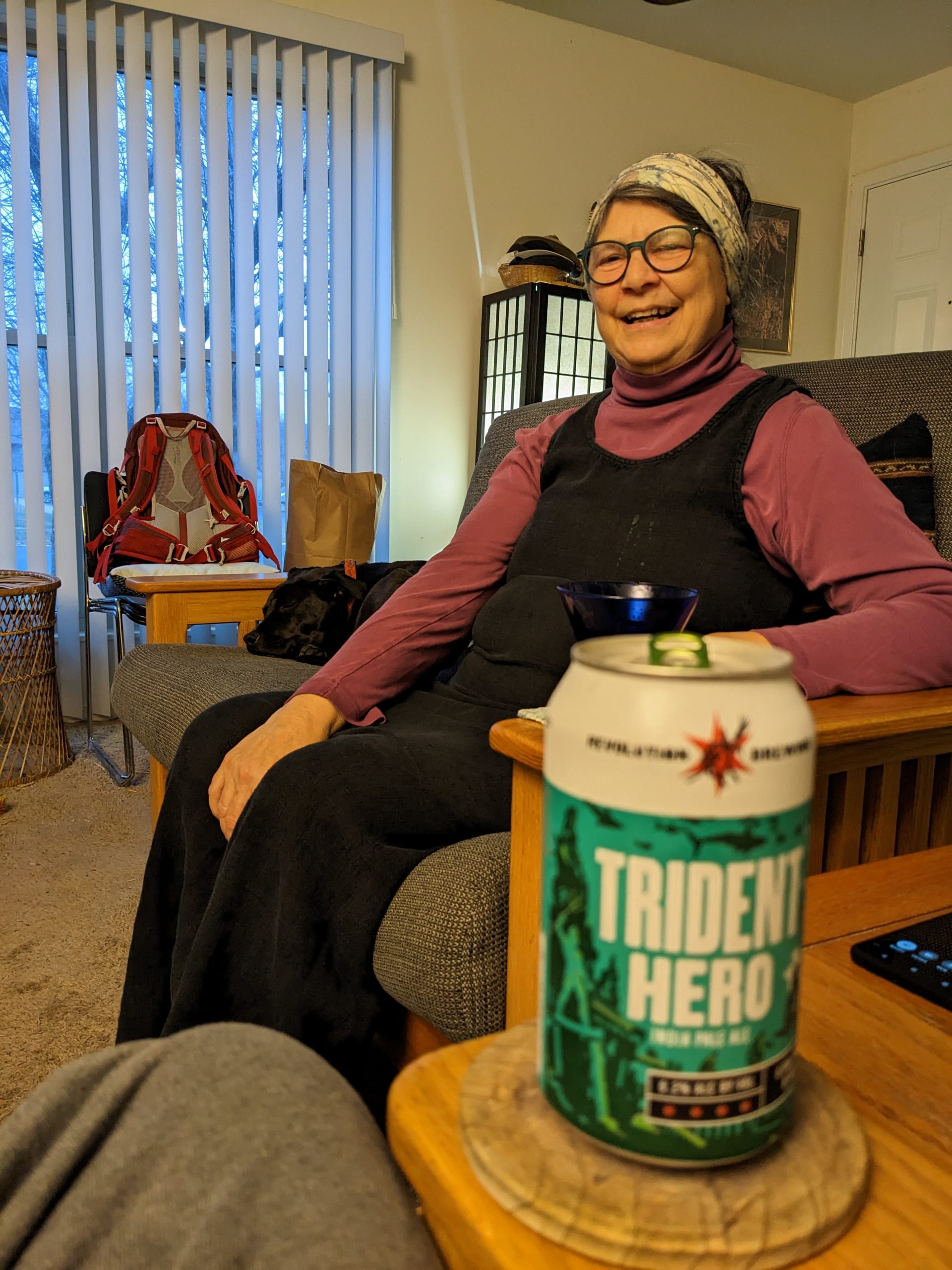
Ashley, Jackie with a martini, and my beer.
Do I need a new running training routine? Probably not? I’ve had pretty good success with running for several years now—I’ve maintained my aerobic fitness, boosted the distance I can run, and suffered almost no injuries. But what if I could reduce not only my injuries, but also my risk of injuries? What if I could run much faster?
I’ve never been a fast runner, and I was okay with that. I never wanted to win races. I just wanted to be fit and healthy. And yet….
Over the past couple of weeks I read Christopher McDougall and Eric Orton’s new book Born to Run 2: The Ultimate Training Guide, which draws on the vast material that McDougall wrote about in the original Born to Run, and in Natural Born Heroes, but offers a detailed 90-day training program, rather than requiring that you read between the lines of the narratives in those books. It’s a regularized version of the training Eric Orton provided while McDougall was writing Born to Run—training that took him from a frequently injured recreational running to someone who routinely runs ultramarathons.
It sounded good enough to me that I was going to give it a try. In fact, I was going to start with day one this past Monday. Then I read the first day’s activities and observed that before day one (on day zero, I suppose), you’re supposed to time yourself running one mile as fast as you can. The book then goes on to use that time to give you target paces for all the upcoming runs.
There was too much ice and snow to get my one-mile time until yesterday, when I did go out and run one mile fast. I mean, not very fast, because, as I said at the start, I’m not a very fast runner. But I did run 1 mile in 10:04, which is very nearly as fast as I’ve ever measured myself running (click for a few measurements from 2003 and 2004).
Not only does that mean that my running speed has scarcely declined in the past 20 years, it also challenges one of my fundamental beliefs. Back in the day I used to be able to average 12-minute miles, which meant that I’d have to run three times as fast to be competitive in a race. (And the past few years, as I was focusing on MAF training, I’ve done a lot of my runs even slower than that—averaging 14 or 15 minutes per mile.) But if I can run a 10-minute mile, then I’d only have to run twice as fast in order to be running with the non-elite front-of-the-pack runners.
Of course, McDougall makes no promises that his 90-day program will double my running speed, but even if I run only a little faster, with only a slightly lower chance of injury, it seems like it would be well worth giving it a try.
I’ve got my day-zero measurement, so maybe I could start in on day one of the program. Except, we’re still right at the start of winter, and I’m not at all sure that I’ll be able to follow the schedule, as far as the outdoor runs are concerned. But I don’t want to wait.
I think I’ll try to split the difference this way: I’ll start in on the various exercises in the program, many of which are indoor exercises anyway. They look like the sort of thing that need some practice anyway, so I’ll focus on learning them and on watching the weather. As soon as it looks like I’ll have a reasonable shot at getting the runs in, with only minor adjustments to the scheduled days, I’ll jump in.
I’ll keep you posted.
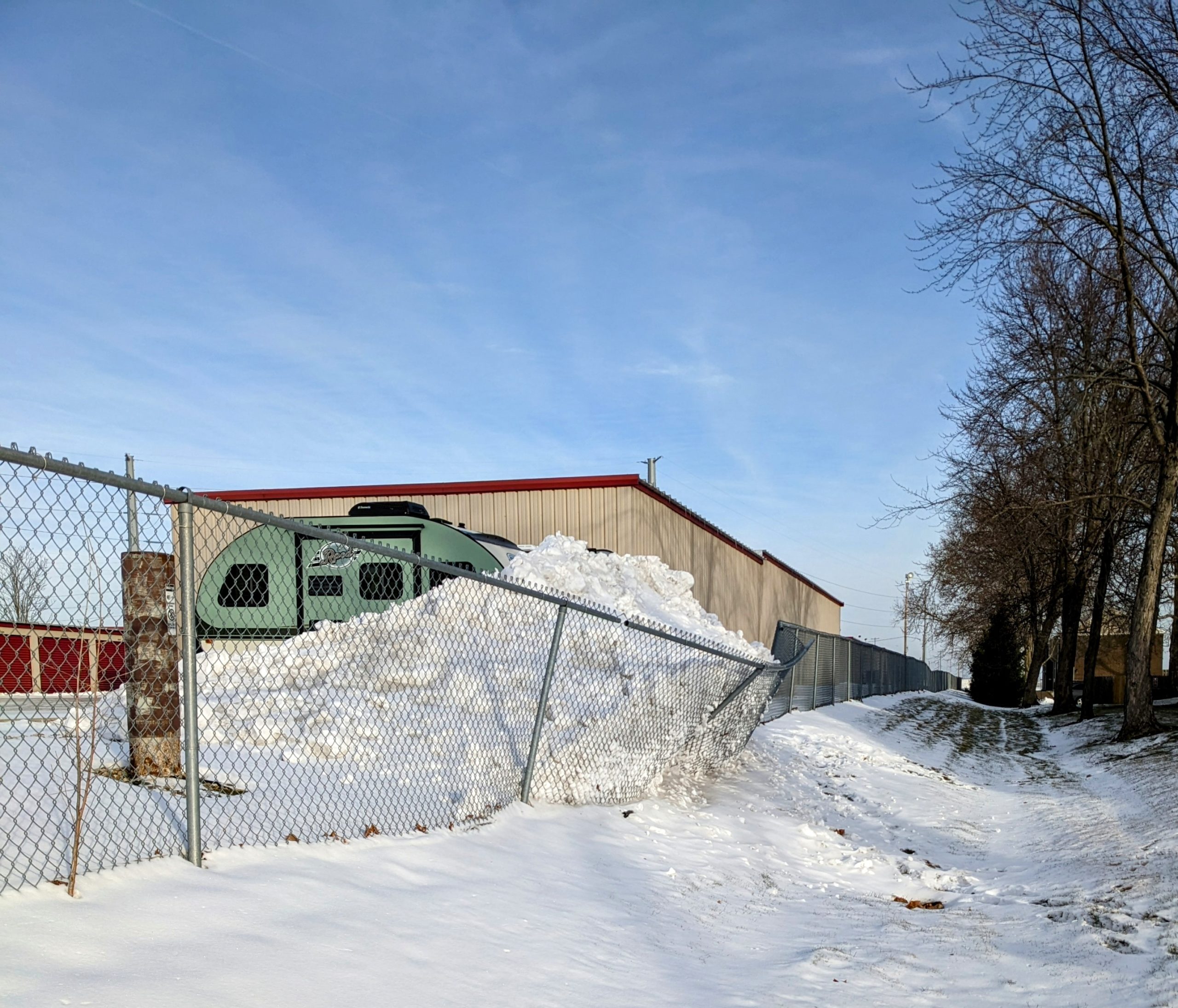
Dunno whether the self-storage place next door plows their own parking lot or hires it done, but either way I bet they’re not thrilled.
The sunrise this morning was so lovely I actually stepped outdoors to take a photo, rather than just shooting it through the window.

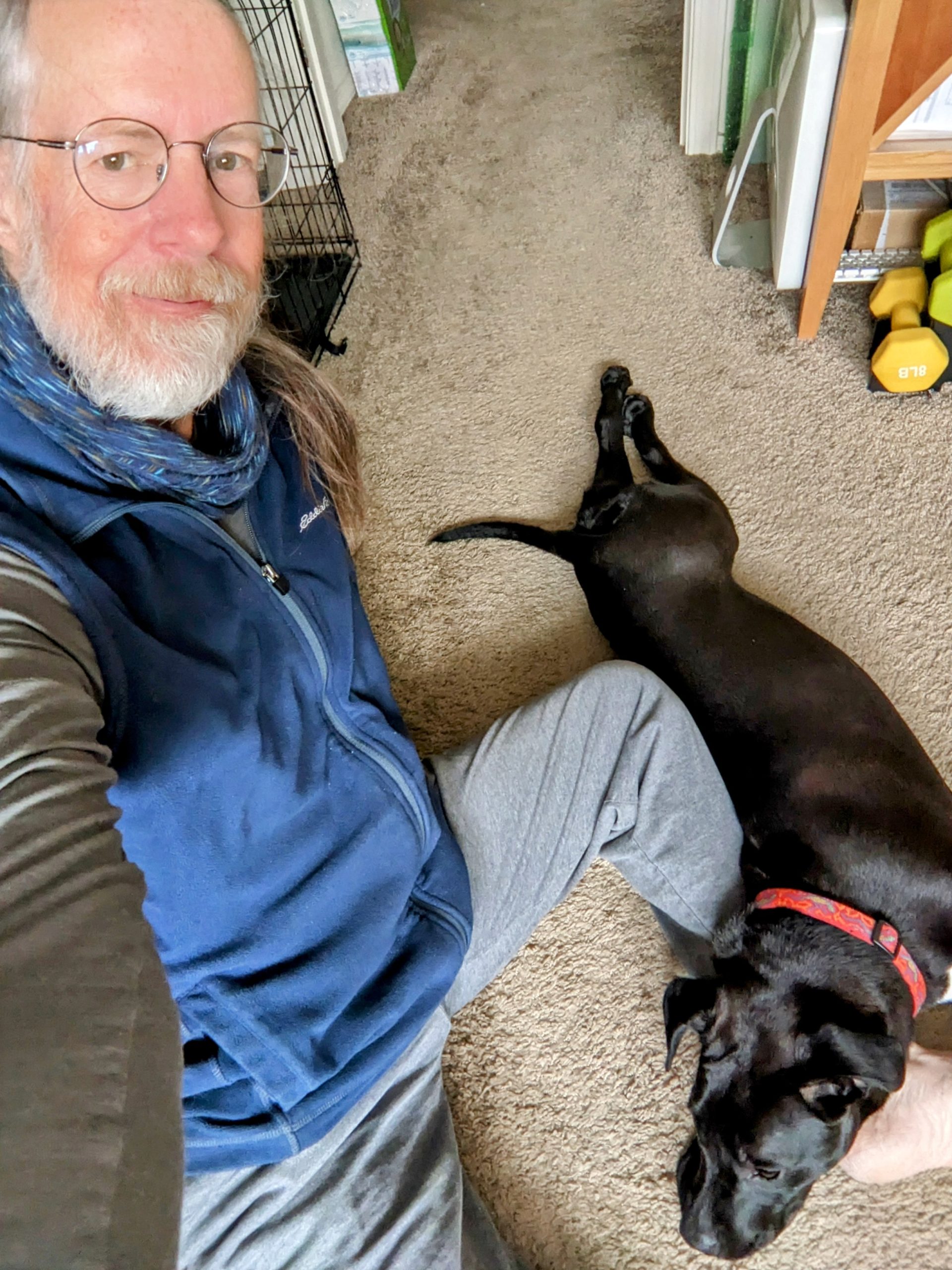
Doing my morning exercises. Ashley is the best of all possible workout companions.
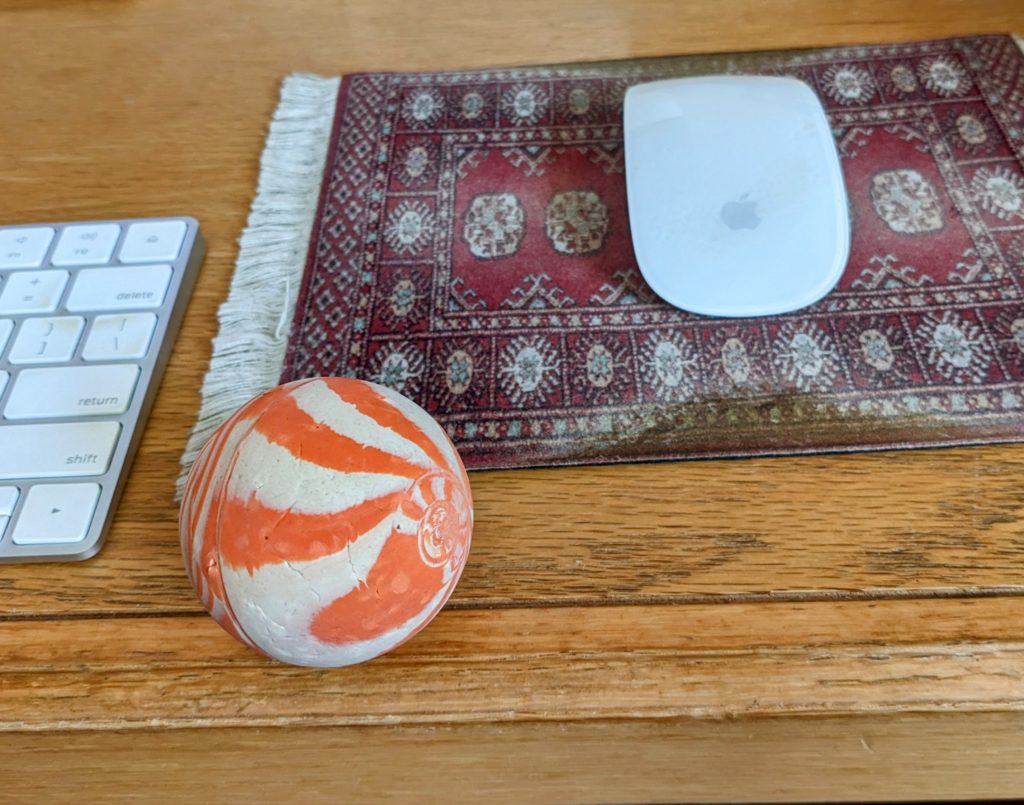
For a couple of years now I’ve included in my warm-up mobilizing the joints in my foot by standing on and rolling this hard rubber ball. It’s really helped reduce running injuries.
But Ashley will use whatever means necessary to get the ball. So for two months I’ve scarcely done it.
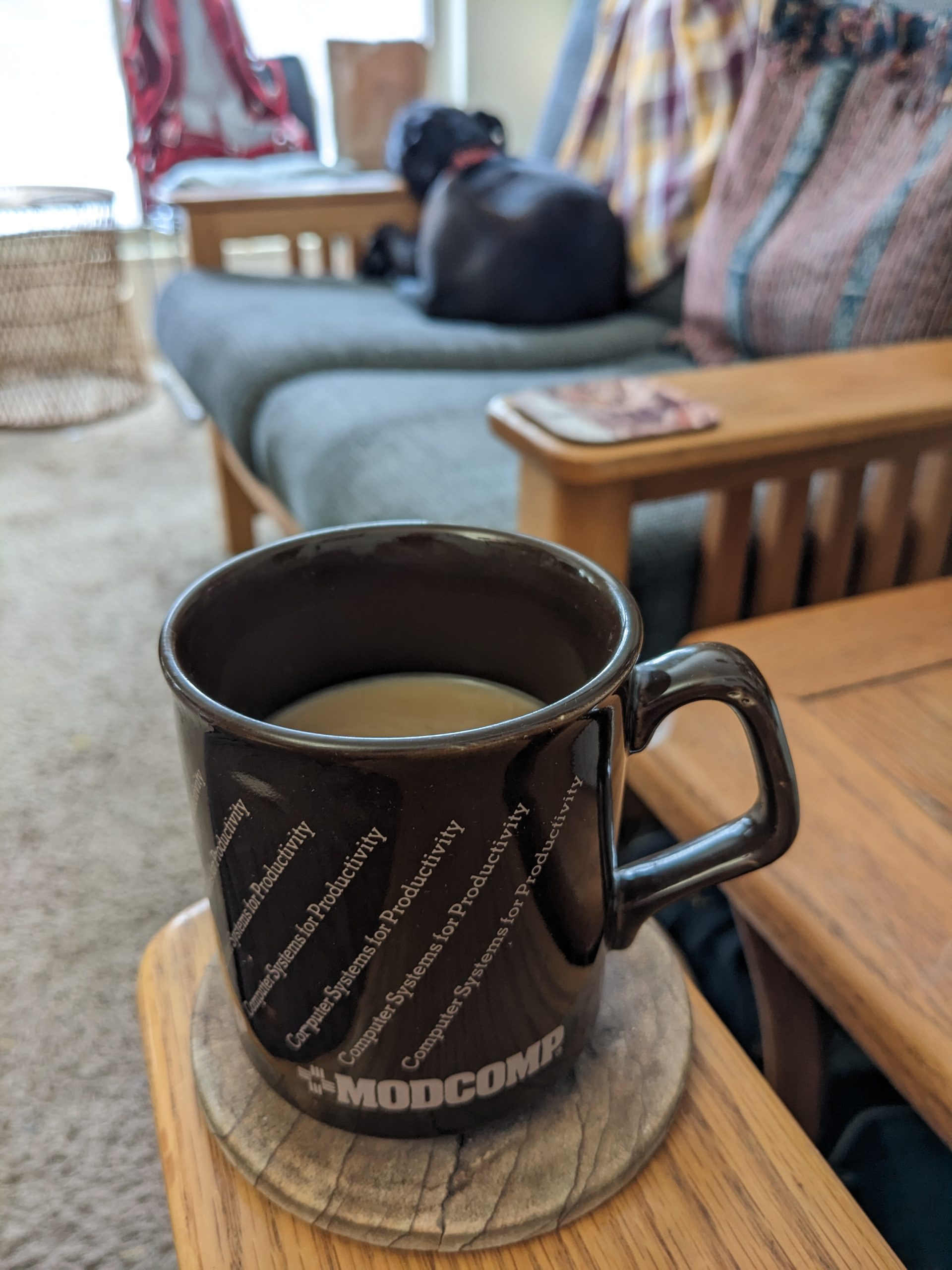
I made two big ol’ mugs of hot cocoa. Delicious and warming! Now I’ve filled my empty mug with coffee, so that the cocoa dredges will make it ever-so-slightly mocha-y.
The pandemic is bad, but one bonus of avoiding public places is that I hear almost no Christmas music—which means that I’m not already tired of it before I’m ready to listen to some.
Now listening to Vince Guaraldi’s Peanuts Christmas album.
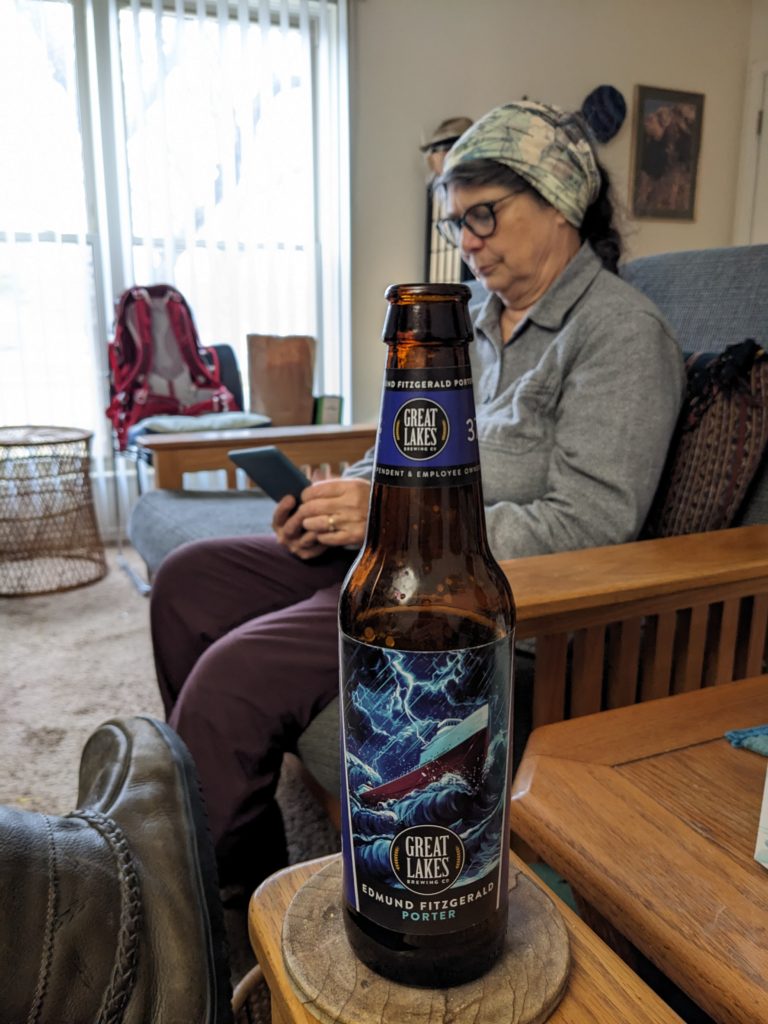
My brother doesn’t much like porters, but I find them just right for winter.