

My whole life would have been better if there’d been social and financial support for letting people on the edge spend a few months away from the strains of workaday life. Bring Back the Nervous Breakdown
2021-02-04 06:44
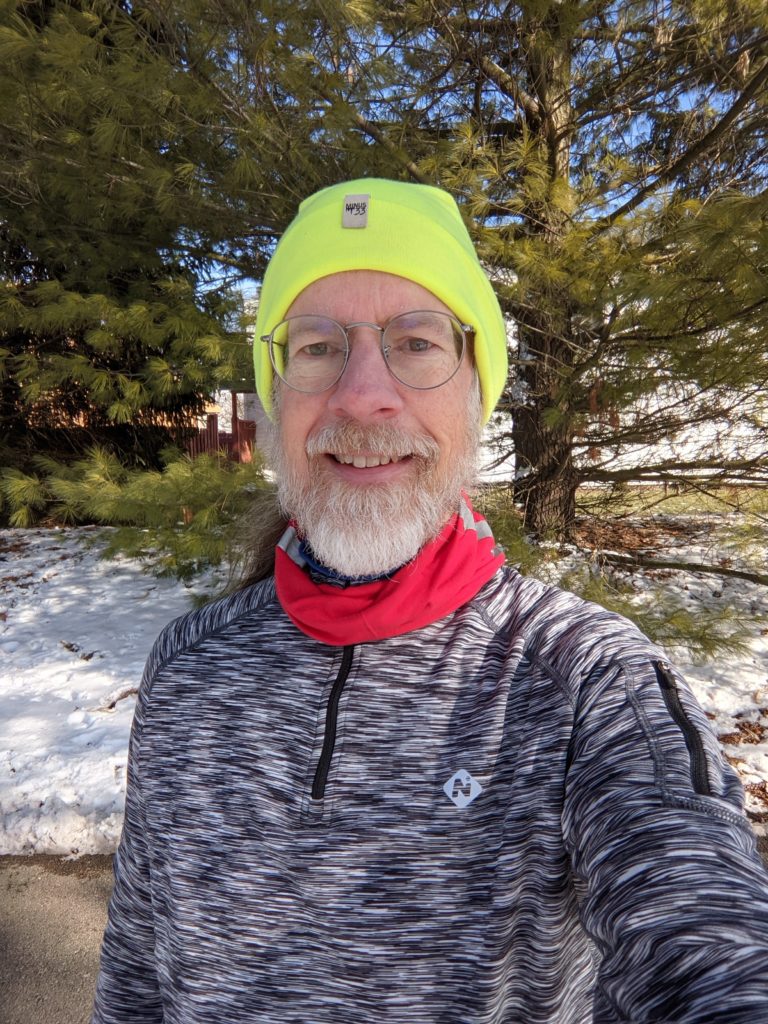
Last year I used my consumerist impulses to motivate myself to get out for runs—I’d buy running gear, and then feel like I had to go for runs to justify the purchase. 🏃🏻♂️ This year I’m running anyway. But that doesn’t mean I can’t buy new running gear. This handsome top is perfect for runs when it’s just about freezing.
2021-02-03 11:52
If people will just stay home for the Super Bowl, Mardi Gras, and May Day this whole pandemic thing might well be over by 4th of July.
2021-02-03 11:05
It is perpetually tempting to imagine letting the red states (whose voters imagine that they are getting the short end of the stick, when in fact they are vastly subsidized) go their own way. Tempting, but both impossible and harmful.
Much better, as cogently explained here by @interfluidity, is to build things up in the red states, so that their citizens perceive that they have an economic and political stake in the United States.
“The only way to mitigate this tendency towards corrosive crisis is to ensure that differences of interest between larger and smaller states are generally modest.”
Recommended reading: Functional Training and Beyond by Adam Sinicki

I’ve long struggled to program my training, a task that is difficult because I want to get better at everything. I want to be stronger and faster. I want to have more endurance for running and more endurance for walking (which turn out not to carry over perfectly from one to the other). I want to maintain and deepen my taiji practice and my parkour practice. I want to learn rock climbing and fencing.
This isn’t a new problem for me. As just one example, back in 2013 I was considering programming training not organized by the week but perhaps in 9-day training cycles.
There are at least two problems that I’m trying to address. One is just fitting in training for each capability I want to get better at. The other is how to not break down under that training load (which involves at least fitting in enough recovery time, but other stuff as well).
During the pandemic I’ve done okay, by focusing on exercise. Although I tweak things pretty often, very roughly I’ve organized each week to include:
- 3 strength training workouts
- 2 runs (a “long” run and a “fast” run)
- 1 HIIT workout
- 2 rest days
That looks pretty good until you do the math and see that it only works for 8-day weeks.
Besides that, note that this excludes my taiji practice (which amounted to more than 5 hours a week back in pre-pandemic days, because besides teaching I was engaging in my own practice). It also excludes my long, slow warmups (which I’ve started calling my “morning exercises,” since I do them pretty much every morning before proceeding with my “workout” for the day).
The way I’ve been making it sort-of work is by doubling up how I think about some of the workouts. A “fast” run with sprint intervals is a HIIT workout, and a HIIT workout with kettlebell swings is a strength-training session.
Still, there’s no hope to make something like this work if I want to add in parkour, rock climbing, and fencing. Likewise, I know from experience that I need a full day to recover from a very long (14-mile or longer) walk, so doing one of those requires devoting two days out of the week to just one training session.
So, I’m left in a quandary. How can I get better at all the things I already do and add in some additional activities as well? (Just before the pandemic I’d started taking an aikido class; I’m sure I’d enjoy finding a local group that plays Ultimate Frisbee….)
Happily for me, Adam Sinicki (aka The Bioneer) has written a book that addresses exactly this issue. The book is Functional Training and Beyond: Building the Ultimate Superfunctional Body and Mind. It starts out talking about “functional training,” and about the history of “getting in shape” i.e. “physical culture.” Then it runs though all the most common training modalities (bodybuilding, powerlifting, kettlebells, crossfit, etc.), before proceeding to talk specifically about how to take the best from each one, and then how to program it all into a workout plan.
His thinking on programming is pretty straightforward: You don’t just add everything together. Rather, you look through all the exercises you might do and pick the ones with the most cross-over benefit relevant to your goals, and then build an exercise program out of those (and you sequence them correctly to maximize your gains in terms of strength, mobility, flexibility, skills acquisition, speed, power, hypertrophy, etc.).
I’m going to spend some time (and some blog posts here) thinking over just how I want to do that.
2021-01-27 07:02
Turns out, pumpkin pie without whipped cream is also good with a hoppy beer. 🥧🍺

2021-01-25 14:02
Pumpkin pie with whipped cream 🥧 goes surprisingly well with a nice hoppy beer 🍺.
2021-01-23 06:31
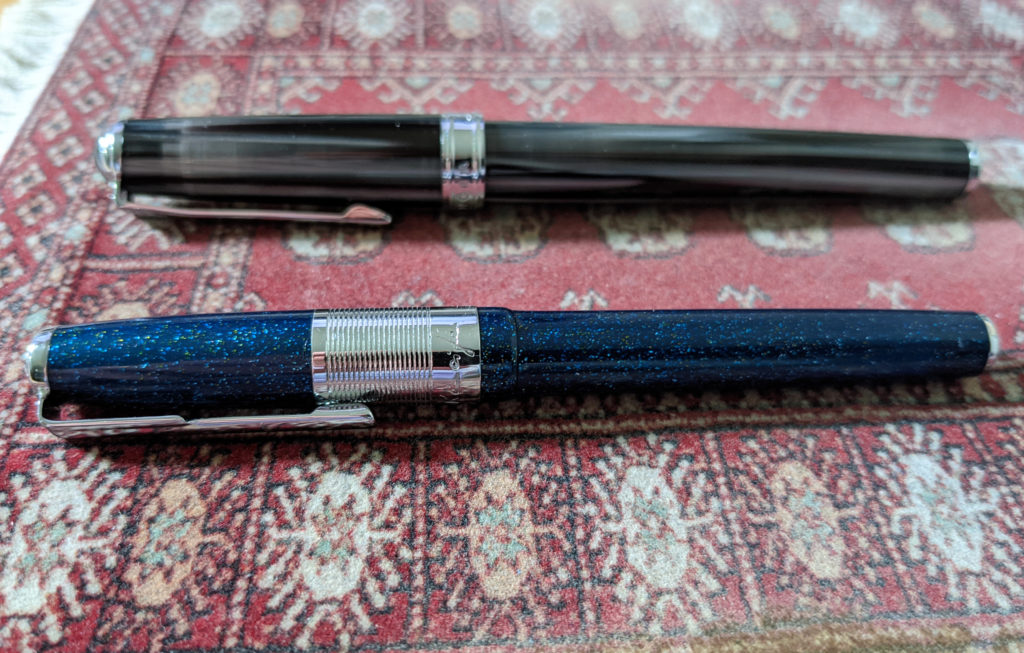
Today is National Handwriting Day. I need to write some letters.
2021-01-21 09:16
If you’ve been following along, you’ll know that I never quit writing link posts, even after they became the backward, less developed countries of the internet.
“The sharing moved to social media and got lost with the ephemera.”
Source: CJ Chilvers: A Love Letter to the Link Post via @numericcitizen.
2021-01-21 08:58
I have a vivid memory from when I was a boy, of the distinctive smell of fried bacon in my mom’s parents house in Williamsville. I always expected my house to smell like that when I fried bacon, but it never has. But Jackie got some fancy dry-cured bacon (from the same place her mom used to get country hams), and for the first time fixing breakfast in my house gives it the same wonderful smell as my grandmother fixing bacon in her house.