
Some time in October every year I quit being able to get enough sun to make my own vitamin D. Eventually it gets too chilly to go out with enough skin exposed, and even if it stays warm late into the fall, eventually the implacable reality of the earth’s axial tilt means there simply aren’t enough minutes of the day when the appropriate frequencies of UV light shine down where I live.
As a practical matter, this period runs about six months. By early March there’s probably enough UV available, but it’s usually early April before the stars align such that we can take full advantage. We need days when it gets warm fairly early, because the UV is only available for a few hours right around solar noon. (Warmth at 3:00 PM is great, but doesn’t help with the UV until later in the year when the sun is even higher.) We need to get at least two or three of those days each week. (Just two days would probably be enough, if one never had schedule conflicts that kept one out of the sun around solar noon.)
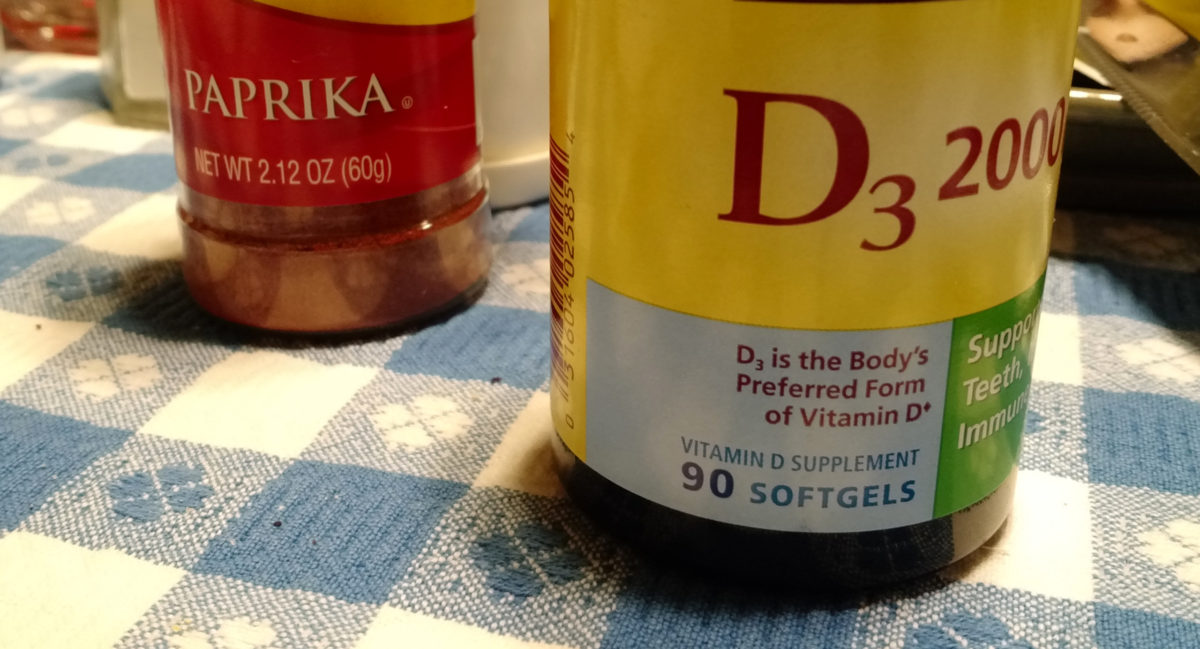
My experience has been this all works out to mean that I need to rely on supplements for my vitamin D needs for right around 180 days per year. With that in mind, I’ve taken to buying two 90-pill bottles of vitamin D each fall.
When I notice—as I say, usually sometime in October—that it has been several days since I managed to get enough sun, I start taking the pills.
Just a few days ago, I finished my first bottle and opened my second.
That means I’ve made it halfway through! Another 85 or 87 days and I’ll be done with the pills and able to make my own vitamin D!
The last few years I was taking 1000 IU pills. This year I upped it to 2000 IU each day. (Not quite as big a change it sounds—I used to eat a lot of children’s breakfast cereals, often supplemented with vitamin D, but since I went low-carb I’m eating a lot less of those.)
It’s still a somewhat higher dose, which I think may be helping. So far this year I’ve only had a couple of days when I found myself glum for no good reason, a bit better than average, I think.
Steven always warns me against imagining that spring starts before April. But soon—less than 90 days now—I’ll once again be able to make my own vitamin D.