
Anybody who follows me knows that I’m all about fitness, gamification, and especially the intersection of fitness and gamification. Add to that a bit of program design, and I’m already patient zero for @TheBioneer’s latest video, even before thinking about larping.
Category: Fitness
2022-07-14 12:20
I just shared this with my brother, explaining that The Bioneer was responding to someone who had criticized his whole schtick:
I’m the first to admit that I don’t need to be able to climb a rope. Or sprint really fast. The average Joe just needs to be able to sit and type.
That’s why I coined the phrase “SuperFunctional.” I want to be able to do more stuff than is strictly necessary. Because it’s cool.
He called this “Larping as an Athlete.”
This is preposterous: I am larping as Batman!
Seriously, though. That’s what I’m doing.
Source: Functional Training is NOT a Waste of Time – A Defense – The Bioneer
My brother indicated that he understood, which made me think: We might all be happier if we thought of ourselves as larping at whatever we’re doing.
Best if we do it seriously.
Training for everything
If I’m serious about training to get better at everything—and I am—then I need to think seriously about how to fit in, and recover from, all that training. This post is my first cut at documenting some of my early thinking on how I might do that.
A plan to fit in everything needs to start with eliminating having whole days devoted to just one particular kind of exercise: strength days, running days, etc. Instead, most days will have to have at least two (hopefully complimentary) exercise activities.
I had already started work on thinking about the best ways to combine exercise activities in ways that would reinforce one another, based on the ideas of Adam Sinicki (aka The Bioneer). But more recently the work of Mark Wildman has provided what may be the solution: What he calls “the Tetris of training.” (That’s a link to the first of a series of videos where he talks about program design in those terms.)
The basic idea here is that you divide your workout into pieces: Maybe a kettlebell squat piece, or a single-arm club-swinging piece, maybe a running piece, etc. Then structure each piece as a specific block that can be done in a specific amount of time, and organize those those blocks into a sequence to make a workout that can be done in 30, 60, or 90 minutes (including a warmup at the beginning and a cooldown at the end), and lay those workouts out on a weekly timeline, with appropriate rest days.
Another key part of the idea is that each of those pieces should be its own progressive program, running on its own schedule, but arranged with the others so that they’re not all progressing upward at the same rate.
This can (and probably should) get pretty fancy, because there are all kinds of considerations. You want to:
- Cover all the basic movement patterns (walk, run, crawl, lift & carry, climb, throw & catch, etc.)
- Hit all the large muscles in your body (glutes, quads, hamstrings, pecs, lats, traps, etc.)
- Work all the basic directions of movement (Roll, Pitch, Yaw, Heave, Sway, Surge)
- Avoid working the same muscle patterns two days in a row (to allow for recovery)
- Make sure the important muscle patterns get hit at least twice a week
Besides all that stuff, I particularly want to include some “skills” training, where I’ll work on things like parkour, HEMA, rock climbing, fencing, etc.
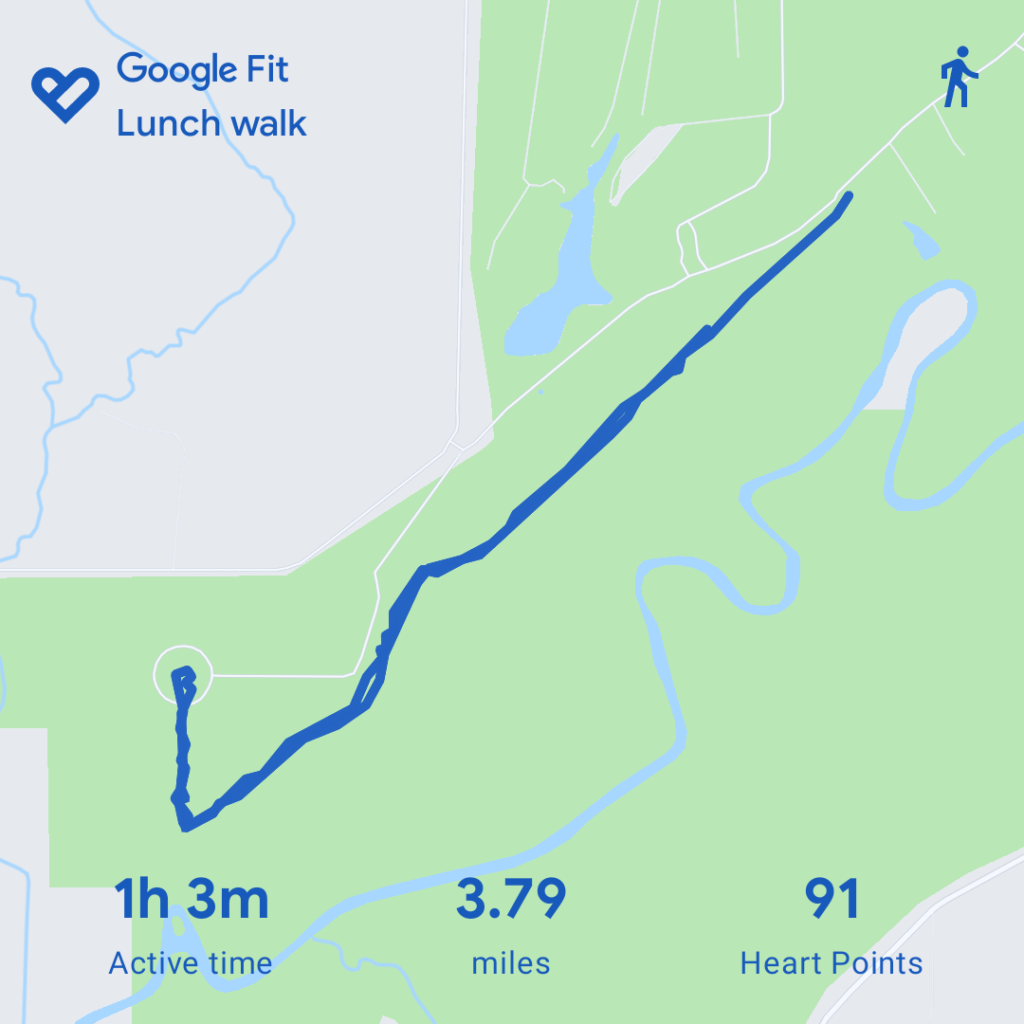
I roughed out a plan along these lines, and gave it a try last week and this week. I have a couple of external constraints that I’m working around. One is that I want to be able to join my tai chi group in our Monday/Wednesday/Friday practice sessions. Another is that I want to include time each week for both a long run, and a long hike with Jackie—and both of those activities require flexibility related to the weather. Last week I ditched two of the tai chi sessions, but got in both a hike with Jackie and a long trail run. This week I couldn’t do one tai chi session because of rain, plus I had to take two unscheduled rest days because I tweaked something in my hip.
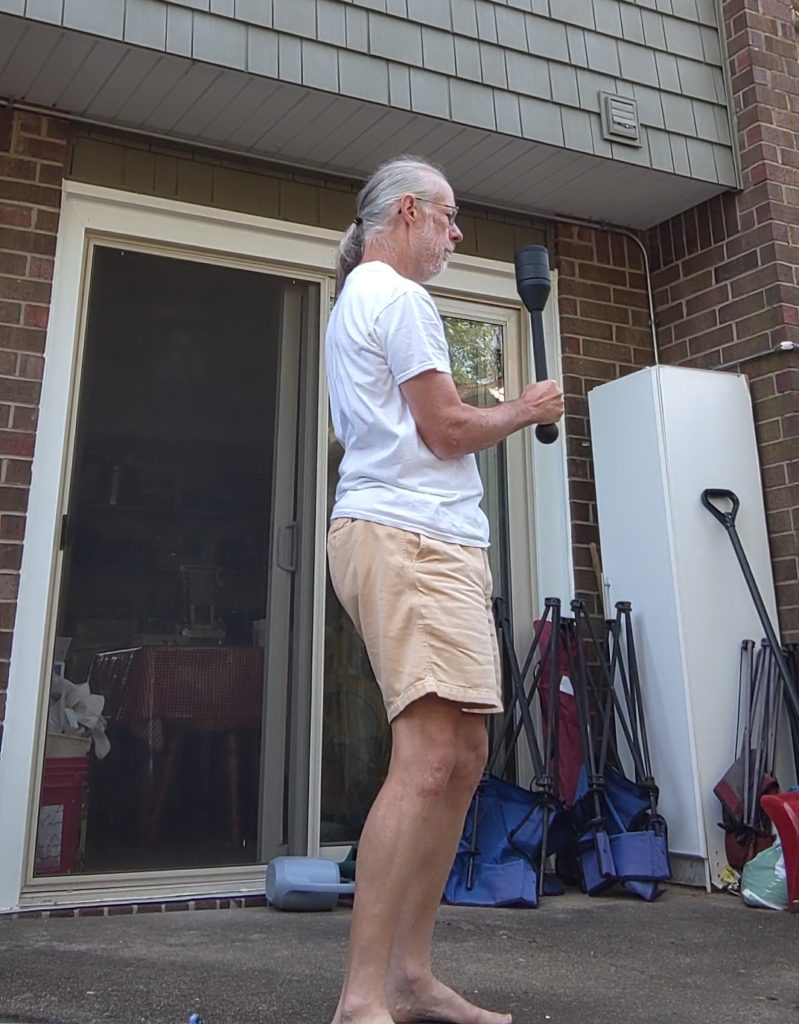
Today my hip seems to be recovered. I’ve done my heavy club swinging for the day, and I’ve gotten in a long run. Now I need to look at my draft schedule and see how to restart my workout plan, given all my many constraints.
Groping my way toward an indigenous movement practice 🏃💪🏻🏋️🦥
Is it okay for someone who looks like me to seek or follow any sort of indigenous practice? Probably not? When a descendant of colonizers makes use of any indigenous practice it’s very likely to be an act of cultural appropriation. It doesn’t have to be, but to a first approximation, it probably is.
Even so, I find much that I like in various indigenous movement practices, which makes me want to find a way through this ethical thicket. And, I have come up with a couple of ideas.
First of all, my people have our own practices. Genetically I’m descended from people of Northwestern Europe—Scots, Irish, English, and Dutch that I know of. Just going by appearance, I conjecture that Celtic genes dominate.
There’s been an effort to recreate Celtic spiritual practices. I don’t know of any similar effort related to movement practices, but that’s probably just my ignorance. A single on-line search brought me to this page on Celtic martial arts which has a bunch of links to ancient sources, and to sources that are merely old, such as the fencing manuals I’ve become familiar with due to my interest in historical European martial arts. Finding that much so easily makes me imagine there’s probably more out there.
Culturally I’m descended from the broad line of Western culture going back to the ancient Greeks and Romans, who had very strong movement practices. Interestingly, our movement culture was largely crushed by Christianity just like cultures all over the planet. (The Catholic church believed that any effort to improve the body inevitably distracted from what they viewed as the much more important effort to improve the soul. There’s a nice discussion of this in Daniel Kunitz’s book Lift, which I wrote about here.)
There is a vast body of work on ancient Greek movement culture—ancient sources, translations, compilations, analysis, etc. In his book Natural Born Heroes, Christopher McDougall discusses various aspects at some length. I wrote about that book here.
What started me down this path was discovering Well For Culture, which bills itself as an “Indigenous Wellness Initiative.” Poking around their website I found all sorts of messages that resonate with me. And yet, as I described at the top, I hesitate to simply appropriate their cultural knowledge for my own use.
Which brings me to my second idea, which is that perhaps it’s okay to examine those portions of their cultural knowledge that they choose to make public, and use that knowledge as a lens though which to examine my own cultural traditions. Where there is overlap, I can consider emphasizing those aspects in my own movement practice. Where there is divergence, I can consider whether the differences spring from different histories, different environments, different purposes, or some other source, and let that consideration inform my own practice.
I continue to struggle just a bit with this. Are these indigenous practices being made public with the goal of helping everyone? Or are they being made public—in English, on the internet—because in the modern world other ways of reaching their own people are so limited?
In some cases I’m pretty confident that my use of indigenous knowledge is intended and supported. For example, the tai chi that I have learned and practice used to be held very closely within individual Chinese families, but has for some time been taught much more widely, with the evident goal of sharing those practices with everyone.
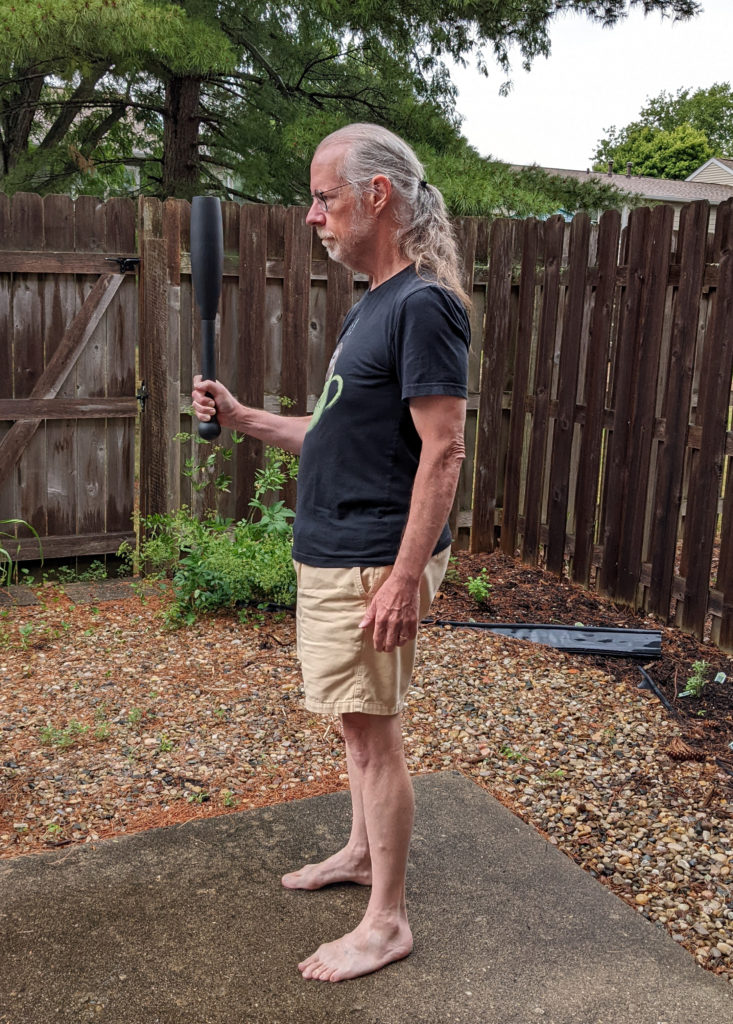
As another example, I’ve started exercising with steel clubs, in the tradition of Hindu (and Persian) club-swinging training. Doing this for exercise is a clear case of cultural appropriation: the British colonizers of India brought the practice back to England in the 19th century. Perhaps—hopefully—the cultural appropriation aspect is somewhat mitigated by the fact that clubs (as weapons) were used by every human culture, going back 10,000 years that we know of.
I’ve looked quickly to see if there’s any evidence for the use of clubs as a training tool, aside from its use as a weapon, and found that E. Ferdinand Lemaike in 1889, in his book Indian Clubs and How to Use Them, had this to say:
The Greeks and the Romans made great use of them, and gave them a prominent place among their various gymnastic exercises….
Not definitive—he cites no source for his statement—but it at least suggests that people in England thought they were following indigenous practices of their own culture.
He goes on to say:
That the club is the most ancient weapon nobody can deny; it is also the most natural and handy that could be found, and consequently the first used by man, for we find that Cain slew Abel with a club. The ordinary weapon of the athletic god Hercules was a club; and though he also used the bow and arrow, he is always represented with his club.
Although in this post I’m focusing on movement practice in particular, I should mention that Well For Culture emphasizes a more broad-based set of practices intended to produce wellness, including diet, song, ceremony, and much more. That fact makes me all the more inclined to look to my own cultural traditions for analogous practices and teachings.
2022-06-20 15:07
A fine run! 🏃 After getting home I did a short workout with my new Adex adjustable steel club: 6 sets each of Inside Circles, Outside Circles, and Shield Casts, each set 5 reps with each hand.
2022-06-15 13:04
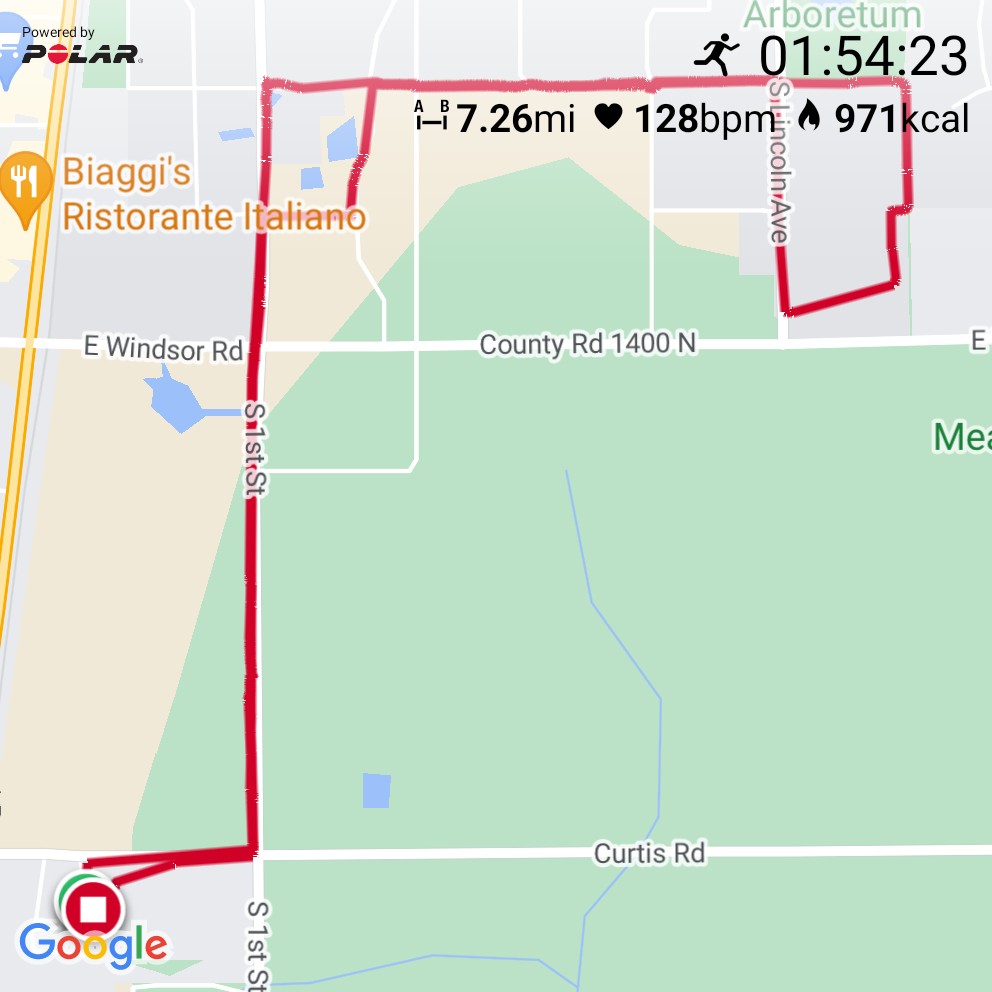
Now that I can run 8 miles, I can run some interesting places, such as the U of I Arboretum. 🏃 Ridiculously high HR due mostly to the heat; I wasn’t running that hard.

Learning movement through words
I am bad at watching somebody move and then doing “the same thing.” This made it very difficult for me to learn any movement-based activity—martial arts, dance, parkour, gymnastics—until I came up with a coping strategy: Generate a verbal description of the move, then do the move by executing my verbal description.
As a coping strategy, this worked great—it’s how I learned my tai chi.
The downside is that it’s very slow. I have seen dancers who can look at new choreography and copy it so fast you can scarcely tell that it’s new, rather than something that’s been practiced hundreds of times. By contrast, I take almost forever to learn something like that.
First, I have to watch the move repeatedly, so I can begin to construct my verbal description. Then, once I have a framework for how it goes, I need to watch it repeatedly again so I can notice specific details and add them to the verbal description. Only then can I even begin to practice the move myself. Then I need to watch the move repeatedly yet again (now while trying to do it), because only then can I begin to compare what I’m doing to what the instructor is doing, and adjust my verbal description when I notice a discrepancy.
I end up with something like this (one instance of the tai chi move “step back and whirl arms”):
- Shift your weight to the left foot
- Turn your right foot in 4 or 5 degrees
- Shift your weight to the right foot and close your step to the right
- Step back with the left foot into santi position
- Keep your left arm coming back, and your weight coming back until your arm is all the way back and all your weight is on your left foot
- Step to the side with your right foot, so your right foot is even with and parallel with the left
- Do a toe pivot with the right foot, to get it out of the way
- Do a heel pivot with the left foot so that it is in the right position for santi on the other side
- Step back on the right
Note that the whole thing depends on having previously established a bit of vocabulary—toe pivots, heel pivots, close step, and of course, santi position.
As I say, the downside is that it’s very slow. There is a countervailing upside, which is that by the time I have learned a move I have already pre-generated a verbal description of the move to use when I want to teach the move. Essentially, I already have the instructions for every tai chi move in my head. I run through them silently as I execute the move anyway. About all I do that’s different when I teach the move is say the instructions out loud. (I use the first few classes to establish the vocabulary—teaching toe pivots, heel pivots, santi position, etc.)
I realized a while ago that the fact that I need to learn this way was probably why I’ve been finding Mark Wildman’s movement skills videos so compelling: He was already creating these verbal descriptions for me, saving me a bunch of time and effort. But it was only today, after having watched probably two hundred of his videos, that I came upon this one, in which he advocates for the students to repeat the descriptions of the moves aloud as they practice them:
This is probably a great idea. It’s not one that I would have tried to impose on my students, but I think I’m going to start doing this myself, to remind myself of how a move goes as I practice it.
2022-06-10 13:25
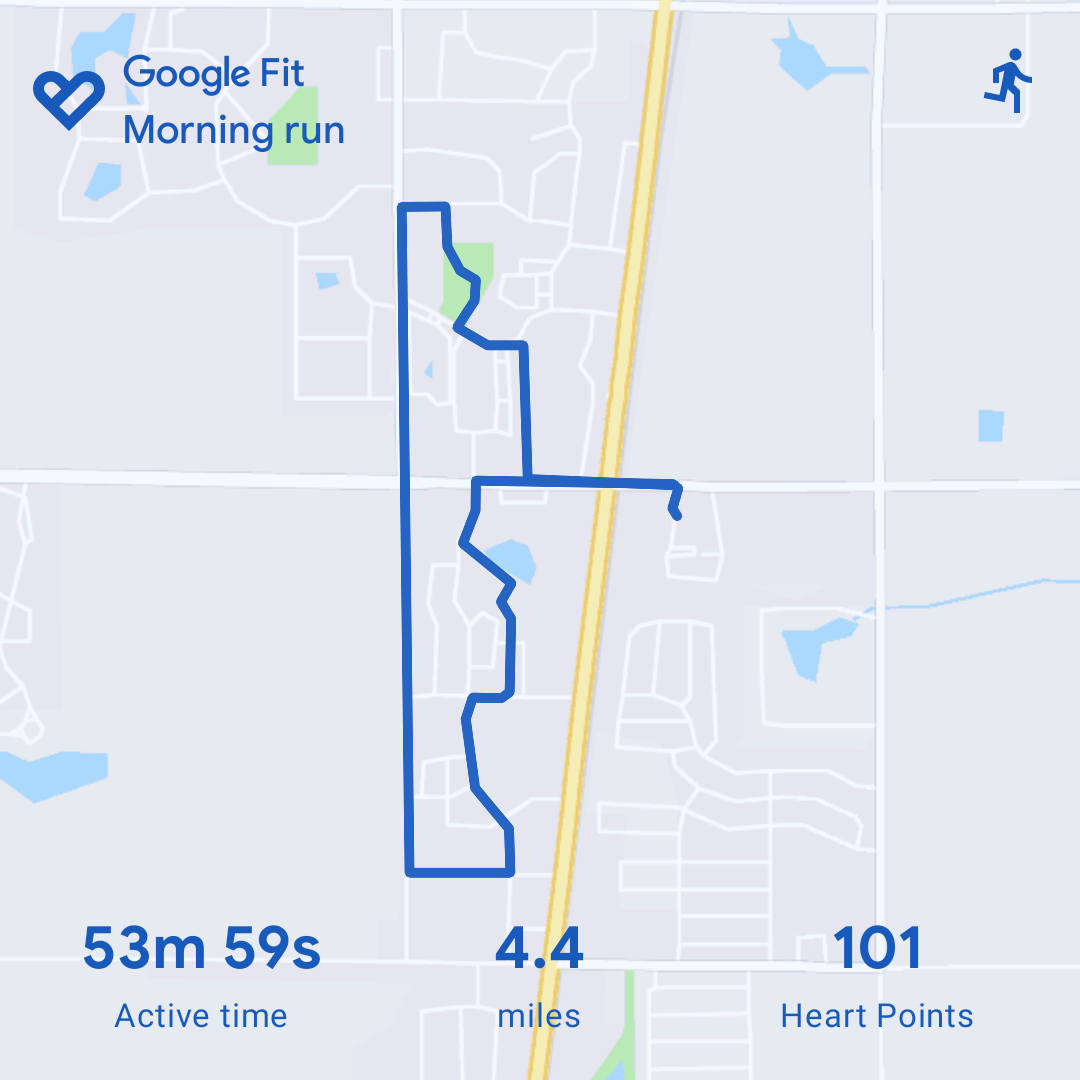
Got in a very nice pre-breakfast run. Felt great throughout. 🏃
2022-06-01 05:57
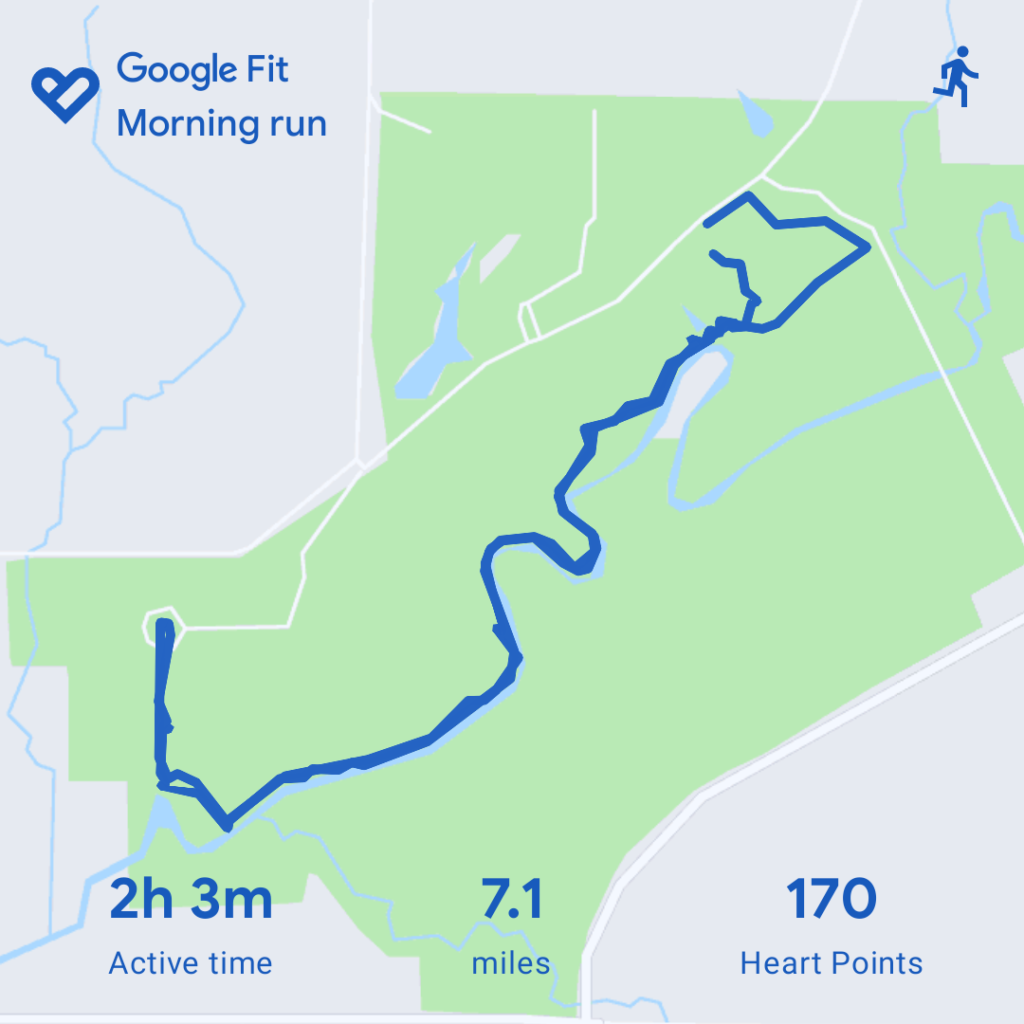
A very nice run yesterday along the bank of the Sangamon. 🏃🏻♂️


2022-05-23 14:15
Did a trail run at Allerton Park. I ran to the Sunsinger and back while Jackie walked as far as the Dying Senator and back. Worked pretty well—we started at the Visitor’s Center and then met up again near the Sunken Garden. 🏃🏻♂️