
I got kinda ho-hum about rainbows when I lived in California, because they were so common. Back here in Illinois they’re more of a big deal—I probably see less than one a year, on average.


I got kinda ho-hum about rainbows when I lived in California, because they were so common. Back here in Illinois they’re more of a big deal—I probably see less than one a year, on average.
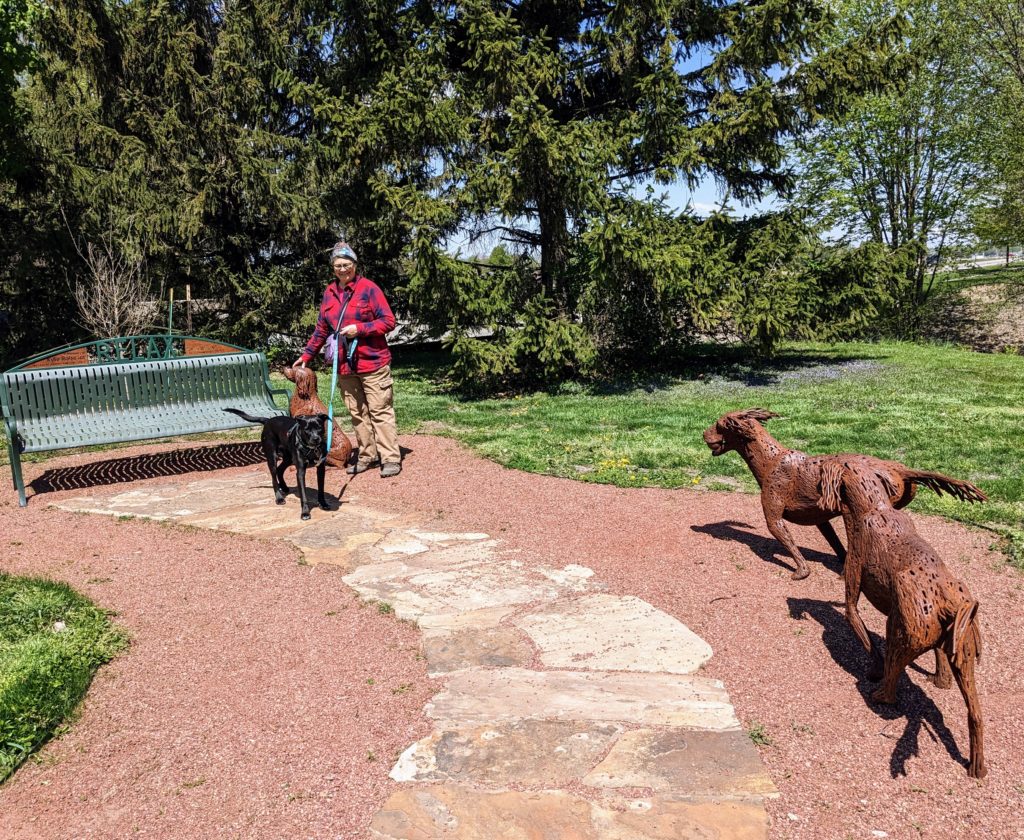
Jackie and I had seen these sculptures from the road on our way to our dog training class. Today we parked at the other end of the Robe trail, then walked to this spot and back to the car, about a 3-mile round trip. #dogsofmastodon
In class a couple of nights ago the lesson was for us to take our first stab at understanding a piece of the text from Joachim Meyer’s The Art of Combat.
I’ve ordered a copy of the book. It hasn’t arrived yet (being shipped from England), but here’s a different translation of the same text from the Wiktenauer site:
Slicing
Is a fundamental element of proper handwork, when you rush from your opponent with quick and agile blows, you can block and impede him better with no other move than with the slice, which you, though you will treasure it in all instances as special as here, will hold in reserve. You must however complete the slices thus: after you entangle your opponent’s sword with the bind, you shall strive thereon, feel if he would withdraw or flow off from the bind, as soon as he flows off, drive against him with the long edge on his arm, thrust the strong or quillons from you in the effort, let fly, and as he himself seeks to retrieve, strike then to the next opening.
https://wiktenauer.com/wiki/Joachim_Meyer, “Of Displacing,” Slicing
The text we used translated what is here as “flow off” as “strike around,” which is actually a specific move (striking first to one side and then to the other). The translation included the word “pursue,” I think where this one says “drive against.”
I generally think of myself as being pretty good at working with text, but I found this remarkably difficult.
The correct move, the instructor indicated, was that you should not wait for the “flow around” or “strike around” to proceed, but rather “as soon as” he begins the move, “drive against” or “pursue” by thrusting your sword forward so that the guard of your sword is pressed up against his.
Since you caught him early in striking around, this leaves him in a very awkward position, giving you many options for striking him effectively.
This all makes sense, but I did not get it from my first ten readings of the text. Clearly I’m going to have to spend a lot of time and effort making sense of it, if I’m going to get good at this.
In our practice session, we did not have the picture:
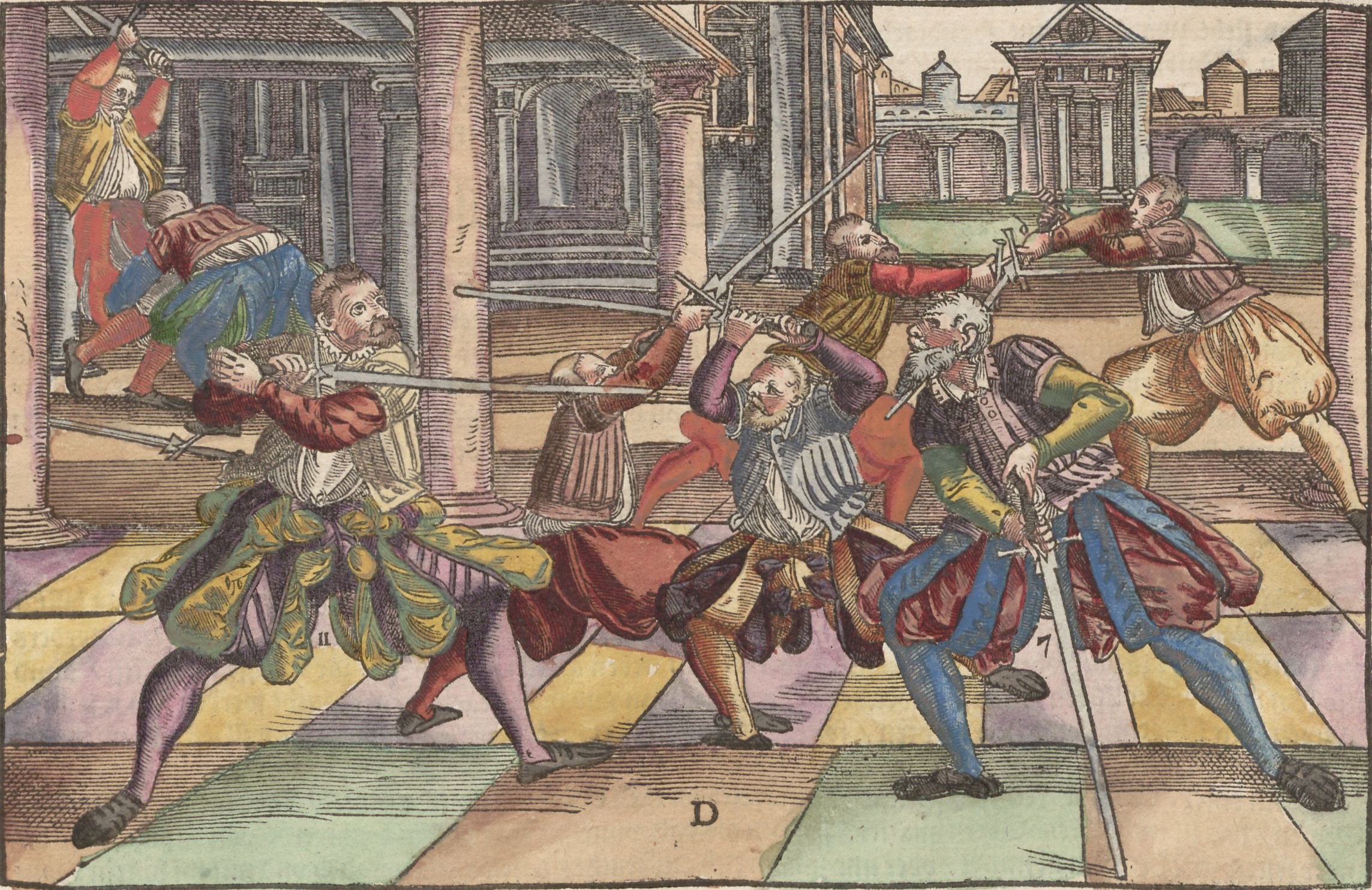
I think I see this move in the middle bit, where the guards of the swords are pressed together.
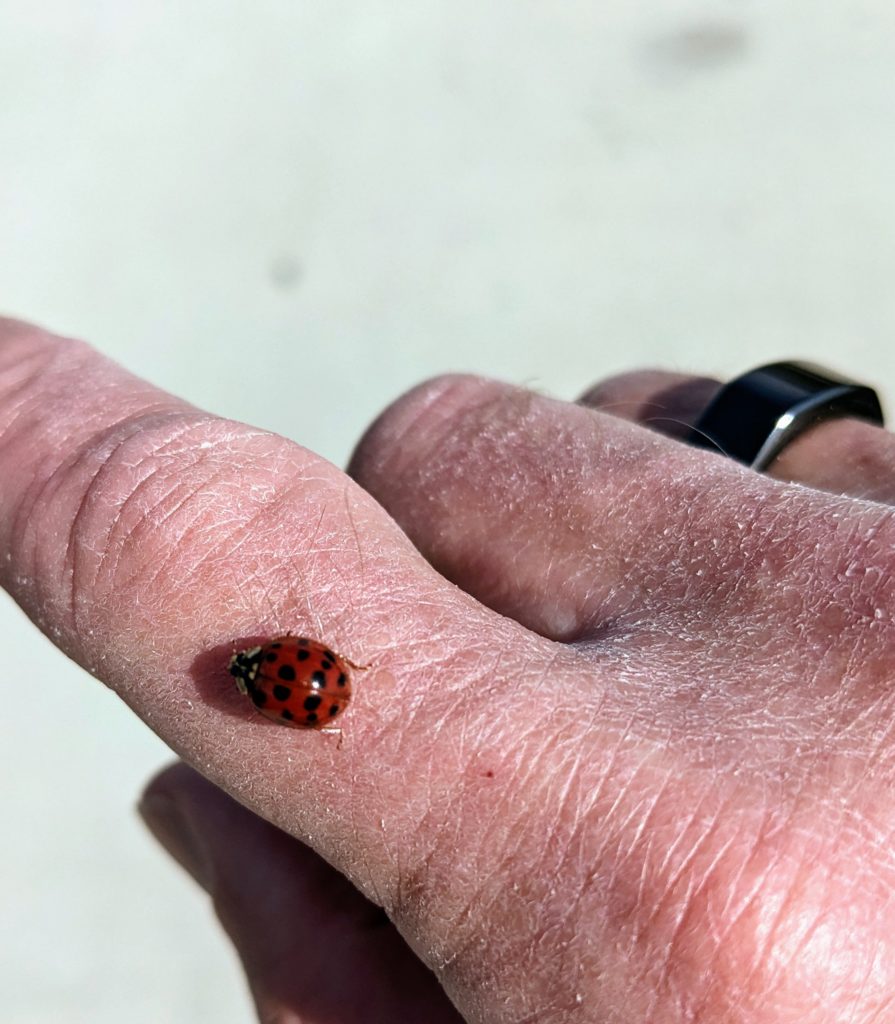
While walking Ashley, noticed that a ladybug had landed on my hand. Stayed there long enough to get a picture.
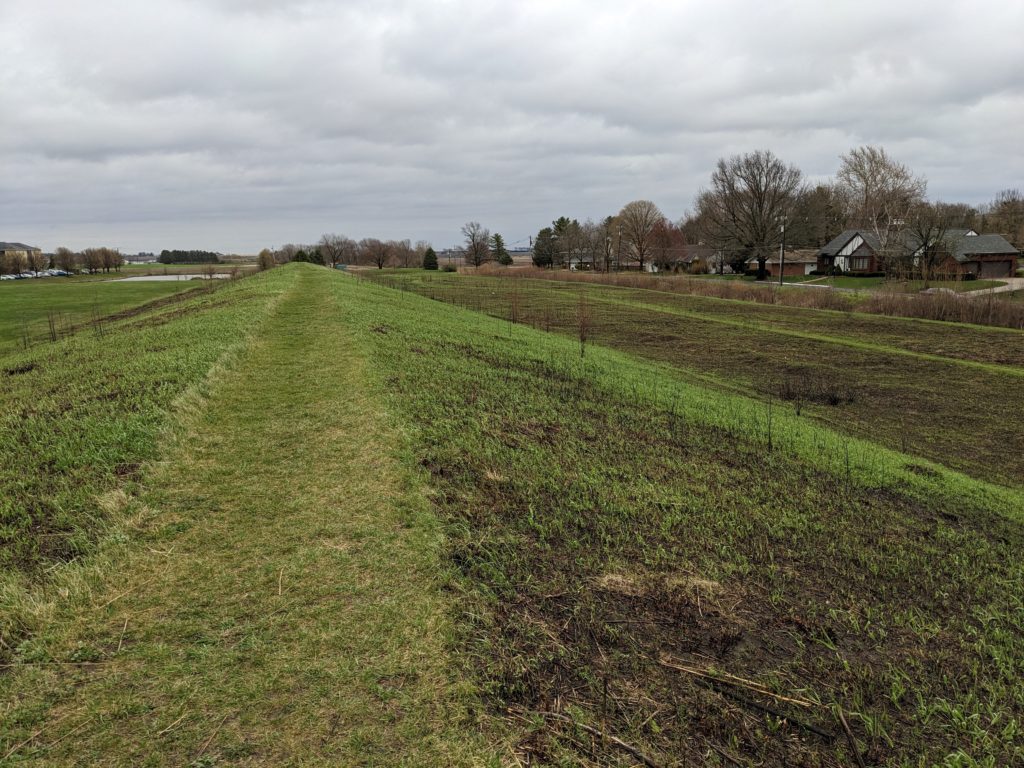
Prairie grass is growing like a weed where they did the burn a couple of weeks ago.
It’s not visible in the picture, but I saw a Yellow-shafted Flicker fly up ahead of me. They’re showy birds, always fun to see.
“Be a good dog. Don’t boop my laptop with your snout,” I said.
“What should she boop it with?” asks Jackie.


Ashley (just visible behind Jackie) likes shifting from the sunny places to the shady places every few minutes. Jackie, on the other hand, enjoys sitting in the sun (as I do). #dogsofmastodon
The highest and best use for day lilly leaves is chewing on them, according to Ashley. #dogsofmastodon

If you don’t want to get hit with a sword, you might want to consider a different hobby.
My instructor at yesterday’s HEMA class.
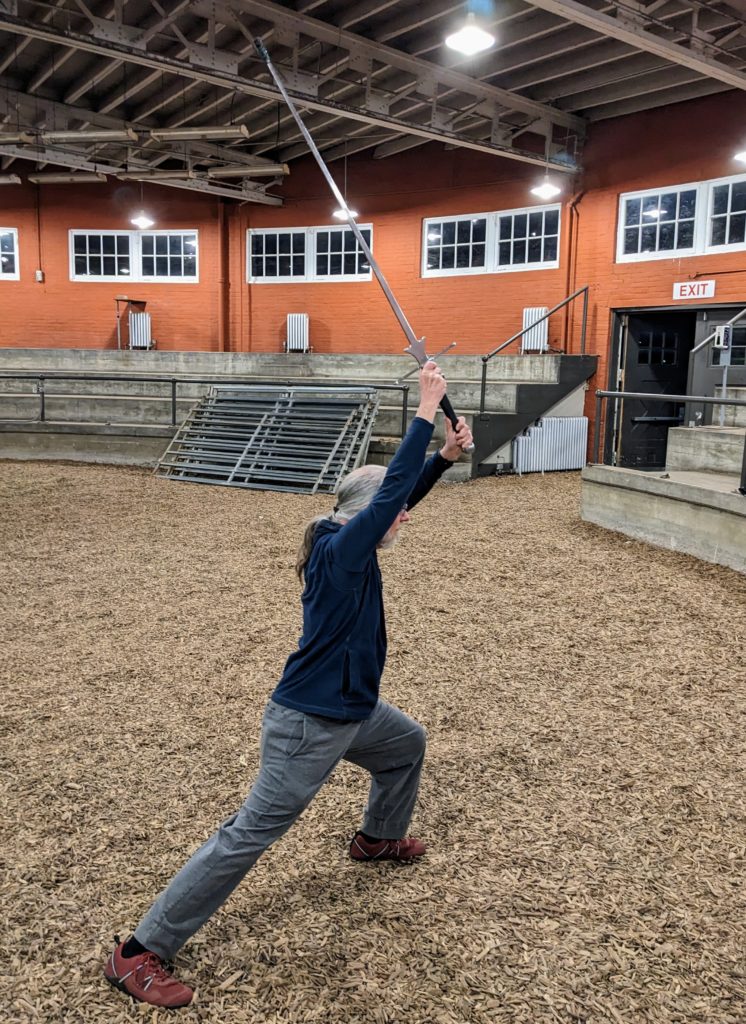
This week I attended my first and second HEMA classes, and had great fun. I am even (almost) in good enough shape to work out for two hours, although I’m certainly feeling it this morning.
The first class was half devoted to longsword fencing at a conceptual level, looking at key concepts from Joachim Meyer’s The Art of Combat (which serves as the basic text for the local HEMA group), with the second half devoted to stance and footwork.
The concepts section had to do with the “five words” of Meyer: Vor (= before), Nach (= after), Sterk (= strong), Schwach (= weak), and Indes (= during, or maybe between). Quite a bit of time was spent talking about these concepts, which nevertheless remained subtle and (at least to me) rather unclear.
The stance was kind of interesting, purely because of the modest difference between a longsword stance and santi stance.
In Tai Chi, santi stance is described as a spiral: Your back foot is turned out about 45 degrees, your front foot is turned in (that is, the same direction as your back foot) just slightly. Your hips are turned less, kind of between your feet. Your torso turned less. Your shoulders are turned still less, your head is turned only slightly. Perhaps only your forward eye is pointed directly at your “partner” (i.e opponent).
Meyer’s longsword stance is different: Your back foot is still turned out 45 degrees (or up to 90 degrees). But your front foot is pointed straight forward, as are your hips and shoulders.
Once we’d we practiced the stance (getting our front knee directly over our front ankle, making sure our back knee was modestly bent), we went on to footwork, learning the passing step and the gathering step. Passing step is just stepping forward, except of course, that changes which is the front foot (pointed forward) and which is the back foot (turned out). The gathering step is like an advance in fencing: you back foot steps up to about even with your front foot, and then your front foot moves forward to reestablish a proper stance. And, of course, you don’t need to be committed: You can move your back foot up, and then if circumstances warrant, simply put it back where it had been.
The second class began with a pretty extensive warmup. We did some mobility, and then some stretching, and then some practice stepping, which both got us practice and got our heart rates up a bit. Then—one part I had trouble with—a bunch of lunges: regular lunges, backward lunges, jumping lunges. (Click my “lunge” tag to read a bit more about my difficulties with lunges.) We also sprinted just a little, I assume primarily to get our heart rates up.
Then we learned one new step: Triangle step. In triangle step you bring your back foot behind the front foot, taking you off-line from an attack from the front.
We practiced something they called “dancing,” which is a variation on the introductory practice of push hands: you and a partner touch your hands together (finger tips, or fist) and then one leads, stepping forward or back, while the other attempts to remain stuck, by stepping back or forward, so as to remain at the same distance—while, of course, using proper Meyer longsword footwork.
After that we picked up swords for the first time!
We learned the four principal guards, and then four cuts. They all had names, but unfortunately the acoustics weren’t good enough for me to hear most of them. But there are extensive web resources (including translations of Meyer’s book), so I have the technology to track them down and learn them before Tuesday.
We practiced the guards and cuts quite a bit, which (after all the stepping practice) left me pretty tired, and rather achy this morning. Happily, I’m not suffering from any over-use injuries, just feeling like I got in a good workout. (The one exception is my toes, which were slightly strained from the lunges. Hopefully they’ll be all better very shortly. Henceforth I’ll remember to do some toe stretches before each the HEMA class.)
The steel club swinging I’ve been practicing for months now stood me in good stead: my hands, wrists, arms, and shoulders are strong enough and stable enough, which I don’t think they would have been otherwise.
Classes take place in the Stock Pavilion, an old University of Illinois building (constructed over 100 years ago) originally built to support the Ag school’s mission as a place for students to learn about things like cattle judging. It’s a large space with a dirt (wood chip) floor and concrete bleachers, which suits pretty well for sword-fighting practice.
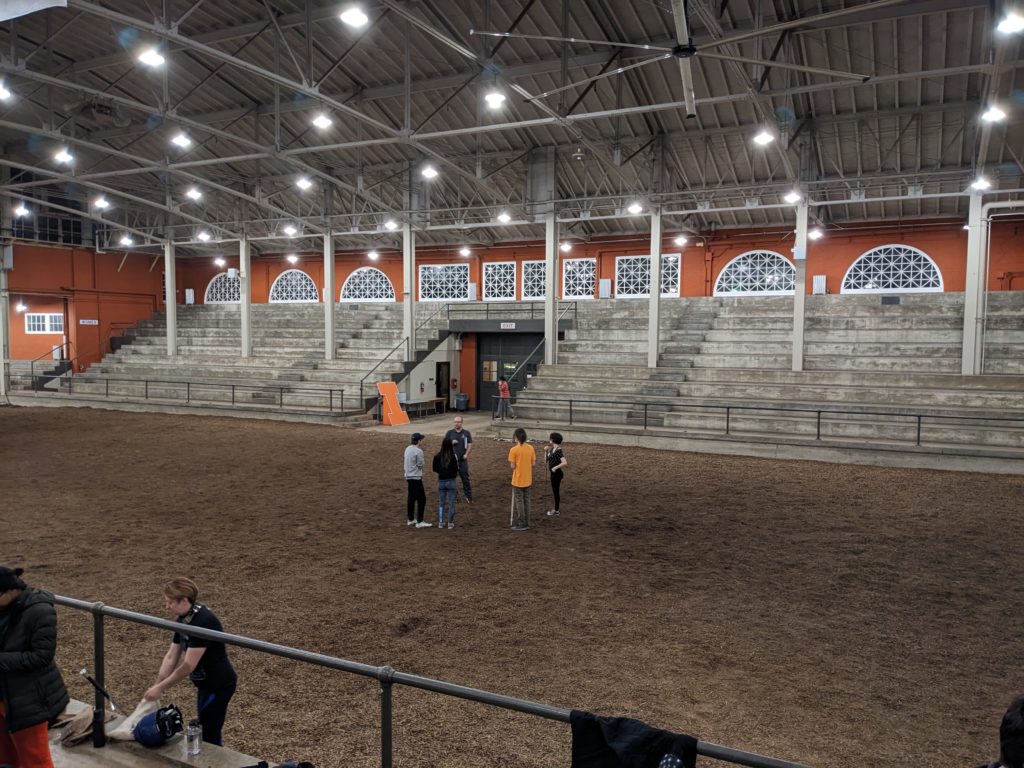
Next thing to do: buy protective gear (mask and gloves). I’ll also want to get a copy of The Art of Combat, which I understand has a new translation coming out next month, so maybe I’ll wait for that.