View from a run

My Oura ring produces a “readiness” score each day, and I’ve found it to be a pretty good indication as to whether or not I’m up for a long run or a hard workout. The times I’ve ignored it when it said I needed to take it easy, I’ve often found it was right and I was wrong. Today was a rare instance of the reverse.

According to my plan, today should have been a rest day. But I wanted to go for a run.
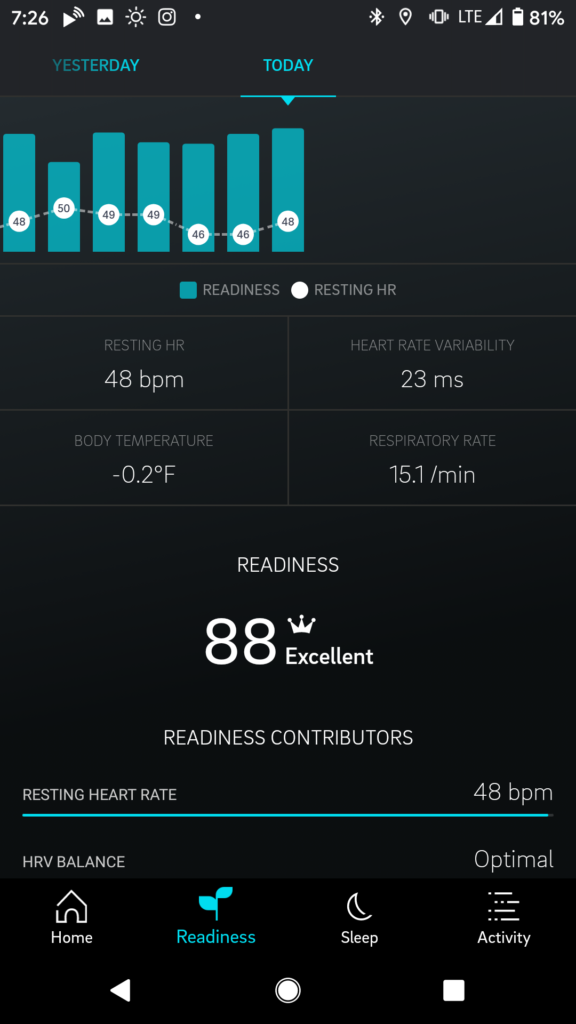
The ring gave me a readiness score of 88 (out of a possible 100), which is rather above my average (my average this month has been 80), and I took that as a license to go for the run I wanted, instead of taking the rest day my plan suggested.

Turns out—this time—my plan was right and my ring was wrong. I went for my run, but I felt tired and sluggish throughout.

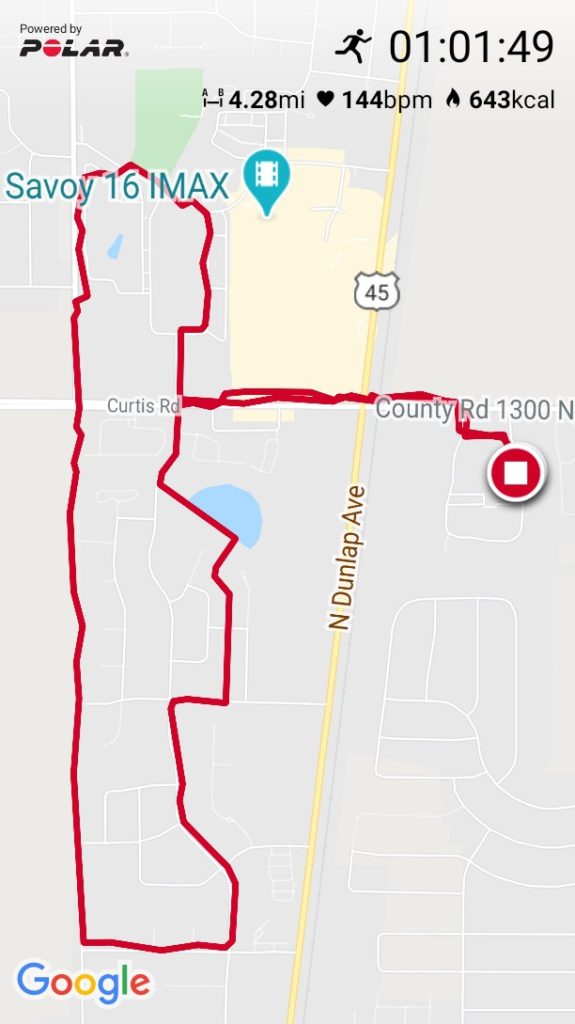
It wasn’t a catastrophe. I didn’t hurt myself. I just don’t think I did myself much good. I ran to Colbert Park, did three hill sprints (in actuality, feeble jogs), and then ran home again. But I didn’t have any oomph behind the sprints, so I don’t expect they’ll have done their job in terms of boosting leg strength or aerobic capacity.

The Oura ring’s readiness score has been a very reliable indicator for me—which is why it helped me fool myself this time. So this is a good reminder to me to interrogate all of the factors that go into making a workout decision—my plan, my intuition, my ring, etc.

So one thing I’m doing is looking back at the factors that feed into the score, looking to see if there’s one that looked better than it really was.
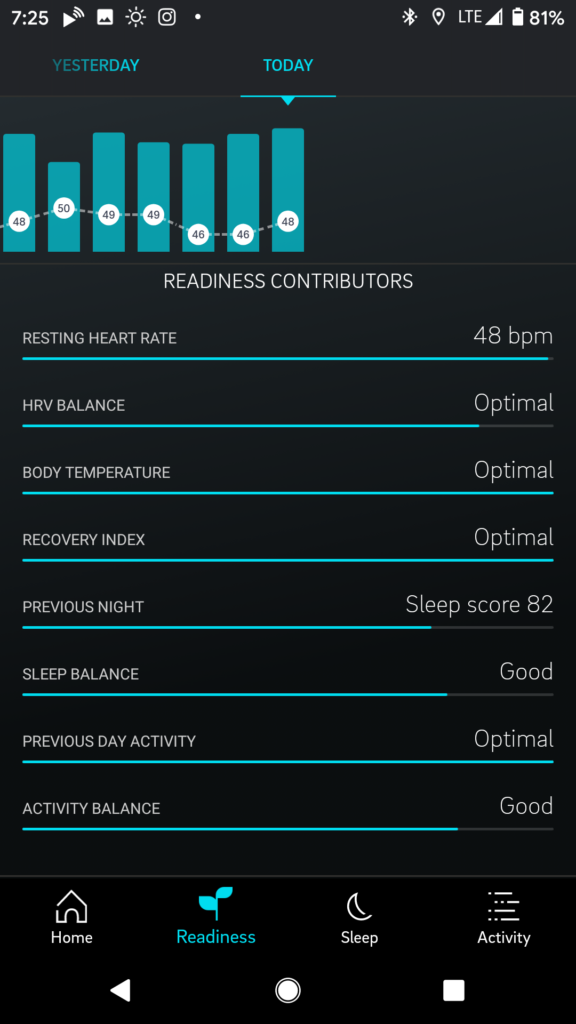
Nothing really jumps out at me. Given the same information, I’d also figure that I was ready for a hard workout. (In fact, I had that information, plus my own sense that I felt ready for a hard workout. That’s exactly how I overrode my plan and went out for a tired, tiresome run.)

Oh, well. Insert your own pithy “live and learn” aphorism here.
I’d heard this, but I’m not sure I really believed it.

I’ve been running in “barefoot” shoes for a good 5 years now. The improvement in my gait was dramatic and immediate. But serious barefoot advocates are very firm about the point that it’s only when you run with actual bare feet that you acquire the huge upside that comes with barefoot running.

Reduced injury rates (due to the improved gait) are one of those upsides. Increased running efficiency (due to the improved gait, but also due to not having to carry the weight of a shoe on each foot) is another upside.

But there are alleged to be further sources of improved efficiency that come from barefoot running. When you’re actually barefoot, you’re going to hit the ground much more gently (because without cushioning it would hurt to hit the ground hard). Your foot is going to hit the ground with zero forward velocity (because if your bare foot slides along the concrete, the friction will cause blisters almost immediately).

In both cases—not slamming your foot into the ground, and not grinding your foot into the ground—the upshot is improved efficiency.

But it’s one thing to hear that “improved efficiency” is a thing, and another to actually see it. Check out this comparison of a run from one month ago, versus a run today.

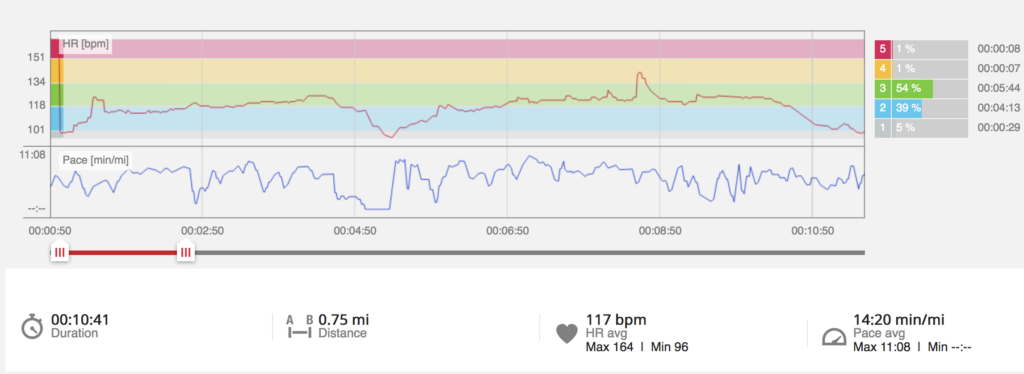
Here’s the first three-quarters of mile of a run from one month ago, wearing minimalist shoes:

I left off the first few tens of seconds because it took until then for my heart rate monitor to stabilize on my actual heart rate. Then I went on for about three-quarters of a mile (out of a longer run) to match the distance that I ran today.

The things to note are that I ran at a 14:20 min/mil pace (very slow), that my heart rate averaged 117 bpm, and that the majority of my run was spent in zone 3.

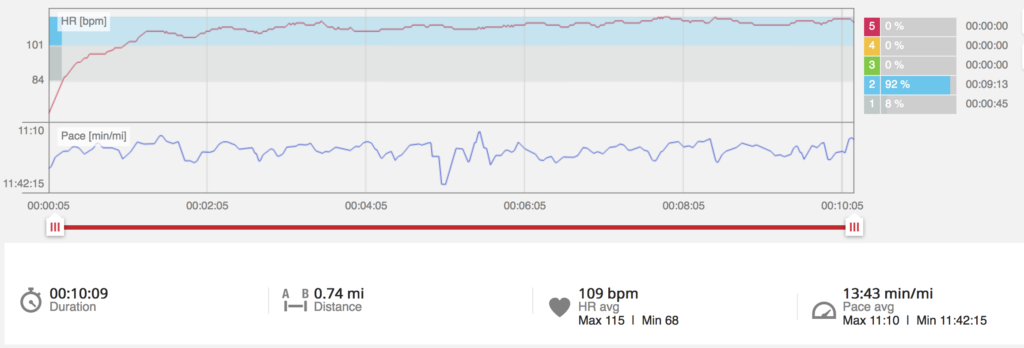
Now check out my graph from today’s run, run with actual bare feet:

I’ve matched the distances (the former is the first part of a much longer run, the latter my entire barefoot run today). Today’s run was at a considerably faster pace (37 seconds per mile faster), while at the same time keeping my heart rate considerably lower (averaging 109 bpm, entirely in zone 2).

I have to say, this is very promising for future endeavors. I need to boost my confidence a bit, so I feel comfortable going for longer runs barefoot. I also need to get a bit more familiar with pacing—my MAF heart rate is probably more like 124. I need to figure out what it feels like when I run that pace barefoot. Because: who knows how fast I can run at that heart rate barefoot?

(The shortcode below won’t work until I get an updated version of the plugin for displaying GPX maps.)

[sgpx gpx=”/wp-content/uploads/gpx/Philip_Brewer_2020-06-27_08-46-36.GPX”]