

Exposing your skin to dawn/dusk sunlight (UV index near zero) for 30 minutes provides at least 24 hours of protection against sunburn.
Tag: sun
2020-05-02
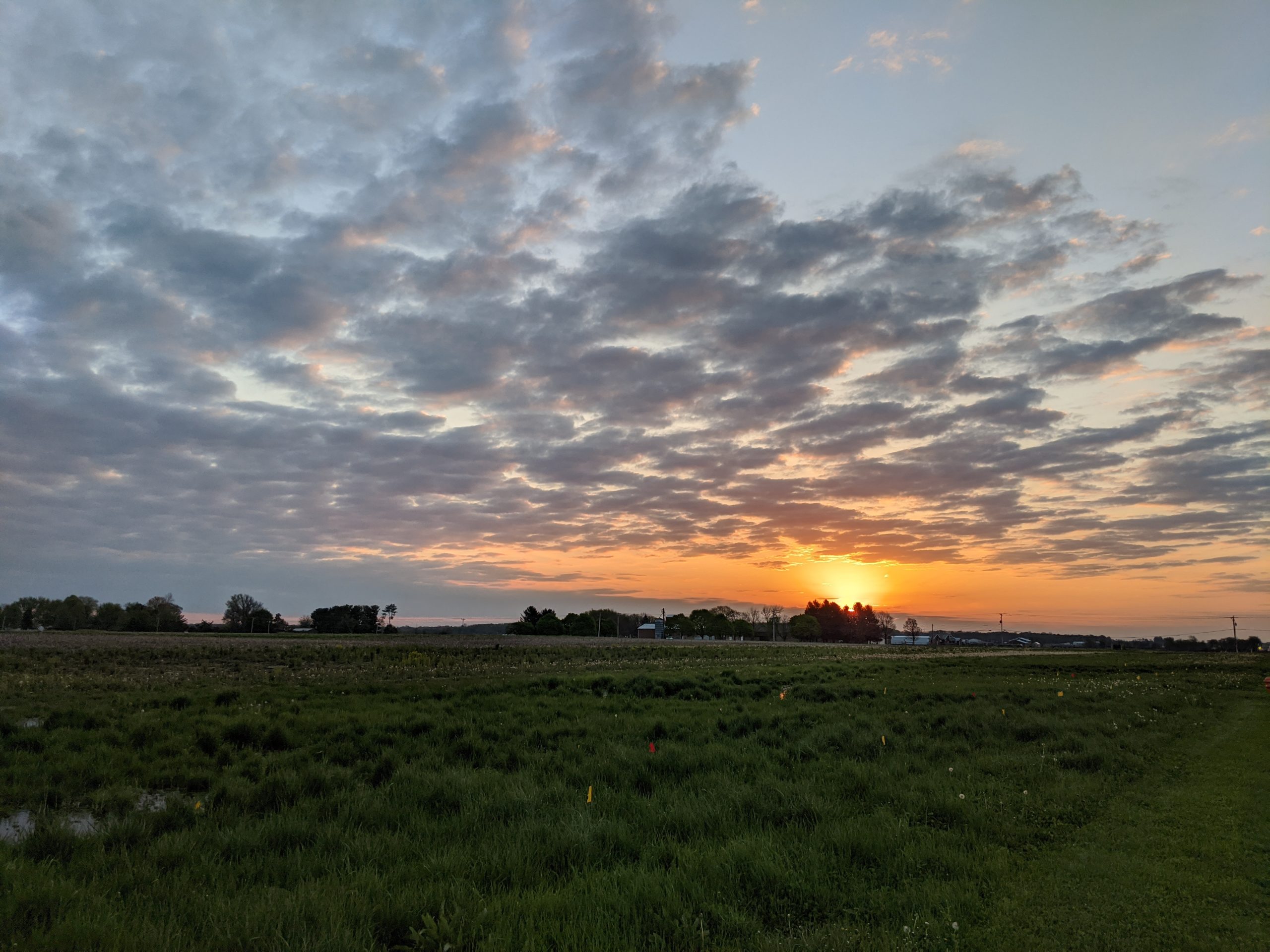
Working on not missing so many sunrises. 📷
2020-04-12 08:53
Happily, except for playgrounds, outdoor public spaces are still open where I live.
The outdoors and sunshine are such strong factors in fighting viral infections that a 2009 study of the extraordinary success of outdoor hospitals during the 1918 influenza epidemic suggested that during the next pandemic (I guess this one!) we should encourage “the public to spend as much time outdoors as possible,” as a public-health measure.
Source: Closing the Parks Is Ineffective Pandemic Theater – The Atlantic
2020-03-08 07:00

In person the sky on the first day of Daylight Saving Time is all pinky-purple, even if this photo makes it look rather orange. 📷
2020-02-21 19:12

Sunrise on a frosty morning. 📷 #mbfeb
2019-12-19 07:31

Walking outside yesterday I realized I was not SAD, even though the solstice was just three days away. In fact, I was very nearly gleeful. And the feeling has persisted. It’s like it’s late February and spring is coming!
2019-12-01 07:07
Jackie and I carried the laundry over to the laundromat at dawn, and I got this picture on the way back.

Optimal Vitamin D Levels
Here’s a report on a study which measured vitamin D levels of Hadzabe and Maasai individuals living traditional hunter-gatherer or pastoral lifestyles, the data having been collected with an eye toward learning something about what would have been typical during our evolution as a species.
For the Hadzabe the mean was 109 nmol/l and for the Massai 119 nmol/l. These levels are not outside the reference range, but are way above the minimums.
[T]he mean vitamin D concentration of traditional Africans is indicative of the level that would have been typical throughout much of our evolution, and hence, the level that the human physiology would have grown accustomed to over millions of years. Hence, it’s not unreasonable to speculate that such a level may indeed represent optimality…
Source: The Vitamin D Levels of the Hadzabe and the Maasai: An Important Study That Flew Under the Radar
People not living traditional lifestyles can get enough sun to see similar levels, but probably not if they work in an office, and probably not at all in the winter (unless they live in the tropics).
I had my own vitamin D level measured once. It was 38.5 ng/mL (equivalent to 96 nmol/l) versus a reference range of
As I was observing just a few days ago, when exposed to sunlight, your skin does a lot more than just make vitamin D. I’m pretty sure that high vitamin D levels are just a marker for adequate sun exposure. Taking vitamin D supplements in sufficient quantity to raise your blood levels high enough to mimic those of people who get enough sun will produce no more benefit than gaming any metric does.
I’d be interested to know what my vitamin D levels are right now, after a long summer of getting plenty of sun. But not interested enough to go to the effort of convincing my doctor that it’s worth testing again, nor interested enough to pay for the test.
Turns out ALL the rays are actinic!
I observed years ago that the more sunlight I got the better I felt. Although “it’s the vitamin D” seemed like a reasonable hypothesis, I’ve been pretty careful not to just assume that—whenever I’ve written about this I’ve gone ahead and listed some of the other “active ingredients” that tend to come along with sun exposure—exercise, time in nature, etc. As I look into the matter more, I find there’s a growing body of evidence that sunlight itself does provide benefits, but it’s not just the UV light—the other frequencies of light are also actinic in all kinds of ways.

UV light
The UV light doesn’t just make vitamin D. It also has all sorts of other effects. In particular, it modulates your immune system in ways that reduce the risk of multiple sclerosis, and probably other autoimmune disorders and some cancers. It also reduces blood pressure. In mice it has been shown to limit diet-induced weight gain.
Blue light
We’ve long known that blue light (especially, but not exclusively, a specific frequency of blue-green light absorbed by a pigment in the eye called melanopsin) was critical for establishing and maintaining an appropriate circadian rhythm. Very recently we’ve discovered that adipose tissue expresses the genes that produce the same pigment and use it to vary how the cell acts. In particular, after exposure to an amount of blue-green light that might shine through skin exposed to full sun, fat cells reduce the amount of fat they store, and also produce less leptin (a hormone that affects feelings of satiety).
Red light
As I discussed a few weeks ago, there’s been a lot of research on the effects of red and near-infrared light exposure. Here’s a page with links to a bunch of studies that suggest that red and near-infrared light boosts collagen synthesis, speeds healing of burns, incisions and broken bones, reduces inflammation, and generally reduces the effects of aging on your skin.
I guess that leaves us with orange and yellow light unaccounted for, but I don’t doubt that they’ll turn out to be actinic as well.
2019-07-24 08:04
Me: It’s not even 8:00 PM yet, and it’s already nearly dark outside. I guess it is a full month since the solstice.
Jackie: Don’t go getting depressed though!
Me: No, that’s for later. Now I just get anxious that in a few months I’ll get depressed.