There’s a downside to my plan to hit my movement goal every day in December that I had not considered.

As I discussed a few days ago, I was aware of some of the downsides of using an unbroken streak for motivation—that it can tempt one to continue a streak when doing so would be unhealthy, and that it can be terribly demotivating when it is finally broken.

This is different. It has to do with setting a target that’s a little aggressive, and then making it a minimum.

My current goal, as far as Google Fit is concerned, is 90 minutes of movement. The default was 60 minutes, but I bumped it up right away back when I was manually entering my taiji sessions. They’re typically an hour long, so one class put me over the top; the lower goal didn’t motivate me to move at all.

It’s not a very aggressive goal. Looking back at my history, I generally hit it more than half the time—about 4 days a week. Looking at it on a per-week basis, I do quite a bit better than that, totaling at least 7x my daily goal about 4 weeks out of 5.

Looking at it terms of miles rather than minutes, I walk between 20 and 25 miles almost every week, but I don’t do it by walking 3 miles per day. Rather, I walk 4 or 5 miles three or four times a week, and then one day I take a long walk in the 8–15 mile range. I think it’s healthier to have a mix of short, medium, and long days, and to include an occasional rest day when needed.

And that’s what’s been lacking so far this month. My goal isn’t so aggressive that I’m suffering from the lack of adequate rest days, but it’s aggressive enough that I’ve reduced my scope for including a really long day every week or two.

I suppose Google Fit could accommodate this a programmatically, through something like separate minimum and average goals, but that seems like an unnecessary complication. Probably better to just do what I was doing before this month, and aim to hit the target on average.

I wouldn’t want to continue this unbroken streak forever, but so far it is doing what it was supposed to do: encourage me to get a good amount of movement during the dark days of early winter.

Now that I’ve noticed this issue, I should be sure to get in a long walk soon. If I don’t go overboard, I should be able to take a long walk without needing so much rest that I can’t hit my minimum the next day. And if I can’t, well, the unbroken streak is a motivational tool, not an end in itself.

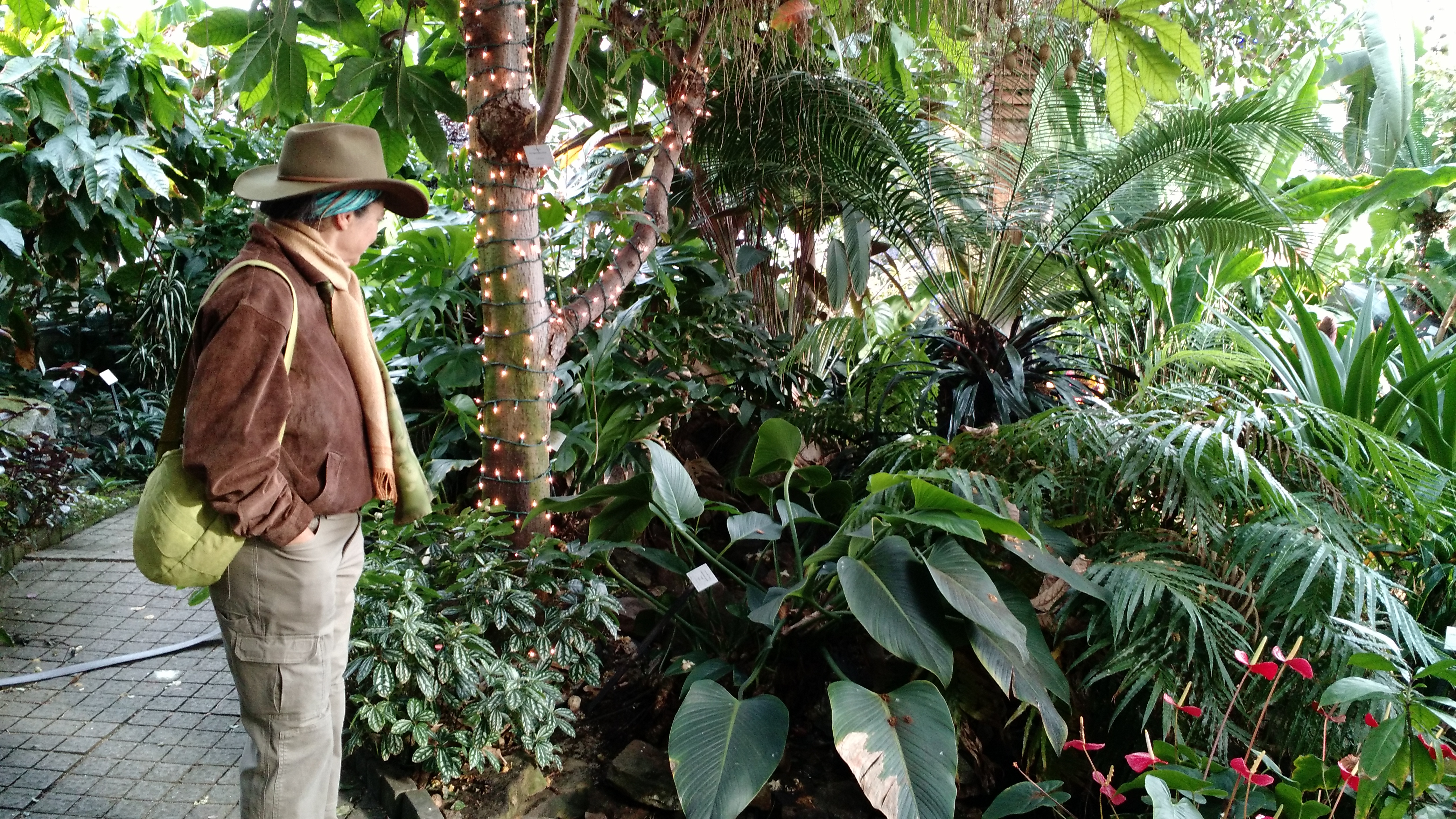
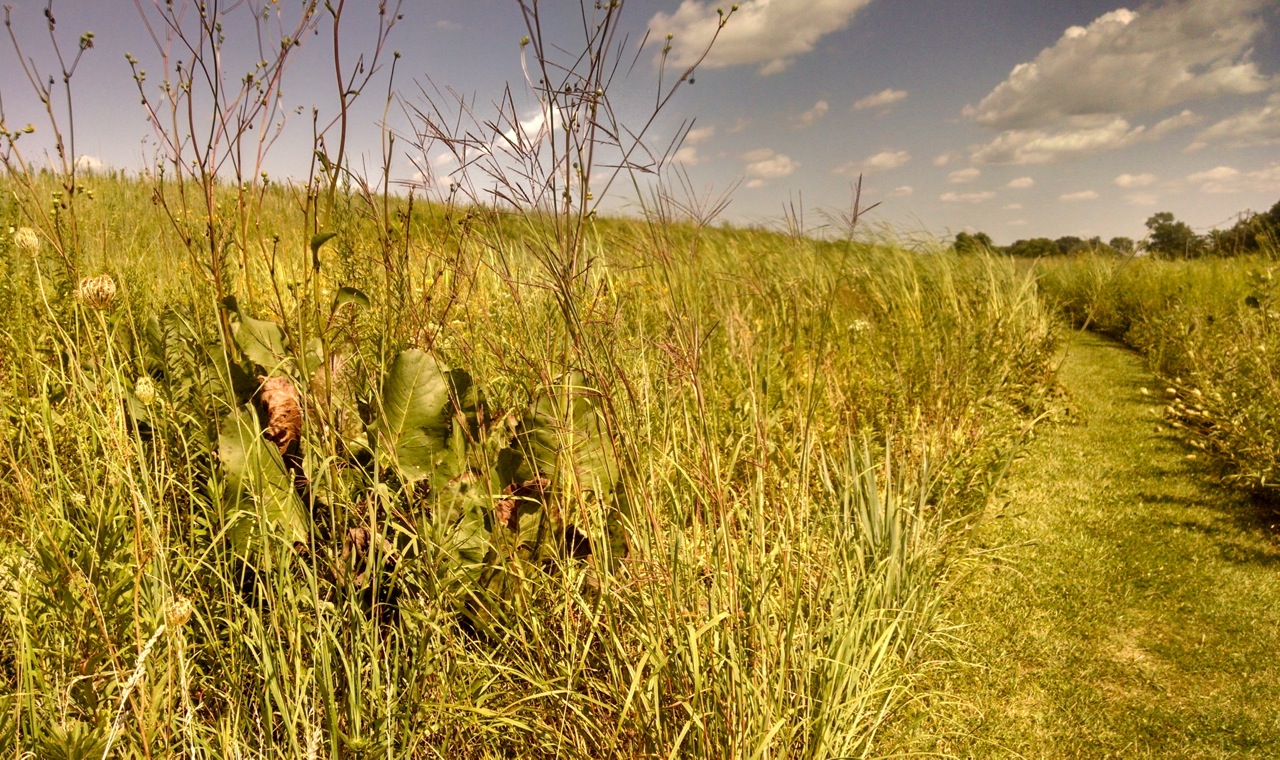
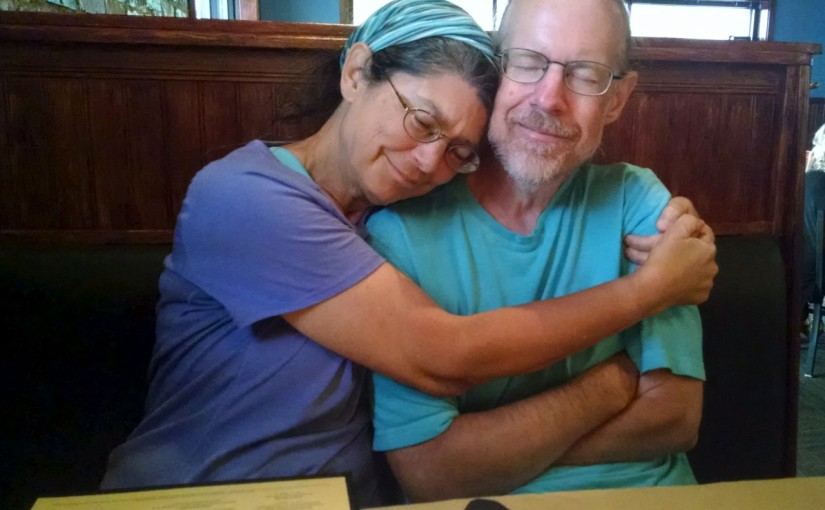
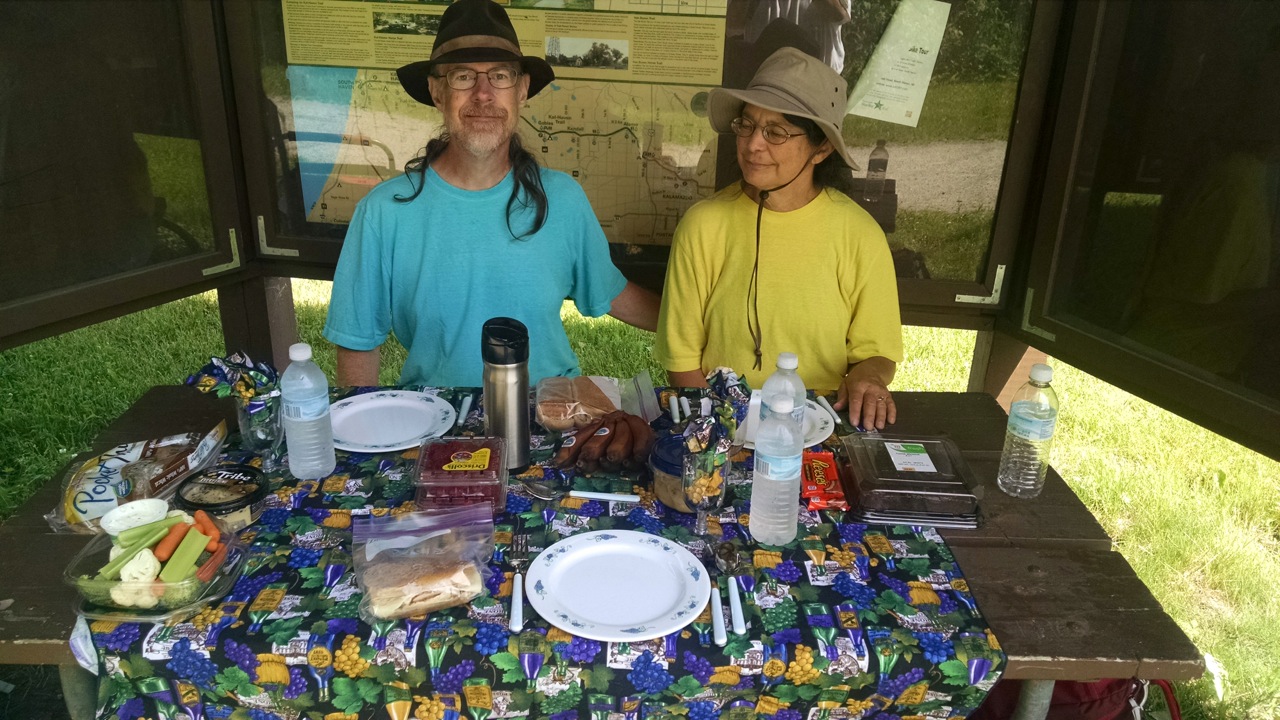
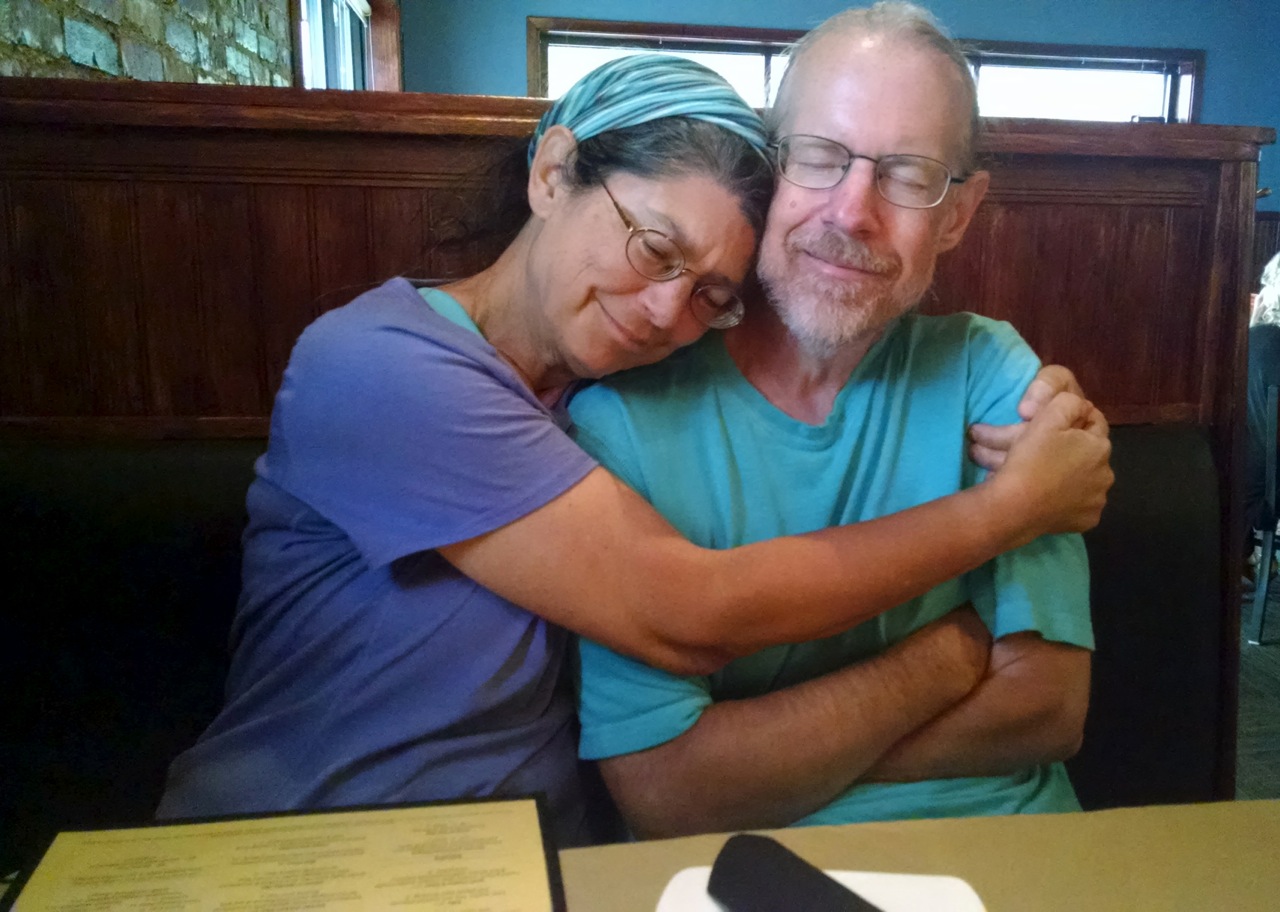
The photo above was taken at the University of Illinois Conservatory, which was a destination for our walk a couple of days ago. Here’s another, with Jackie.

Jackie in the Conservatory

My friend Chuck​ likes to point out that we’ve already reached the worst of the winter darkness: Tomorrow the sun will set at 4:27 PM, and that’s as bad as it will get. As early as December 12th the sun won’t set until 4:28, and it just gets better from there.

For people working a regular job, a later sunset is a big deal (although it’s not really a big deal until January 24th, when sunset time is finally after 5:00 PM).

For me, though, it’s sunrise that really matters, and that keeps getting worse for a long while yet. We don’t hit our latest sunrise until December 30th when it’s not until 7:15 AM—and then it just stays there for almost two weeks. Things don’t really start getting better until January 12th, when the sun rises at 7:14.

So really, I should be luxuriating in the relatively early sunrise this morning. The sun will be up at 6:59 AM—before 7:00! Why, it won’t be this good again until February 5th! That’s after Groundhog’s Day!!!

(All these dates and times local to Savoy, Illinois in 2015–2016. Ephemeris data for your location will vary. But if you live in the mid-latitudes of the Northern Hemisphere, they won’t vary by enough.)

This tree, with some sort of little red fruits all covered in ice by a freezing fog, kinda looks sunrise pink. Maybe I could pretend it is the dawn. Of course, before dawn it’s too dark to see it.

Frosty pink

Despite my anticipatory angst, I’m actually holding up pretty well so far. I’m sure the extra time spent walking outdoors is helping. Yesterday, I walked to my taiji class, then walked around during the time between the two classes (with Jackie for the first half of her walk home, and then around playing Ingress), and then walked home again after my second class. It was just a little over 6 miles, but my longest walk in a good while. I’m sure the two hours of taiji helped as well.

I have mixed feelings about using the motivating power of maintaining a streak.

Lots of people do it. Lots of writers write every day. Lots of runners run every day. There’s probably no virtuous activity out there that doesn’t have someone who has done it every day (or every week, or every year) for decades.

I understand the power. I feel it too, as I’ll describe in just a moment. But I have mixed feelings about it, primarily for two reasons.

First, it tempts people into doing things they shouldn’t just to maintain the streak.

Any runner who has run every day for years has almost certainly gone for a run even though he or she was sick. If it’s just a cold, that’s merely pointless. But going for a run with the flu is life-threatening.

Second, the demotivating power of a broken streak is huge.

For example, I had a streak going in the game Ingress, where there’s a badge for maintaining an unbroken streak of playing every day. I’d gotten my badges for 15-, 30-, and 60-day streaks. When my 180-day badge was due, I found that had apparently missed a day—my streak had ended at 172 days. I immediately abandoned any thought of getting that badge, and quit making any effort to play Ingress on a daily basis. I still play, but my current streak is 4 days.

Because of those issues, I try to be careful about motivating myself by trying to maintain a streak. I still do it though.

I went for a walk yesterday, only because I’m trying to get out for a walk every day this month.

After I hurt my knees in late October, my ability to walk was constrained for several weeks. It was very sad. I missed the last nice days for outdoor exercise, stuck inside resting my knees.

I find it easy to exercise in the summer, and hard in the winter. Every year I imagine that, if I can just keep going through the fall, I’ll preserve the habit and be able to keep going through the winter. It hasn’t worked very well in general, and certainly is out for this year, so I figured I’d do something different: Establish a new habit. I am perfectly capable of just deciding that I’ll get out and exercise in the winter in particular.

So I did decide that. Specifically, I decided that I’d try to meet the goal I’ve established in Google Fit, to get at least 90 minutes of movement every day.

Google Fit’s evaluation is just a bit odd. It’s central metric is minutes, but what it actually counts is steps, and I have no idea exactly how it translates occasional steps into minutes. It works very well when I go for a walk, but when I do taiji, for example, I get essentially no credit for having moved during that hour.

(As an aside, I should mention that I could just manually enter the hour or two I spend doing taiji. I did that for a while, but it isn’t really satisfactory. Among the great thing about Google Fit are that it’s simple and objective—there’s no need to do anything other than just carry my phone all the time, which I do anyway. Manually entering activity misses the whole point.)

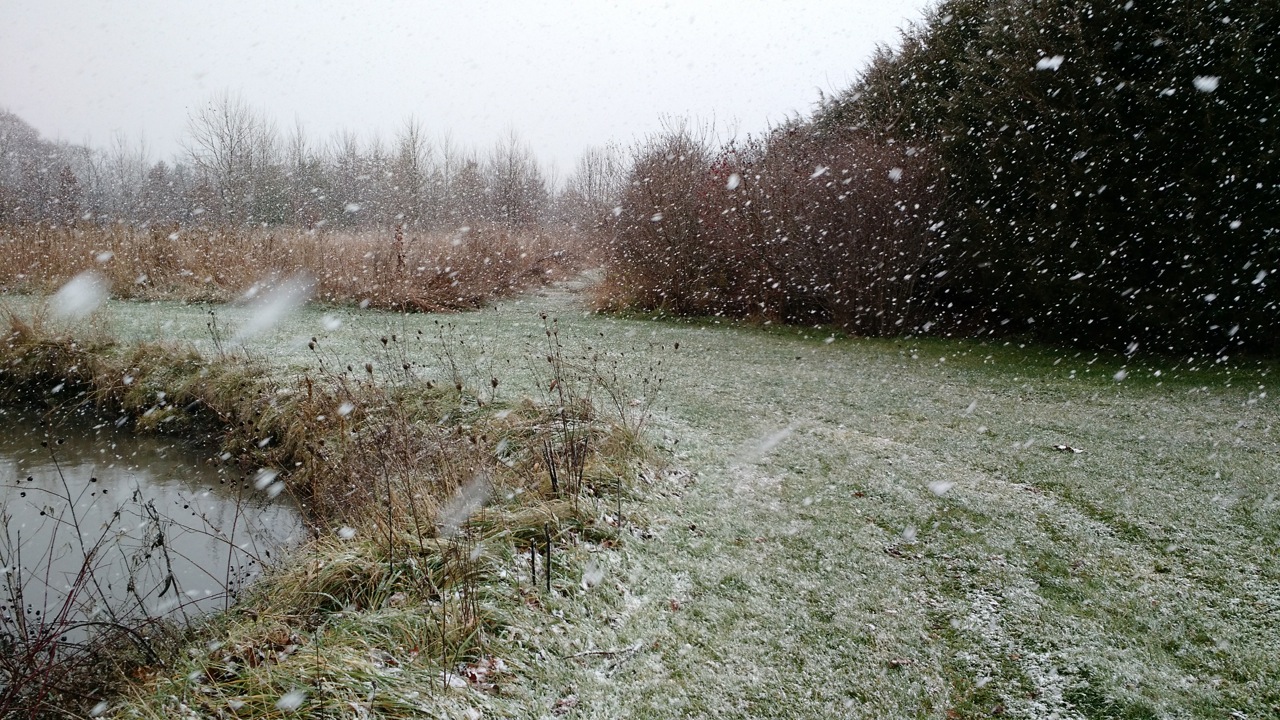
Anyway, yesterday was a cold, wet, snowy day. Just the sort of day on which any sensible person would decide to simply stay inside. But I had this unbroken streak going, and a plan to hit 90 minutes of movement each day in December. So, I went out in the cold, wet snow and walked the remaining forty minutes or so to hit the mark.

Cold, wet, snowy day

During the summer, one can just stay in when the weather is bad, and still get plenty of exercise. Do that in the winter, and it’s all too easy to end up spending three months indoors. So, I am using the power of an unbroken streak to prevent that.

Another couple of weeks, and it will be a habit. A couple of weeks after that, and I’ll have met my movement goal for the month of December—and having gotten that far, I expect I’ll be able to move enough in January and February as well.

For now, though, I’ve just checked—and I see that I need another 24 minutes of walking today.

At least it’s not snowing.

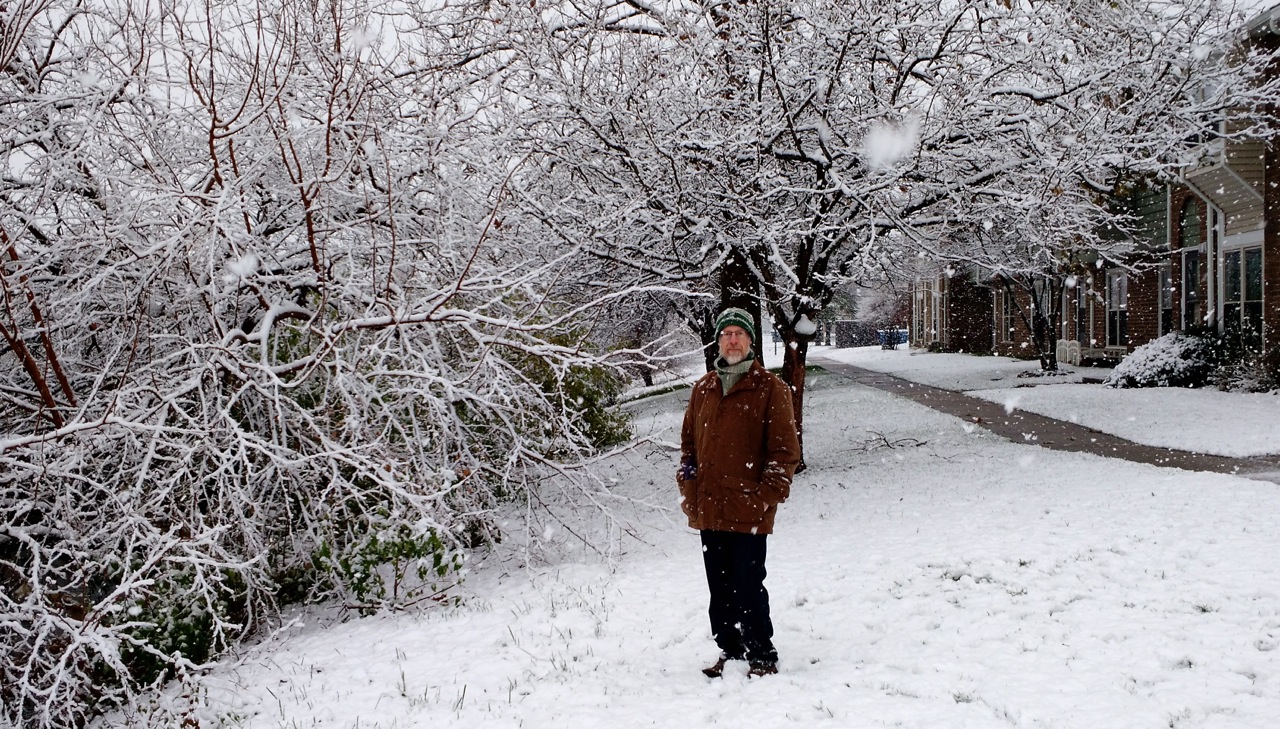
Me in the Snow
Me in the snow. Photo by Jackie Brewer.

Seven or eight years ago, I became aware of research that suggested that vitamin D deficiencies were a possible cause of seasonal depression. As I have long suffered (albeit mildly) from SAD, I figured it was worth trying a vitamin D supplement, and it did seem to help.

I worry just a bit about taking a supplement, because there are dangers with excessive doses of vitamin D. (A random site on the web suggests that doses over about 10,000 IU per day are dangerous, if continued for a period of months.)

So, I prefer to get my vitamin D via sunlight. A pale-skinned person like me can make upwards of 10,000 IU of vitamin D in just a few minutes of mid-day summer sun—but there’s no danger of getting an overdose: your skin keeps making it as long as you’re in the sun, but once saturated with an optimal amount, it starts un-making it as fast as it makes it.

But it’s the UVB light in the sun that makes the vitamin D, and at my latitude (I live at almost exactly 40° north), little or no UVB gets through the atmosphere during the winter. Specifically, the vitamin D window closed this year on November 20th. It’ll open again on January 20th—although of course it’ll be too cold to expose much skin to the sun for a month or two after that.

This past summer, I spent more time in the sun than in years past, and found that it made me feel especially good—like the opposite of seasonal depression. I imagine it’s the extra vitamin D, although I don’t see any way to tweeze evidence for that hypothesis out from the many other possible reasons. Perhaps it was just more bright light (as opposed to the UVB in particular)—surely the sun is the world’s best light box. Perhaps it was just being more active (I tend to get my sun walking or running, not sitting or lying in the sun). Perhaps it was the endocannabinoids produced during the longer runs in particular. Perhaps it was more time in nature (I spend a lot of my outdoor time walking or running in our local prairie and woods), which is known to be good for the mood. Perhaps it was the extra “together time” Jackie and I got on our very long walks. Perhaps it was the solitude of walks and runs by myself, providing space for meditation.

Whatever it was, I miss it in the winter, and I fixate on a vitamin D deficiency as a possible culprit. Maybe I’ll up my supplement dose. Of course, I won’t do just that. I’ll use my Happy Light™. I’ll go for long walks in the cold and snow. I’ll get out in the prairie and the woods. I’ll try to cover all the possibilities. But I’ll keep taking my vitamin D.

Since our big Kal-Haven trail walk in June, we’ve continued to walk, but we haven’t gone on many long walks—and in particular, haven’t gone on any very long walks.

What’s the boundary between ordinary long walks and very long walks? I choose to set an arbitrary dividing line of 14 miles. This is because Jackie and I, by merest happenstance, turn out to each remember having walked 14 miles as our “longest hike ever” in the years before we’d met.

It was with all that in mind that I suggested a couple of days ago that we should go for a 15-mile walk today.

I had in mind more than just ticking off the “very long walk” box. With winter coming, I want to be sure I don’t start thinking that ordinary winter weather is a reason not to go for a long walk. It was chilly this weekend, so I thought a good opportunity to ease our way in to walking in the cold. There are also scheduling issues that’ll make it hard to get a very long walk in during the next week, so it seemed today was our big chance.

It was a wonderful day for a walk—beautiful, clear, sunny weather, crisp in the morning, but reaching 60 in afternoon. We walked up First street to the research park, then turned east and walked along the south end of the Arboretum and through Orchard Downs, before turning south again so we could take a turn through Meadowbrook Park. Then we headed back north along Vine as far as downtown Urbana, so we could have lunch at Crane Alley. (Good beer. I had a Deschutes cinder cone red on nitro. Jackie had an ESB, although I forget which one.) From there we headed west toward campus, headed back south to have coffee at Espresso Royale, then meandered through campus, crossed the railroad tracks and Route 45 to head south along the Boulware path, stopping at Schnucks to get some half&half and tomato paste.

The total distance came in at 14.62 miles, comfortably over the line into “very long walk” territory by my standards.

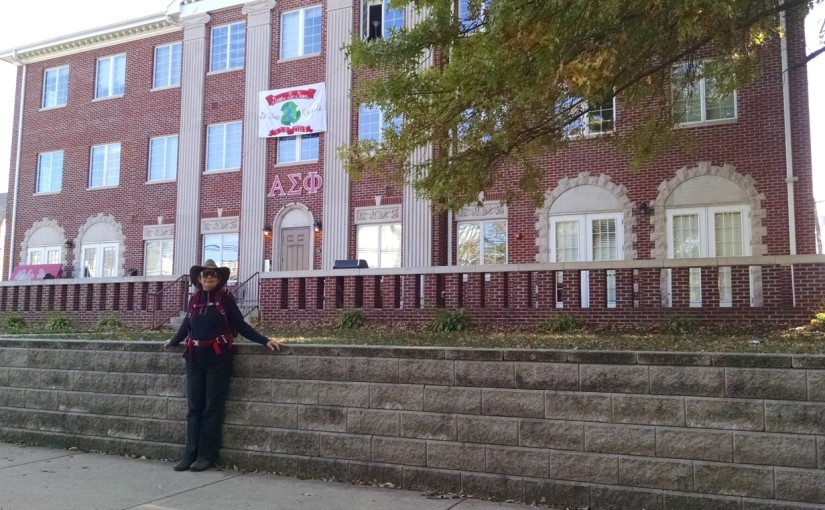
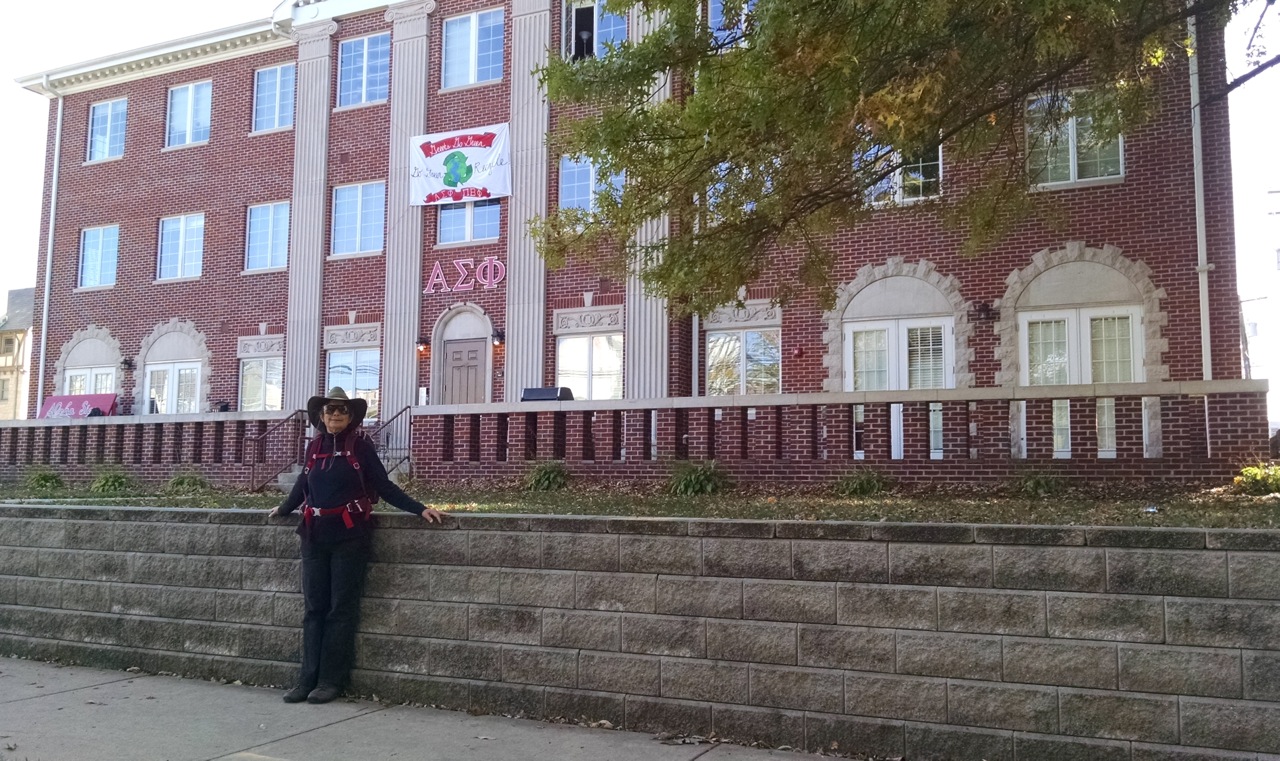
I didn’t take many pictures, but I did get this one of Jackie in front of the Alpha Sig frat house, Chuck McCaffrey’s old fraternity. This would have been along about mile 10 of our walk.

Jackie in front of the Alpha Sig frat house (Chuck's fraternity).
Jackie in front of the Alpha Sig frat house (Chuck’s fraternity).

Oh, and I wanted to mention that I wore my new boots! I bought a pair of Lems Boulder Boots, minimalist-style boots that I got with an eye to being my main winter boot this season. I got them five or six weeks ago, and have worn them as my everyday boot for most of that time, but this was their first try on a very long walk. Fortunately, they worked great.

A couple of years ago, I switched to “barefoot” running—with those quote marks there because I was not actually running with bare feet. Rather, I changed my stride, trying to match the stride of someone who was barefoot, landing on the forefoot rather than the heel.

I bought two pairs of minimalist running shoes (Road Glove and Trail Glove, both by Merrell), both featuring thin, flexible soles with zero drop (that is, the sole was the same thickness from the heel to the toe).

The changed stride demanded a lot more strength and endurance in my calf muscles, which took most of the summer to develop, but it felt natural right from the start. In my third summer of “barefoot” running, I’ve had no hint of running injuries, while hitting distance benchmarks that I haven’t hit in years.

However, my ongoing explorations of natural movement have convinced me that walking and running with actually bare feet probably offer some advantages.

The interwebs are full of advocates of barefoot walking and barefoot running, and frankly they’re kind of scary. They tend to be hugely invested in the idea that everybody who wears shoes is totally missing the boat. Their articles on the subject are full of references to the number of bones in your feet (26) and the number of joints (33), with the point being that there are extensive structures in your foot to deal with the challenges of walking on uneven surfaces. Wear shoes all the time, and those structures lose that capacity. The joints adapt to scarcely bending, the small muscles in the foot adapt to the tiny range of motion available inside a shoe. These things are arguably bad, even if the tone of the barefoot advocates sometimes seems a bit overwrought.

I started walking outside with bare feet some time in the late spring. I don’t remember exactly when, but I do remember going easy on the barefoot walking in the couple of weeks leading up to our big hike, so we must have already been doing it by early June. (My concern was that even a very minor injury—stepping on a thorn, bruising my foot on a rock, stubbing my toe—might be enough to keep me from being able to walk 33 miles.)

Once the big hike was over, I resumed my program of gradually increasing my barefoot walking, first just around the block that includes our townhouse, then more broadly in Winfield Village, then to nearby parks and natural areas.

And somewhere along the way, I started to understand the fervor of those barefoot advocates. Walking barefoot is a transformative experience, in a way that’s hard to make sense of if you only walk in shoes.

First of all, it brought back memories of being a little boy. I spent as much time as possible barefoot as a boy, and (because my parents thought that was fine) that ended up being a whole lot of time. Crossing the parking lots here in Winfield Village—walking on the small bits of grit and gravel that accumulate anywhere cars drive—hurt my feet in exactly the same way they hurt each spring the first few times I crossed Huron Street at the beginning of barefoot season when I was a boy. Crossing blacktop that’s been baking under a hot sun is another pain that’s as fresh in memory as it is distant in years. So is stepping on a thistle. Those things—and the wonderful feeling of stepping from hot asphalt into cool grass—were all things I’d not thought of in 40 years.

Second, the adaptations to walking barefoot are different than I’d imagined them being. Somehow I had the idea that I’d “toughen up” the soles of my feet, and that would protect them from pointy rocks and such. That is happening, but it turns out to be the least important part of adapting. Much more important is recovering enough range of motion in those 33 joints to allow the foot to conform to an uneven surface. Experiencing that process—feeling joints in my feet move in ways that they haven’t moved in decades—has been fascinating.

Third, paying some extra attention to my feet has made me notice that I don’t have nearly as much control over my feet (and especially my toes) as I ought to. For example, although I can raise or lower my big toe independent of the other four, I can only just barely move the other four as anything other than a group. My toes don’t bend back far enough for me to be able to transition from a deep knee bend to kneeling. (This is something that was noticed by instructors a couple of different times when I was studying a martial art of the sort that involve kicking, but the observation never came with a plan for how to improve my toe flexibility.) They’re also quite inflexible bending forward.

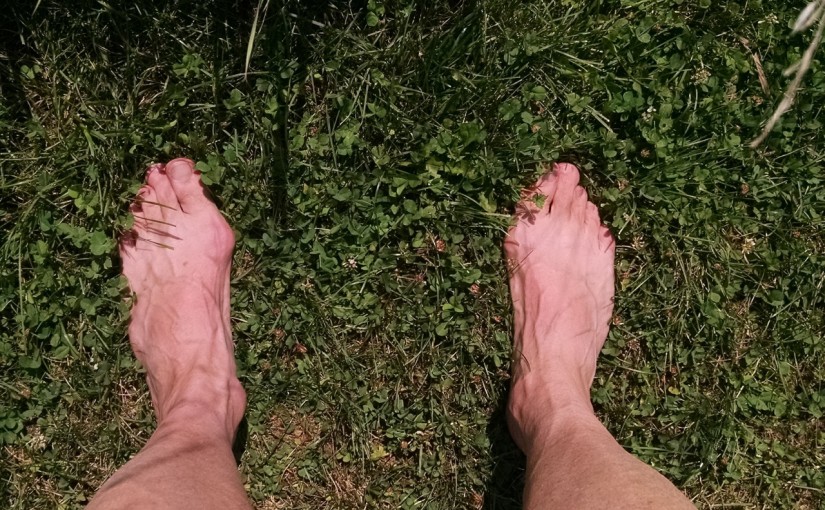
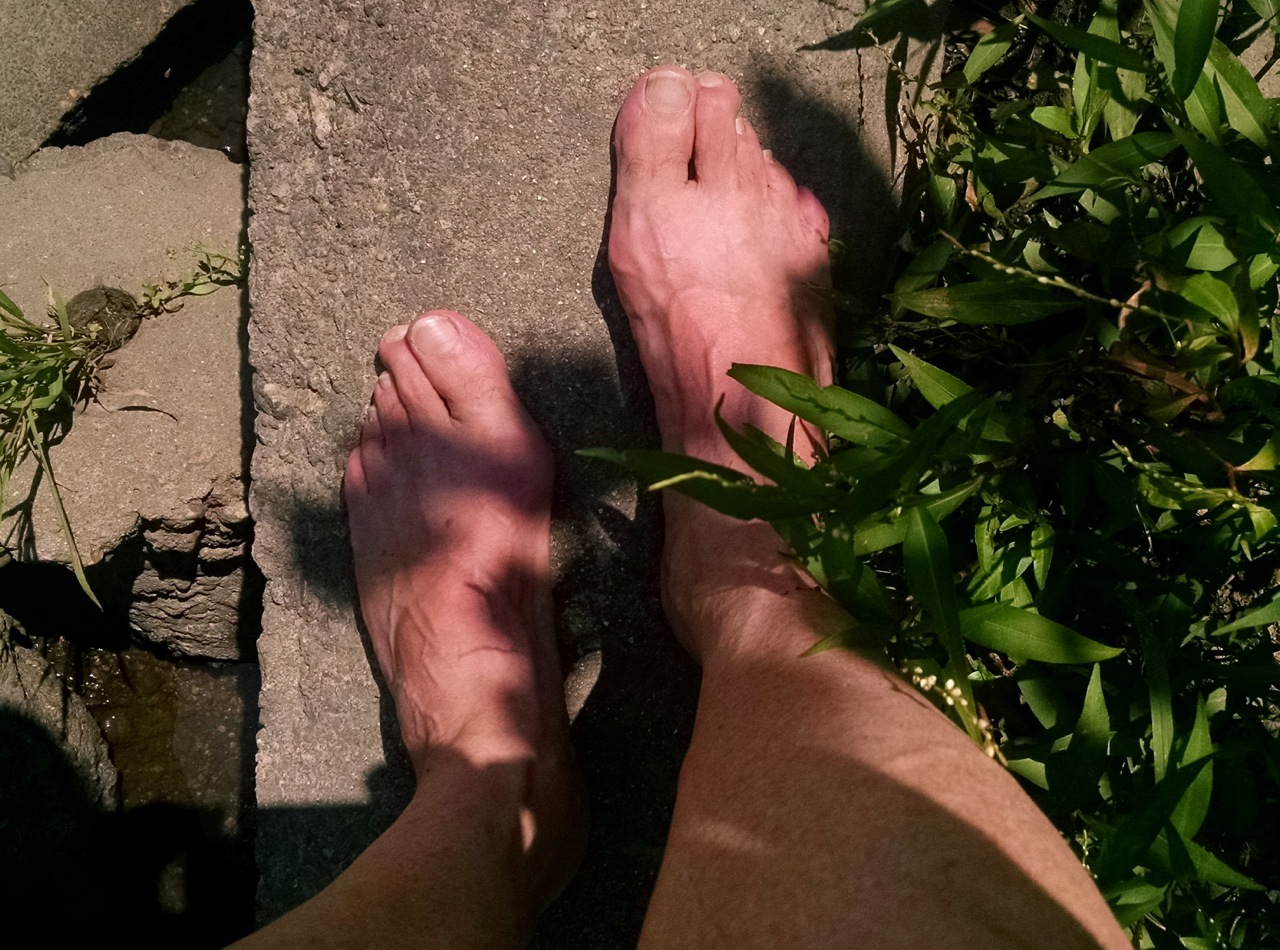
Bare feet on the concrete weir in the ditch behind Winfield Village.

Fourth, bare feet are more stable. I mentioned in an earlier post that crossing the weir behind Winfield Village was challenging. I’ve been practicing, and have gotten pretty good at it in both hiking boots and in my minimalist running shoes, but it sure is easier in bare feet.

The adaptations to barefoot walking are taking longer than I remember them taking when I was a boy—or maybe they aren’t. I mean, it probably took me two or three years to go from crawling to being a toddler, to running around the yard barefoot, to being able to walk across the street barefoot. Perhaps now, after 40 years of virtually never going outdoors with barefeet, I should not be surprised if it ends up taking two or three years once again.

Finally, today, three years after switching to “barefoot” running, I actually tried barefoot running. I didn’t run very fast or very far—I spent 33 minutes to go about a mile. I walked parts of the path, as well as stopping to take pictures, and to exercise my squats briefly on the other side of the weir. Even with the caveats: barefoot running.

Oh—I also saw a Great blue heron, and got some nice pictures of the prairie. Here’s one:

our prairie 2

Two years we trained for this particular very long walk, without getting it together to make the trip to Kalamazoo during the few summer weeks when the days are long enough to through-hike the Kal-Haven Trail in a day. This year we made it happen.

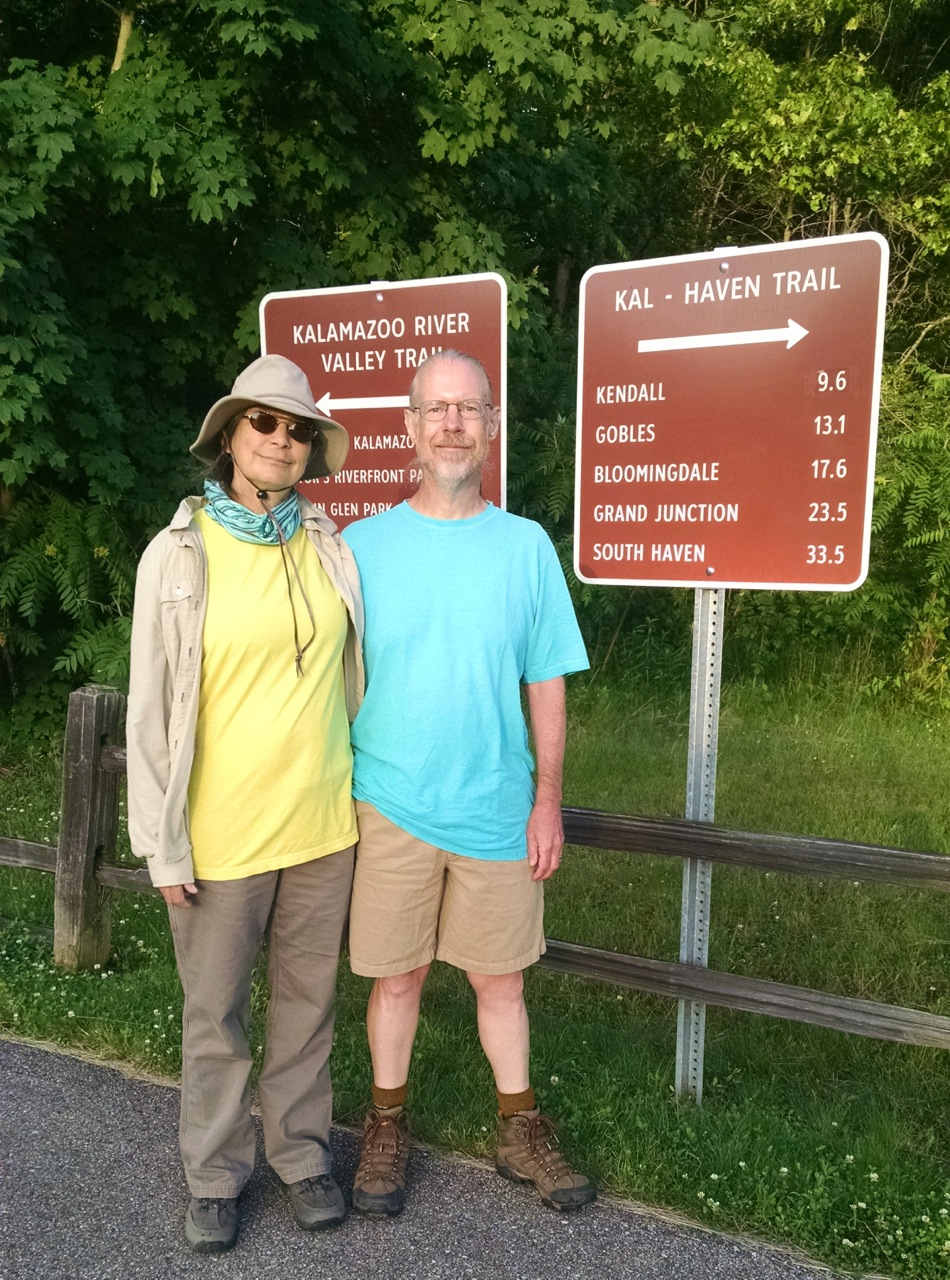
At the trailheadWe meant to be at the trailhead by dawn which was 6:05 AM, but breakfast and final checking of gear took a little longer than we’d hoped. It was almost one hour later when we posed for pictures in front of the sign. We were walking just a few minutes later. Jackie started Endomondo at 7:06.

My brother, Steven Brewer, had offered to drive support, and did a great job. He drove us to the trailhead, met us at four or five points along the way to provide fresh, cold bottles of water, laid out a sumptuous, bounteous feast for lunch, and took pictures along the way. (He has written his own account of the walk.)

We made excellent time through the morning, clocking out a whole series of sub-18-minute miles, and reached Gobles a few minutes before noon.

The crushed limestone surface was great—smooth, level, hard enough for efficient walking, gentler than concrete. (There was one stretch in Bloomingdale that had been resurfaced with asphalt, which was much harder on the feet.)

photo_18363558004_oThere was one downside to the surface, though. Almost as it it were designed that way, my tread caught the limestone and pitched it forwards into my boots. I had to stop every few miles and shake a teaspoon of limestone grit out of my boots.

Still great for walking on, and kinda pretty.

I had made sandwiches, and Steven had gotten all sorts of stuff to go with them—german potato salad, red bananas, hummus, flat bread, raspberries, raw veggies, and brownies for desert.

Trailside FeastBehold our awesome lunch, served trailside, complete with cloth napkins.

It took some minutes to loosen up after we got started going again, but we were almost matching our pace, carrying on with sub-20-minute miles right along until we hit mile 25.

I was still feeling pretty good then. We had slowed down a bit, but as we passed mile 27, I tweeted, “Has blown through marathon distance and is pressing for 33.5 miles. South Haven here we come!”

Pretty much just about then, though, I started dragging a bit. We had walked farther than we’ve ever walked before, and the last few miles were tough.

We pressed on, walking at perhaps a 22-minute pace. Jackie held up better than I did, as you can perhaps tell from this picture, taken very close to the end of the trail. Steven had suggested that we smile, and both Jackie and I did our best:

Approaching South HavenAt that point it was merely a matter of trudging on. We wrapped up at 33.41 miles as measured by Endomondo, and Steven popped us into the car and drove us to the restaurant for a celebratory feast.

At about that point, my body seemed to have lost the ability to thermoregulate—I was shivering so hard my teeth were chattering in the slightly cool air of the South Haven evening.

Jackie wrapped her arms around me to keep me warm, and Steven got this picture as well:

18964591362_299df20f06_oAfter a good night’s sleep, a big breakfast, and a nap after lunch, I think we’re all largely recovered. I stiffen up a bit if I sit still, but am not really even very sore. In the morning we got out to play Ingress, and I was able to walk around pretty much as usual. I’ll take at least one more day off before I go for a run, but basically I feel fine.

We have no plans for even longer walks, but we’ll certainly keep walking, perhaps expanding to multi-day through-hikes of the sort where your gear is schlepped for you from B&B to B&B.

It was a great experience!

I have always found “deconstructionist” models appealing. For example, I liked the idea that you could “figure out” all the nutrients that you need and then build up a diet that provides the right mix of carbs, proteins, fats (with proper mix between omega-3 and omega-6 fatty acids), the right amounts of fiber, vitamins, minerals, and so on.

Then Michael Pollan came along and (in his book In Defense of Food) completely destroyed that idea. First of all, it’s an impossible problem to solve—the different nutrients interact in the body (and biome) in ways that are intractably complex, plus there are so many micro-nutrients as to make it computationally infeasible (even if we knew what all of them were, which we don’t). More to the point, though, it’s a completely unnecessary problem to solve: our bodies solve it for us, as long as we eat a diet of diverse foods and minimize our consumption of manufactured food-like substances.

I’m not saying this is new news. In fact, this is common knowledge—everybody said this, right from the start. What I’m saying is that, for reasons no doubt having to do with my personality and psychological makeup, I liked the deconstructionist model for analyzing and then constructing a plan for what to eat, despite what everybody said. For some reason, again having to do with my personality and psychological makeup, Michael Pollan’s explanation of how the whole deconstructionist model of designing a plan for eating was fundamentally flawed suddenly made it clear to me (in a way that any number of people—including my third grade health teacher and both my parents—had not managed to do).

All that seems relevant because—I recently realized—for years now I’ve been making the exact same mistake with movement. I’ve been trying to “figure out” an exercise regime that would keep me fit. If you click on the Fitness category over in the sidebar, or the “exercise” tag on this post, you’ll be linked to a long list of my posts on the topic, many of which describe my latest attempt to find the right mix of walking, running, bicycling, lifting, stretching, and taiji to build and maintain optimal levels of aerobic capacity, strength, and flexibility.

Then I ran into the work of Katy Bowman, whose explanations of why exercise is no substitute for movement clicked for me in just the same way, and for roughly the same reason: The problem is intractably complex, and anyway our bodies solve the problem for us—as long as we engage in an ample amount of diverse movement and minimize things like sitting in chairs and wearing bad shoes. (See her book Move Your DNA: Restore Your Health Through Natural Movement.)

Again, this is not really new news; I’m just late to the party because I like the idea of designing an exercise regime that covers all the necessary categories.

However, I think I have come around. Appealing as it is to me to design the perfect exercise regime and then tick off each box as I reach my target for the week, I pretty much have to admit that the whole thing is a fool’s errand. I’d be much better off spending that time walking, stretching, hanging, squatting, climbing, balancing, jumping, throwing, catching, and so on.

I’ll still run (because I enjoy it, probably due to the endocannabinoids, and because being able to run is useful), but I’ll spend a lot less time on things like figuring out how much I can safely add to my weekly mileage. I’ll just run as much as I feel like—while being careful to do so mindfully, and to pay attention to my body, so that enjoying running doesn’t entice me to run more than should.

Still not new news.

We’ve decided not to do another even longer walk before we do the big hike of the Kal-Haven trail. (Coming up later this month!)

I’d had it in my head that we’d do a 30-mile walk, but the more I thought about it, the less it appealed. Mainly, it seemed like it would make the main event less special. (“Oh. We walked 3.5 miles longer than our longest training walk. Big deal.”)

We will do one more walk of close to marathon distance, somewhere in the 20–25 mile range, but besides that, we’ve been doing some shorter walks of a more rugged nature, hoping to address some deficiencies that cropped up on the marathon-length walk.

In particular, I noticed that toward the end of really long walks, my hips get tired and seem kind of wobbly when I walk over uneven ground. I thought one way to address that, besides doing more longer walks, would be to find some especially uneven ground to hike on. That’s why we went to Fox Ridge and later to Forest Glen—the trails would let us get in some longish walks with some slightly different sources of stress than just more longer.

Today we hiked at Allerton Park, doing a bit over 6 miles of some not-too-rugged trails. We’d had it in our heads to do 6 more miles on the other side of the Sangamon River, but decided to skip it due to schedule constraints—we would have had to rush to get home in time to got to my Esperanto meeting and the farmers market this evening.

Besides the hike, we also took half an hour or so to do some taiji in the Fu Dog garden. That was very nice.

Once again, I got to put my parkour practice to use.

There’s a path that leads—used to lead—to the back of the mansion, and there used to be an iron spiral staircase that got you up to the top of a retaining wall the separates the grounds (at one level) from the steep slope down into the forest and the Sangamon.

We hiked up that trail—what’s left of it—only to find that the iron staircase has been removed.

The wall there would be beyond our capability to climb, but just around the corner (separating the mansion grounds from the pond), the wall is shorter—about chest high.

It’s been a long time, but I just did what I would have done as a boy facing a wall of that height—I put my palms on it, then jumped up high enough that I had enough leverage to go ahead and push myself up onto the wall.

Jackie found that she couldn’t jump high enough to get to where she could push herself on up, so she reached over the top of the wall to where she could hook her fingers over the far side. Then she just scrabbled up as best she could, her boots sliding on the bricks, but catching enough that she managed to get herself up onto the wall.

We were both pretty pleased with ourselves. I doubt if we could have climbed that wall five years ago.

I neglected to get a picture of the wall from today, but here’s a picture from a few years ago, looking across from the far side of the pond (click to embiggen):

allerton mansion retaining wallWe were way over on the right, and our climb was from just above the pond. (There are two walls there. We just climbed the lower wall. There’s a path at that level, and then a second retaining wall up to the level of the mansion grounds proper.)

On an unrelated note, today seemed to be Path Crossing Day for the snails. I scarcely took a step down the path without seeing a snail.

Here’s the first snail I spotted:

trail snail at allerton parkIsn’t he a handsome fellow?

I don’t know when I quit crawling. Probably around first grade. I’m not sure why, either. Because it was something babies did, and I was grown up, I expect.

I don’t remember my parents trying to get me to quit crawling, but I’ve seen other parents try to convince their children to stay off the ground, in the interests of either propriety or cleanliness.

At any rate, most people who crawled all the time before they were five years old have so completely lost the habit it doesn’t even occur to them as a possible way to get under or through something.

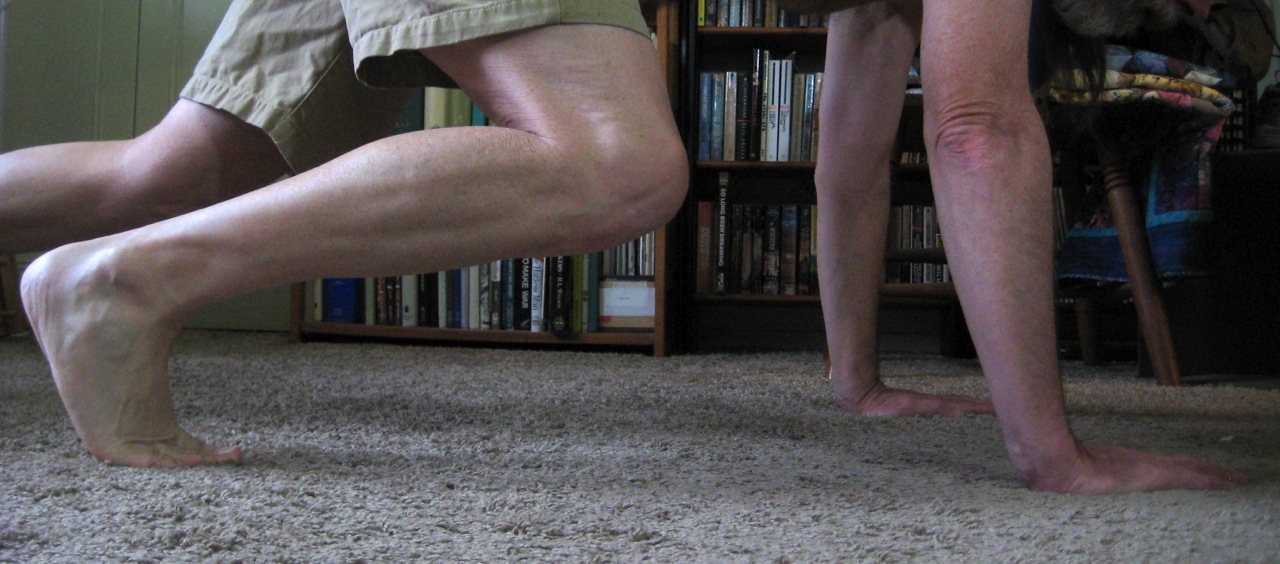
When I trained with the local parkour group, the first thing the group practiced was quadrupedal movement—crawling on hands and feet.

After that practice session, I added quadrupedal movement to my own practice, and the first time I went out to do it, Jackie decided to come with me.

(It happened like this: I told Jackie I was going to go play in the woods. “What are you going to do?” she asked. “Crawl and roll on the ground,” I said. “Can I come?”)

We did some rolling, both just rolling sideways and shoulder rolls. We also did some crawling, both prone (bear crawl) and supine (crab crawl).

The actual amount of time spent crawling was pretty small—I doubt if it added up to as much as 5 minutes—but it turned out to be a surprisingly successful bit of practice, because just in the week since then, it has usefully informed the way we dealt with obstacles repeatedly.

The first time was last week at Fox Ridge State Park. At one point the trail was blocked by some fallen trees. There was more than one trunk, making the geometry a bit complex for climbing over. There was enough space underneath the bottom trunk that it would almost have been possible to just do a “step under” move, except we were wearing packs, meaning that we needed another eight or ten inches of clearance.

If I hadn’t just practiced crawling, I don’t think it would have occurred to me that the easiest way to get under the trunks was to crawl on my hands and feet. We’d probably have done something complex, like both take our packs off, have me step under the barrier, handed both packs through (or over), and then have Jackie follow under the barrier.

With the recent reminder that crawling is simple and effective, that’s what we did. I tried to step under, found that there wasn’t clearance for my pack, so crouched down further, put my hands on the ground, and crawled on through. Took about five seconds. Got my hands a little dirty. Worked great.

Yesterday we hiked the backpacking trail at Forest Glen, which presented a problem for which supine crawling made an excellent solution.

steep pathIt’s hard to capture the steepness of this bit of trail in a photo. Not only was the trail steep, it was also wet, and the mud was slippery.

Jackie went down first, and quickly found that the combination of steep and slippery made it too dangerous to attempt to go down bipedally. She dropped down and did an inverted foot-hand crawl (aka supine crawl or crab crawl). It made for a quick, efficient, safe way down the steep bit in the path.

I followed behind, just the same way.

Rediscover quadrupedal movement. Besides being a way to get under or through something, it’s also very stable—perfect for dealing with loose, rugged, steep, uneven, or slippery ground.