Cardiff de Alejo Garcia links to a paper by economists Gianmarco IP Ottaviano and Giovanni Peri that tries to make the case that, because US and foreign-born workers choose different occupations, they’re really not competing for the same jobs. (The paper itself is behind a paywall.)

The main thrust of the argument seems to be this:

Certain jobs get lots of foreign-born workers while others get almost exclusively US workers (tailors 54% foreign-born, crane operators 1% foreign-born). Because of this, more foreign workers won’t increase unemployment, because the foreigners would just be competing with other foreigners for those jobs. Further, more foreign workers won’t even decrease US wages, because even another thousand tailors won’t put any pressure on wages for crane operators.

No doubt my own experience as a software engineer colors my perceptions (computer engineers are 33% foreign-born), but I’m unconvinced.

For one thing, these sorts of pressures occur at the margin. Even a modest number of workers (of any nationality) willing to work for less, will have the effect of holding down wages for everyone else.

For another, there is indirect pressure. Even if a Chinese cook doesn’t compete with a US cook for a job at a diner, another thousand of them will hold down wages for Chinese cooks. That will result in lower costs for Chinese restaurants, which do compete with diners. That puts pressure on diners to hold down their costs—including wages for cooks.

Finally, people’s job and career decisions aren’t static in the face of these pressures. Perhaps few software engineers decided to become lawyers (only 4% foreign-born), but a great number of software engineers have moved on to doing something different. Each one who does so is now competing in that new field, potentially holding down wages over there.

Of course, outsourcing production overseas has had at least as strong an impact on employment and salary levels as immigration has. I’m just glad that I figured out early that I would shortly be competing with someone who could live a middle-class lifestyle on $6000 a year. That gave me a few years to take the necessary steps to arrange my life otherwise.

Tobias Buckell just posted about Portugal’s push into renewable energy. He links to an article claiming that 45% of Portugal’s grid electricity now comes from renewable sources, and that they’ve managed this with just a 15% increase in electricity costs. Making the (somewhat unlikely) assumption that one could get another 45% increase for another 15% increase in price, he suggests that it would be totally worth it:

I’d take a 30% hike for energy independence and no money being sent to terrorists in a fucking heart beat.

Frankly, I would too. In fact, I’d be willing to pay a lot more than that. Unfortunately, I’m afraid it would cost a lot more than that—more than most people would pay.

First of all, Portugal was already paying about twice what we pay in the US for electricity. The 15% bump was on top of that. Second, Portugal had substantial untapped sources of hydro power. The US doesn’t.

Either of those, I expect, would doom the project. The first makes it unaffordable—I’d be willing to pay 30% over double what I’m paying now for electricity, but I doubt if very many other people would. The second makes it impossible—we have a lot of untapped wind power, but that comes and goes. Use of wind power will grow, but even with a much better grid (to distribute power from where the wind is blowing to where people are using it), you need something more reliable for baseline power.

But neither of those is the real problem, which is that the US uses three times as much electricity per person than Portugal does. (13646 kWH  versus 4663 kWH per capita in 2005, data from the World Bank.) If you look at the historical per capita energy use in each country, you can see that both countries have shown steady growth—but Portugal is only up to about where the US was in the early 1960s. (And, sadly, following right in our footsteps.)

So, to shoot for the Portugal model we’d have to:

  1. Cut our energy use by two-thirds,
  2. Double the price (plus 30%), and
  3. Either invest vast additional sums in the grid (perhaps $100 billion) or accept brownouts when the wind wasn’t blowing.

Again, I’m totally up for that. My electricity consumption is probably already two-thirds below the US average. My typical electric bill runs just about $30; I’m sure I could stretch my budget to cover $70 if the payoff was no more carbon in the air and no more sending buckets of cash to people who hate us.

But based on the way people actually behave, I’m forced to assume that most people would rather burn the planet and fund terrorists than turn off the AC, downsize the car, and pay up for organic, locally grown food.

I’m as outraged as anyone at the incompetence that led to the Deepwater Horizon oil spill in the gulf: both the slipshod regulation by the government and the incompetence and criminality of BP, Transocean, and Halliburton. I wouldn’t mind one bit if all three companies were broken by cleanup costs, restitution to injured parties, and civil and criminal penalties. But I’m a bit sad to see all the blame being laid at their doorstep.

The fact is, spills like this are an entirely predictable result of consuming 85 million barrels of oil per day. If you consume that much, you have to produce that much. And if you produce that much, you will have accidents. Some of the accidents will kill people. Some will contaminate huge swaths of the ocean.

Sure, BP et al deserve much of the blame. But there’s plenty of blame to go around. A good share of it belongs to every one of us who drives a car, heats their home, or buys anything made out of plastic.

What did you think was going to happen?

Backyard Chickens
Backyard Chickens
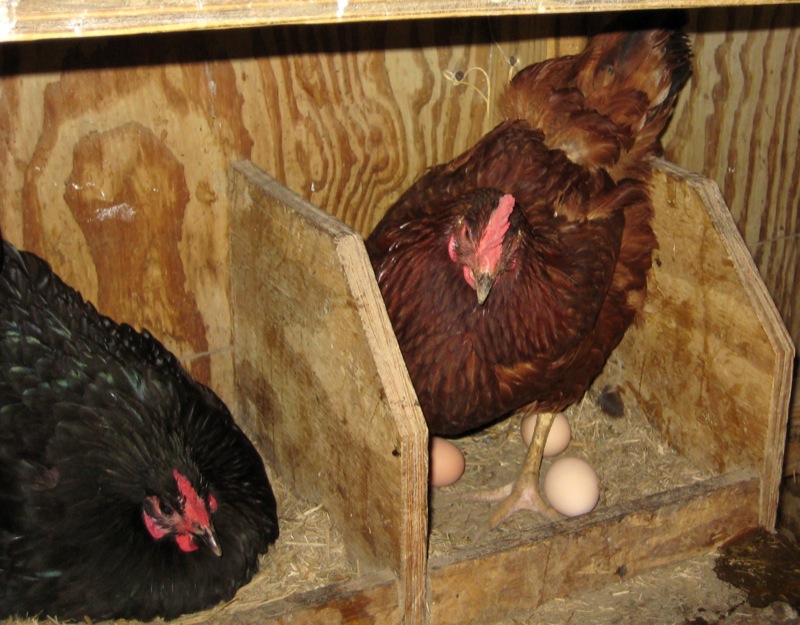
Chickens at Creque Dam Farm in St. Croix

When I was looking for a house a few years ago, I only looked in Urbana. The main reason was that Champaign prohibits residents from keeping chickens, while Urbana allows it. As you can imagine, I was delighted to learn that the topic of legalizing chickens has come before the Champaign City Council.

I know a little about what it’s like to have chickens in the yard, from one summer when my parents got a flock of chicks and raised them up to fryer size. We didn’t keep them for eggs, but they were around for several months, and I was never bothered by noise, smell, or any of the other problems that backyard chickens are supposed to bring.

I’ve had eggs from free-range chickens—real free-range chickens, not the mockery of free-range allowed under USDA regulations. They’re not just better; they’re so much better as to not even be the same thing.

So, I’ve written to my city council representatives:

I was very pleased to see in the local paper that the topic of changing the law to allow Champaign residents to keep chickens has come before the council. I urge you to support this change.

One of the most important changes we need to make Champaign a more sustainable community is to stop viewing the household purely as a center of consumption: it needs to become a center of production as well. Allowing residents to raise chickens is a step in the right direction.

Many communities (including Urbana) allow residents to raise a modest number of chickens in their backyard. With a few sensible restrictions (no roosters, adequate space for each bird), there’s no reason that chickens can’t be kept in an ordinary backyard without adversely impacting neighbors.

I urge you to support such a change in the law.

The picture that illustrates this post was taken at the Virgin Islands Sustainable Farming Institute’s Creque Dam Farm, which I visited in August of 2008 and about which I wrote a piece for Wise Bread: Learn Techniques for Sustainable Living. I’d earlier written a piece for them on backyard chickens called Real Eggs.

Update to add: I got a quick response from Thomas Bruno, one of the at-large city council members. He described the process for getting an item considered by the city council and adds:

Get a science teacher involved or a scout troop and your chances of success will skyrocket.

So, I guess my next step is to get in touch with some of the other people mentioned in the article as pushing for a change in the law, and see if anyone knows a science teacher or a scoutmaster.

Second update: I found and linked to a great article on how to get your town to legalize backyard chickens.

Late last summer, I got email from the publisher Gale. They wanted to license my Wise Bread article Bankruptcy is a Good Thing to use in their book Bankruptcy (Introducing Issues With Opposing Viewpoints).

They have a whole series of “introducing issues with opposing viewpoints” books, each of which contains a variety of articles and essays on some topic. I gather that the idea is to help teach students the skill of reading a number of articles, any one of which may be unbalanced or narrowly focused, and then synthesizing an understanding of the topic. It’s a useful skill, and one that’s hard to teach with a textbook, since textbooks generally try to present a comprehensive and balanced viewpoint.

I executed the license agreement back in August. The book came out in April, and the check (payment on publication, of course) arrived today!

It would probably be worth my time to market reprint rights more aggressively, but I enjoy writing more than I enjoy marketing. So, it’s especially nice when the chance to earn a license fee falls into my lap like this.

Because of the nature of (and price of) the book, I didn’t try to negotiate a contributor’s copy. If you happen upon a copy, I’d be pleased to hear a little about it.

I live in a nicely cosmopolitan little apartment complex. It’s one of the cheaper places to live in town, so we get a nice mix: single people, young couples, seniors, working-class folks, grad students. Those last two categories in particular add a good bit of racial diversity—African Americans, South Asians, East Asians. It makes for a nice place to live.

Because I like living in places like this, I find myself conflicted on the topic of  immigration.

The largest motivation for opposing immigration (setting aside the wrong-headed opposition that springs from racism) is economic—but most of the people trying to make the economic argument get it wrong. Or maybe they just state it poorly.

Population density

The most important reason that the United States is an attractive place to live is the low population density. This was true from the beginning of European settlement. There was enough land that anyone could be a landowner. The low population meant fewer workers, which kept wages high and working conditions good. Natural resources were abundant, meaning everyone could have and use more timber, more water, more grain, and (especially over the past couple of generations) more coal, oil, and natural gas.

There is high population density in cities, and that’s the best way to arrange things: If most people live in an urban environment, it preserves the maximum amount of land for crops, timber, pasture, natural areas, and so on. Sprawling the people out in subdivisions and exurbs wastes a lot of land. But however you arrange the living and working spaces: the more people you have, the smaller the average person’s share is going to be.

Economists dismiss this argument, on the grounds that people are productive: Each new person produces more than enough to be self-supporting, so each new person can potentially raise everyone’s standard of living. That’s not wrong exactly, but it’s largely a self-serving argument. The monied interests benefit from an influx of new workers, because a larger labor force holds down wages. At the same time, the monied interests don’t suffer as their pro-rata share of nature’s bounty declines, because they don’t settle for a pro-rata share; they buy as much as they want, leaving that much less for the rest of us.

Many people understand this at some level, but view it in pieces rather than as a whole. If they’re workers, they object to other workers willing to work for lower pay. If they’re business owners, they claim that there are “certain jobs” that Americans just won’t do. (A falsehood: it would be easy to find Americans to do any job, if it were a full-time salaried position with health insurance, a pension, and education benefits—just like every job I ever had as an adult.) Others point to the increased demand on social structures when “different” people arrive—people with bigger families (more children to be educated) or people who speak a different language (public safety information needs to be translated). At this level, the pro-business argument is correct: immigrants are productive and the taxes they pay easily cover the costs of the services that they use. But they still increase the population density—and that means dividing all the resources of the country among more people.

It’s an economic issue, a quality-of-life issue, and particularly an environmental issue: there are many things that are only environmentally harmful if the demand for inputs exceed the local environment’s capability to provide them, or if the outputs produced exceed the local environment’s capability to handle them.

So: I’m not against immigration; I’m against population growth. In the context of a stable population, I’d like as much immigration as possible, because I enjoy a cosmopolitan community.

Where the anti-immigrant argument turns really wrong, is when it comes to strategies and tactics of handling a population that includes some immigrants.

Police state

If you’re going to allow people to visit, whether for tourism, cultural exchange, as guest workers, or whatever, some number of those people are going to stay here. They’ll stay for all kinds of reasons—for economic opportunity, for freedom, because they fall in love with someone who lives here, or just because they like the place they’re visiting.

If the number who stay are the number you want to stay, then everything’s fine. But if it’s more than you want, there’s no way to reduce the excess without turning the country into a police state.

I don’t want to live in a police state. I don’t want police to ask me for my papers. It’s annoying. It’s un-American. It’s unconstitutional. (Well, it’s constitutional for the police to ask, but it’s unconstitutional for them to do anything if I don’t present my papers. Note that the Supreme Court seems inclined to disagree with me on this point.)

For one thing, there’s no obligation for a citizen to even have papers. Almost everyone does, because a drivers license counts and it’s so handy to be able to drive, but it’s not required. It’d be pretty tough to get along without a social security number, but you can have a number without having an identity document. (Early social security cards—I still have mine—had no security features at all: just a name and number printed on card stock.)

Since the mid-1980s, employers have been insisting on seeing identity documents, because otherwise they can face penalties if they hire illegal immigrants—an early example of exactly what I’m unhappy about.

Even if you have papers, even if you keep them sufficiently in order that you can present them to an employer when you start a new job or a bank when you want to open a new account, there’s still no obligation to keep them on hand to show to the police.

Still, objecting to being asked to show papers is really just a personal quirk. The real harm comes from having people here who can’t safely use ordinary public institutions. Communities where people are afraid of being arrested or deported are inevitably bad communities.

  • Crimes will go unreported, which will result in more crime—and more violence, as people who lack access to the courts have to resort to self-help to settle their disputes.
  • Sick people won’t seek medical care, producing pockets of disease.
  • Pernicious institutions like check-cashing stores and pay-day lenders thrive where people can’t open bank accounts.

I don’t want to live in a town where there are people who don’t feel safe talking to the police when they get robbed or the department of labor when they get cheated by an employer or the bureau of weights and measures when they get cheated by a merchant. I don’t want to live in a town where lots of drivers don’t have insurance because they don’t have a license because they don’t have the right kind of visa. I don’t want to live in a town where some people have to work for cash because there’s no legal way for them to pay taxes.

As I say, I’m of two minds. I want to keep the low population density we enjoy in the US—it’s a key factor in our high standard of living. At the same time, I enjoy living in a diverse community. But it’s impossible to have it both ways: If you allow foreigners into the country, some of them will stay, and any effort to remove them produces problems that are much worse than the small hit that any one immigrant produces to our standard of living. And yet, in the aggregate, the hit on our standard of living is significant.

In the end I come down squarely against measures like the recently passed law in Arizona—it will do a lot more harm than good. I’m generally in favor of efforts to control the border, to make it tougher for people to sneak into the country, but that’s no panacea—not unless you use control of the border to hold the number of temporary visitors below the number of permanent residents that you’d be willing to accept. I’m not sure there is a solution, except for the rest of the world to become as nice a place to live as the US, and thereby produce a balance between immigration and emigration.

In his article Saving Yourself [Note: article is now behind a paywall] Daniel Akst buries at the end a particularly good statement of the central point I try to make in my personal finance writing:

Thrift is thus a way to redeem yourself not just from the unsexy bondage of indebtedness but also from subjugation to people and efforts that are meaningless to you, or worse. Debt means staying in a pointless job, failing to support needy people or worthwhile causes, accepting the strings that come with dependence, and gritting your teeth when your boss asks you to do something unethical instead of saying “drop dead”. Ultimately, thrift delivers not just freedom but salvation—which makes it a bargain even Jack Benny could love.

To get there, though, he takes you on a wonderful journey through the American history of thrift, from Jack Benny to the Puritans and back again, with a couple of side trips to Sexyland.

My Wise Bread post Have Style, Not a Lifestyle was featured on the Discovery Channel’s Planet Green.

Here’s the gist of what I had to say:

The key to resisting the Diderot effect is to have style. Not just any old style, but a particular style. Something nicer than everything else you own isn’t in keeping with your style and that makes it easier to resist: It’s just not you.

Check out the Planet Green’s Watch Out For the Diderot Effect which includes a link to a translation of Diderot’s famous essay.

This is exactly right:

Subjecting children to daily unpleasantness – in the form of arbitrary rules, dysfunctional socialization, scholastic regimentation, age-segregation, teasing, bullying, verbal abuse, or what have you – in the name of acclimatization to the “real world” simply lowers their standards for the life they will accept.

via The Lazy Faire » Blog Archive » It’s OK to give your kids high standards

The idea that parents should stand aside from protecting their kids—or even go so far as to deliberately do things that are cruel or capricious—to make sure that children learn the various lessons that add up to understanding that “life is tough” or “life isn’t fair” is an insane one. No child, no matter how coddled or protected, is going to fail to confront the sorts of problems that drive those lessons home.

I’ve written on the same topic.  In particular, in Find Work Worth Doing, where I criticize mock work (such as most school work) and go on to say:

I think parents also do their kids no favors when they encourage them to take low-skill, part-time jobs to earn pocket money.  (Sometimes they do so with the explicit motivation that it will teach their kids the value of work!)  Kids will be far ahead of the game if they’re taught how to identify work that’s worth doing, and how to find a job doing that work.

Protecting a child from the hard knocks of life will not prevent your child from learning the truth about the real world. Nothing can.

Jay Lake gently suggests that just waving your hands and saying “Cross-subsidy” is not a complete answer to the notion of what Amazon thinks its doing, and that’s a fair point. I think Amazon’s real objectives have a lot to do with controlling the marketplace. By selling ebooks below cost they do several things at once; in particular, they make it expensive for anyone else to enter the ebook market for new bestsellers.

If they can establish the one true price for the ebook edition of a new hardback, and keep other booksellers out of the market by selling the books at a loss, they’ll soon be in a position to dictate terms to the publishers in the same way that big-box retailers dictate terms to their suppliers in other markets. (Clearly they were supposing that they were already in that position, else I don’t think the “disappearing buy button” fiasco would have happened. Fortunately, it looks like Amazon pushed too hard too early.)

I think the result of an Amazon victory would have been very similar to what we have seen in the big-box stores over the past few years: Consumers would enjoy low(ish) prices while suppliers would see ever-increasing pressures on their profits. (I’m seeing the publishers as suppliers here, although the profit pressure would pretty quickly flow on to authors as well.) Choice would decline as profit pressures forced all but the lowest-cost suppliers out of business.

So, I’m glad that seems to have been headed off, at last for the moment.

Having said all that, though, I think the cross-subsidy analysis is also correct. I think Gillette made its own razors to give away, but it wouldn’t have needed to. Nowadays it would surely outsource razor manufacture, but that wouldn’t be necessary either. It could just as easily announce that it would sell any razor that matched the specs for its blades, and then sell them for less than it paid its suppliers. (In fact, that might be a perfectly viable business model. Surely some shavers would go for a cool-looking limited-edition art razor and accept the resulting lock-in to Gillette blades, as long as the razor wasn’t too expensive.)