For about six weeks now, I’ve been playing Ingress.

It’s a game. You could almost call it a video game—you see what’s happening on a video screen—but to play you have to go outside: The action of the game happens at specific places in the real world.

The conceit of the game is that matter from another dimension is intruding into our world via portals. In our world, these portals appear as works of public art or unique architecture. Via the game (running on an Android phone or tablet), you can locate and manipulate these portals.

I’ve been having a great time. I’m working with a half-dozen or so local Resistance players, some new like me, others already at level 8 and mainly providing support (since they’re no longer working to level up themselves).

The structure of the game encourages team play—building a powerful portal requires multiple high-level players to work together. But the team play doesn’t need to be simultaneous, just somewhat coordinated. Lower-level players can make faster progress if they play with a higher-level player, but it’s not necessary.

Screenshot_2013-11-01-11-15-12Besides the pleasures of loosely integrated, minimal-pressure teamwork, the other great thing about the game is that, because it takes place in the real world, to play it you have to go out in the real world. The game reports on how far you’ve walked in the course of playing it—for me, 50 km in the past six weeks. (See “Distance walked” in screenshot.) I credit that walking with helping me maintain my weight even though I haven’t been able to run for the past month.

I’m also really into the public art aspect of the game. I was already a huge fan of public art, but the game has made me connect with individual works in a way that I hadn’t. I’m aware of individual pieces in a whole new way—how they relate in space with one another and with other aspects of the community. (Although it is a different experience now to go for a walk downtown. Even when I’m not playing, I’m aware that certain works that are portals in the game. I have to remember that most people are not.)

Anyway, Ingress is now in open beta. If you have an Android device, you can just download the game and go.

I recommend it.

If you’re local and play, get in touch. I’d be glad to help you level up.

I’ve fallen rather far behind on my posts about growing flax this year, so this is something of a catch-up post. It covers the work we’ve done since harvesting—and not only brings us up to date, but pretty much finishes up the series. Jackie will, of course, spin our flax fiber into yarn, but she spins all the time, so that’s just normal around here.

So, in quick succession, here are the next steps after harvesting:

Drying

It’s a little odd that you’re supposed to dry the flax, giving that the next step is to soak it in water, and yet that’s how it’s done, and who are we to go against tradition?

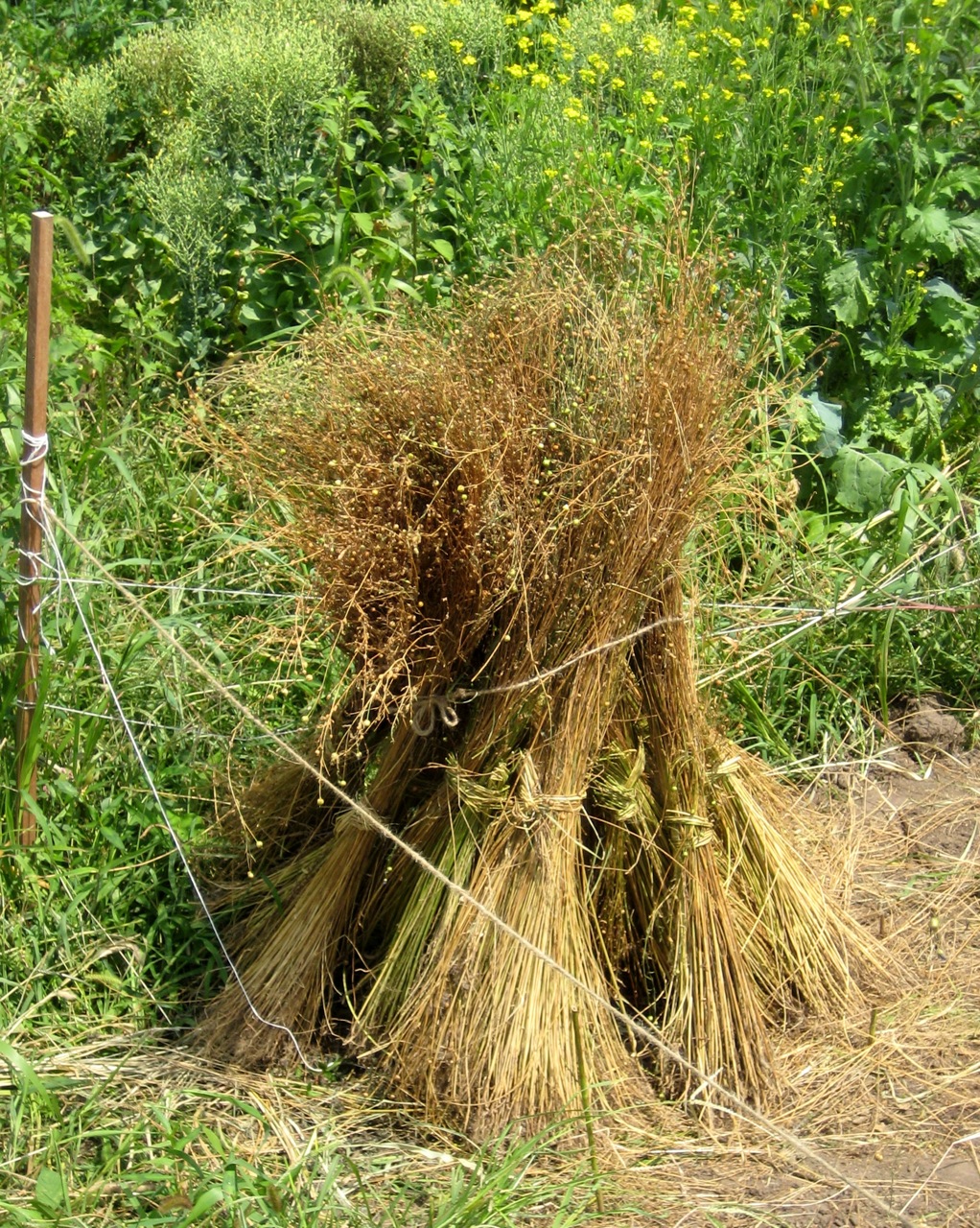
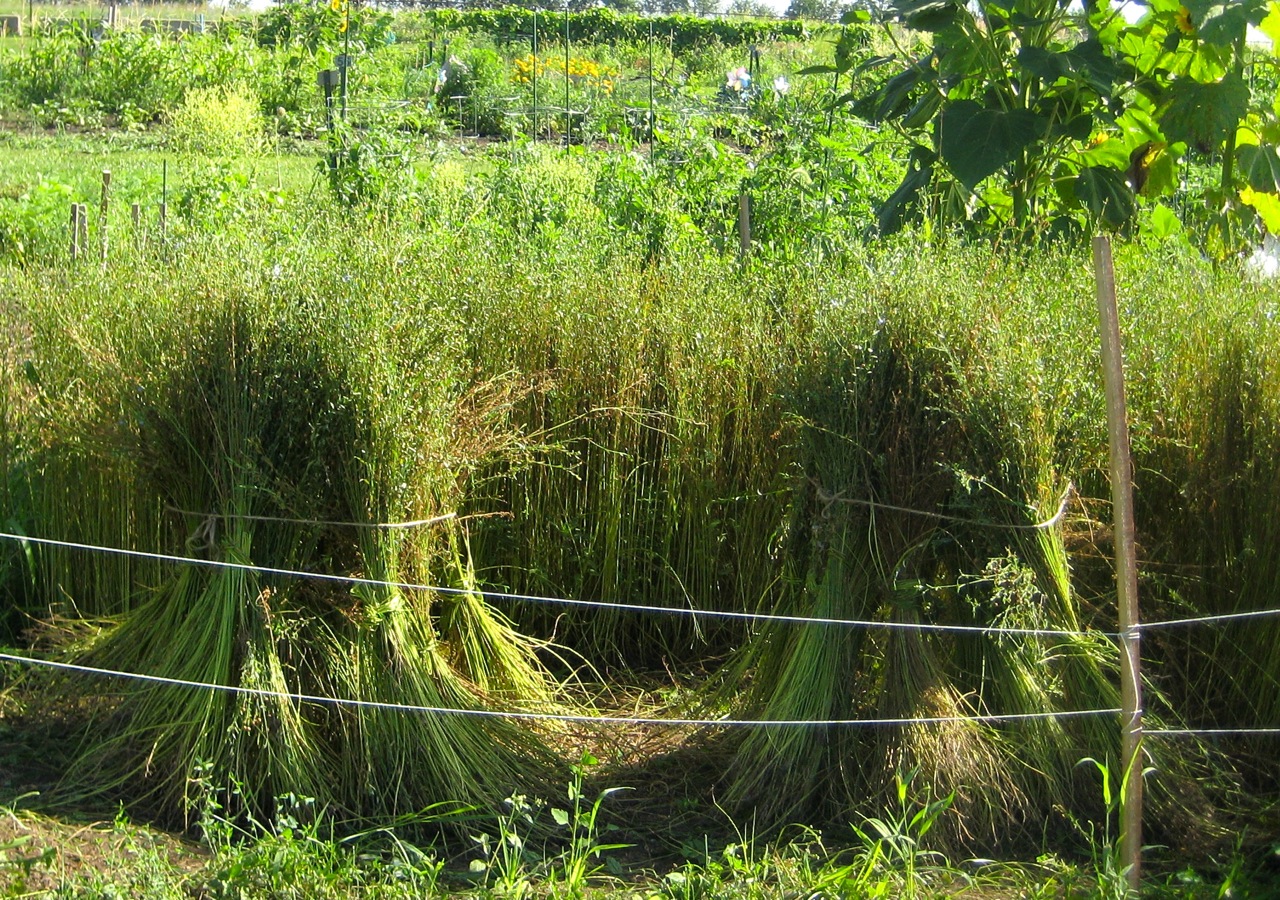
Here’s one of our little flax stacks. This is well along in drying, although you can see that some of the interior stems are still pretty green.

flax-stack

Rippling

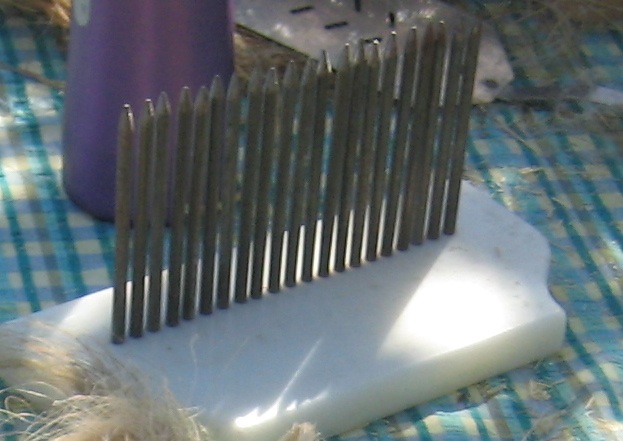
Once the plants are dry, you want to remove the seeds. There’s a tool that’s basically a bed of nails spaced appropriately for catching the seed pods.

I neglected to get a good picture of our ripple, but here’s one cropped out of a larger picture:

ripple

You just draw each bundle of plants through the ripple a few times, and collect the seed pods that pop off.

We got a big coffee container full of seed pods. Unfortunately, a lot of the seed pods only have two or three seeds in them, making it pretty tiresome work to get flax seeds. If you spend about fifteen minutes at it, crushing each pod and then getting the seeds out, you can get maybe a quarter-teaspoon of seeds.

I blame colony collapse disorder. (Flax is bee-pollinated. The native bees do the best they can, but evidently without complete success.)

Retting

Once the flax is dry, you rett it—you subject it to a controlled rotting process, the purpose of which is to do some damage to the stem so that you can get to the fibers.

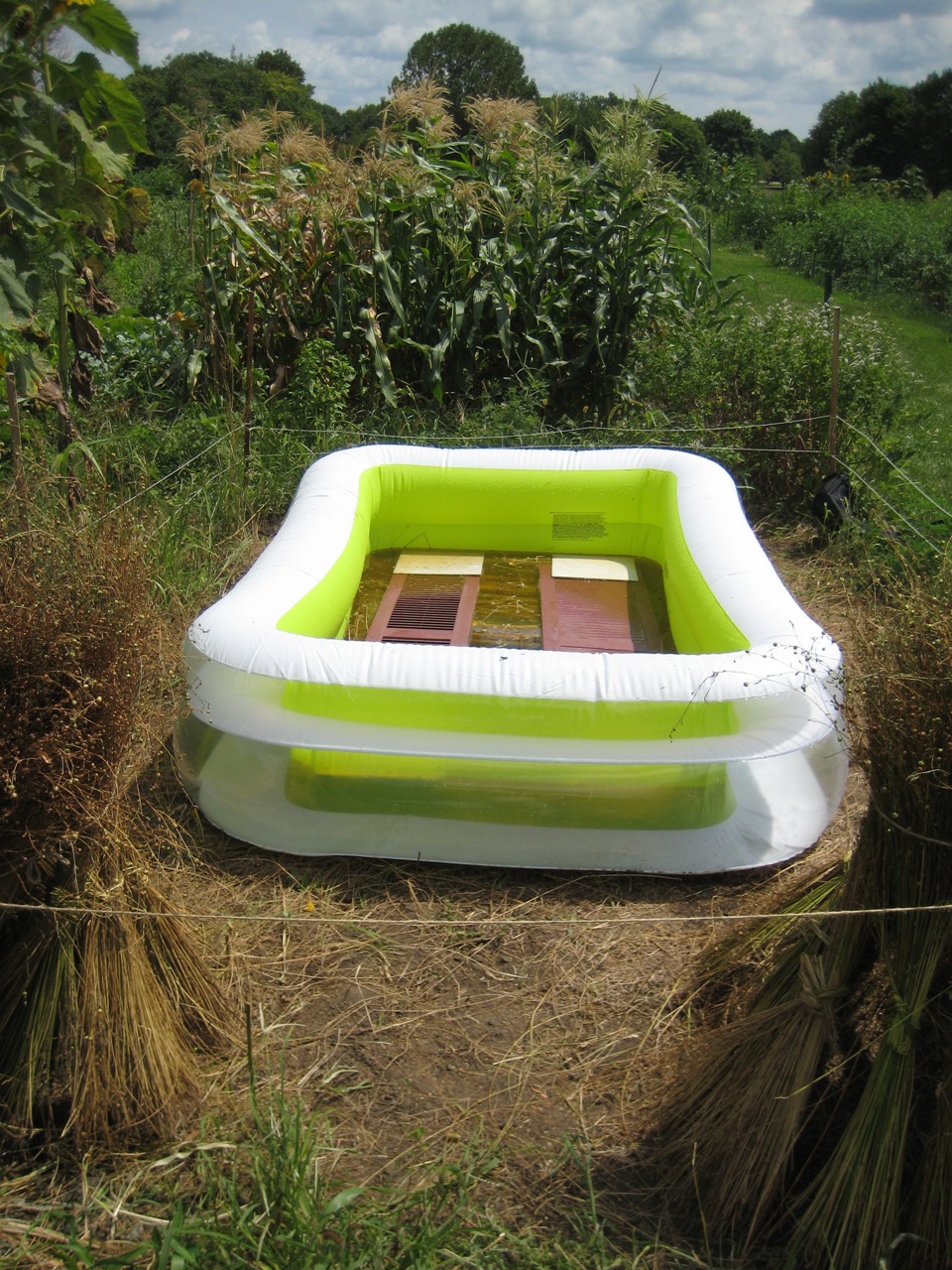
We retted our flax in a kiddy pool that we bought cheap at a local discount store:

retting-pool

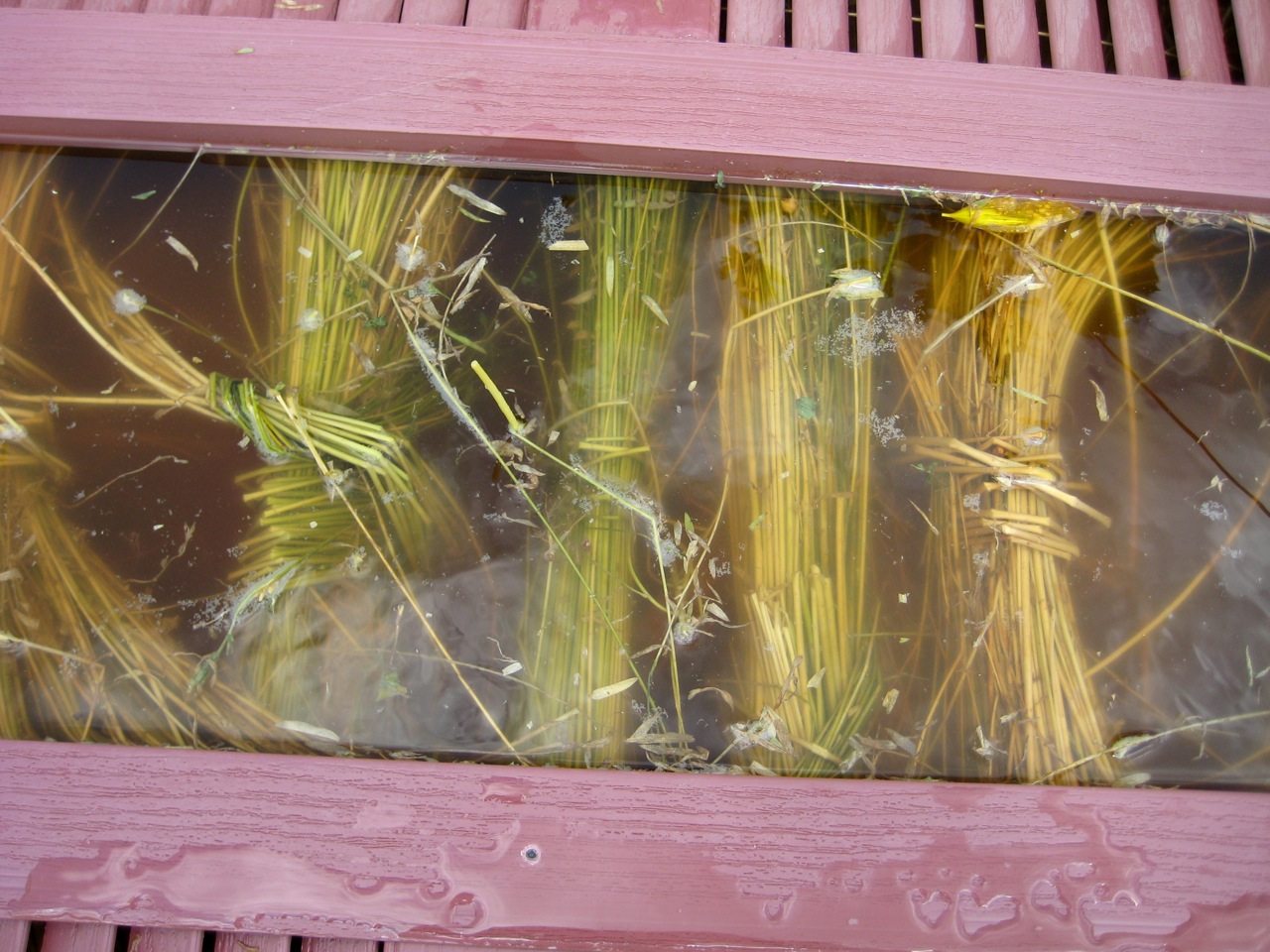
You need to weight the flax down so that it’s all under water. We used some vinyl shutters that we got cheap at the Habitat for Humanity ReStore, together with some cheap tiles as weights.

Here’s a closeup of the bundles under the weights:

retting-closeup

Retting is generally considered a stinky process, although ours wasn’t too bad. We retted each harvest separately, and it took about five days each time.

Drying, again

After retting, you have to dry the flax bundles. I didn’t get any pictures of this phase, but it’s not really different from the first phase of drying, except that now the bundles are rather limp, so that you need something for them to lean against if they’re going to stand up. The bundles have gotten lighter, though, so it doesn’t need to be anything very sturdy. We used the flower stalks of our bolted lettuce as supports.

Breaking

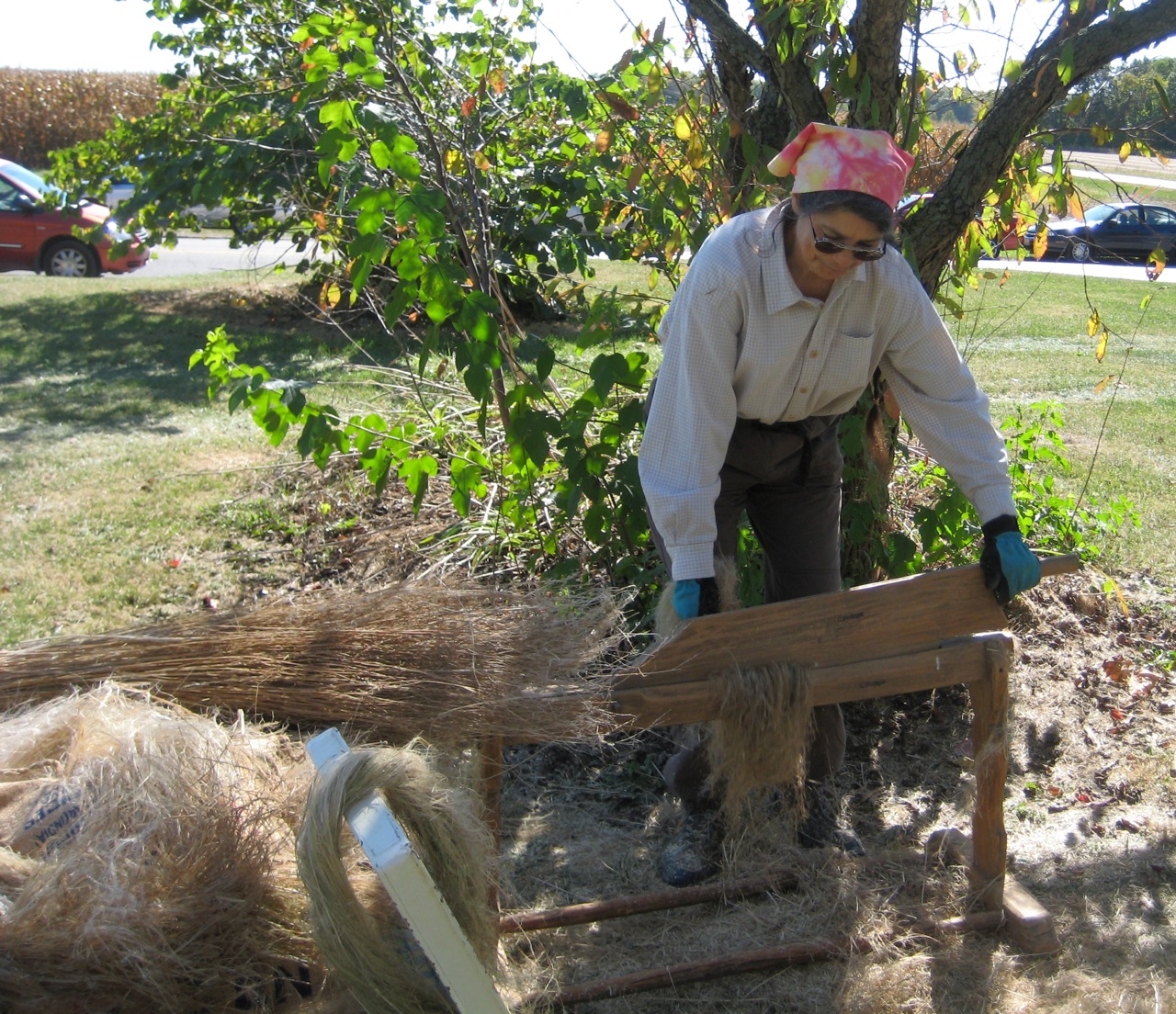
Once the stems are dry, you need to break up the stem material that surrounds the fibers. This can be done with your bare hands (I did a couple of stems by hand, just to see the process in detail), but it would be pretty time-consuming and tedious.  There’s a special tool for automating the process called a flax break. It’s kind of like a big paper-cutter, only with multiple blunt wooden blades

It turns out, there actually is a flax break not too far away, owned by Five Mile House, a historic homestead just south of Charleston, Illinois. They offered to let us use their flax break if we’d demonstrate how it was used.

So, on one Sunday in September, Jackie and I went to Charleston and “demonstrated” how to break flax. (I put the word in quotes because we really had no idea how to use the flax break, so our demonstration consisted mostly of letting people watch as we tried to figure it out.)

We only got about half the flax broken during that three-hour period, so we went back yesterday and finished the job.

jackie-breaking

Scutching

If you do a good job of breaking, most of the unwanted material falls right off. (That material is called “boon” and is supposed to be good for all sorts of things. Basically, it’s mulch.)

Inevitably, some bits will still be wrapped around your fibers. Those bits are removed through scutching, which is striking the fiber bundles with something sharp enough to scrap things off the fibers, but not sharp enough to cut them. A real scutching knife looks rather like a wooden sword. We didn’t have one, but made do with various other items, such as a spatulas.

Hackling

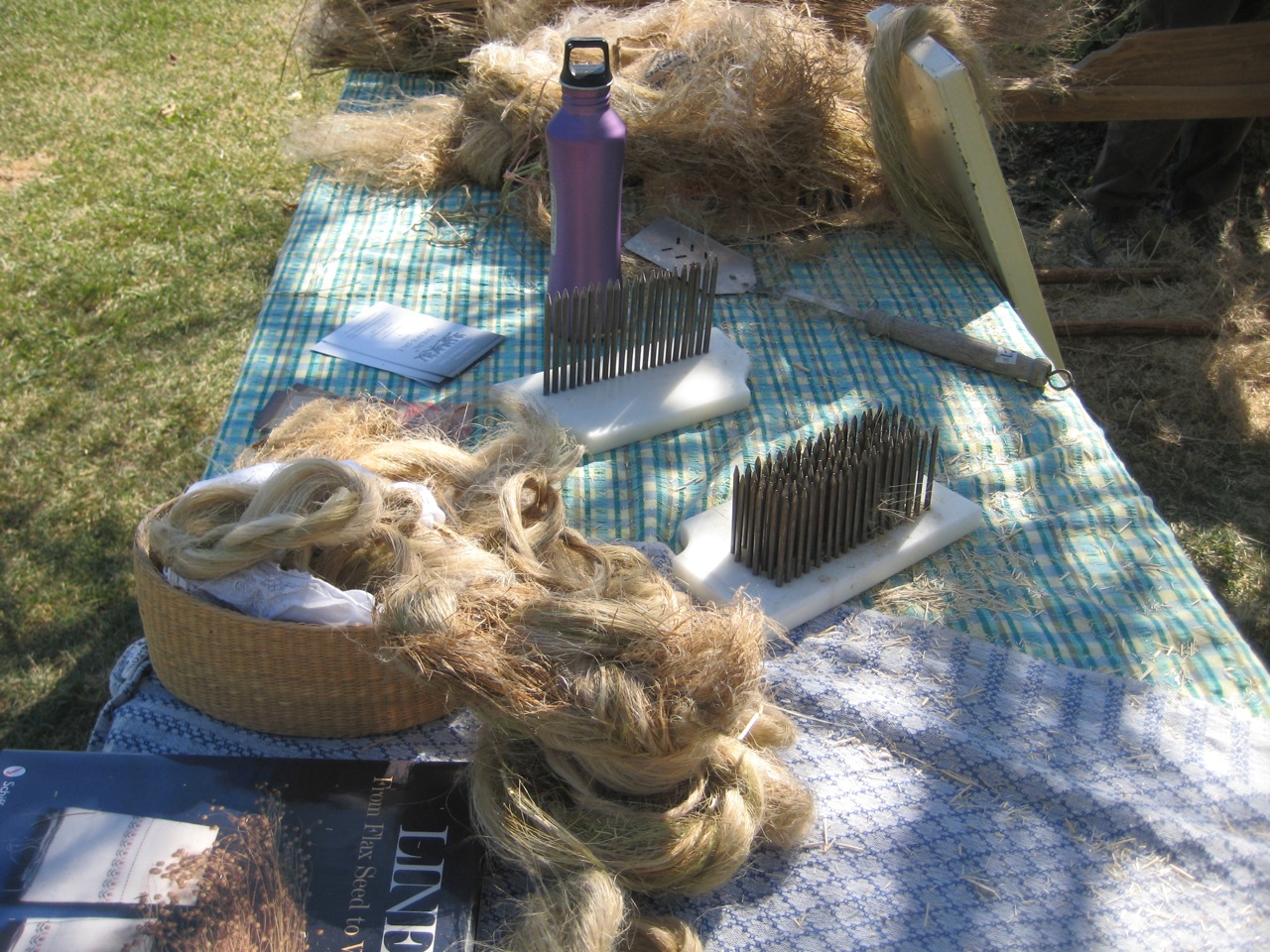
The last step is to comb the fibers to make them ready to spin. This step is called hackling, and is done with a hackle, which is basically a bed of nails like a multi-row ripple.

fiber-hackle-scutching-board

You just grab the scutched bundle in the middle and draw it through the hackle. Any short or tangled fibers will get caught in the hackle, and after a few passes, the bundle in hand will be a tidy bundle of long, straight, neatly aligned fibers. The long fibers are called “line” flax, and are considered the good stuff. The short fibers are called “tow” and are perfectly good fibers, useful for many things, but not fine linens.

In our second visit to Five Mile House we finished breaking our flax. We also got a good bit scutched and hackled. What had been enough flax bundles to completely fill the back of our hatchback is now just three paper grocery bags full of fiber.

That’ll be enough to keep Jackie spinning through the winter.

It’s been a very interesting process, and a lot of fun, but I doubt if we’ll do it again.

My plan for next year, as crop to occupy a big chunk of the garden so we don’t have to keep weeding it, is barley. (First year, malt syrup. If that works, second year, maybe beer.)

I’ve just enjoyed a fascinating talk by Lisa Yaszek, presented as part of the Writing Another Future symposium going on right now at the University of Illinois.

The topic as presented on their website was “International Science Fiction,” but her slides were headlined “Writing Black Futures,” which was a more accurate title.

The talk mainly presented a structure for organizing African science fiction, dividing it into three categories US Afrofuturism (1850–1960), Atlantic Afrofuturism (1960–present), and African Afrofuturism (1980–present). Her organizing principle seems to be just as stated in the title—the periods were categorized by how the authors viewed the futures of people of African descent—and how those views were influence by (and illuminated) how they viewed their pasts. She also talked about shifting themes of how blacks are viewed by white society—from invisibility to misrepresentation to afro-pessimism.

She talked about several African sf writers that I wasn’t familiar with: Kwasi A. Kwakwa and Jonathan Dotse both sound like people I’d like to read more of.

There was some time for questions at the end. One person asked about how so much African sf is written in English. Yaszek seemed to think it came down to two things. One was the size of the market. No African country, not even South Africa, is big enough to sustain a publisher of just African sf, and writing in English gives you access to a global market. The other was that writing about technology and its impact on the future requires the words to talk about technology, and the vocabulary of technology is all in English.

I asked about Nnedi Okorafor and Tobias Buckell. She was familiar with both (although she made the classic error of inserting an “n” into Toby’s last name). She admitted to having read little of Toby’s fiction, but extravagantly praised his writing about sf. Having coming to Toby’s writing through his fiction, I found that an interesting perspective.

Now I’m heading right back out to hear Kim Stanley Robinson’s keynote for the symposium!

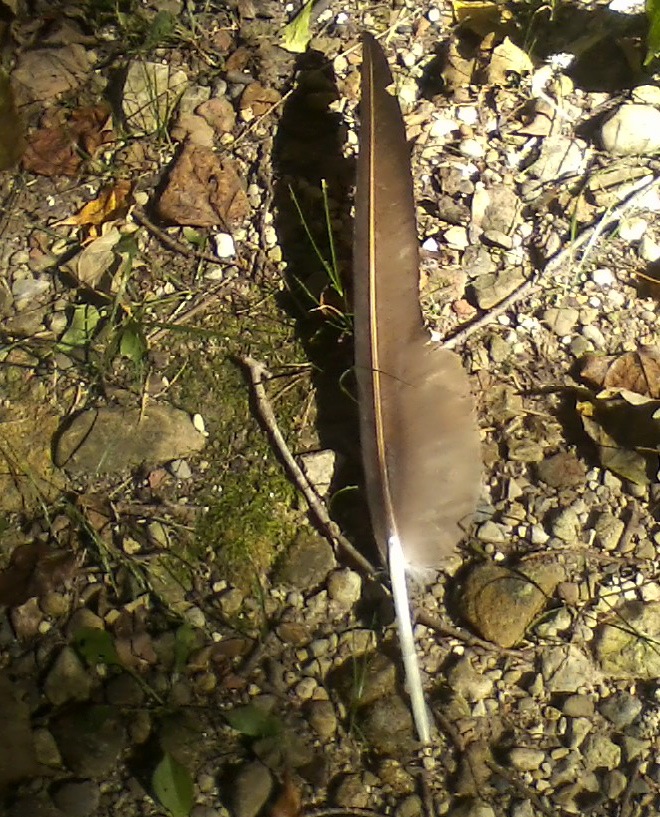
Turkey vulture feather

Jackie’s Spinners and Weavers guild had an event at Forest Glen today. It’s an annual event called Dye Day, where they mix up half a dozen pots with natural dyes and all the members can bring in some fiber to dye with walnut husks or goldenrod or cochineal or indigo or whatever.

Because we were going to be at Forest Glen, I seized the opportunity to go for a trail run.

It was a great run. I ran a section of the same backpacking trail Jackie and I had walked back in July, beginning at the same point (near the Gannett Center). My plan was to run out on the trail for 30 minutes, then turn around and run back. That was probably a bit ambitious, given that it’s my first trail run of the year, and that I’ve only had about three runs so far this summer that hit the 60 minute mark, but I was pretty sure it was doable, and that as long as I didn’t try to hurry, I’d probably be fine.

And, in fact, I was.

I saw two deer—or very possibly the same deer twice. At any rate, he looked very annoyed when, having run off after catching sight of me, I came at him from another direction when my trail took me around behind a hill and then right up to the very spot where he’d run off to.

I also saw a stufflebeam, who galumphed at a reasonably high rate of speed back into the underbrush when I threatened to get between him and that safety.

But the best thing I saw was a large flock of turkey vultures, that were all roosting together in a big tree that overhangs the trail.

Turkey vulture feather

Like the deer and the stufflebeam, the vultures were not happy to have a runner come upon them suddenly. As I passed under their tree, first one and then another leapt from their branch and took off into the air, beating their wings with a power that isn’t so apparent when they’re soaring.

But there weren’t just two or three vultures. As I slowed, startled by the first birds’ explosive launches, they continued taking flight, no longer one at a time, now taking flight in groups of two or three at a time. At least twenty very large birds took off from that tree in the 5 or 10 seconds it took me to pass under it.

It was spectacular.

It was early enough in my run that I didn’t want to stop and gawk, even to see the birds climb into the air to join their fellows who were already soaring, although I enjoyed what I could see of it.

It was hard to beat that little adventure, although the deer and Mr. Stufflebeam did their best, as did the forest scenery and the trail itself.

The backpacking trail is only marked to be followed in the forward direction, so it’s easy to get off track if you try to follow it in reverse, and I did go off course for a bit as I tried to return. After a few minutes of bushwhacking I saw where I’d gone wrong and worked back just enough to get back on track.

Running the trail as an out-and-back meant that I passed once again under the vulture-roosting tree—and it turned out that quite a few vultures had decided that 9:00 AM was too early to be up soaring, and had returned to roost some more. Once again, they launched themselves into the air. This time I slowed down to watch, and finally stopped near the trunk of the tree.

One vulture, either lazier or more confident of his safety up on a branch maybe 20 feet above the trail, decided not to bother taking off, giving me a good look at his red head and vulturous posture.

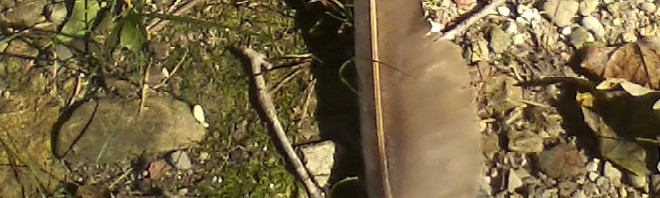
Roughly under him, I found the feather pictured above, which I assume based on its location and size is a turkey vulture feather. From the shape, I’m assuming it’s a primary flight feather (although I don’t know my feather morphology as well as all that).

I picked it up and carried it a short distance to a sunny spot where I could get a good photo with my phone. (I hadn’t brought my good camera.)

From there it was less than a mile back to the trail head.

According to my GPS thingy, I ran 4.523 miles in 1:14:44, giving me a 16:39 pace. My old GPS thingy—a first generation Timex Bodylink—isn’t nearly as good as a modern GPS device, and tends to have trouble maintaining a satellite lock under a forest canopy, so it doesn’t get as many waypoints as it might. That tends to cheat me out of credit for my full mileage. (The device assumes that I’ve run a straight line between one fix and the next. When the device fails to get a lock for many seconds at a time, it treats my run as cutting a straight line, even though I was following a twisty path.) Still, 4.523 miles is the best number I’ve got, so that’s what I’m going with.

I headed back to the Spinners and Weaver’s guild event, got out my folding chair, and sat down to rehydrate. Turkey vultures—almost certainly the same ones I’d startled into the air—were circling overhead. One of Jackie’s guildmates turned to me and said, “I guess they’ve figured out we’re dying down here.”

Great to be out on the trails again. I will have to find a way to run more trails before the end of the season.

I spent my lunch hour at an OLLI lunchtime lecture, learning about why we have coal in Illinois, and why sometimes coal formations have fossilized forests on top. The talk by Scott Elrick (of the Illinois State Geological Survey) was absolutely fascinating.

The first part of the talk looked at the history of continental drift, looking at where the land mass that eventually became North America (and the piece of it that became Illinois) was over the last few hundred million years. During the Pennsylvanian period, Illinois was roughly on the equator, which turns out to be important.

To get coal, you need to have lots of plant matter, but very little sediment. If you don’t have the plant material, you’ve got nothing to turn into coal. But even if you have the plant material, if you have any significant amount of sediment—inorganic material washed in by water and deposited on the ground—you don’t end up with coal, you just end up with shale.

There’s an area along the equator called the “convergence zone” where the weather of the northern hemisphere meets the weather of the southern hemisphere. Most of the time, this zone shifts north and south over the course of a year, meaning the tropics experience wet seasons and dry seasons. However, during the period in question there was extensive glaciation, meaning lower sea levels, which turns out to mean much less shifting of the convergence zone. Which means that, for a geologically long period of time, it rained a lot, all year.

That’s the circumstance that lets you get coal. To be more specific, that’s the circumstance that gets you peat.

Lots of plant matter, but very little sediment (because those plants had lots of roots to stabilize the ground, and they never had to die back, because there were no seasons). The plants grow, the plants die, the dead plants end up on the wet ground, they get covered with water, which limits the oxygen that gets to the plant, meaning that more plants can grow on top of them before they decay. Result: peat.

To get coal takes one more thing: Your peat has to get buried. If it gets buried well enough that air never gets in there, and if it ends up buried deep enough that there’s some serious pressure and heat, and stays there for long enough, all the volatile (i.e. non-carbon) elements in the peat get cooked off. Result: coal.

So, in the Pennsylvanian, we had this long period of nothing but rainy season, allowing layers of peat to build up. But eventually the glacial period ended.

It turns out that glacial periods can end really fast. They start slow, with ice building up gradually over decades and centuries. But they can end very quickly, with centuries of ice melting in a matter of years.

The ice melts, the sea levels rise, and the convergence zone starts showing seasonality, moving north and south over the course of the year. Forests full of plants that expected rain every day suddenly had to adapt to tolerate dry seasons.

This produced a lot of changes, of course. The plant species show dramatic shifts. Crucially, they die back during the dry season—meaning that you start to see a lot more sediment.

In the fossil record, you see this as a thick vein of coal with a thick vein of shale on top.

And right here in east-central Illinois, something very interesting happened. Along a fault line, a series of earthquakes caused the ground on one side to sink. In that sunken area the sediment built up even more quickly—quickly enough to cover whole plants. Fallen trees were covered up faster than they could rot away. Branches with leaves were covered before the leaves could fall off.

The result is a thick vein of coal, with a fossil forest on top of it.

Is that cool or what?

This particular forest, near Danville, Illinois, was the first one discovered that was big enough that paleobotanists could study the forest at the level of the forest community. As opposed to just seeing what plants grew near a few other plants, they could see how the plants that grew near one another changed as you moved from one part of the forest to another.

Painting by J. Vriesen and K. Johnson via nature.com

Scott Elrick showed us all kinds of cool stuff. One thing was this artist’s rendition of the forest, showing large, tall trees growing very close to one another, something that would be rare in forest today. Turns out that these trees—Lycopods—had photosynthetic bark, and didn’t grow leaves until they reached their full height. So they didn’t shade out their neighbors the way modern trees do. They also had very long roots that extended many meters from the trunk, but the root systems were quite shallow, going just a few meters down.

He also had pictures taken from within the coal mine, showing the fossils of these trees—trunk and roots—growing right up out of the coal seam: Trees that had been alive when the weather changed and that ended up with a meter or two of sediment covering the bottom of the trunk fast enough that the tree never fell down. It just fossilized in place.

It was a great talk at which I learned all sorts of things about geology and paleobotany. I’m going to have to follow this guy’s work in the future.

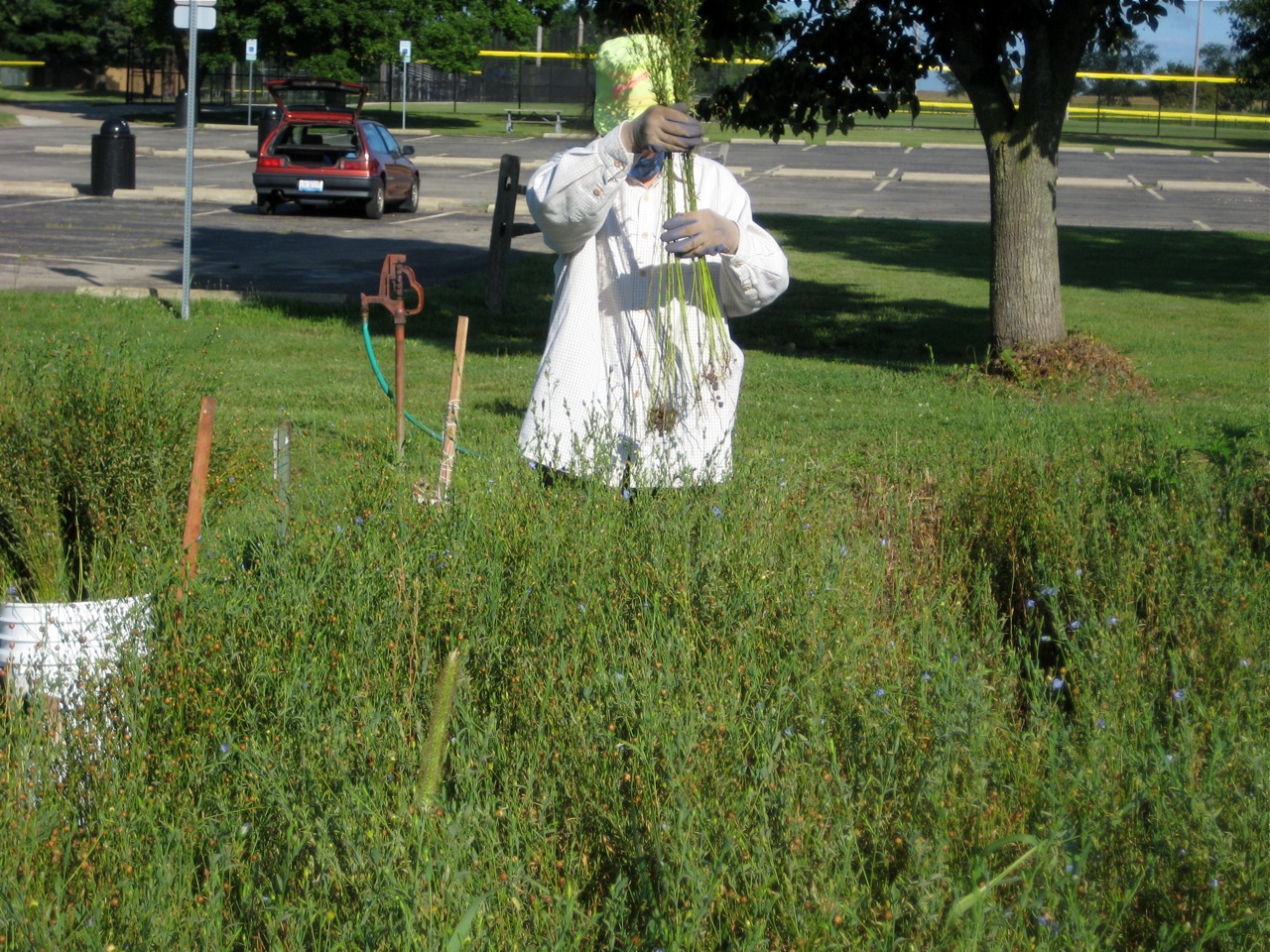
It’s hard to decide when to harvest flax. If you harvest early enough to get the finest fiber, you get no seeds. If you harvest late enough to get seeds to plant next year, you get coarse fibers.jackie harvesting flax

The books suggest various compromises. One suggested 30 days after the peak of flowering, if you mostly care about fiber, and two weeks later if you mostly care about seeds.

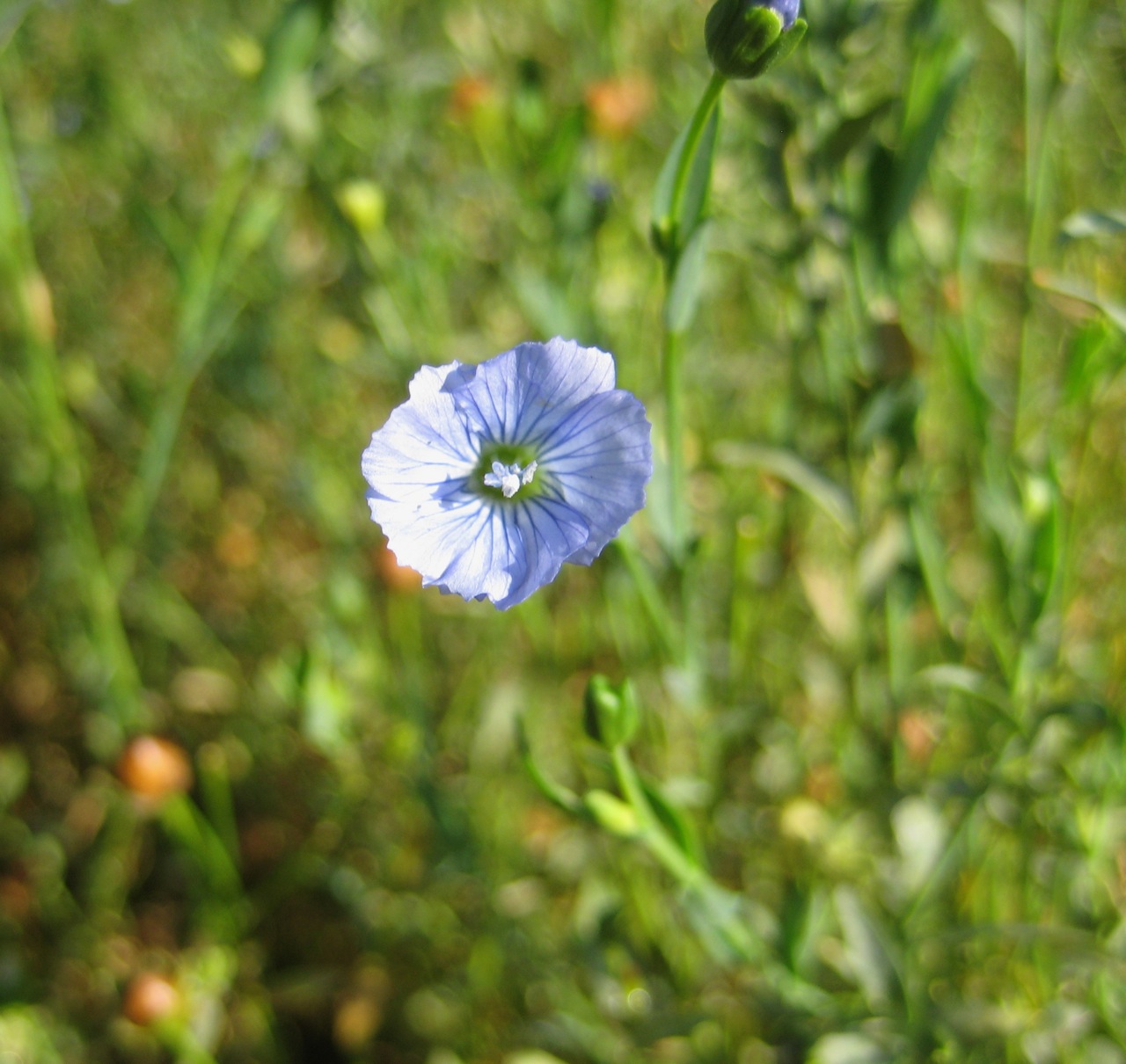
Flax flower

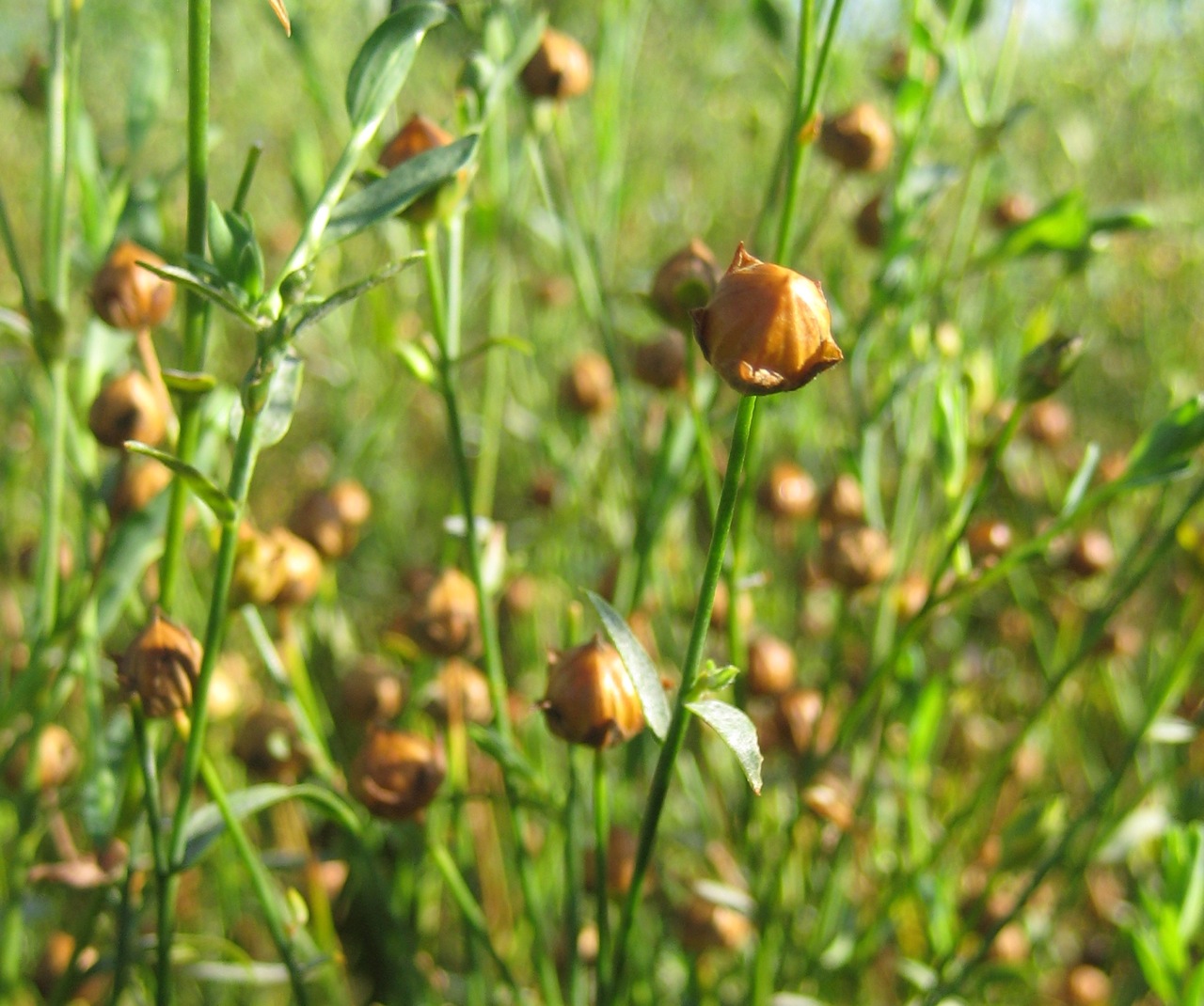
We decided to harvest half of our plants today. We think it’s early enough to get good fiber. Indeed, some of the plants are still in flower. But there are plenty of seed pods that look like they’ll be full of seeds.

flax seed pods

Depending on how things go, we’ll harvest the other half in a week or two. That may get us some more or better seeds. At least as important to me, it adds a bit of redundancy—if something goes wrong with the processing of this batch, we’ll have another batch that won’t suffer the same fate.

Jackie has suggested that we not try to save seeds to plant, but rather eat the seeds we get. (I assume she means to grind them up to use as flax-seed meal, which we do buy at the store and put in bread and such. Even if every seed pod turns out to be full to bursting with seeds, we’re only going to get a few tablespoons of flax-seed meal, but that’d be enough for several loaves.)

The first step to turn flax into linen, after growing the plants and harvesting them, is to dry them. The books suggest that you tie the stalks into bundles, then arrange the bundles into loose stacks for drying.

That’s where we are now:

sheaves of flax

jackie-looking-back
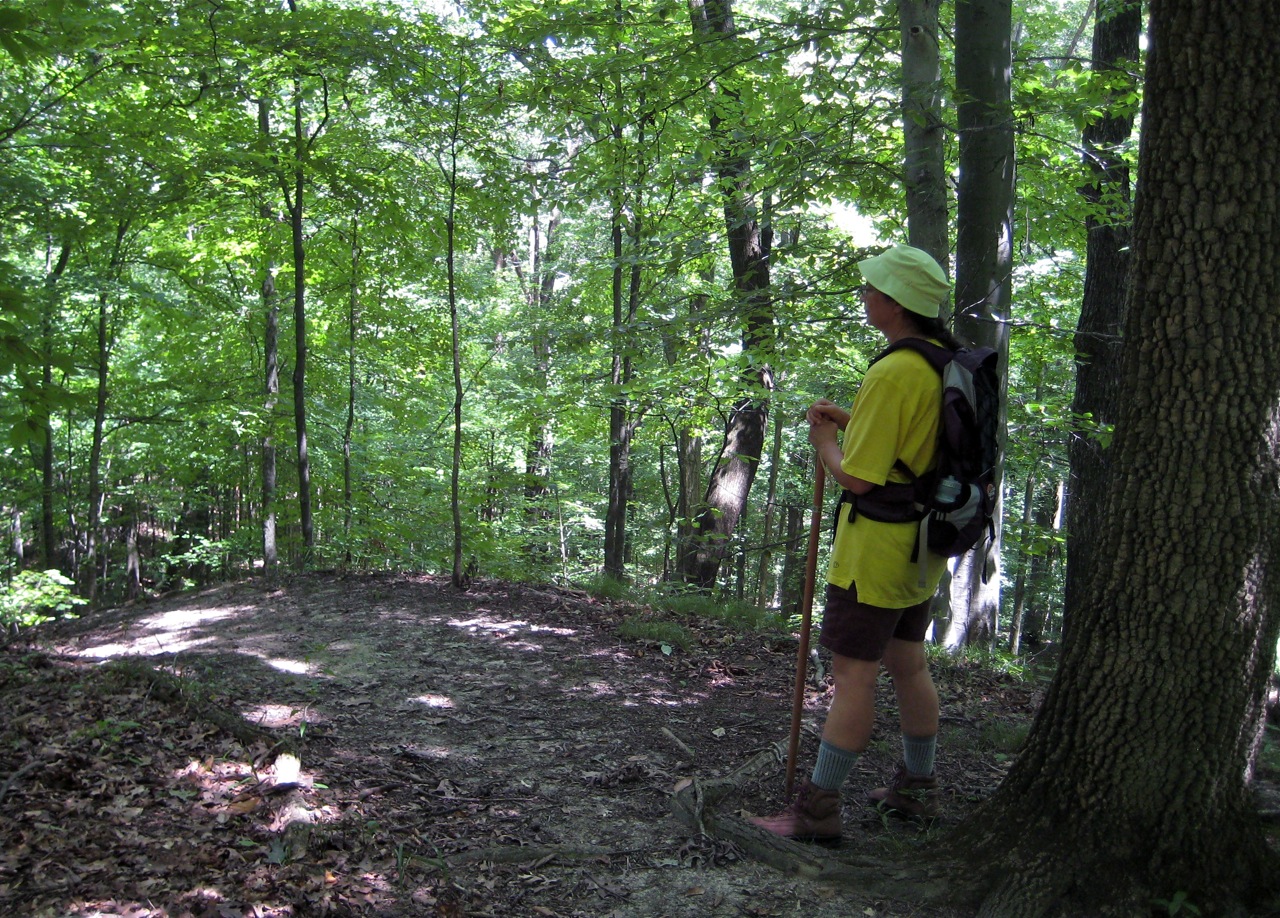
Jackie looking back along the trail.

Jackie and I went for a hike at Forest Glen today.

There was a Spinners and Weavers Guild event there, and our plan was to go early, go for a hike that would take 4 or maybe 5 hours, and then get back in time for a late lunch and a couple hours at the event.

Turns out, our timetable was a bit optimistic.

For one thing, having failed to get all packed up the night before, we left an hour later than we’d intended. Plus, getting to the venue took a bit longer than we’d planned. So, instead of starting our hike around 8:00 AM, we didn’t hit the trail until about 9:15. On top of that, our hike ended up taking a full 6 hours, instead of the 4–5 we’d planned.

Our socializing after ended up being with just the last 6 or so die-hard spinners.

jackie-hiking-up
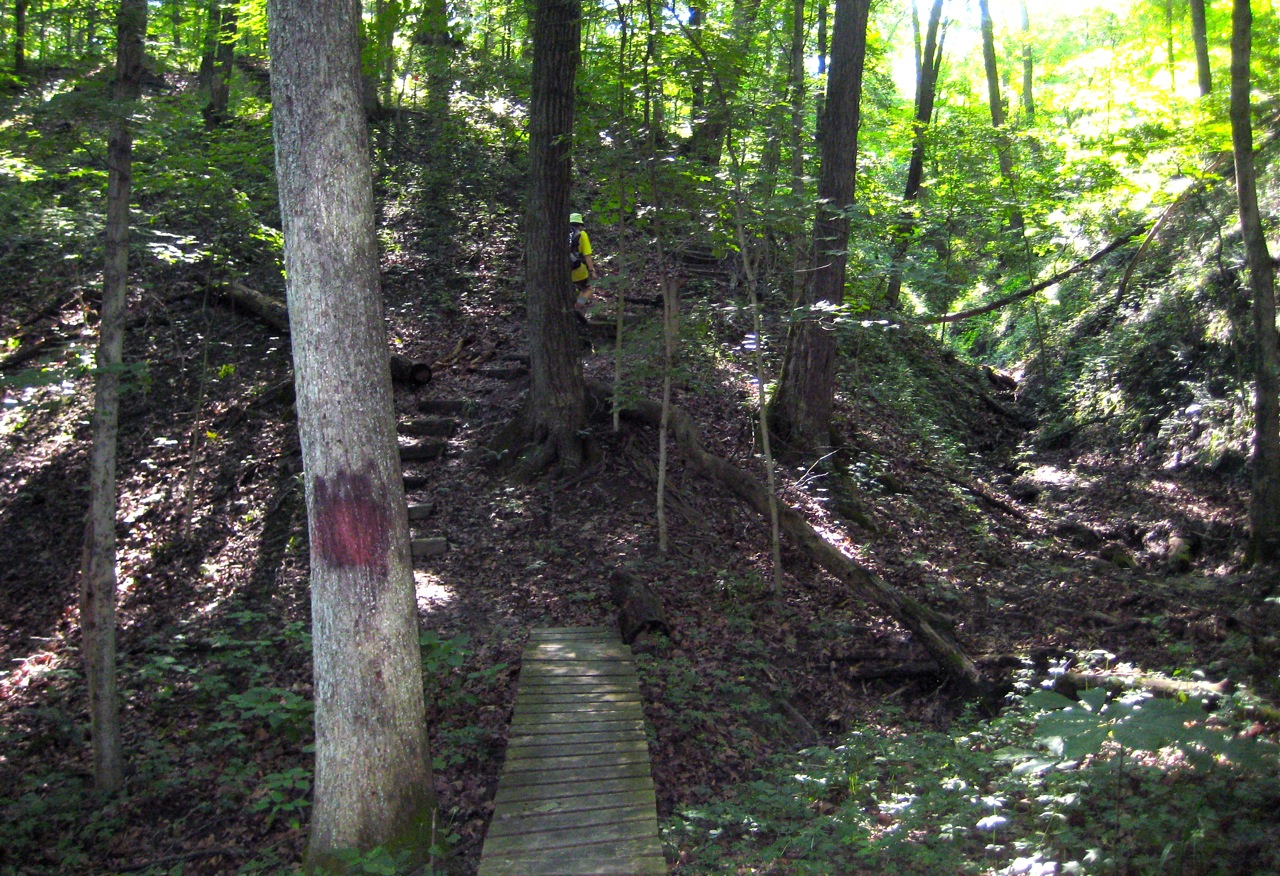
Jackie climbing a ridge.

Still, it was a great hike. Unlike our urban walks, Forest Glen is non-flat.

It’s kind of hard to see in that picture (click through for a larger version), but Jackie is there right in the middle, hiking up the side of the ridge.

There’s not a huge amount of elevation change, but the trail makes good use of what there is. According to Endomondo, we stayed between 407 and 644 feet above sea level, and yet we managed a total ascent of 1330 feet and a total descent of 1287 feet.

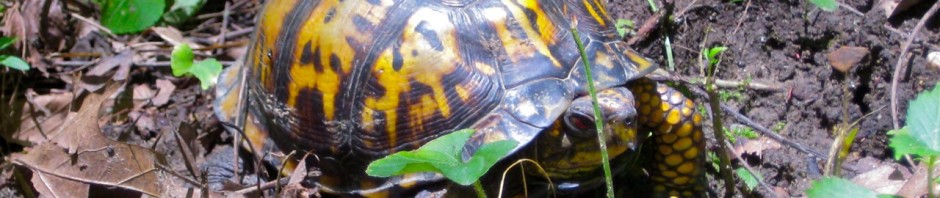
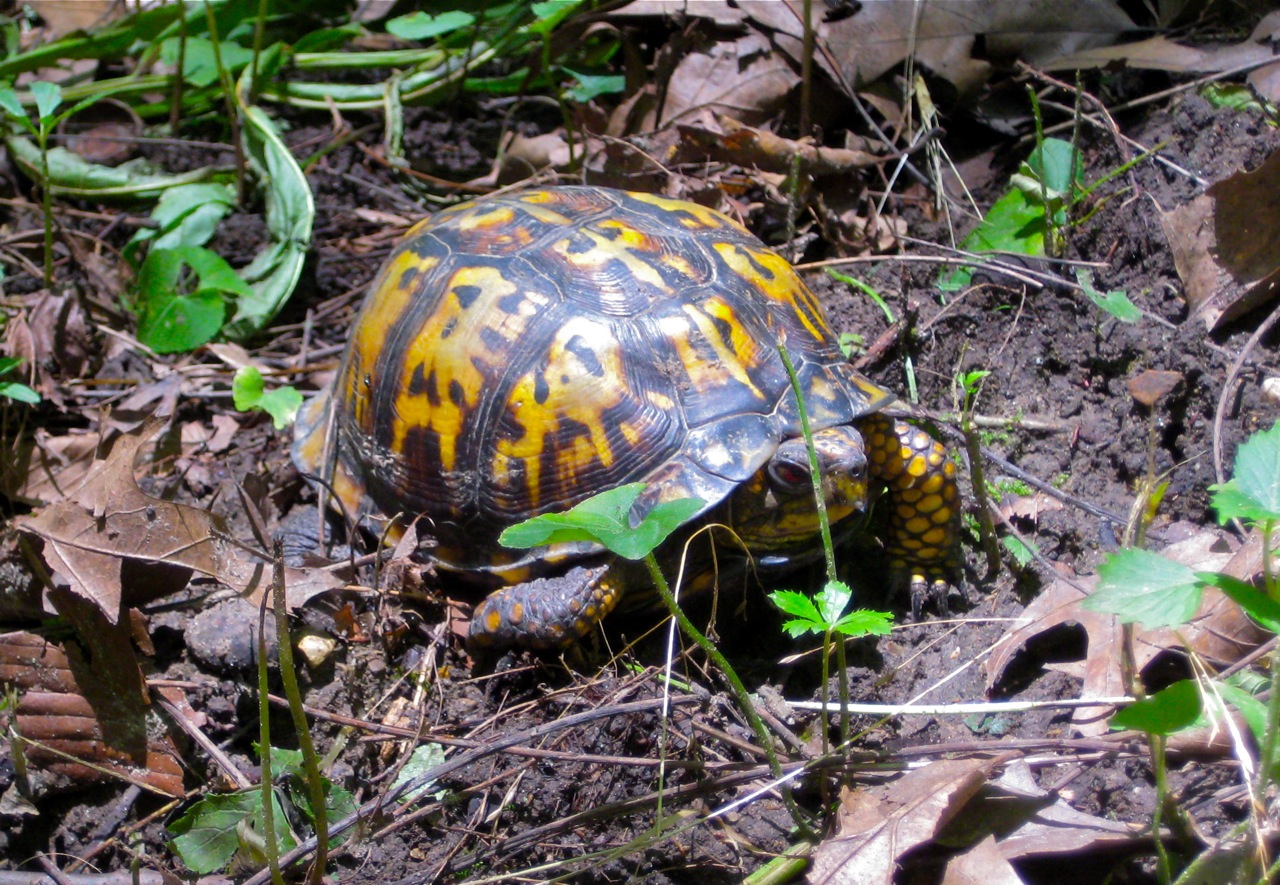
There’s quite a bit of wildlife in and around Forest Glen. In trips past we’ve seen owls, several kinds of woodpeckers, turkeys, vultures, pheasants, and deer. We saw several of those this trip as well, but we also saw something that was common when I was a boy, but has been quite rare in my experience for more than twenty years: a box turtle.

box-turtle-in-forest-glen
Box turtle just off the path at Forest Glen.

Apparently the Forest Glen box turtle population has been at some risk—a few years ago, tens of box turtles were found dead, all in the same area. They’ve done quite a bit of research on what happened without a definitive result, but the best guess is that some infectious disease took them, possibly passed to many individuals when a large number of turtles were caught and then held together for a local charity event that included a turtle race.

Apparently the local organizers have agreed to drop the turtle race, as a way to protect the turtles. (The race had been held for 49 years without incident, but so many dead turtles all at once was a strong sign that there was a problem.)

A great hike, albeit a bit tiring, and some very pleasant (albeit a bit brief) socializing after. Here’s the details on Endomondo:

If you’re familiar with Forest Glen, it might look as though we hiked the backpacking trail, but we didn’t—because that would have been against the rules, which require that you register a week in advance and pay a fee. Instead, what we did is scout several segments (well, all the segments) of the backpacking trail in advance of some future hike. Before trying this trail with a backpack full of camping gear, we thought it would best to know just how rugged it was and how hard it was to follow the markings. (And it’s good that we did. Our urban walking has not quite conditioned us adequately to manage this trail safely with camping gear. We’d have almost certainly made it, but several spots would have been tough—maybe even dangerous—if we’d been carrying heavy packs. Also, we did miss one turn. By the time we’d backtracked and gotten back on the trail, we’d added a good half a mile to our total distance.)

My sore calf never hurt throughout the hike, although I could just perceive the injured spot as slightly tight, slightly tender on some of the more aggressive downhill bits of the hike.

Tomorrow will be a rest day. If today’s activities don’t produce any soreness, maybe I’ll try a short run on Monday.

Continuing our series of long walks to prepare for a possible through hike of the Kal-Haven trail, Jackie and I walked 16.72 miles today.

We walked to the University of Illinois’s arboretum, and then on through south Urbana to Milo’s where we had lunch. Then we walked to Meadowbrook Park and along the trail that goes along the south and west edges of the park, then through married student housing to the old Motorola building (where OLLI is now) to refill our water bottles, and then on home.

Jackie has asked that I specifically mention that we got a very close look at three juvenile Stufflesbeam (the plural of Stufflebeam, which is what we call ground hogs), just on the west side of the railroad embankment where Stadium Drive crosses Neil. One in particular stood just a few feet away, eating grass with great enthusiasm, close enough to give us a great view of his little nose.

Here’s what my tablet captured via Endomondo:

Jackie and I took a couple of pictures of one another with one of our favorite sculptures. We like this sculpture for various reasons, but one is that the very first time we came upon it, suddenly and unexpectedly as we took a turn in the path, we both had the same thought—and we both knew that the other was having that thought: “Anya wouldn’t like that!”

The picture Jackie took of me is pretty good—that’s what I look like. It’s of some interest to me because we took pictures with this sculpture a few years ago, and I didn’t like the pictures of me because of my weight at the time, and there was no way to crop the picture to hide my stomach and yet keep the rabbit sculpture.

I like this one better.

phil-with-rabbit

And, although Jackie just got an ordinary good picture of me, I managed to get a great picture of Jackie.

jackie-with-rabbit

It’s a perfect picture of the Jackie I know—the Jackie I’ve been married to for 21 years.

Since there scarcely any thought of building them in the US, it’s silly to worry about the downsides of real high-speed trains, but it’s the sort of thing I tend to worry about. After all, the math is kind of scary.

It’s only 135 miles from Champaign’s Illinois Terminal to Chicago’s Union Station. If your trains can average 135 mph, you could make the commute in an hour—a long commute, but well within the range that many people find acceptable.

On a train that fast, you could depart Champaign at 6:45 and get to your desk anywhere in the Loop by 8:00. Another train that left at 7:45 could get you to Union Station in time to be at your desk at 9:00. Combine those with similar trains that departed shortly after the close of business and got you back to Champaign in time for supper, and suddenly Champaign offers all of its regular attractions plus all the attractions of Chicago.

Personally, I think that would be awful. It could easily attract thousands of new residents to Champaign—and Champaign does not need thousands of new residents.

Happily, the high-speed rail network that the US is actually building operates at a top speed of 110 mph—fast compared to highway speeds, but nothing like an average of 135 mph. I don’t know what sort of average speed that would produce, allowing for congestion and stops along the way, but let’s just pick a number and say we could average 90 mph. That would mean that it would take one hour thirty minutes to get to Chicago.

Suddenly the math for making Champaign a bedroom community is much less compelling. At 90 mph, the furthest you could live from Chicago and still have a one-hour commute would be Gilman. As a practical matter, people who found the idea attractive would probably live in Kankakee instead. Not that I have anything against Kankakee, but better they get thousands of downtown Chicago workers than we do.

While averting the downside of turning Champaign into a bedroom community, moderately high-speed rail service is still great for non-commuters. Amtrak service to Chicago is already pretty good—fine for a day trip to Chicago. I can catch the City of New Orleans at 6:00 AM and get to Chicago before the museums open. After a day in the city I can either leave around 4:00 PM on the Illini and get home in time for supper, or I can have an early supper in Chicago, leave around 8:00, and get home by bedtime. Imagine if those trains averaged 90 mph.

Better, imagine a couple of 110 mph trains making evening runs designed to allow people in Champaign to head into the city after work, arrive early enough for a late dinner—or, if they ate dinner on the train, a show—and then return in time to spend the night in their own bed.

The more I think about it, the happier I am with the (objectively pretty lame) moderately high-speed rail taking shape in the US. It has great potential to make Chicago accessible for half-day or evening visits without the downside of turning Champaign into a bedroom community.

(All these meditations prompted by Andrea Mayeux‘s article Researchers say high-speed rail could fuel U.S. real-estate, economic booms, via Tobias Buckell’s post High speed rail could spark a real estate boom in second tier cities.)