
This time not only did Ashley find her place in the sun, I found mine as well. 🐕


This time not only did Ashley find her place in the sun, I found mine as well. 🐕
We have reached the time of the year when the sun shines directly into my eyes when I’m sitting in my chair in the living room. Ashley is cleverly sitting just out of the direct sunlight.
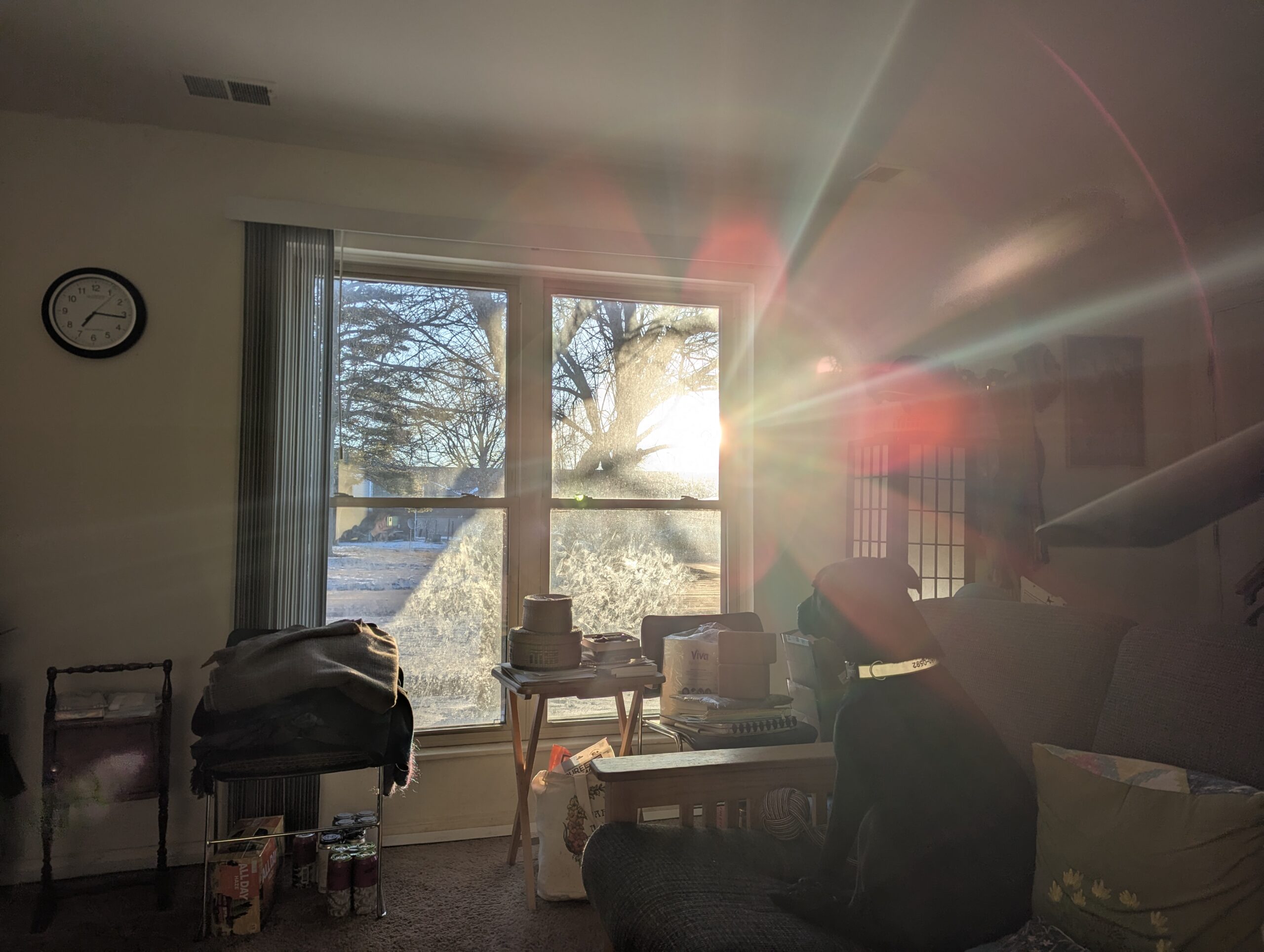
For years now I’ve been fixing the same little feast for valentine’s day: rock Cornish game hen, Uncle Phil’s long grain and wild rice, and flourless chocolate cake.
It’s inspired by the very first meal I cooked for Jackie, just a few days after we started dating.
This year I made numerous mistakes in timing and measuring—kinda weird, since I slept so well last night. Fortunately, a modest amount of scrambling and fixing managed to make everything come out delicious!
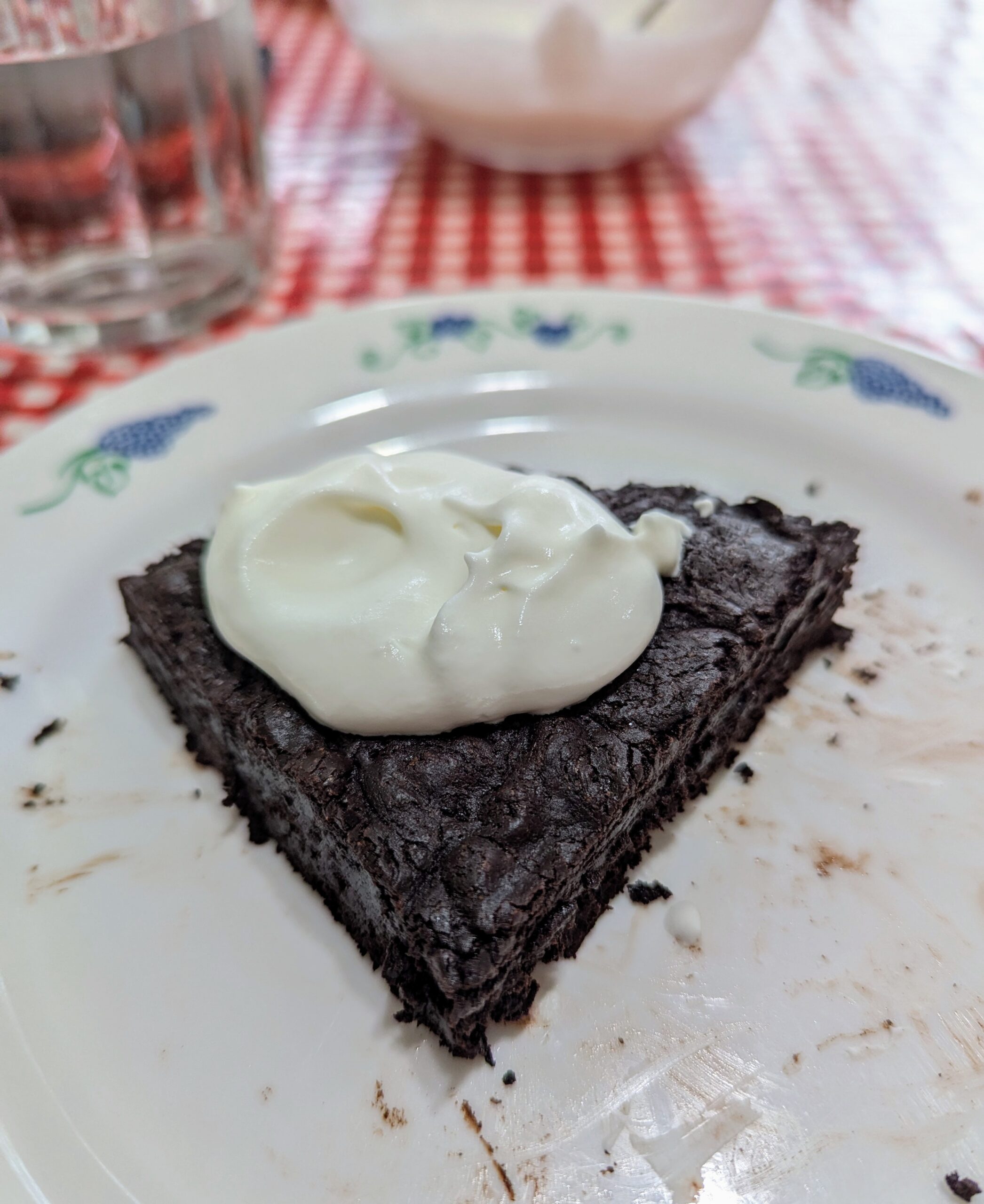
Several times in my adult life I have suffered a bout of very poor sleep, usually due to life stress. One of those times, six years ago, coincided with the Oura ring becoming available. So I bought one.
Buying a ring, of course, doesn’t help you sleep better. The Oura ring just offers metrics on your sleep. It’s up to you to make sensible use of that data.
Besides buying the ring, I went down the rabbit hole of reading about sleep. In particular, I read the book Why We Sleep by Matthew Walker. Based on that book, and a lot of reading of internet articles on sleep, I started trying to get 8 hours of sleep a night, as measured by my Oura ring.
Of course that’s not what the “8 hours of sleep” number ever was. The number was always a “time in bed” number, assuming that you spent an average fraction of that time actually asleep. (Some people might actually need 8 hours of actual sleep per night, but that’s not what the number referred to.)
I conducted various experiments (which is what the Oura ring makes possible), but about the only way I could get 8 hours of actual sleep (besides being really, really tired) was to spend 10 or more hours in bed. Rather pleasant on the right sort of day when you’re in the right sort of mood, but not really a practical lifestyle, even for someone like me who doesn’t need to go work a regular job any more.
I did the sensible thing, which was to mostly not worry about it, and just try to get plenty of sleep. And I did okay. My average sleep score from my Oura ring over the 6+ years I’ve had it has been 84. (That’s one tick below the cut-off for “excellent” sleep.)
Just lately though, I’ve made another tweak to my “sensible sleep” strategy (which will no doubt seem extremely obvious to anyone who has never had an extended period of very bad sleep): I quit trying to extend my time in bed in an effort to try and get 7 or 8 hours of actual sleep.
Like all sensible people, I’m back to just going to bed when I feel sleepy, and getting up when I wake up feeling refreshed.
My Oura ring likes the results:

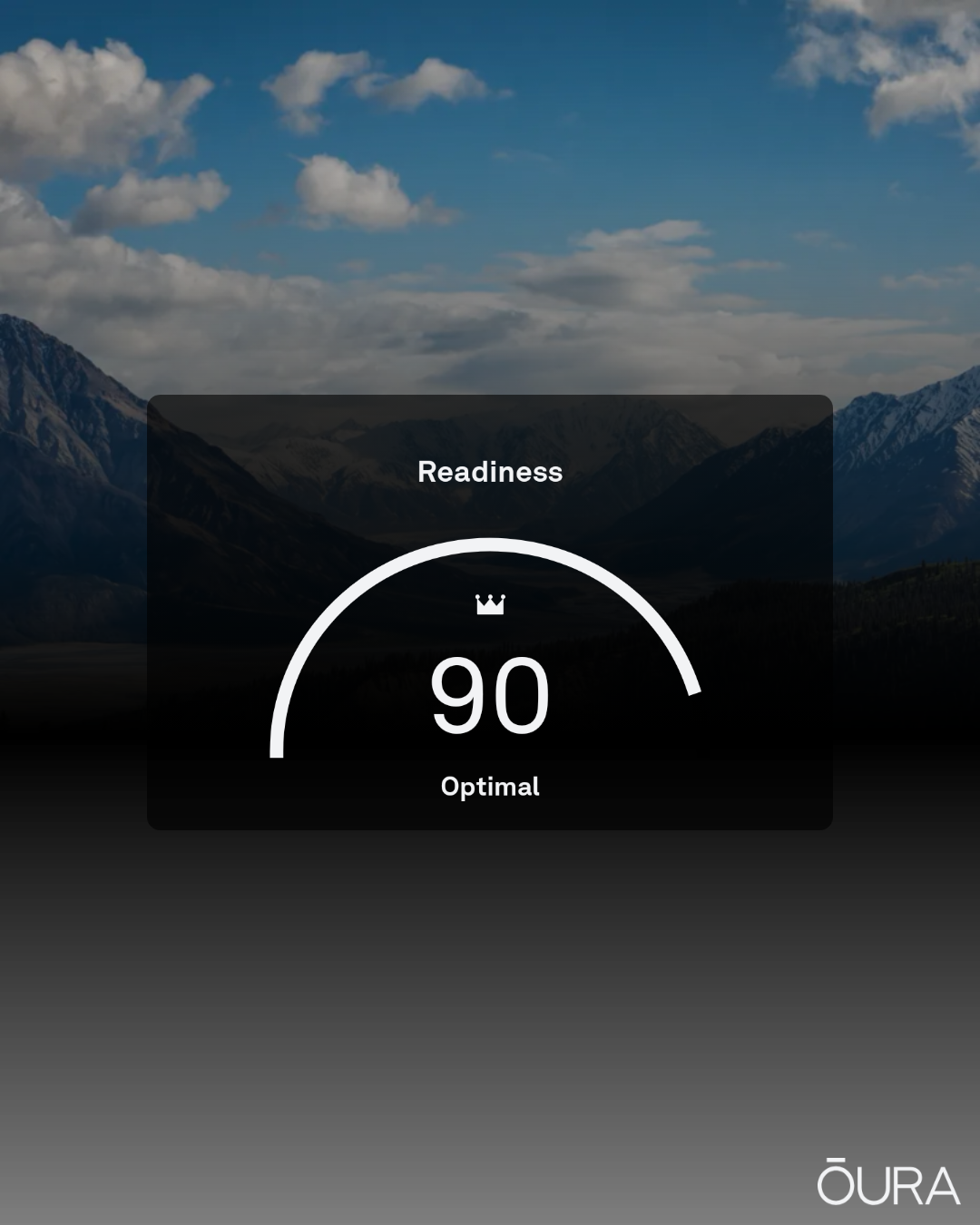
In part this was due to hearing an interview with the author of How to Sleep Like a Caveman by Merijn van de Laar. He reports that Hadza people spend a very typical amount of time in bed, but only spend a little over six and a half hours of that time asleep.
Of course the smart thing to do is to go entirely by feel: If you wake up feeling refreshed, you’re probably getting enough sleep. If you get sleepy during the day, maybe take a nap.
The Oura ring is for when that simple, sensible strategy doesn’t do the trick.
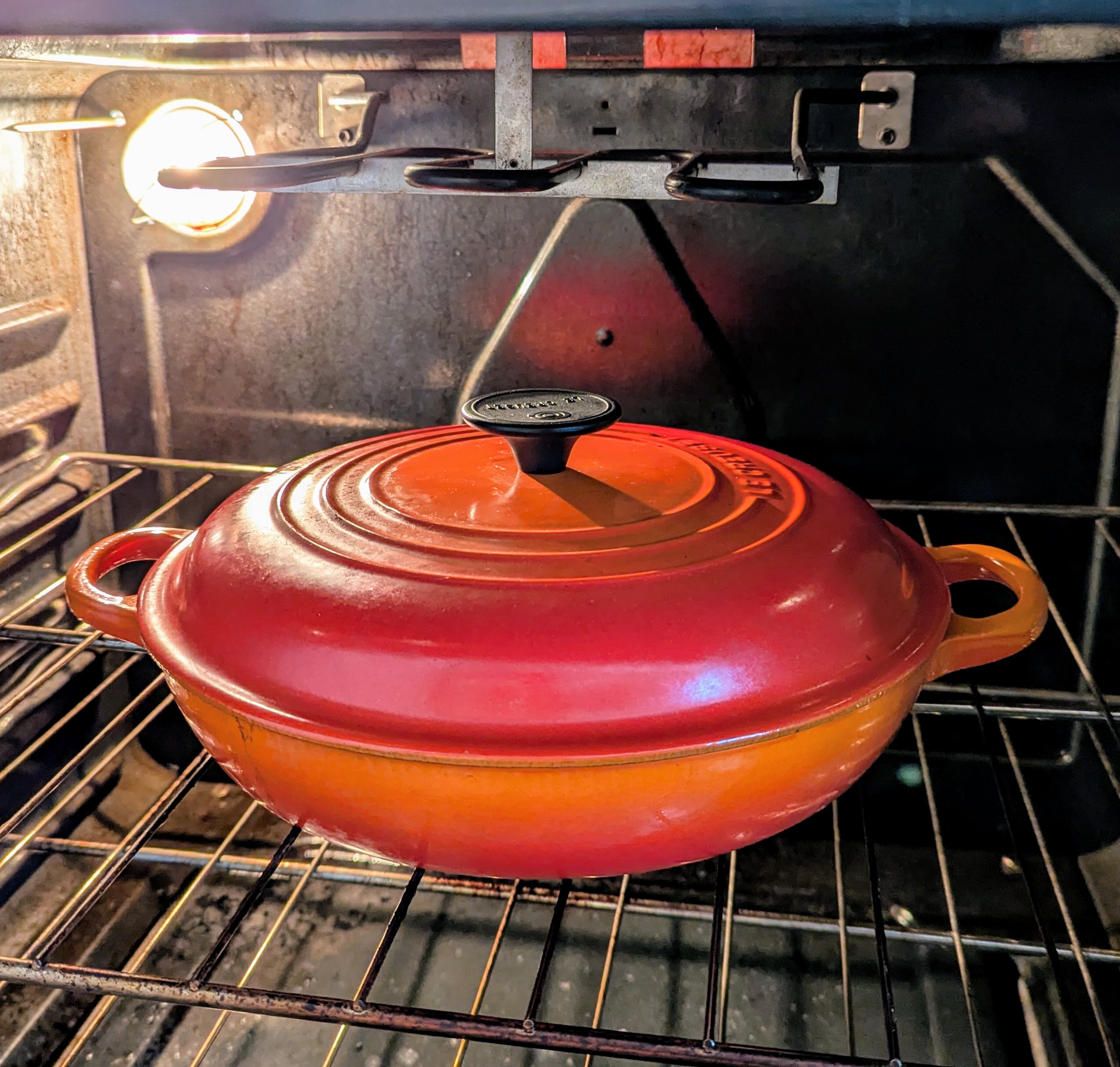
Some years ago we got this glorious orange Le Creuset braising pan, and since then I’ve been inclined to braise everything I don’t grill. Contents today: venison rib chops—something that probably would grill very well, but Jackie likes the way I braise it, so that’s what I’m doing.
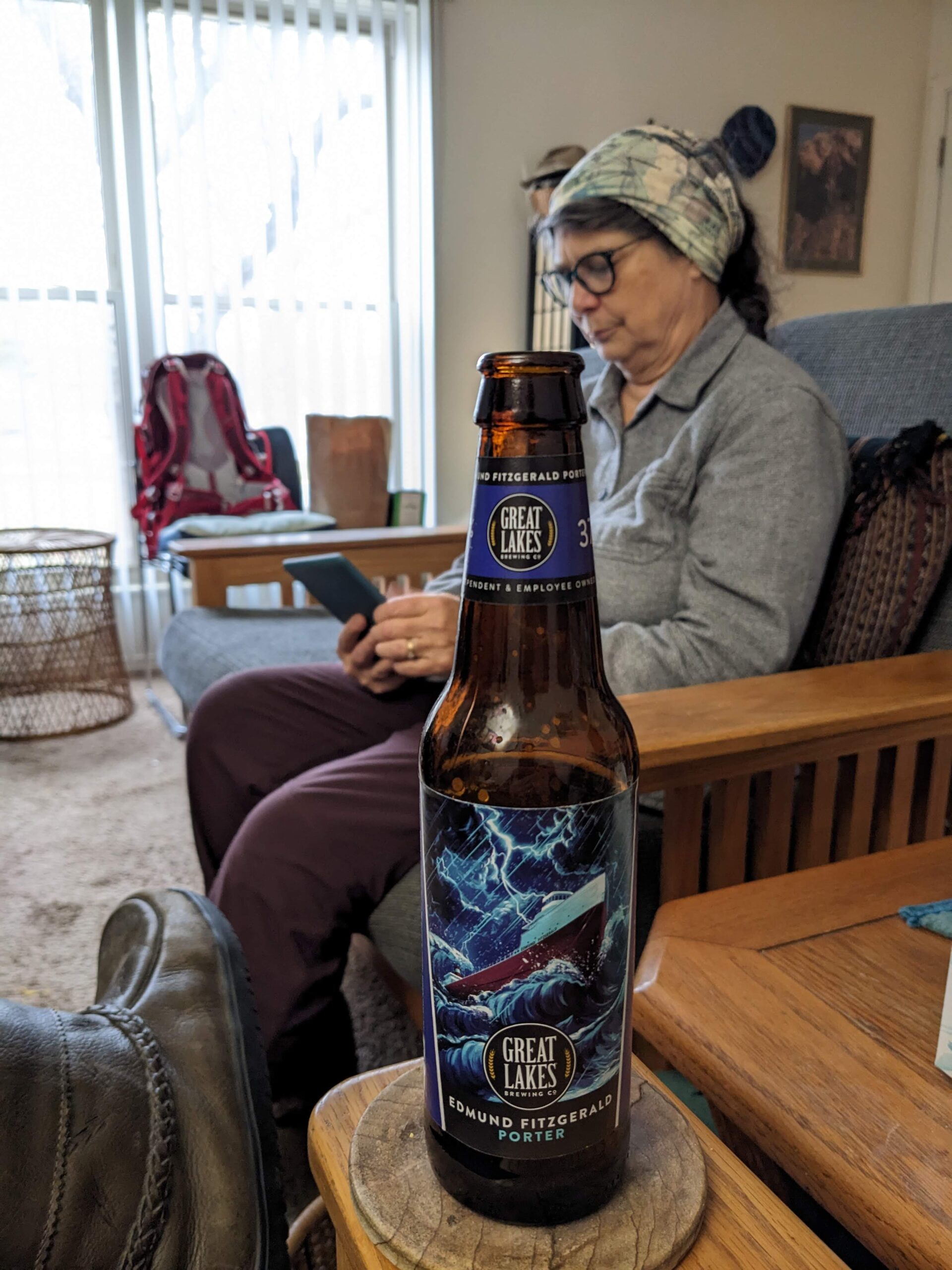
Do you think, with 25% aluminum tariffs in the offing, that bottled beer will make a comeback?
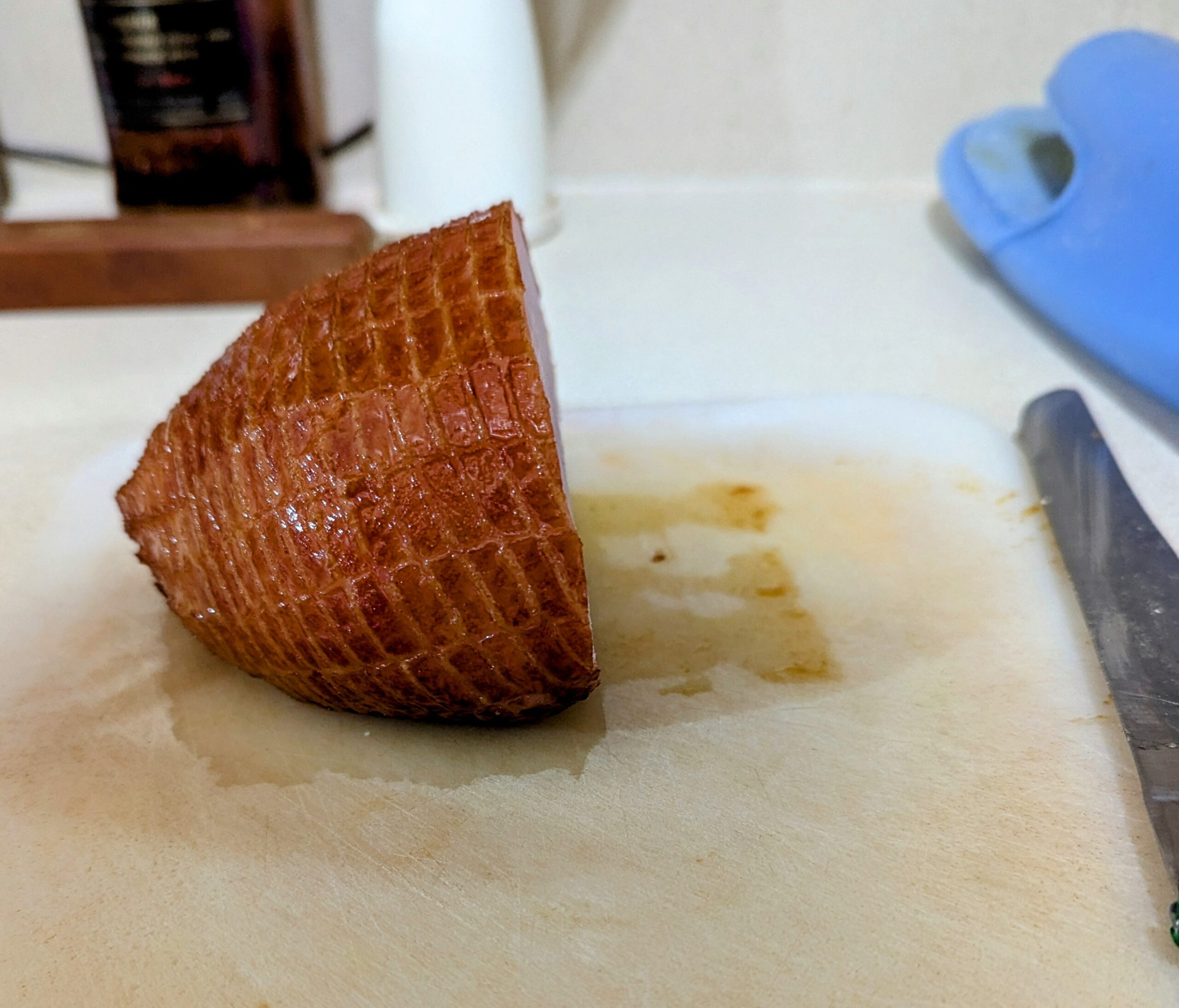
I was preparing a honey-mustard glaze to put on a ham. The recipe called for dijon mustard, honey, and dark brown sugar—that last, presumably, to make it caramelize nicely. The new jar of honey I opened had crystalized rather completely. So I skipped the brown sugar, and just put in twice as much honey.
It was delicious.
Now I’m trying to decide whether it’s worth updating the recipe, given that I can’t expect to have crystalized honey on-hand all the time.
For most of my adult life, trying to use “intuition” to decide on rest days would have been a terrible idea. If I’d let myself say, “Hmm. I don’t really feel like a workout today,” I’d scarcely have worked out at all. Instead, I came up with a schedule, and stuck to it, either well or poorly.
When I stuck to it well, I’d see progress. When I stuck to it poorly, I wouldn’t.
Starting around 5 years ago or so, something changed in my brain: I started really enjoying my workouts.
Partially, it was that they were working well, which is just satisfying. But it was more than that. First, I noticed that I felt better after a workout. Then I started feeling better during a workout. Instead of it being hard to motivate myself to work out, I craved workouts.
People who knew me were mildly disturbed by this. It was unlike me. It was certainly unlike them. I would not be surprised if they began to suspect that I was some sort of pod-person.
Because I wanted to work out nearly every day, I would sometimes wonder if I was over-training (or under-recovering), but that’s not trivially easy to determine in the moment.
I’ve long tracked my workouts, but not really in a consistent way—I’d just write down what I did that day. Sometimes I could look back and say, “Wow. That looks like a serious workout,” and other times I’d look back and say, “Was that really a workout?” But often times it wasn’t clear either way.
Just lately though, I’ve been doing the Mark Wildman workout programs that I mentioned a few weeks ago. That gives me a pretty consistent metric. I’m doing three different programs, each of which has 4 to 7 different levels, each of which can be done with an almost infinite range of weights, but they all have a consistency in design: start with a light weight, work up in complexity, then bump up the weight but go back down in complexity. If you’re consciously attempting to make progress, then it’s pretty easy to make each workout “count” as a workout, while avoiding overdoing it in any particular workout.
But while avoiding overdoing it in any particular workout is good, it is possible to do that, and yet get over-trained, simply by doing too many workouts with inadequate recovery.
So, today I went back over my past 3 months’ training log entries. For my first cut at this, I’m just counting rest days. I figure that I want to work out either 5 or 6 days a week, which makes any week where I have either 1 or 2 rest days a “good” week.
In the past 13 weeks I’ve had 1 week with 0 rest days, 1 week with 3 rest days, and 1 week with 4 rest days. All the rest were “good” weeks with either 1 or 2 rest days.
That’s just about perfect. The usual advice is to take a “deload” week every 4 to 6 weeks, so 2 weeks out of 13 being weeks with extra rest just about hits the nail on the head. The one week with 0 rest days was probably just an artifact of rest days falling outside of one calendar week—not a big deal, as long as it’s rare.
Anyway, the intuitive rest days seem to be working well. I’m getting in my workouts, and I’m getting in adequate rest. I guess I can stick with it for a while.
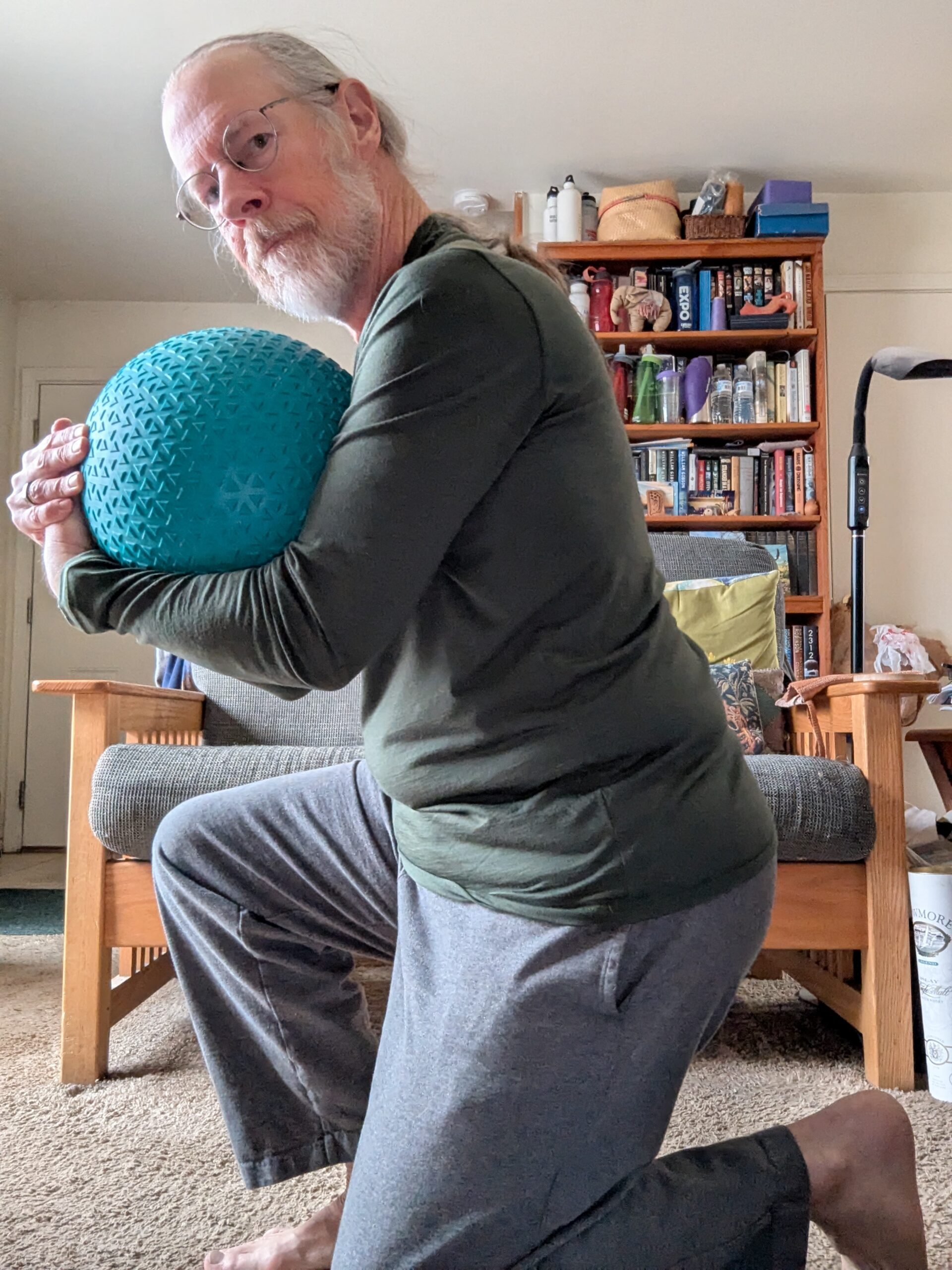
Today’s workout was 2-handed club swinging followed by abs.
The main workout went fine, but when I started the ab workout, Ashley had come upstairs. She found the postures of my workout (hollow-body, plank, etc.) to be very provocative, inspiring her to want to help.
“help”

I made a couple of political donations during the last election cycle. Now, every single day I get an email request for another donation, with some statement along the lines of:
“We are rapidly approaching the first fundraising deadline of 2025.”
But, you know what? I don’t care diddly-squat about fundraising reporting deadlines. What I want to know is what you’ll do with my donation to advance my priorities. Your artificial “deadline” means nothing to me, so as soon as you start talking about a reporting deadline, I stop reading your begging letter, and go on to my next email message.