I hate running on treadmills. I also dislike running outdoors in the cold. The result has been that, while I may get into pretty good shape in the summer, I always lose that fitness over the winter, because I don’t run.

This year, I’m trying again to run on the treadmill. This year, I’m trying with podcasts.

I don’t listen to my iPod when I run outdoors. Running outdoors is wonderful, and I want to experience it full. Running on a treadmill is awful, and I want to pretend it isn’t happening.

I’ve had to make a second change to make this work: I’m going to the fitness center by myself.

Before, I tried to fit my workouts into the joint visit to the fitness center that I make with Jackie to do our lifting. That didn’t work. Jackie was willing to walk on her treadmill while I ran on mine, but she wanted us to be walking together. Since I was trying to pretend that I had slipped into some sort of lacuna in the space-time continuum, I was an unsatisfactory companion. Jackie was also willing to carry on with her workout while I ran, but there’s no reasonable way for her to stretch her workout to last 20 minutes longer, which is only barely enough time for me to get a reasonable run in.

So far, the scheme is working okay. For three weeks now, at least twice a week, we’ve gone to the fitness center for our lifting, then gone to taiji, after which I’ve gone back to the fitness center to run on the treadmill. The first couple of runs were kind of shaky, but I’d gotten them up over 2 miles last week, and today I ran 3 miles.

That’s long enough, I think. My long runs outdoors had gotten up over 5 miles, but my plan for the winter isn’t to boost my endurance, it’s just to preserve it. If I can run 5–7 miles a week, I think I can accomplish that. A single 3-mile run each week, combined with one or two 2-mile runs, will do the trick.

The podcast thing is working. My plan had been fiction, and I’ve listened to an Escape Pod story and to one on the Small Beer Press podcast. The problem with fiction is that it takes a while to get wrapped up in the story, and every instant that I’m not immersed in the story is an eternity of actually experiencing the fact that I’m running on a treadmill. Music works okay. News podcasts are okay, too.

Once, when Jackie and I were heading into the fitness center, back before we’d given up on treadmill exercise together, I asked her on our way in the door, “Are you ready to face the satanic mills?”

“At least they aren’t dark,” Jackie replied.

“It’s true,” I admitted. “They are well-lit.”

They’re still well-lit. They’re still satanic. But they’re pretty tolerable, if you’ve got a story to listen to.

I decided that I wanted to try barefoot running.

Of course, I didn’t want to actually run with bare feet. That seems stupid (although I suppose it’s another capability that might be worth developing, just in case circumstances arise where I might really need to run in bare feet).

No, what I wanted to do—like many people who have read Christopher McDougall‘s book Born to Run—was try running with the stride that one would use if one were barefoot.

The natural running stride, it turns out, is quite different from the walking stride. In walking, you land on your heel, then rock forward and push off with your toes. If you wear cushiony, padded running shoes, you can run like that too, but it’s not the natural way to run.

The natural running stride is easy to experience—just run in place for a few seconds. You’ll land on your forefoot, absorb the impact with the muscles of your calf and thigh, and then launch yourself off again with those same muscles.

I’ve been trying to run with more of a forefoot strike since I started running again this spring, but it’s hard to do if you’re wearing ordinary running shoes. The heel is not only all cushiony, it’s thick. That means that, unless you exaggerate your forefoot strike, you’re still going to land on your heel.

So, I went to the shoe store, meaning to try out one of the many new “minimalist” running shoes with thinner heels and less cushioning that are now on the market.

Happily, we have a great running shoe store in town called Body and Sole. After trying on three pairs of shoes with progressively less padding and structure, I tried on a really minimalist pair, which felt wonderful. I tested them in the concrete parking lot, taking a turn around the outside of the building, and then a second turn, and then a third. I told the salesman, “That first pair was fine, and I would have bought them. But this pair was the pair that made me want to keep running laps around the building.”

So, now I need to adjust to this new stride. It demands a bit more strength and endurance in the calf muscles (and no doubt in the muscles that keep the bones of the foot correctly arranged as well).

The shoes I ended up, a style called the Road Glove, are made by Merrell, which also provides an extensive website on barefoot running. They feel just like you’re barefoot, except that there’s a sole to protect your feet from sharp/hard/abrasive road hazards.

Following their advice, I just ran half a mile yesterday. I certainly feel it in my calves today. They don’t feel bad, though. Just tired and sore like I got a good workout yesterday. And my tendons and joints don’t feel sore at all.

The timing is perfect for doing a few low-mileage days. On Sunday I ran 5.25 miles for my long run (in my old shoes), so Monday and Tuesday would have been light running days anyway.

Plus, on Tuesday we went for a long bike ride. We rode to Philo and met some friends for lunch at the Philo Tavern. That’s a 28-mile round trip, which we did in an even three hours. (I wrote about an earlier bike ride to Philo in my old Clarion journal.)

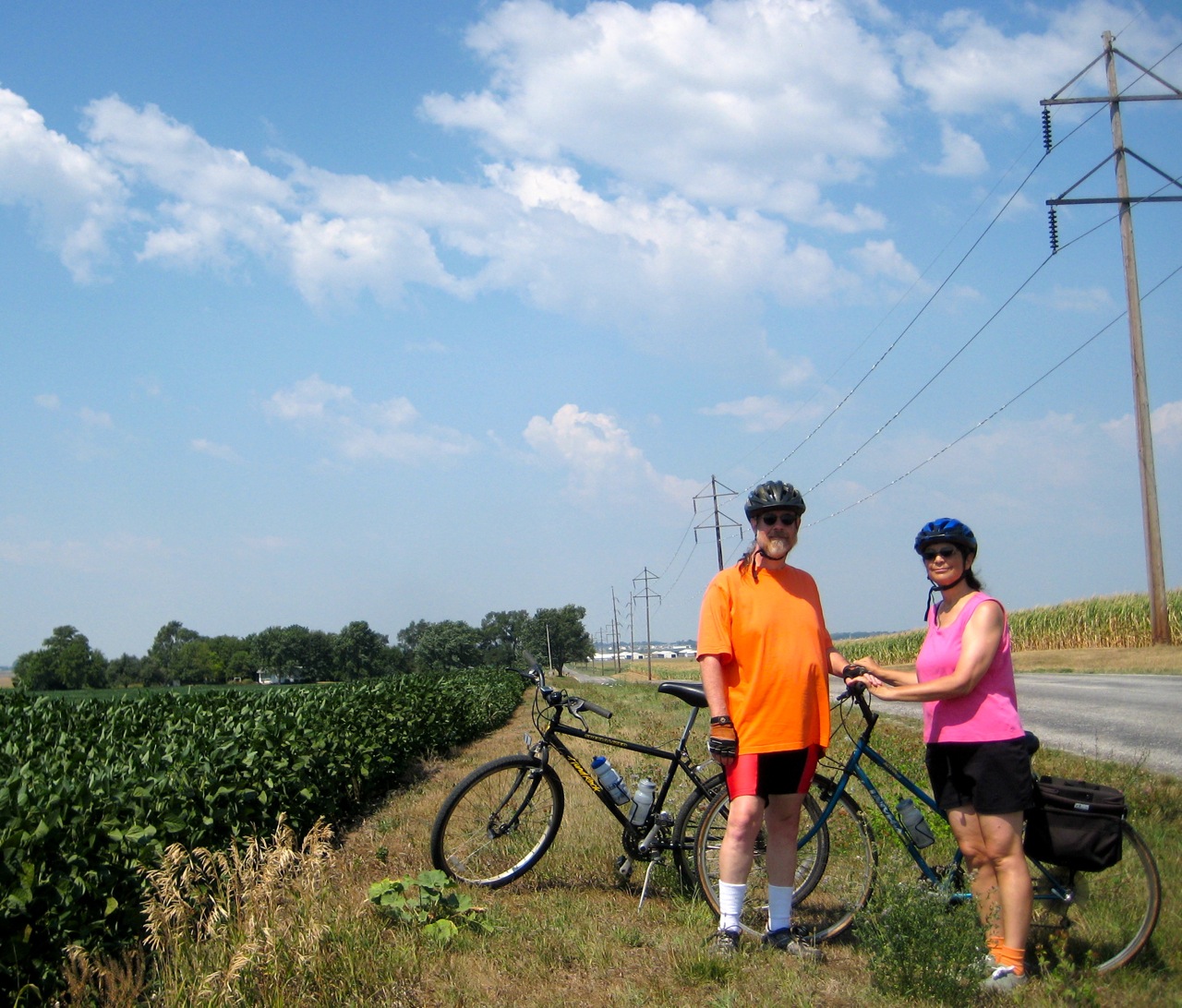
Here’s us, on the road to Philo:

Cyclists on the side of the road
Me and Jackie on the road to Philo

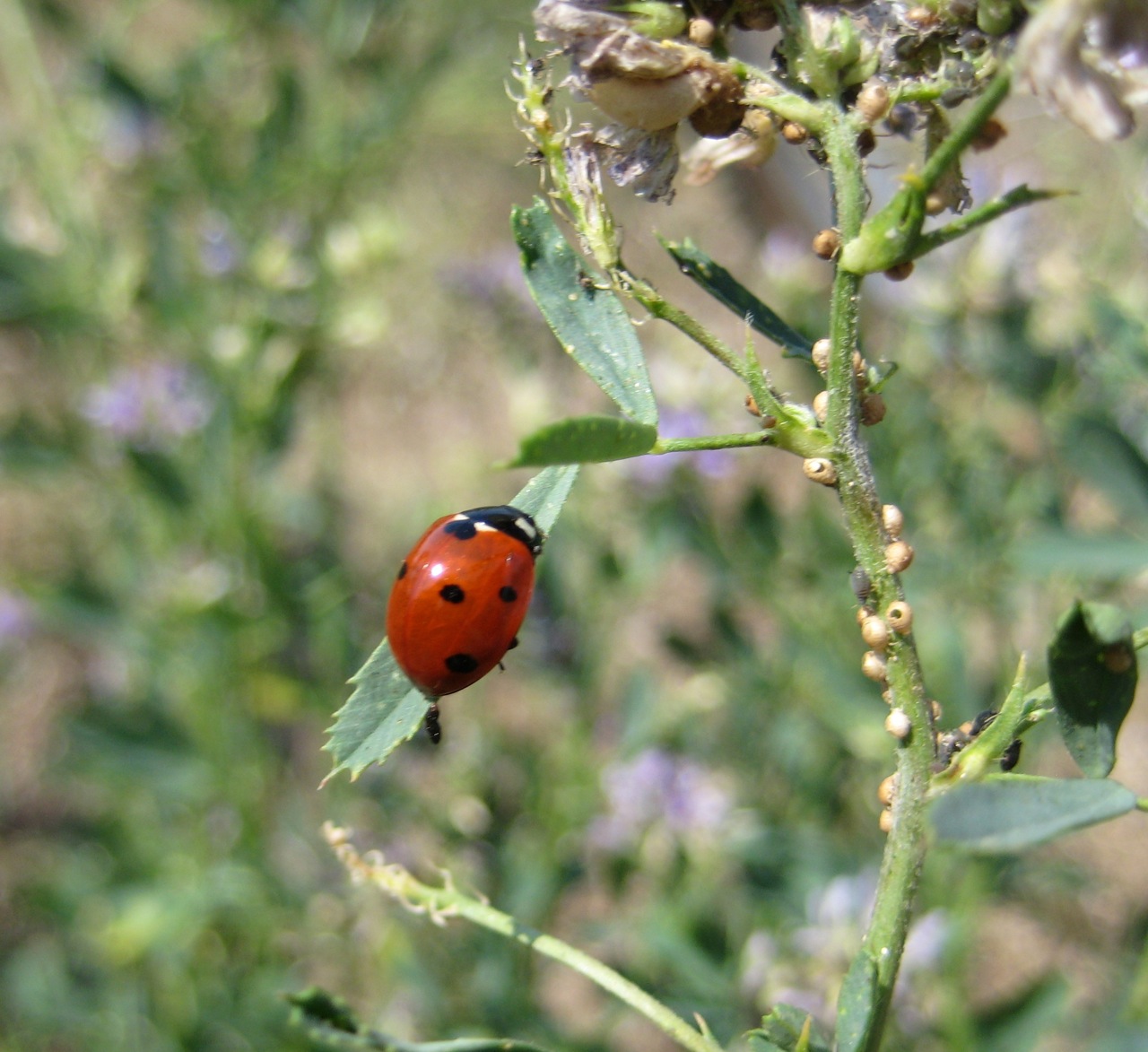
And here’s a pretty ladybug that I noticed while we were paused to get that picture:

Roadside Ladybug

I’ve already sent that picture to the Lost Ladybug Project, which is trying to gather data on the native ladybugs, whose distribution is changing due to the importation of non-native ladybugs and climate change.

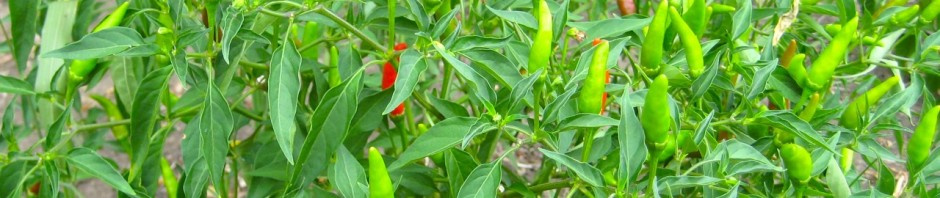
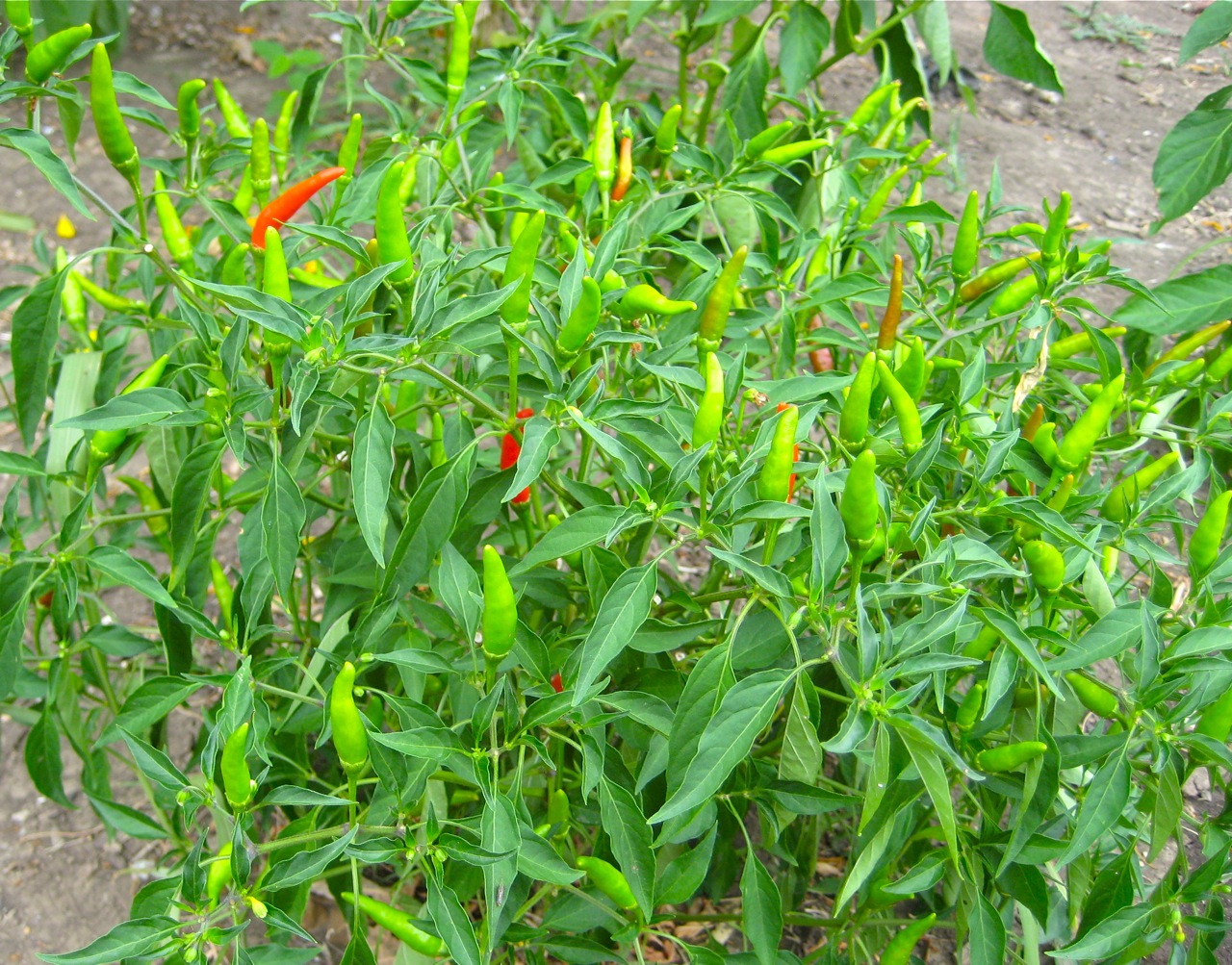
Siam Dragon Peppers
Siam Dragon Peppers
We keep harvesting them, but every time we return to the garden a few more of our Siam Dragon Peppers are ripe.

I like to joke that I no longer multitask at more than one thing at a time.

Related to that, I recognized years ago that a certain amount of monomaniacal focus was really useful for successfully completing a large project (such as a novel), but that being able to focus on more than just one thing was important to being more broadly successful.

This is all the more true if you want to accomplish more than just one thing (if you want to, for example, write a series of Wise Bread posts, write an occasional short story, and become physically fit, in addition to writing a novel). And yet, each one of those things requires focus, if I’m to accomplish it.

Basically, I need to be able to be monomaniacal about three or four things at a time.

Like most people, I find that I get caught up in whatever I’m doing, both on a minute-to-minute basis and a day-to-day basis.

On a minute-to-minute basis, when I’m writing something, and especially when the writing is going well, I want to press on. I feel this way, even though I know from both things others have said and personal experience, that it’s always best to stop in the middle of things—to leave a ragged edge, so that I return to the work with a clear entry point, already knowing how the next bit goes. Convincing myself to do this routinely would really help with being monomaniacal about multiple things: I’d be quicker at ending the first thing so I could switch my focus to the second, and I’d be quicker at resuming the first thing when I came back to it.

Just lately, my day-to-day monomaniacal focus has been on running. I don’t run every single day, but I’ve had to make it the first thing I do on the days that I do it, because otherwise it’s too hot to run. It’s been working very well for building fitness, but doing it first has tended to result in it preempting my writing.

I’m not quite sure why. Partly it’s because a good workout leaves me feeling tired. Partly it’s because a good workout leaves me feeling like I’ve accomplished something (so I’m less driven to accomplish something more). Partly it’s just that I’m only at my best first thing in the day, so whatever I do first always ends up being the main thing I do that day.

Once there’s a break in the heat, I want to get back to writing first of all. If I can put that together with taking a fairly early break (leaving the work paused at a ragged edge) and then running (or walking or bicycling or lifting or doing taiji) and then returning for a second session of writing, I think I’ll be more productive at the writing without any loss of success at the fitness thing.

Exactly on topic for the above is Tobias Buckell’s latest meditations on designing a daily routine that provides both writing time and exercise time, while also allowing him to work on different aspects of his work at whatever time of day he’s most effective at that particular thing. Toby is a great writer, but he’s an absolute genius at measuring his productivity and then using that data to tweak his work habits.

I need to improve my own data collection. I already track my productivity at writing, but I need to get a bit more fine-grained about it and track productivity per work session (rather than per day). I’m sure I’m most productive in the first session of the day, but I don’t have any evidence, and I certainly don’t know how much less productive I am during the later sessions, nor to I know whether my productivity declines less if I work on non-fiction (or editing, or research).

The picture, by the way, has nothing to do with this post. I just thought the blog needed another picture, and I’d brought the camera to the garden today.

I have been on-and-off reading about “paleo” diet and exercise programs (also called “primal”).

I think there’s a lot to paleo, on an evolutionary basis. On the other hand, there are an awful lot of post-paleo lifestyles that have proven to be entirely successful, in the sense that generations of people have eaten all manner of particular diets and been healthy. (Native Americans ate corn, beans, and squash. Scots ate oats and kale. Lots of people ate rice and lentils.) Given that, and the fact that paleo diet programs doesn’t match well with what I like to eat, I’ve only paid a bit of attention to them. Basically, I’ve let them reinforce my preconceived notions.

I have a similarly divided appreciation of paleo exercise programs, but there I think I’ve worked out what was bugging me.

The half I agreed with is that very short bursts of very intense activity should be a key part of an exercise program. I’ve only made limited moves to incorporate this insight into my own workouts, but only because those sorts of intense bursts are hard.

I suspect it would be a really good change to compress my current 20-minute lifting workout into 10 minutes, which I could do if I really hustled between machines and counted the first set of the three leg exercises that I do as a warm-up.

To do so would require some additional mental toughness. It’s really hard to jump off the leg extension machine with your quads burning, and then jump on the leg curl machine and make your hamstrings feel the same way, and then hurry on to the leg press. Taking an extra thirty or forty seconds between machines to recover is a lot easier. (Not to mention inevitable, if you’re working out in a fitness center where you have to adjust the seat and set the weights on each machine.)

The half I disagreed with is the half that seems to dismiss endurance exercise.

Now, it may be that my reading of paleo exercise programs has simply been so cursory that I missed the paleo version of endurance exercise. But it sure seems to me like a large fraction of the paleo folks don’t merely dismiss endurance exercise, they actively disdain it.

That puzzled me, because it seems to me that the paleo human was the quintessential endurance machine.

As I say, I think I’ve come to understand the objection, which is that you can’t do high-intensity endurance exercise unless you eat loads of carbs. The paleo folks think you should do endurance exercise, as long as you keep the intensity level at a level where you can perform on a low-carb diet. Further, they seem to think that the appropriate level supports walking or hiking, but doesn’t support endurance running.

That’s crazy, although it’s understandable. The modern way of training to run is all about prompting the body to mobilize glycogen stores, by depleting those stores and then eating a high-carb diet to replenish and boost them.

That is not the only way to run. You can also engage in endurance activity powered mainly by fat stores.

Begin bonus anecdote:

When I was in high school, I decided to bicycle to Saugatuck, see a play, camp out overnight, and ride home the next day. I didn’t have a cyclometer in those days, and have always claimed that the distance was 75 miles each way. Google Maps tells me that my route (or very close to it) is 69.3 miles. Close enough.

I knew nothing about carb or fat metabolism. I made no plans to get food along the way, and in fact ate very little.

I headed out early in the morning, did just fine for a bit more than the 36 mile I was used to riding, and then bonked at about mile 40. (Bonking is what cyclists call it when you exhaust your body’s glycogen stores. It’s the same thing marathoners call “hitting the wall.”)

I was exhausted. My speed dropped from 14–17 mph down to 7–8 mph. And it stayed there.

That’s the important part of this anecdote. It stayed there. I rode another 30 miles or so that way. I rode it at less than 8 mph, but I rode it. I got up the next morning, still exhausted, got back on my bike, and rode a few miles to a breakfast spot and ate my only proper meal of the whole trip. It didn’t help much. I rode the whole way home at 7–8 mph.

End bonus anecdote.

If you haven’t trained your body to use fat stores for endurance activity, you’ll be pretty slow—as I was on my ride. And you’ll never be fast the way someone who has trained to build up glycogen stores can be. But with a modest amount of training, you can be plenty fast enough to run.

There are times when it is convenient to be able to run for an extended period. If you want to have that capability, you need to run—and not just occasional short sprints during your walks.

We don’t have much direct evidence of what paleolithic humans actually did, but I have no doubt that, in addition to walking a lot, they ran a lot. The human body is just too well adapted for long-distance running for it not to have been a key capability over an evolutionarily long period.

Yesterday, I went on my first open-ended run of the season.

On earlier runs, I pretty much knew how far I was going to go and what route I’d follow. Occasionally there’d be a bit of room for variation—I might think, “If I’m feeling good, maybe I’ll add a second lap around Kaufman Lake,” or “Maybe I’ll add the leg out to Bradley and back.” But by and large, I knew to within a few tenths of a mile how far I’d run before I took my first step.

The reason was that every run would take me a large fraction of as far as I could run. There was no chance I’d just decide on a whim to go a few miles further, because I couldn’t run a few miles further.

So, it was a great treat yesterday, to head out for a run with only a general idea of where I’d be running, and with no specific plan how far I’d go.

I knew I’d run halfway down O’Malley’s Alley (the short bit of rail trail that I call McNalley’s Alley), and then cut over into the neighborhood south of there. But I’d had only a vague, somewhat aspirational notion that I’d continue on as far as the trail through Robeson Park. But I knew that the trail would cross several different roads, and that I’d be able to head for home on any one of them, if I decided that I’d run as far as made sense.

In the end, I headed home when I got to Crescent. On some future run, I’ll push on as far as Mattis, and maybe continue on down the Simon trail before heading home.

This run, according to my GPS thingy, came to 4.84 miles, which I ran in 54:15, for an average pace of a bit over 11 minutes per mile. And it was a great run. My feet didn’t hurt, nor did my ankles, knees, hips, or any other bits. I did get pretty tired by the end, but not over-tired. In fact, after a bit of a rest and rehydration, I had enough energy to bicycle 9 miles, lift weights, and do an hour of taiji. (The lifting, I must admit, was a rather feeble effort.)

At over 50 minutes, it was definitely a long-enough endurance effort to produce significant levels of endocannabinoids, which I presume is the reason that my memory of the run is mainly just a strong sense that I was having fun and feeling good. There are only a few spots where specific details are sharp and clear—the spot where I had to back up and run on the grass next to the trail, to avoid a muddy patch, the spot where I thought, “There’s a hill here? How did I not know there was a hill here?” and the spot where I slowed to a walk so I could look back over my shoulder and read a street sign, so I’d be able to make a map.

Speaking of which, here’s a map of the run:

A couple of days ago, I was updating my running log and noticed that my cumulative distance for the month so far was 26.2 miles.

I tweeted it, mentioning that my cumulative time spent running that distance was 5:02:53, but my twitter followers are mostly not runners, and I don’t think any of them realized that, to a runner, 26.2 miles is a round number—the distance of the modern marathon.

It’s good for me to see that my short runs do accumulate to some significant miles. It’s been three weeks since I upped my long run to 3 miles, and I’ve started to get pretty anxious to stretch it out to 4 miles. But I once before pushed up my long runs a little too quickly at just about this point (so I could run in a 5.5 mile trail race), and in the process hurt my Achilles tendon—an injury that took more than 6 months to heal. Any little thing to motivate me to keep running the same distance until I’m ready to handle longer distances is good.

I am still boosting my overall distance, I’m just doing so very slowly. My weekly mileage for the last three weeks was 8.5, 8.8, and 8.9 miles. I’ve done 6.1 miles already this week, and will probably crack 9 miles (although I might not, because the forecast high for Thursday is 102℉, and I may just take a rest day).

Longer long runs will come. Just not quite yet.

My run on Monday included two laps around Kaufman Lake. Among the people that I encountered more than once was a pair of young black men. I don’t know how old they were—in their twenties, I suppose.

As I passed them the second time, one of them asked how old I was. I told him I was 52. He said, “Wow! You’re in great shape!” I thanked him and ran on.

That brief conversation has stuck with me.

First of all, I don’t think of myself as being in great shape, although I’m getting fitter. That particular run went on to be 2.4 miles at an 11:27 pace. That matches the distance of my longest previous run this year, and was actually the best pace I’d managed at any distance in a very long time. (When I’m estimating time or distance, I generally assume a 12-minute pace.)

Jackie pointed out that, if I was right about the men’s ages, their fathers would probably be just about my age. That might well mean that they have a very specific referent for the default fitness level of a man in his 50s.

There are certainly a lot of men in their 50s that are in pretty poor shape, but that doesn’t mean that I’m in good shape, let alone great shape. I’m still quite overweight (although as of a couple of weeks ago, no longer obese, according to the National Institutes of Health). I’m not in nearly as good shape as I was in 2004, when I was routinely running 6 and 7 miles for my long runs, nor the summer of 2005 when I was working my way up to riding a 100-mile bike ride.

Today’s run was 1.5 miles at an 11:22 pace. I’ve been recording my 1.5 mile runs as “easy” runs in my training log, but this was really the first one this year that qualified. The previous ones, if judged objectively (by heart rate, etc.) would rightly have been classified as “hard” runs. But I’m past that stage. I can run along at a comfortable lope and not be maxing out my aerobic capacity.

This is when running gets fun. And maybe that is the same thing as being in great shape.

I’m a student of daily routines. I like to imagine that I’m looking for good models for my own behavior, but that’s only true in an oblique way. By now I understand pretty well the structure of a productive routine; no new routine will be enough better than the routines I’ve already studied to justify the effort of examining them. The value in studying daily routines, for me, is as a reminder to follow my own routine.

For a while there was a great blog called Daily Routines that was very nearly pornography for this inclination of mine to ponder new models. It was there that I found the daily routine for Charles Darwin, which is probably the best model I’ve found so far.

And it is in part because of its similarity to Darwin’s model, that the daily routine of Vestricius Spurinna caught my eye:

At the second hour [after waking] he calls for his shoes and walks three miles, exercising mind as well as body. If he has friends with him the time is passed in conversation on the noblest of themes, otherwise a book is read aloud….

Then he sits down, and there is more reading aloud or more talk for preference; afterwards he enters his carriage [for more private conversation].

After riding seven miles he walks another mile, then he again resumes his seat or betakes himself to his room and his pen. For he composes, both in Latin and Greek, the most scholarly lyrics. They have a wonderful grace, wonderful sweetness, and wonderful humour, and the chastity of the writer enhances its charm.

When he is told that the bathing hour has come—which is the ninth hour in winter and the eighth in summer—he takes a walk naked in the sun, if there is no wind.

Then he plays at ball for a long spell, throwing himself heartily into the game, for it is by means of this kind of active exercise that he battles with old age.

After his bath he lies down and waits a little while before taking food, listening in the meantime to the reading of some light and pleasant book. All this time his friends are at perfect liberty to imitate his example or do anything else they prefer.

Then dinner is served…. The dinner is often relieved by actors of comedy, so that the pleasures of the table may have a seasoning of letters. Even in the summer the meal lasts well into the night, but no one finds it long, for it is kept up with such good humour and charm.

The consequence is that, though he has passed his seventy-seventh year, his hearing and eyesight are as good as ever, his body is still active and alert, and the only symptom of his age is his wisdom.

– (From a public-domain translation of the letters of Pliny the Younger.)

Of course, Spurinna was retired, so one writing session of just an hour or two is probably enough for him. His work when he was younger was as a magistrate and governor, and so probably took place in those conversation sessions that are now just for pleasure.

I think there’s a lot to emulate there. Three walks per day adding up to five miles seems just about right—as long as you include another hour or two of vigorous sport. Of course, he’s in his late seventies. Us younger folk should probably get in a little more than that.

Last month I posted a bit on endocannabinoid production in cursorial mammals, pointing to an article on new research that both supports the hypothesis that endocannabinoids are responsible for runners high, and that the whole system may have evolved to encourage and facilitate long-distance running in mammals whose success depends on it.

I found that I was still quite interested in endocannabinoids and running, and a little more research brought me to this 2004 survey paper by A Dietrich and W F McDaniel in the British Journal of Sports Medicine, endocannabinoids and exercise. It turns out endocannabinoids are involved in a whole range of systems, both centrally in the brain and peripherally in the rest of the body.

Some of the things that endocannabinoids do are entirely to be expected by anyone who has any experience with exogenous cannabinoids: pain relief, sedation, reduced anxiety, euphoria, and a general sense of wellbeing.

But other things were new to me:

  • Anandamide, a particular endocannabinoid, prevents edema and inflammation—probably a very useful mechanism. After all, running is bound to produce minor tissue damage to the feet and legs. Those endocannabinoids probably greatly reduce the need to get clever with ice and elevation and compression and anti-inflammatory drugs.
  • Anadamide also acts as a vasodilator and produces hypotension, perhaps facilitating blood flow during exercise.
  • Although in large doses cannabinoids produce motor inhibition, in low doses they produce increased locomotion. It appears that they make it easier to perform motor skills that have been practiced to the point where performance is automatic, such as running.
  • Cannabinoids act as brochodilators, perhaps facilitating breathing during exercise.

On that last point, I’ve certainly noticed that going for a run produces a profound relaxation of my upper airways. My nasal passages are pretty much permanently inflamed due to allergies—to the point that I spent most of last year needing to use a nasal steroid spray if I wanted to be able to breath through my nose. I have no idea if it’s mediated by endocannabinoids, but my nose is much, much more open after a run than it is before a run, and the effect lasts for hours.

One thing I found particularly interesting was an explanation for why cannabinoids don’t seem to be very addictive. They’re involved in the same dopamine systems that other addictive drugs are, and by rights ought to produce withdrawal symptoms when they’re withdrawn. In fact, you can produce those symptoms (in rats), by habituating the rats to THC and then administering an antagonist that blocks cannabinoid receptors. But mere withdrawal of the drug won’t do it, apparently because the drug hangs around in the system for so long that even abrupt withdrawal ends up resulting in a gradual tapering off.

On the other hand, gradual withdrawal is still withdrawal—even if it’s not drastic enough to produce shakes—and endocannabinoids may explain not only runners high, but also the addictive behaviors reported in runners:

We do not suggest that the addictive aspects of exercise are identical with the addictive properties of exogenous cannabinoids, but that a similarity exists between the desire that some people have for exercise and the desire they may have for exogenous administrations of cannabinoids. The parallels between these results and the subjective experiences associated with exercise abstinence, as discussed previously, are considerable.

What led me to this paper in the first place was a desire to get some data on just how much exercise was necessary to start producing endocannabinoids. On that question, the paper does provide a datapoint:

Using trained male college students running on a treadmill or cycling on a stationary bike for 50 minutes at 70–80% of maximum heart rate, we found that exercise of moderate intensity dramatically increased concentrations of anandamide in blood plasma.

That sounds pretty reasonable, although I wish they had data for exercise for 10 to 40 minutes as well. My guess, based on reports of runners high, is that it does take upwards of 50 minutes to start seeing a significant increase, but it’s just a guess. It’d be nice to have some data.

Most unconditioned people can’t maintain 70–80% of maximum heart rate for 50 minutes, meaning that if it’s true that it takes 50 minutes, most people won’t be able to experience this “dramatic” increase. The typical sedentary person would probably have to train for weeks to achieve this level of performance.

So far this year, my longest run was 26 minutes. But it was a great run (unlike my first long runs of the previous two years, which were not entirely successful). I’m quite optimistic that I’ll be able to ramp up the distance without much difficulty.

Chuck McCaffery and me, after finishing the Allerton Park Trail Race in 2003
Chuck McCaffery and me, after finishing the 5.5 mile Allerton Park Trail Race in 2003. Photo by Jackie Brewer.

I remember back in the late 1970s and early 1980s people were speculating that endorphins might be the source of runners high—and I remember how disappointed they were when experiments showed that exercise-induced levels of endorphins were much too low to produce the reported levels of euphoria.

They may simply have been looking for the wrong class of euphoria-inducing chemicals—it now looks like runners high may be produced not by endorphins but by endocannabinoids. Further, according to a paper in the Journal of Experimental Biology, there’s reason to believe that this euphoria is important enough in improving reproductive fitness that it is broadly selected for in cursorial mammals (that is, those with bodies suited for running). See Endocannabinoids motivated exercise evolution for an overview. (The paper itself was behind an annoying paywall when I originally posted this, but now seems to be available here: https://doi.org/10.1242/jeb.063677.)

This could explain a lot of otherwise hard-to-explain behavior:

. . . a neurobiological reward for endurance exercise may explain why humans and other cursorial mammals habitually engage in aerobic exercise despite the higher associated energy costs and injury risks, and why non-cursorial mammals avoid such locomotor behaviors.

Sadly, the evolved system does not show much promise for turning couch potatoes into endurance athletes:

. . . couch potatoes are not about to leap suddenly out of their comfy chairs and experience the pleasurable effects of exercise, because they probably cannot produce enough endocannabinoids. . . . Inactive people may not be fit enough to hit the exercise intensity that leads to this sort of rewarding sensation.

This is why I’m so pleased at having come up with an exercise regimen that I can persist with over the winter—I enter spring already able to enjoy the euphoric joys of exercise without having to first get in shape.