For the first couple of years I was doing longsword, I had real trouble keeping my arms extended and pushing my hands up (due to a lack of strength, lack of endurance, and lack of the habit).
I did all manner of training to work on this—exercises for arm strength, especially overhead pushing, endurance training for those same exercises, and of course sparring to train the habit. (See in particular Fitness training for longsword.)
I’m not there yet, but it no longer seems to be my worst problem. Here’s a sparring match with one of the better fencers in our local group:
I’m not quite all the way there, so it’s a thing to keep paying attention to, but it’s no longer my biggest problem.
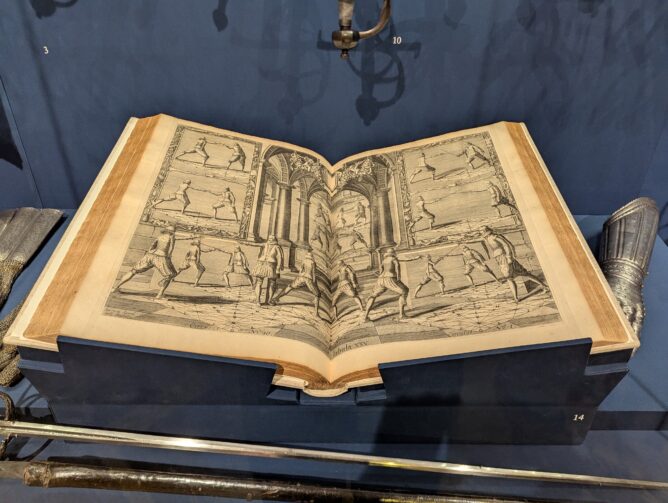
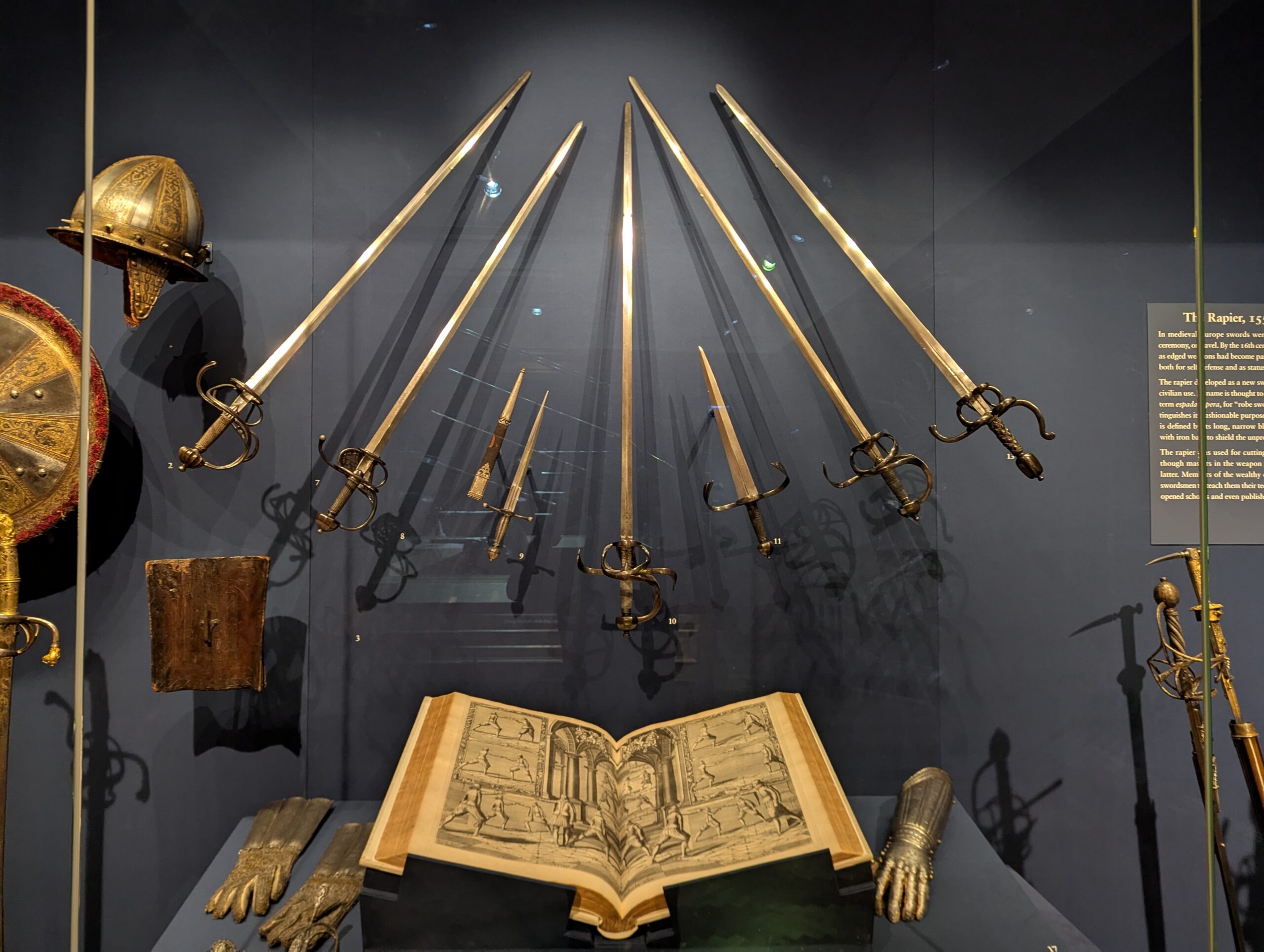
This summer, while in Chicago for other reasons, we went to the Art Institute. I made a point of tracking down the room with the arms and armor, where I found, among many other things, a copy of Thibault’s Academie de l’Espée.
The picture above gives you and idea of the fabulous (and fabulously detailed) engravings, but look how big the book is! I mean, it’s half the length of a sword!
So, I was delighted to discover that HEMA Bookshelf has a plan to publish a book with these images, “the first time this art has been published at close to full size since 1668.”
Read about the project here: The Thibault Project. While you’re there, go ahead and pre-order a copy yourself. I mean, it’s only money. Oh, and way more bookshelf space than I have available. But I’ll fit it in somewhere.
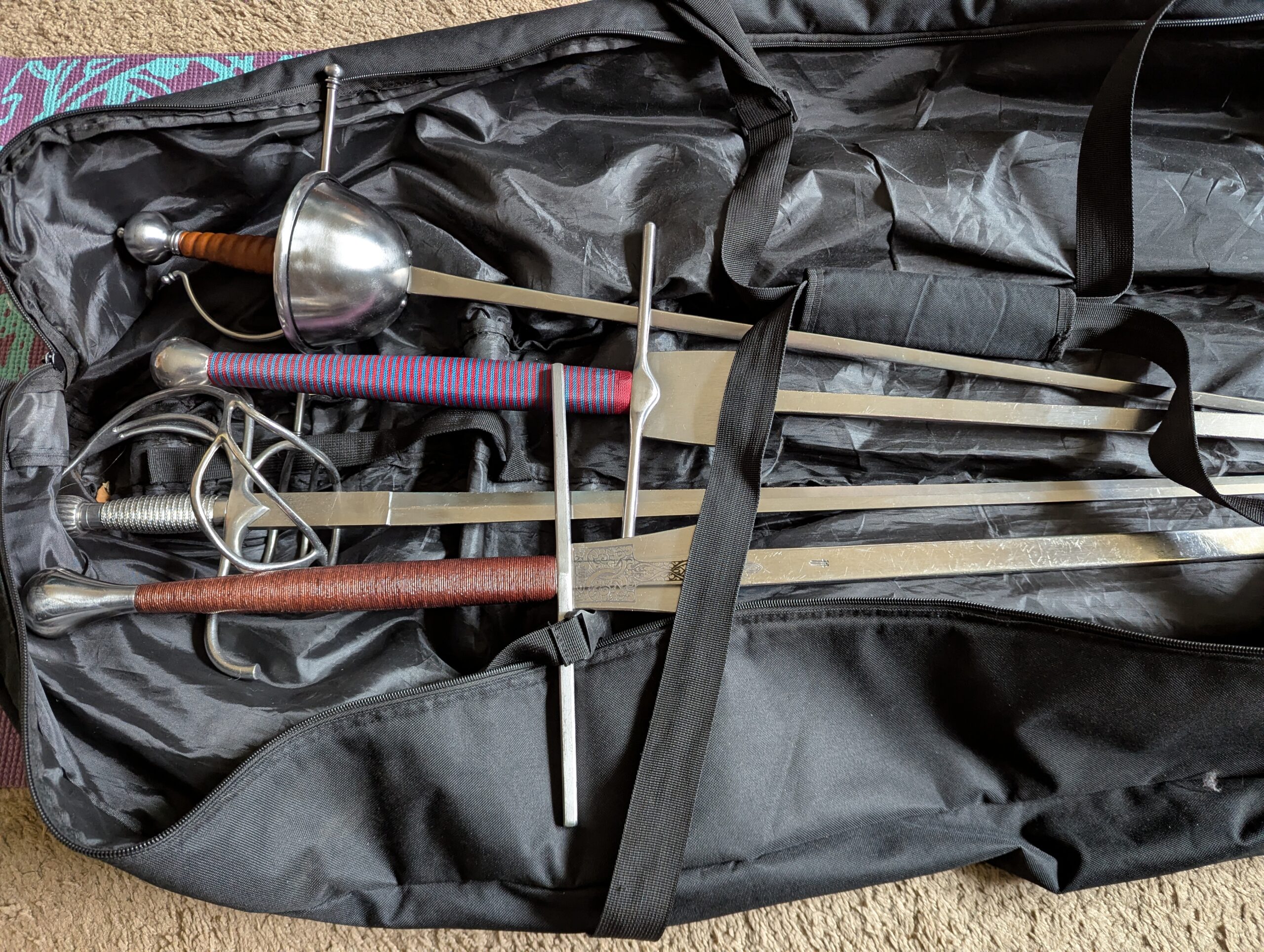
Sundays are the day I still manage to do some HEMA training. I used to go three times a week, but had to cut way back after I hurt my elbow. Now it’s just Sundays, because Sunday is the day my group does a sword-in-one-hand class, which is gentler on my elbow. We usually train dussack or rapier.
My plan for today was to get as much writing done in the morning as I could, then go train sword fighting, and then squeeze in a bit more writing in the late afternoon or evening. But, as often happens, things happened. My brother invited me to attend the kick-off meeting for SFWA’s Winter Worlds of Giving event, so that was most of an hour on zoom. Then my usual cocktail hour with my brother and my mom. Then walking the dog. Then an episode of The Diplomat with Jackie. Then another episode of The Diplomat with Jackie. And now I’m just too tired to get any more writing done.
So, it’s a good thing I got in that morning session, which got me 551 words.
One of the things I haven’t done well in learning sword fighting has been “getting in the reps.” We’ll learn a move—a particular cut or thrust or parry—and I’ll work on it until I can do it correctly once (or a few times), but then I’ll quit. I don’t “get in the reps” that it would take to really learn the thing.
This is about 80% my own fault, of course. (It’s about 20% the fault of the instructors, who always want to move on and teach the next cool thing.) Clearly, having done something correctly once (or a few times) should put me in the position of being able to practice it more, either alone or with a training partner. And it’s totally on me that I hardly ever do that.
Anyway, I occasionally remind myself that I should get in the reps of whatever we’ve just learned. Sometimes I do better or worse, but I rarely forget. (I just get tired or busy or forget all the things we learned except the last one or find some other reason to fail to get in my reps.)
The reason I’m thinking about this today is simply that I’ve been writing more just lately, and of course writing is the same way. If you want to get better at writing, you need to get in the reps.
Add your own “pen is mightier than the sword joke here.”
More specifically, you need to engage in “deliberate practice.” So it’s not just getting in the reps. You need to get in one rep, monitor your performance, evaluate your success, and then figure out how to do it better. Then repeat.
This is true at every level. In sword fighting there’s the cuts, thrusts, and parries, of course. But there’s also footwork to go with each one of those things. Then there’s postures that you might pass through along the way. There’s distance management. There’s watching your opponent’s postures for clues as to what he might be about to do. There’s figuring out what you might do in response.
Writing has its own levels, but it’s still the same. Word choice. Sentence structure. Paragraphs. Telling a story.
After decades of practice, I’m pretty good with words, sentences, and paragraphs. My skills with telling a story still need some work.
For an athlete, being explosive is good. You can jump higher, run faster, hit harder, and (the point of this post) thrust a sword more quickly. Sadly, I’m perhaps the least explosive person around. This is very frustrating when it comes to sword fighting, because my thrusts aren’t quick enough to hit my opponent, whereas their thrusts are quick enough to hit me, before I can parry them.
I can obviously compensate in various ways. I can try and be very deceptive, and then launch an attack that is so surprising my opponent can’t react. I can get very good at parrying, so I can stop an attack with a very small movement that doesn’t have to be so quick. I’m working on these things.
But one other thing I can do is work on explosiveness.
This will have other advantages too. Explosiveness (roughly the same thing as power) is an aspect of muscular strength that disappears early as one ages, and it’s very useful. Just being strong is great, if you want to lift something heavy, but power (or explosiveness) is what you need if you catch your toe, and then want to get your foot out in front of you before you fall down.
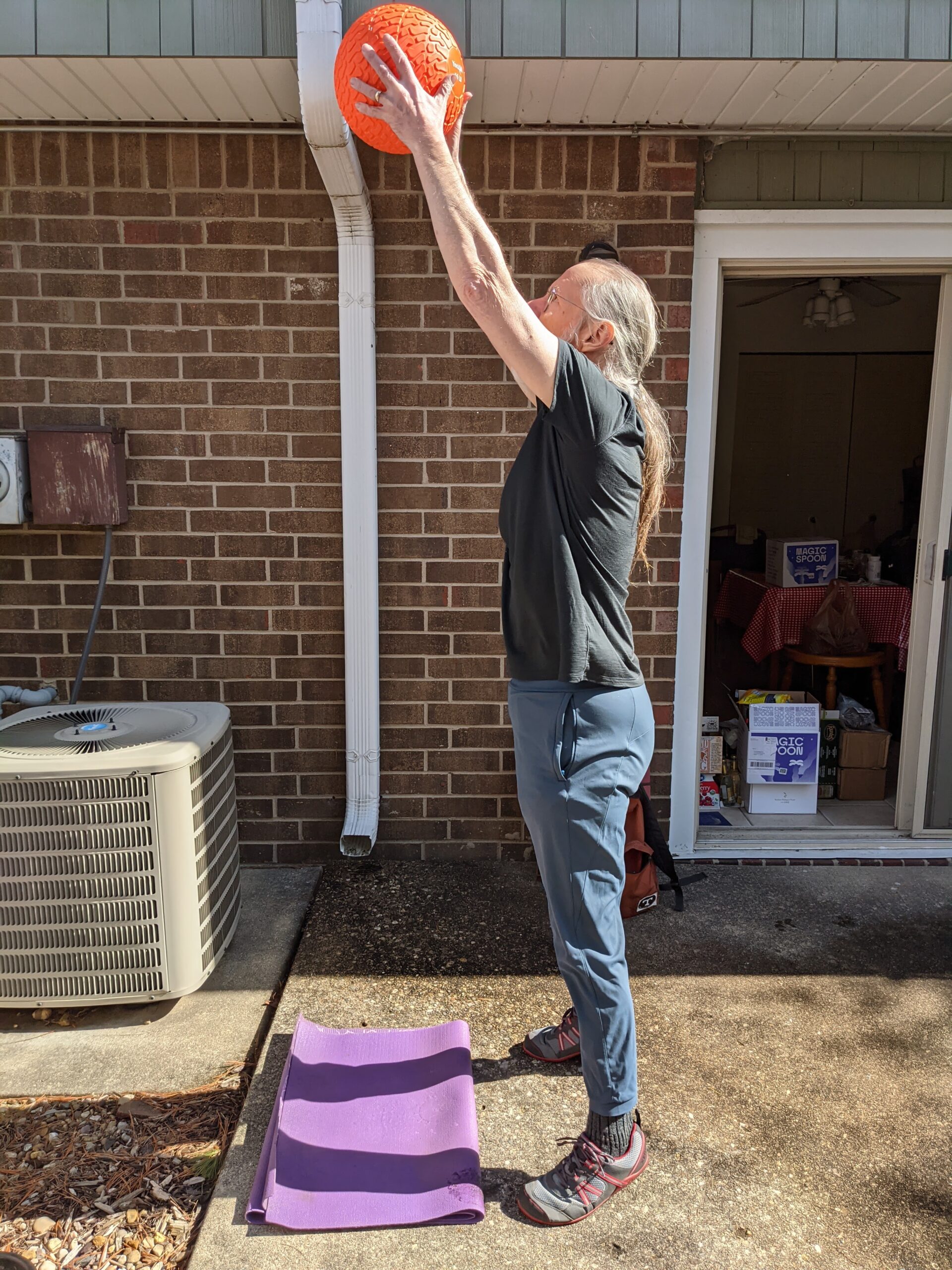
I’m going to have to do some research on training for explosiveness, but one exercise that I already know that I can start training right away will be to throw my slam ball. Some people do that facing a wall, so they can catch it and throw it again. But I think I’ll throw it, and then spring forward as fast as possible to pick it up and throw it again, so I can train both explosive arm strength and explosive leg strength.
Another slamball exercise to improve power and explosiveness—the classic slamball slam
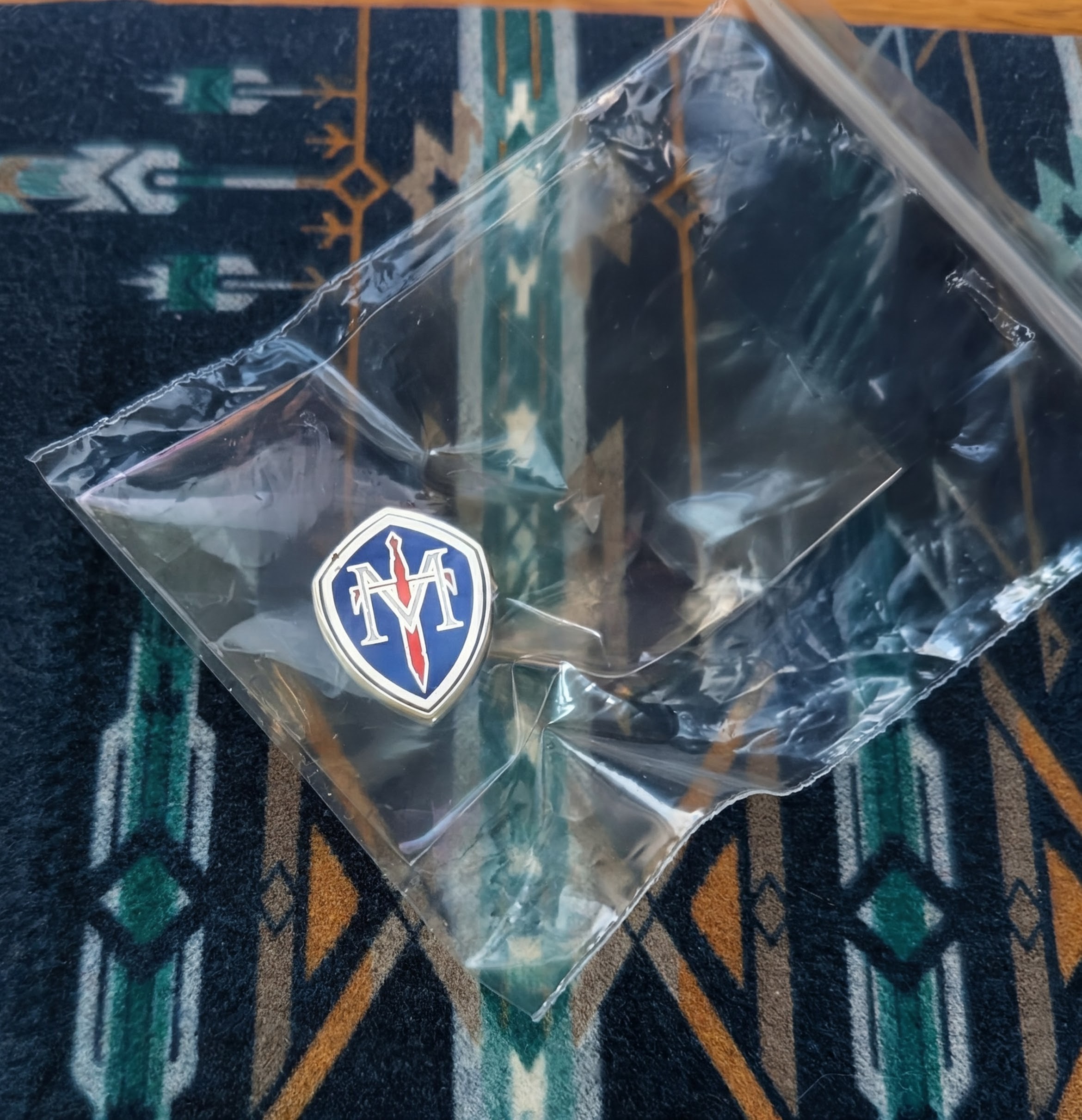
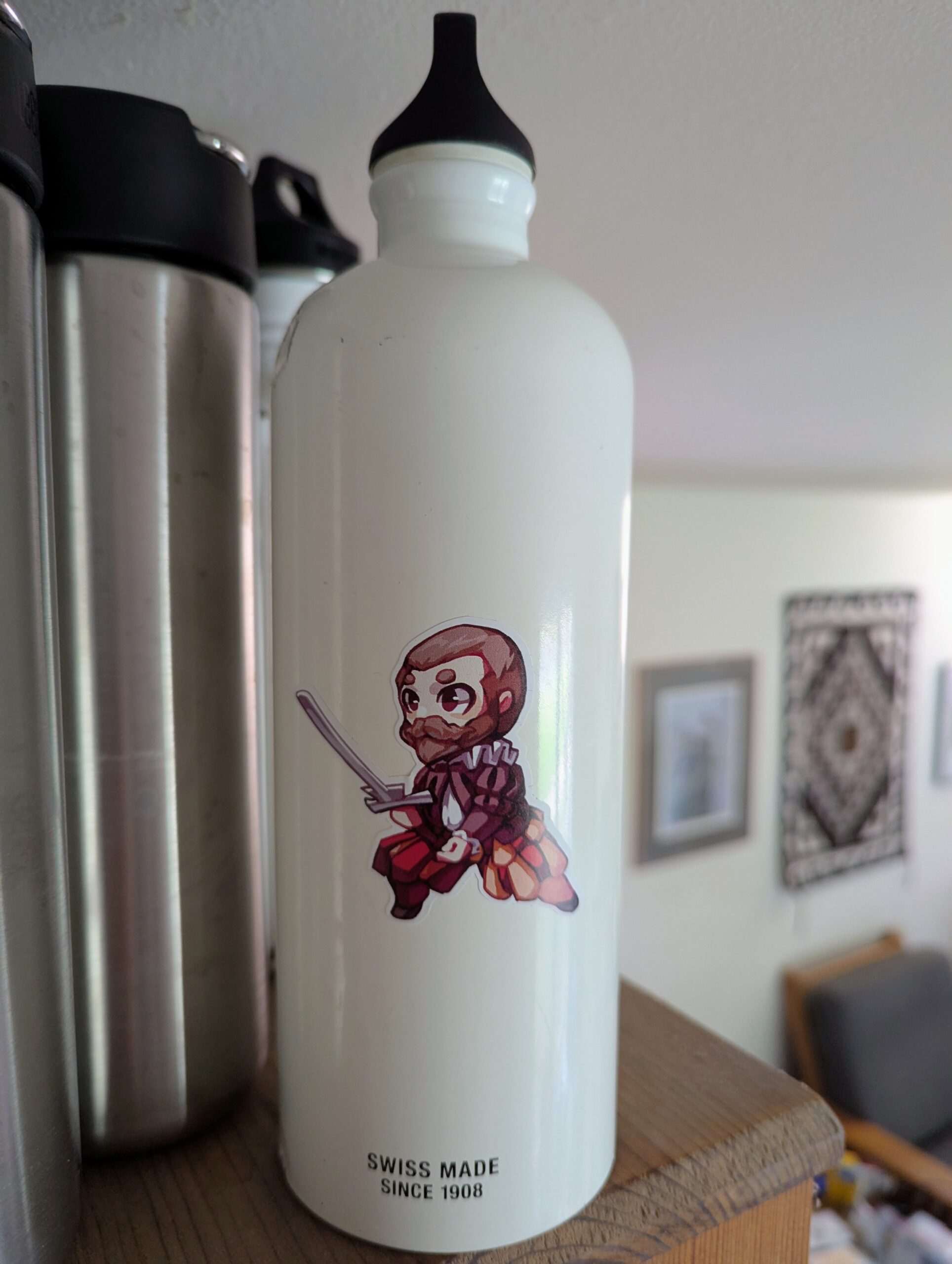
We study primarily Meyer in our group, so I put the Joachim Meyer sticker on the water bottle that I bring to practice:
But because I’m not particularly good at all the fancy stuff that Meyer teaches, I have a sneaking admiration for Johannes Liechtenauer, whose sword fighting instruction is accessible to any random peasant who happens to pick up a sword, so I put his sticker on my laptop:
I wanted a workout to practice my Meyer fencing stance—a workout more interesting than just standing in the stance for a minute or two.
Mark Wildman, in one of his a live Q&A videos, suggested the mace drop swing as a useful exercise for someone doing longsword. (It was in response to a question I asked about improving arm strength and endurance for holding your arms forward and overhead at full extension for extended periods, as one does in longsword.) He had suggested doing it in Warrior 2, but specifically mentioned that you could do it in whatever stance went with your longsword style; it just got harder as your stance got wider.
Besides being boring, just standing in a Meyer stance for a minute or two seemed like a missed opportunity; even a modest challenge to your stability in the stance seemed like it might pay off in strength, flexibility, and control of your stance.
So here’s the workout I came up with:
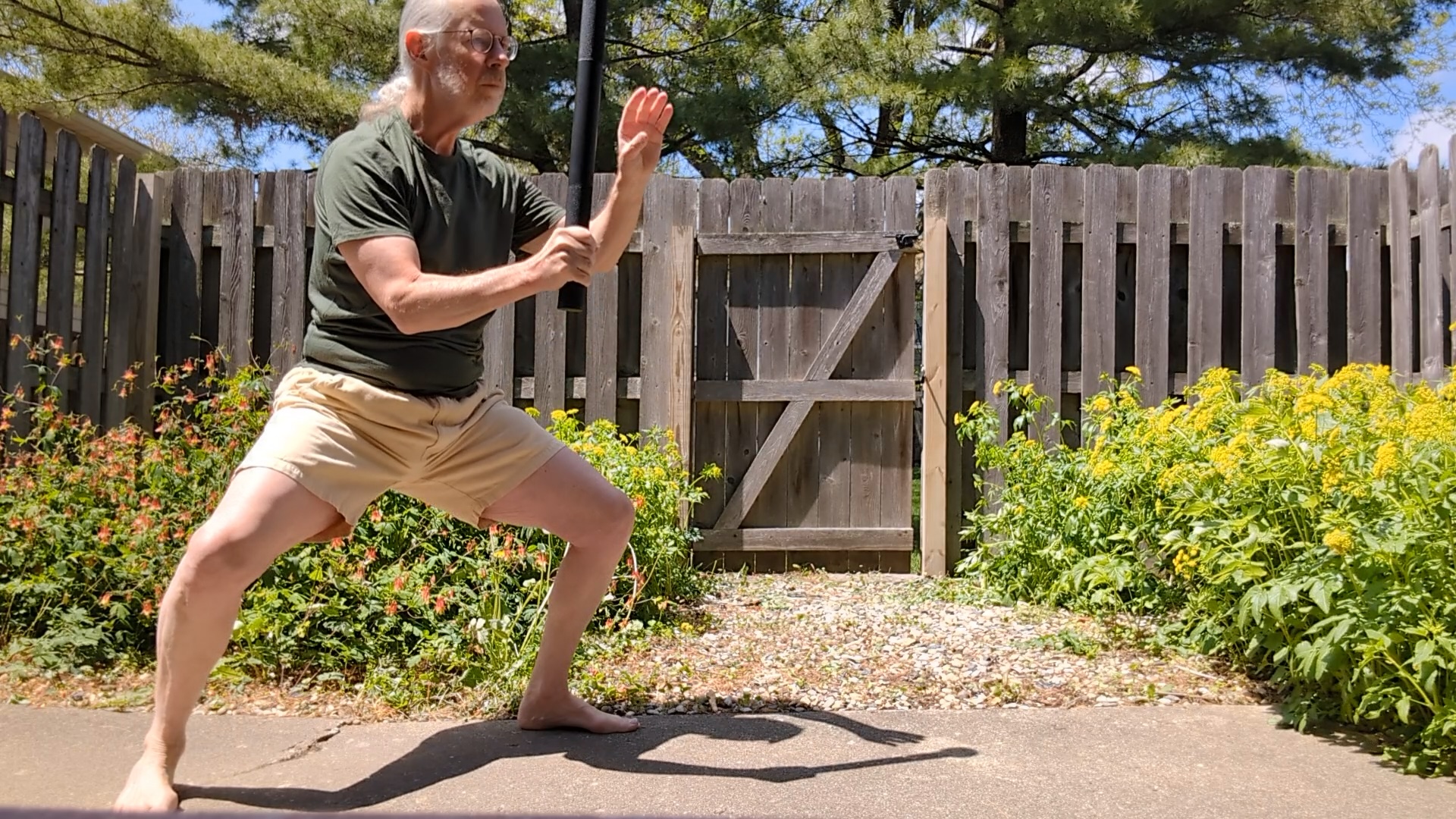
Get in your best Meyer stance, with your mace in your front hand. Execute 5 drop swings, checking your stance after each rep. Shift the mace to your rear hand and repeat. Take one passing step forward. (Your mace will now be in your front hand.) Repeat five swings with the front hand and five swings with the back hand.
That’s one set.
Here it is as a video:
My plan is to gradually add sets until I can comfortably stay in the Meyer stance for 5 or 10 minutes, to build the habit and capability of keeping a good stance while it is challenged by a shifting weight.
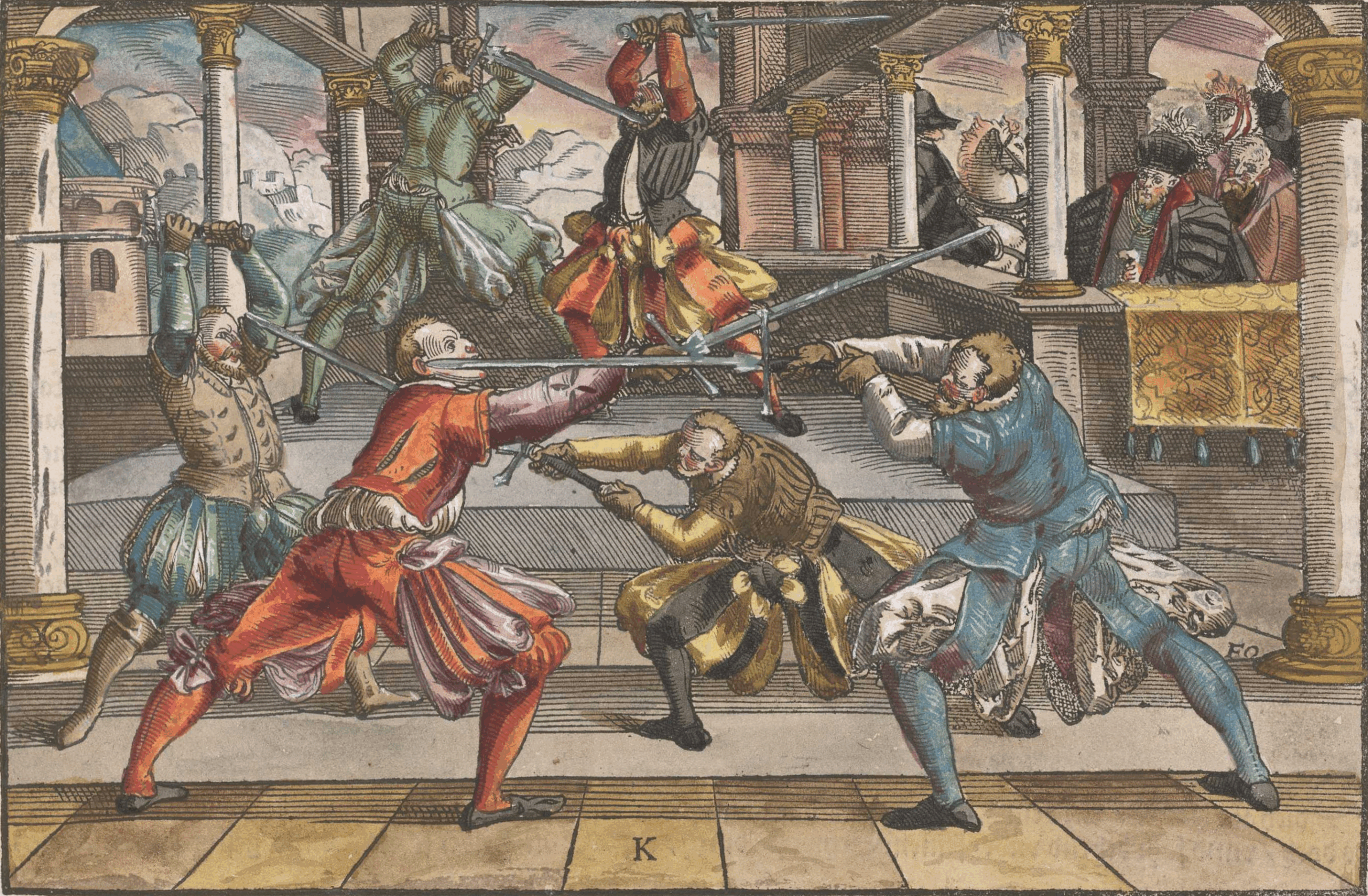
I think my stance is okay here. Of course, there isn’t just one Meyer stance. This image from Meyer’s treatise show the range pretty well:
The front two figures are both in what I think of as a basic Meyer stance. The two figures behind them are also in Meyer stances, the one on the right in something of a lunge, the one on the left in a more upright stance.
My drop swings clearly need a lot of work (do not copy mine!), but that basically comes along for free as I do the stance workouts. (I wrote a post called Fitness training for longsword, Mark Wildman style that embeds two Mark Wildman videos of the Warrior 2 stance mace drop swing, if you want to see someone doing it better.)
I’m doing the swings with my 5 lb mace. I have a 10 lb mace that I’ll want to move up to, once I have the drop swings a bit more under control.
Some months ago my elbow started hurting. (The little bump on the inside of my elbow joint was where it hurt.) I don’t think it was a sword-fighting injury; I think it was a dog-walking injury—but the sword fighting seemed to aggravate it.
So I did less sword fighting. I switched from three times a week to just twice, and then just once, and then I quit going altogether. Then last week I traveled to Amherst to visit my brother and my mom, and just about didn’t exercise at all while I was on that trip. My elbow got steadily better, so that for about a week now, it hasn’t hurt at all.
So yesterday I went back for a sword-fighting class!
The class was kind of abbreviated. At the beginning of class we did a bearpit for a member’s birthday, so I got to do three passes at longsword. Then we did an actual class on rapier fencing. Then we were going to switch to longsword, but there was a tornado warning, and we all stopped to stare at our phones, looking at weather radar and texts with friends and relations in the area, making sure we were all okay.
Turns out that’s just a well. My elbow seemed to hold up fine during class, but today it’s a bit twingey again, so I’m glad I didn’t aggravate it more.
This pretty clearly means I’m not ready to go back to three-times-a-week training, but maybe it doesn’t rule out once-a-week training.
I’ll see how my elbow feels over the next few days.