

“To me, success as a writer would be dying alone on an ice floe shortly after turning eleventy-one.”

“To me, success as a writer would be dying alone on an ice floe shortly after turning eleventy-one.”
Just in case you need an excuse to spend some money:
“spending money to upgrade the aesthetics of your workspace is not just an exercise in expression, but is perhaps instead one of the best business investments you’ll ever make.”
Source: The Forgotten Tale of George Lucas’s Writing Tower – Study Hacks – Cal Newport
Two bouts at the computer this morning got me 661 words written in @ScrivenerApp today! #amwriting
Whether I’m trying to “get enough exercise” (as I tried to do for years), or trying to “fill my days with movement” (which I’ve realized is a much better way to think about my physical activity), training has been a constant. As someone who has only rarely trained as part of a group, or had a teacher or coach, a lot of my training has been solo training.
Often my focus was on endurance training: preparing for very long walks, foot races, or a 100-mile bike ride. I also did strength training. And my training often included skill training—Tai Chi, parkour, tennis (long ago), even fencing (one brief term in college).
Training by yourself is hard. It’s hard to motivate yourself to go out and do it, and it’s hard to push yourself enough to make good progress (and if you’re good at pushing yourself, it’s hard to know when to take time to recover instead). For skills-based training, it’s hard to learn those skills without a teacher or coach. And for activities with any sort of competitive element, such as tennis or fencing, it’s especially hard to train without a partner. This has been particularly acute during the pandemic, but really it’s always true.
And here is where Guy Windor’s new book The Windsor Method: The Principles of Solo Training comes in.
A lot of the specific information in the book is stuff I’ve figured out myself over the years: Some training is just about impossible to do without a teacher (learning your first Tai Chi form) or a partner (practicing return of serve in tennis). But for most activities, that fraction of the training will be much less than half of your training. Much of the rest of your training is either easy to do by yourself (strength and endurance training), or at least possible to do by yourself once you’ve learned the skill well enough to be able to evaluate your own performance (practicing a Tai Chi form, for example).
The key is to spend some time figuring out the entire scope of your training activities, and then think deeply about what category each activity falls into.
To the extent that your access to a teacher, coach, or partner is limited (as during a pandemic), emphasize the things that are easy to train solo (such as strength training and endurance training), then judiciously add those parts of the training that are advantaged by (or require) a teacher or partner as they are available.
What Guy Windsor adds to this sort of intuitive structuring of training is, as the title suggests, a method. He has systematized the structure in a way that makes the decision-making parts of the activity easier to do and easier to get right.
Perhaps even more important than that, he has taken a step back to talk about all the parts of training that aren’t just skills training for your particular activity. That other stuff—sleep, healthy eating, breathing, mobility, flexibility, strength training, endurance training, etc.—are actually more important than this or that skill, while at the same time being the bits that are easiest to train solo. If you’re stuck for a year with no partner, no teacher, and no coach, but you spend that year focusing on health and general physical preparedness, you’ll scarcely fall behind at all, and make yourself ready to jump into your skills training with both feet once that’s possible again.
I should mention that Guy Windsor’s book was written with practitioners of historical European martial arts especially in mind, but that scarcely matters. It is entirely applicable not only to practitioners of any other martial art, it is entirely relevant to literally anyone who trains in anything.
And, since many of my readers are fiction writers, I should also mention another of Guy Windsor’s books Swordfighting for Writers, Game Designers, and Martial Artists. When I signed up for his email list, he offered it as a free download for people who did so.
Being forced into purely solo training for 18 months has made me keenly aware of the many opportunities for non-solo training available here locally. There’s a local fencing club that I’ve had my eye on for some time, and our financial situation is such that now we could afford for me to join and buy fencing gear. Just today I searched for and found a local historical European martial arts club on campus—I’ve asked to be added to their Facebook group and joined their Discord. One of my Tai Chi students teaches an Aikido class with the Urbana Park District—I had started studying with him right as the pandemic began and got in two classes before everything was canceled. And, not sword-related, but cool and great training, is indoor rock climbing at Urbana Boulders.
Just as soon as the pandemic lets up for real, I’ll be doing some of those things.
In the meantime, I’m going over my solo training regimen, taking advantage of the insights that Guy Windsor provides in The Windsor Method: The Principles of Solo Training to figure out what adjustments I should make.
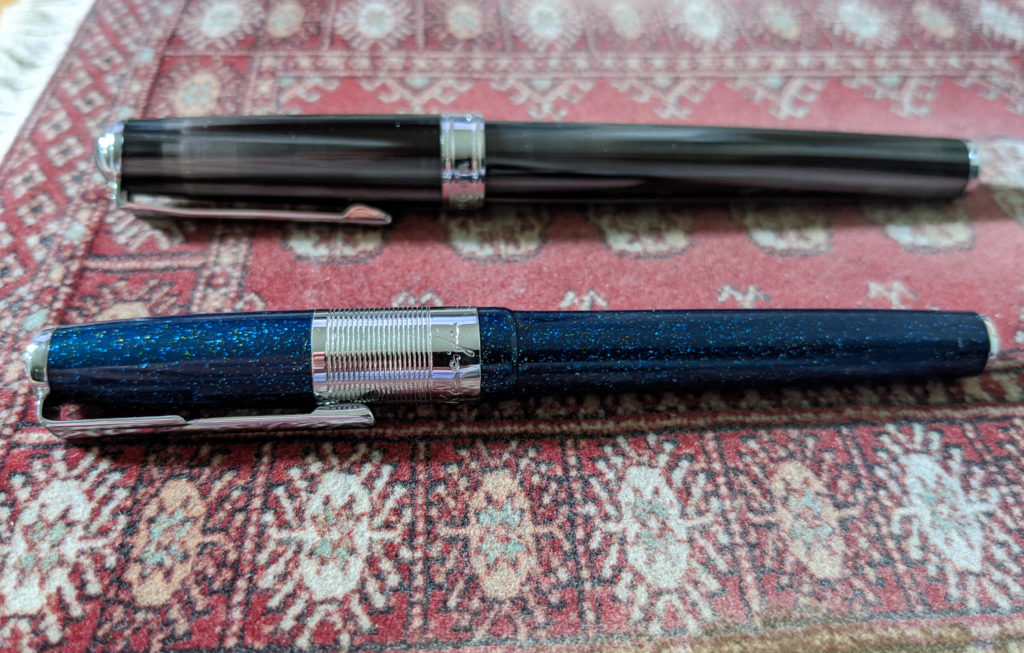
Today is National Handwriting Day. I need to write some letters.
Back in 2009 I wrote an article for Wise Bread on the Economic effects of pandemic flu in a recession, which may be coronavirus-relevant.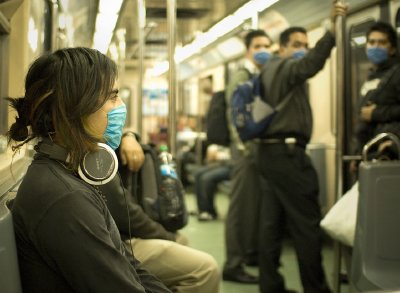
“Just fear of a pandemic can produce substantial costs to the economy, if people stay home rather than work and shop.”
Photo by Eneas De Troya
A great post by Toby on setting a modest daily goal and sticking to it:
But I noticed a few more things. I started getting smaller projects done and things for me done. That book I wanted to read, well, I hit my 500. So lets read it.
Source: Tobias S. Buckell
I know that I need to write in the morning if I’m going to be productive at fiction. Even just 20 or 40 minutes of early morning writing gets my head into the story space, and once it’s there I’ll continue to have story ideas through the day.
I’ve had trouble making this work since I started teaching taiji. For most of the year I need to start getting ready early enough to be out the door no later than 8:40 AM. I’m only gone for a couple of hours, which isn’t such a big hole in the day, but it’s big enough that it’s made it hard to get in the necessary early-morning writing session.
But after months—years, really—of not getting my fiction writing in, I’m taking a fresh stab at making an early-morning writing session happen.
I started a week ago so I could test-run the new schedule and get the kinks worked out before the last week of August, when the first fall taiji session starts. So far it’s working pretty well. I got my early-morning writing done every day except one, and that day I managed to get in a good writing session in the afternoon.
The obvious thing to do, of course, would be to just start even earlier. That isn’t easy because I’ve put together an early-morning routine that I’m finding really satisfying:
After Jumbling and a couple of cups of coffee, I generally have breakfast, after which is my window to get some writing done before taiji.
What I’m doing differently is simply that I’m trying to start breakfast no later than 7:00 AM (ideally a little before), so that I can finish before 7:30.
I need to leave by about 8:40 to be sure I get to the Rec Center in time for my class, which gives me a generous hour to write.
If I manage that—spend enough time writing to get immersed into the story space of whatever I’m working on—then my brain gets started working on story problems. All through the rest of the day I’ll have plot points, possible story twists, clever turns of phrase, bits of dialog, and so on, popping into my head.
Until I start writing, none of that happens. It’s actually kind of awkward when I don’t get a chance to write during the day, and then try to squeeze in a writing session late, because then I’ll be getting those ideas while I’m trying to go to sleep.
Actually, it turns out it can be kind of awkward even when I do what I’m trying to do. Two days last week I skipped the group taiji practice session, but on Friday I did pretty much just what I’m planning to do going forward, and the result was that my brain was fairly fizzing with story stuff at the point I was getting set to head out the door. That’s fine for the summer practice sessions where I’m just a participant and not in charge of anything, but when I’m the teacher it’s my job to be fully present and mindful in the class, not in my latest fictional world.
It was okay this time; my fizzy brain had settled down by the time I was in the car ready to drive. But it’s another thing to take into account as I calibrate this new routine, which is why I wanted to have these couple of weeks for a test run.
Still, if I want to get fiction written, it’s best to get started early. And for a week now, I’ve been managing it. (And as a consequence, have finished a draft of my first new short story in a long time.)
I occasionally choose to do hard things.
In the book Own the Day, Own Your Life Aubry Marcus suggests making your brain chemistry work for you by creating small successes, especially early in the day: Decide that you’re going to do something, and then do it. Even a small thing—deciding to mediate for 5 minutes and then doing so—gives you a little dopamine hit. That makes you feel better immediately, and possibly for the rest of the day. More to the point, repeatedly achieving small successes like this gradually boosts your capability: You can decide to do harder things (get in your workout, go for a run, write 5 pages of your novel) and then do them.
In an episode of her Move Your DNA podcast, Katy Bowman juxtaposes the feeling of satisfaction that you get when you set yourself to do something that you know will be hard and then carry through all the way to completion, with the feeling of being comfortable, saying:
What we’re trying to create through comfort is like the synthetic version of what you get when you pass through those hoops.
Katy Bowman
I think there’s a lot of truth to that. It’s very satisfying to decide to do something that’s hard and then do that thing. It feels good. I’m not sure it feels good in the same way that sitting in a comfy chair feels good, but I think there is a connection. Sitting down feels really good after a long run when your legs are tired; sitting in a really comfy chair kinda feels like that, without the need to go for the long run first.
I occasionally do physically hard things. I’ve run several footraces, at distances up to 7.1 miles. I did a century bicycle ride. Jackie and I day-hiked the 33.4-mile Kal-Haven trail. And it’s very true: choosing to do a hard thing knowing that it will be hard, and then doing the whole thing even though it is hard, is very satisfying.
However, there’s another entirely legitimate perspective:
A sentence I read today in an outdoors magazine: “You are in danger of living a life so comfortable and soft that you will die without ever realizing your true potential.” Danger? Like, that’s my life goal. 😬First world folk are… interesting.
zeynep tufekci (@zeynep) January 13, 2019
She says that—but she also apparently reads outdoor magazines, so I suspect even she sees the value in doing hard things.
If you have “work product” (pictures, writings) that you intend to disseminate to the public by a “form of public communication,” it is a violation of 42 US Code, Section 2000aa for government officers to search or seize it—if they know it’s there. https://papersplease.org/wp/2017/02/15/searches-at-airports-and-us-borders/