I just heard a teaser for a story on how PDFs have become ubiquitous, with the supposed downside that AIs have a lot of trouble reading a PDF. The implication was that was bad, but I thought “Awesome! I’m going to have to switch to PDFs for more of my output! Oh, and I think I’ll start using TeX to produce more of that output!”
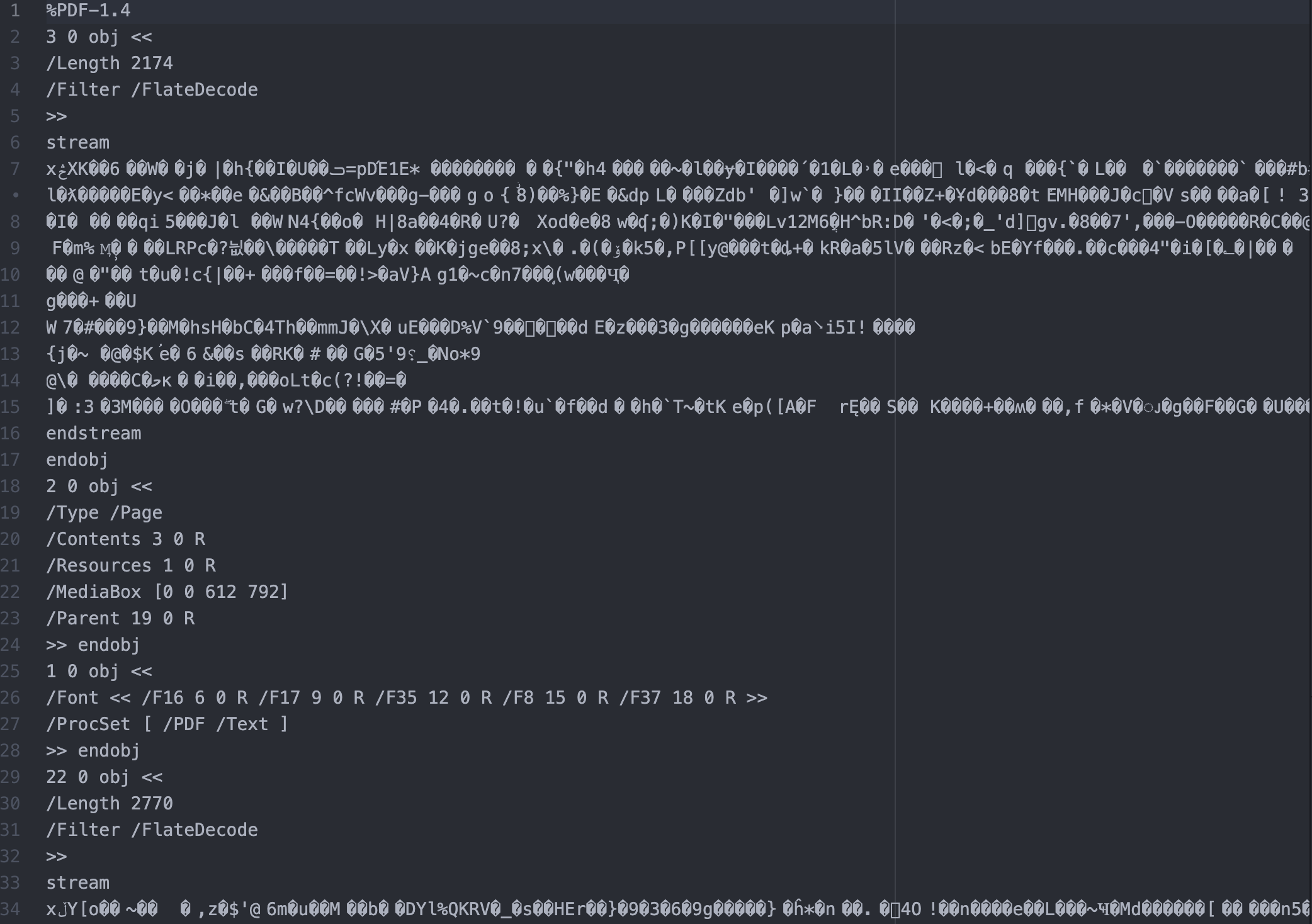
If you’ve ever read the contents of a PDF file produced by TeX you’ll understand.
Update: Turns out it was a story in the Economist. Here’s a gift link to the story (should get the first few people who click on it past the paywall):
The large language models underpinning generative AI are often bamboozled by PDFs, reading a page set in columns from left to right rather than top to bottom, say, or getting confused by headers and footers. Trouble parsing PDFs is one of the reasons AI chatbots occasionally “hallucinate”, generating nonsense.
I mean, for values of “money” that are totally confused about why LLMs hallucinate.
I’ve known since before the inauguration that the economy was facing stagflation. The tax cuts would boost the deficit, raising interest rates. The tariffs would boost prices, producing inflation. Both those things, plus forcing out immigrants, would tank the economy, producing stagnation (at best), yielding stagflation.
I wrote about this more than a year ago, in Our new upcoming stagflation. We are now seeing it, even before the war started.
I’m actually a little surprised we didn’t see it sooner. I credit the delay to a few things. First, Biden had left the economy in really good shape. It took a lot to tank it. Second, even though it seemed to us that Trump was “moving fast and braking things,” it’s just hard to move that fast on things like tax cuts, imposing tariffs, and deporting migrants—even if you’re willing to break laws to do it faster, these things take time. Third, Trump always chickens out, so we didn’t get the threatened tariffs on schedule; we got watered down tariffs after a delay.
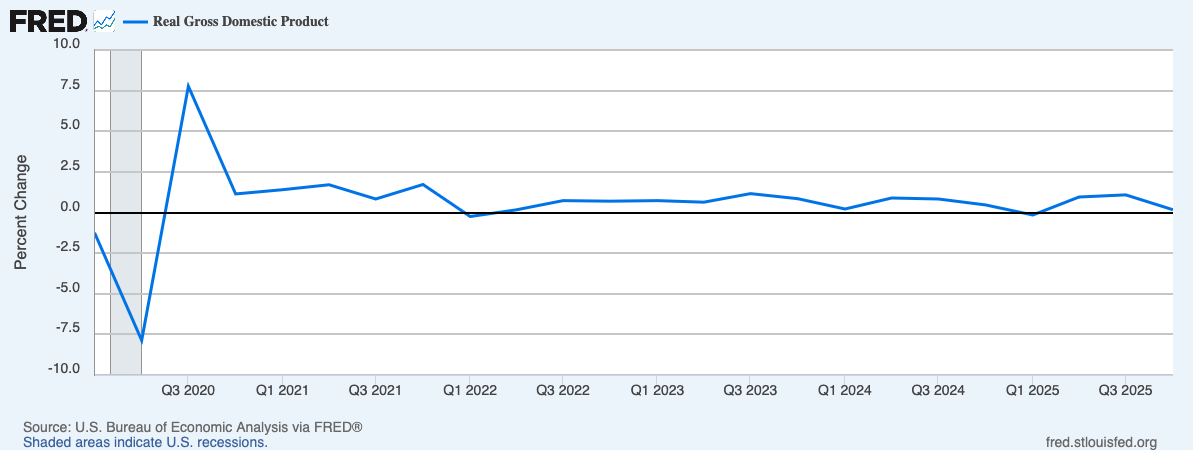
However, the stagflation is here. Check out this graph of Real GDP. As you can see, in Q4 it had fallen almost to zero. The economy wasn’t shrinking, but it was stagnating.
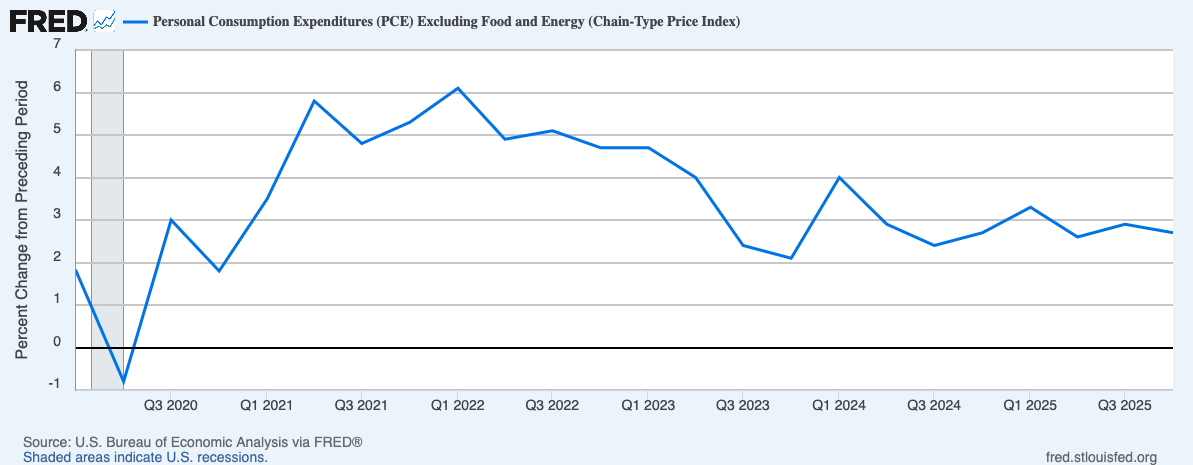
At the same time, inflation had quit coming down. Here’s a graph of Core PCE, the Fed’s preferred inflation index. After getting down almost to 2% (the Fed’s target) about 8 months ago, it reversed course and has been bumping along close to 3% since then.
I think all of these things were about to get worse. Even with the Supreme Court’s ruling that a major part of Trump’s tariffs were illegal, there were plenty of others that aren’t going away. The tax cuts are still in place. Immigration has virtually come to a halt, many immigrants have been detained or deported, and any sensible foreigners with skills that they can apply elsewhere are fleeing the country.
So: Stagflation was already here. But things are about to get much, much worse, because now there’s a war on.
That has already spiked up oil prices. Those won’t feed immediately into Core PCE (which excludes food and energy prices), but will feed in over time, because higher energy prices make everything we produce more expensive. And, of course, wars are fantastically expensive, meaning that the deficit will blow out way worse than it was already going to, which will lead to higher interest rates (soon) and higher taxes (later).
Oh, and don’t expect AI to save us. If you listen to the business news, you know that the only reason the economy isn’t in much worse shape is that businesses have been paying huge amounts on AI infrastructure. As I wrote in my AI bubble post, I think a large fraction of the data centers and model training that that money got paid for will turn out to be worth much less than was paid for it.
So, where are we? Well, about where I thought we’d be, as far as the economy goes—in a modest stagflation that could be fixed pretty quickly, at the cost of a substantial recession, if the Fed had the guts for that. Except that now we’re in a war too.
I can tell you how to arrange your finances to survive a stagflationary period, but I can’t tell you have to survive a war. Wars are very bad, much worse than recessions.
If you know how to survive a war, let me know. If not, good luck.
When I was 2 years old, I was in the hospital twice with digestive issues, and came out with a diagnosis of celiac.
This was in the very early 1960s, when nobody knew diddly squat about celiac, and there were no gluten-free baked goods, and no indications on labels or menus that all kinds of ordinary things in restaurants and grocery stores had gluten in some form or another. My mom did the best she could to avoid giving me things with gluten in them, and taught me to explain to people who were trying to feed me that I couldn’t eat wheat, oats, rye, or barley.
I think nowadays people think that oats don’t have gluten, but we didn’t know that then, so we did our best to avoid all of them.
I ate this half-assed gluten-free diet until 1976, when went away for 6 weeks to a National Science Foundation summer program. I was living in a college dorm and eating in a college cafeteria, and found it too difficult to follow my diet. I found that my digestion was about the same as before, and just quit worrying about staying gluten-free. (Until I got married, and my wife thought that, if I had celiac, perhaps I should avoid gluten. And it was much easier in the 1990s to find gluten-free food.)
Fast-forward another decade or so. Blood tests for the antibodies to gluten became available. I got those tests done, and discovered that I’d never had celiac.
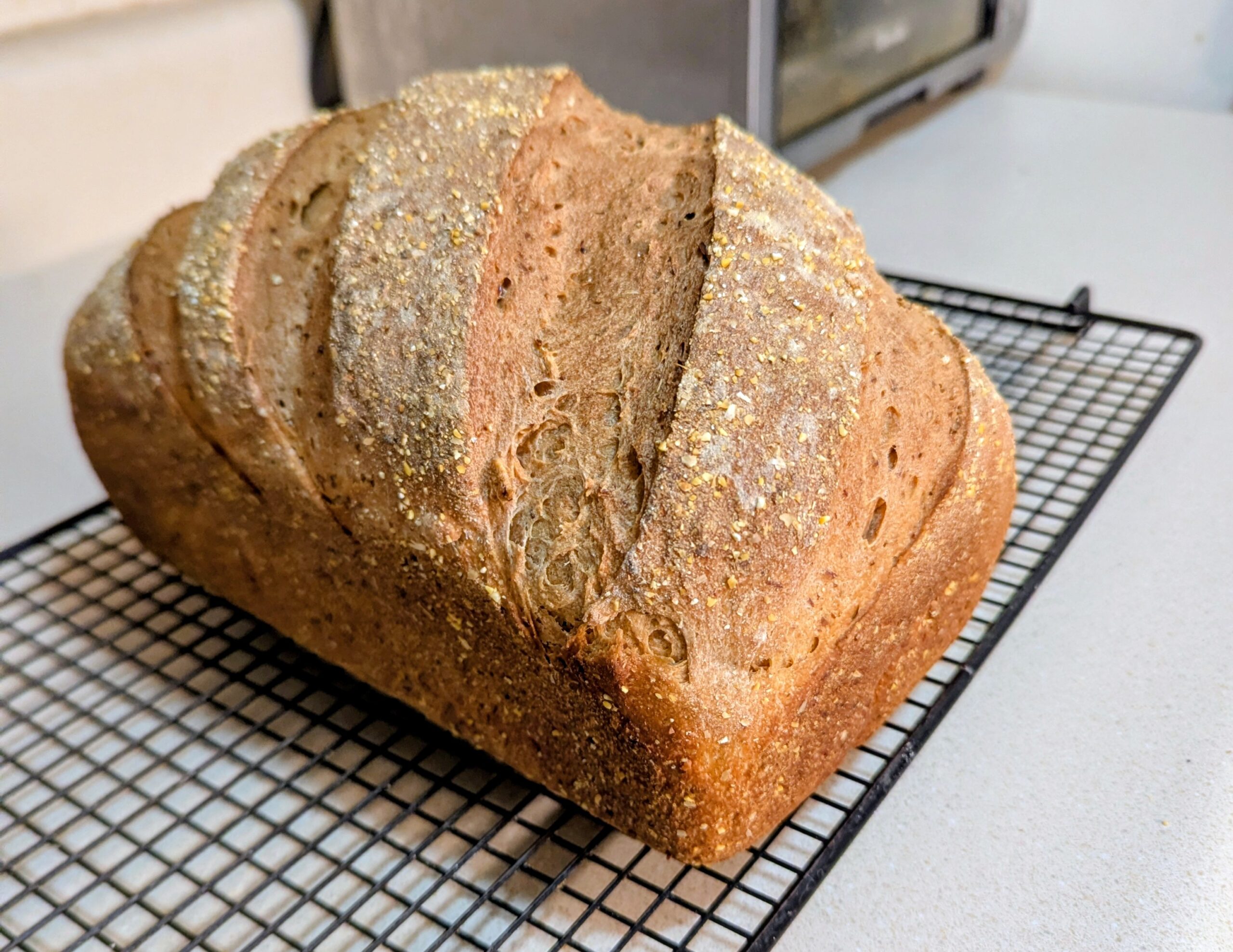
So, one thing I like to do these days is hark back to having to avoid “wheat, oats, rye, or barley,” and subvert it, by baking bread that contains wheat, oats, rye and barley.
In the years that I was particularly suffering from season depression in the winter months, I found various things that helped. (Click the SAD tag to see various posts on the topic.) One thing that was kind of in the middle in terms of both value and effort was taking myself on an Artist Date. (There’s an Artist Date tag as well.)
Lots of different things can quality as an Artist Date, of course, but I usually used the term to refer to going to someplace (anyplace) that I found inspired me. At the top of the list, because there’s already art, which helps me get into the right frame of mind, is to go to an art museum or an art gallery. But almost as high is going to a natural area, or some place like the Japanese Garden at Japan House.
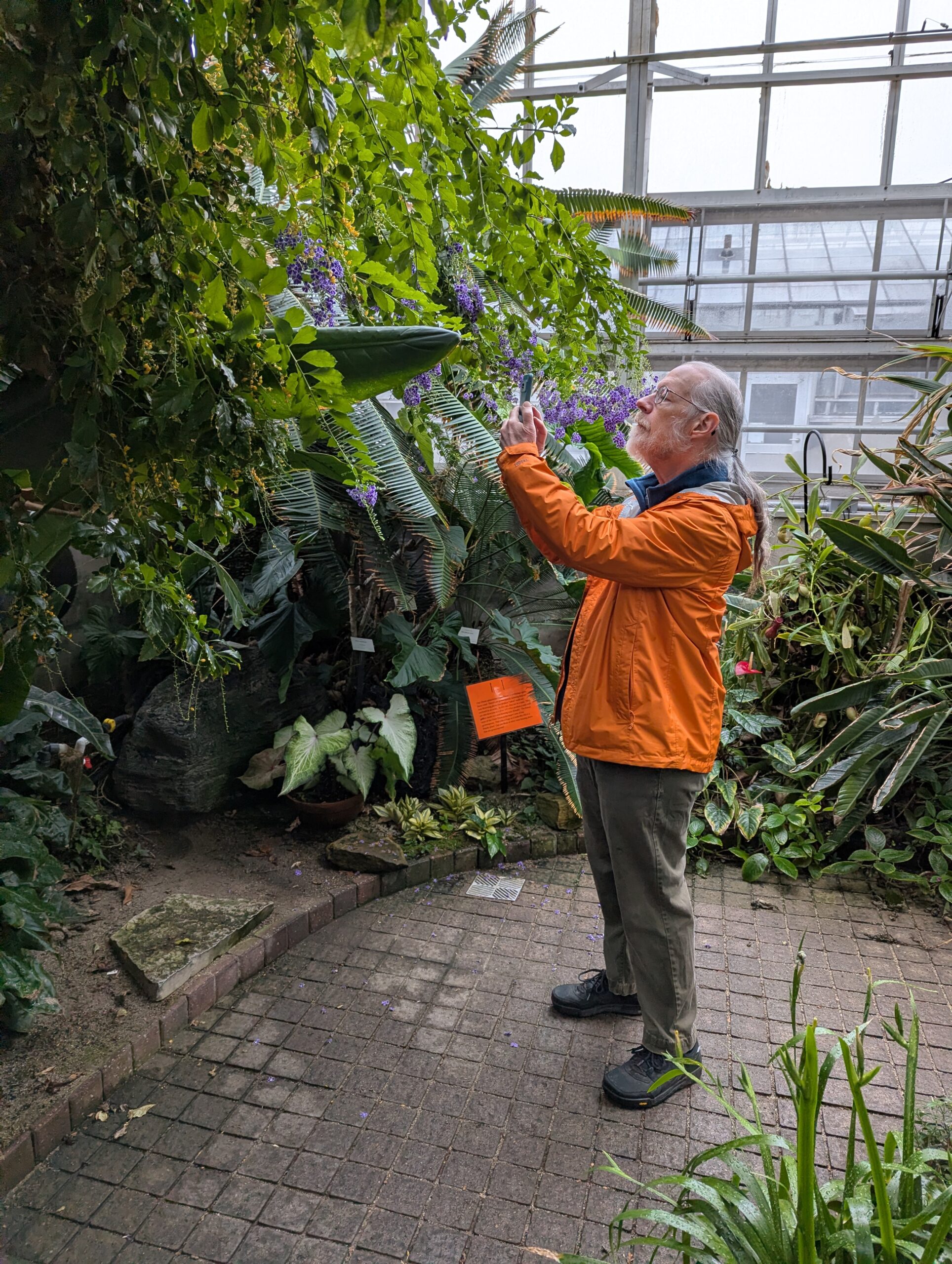
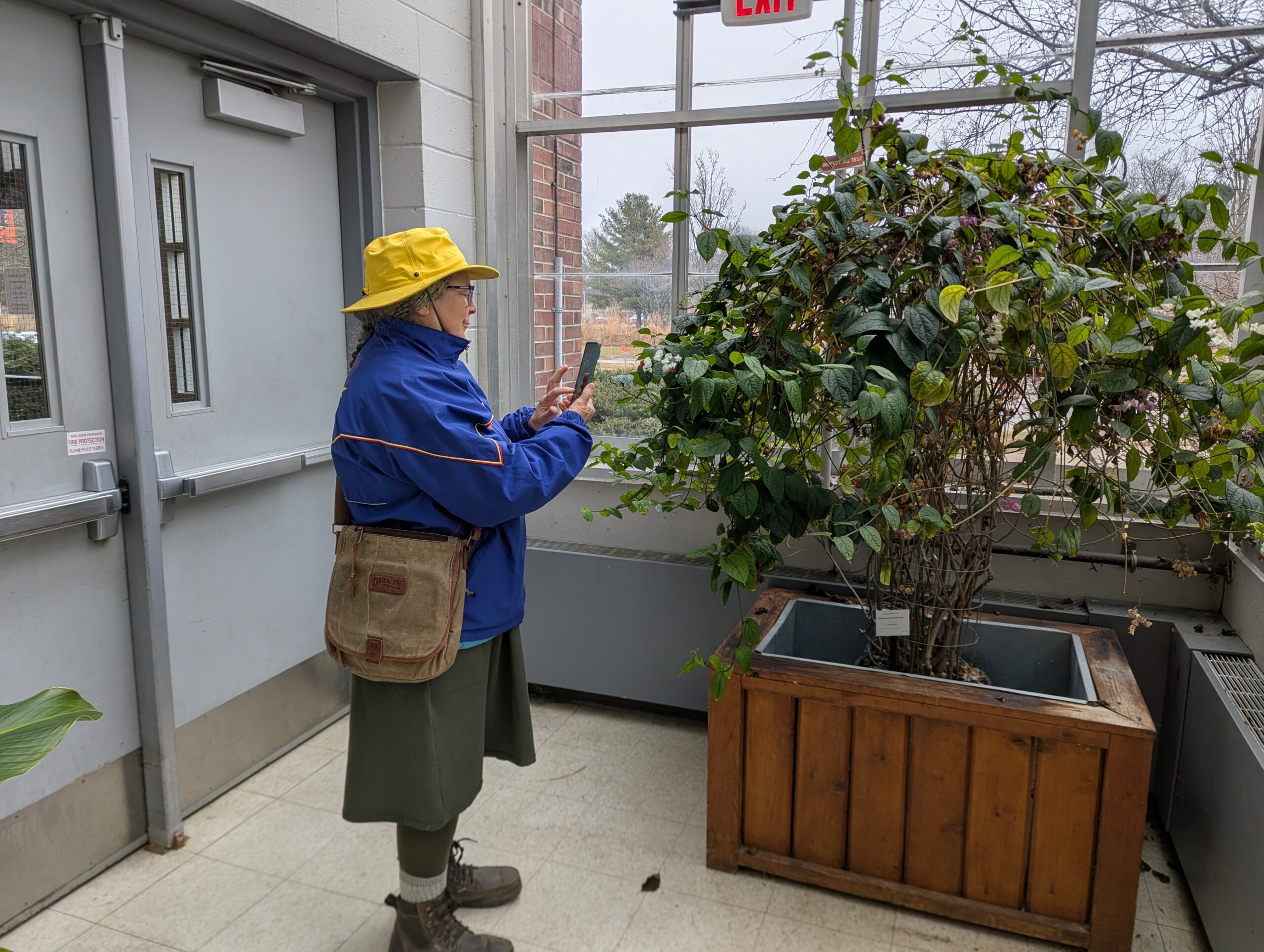
I haven’t been particularly depressed this winter, but the Krannert Art Museum had an exhibit of textile art that Jackie wanted to see, so we decided to make an artist date of it. On a whim, we added the Conservatory, which has a greenhouse with a bunch of tropical flowers, and is always nice to visit in the winter, because it’s warm and sunny. (Sunniness, of course, depends on the sun being out.)
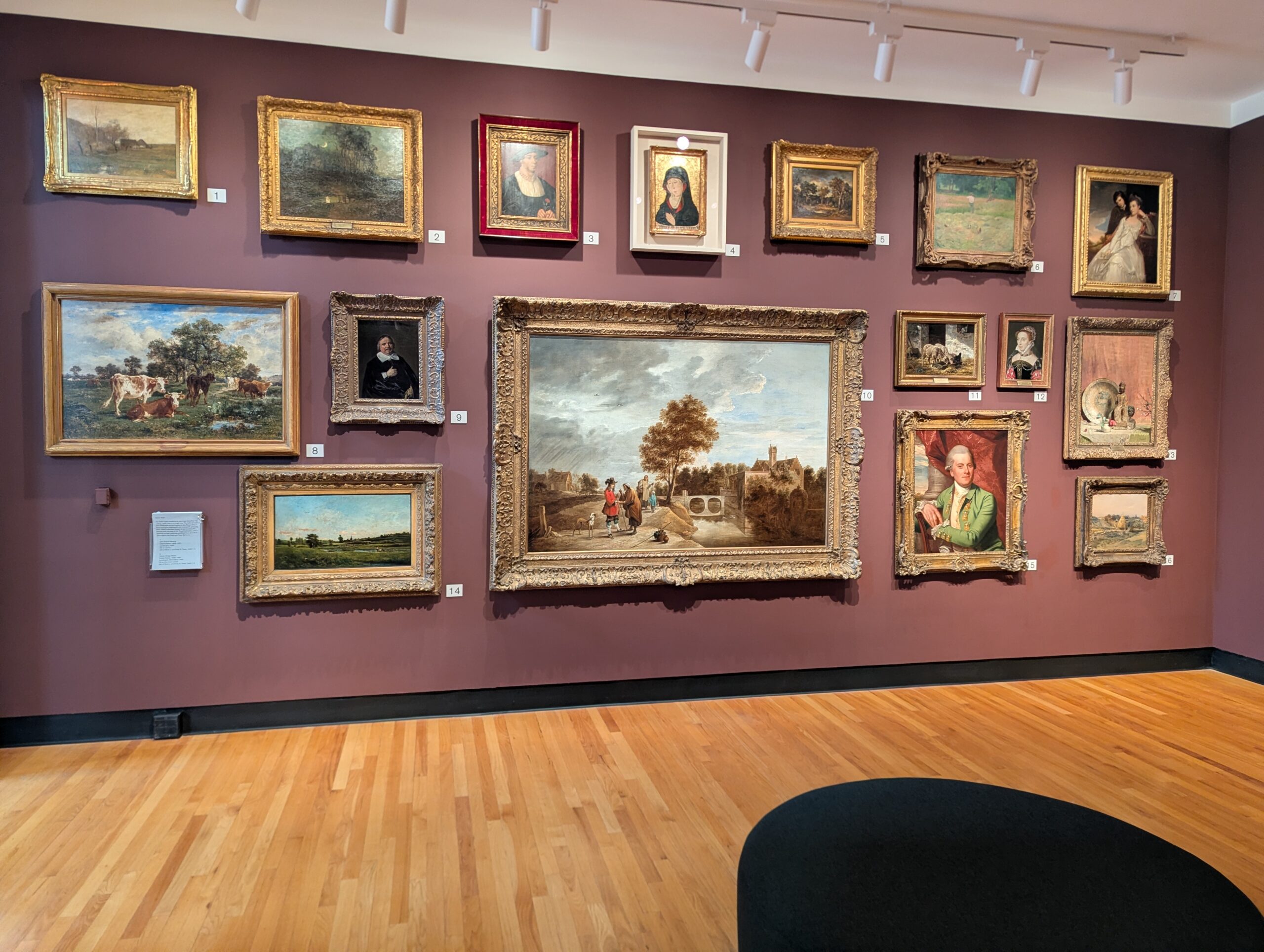
It’s hard to get a good picture of the art museum, except by just taking pictures of individual works of art, which I don’t like to do (out of courtesy and for copyright reasons), but I thought this one was valid:
There was a term (that I have already forgotten) for having numerous paintings covering the wall, rather than a spaced array of individual paintings.
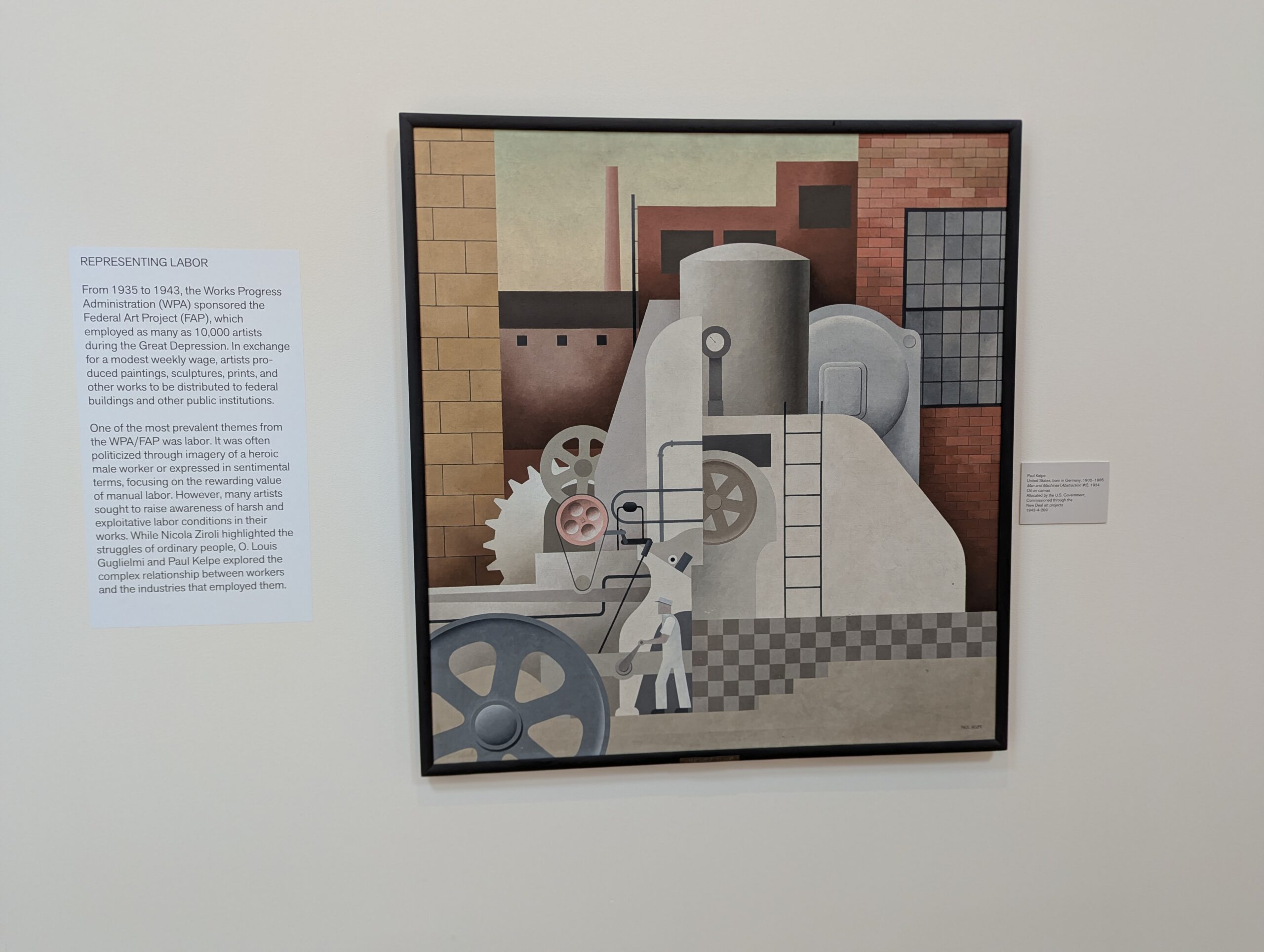
And this one was produced as part of the WPA’s Federal Arts Project, by artists who were paid a modest wage to make art that belonged to the government (and all such work is copyright-free):
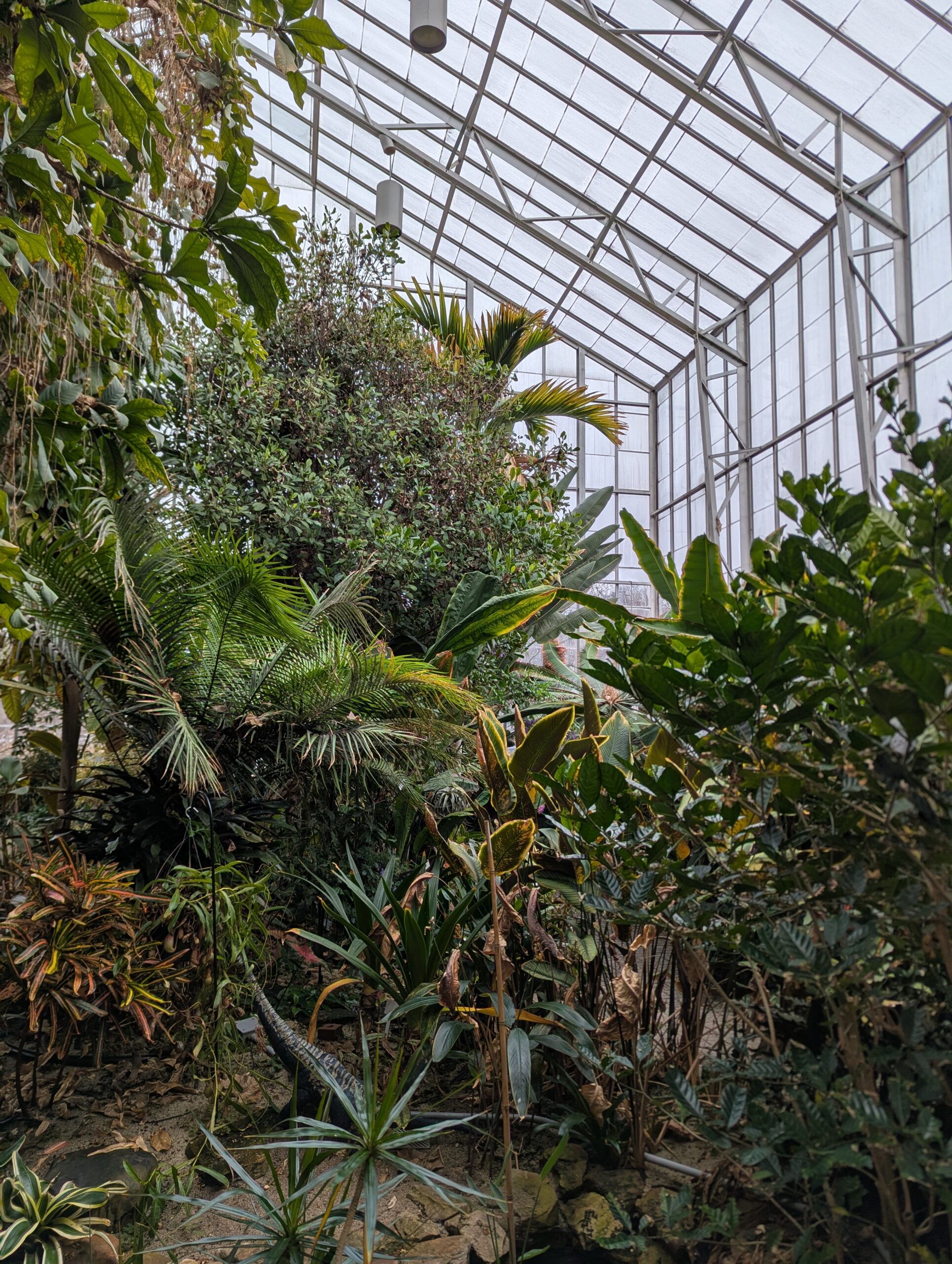
As I said, I wasn’t really depressed, so it didn’t so much matter that the Conservatory greenhouse gave of a clear view of the complete lack of sun:
For the first couple of years I was doing longsword, I had real trouble keeping my arms extended and pushing my hands up (due to a lack of strength, lack of endurance, and lack of the habit).
I did all manner of training to work on this—exercises for arm strength, especially overhead pushing, endurance training for those same exercises, and of course sparring to train the habit. (See in particular Fitness training for longsword.)
I’m not there yet, but it no longer seems to be my worst problem. Here’s a sparring match with one of the better fencers in our local group:
I’m not quite all the way there, so it’s a thing to keep paying attention to, but it’s no longer my biggest problem.
A pretty good recent episode of Gil Duran’s Nerd Reich podcast had an odd hole in it.
In the one I’m talking about, the one with Quinn Slobodian, Quinn explains that there’s a reason the many efforts to create a seastead, charter city, network state, and such never go anywhere: They’re unnecessary.
[Y]ou don’t actually need to create a new polity to have your own sense of entitlement and privilege reinforced in every imaginable way, and to have your own economic comfort facilitated by the institutional arrangements of the state in almost every way. With some creative accounting and some use of offshore havens and trusts and so on, you can really game the whole thing very well already, right?
Having said that, they do talk a bit about why, given that there are already tools to protect your property and money (freeports, trust, special economic zones, and the like), anybody would work so hard and spend so much money to create an actual place that’s outside the control of any government. They don’t quite come around to answering that question, which I think is unfortunate, because I think they both know the answer.
The people pushing these efforts want serfs.
They don’t want workers who can join unions. They don’t want software engineers who hesitate to create autonomous munitions or tools for surveillance capitalism. They don’t want maids or pool boys who feel free to resist their advances.
They want the right to be mean to people, in a situation where the people have to just take it.
That’s what places like Próspera offer that you can’t get from a family company incorporated in a special economic zone.
Stephen Miller would have ICE agents (and the rest of us) believe that they have “immunity” to perform their “duties.”
This is, of course, false. Depriving any person (not just citizens) of their rights “under color of law” is its own crime. But it is in that light that we should view their position on face masks as admitting that they know they have it wrong:
The administration’s perceived need for face coverings evocative of Iranian secret police and Russian security agents helps us recognize that assertions of state supremacy and citizen insignificance are claptrap…
If they were immune, they’d not hesitate to show their faces. The fact that they feel the need to keep them hidden makes it very clear that they know they’re totally exposed in a legal sense.
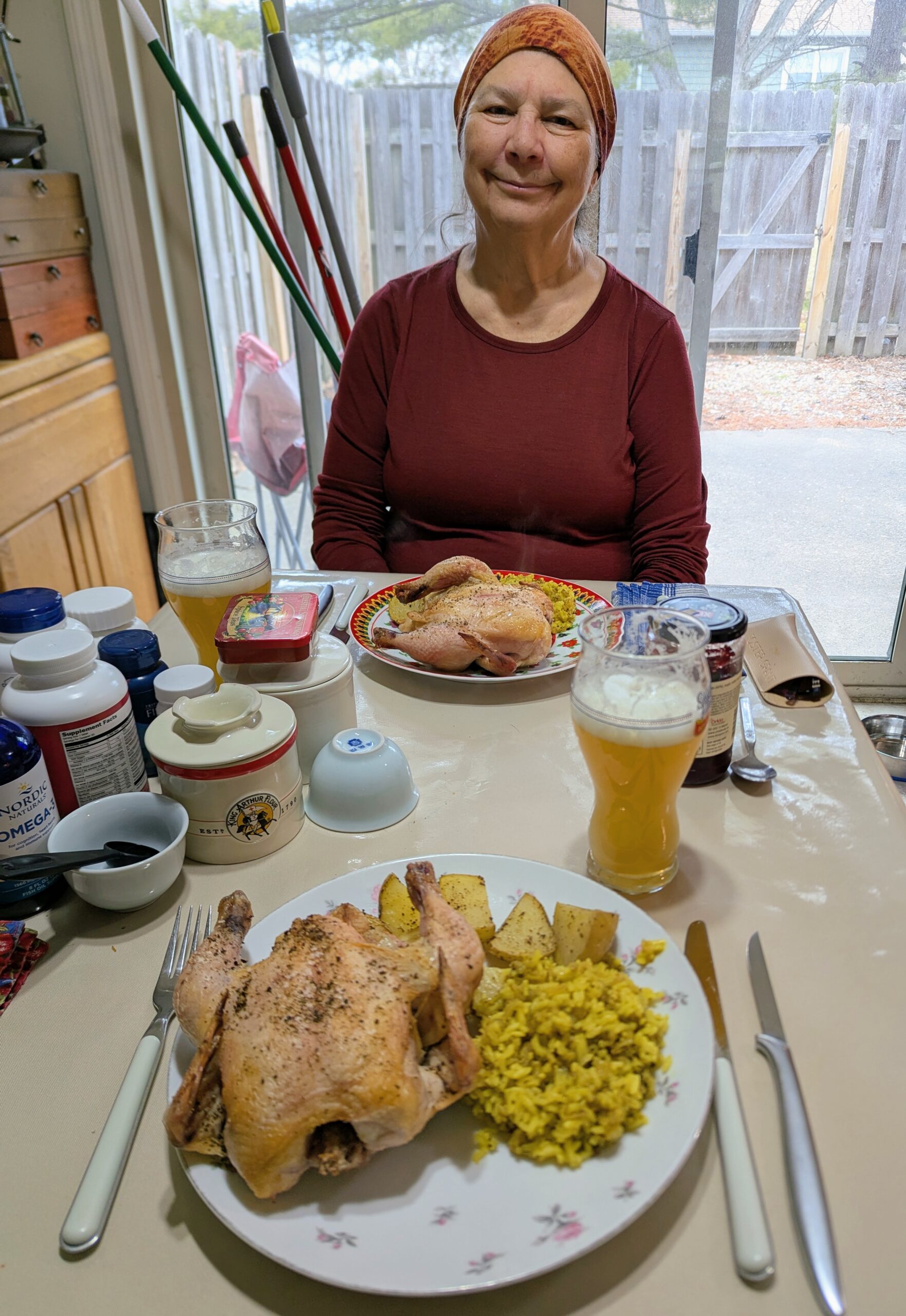
Ten years ago, instead of taking Jackie out to a restaurant and sitting with a bunch of other couples wanting to overpay to order off a “special” Valentine’s Day menu, I decided it would be more fun to cook her my own little feast.
As my inspiration, I reached back to October, 1991, and the very first meal I ever cooked for her. (She was threatening to go home because she was tired, and I said, “No! Stay here! I’ll fix dinner! You can just take a nap and I’ll do everything!”)
Some of the details have varied (the flourless chocolate cake was new maybe 4 years ago), but rock cornish game hens and long-grain and wild rice have always been there.