

Check it out: I broke off two squares of 86% dark chocolate precisely along the pre-scored divisions between squares. (Usually I just get random chunks of different squares.)

Check it out: I broke off two squares of 86% dark chocolate precisely along the pre-scored divisions between squares. (Usually I just get random chunks of different squares.)
We’re expecting more total lilies, now that they’ve been given more room, but I do kind of miss the density we had with so many lilies in one small spot. #lilycount 11

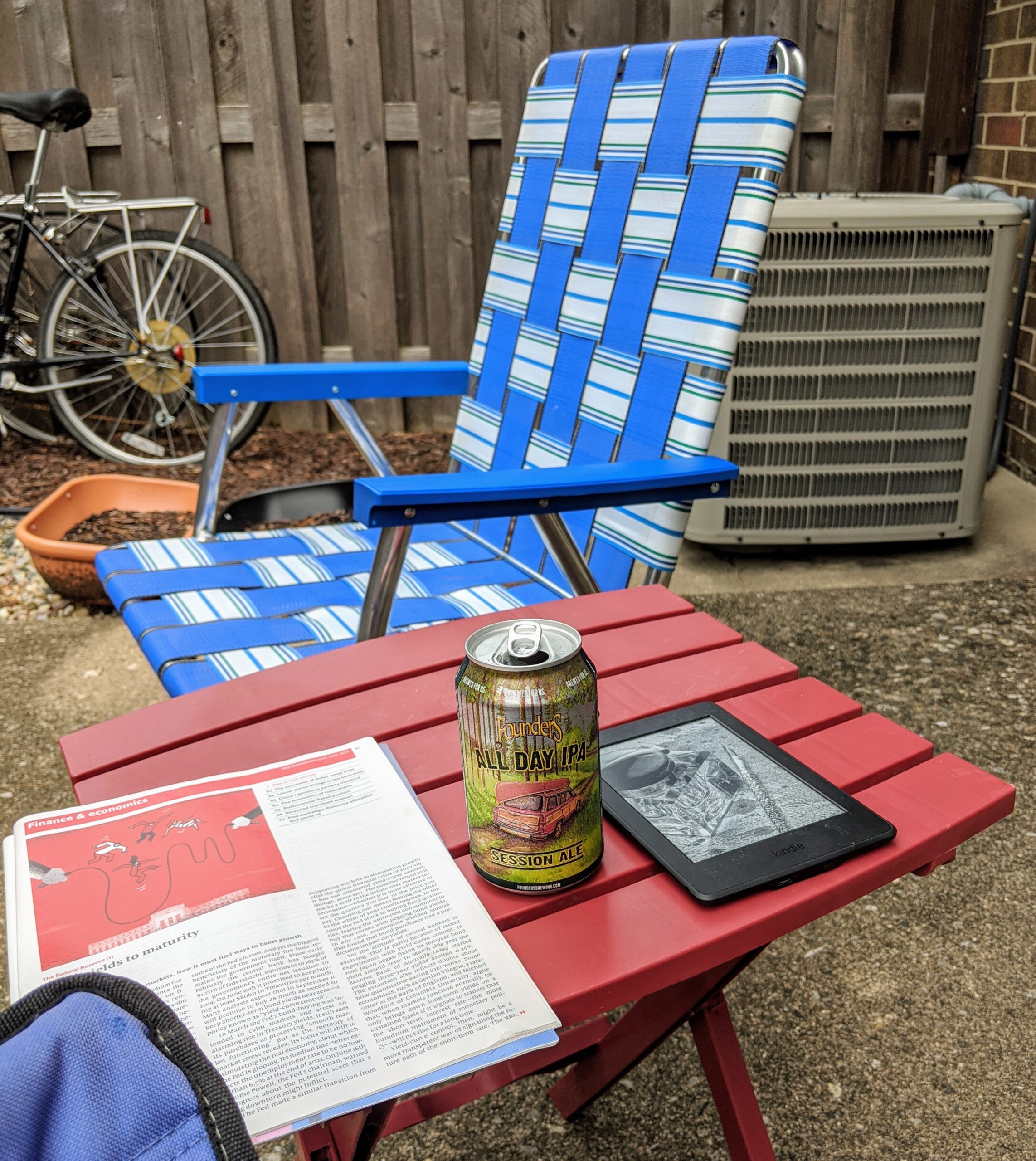
Sitting on the patio, drinking a beer and reading The Economist. Jackie is nearby, and expected to return. Kindle on standby for when Economist runs out.

No lilies yesterday, but today #lilycount 2. (And a whole lot of buds that will burst into flower over the next few days.)

Last fall Jackie dug up this whole flowerbed and spread the bulbs, corms, and rhizomes out over double the space, so I’m hoping for an even more spectacular display this year than last. #lilycount 1
I’d heard this, but I’m not sure I really believed it.
I’ve been running in “barefoot” shoes for a good 5 years now. The improvement in my gait was dramatic and immediate. But serious barefoot advocates are very firm about the point that it’s only when you run with actual bare feet that you acquire the huge upside that comes with barefoot running.
Reduced injury rates (due to the improved gait) are one of those upsides. Increased running efficiency (due to the improved gait, but also due to not having to carry the weight of a shoe on each foot) is another upside.
But there are alleged to be further sources of improved efficiency that come from barefoot running. When you’re actually barefoot, you’re going to hit the ground much more gently (because without cushioning it would hurt to hit the ground hard). Your foot is going to hit the ground with zero forward velocity (because if your bare foot slides along the concrete, the friction will cause blisters almost immediately).
In both cases—not slamming your foot into the ground, and not grinding your foot into the ground—the upshot is improved efficiency.
But it’s one thing to hear that “improved efficiency” is a thing, and another to actually see it. Check out this comparison of a run from one month ago, versus a run today.
Here’s the first three-quarters of mile of a run from one month ago, wearing minimalist shoes:
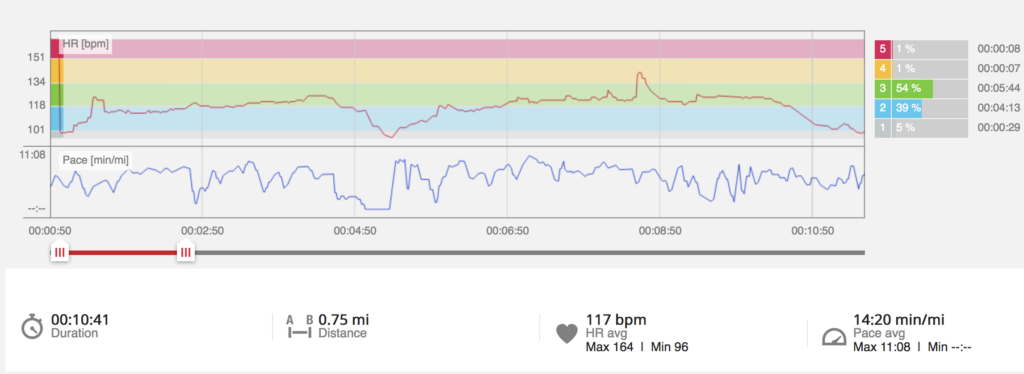
I left off the first few tens of seconds because it took until then for my heart rate monitor to stabilize on my actual heart rate. Then I went on for about three-quarters of a mile (out of a longer run) to match the distance that I ran today.
The things to note are that I ran at a 14:20 min/mil pace (very slow), that my heart rate averaged 117 bpm, and that the majority of my run was spent in zone 3.
Now check out my graph from today’s run, run with actual bare feet:
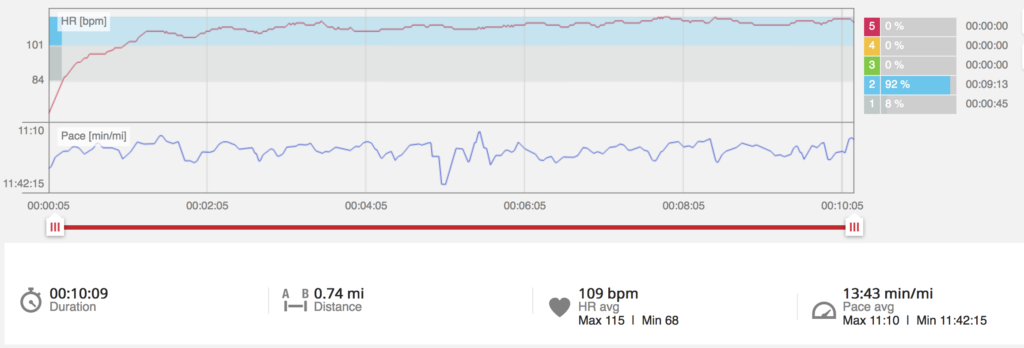
I’ve matched the distances (the former is the first part of a much longer run, the latter my entire barefoot run today). Today’s run was at a considerably faster pace (37 seconds per mile faster), while at the same time keeping my heart rate considerably lower (averaging 109 bpm, entirely in zone 2).
I have to say, this is very promising for future endeavors. I need to boost my confidence a bit, so I feel comfortable going for longer runs barefoot. I also need to get a bit more familiar with pacing—my MAF heart rate is probably more like 124. I need to figure out what it feels like when I run that pace barefoot. Because: who knows how fast I can run at that heart rate barefoot?
(The shortcode below won’t work until I get an updated version of the plugin for displaying GPX maps.)
[sgpx gpx=”/wp-content/uploads/gpx/Philip_Brewer_2020-06-27_08-46-36.GPX”]
Way back on June 9th I ordered a fancy new umbrella. The vendor created a shipping label that very day, and sent me a tracking number. For reasons (perhaps among them, as they claim on their website, precautions in the warehouse against COVID-19), it was six days before they actually handed the package over to the shipper.
As soon as I’d ordered it, I looked ahead at the weather forecast, wondering if there’d be some rain to use it in, but it looked like a full week of dry weather. Of course, after it took a week to actually ship the package, things had changed. Happily, the package was on-track to arrive Saturday—I’d have my new brolly in hand just hours ahead of forecast thunderstorms!
But then the package followed a mysterious path on it’s way from Wisconsin to Illinois:
In what way is this a sensible?
I mean, I’m willing to cut the vendor some slack for taking six days between sending shipment information and then actually tendering the package. I’m sure precautions against COVID-19 reduce their efficiency in shipping things out of their warehouse. But sending the package from Wisconsin to Illinois via New Jersey and then Missouri? They spent 5 days getting the package to a different adjacent state, to a city only 72 miles closer than where it started!
Now that the package is in the hands of the post office, I figure it will actually get here in a couple of days, just about the time the wet weather ends and it gets sunny and dry for a few days.
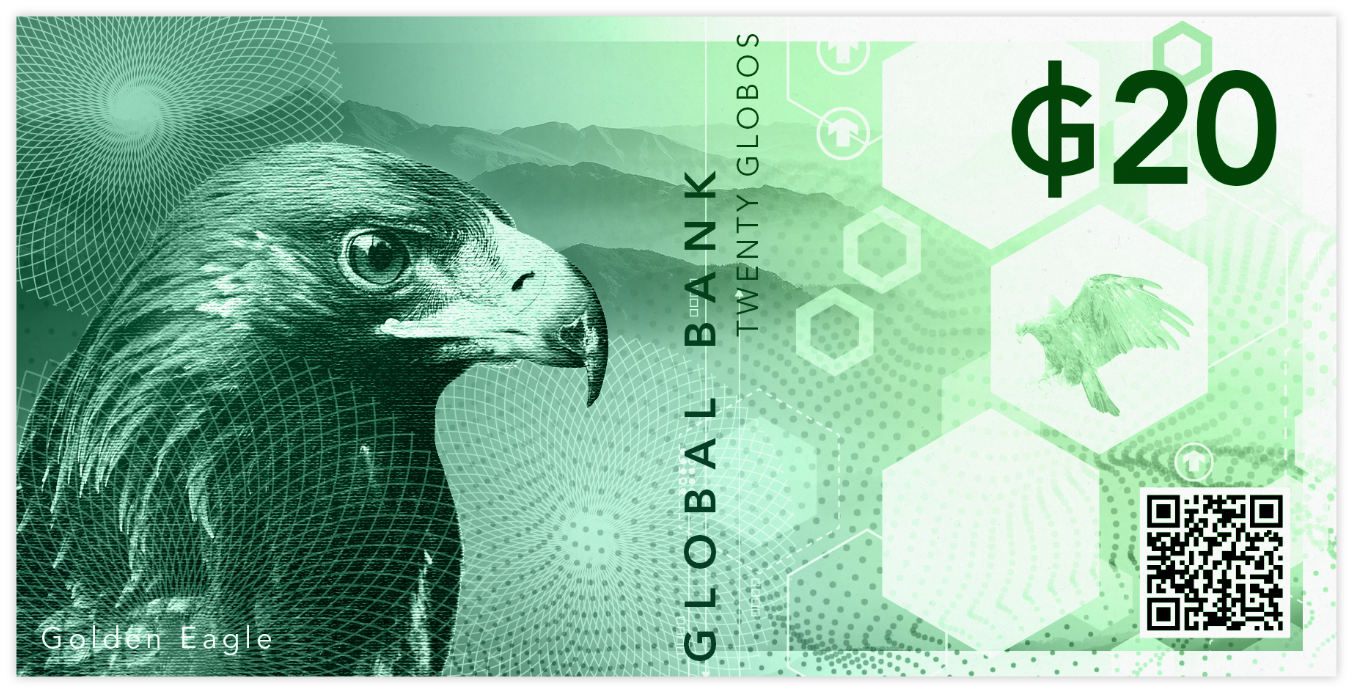 As a big ol’ banknote design geek, I found this delightful:
“We analysed the world’s banknotes, looking at their colour, characters, buildings and animals to discover the DNA of our world currency”
Source: Currency in colour: a visual guide to 157 banknotes around the world
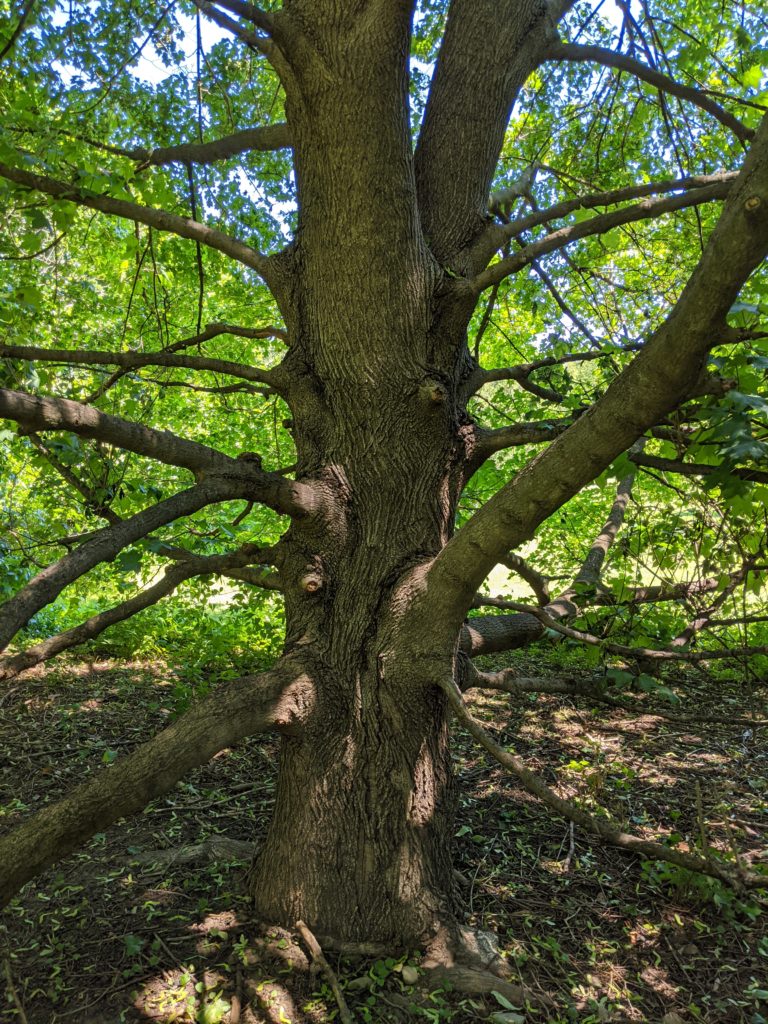
South of the University of Illinois Arboretum I came upon this most excellent climbing tree. (A couple of those branches are dead, so be careful.) Sharing to remember it’s precise location.

In a shaker mix with ice:

4 parts cheap gin
1 part cheap triple sec
1 splash cranberry juice concentrate

Shake until cold, pour over ice, top with grapefruit juice.