A year or more ago, I came upon a pretty good article (linked at the bottom of this post) with some good, basic exercises intended to provide a base for parkour training. I’d had it in my head to do those exercises last winter and be ready to do some serious parkour training in the spring. I even did some. Then spring came, and I realized that I hadn’t done them consistently enough to have done myself much good. I felt like I’d wasted the winter.

I ended up not pursuing parkour the way I’d planned, mainly because I didn’t want to risk even minor injuries during the run-up to our big Kal-Haven Trail walk, but also because I really didn’t have the base to train seriously.

I want to avoid that this year, so I thought I’d sketch out a plan for building my base for parkour—and as long as I was doing that, I figured I might as well document it here for easy reference.

To help me focus, I’m holding the list to just four things (on top of my usual walking, running, taiji, etc.).

Squatting

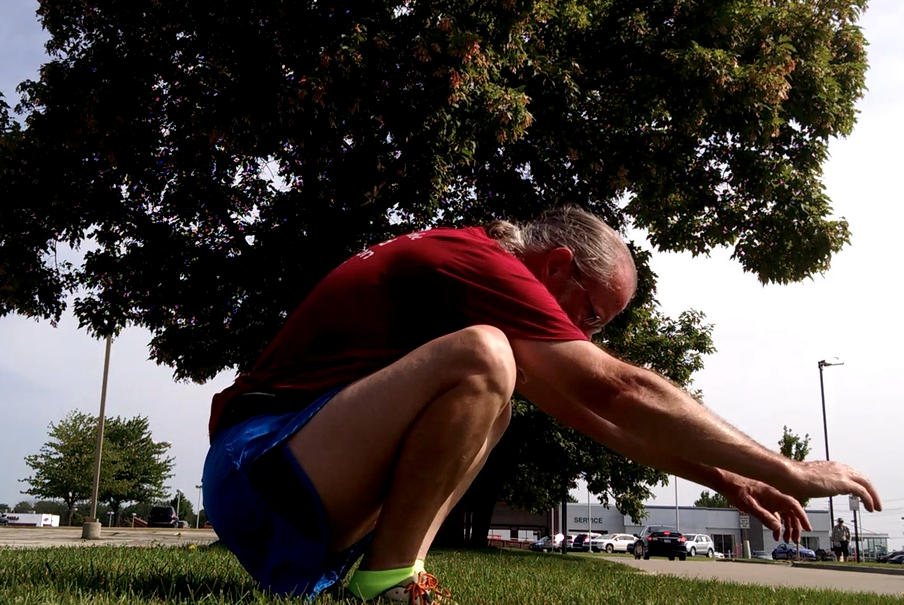
My goal here is to get to where I can do a full, deep squat, and then hang out comfortably in that position. I can get down into a deep squat, but to do so I have to curl forward and stretch my arms forward, to get my center of balance over my feet and not topple over backwards. I’m pretty sure this is due to flexibility issues, rather than strength issues.

I came across a pretty good page on diagnosing and addressing squat flexibility issues, which would have me believe that tight calf muscles and tight hip-flexor muscles are likely culprits.

I’m already doing calf stretches, both straight-knee and bent-knee. I’ll try and be a bit more consistent about that.

The suggested exercise for hip flexors is a crescent lunge, which looks pretty good. Based on other stuff I’ve read, I suspect that I also want to work on releasing my psoas, so I’ll include that as well.
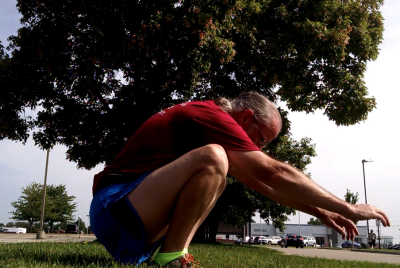
me squattingIn addition to all this prep work, I’ll also spend some time squatting with some sort of support or another. I know three ways to do this. First, elevate the heels, so that calf tightness doesn’t limit the squat. Second, just hang onto something (like a door frame or a tree trunk) so that I can avoid toppling backwards. Third, do goblet squats, where the weight of the dumbbell works to shift my center of gravity forward.

I might also try prisoner squats. I won’t be able to go all the way down, but it’ll give me a chance to keep my back nice and straight, and then see how low I can go with a straight back.

Success will be when I can get all the way down with a straight back, and then use my hands to manipulate things that are nearby.

Toe Stretches

Last summer, when I started doing some barefoot walking for the first time in years, I was surprised to discover how much a lack of toe flexibility was limiting me. It interfered with quadrupedal movement in particular, but also all sorts of transitions to and from a standing position while barefoot.
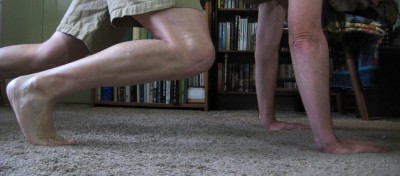
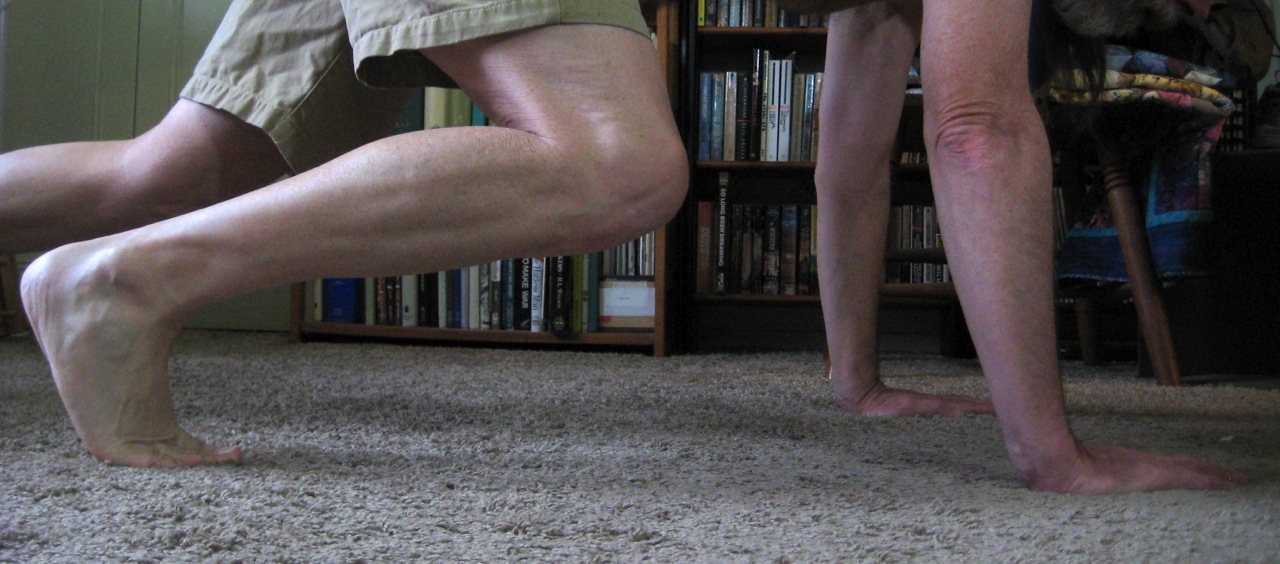
quadrupedI’ve started working on toe flexibility. My main exercise so far is assuming quadruped position, and then—keeping my weight back on the balls of my feet—sinking my knees toward the ground. When I find the spot where my weight shifts forward onto the toes themselves, I ease off.

Along with that, I’m doing other foot mobility exercises: Lifting my toes individually, spreading my toes, relaxing my foot enough that it can conform around objects, etc.

Last summer I did quite a bit of barefoot walking, and was surprised and kind of sad to find that a few decades of wearing shoes seemed to have fused my feet into solid lumps.

Success will be when I can keep my weight back on the balls of my feet and still get into position for things like planks, push-ups, and lunges.

Hanging

Hanging from a bar or a branch is one of the things I got started on last winter, and then got distracted and wasn’t consistent about.
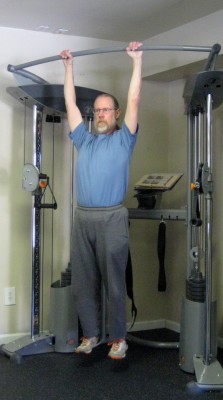
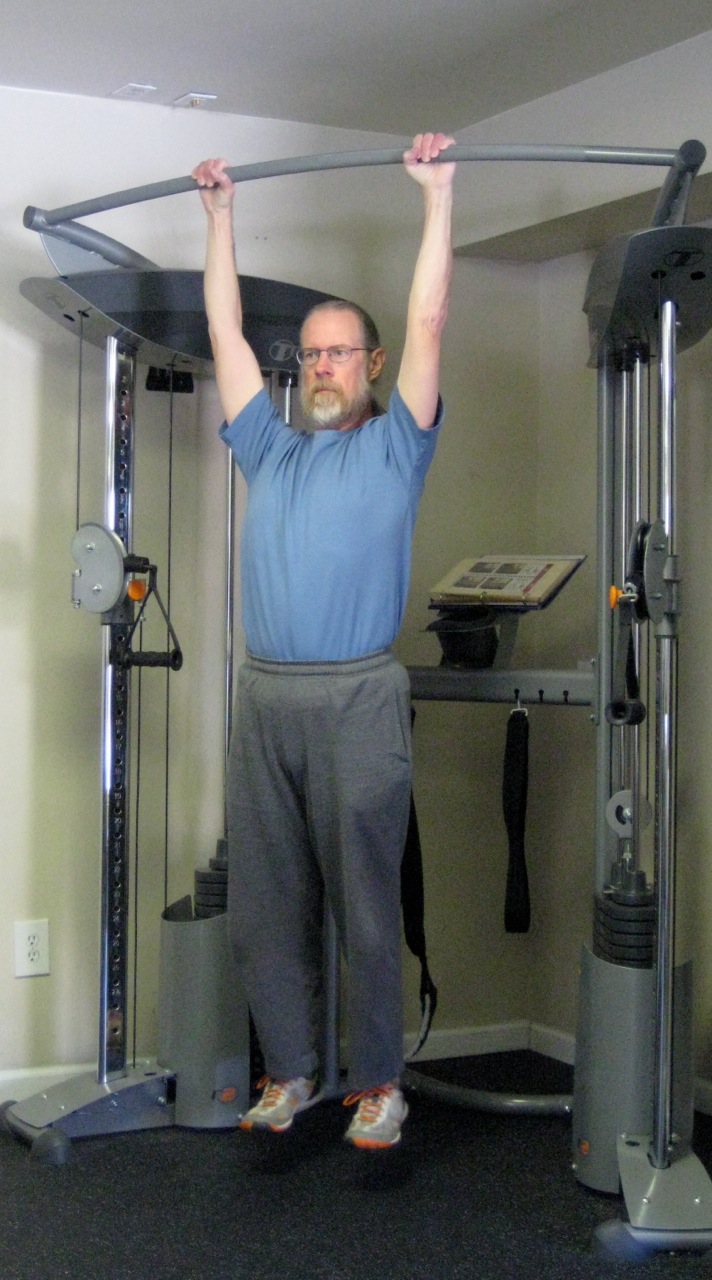
hangingLonger term, I want to be able to do pull-ups, but hanging is the place to start. I had worked up to hanging for 30 seconds last summer, but I did a bit of hanging yesterday and found that about 15 seconds was as long as I could manage. I’m ahead of where I started—a few years ago I wouldn’t have been able to support my weight with my hands; I’d have been afraid to even try, for fear that I’d hurt something. Still, not being able to hang for even 30 seconds is discouraging. (Not to mention life-threatening, if I find myself in an action movie.)

The progression is straightforward: hanging, then negative pull-ups (where you use a step to get up to the top of pull-up position, then lower yourself), then pull-ups. From what I’ve read, once you can do a 10 or 12 negative pull-ups, you can probably do a pull-up. We’ll see.

I don’t have a perfect situation for this: The benches in the fitness room here are too low to get me up to the top of pull-up position. I can probably use one or another of the pieces of playground equipment. I looked yesterday, but the most likely playground had kids playing at it, so I didn’t try.

Being able to do a pull-up is a key capability for various parkour moves, such as wall climbs.

Success will be a single pull-up in good form from a dead hang.

Wall Dip

This is where you put your hands on top of a wall and use them to push yourself up—like a push-up, but with your feet unsupported. I can currently do about one rep of this.

The progression for working up to these is just doing a wall support, where you hold yourself up in the top position.

I don’t know of a good wall for doing this exercise anywhere in Savoy, which seems odd. I wonder if architecture and construction fashions have changed—campus is full of low walls that are prefect for this sort of thing.
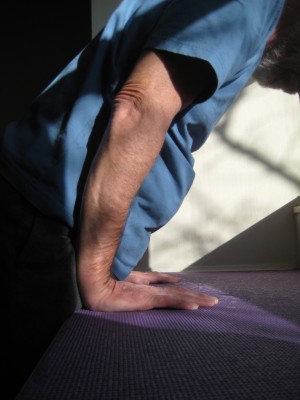
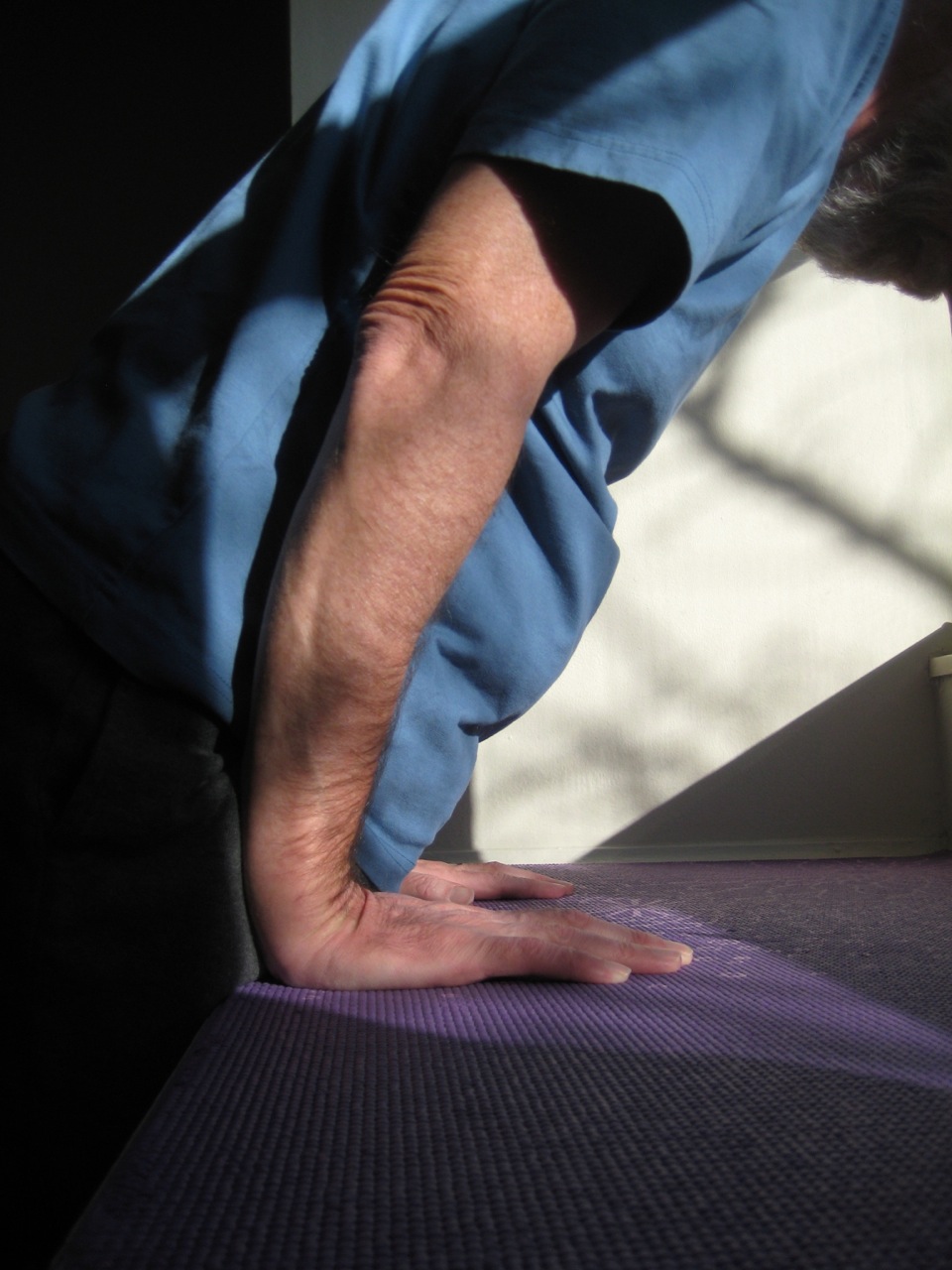
wall supportHappily, the edge of the window seat in my study is an adequate support, so there’s a spot to do this that’s literally less than one step away from where I’m sitting as I type this. It’s not a perfect spot, because it’s kind of low, so I have to bend my knees to get my feet off the ground, which means that I can’t use my feet against the wall to help. That’s fine for practice wall supports and wall dips, but it means that I don’t have a good place to transition my practice to more specific parkour skills like wall climbs.

Success will be when I can do a dozen or so wall dips with good form.

So, that’s my winter parkour-prep program. With some consistency, I should come into the spring with enough strength and flexibility to jump right into serious training on parkour-specific moves.

Just for completeness, here’s the article I mentioned at the beginning, with a set of basic exercises for building strength for parkour training. I almost didn’t link to it because I don’t like the title, but it’s really pretty good.
You know this, right? Age-related diseases—at least, those of middle age—mostly aren’t. Rather, they’re lifestyle diseases that seem age-related because it takes years or decades for the harm done by the lifestyle to start showing up as symptoms.

I’m prompted to write this by something Charles Stross wrote over a year ago, where he talks about the symptoms of aging. I almost didn’t link to that post, because he’s really talking about something else—his post is about the political effects of reasonably foreseeable improvements in medicine—but along the way, he describes his current circumstance:

. . . chronic low-grade pain of the middle-aged body: joints that creak and pop, muscles that need an extra stretch, sore feet.

And goes on to compare it to his hypothetical world with science-fictional medicine:

Unlike today’s senior citizens, you don’t ache whenever you get out of bed, you’re physically fit, you don’t have cancer or heart disease or diabetes or Alzheimer’s, you aren’t deaf or blind or suffering from anosmia or peripheral neuropathy or other sensory impairments, and you’re physically able to enjoy your sex life.

Of course there are age-related diseases—Alzheimer’s and anosmia probably are. But especially the ones in the first quote—the age-related difficulties of the middle-aged body—aren’t age-related at all. To imagine that they are is to make a category mistake—and a serious one, because the error makes it much more difficult to recover your health.

I’ve hesitated to write this post, because I realize that I’m speaking from a position of privilege—I’m healthy. This is partially a matter of luck, partially a matter of good genes, partially a matter of a lifetime history of good health care, access to adequate nutrition, and so on.

Even so, I’ve got real first-hand experience with exactly the list of middle-aged body problems that Stross lists.

Eight or ten years ago, I was feeling old. Tasks that required strength were more daunting than they had been—especially ones, such as carrying things up or down steps, that added additional weight to my already excessive body weight. My balance wasn’t as good, making slippery tubs and icy sidewalks seem like serious threats. My plantar fasciitis was kept at bay only by being scrupulous about wearing supportive shoes and by limiting the amount of standing I did. I could still get down on the floor and get up again, but it was hard enough that I didn’t do it when I didn’t have to. I had trouble getting a good night’s sleep, because my back would ache when I lay still too long, and when I did sleep through the night I’d need considerable stretching before I could move normally the next morning.

I viewed all this as normal aging. Partially, I think that was because I was actually in pretty good shape. I could walk 5 or 6 miles. I routinely bicycled to work when the weather was nice. I went to the fitness center two or three times a week to use the weight machines and do some stretching. Despite all that, my physical capabilities were declining, and I didn’t see anything I could do about it, except perhaps spend even more time exercising, which didn’t seem practical for someone with a day job.

It wasn’t true, though. Over the past six or seven years, I have felt better each year. It is not a strain to carry things of ordinary weight, even going up and down stairs. My static balance is excellent—I no longer fear slippery tubs, although I do still try to be careful on ice. My feet don’t hurt when I stand a lot, even when I’m barefoot. I make a point of sitting on the floor, just to add some variety to the day. I sleep well, and I wake up able to move.

What did I do? Nothing extraordinary.

Starting to do tai chi was probably the key shift, because it changed so many things at once about my movement practice. Somewhere along the line I ran across parkour, and then even before I had done more than play with that I discovered natural movement as a thing—and that was what gave me a framework for thinking about movement the same way I’d come to think about food.

Trying to figure out the best diet is a waste of time. It’s computationally infeasible, and anyway unnecessary—just eat a wide variety of foods (and limit your consumption of industrially produced food-like substances) and your body takes care of the rest. (See Michael Pollan’s In Defense of Food for details.)

Similarly, trying to figure out the best exercise regime is a waste of time. You are far better off to get a wide variety of movement (and limit the time spent doing things like sitting in chairs and wearing shoes). Once again, your body will take care of the rest.

What struck me—what prompted me to write this post—was that Stross’s description of what his science-fictional medicine feels like is what I’ve felt like. It’s not exactly aging backwards, but it is a recovery of a feeling of ease and comfort that had slipped away under cover of “normal” aging.

My life feels kind of like a science fiction story, with the science-fictional medicine being just recovering normal patterns of movement.

It makes me want to advocate these lifestyle changes, perhaps more strongly than is advisable. As I say, I recognize that I’m writing from a position of health that isn’t available to just everyone. I can’t say that if you’ll just start walking and running and bicycling and lifting weights and doing taiji and experimenting with parkour and natural movement, you will reverse the aging process and feel young again. There are kinds of impairments that cannot be completely recovered from, and perhaps some that cannot even be improved.

And yet, I do advocate these lifestyle changes. Move better. Move more. Eat food. I bet you’ll feel better—especially if you’re starting to suffer from the symptoms of “normal” aging.

There’s a downside to my plan to hit my movement goal every day in December that I had not considered.

As I discussed a few days ago, I was aware of some of the downsides of using an unbroken streak for motivation—that it can tempt one to continue a streak when doing so would be unhealthy, and that it can be terribly demotivating when it is finally broken.

This is different. It has to do with setting a target that’s a little aggressive, and then making it a minimum.

My current goal, as far as Google Fit is concerned, is 90 minutes of movement. The default was 60 minutes, but I bumped it up right away back when I was manually entering my taiji sessions. They’re typically an hour long, so one class put me over the top; the lower goal didn’t motivate me to move at all.

It’s not a very aggressive goal. Looking back at my history, I generally hit it more than half the time—about 4 days a week. Looking at it on a per-week basis, I do quite a bit better than that, totaling at least 7x my daily goal about 4 weeks out of 5.

Looking at it terms of miles rather than minutes, I walk between 20 and 25 miles almost every week, but I don’t do it by walking 3 miles per day. Rather, I walk 4 or 5 miles three or four times a week, and then one day I take a long walk in the 8–15 mile range. I think it’s healthier to have a mix of short, medium, and long days, and to include an occasional rest day when needed.

And that’s what’s been lacking so far this month. My goal isn’t so aggressive that I’m suffering from the lack of adequate rest days, but it’s aggressive enough that I’ve reduced my scope for including a really long day every week or two.

I suppose Google Fit could accommodate this a programmatically, through something like separate minimum and average goals, but that seems like an unnecessary complication. Probably better to just do what I was doing before this month, and aim to hit the target on average.

I wouldn’t want to continue this unbroken streak forever, but so far it is doing what it was supposed to do: encourage me to get a good amount of movement during the dark days of early winter.

Now that I’ve noticed this issue, I should be sure to get in a long walk soon. If I don’t go overboard, I should be able to take a long walk without needing so much rest that I can’t hit my minimum the next day. And if I can’t, well, the unbroken streak is a motivational tool, not an end in itself.

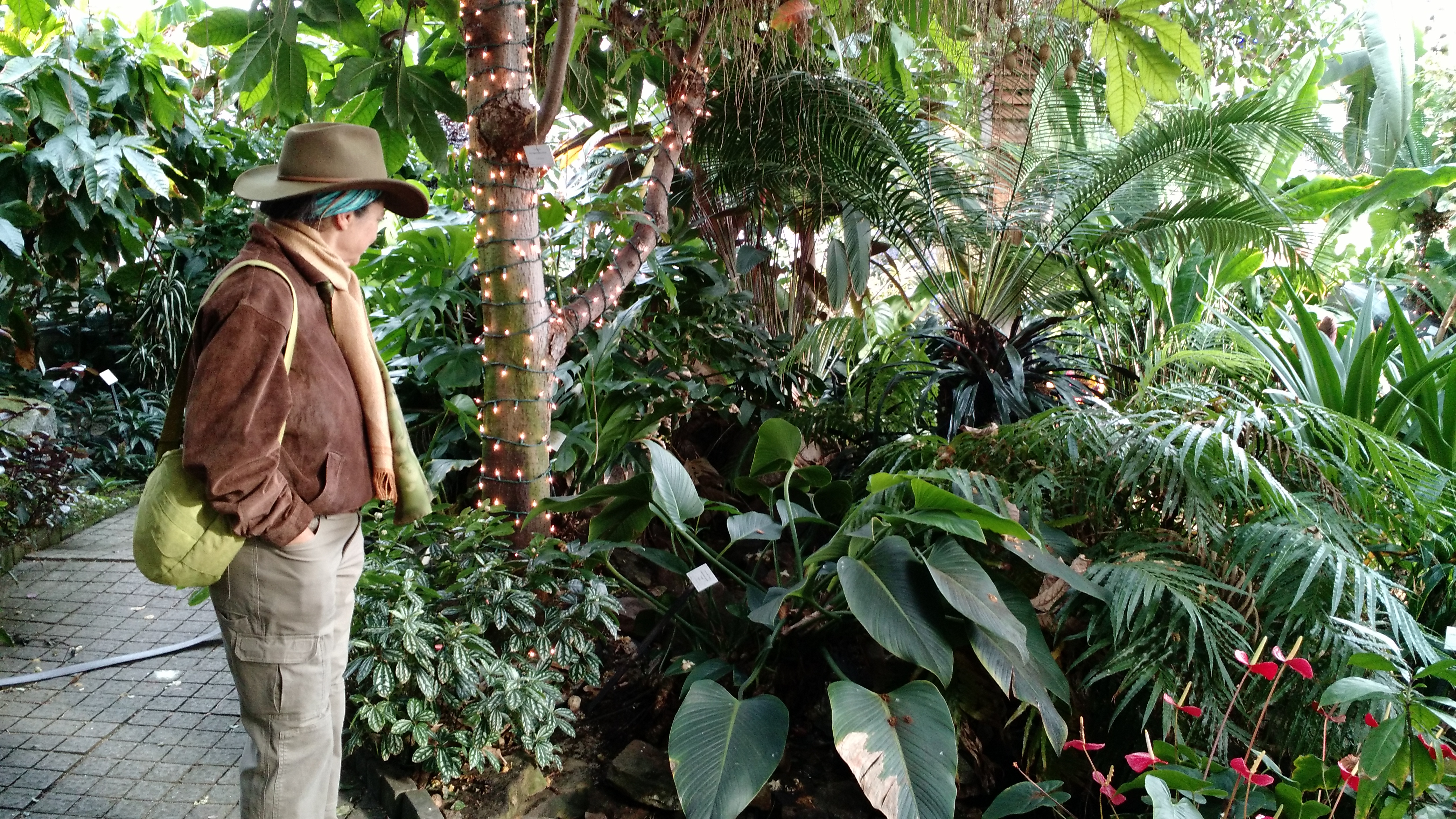
The photo above was taken at the University of Illinois Conservatory, which was a destination for our walk a couple of days ago. Here’s another, with Jackie.

Jackie in the Conservatory

I have mixed feelings about using the motivating power of maintaining a streak.

Lots of people do it. Lots of writers write every day. Lots of runners run every day. There’s probably no virtuous activity out there that doesn’t have someone who has done it every day (or every week, or every year) for decades.

I understand the power. I feel it too, as I’ll describe in just a moment. But I have mixed feelings about it, primarily for two reasons.

First, it tempts people into doing things they shouldn’t just to maintain the streak.

Any runner who has run every day for years has almost certainly gone for a run even though he or she was sick. If it’s just a cold, that’s merely pointless. But going for a run with the flu is life-threatening.

Second, the demotivating power of a broken streak is huge.

For example, I had a streak going in the game Ingress, where there’s a badge for maintaining an unbroken streak of playing every day. I’d gotten my badges for 15-, 30-, and 60-day streaks. When my 180-day badge was due, I found that had apparently missed a day—my streak had ended at 172 days. I immediately abandoned any thought of getting that badge, and quit making any effort to play Ingress on a daily basis. I still play, but my current streak is 4 days.

Because of those issues, I try to be careful about motivating myself by trying to maintain a streak. I still do it though.

I went for a walk yesterday, only because I’m trying to get out for a walk every day this month.

After I hurt my knees in late October, my ability to walk was constrained for several weeks. It was very sad. I missed the last nice days for outdoor exercise, stuck inside resting my knees.

I find it easy to exercise in the summer, and hard in the winter. Every year I imagine that, if I can just keep going through the fall, I’ll preserve the habit and be able to keep going through the winter. It hasn’t worked very well in general, and certainly is out for this year, so I figured I’d do something different: Establish a new habit. I am perfectly capable of just deciding that I’ll get out and exercise in the winter in particular.

So I did decide that. Specifically, I decided that I’d try to meet the goal I’ve established in Google Fit, to get at least 90 minutes of movement every day.

Google Fit’s evaluation is just a bit odd. It’s central metric is minutes, but what it actually counts is steps, and I have no idea exactly how it translates occasional steps into minutes. It works very well when I go for a walk, but when I do taiji, for example, I get essentially no credit for having moved during that hour.

(As an aside, I should mention that I could just manually enter the hour or two I spend doing taiji. I did that for a while, but it isn’t really satisfactory. Among the great thing about Google Fit are that it’s simple and objective—there’s no need to do anything other than just carry my phone all the time, which I do anyway. Manually entering activity misses the whole point.)

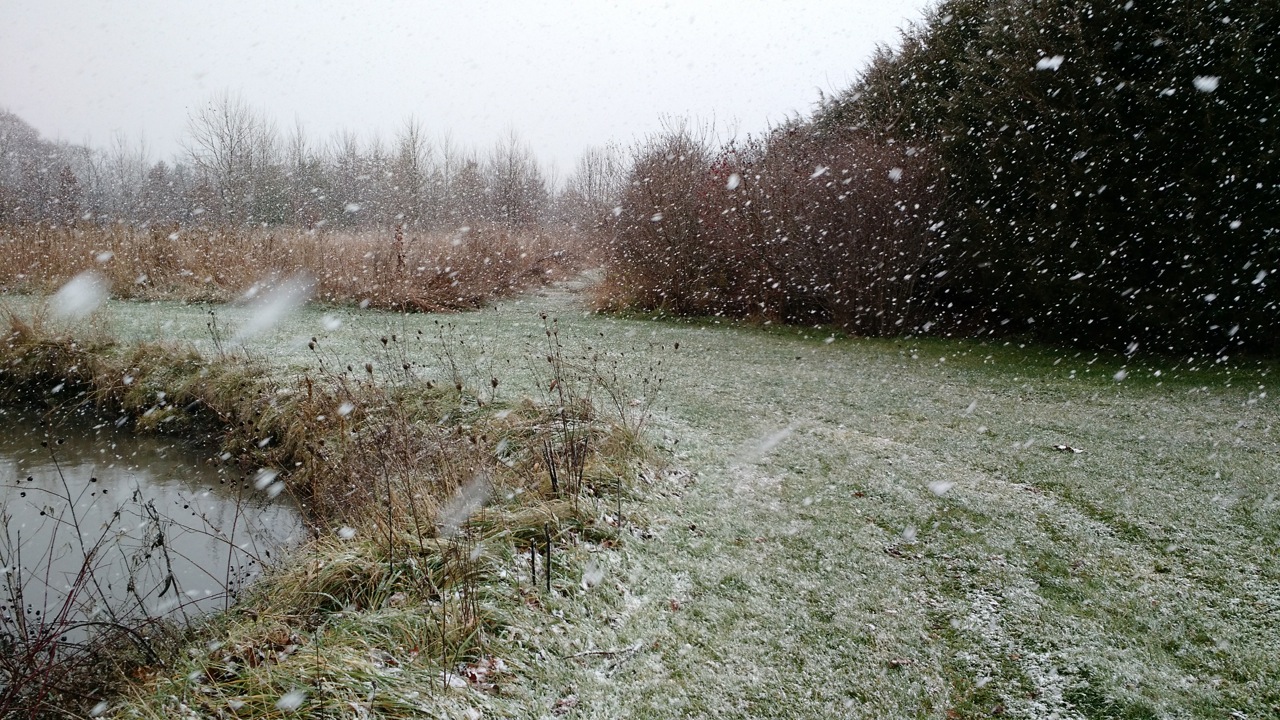
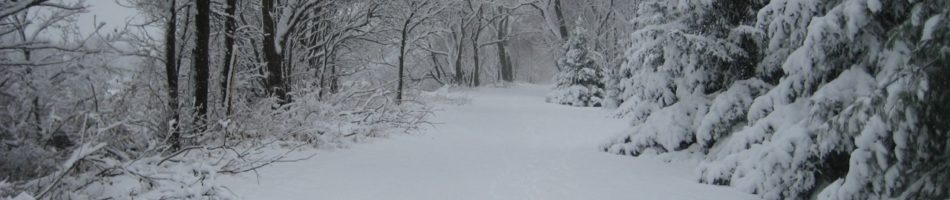
Anyway, yesterday was a cold, wet, snowy day. Just the sort of day on which any sensible person would decide to simply stay inside. But I had this unbroken streak going, and a plan to hit 90 minutes of movement each day in December. So, I went out in the cold, wet snow and walked the remaining forty minutes or so to hit the mark.

Cold, wet, snowy day

During the summer, one can just stay in when the weather is bad, and still get plenty of exercise. Do that in the winter, and it’s all too easy to end up spending three months indoors. So, I am using the power of an unbroken streak to prevent that.

Another couple of weeks, and it will be a habit. A couple of weeks after that, and I’ll have met my movement goal for the month of December—and having gotten that far, I expect I’ll be able to move enough in January and February as well.

For now, though, I’ve just checked—and I see that I need another 24 minutes of walking today.

At least it’s not snowing.

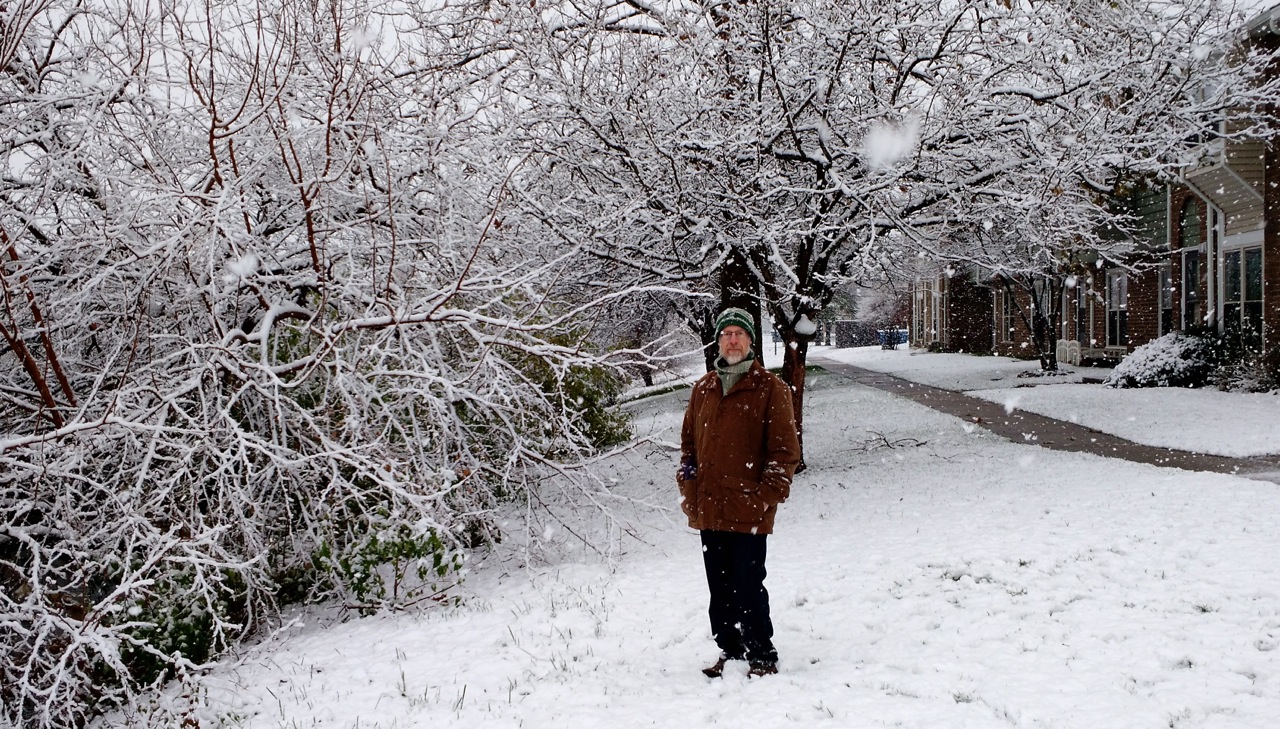
Me in the Snow
Me in the snow. Photo by Jackie Brewer.

Seven or eight years ago, I became aware of research that suggested that vitamin D deficiencies were a possible cause of seasonal depression. As I have long suffered (albeit mildly) from SAD, I figured it was worth trying a vitamin D supplement, and it did seem to help.

I worry just a bit about taking a supplement, because there are dangers with excessive doses of vitamin D. (A random site on the web suggests that doses over about 10,000 IU per day are dangerous, if continued for a period of months.)

So, I prefer to get my vitamin D via sunlight. A pale-skinned person like me can make upwards of 10,000 IU of vitamin D in just a few minutes of mid-day summer sun—but there’s no danger of getting an overdose: your skin keeps making it as long as you’re in the sun, but once saturated with an optimal amount, it starts un-making it as fast as it makes it.

But it’s the UVB light in the sun that makes the vitamin D, and at my latitude (I live at almost exactly 40° north), little or no UVB gets through the atmosphere during the winter. Specifically, the vitamin D window closed this year on November 20th. It’ll open again on January 20th—although of course it’ll be too cold to expose much skin to the sun for a month or two after that.

This past summer, I spent more time in the sun than in years past, and found that it made me feel especially good—like the opposite of seasonal depression. I imagine it’s the extra vitamin D, although I don’t see any way to tweeze evidence for that hypothesis out from the many other possible reasons. Perhaps it was just more bright light (as opposed to the UVB in particular)—surely the sun is the world’s best light box. Perhaps it was just being more active (I tend to get my sun walking or running, not sitting or lying in the sun). Perhaps it was the endocannabinoids produced during the longer runs in particular. Perhaps it was more time in nature (I spend a lot of my outdoor time walking or running in our local prairie and woods), which is known to be good for the mood. Perhaps it was the extra “together time” Jackie and I got on our very long walks. Perhaps it was the solitude of walks and runs by myself, providing space for meditation.

Whatever it was, I miss it in the winter, and I fixate on a vitamin D deficiency as a possible culprit. Maybe I’ll up my supplement dose. Of course, I won’t do just that. I’ll use my Happy Light™. I’ll go for long walks in the cold and snow. I’ll get out in the prairie and the woods. I’ll try to cover all the possibilities. But I’ll keep taking my vitamin D.

Since our big Kal-Haven trail walk in June, we’ve continued to walk, but we haven’t gone on many long walks—and in particular, haven’t gone on any very long walks.

What’s the boundary between ordinary long walks and very long walks? I choose to set an arbitrary dividing line of 14 miles. This is because Jackie and I, by merest happenstance, turn out to each remember having walked 14 miles as our “longest hike ever” in the years before we’d met.

It was with all that in mind that I suggested a couple of days ago that we should go for a 15-mile walk today.

I had in mind more than just ticking off the “very long walk” box. With winter coming, I want to be sure I don’t start thinking that ordinary winter weather is a reason not to go for a long walk. It was chilly this weekend, so I thought a good opportunity to ease our way in to walking in the cold. There are also scheduling issues that’ll make it hard to get a very long walk in during the next week, so it seemed today was our big chance.

It was a wonderful day for a walk—beautiful, clear, sunny weather, crisp in the morning, but reaching 60 in afternoon. We walked up First street to the research park, then turned east and walked along the south end of the Arboretum and through Orchard Downs, before turning south again so we could take a turn through Meadowbrook Park. Then we headed back north along Vine as far as downtown Urbana, so we could have lunch at Crane Alley. (Good beer. I had a Deschutes cinder cone red on nitro. Jackie had an ESB, although I forget which one.) From there we headed west toward campus, headed back south to have coffee at Espresso Royale, then meandered through campus, crossed the railroad tracks and Route 45 to head south along the Boulware path, stopping at Schnucks to get some half&half and tomato paste.

The total distance came in at 14.62 miles, comfortably over the line into “very long walk” territory by my standards.

I didn’t take many pictures, but I did get this one of Jackie in front of the Alpha Sig frat house, Chuck McCaffrey’s old fraternity. This would have been along about mile 10 of our walk.

Jackie in front of the Alpha Sig frat house (Chuck's fraternity).
Jackie in front of the Alpha Sig frat house (Chuck’s fraternity).

Oh, and I wanted to mention that I wore my new boots! I bought a pair of Lems Boulder Boots, minimalist-style boots that I got with an eye to being my main winter boot this season. I got them five or six weeks ago, and have worn them as my everyday boot for most of that time, but this was their first try on a very long walk. Fortunately, they worked great.

In looking for ways to fill my day with diverse natural movement, one tactic I keep seeing suggested is play. It’s a compelling idea. More play will likely boost both the diversity of movement (because play is like that) and the quantity of movement (because play is fun).

I’ve been hesitating, because I already struggle to balance my desire for diversity with the worry that maximizing diversity will make it hard to improve any of the many things I want to improve at. I worry that play will put a heavy thumb on that balance, toward diversity and away from focus.

It’s a big deal, because we know how to get good at something: deliberate practice, as described by Anders Ericsson in a 1993 paper that I’ve talked about before. (For reference: Deliberate practice is a cycle of performing your skill, monitoring your performance, evaluating your success, and then figuring out how to do it better.)

One of the points that Ericsson makes in that paper is that deliberate practice is very different from other activities like work and play:

Work includes public performance, competitions, services rendered for pay, and other activities directly motivated by external rewards. Play includes activities that have no explicit goal and that are inherently enjoyable. Deliberate practice includes activities that have been specially designed to improve the current level of performance.

I will grant Ericsson his point in the case of work: If you’re getting paid, you’re probably not going to be creating opportunities to focus on the areas of your performance that are most in need of improvement; rather, you’ll try to maximize your use of skills and abilities you’ve mastered, so you can produce your best work as quickly as possible.

In the case of play, however, I beg to differ. Or rather, I observe that when Ericsson provides examples of “play” in the paper, he’s mostly talking about competitive and especially team-oriented play. Just like with work, the conditions—trying to win, trying not to let your team down—similarly incentivize arranging things to maximize your use of skills and abilities you’ve already mastered.

Serious competitive play is only one kind of play, though. There’s a lot of play that is only notionally competitive, as well as play that’s explicitly cooperative. These other sorts of play are at least as common as serious competitive play.

In my experience, these other sorts of play are full of deliberate practice.

I once saw a kid trying to jump a skateboard onto a low wall. In the time it took me to walk past (a minute or two), the kid repeatedly rolled his skateboard in a big loop tangent to the wall, attempted to make the jump, failed, and set up to try again. I don’t know how long he was going at it before I arrived or after I left, but I’ve rarely seen a more perfect example of deliberate practice: He was performing his skill, monitoring his performance, trying to figure out how to do it better, and then trying again.

In my experience, play involving a group of people of various skills levels very often includes specific instruction and specific encouragement for the less-skilled players to learn and then practice a new skill. “You don’t know how to do a vault? Well, here’s one way. Try it a few times.”

So, I think I’m going to quit hesitating to emphasize “play” as a way to fit more, and more various, natural movement into my day. Like that kid on the skateboard, I’ll try to include some deliberate practice in my play. Of course, I still have my essential quandary: How do I thread the needle between focusing on one or a few things without losing the diversity? But that’s a problem for another day. My play can include as much focus as I choose to include.

There’s a good Oliver Burkeman piece in the Guardian on gamification, or what Jane McGonigal calls living gamefully: using “the same psychological principles, featuring mini-challenges, systems for winning points, completing quests and moving upwards through levels,” to motivate people to do ordinary real-world stuff like exercise or go to work. Burkeman suggests that gamification “reliably divides people into those energized by it and those utterly appalled,” so I wanted to call myself out as an exception, because I’m both.

First of all, I’m totally in the target audience for this sort of thing. I remember seeing this comic in 2006, back when I was still working a regular job, and finding it spoke deeply to me.

xkcd comic Exercise by Randall Munroe

I bought both Zombies, Run! and Superhero Workout by Six to Start, two games that gamify exercise. I found myself strongly motivated to get out and run, even in winter cold, by the story in Zombies, Run!

More recently, I’ve observed myself strangely motivated by Google Fit. Even though my goal is self-set, and the reward for achieving it is merely a splash of orange lines and a “bling” sound, I have been known to nip out in the late evening to walk another six minutes just to get my walking time for the day up to my 90-minute goal.

I would pay serious money for a more clever version of Google Fit—one that could count not only time and distance walking, running, and bicycling, but also keep track of my crawling, hanging, climbing, jumping, balancing, throwing & catching, lifting & carrying, swimming & diving, and grappling & striking.

On the other hand, I recognize that this is fundamentally an error—the same error I talked about just a few days ago, when I explained that, although it’s in my nature to want to figure out what I need and make a plan to get it, I recognize that it’s a mistake. It’s a mistake because the “figuring it out” step is both impossible (intractably complex) and unnecessary (get ample natural movement and you’ll be fine).

And yet . . . . And yet, it is a fact that my life does not have enough natural movement in it. Given that I’m not going to become a hunter-gatherer (and would probably starve to death in a few months, if I didn’t die sooner from exposure or an accident), perhaps “living gamefully” is useful as a way to motivate myself and to keep track of the exercise I need to replace the movement I’m not getting.

I’ve praised the game Zombie’s, Run! several times over the past couple of years. It’s great fun. It’s gotten me out several times to run in weather cold enough that I’d have otherwise just stayed inside. It’s kept me company on several treadmill runs that I’d otherwise not have finished. But I haven’t played it in quite a while, because more and more I find that I want to be fully present in my runs.

This isn’t a big change. I’ve never been much on listening to music or the radio or audio books while walking or running, and not just because of the various dangers, from traffic or muggers or stray dogs or whatever. (Those dangers are real, both from having your ears covered and from being distracted, but I think they’re pretty small, and pretty easy to ameliorate through simple things like looking carefully at road crossings.)

The main reason I didn’t listen to things while running was that I enjoyed running, and didn’t want miss the experience. (And of course, mindful exercise is more effective than distracted exercise.)

Maybe it’s a pretty good compromise to distract myself from my unpleasant workouts—trudging through the cold, running on the treadmill—and maybe I’ll do that again next winter. But lately I’d had no inclination to distract myself.

I feel sorry for the people who find exercise so unpleasant that they need to be distracted from what they’re actually doing. I enjoy my runs too much to want to miss them by being immersed in a fictional world—even a fictional world as much fun as Zombies, Run!

Doesn’t mean I don’t miss my zombies.

I used to feel that it was very important to maintain a steady effort during a run. (I would always note in my log if I’d had to walk for a bit.) I’ve completely gotten over that idea. I no longer hesitate to walk or stop for any number of reasons.

Partly it’s that I rarely have to slow to a walk because I’m out of breath—something that was a common occurrence when I was so out of shape. Now I slow down or stop for other reasons—if I step wrong and get a twinge in an ankle or a knee, to traverse a challenging bit of trail with care, to hack an Ingress portal. Or, as I did at several points today, to take a photo.

The run I’ve taken most often since I moved to Winfield Village makes three passes through this prairie:

Prairie Sunflowers on the middle path at the Lake Park Prairie Restoration

Just a few yards from where I took that picture, I saw this handsome zothie:

Zothie
Zothie

After that I cross the ditch that separates Winfield Village from the subdivisions south of us, and run in the Lake Park forest. Today, just after crossing the weir, I saw this little snapping turtle:

snapping turtle
Snapping turtle just south of the weir over the ditch just south of Winfield Village

At the southeast corner of the forest, there’s a patch of thistle. I tried to get a picture of a thistle flower, without much success. This picture of the patch as a whole does a pretty good job of capturing the purple flowers and the reddish grass that was growing with them:

thistle patch in forest
Thistle patch at the southeast corner of the Lake Park forest

So, there you go—views from a run.

It’s a bit over three miles (including a second pass through the prairie after the out-and-back in the forest). With the picture-taking, it took just shy of an hour, giving me an average pace of 18:26. A pretty slow run, but speedy enough picture-taking, and a whole lot of fun.