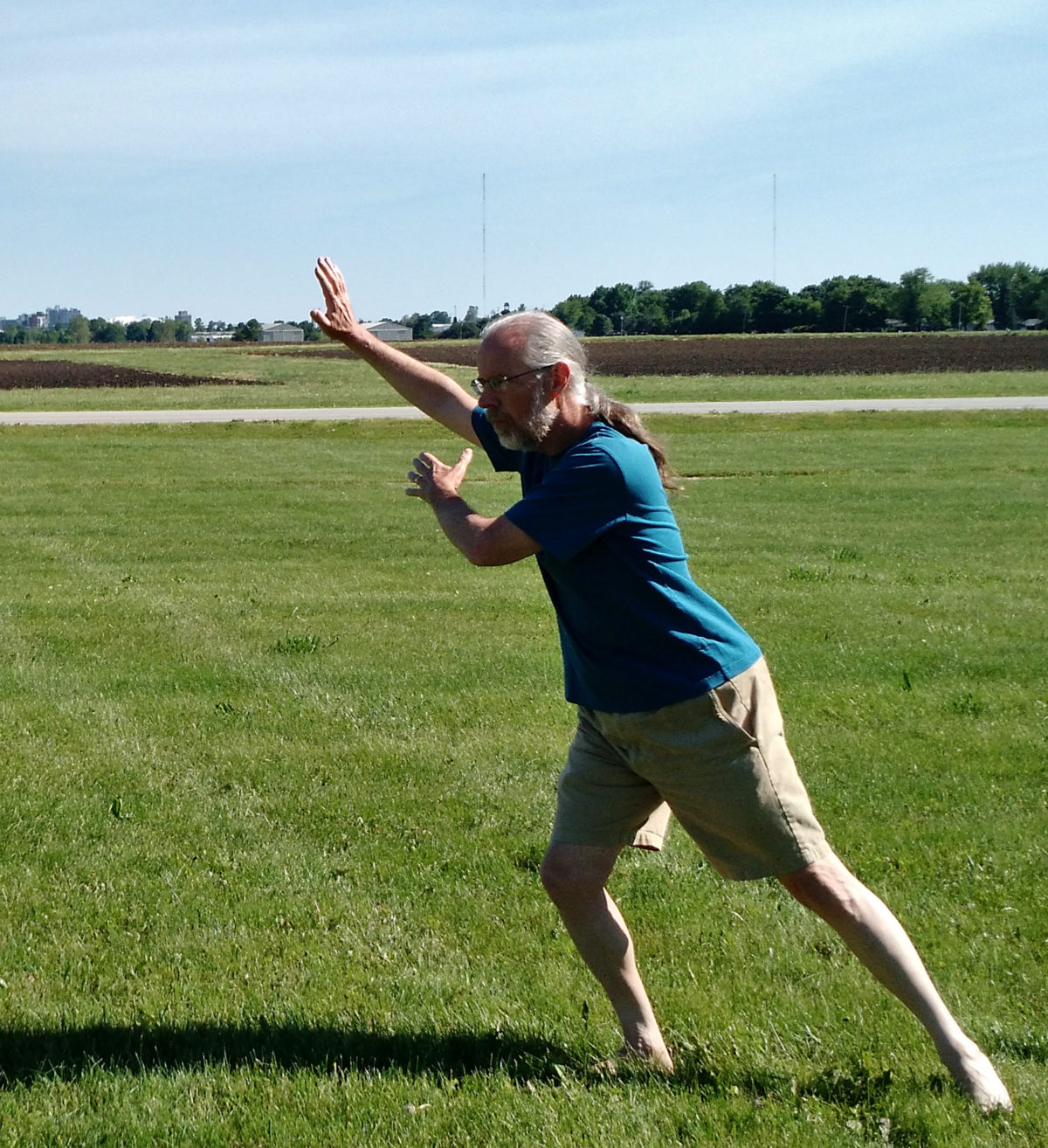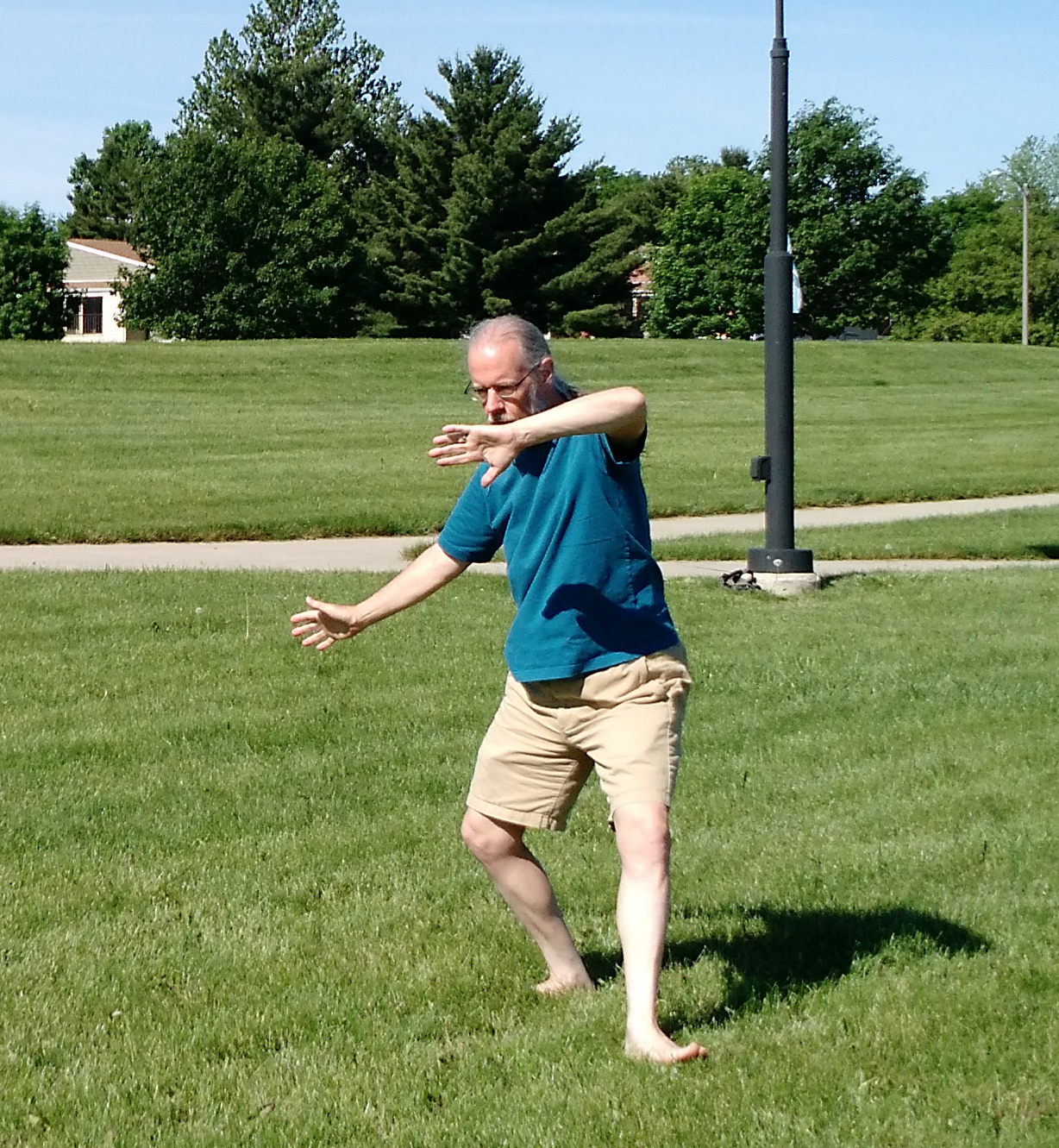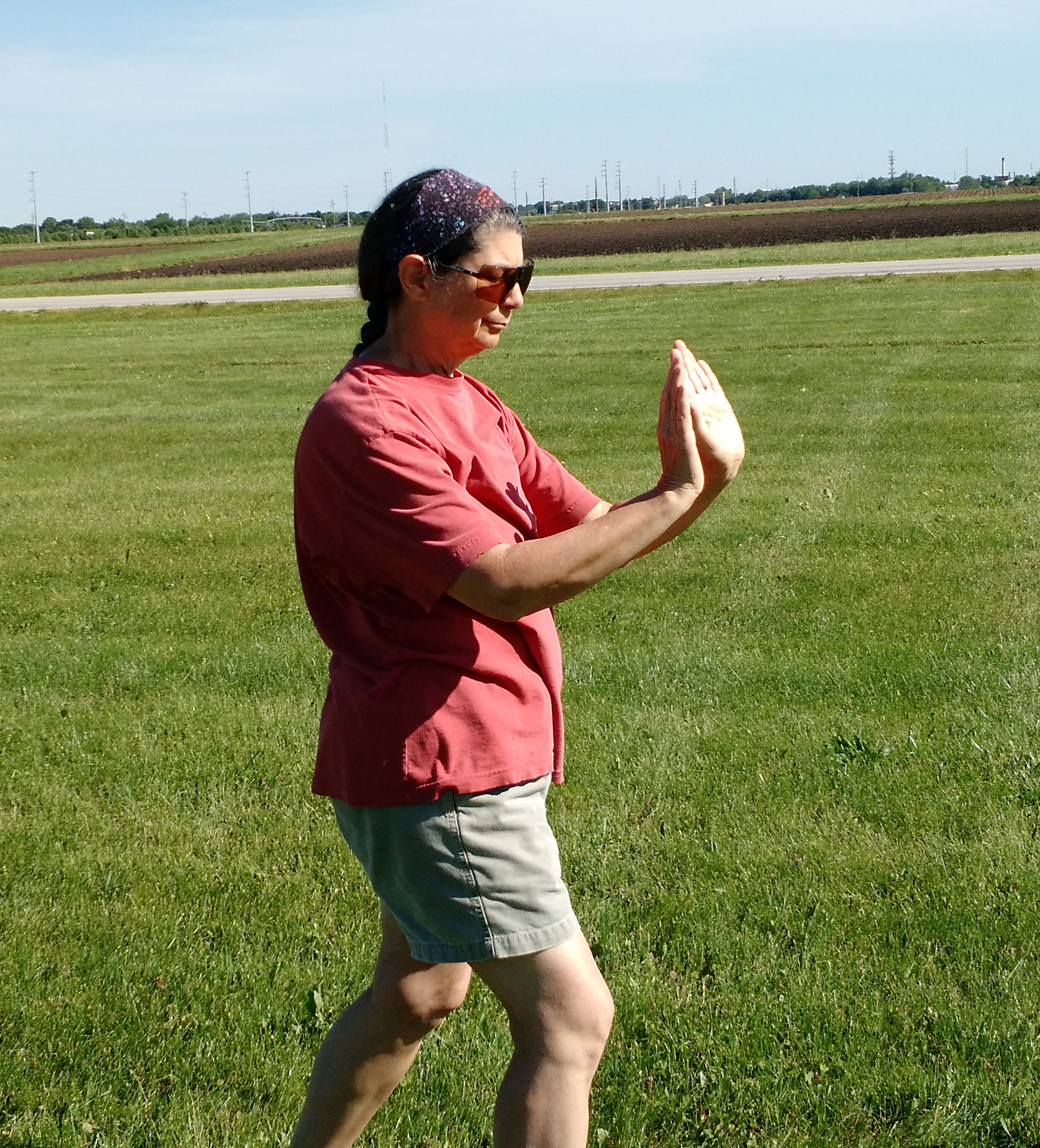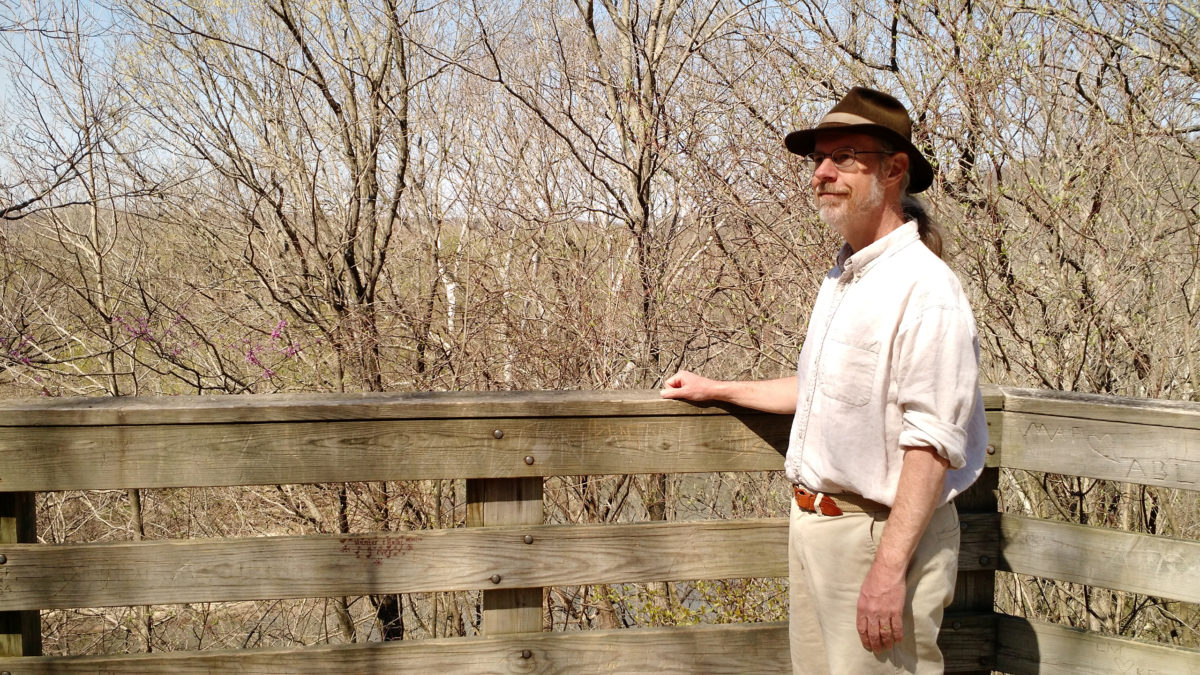
img_20160530_091940035_27254416212_oEveryone is welcome to join me and the folks from the tai chi groups I teach for free practice sessions this summer.

We’re planning to meet Monday-Wednesday-Friday 8:30–9:30 AM in Morrissey Park. (If we meet later it gets too hot before we’re done.)

These group practices sessions have no teacher or leader, so they’re free.

These sessions tend to be much like our usual classes:

  • A few minutes of opening exercises
  • Half an hour of moving Qigong
  • Ten minutes of standing meditation
  • A short tai chi form
  • The 48-movement form

This means that most of the hour is accessible to anybody, even complete beginners.

We’re starting Wednesday, June 1st. I’ve promised to show up for the first couple of sessions to help students from my beginner class get started on the longer form. (After that I’ll miss several sessions in a row because I’ll have family visiting, but there are lots of other friendly people there, many of whom know tai chi as well I do.)

Join us!

img_20160530_085444842_27253378762_o

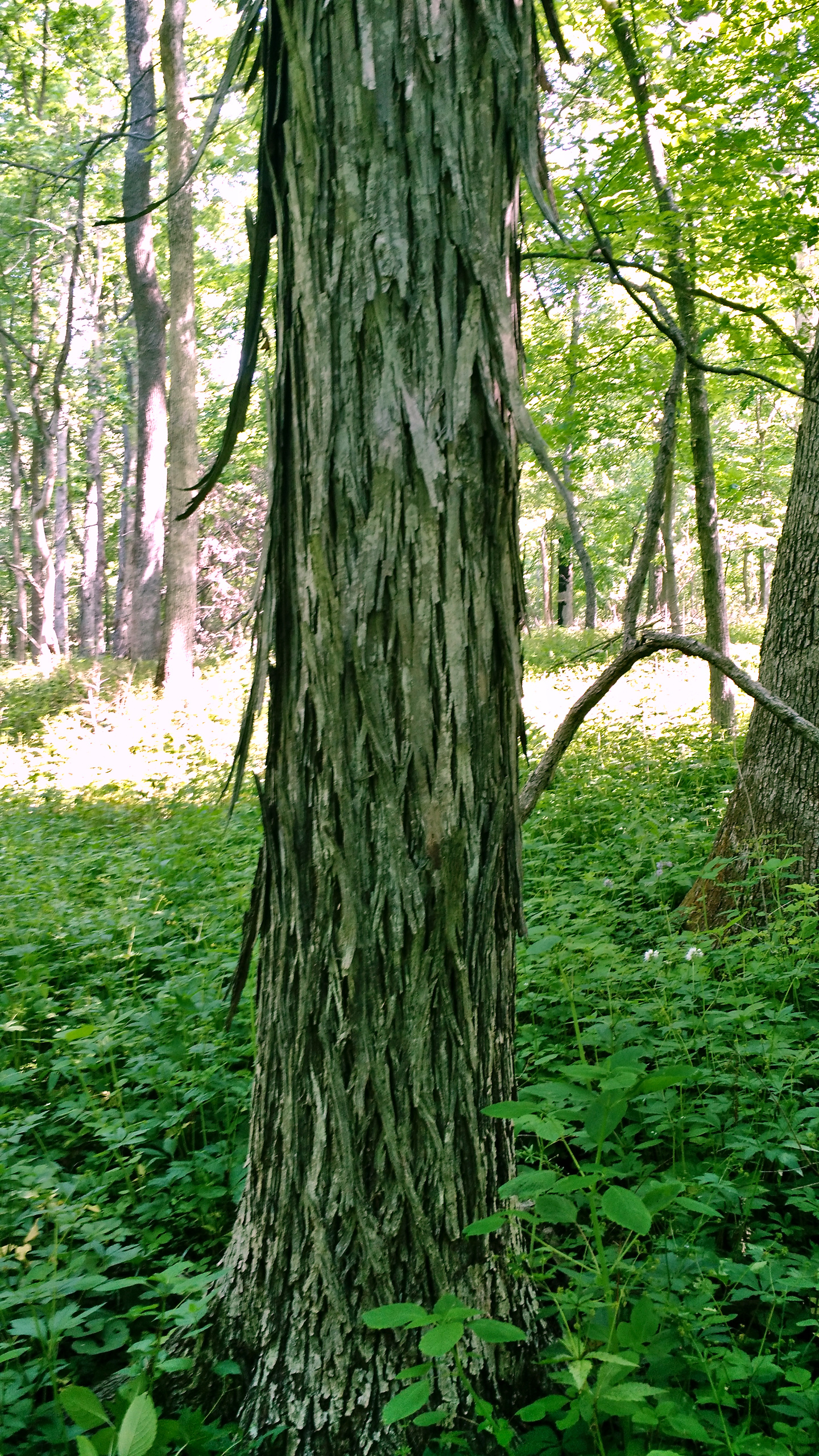
Shagbark Hickory tree at Allerton Park
Shagbark Hickory at Allerton Park

Jackie and I attended a tree identification workshop at Allerton Park yesterday.

Both my parents are naturalists, and my brother took some botany classes as part getting his PhD in science education, so they all know all the trees we’re likely to see in any of the places where we’ve ever lived. They routinely identify the trees for me when we’re walking. If I’d had any sense, I’d have learned all that stuff myself long ago.

Sadly, I have a lazy brain—the sort that figures that if other people will identify the trees for me, there’s no need for me to learn how to do it myself. So, I had to subject myself to this workshop to try and catch up.

It was a very well done workshop. We spent about half an hour going over basic terminology of tree characteristics—alternate versus opposite, simple versus compound, pinnate versus palmate, petioles versus petiolules—then we spent about three hours hiking through Allerton Park on the south side of the Sangamon River, before breaking for lunch. After lunch we spent another three hours hiking on the north side of the river, looking at the trees found over there.

We learned to identify maybe 30 species, with enough repetition of the more common species that we might actually be able to remember them.

It was good.

With all the time and effort I’ve been putting into fitness of late, I’ve been feeling just a little smug—I’m in so much better shape than I was nine or ten years ago. But this outing showed me that any such smugness is unjustified—everybody in our group of 20 or so, including some people older than Jackie and me, held up just fine to the rigors of five or six hours on our feet in the woods, some of it hiking off-trail. Jackie and I held up just fine too, but I was pretty tired at the end. (And managed to jam my ankle at some point, which wasn’t a problem during the event, but got sore in the night.)

It was a good reminder that endurance is a very complicated thing. Being in shape to walk briskly for 10 or 15 miles is not the same as being in shape to alternate walking and standing for the same number of hours. Adding effort in a mental dimension—trying to learn the trees, keeping an eye out for things like poison ivy, nettle, and tripping hazards—also makes things more taxing, something that’s easy to forget.

Now we need to get back to Allerton reasonably soon—before we forget everything—and see how many of those trees we can still identify.

A few months ago, I wrote about my plan to do some strength training to prepare myself for parkour training this summer. As I’m now working on my plan for the summer, I thought I ought to evaluate how my winter’s training had gone.

There were four specific areas I wanted to work on:

  • Hanging
  • Wall support/wall dip
  • Squatting
  • Toe flexibility

Although my progress was mixed, I’m reasonably happy with how things have gone.

I’m most pleased with the hanging. I don’t remember for sure how far I had gotten last summer—I think I remember hanging for forty seconds—but I’m sure I beat it this year. (Recent best: one minute fifteen seconds.) In addition, I started adding negative pull-ups to my workout, and can now do four of them. (And do them with pretty good control.) I may be within striking distance of my first pull-up!

I’ve been quite lazy about the wall support and wall dip exercises. In my brain the reason for this is that I don’t have a good wall to practice on, which is crazy, because the window seat is right here about two feet from where I’m sitting, and it’s a perfectly good place to do the exercise. It’s not perfect, though: It’s too low, so I have to bend my knees to get my feet off the ground, and that means that I can’t do the most parkour-like version of the exercise in which my feet can contribute to the effort. Which is no excuse for not doing the upper-body part of the exercise, but that’s brains for you.

I’m not sure I made much headway with the squatting, although I figured out that ankle flexibility is my main limitation. If I prop my heels up a couple of inches, I can squat down, linger there for a while, and stand back up again. Without the heel support, I need some other aid—something to hang onto to keep myself from topping over backward. I’ve been doing a lot of stretching for calf (and hamstring) tightness, and also just spending some time in a squat (with heel support). I’ve also done some bodyweight squats, going as low as I can, and some goblet squats (where the weight allows me to get all the way down without toppling over, and provides some resistance).

I think I did gain some toe flexibility, or perhaps just a better understanding of my limitations. I’m hoping that I improved enough that I’ll be able to do things like quadrupedal motion barefoot without hurting my toes. In any case, I’m pretty sure that even my most minimal shoes will provide adequate protection that I can train while I continue to work on it.

Besides just progress, I thought I’d mention one further insight: For a while in the autumn I’d been just a little restless during the night—I’d wake up and toss and turn, and often end up getting up for a bit before I was able to get back to sleep. I was very surprised to discover that this immediately got better. My theory is that it was due to the stretching I’ve been doing to improve my squatting: My lack of flexibility meant that I’d start getting achy and uncomfortable after a few hours of lying still, and the stretching improved that almost immediately.

As I said up at the top, I’m working on my plan for the summer. I’ll be sharing those thoughts shortly.

I think Champaign-Urbana is great. The university gives it cultural and scientific amenities far beyond its size. It’s a cheap place to live, which not only enables my lifestyle, it enables the lifestyle of any number of clever creative people who choose to live where they can make enough from their art to support themselves.

Just about the only thing that CU really lacks is relief—that is, a variation in height from one place to another.

What I mean to say is: it’s really, really flat. Take for example, this image:

Looking toward Yankee Ridge

That’s the hilly direction. I’m looking toward Yankee Ridge, which is about three miles away from where I’m standing. It may not look like much, but that hill in the distance is a big deal when you’re on a bicycle. At least, it is if you’re used to riding in Central Illinois.

Given the terrain, we don’t get enough hiking on hills, unless we make an effort to go to the hills. So, that’s what we did yesterday. We drove to Fox Ridge, a nearby state park which has some hills.

I remember hiking in Fox Ridge last summer, shortly before our big Kal-Haven trail hike, and finding that we were in pretty good shape for dealing with the hills, despite our very limited practice. That was less true this spring. I was a bit tired from my unexpectedly fast run the previous day, and we were both a bit out of shape from a lack of hills over the winter.

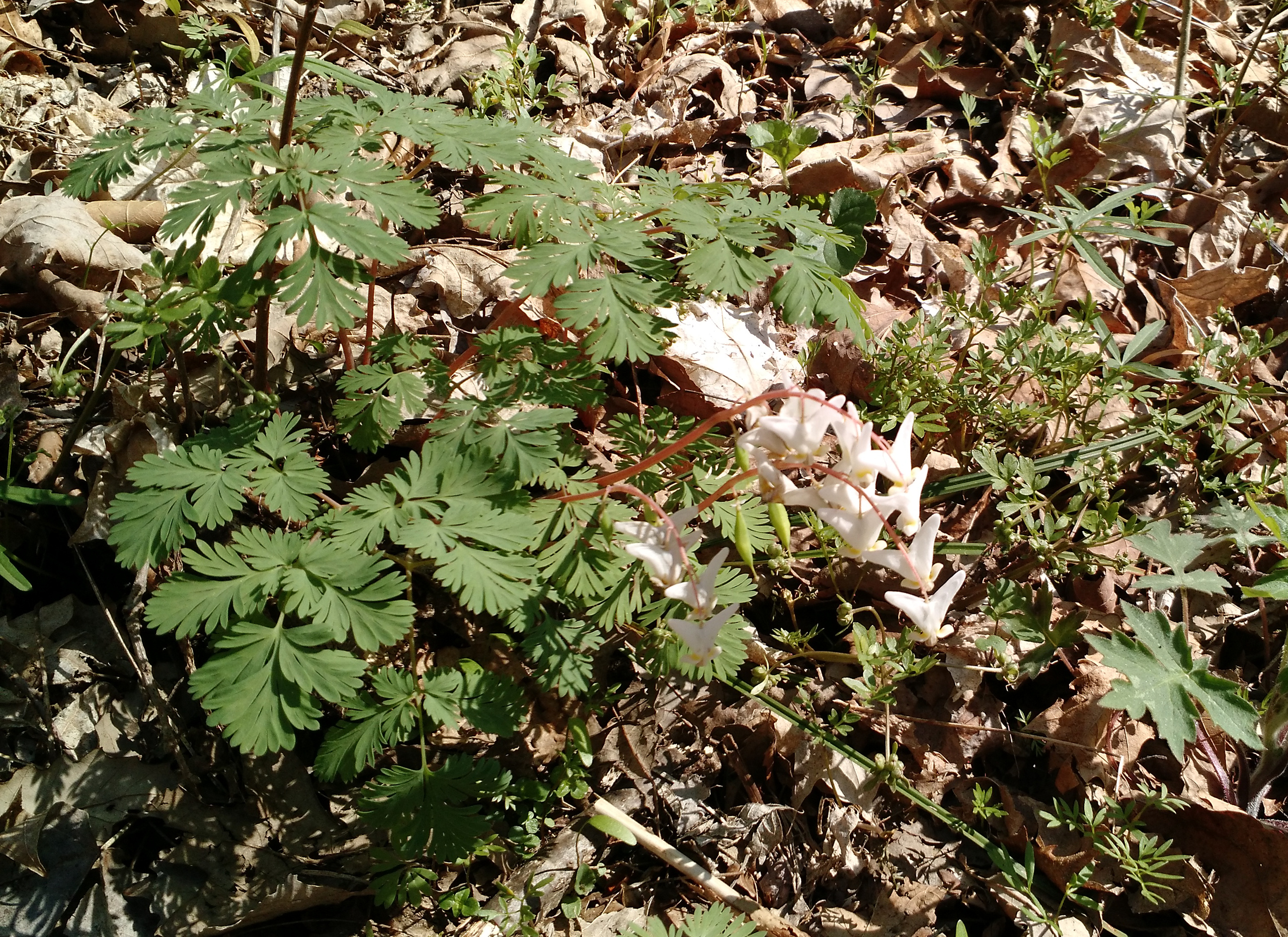
Still, we did okay. We saw some spring wildflowers, like these dutchman’s breeches:

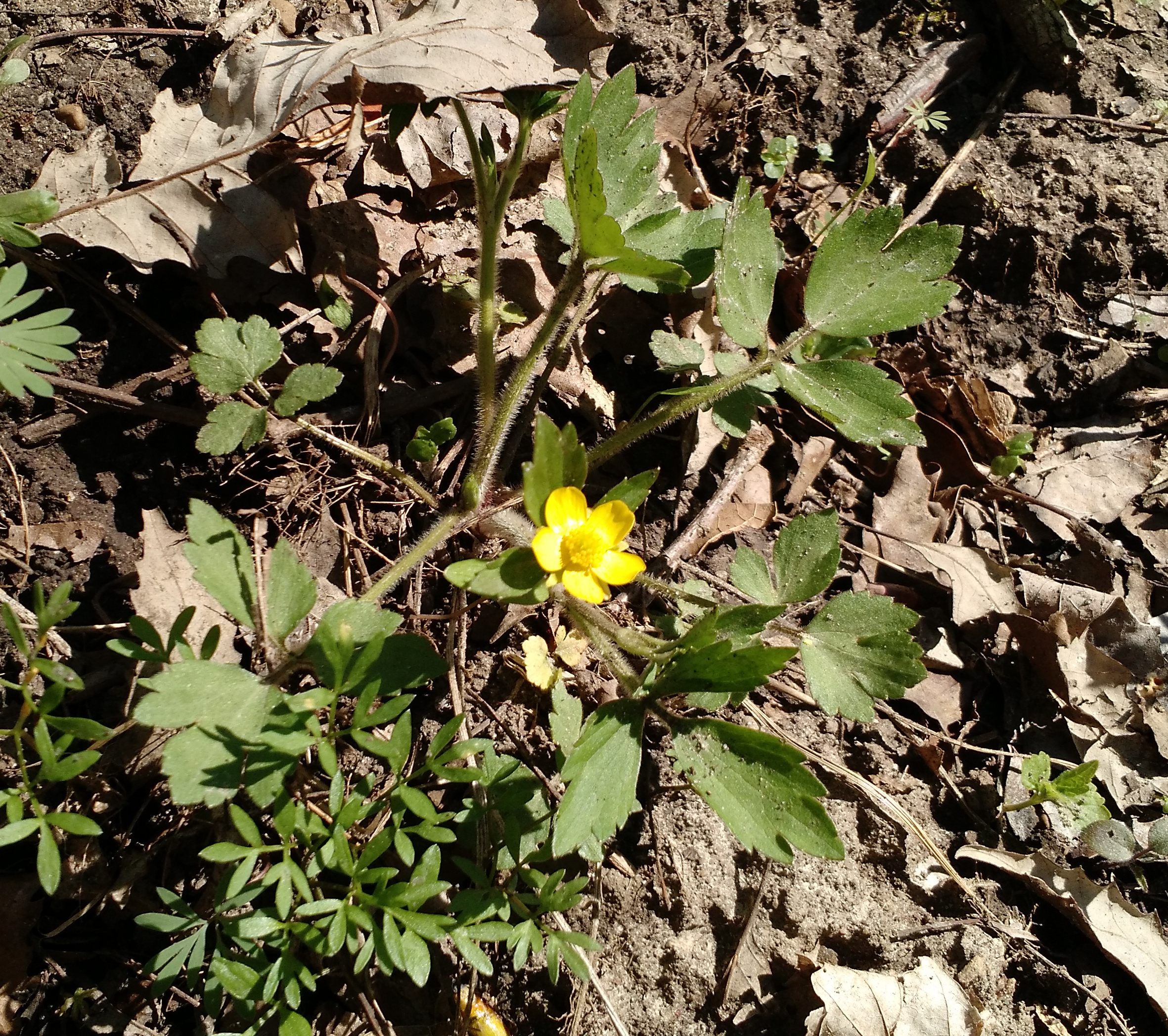
img_20160416_101623469_26401844861_oAnd this buttercup:

img_20160416_101630244_26468029235_o

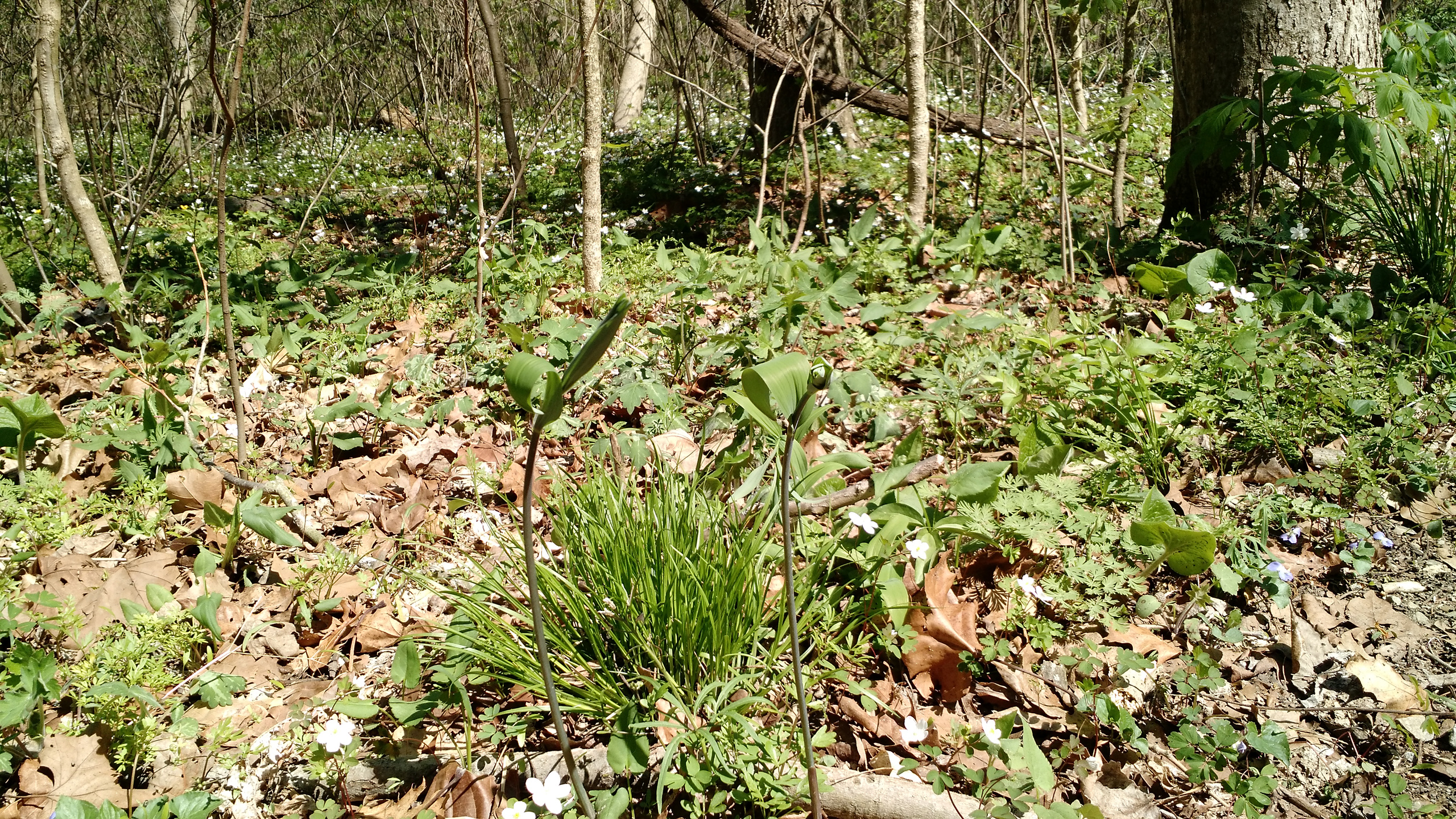
And this solomon’s seal:

img_20160416_110056171_26401892471_oTotal hiking was probably only a little over 3 miles, but the hills made it a very different sort of hike than our much longer hikes closer to home. Plus, we got to spend time in the woods.

So, that’s another bonus of Champaign-Urbana: We’ve got Fox Ridge State Park just 50 miles away.

The weather finally became what I want from weather: gloriously warm and sunny. Friday I celebrated by going for a run.

Conventional wisdom for a while now has been that faster foot-turnover—at a rate of 180 steps per minute—is better. Supposedly it maximizes the amount of energy stored in the elastic properties of your feet and ankles which can then be returned as free energy in the next stride. Slower foot-turnover means you have to work harder twice—first, using muscle strength to absorb the energy of the foot-strike, and then using fresh muscle power to generate the next stride.

To work on that, I’d downloaded a metronome app to my phone, and set it to tick at 180 bpm. I started that up, and started running in sync with the ticking.

I’m sure it’s possible to run at a slow pace with fast foot-turnover, but doing so did not come naturally to me. I sprinted off down the road at quite a bit faster than my usual running pace.

Perhaps, if I’d focused on running slowly at 180-foot-strikes per minute I’d have been okay, but the other thing I was focusing on was making my foot-strikes as gentle as possible. (There’s recent research supporting the obvious: minimizing impact loading of each step reduces running injuries.)

With my attention focused on faster, lighter foot-strikes, I managed to get myself pretty out of breath in just a mile or so. At around 2 miles, I passed a playground that I like to pause at—I practice my balancing by running around the perimeter formed by (I think) 1×6 boards, and then do some inverted rows using a piece of playground equipment. That gave me a chance to catch my breath a little, and I walked for a minute or so after I finished there.

Once I started up running again, I ran a bit more slowly. I’d turned off the metronome, although I was trying to keep the 180 bpm pace in my head. I was doing a bit better at keeping a lower pace, until I came into sight of the traffic light to cross Route 45, and saw that Jackie was also approaching the intersection, about a block ahead of me.

I responded to that by picking up the pace (again), and managed to cross on the same walk signal. Then I quit running, and walked the rest of the way home with her. The run came in a 3.2 miles, at an average pace that is nothing to write home about, except that it includes the time playing on the playground equipment.

Next step: Figure out how to run slowly with fast foot-turnover.

By the way, this is still true:

The image at the top is the view out the study window, where you can see that our neighbor’s flowering tree is in full bloom. Ours is perhaps a day or two behind.

Having written about endocannabinoids as the likely source of runners high, I wanted to draw people’s attention to this report, which talks (in the middle third) about the use of exogenous cannabinoids by athletes.

If runner’s high is not enough, why do people exercise on THC, the active ingredient in cannabis? It is not unusual for athletes, like other social groups that follow common routines, to combine popular lifestyle activities like alcohol (beer after racing) and food consumption (pre-race pasta parties), with others in the clan. The same appears true of cannabis use, enhancing leisure and social activities such as getting together for a run or race.

Source: REPORT: Smoking and Exercise – Dr. Phil Maffetone

Even the first bit (on nicotine as a possible performance-enhancing drug) is interesting, with an appropriate emphasis on tobacco’s dangers. The bit on marijuana, viewed largely through the lens of its possible beneficial effects both during and after exercise, made for a nice contrast.

I like to have something around which to organize my walking. Training for our big Kalamazoo to South Haven hike worked great, but having completed that I was looking for something new.

Via Nerd Fitness’s How to walk to Mordor page, I found this little page on Walking to Rivendell, and I think that just might be what I was looking for.

Way back in 2003, some clever people got the idea to go through The Fellowship of the Ring (and a handy Atlas of Middle Earth) and note down all the legs of Frodo’s journey from Hobbiton to Rivendell. Then, as they did their own daily walking, they tracked their progress, noting each milestone as they passed it. (Five miles along; crossed the Great Road from the Brandywine Bridge and entered Tookland.)

Jackie doesn’t seem to have the same strange urge I do to organize walks around some arbitrary or fantasy goal, but she has embraced the idea with some enthusiasm, and decided that we should begin at the beginning and follow the path of Bilbo’s journey to Rivendell. It begins with a hurried dash from Bag End to The Green Dragon in Bywater, then down the Great East Road to a camp site a couple of miles past the three farthing stone, for a total of 11 miles.

We won’t match Bilbo’s journey day by day, but we thought we’d at least start with an 11-mile walk to get into the spirit of the thing.

So yesterday we did.

To make the mileage come out right (and to avoid a boring bit of the walk that we do all the time), we took the bus to campus and started our walk there.

From the Research Park (just across the street from my old office) we walked through campus and on to the Urbana Library (where we returned a library book and checked out another), then went across the street to Lincoln Square Village where we had lunch in their little food court. We went back to the library where we split a brownie for desert and lingered over coffee. Then we headed west across the north end of campus, paused briefly in the Engineering Quad so I could play just a bit of Ingress, and proceeded to the water amenities at 2nd street.

We’d had lunch early, so it was at just about this point that the vitamin D window opened. It was preternaturally warm and sunny, so I took off my jacket and put it in my pack and we spent a half hour or so comprehensively walking the paths through both halves of the water amenities (with my arms exposed to the deadly ultraviolet light of the sun) before heading on to downtown Champaign. We walked through West Side Park, near our 2014 summer place, and then turned south and walked past our 2014–2015 winter palace.

Not far south of there, we passed a house where the grassy verge between the sidewalk and the road was filled with these tiny ceramic houses:

img_20160130_140716526_24689044956_o

Not exactly Rivendell’s last homely house, but I felt they were adequately in the spirit of elven houses anyway.

From there we proceeded to Hessel Park, and thence along familiar paths to home.

I neglected to run Endomondo, but Google Fit claims I walked 11.1 miles.

It was a great walk! Jackie had a sore shoulder and didn’t want to carry a pack, so I carried not only the library book, but also the first aid kit, our lunches, and water for two.

Jackie with our water bottles

Speaking of water, last year Jackie bought one of these Camelbak water bottles, and was very pleased with it. I was happy enough using bicycle-style water bottles. But—by sheerest happenstance—the kindly admins at Wise Bread gave me (as a thank-you gift for being one of their writers) the exact same water bottle as Jackie’s—except that mine has the Wise Bread logo.

These bottles are a little bigger than the ones I carried last year. That together with the library book made my pack a little heavier—enough to be noticeable, but not too much for a walk to Rivendell.

I wore my minimalist boots, which seemed like a nice compromise between my regular hiking boots and going barefoot like a hobbit. In the summer I plan to get back to barefoot walking in a big way (although it may be a while before I’m taking my long walks barefoot).

Via an Art of Manliness podcast interview with Steve Kamb, I just learned about his new book Level Up Your Life. The book is just out, so it’s not so surprising that I hadn’t been aware of it before, but I’m a bit surprised that I hadn’t been more aware of the author’s website Nerd Fitness, which has been around for a while.

The site can’t be completely new to me: my browser remembers that I previously visited the definitive guide to parkour for beginners page, but I must have been totally focused on parkour that day, because I didn’t notice that the site is also full of other stuff that is very much my sort of thing: gamifying exercise (and life).

I haven’t read the book, but the interview laid out the case for how gamification can help you succeed, and not just at exercise. Kamb described how to use the motivational tricks of video games—that ones that keep you playing for one more minute, and then one more level, and then one more quest—and apply them to real life. Figure out what you want to do, and then divide those big goals into quests. Just like in a game, design a series of sub-quests, each one designed to give you the skills and experience to accomplish the next sub-quest, until finally you’re ready for the final level, where you face the biggest challenges, and overcome them.

It works great for fitness, where you can set a whole series of fitness goals, but the author was clear that it worked just as well for non-fitness goals. He talked in particular about international travel—that he wanted to do, but found intimidating, and that he approached by designing a series of trips that let him overcome one daunting aspect at a time (distance, foreign language, traveling alone, etc.). He also talked about learning to play a musical instrument, and then leveling up to where he could perform for an audience.

As someone who does just a little gamification of his own life, I got a bunch of useful ideas from the interview.

One I liked was a way to help you divide your attention among the inevitably many high-priority items in your life: the classic comic book trick of a secret identity. By day, a mild-mannered cubicle worker; by night, a secret agent honing his parkour skills for when he’ll need them to complete his mission (and survive the aftermath). Just like any superhero, you need to give both parts of your life the full attention they’re due.

Another was to use a trick nabbed from games for designing rewards for successfully leveling up: Instead of rewarding yourself with a taste of failure (such as rewarding yourself for losing weight with a supersized fast-food meal), do what video games do: give yourself a reward that improves your chance of success with the next quest. If your quest was to learn how to cook, reward yourself at level 5 by buying a really good chef’s knife, and then at level 20 by traveling to France for a workshop at a world-class cooking school. If you pay careful attention to this as you design your series of sub-quests—instead of just making it up as you go along—I can see you drastically increasing your chance of success at many of the harder sub-quests (because you have provided yourself with the right tool), while simultaneously saving a bunch of money.

Another is to gather allies for your quest. It is very hard to succeed in any area of your life unless the people around you are also successes in their lives. There is a certain temptation to be a big fish in a small pond—to gather people around you that you’re superior to—but then you don’t have people you can rely on when you face problems you can’t handle. There is also the temptation to let people who are better than you do for you what you can’t do yourself—but what would their motivation be? Just as in a multi-player video game, in real life you’re better off (and have more fun) if you have a team of people at about your level. If you’re a beginner, you certainly want a few higher-level players to help, and it’s always okay to have a few lower-level players that you can mentor. Ideally—and it often works out this way in practice—everyone will be better than you at some things and not as good at others. Then you can both help one another out; both learn from one another.

Those are just the things I remember from the interview, there’s more to it than that.

It sounds like a great book. I’ll have to get a copy, and I’ll also have to take a closer look at both Nerd Fitness and the book’s companion site Level Up Your Life.

A year or more ago, I came upon a pretty good article (linked at the bottom of this post) with some good, basic exercises intended to provide a base for parkour training. I’d had it in my head to do those exercises last winter and be ready to do some serious parkour training in the spring. I even did some. Then spring came, and I realized that I hadn’t done them consistently enough to have done myself much good. I felt like I’d wasted the winter.

I ended up not pursuing parkour the way I’d planned, mainly because I didn’t want to risk even minor injuries during the run-up to our big Kal-Haven Trail walk, but also because I really didn’t have the base to train seriously.

I want to avoid that this year, so I thought I’d sketch out a plan for building my base for parkour—and as long as I was doing that, I figured I might as well document it here for easy reference.

To help me focus, I’m holding the list to just four things (on top of my usual walking, running, taiji, etc.).

Squatting

My goal here is to get to where I can do a full, deep squat, and then hang out comfortably in that position. I can get down into a deep squat, but to do so I have to curl forward and stretch my arms forward, to get my center of balance over my feet and not topple over backwards. I’m pretty sure this is due to flexibility issues, rather than strength issues.

I came across a pretty good page on diagnosing and addressing squat flexibility issues, which would have me believe that tight calf muscles and tight hip-flexor muscles are likely culprits.

I’m already doing calf stretches, both straight-knee and bent-knee. I’ll try and be a bit more consistent about that.

The suggested exercise for hip flexors is a crescent lunge, which looks pretty good. Based on other stuff I’ve read, I suspect that I also want to work on releasing my psoas, so I’ll include that as well.

me squattingIn addition to all this prep work, I’ll also spend some time squatting with some sort of support or another. I know three ways to do this. First, elevate the heels, so that calf tightness doesn’t limit the squat. Second, just hang onto something (like a door frame or a tree trunk) so that I can avoid toppling backwards. Third, do goblet squats, where the weight of the dumbbell works to shift my center of gravity forward.

I might also try prisoner squats. I won’t be able to go all the way down, but it’ll give me a chance to keep my back nice and straight, and then see how low I can go with a straight back.

Success will be when I can get all the way down with a straight back, and then use my hands to manipulate things that are nearby.

Toe Stretches

Last summer, when I started doing some barefoot walking for the first time in years, I was surprised to discover how much a lack of toe flexibility was limiting me. It interfered with quadrupedal movement in particular, but also all sorts of transitions to and from a standing position while barefoot.

quadrupedI’ve started working on toe flexibility. My main exercise so far is assuming quadruped position, and then—keeping my weight back on the balls of my feet—sinking my knees toward the ground. When I find the spot where my weight shifts forward onto the toes themselves, I ease off.

Along with that, I’m doing other foot mobility exercises: Lifting my toes individually, spreading my toes, relaxing my foot enough that it can conform around objects, etc.

Last summer I did quite a bit of barefoot walking, and was surprised and kind of sad to find that a few decades of wearing shoes seemed to have fused my feet into solid lumps.

Success will be when I can keep my weight back on the balls of my feet and still get into position for things like planks, push-ups, and lunges.

Hanging

Hanging from a bar or a branch is one of the things I got started on last winter, and then got distracted and wasn’t consistent about.

hangingLonger term, I want to be able to do pull-ups, but hanging is the place to start. I had worked up to hanging for 30 seconds last summer, but I did a bit of hanging yesterday and found that about 15 seconds was as long as I could manage. I’m ahead of where I started—a few years ago I wouldn’t have been able to support my weight with my hands; I’d have been afraid to even try, for fear that I’d hurt something. Still, not being able to hang for even 30 seconds is discouraging. (Not to mention life-threatening, if I find myself in an action movie.)

The progression is straightforward: hanging, then negative pull-ups (where you use a step to get up to the top of pull-up position, then lower yourself), then pull-ups. From what I’ve read, once you can do a 10 or 12 negative pull-ups, you can probably do a pull-up. We’ll see.

I don’t have a perfect situation for this: The benches in the fitness room here are too low to get me up to the top of pull-up position. I can probably use one or another of the pieces of playground equipment. I looked yesterday, but the most likely playground had kids playing at it, so I didn’t try.

Being able to do a pull-up is a key capability for various parkour moves, such as wall climbs.

Success will be a single pull-up in good form from a dead hang.

Wall Dip

This is where you put your hands on top of a wall and use them to push yourself up—like a push-up, but with your feet unsupported. I can currently do about one rep of this.

The progression for working up to these is just doing a wall support, where you hold yourself up in the top position.

I don’t know of a good wall for doing this exercise anywhere in Savoy, which seems odd. I wonder if architecture and construction fashions have changed—campus is full of low walls that are prefect for this sort of thing.

wall supportHappily, the edge of the window seat in my study is an adequate support, so there’s a spot to do this that’s literally less than one step away from where I’m sitting as I type this. It’s not a perfect spot, because it’s kind of low, so I have to bend my knees to get my feet off the ground, which means that I can’t use my feet against the wall to help. That’s fine for practice wall supports and wall dips, but it means that I don’t have a good place to transition my practice to more specific parkour skills like wall climbs.

Success will be when I can do a dozen or so wall dips with good form.

So, that’s my winter parkour-prep program. With some consistency, I should come into the spring with enough strength and flexibility to jump right into serious training on parkour-specific moves.

Just for completeness, here’s the article I mentioned at the beginning, with a set of basic exercises for building strength for parkour training. I almost didn’t link to it because I don’t like the title, but it’s really pretty good.

There’s a downside to my plan to hit my movement goal every day in December that I had not considered.

As I discussed a few days ago, I was aware of some of the downsides of using an unbroken streak for motivation—that it can tempt one to continue a streak when doing so would be unhealthy, and that it can be terribly demotivating when it is finally broken.

This is different. It has to do with setting a target that’s a little aggressive, and then making it a minimum.

My current goal, as far as Google Fit is concerned, is 90 minutes of movement. The default was 60 minutes, but I bumped it up right away back when I was manually entering my taiji sessions. They’re typically an hour long, so one class put me over the top; the lower goal didn’t motivate me to move at all.

It’s not a very aggressive goal. Looking back at my history, I generally hit it more than half the time—about 4 days a week. Looking at it on a per-week basis, I do quite a bit better than that, totaling at least 7x my daily goal about 4 weeks out of 5.

Looking at it terms of miles rather than minutes, I walk between 20 and 25 miles almost every week, but I don’t do it by walking 3 miles per day. Rather, I walk 4 or 5 miles three or four times a week, and then one day I take a long walk in the 8–15 mile range. I think it’s healthier to have a mix of short, medium, and long days, and to include an occasional rest day when needed.

And that’s what’s been lacking so far this month. My goal isn’t so aggressive that I’m suffering from the lack of adequate rest days, but it’s aggressive enough that I’ve reduced my scope for including a really long day every week or two.

I suppose Google Fit could accommodate this a programmatically, through something like separate minimum and average goals, but that seems like an unnecessary complication. Probably better to just do what I was doing before this month, and aim to hit the target on average.

I wouldn’t want to continue this unbroken streak forever, but so far it is doing what it was supposed to do: encourage me to get a good amount of movement during the dark days of early winter.

Now that I’ve noticed this issue, I should be sure to get in a long walk soon. If I don’t go overboard, I should be able to take a long walk without needing so much rest that I can’t hit my minimum the next day. And if I can’t, well, the unbroken streak is a motivational tool, not an end in itself.

The photo above was taken at the University of Illinois Conservatory, which was a destination for our walk a couple of days ago. Here’s another, with Jackie.

Jackie in the Conservatory