In his dedication to educating the public about the zero bound, Paul Krugman has asked several times (most recently today):

. . . what calculation leads to the notion that a target of “close to but less than 2%” is appropriate, as opposed to, say, 3 or 4 percent.

I think I know the answer: An inflation rate of 2% is small enough that price changes due to inflation are unnoticeable in the noise of other price changes, even over periods of a few years.

Among the costs of inflation are those that come from uncertainty about not only future prices, but also about current prices.

When inflation is under 2%, the price of a cookie at the local bakery might remain unchanged for years at a time. I can stop by the bakery with exact change, and be reasonably confident that I’ll be able to buy one. The costs of flour, sugar, and chocolate will vary over time—but some will rise and others will fall, and the bakery will be able to hold the line on the price of a cookie. This is a convenience for me. It’s also good for the bakery, because people who are confident that they have enough cash in their pocket to buy a cookie are more likely to stop and get one. If they had to make a stop at the ATM first to get cash—or worse, be sent away to visit an ATM mid-transaction—they might not.

At some point—and I assert that the point turns out to be slightly above a 2% inflation rate—stores find that it’s necessary to raise prices at least annually, just to keep up with inflation.

Even if the inflation rate is known and not a surprise, there’s still the threshold effect of one day the price is $x and the next day it’s $x+3%.

When the inflation rate is below 2%, prices can remain stable for years at a time—long enough for people to learn what they are. And that knowledge can make their day run more smoothly. They can be sure they have appropriate cash on hand. They don’t need to check prices ahead of each transaction.

When the inflation rate is above 3%, stores might need to raise prices twice a year, to avoid falling behind. When the prices of a hundred things are all being raised more often than annually, it becomes impossible to learn what prices are, and impossible for that knowledge to make the day run more smoothly. All of a sudden, you have to pay attention to price changes, because they’re happening all the time. In advance of every transaction, you need to allow for the fact that maybe today is the day that prices went up several percent.

Some prices change all the time anyway, especially where the item being sold is a single commodity, such as milk or gasoline. For exactly this reason, prices of those items are often prominently displayed—to reduce the transaction effort of the consumer who wants to know what the price is going to be.

I think that’s why 2% inflation is different from 3–4% inflation: Because price changes due to inflation begin to stand out from changes in relative prices, adding another whole layer of informational costs on every purchaser, on every purchase.

I was one of the first people to try to sign up for insurance on healthcare.gov. That turns out to have been a mistake. At least, that’s my theory.

With considerable effort, over a period of a couple of days right at the beginning of October, I’d gotten through the first part (where you verify facts about yourself to confirm that you’re you). Then I’d done the part where they ask about your income, etc.

At that point—when I’d entered all the info about my and Jackie’s contact info, race, ethnicity, income, and so on—I clicked the last “submit” button. . . and waited.

After a long time, the submission timed out.

Not wanting to have to go through all that entering again, I just backed up a screen and clicked submit again. . . and waited again. And it timed out again.

I did that over and over again, hoping that eventually I’d get a successful submission. And at some point I did get one. In fact, I got a bunch—many of those failed submissions had apparently gone through before they failed. But (I now believe), something about them had gotten corrupted at some point.

On the first visit after that, I’d gotten through to the point of seeing what policies were available to me and how much they’d cost. I printed the list and reviewed it with Jackie and investigated the networks offered by a few plans and picked a policy (sticking with Health Alliance, but going for one of their new Silver plans). But when I returned, there was a glitch: I could no longer sign up for insurance for Jackie and myself; it offered me a policy only for myself, with no sign as to whether I’d be able to get Jackie signed up after.

Yesterday, I finally gave up on making my way through the signup process, and called the telephone interface.

Turns out, the people on the other end of the phone go through the exact same interface. So, of course, they ran into the exact same problem I did.

After escalating to the senior tech guys, the proposed solution was to reset my account and have me start over. (Something I would have done a long time before, if that interface were available.)

Sadly, I couldn’t make that work either.

Finally, I started over completely. I created a new account (with a new login name, using a new email address), re-verified my identity, and re-entered all the info about me. This time, having already selected a policy, I pressed straight ahead and enrolled.

So, I have successfully signed up for insurance through Obamacare. It took about an hour, once I started over from scratch. I suspect it would have worked pretty smoothly, if I hadn’t tried so persistently to sign up in those first few busy days.

Despite the aggravations of getting signed up, I’m pretty pleased. Obamacare is going to save me hundreds of dollars a month. Our insurance bill had been our largest bill—quite a bit higher than our rent. Now it will be just another monthly expense—bigger than our phone bill, but less than rent or groceries.

And yet, the cost savings is far from the most important thing. Before, I worried constantly that any major medical problem would ruin us—make it impossible to get affordable insurance; trap us in a policy that all the healthy people had fled, with premiums spirally inexorably higher until they consumed all our money. Now, at last, we have some security on that front. Cheap or expensive, at least our insurance is actually insurance. A major medical problem would still be a big deal—one of us would no longer be healthy. But at least it would just be that, and not that and a financial catastrophe too.

Since there scarcely any thought of building them in the US, it’s silly to worry about the downsides of real high-speed trains, but it’s the sort of thing I tend to worry about. After all, the math is kind of scary.

It’s only 135 miles from Champaign’s Illinois Terminal to Chicago’s Union Station. If your trains can average 135 mph, you could make the commute in an hour—a long commute, but well within the range that many people find acceptable.

On a train that fast, you could depart Champaign at 6:45 and get to your desk anywhere in the Loop by 8:00. Another train that left at 7:45 could get you to Union Station in time to be at your desk at 9:00. Combine those with similar trains that departed shortly after the close of business and got you back to Champaign in time for supper, and suddenly Champaign offers all of its regular attractions plus all the attractions of Chicago.

Personally, I think that would be awful. It could easily attract thousands of new residents to Champaign—and Champaign does not need thousands of new residents.

Happily, the high-speed rail network that the US is actually building operates at a top speed of 110 mph—fast compared to highway speeds, but nothing like an average of 135 mph. I don’t know what sort of average speed that would produce, allowing for congestion and stops along the way, but let’s just pick a number and say we could average 90 mph. That would mean that it would take one hour thirty minutes to get to Chicago.

Suddenly the math for making Champaign a bedroom community is much less compelling. At 90 mph, the furthest you could live from Chicago and still have a one-hour commute would be Gilman. As a practical matter, people who found the idea attractive would probably live in Kankakee instead. Not that I have anything against Kankakee, but better they get thousands of downtown Chicago workers than we do.

While averting the downside of turning Champaign into a bedroom community, moderately high-speed rail service is still great for non-commuters. Amtrak service to Chicago is already pretty good—fine for a day trip to Chicago. I can catch the City of New Orleans at 6:00 AM and get to Chicago before the museums open. After a day in the city I can either leave around 4:00 PM on the Illini and get home in time for supper, or I can have an early supper in Chicago, leave around 8:00, and get home by bedtime. Imagine if those trains averaged 90 mph.

Better, imagine a couple of 110 mph trains making evening runs designed to allow people in Champaign to head into the city after work, arrive early enough for a late dinner—or, if they ate dinner on the train, a show—and then return in time to spend the night in their own bed.

The more I think about it, the happier I am with the (objectively pretty lame) moderately high-speed rail taking shape in the US. It has great potential to make Chicago accessible for half-day or evening visits without the downside of turning Champaign into a bedroom community.

(All these meditations prompted by Andrea Mayeux‘s article Researchers say high-speed rail could fuel U.S. real-estate, economic booms, via Tobias Buckell’s post High speed rail could spark a real estate boom in second tier cities.)

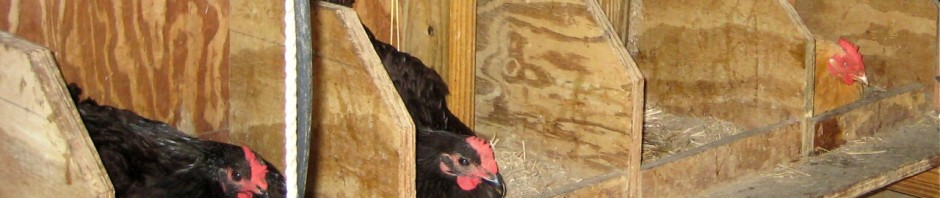
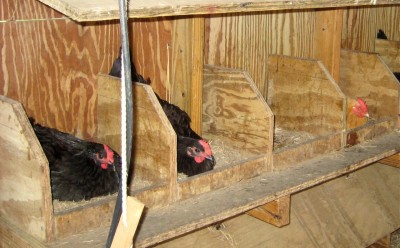
more-st-croix-chickensThe News Gazette had an article yesterday saying that the Champaign City Council has agreed to “schedule a study session” on the topic of legalizing backyard chickens.

Tom Bruno, who was the guy who offered me some encouragement when I inquired earlier seems ready to support the idea. Other members of the council sounded more ambivalent. The comments on the News Gazette article are decidedly mixed as well. (The people who object not because they think the chickens would actually cause any sort of problem, but because they’re afraid that it would make the area seem too “redneck” surprise me.)

So, it’s by no means a sure thing. Time to get organized.

Plaster copy of Venus de Milo.

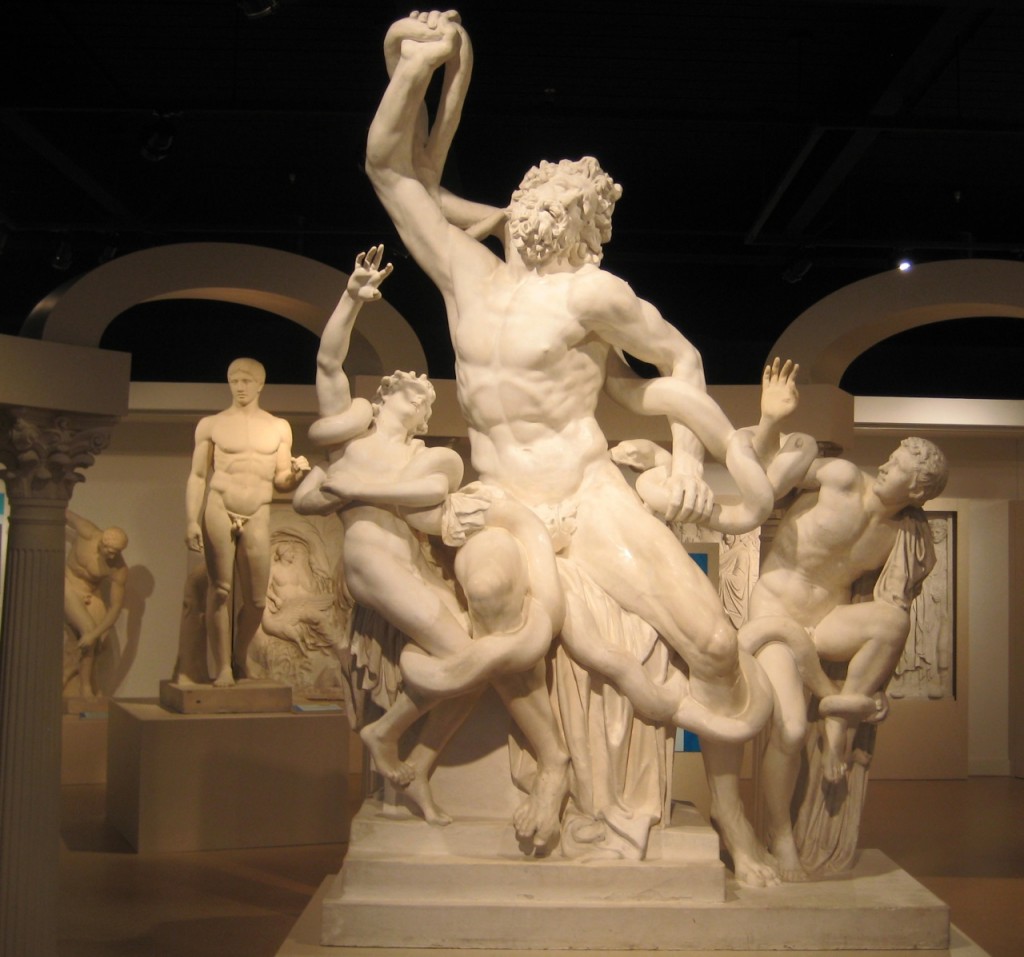
A hundred-odd years ago, a lot of towns and cities had their own museum. In those days, international travel was beyond the reach of ordinary people, and museums saw it as part of their mission to bring the great artistic and cultural works of the world to a place where ordinary people could see them. To support that, a whole industry existed making molds of the great works of European sculpture, and then casting plaster replicas of those works to be displayed in museums.

After all, the Venus de Milo can only be in one museum, but should only people who can get to the Louvre be able to see it?

A few decades later, fashions changed. Air travel and other changes made it possible for ordinary people to get to Europe after all, so they could see the great works of European art and culture. Rather suddenly, it no longer seemed like a great service to show people copies of the greatest works of art and culture.  Museums decided that they should show people originals—even if they could only afford 3rd rate originals.

julius caeser
Plaster copy of bust of Julius Caeser

Thanks entirely to great good fortune, at the time that this shift was at its peak, a budget crunch at the University of Illinois had virtually shut down the museums that are now known as the Spurlock Museum. They had so little money, they were unable to hire a director, meaning that there was no one in authority to throw out the plaster copies of the great works and replace them with 3rd rate originals.

At museums all over the country, an incredible number of these excellent copies—quite literally museum quality—were simply thrown away. But not those belonging to the Spurlock Museum.

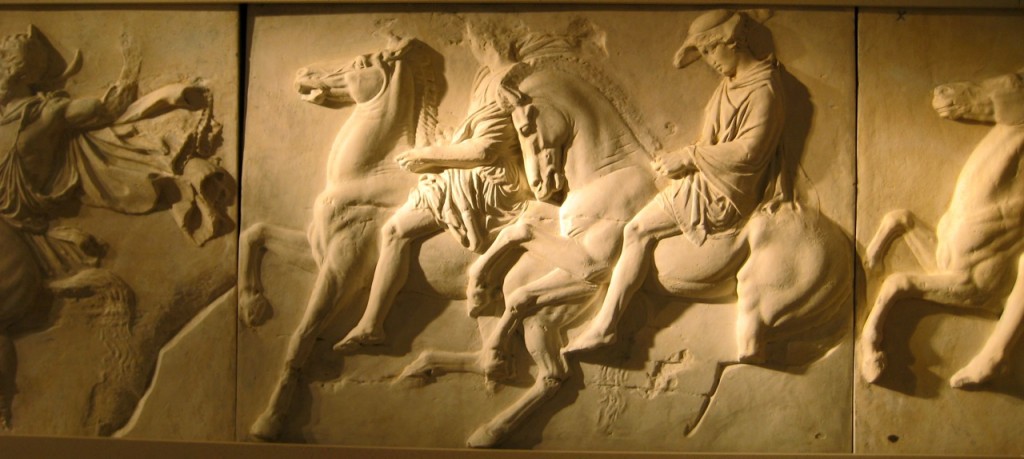
Among other things, we have a fairly complete set of replicas of the Elgin Marbles, made from molds taken before an ill-fated attempt at cleaning did serious damage to the originals. Scholars come from all over the world to study our copies.

elgin marbles
Plaster copy of frieze blocks from the Parthenon

I was going to the Spurlock Museum today, to attend a meditation class by Mary Wolters (an excellent workshop, by the way), and decided to catch an earlier bus so I’d have half an hour to look around the collection. I’d several times wished I had a picture of one or another items from their collection to use to illustrate a Wise Bread post, and I figured this would be a good chance to get a few photos.

Having taken a few, I thought I’d share some here.

spurlock scupture

If you’re local, don’t miss the wonderful Spurlock Museum.

During the debt ceiling crisis back in 2011, I suggested that it would be no big deal if the government just “prioritized” spending so as to match revenues for however long it took Congress to get its act together and raise the debt ceiling. I got some push back on this by people who said I was crazy if I thought that much spending would suffice, but I never thought it would suffice—I was just sure that the result would be so onerous that Congress would knuckle under in no time. I figured that was what the Treasury secretly had in mind.

I’ve changed my mind.

It would have gone like this: The laws are contradictory—Congress sets the tax rates, Congress sets the spending levels, Congress sets the debt ceiling. The poor Treasury, simply doing the best it could in a no-win situation, would hold up pretty much all payments except interest on the debt, judges pay, soldiers pay, and social security. Once payments to major corporations in districts where recalcitrant Congressmen lived got held up, the stalemate would have ended pretty quickly.

I no longer think that’s what’s going to happen. Basically, I’ve come around the view that the Treasury meant what it said when it claimed that its hand were tied: It is legally required to spend the money the Congress has appropriated, whether the money is raised or not.

And I think there’s a solution.

Really, it’s the same solution as the “platinum coin” solution or the “issue scrip” solution, but those solutions are just gimmicks to put a pseudo-legalistic shine on what basically amounts to paying our bills by printing money.

I don’t think there’s any need for the gimmick. I think what the Treasury means to do once the headroom for keeping under the debt ceiling runs out is: Nothing. They’ll just go on writing checks exactly as they’ve been doing.

They’ll stop issuing new debt of course, so there’ll be no new money in their account at the Federal Reserve to pay the checks.

At which point, I’m reasonably sure, the Federal Reserve will just pay the checks anyway—which the Fed can easily do by just crediting the depositing bank’s account. (In other words, printing the money.)

Basically, the Fed would let the Treasury run an unlimited overdraft.

This works on several levels.

First of all, it doesn’t require any reprogramming or rejiggering of the Treasury’s numerous systems for making all the many payments they make every day. (No entity makes more payments than the US Treasury.) That’s good, because any attempt to do so would be problematic at best, and probably catastrophic in the short term.

Second, the people who are being most recalcitrant about raising the debt ceiling are the ones who would be most outraged. (I can just see them frothing at the mouth. Oh noes! Inflation!!1!)

Third, under the current circumstances, it would probably be good for the economy. I’ve pretty much come around to Paul Krugman’s analysis that at the zero bound there is no inflation risk to printing money. Even better, if it did produce some inflation, that might get us up off the zero bound. (I for one would be very pleased to be able to earn a return on my capital.)

A generation ago the Fed would have hated this—bankers used to hate overdrafts in the deepest depths of their bowels. But overdrafts have been so profitable for banks these past 20 years or so, I expect we have a whole generation of bankers who have gotten over it.

As to whether it’s really legal or not, that’s something for the courts to decide. The debt ceiling applies to debt “subject to the limit.” The Fed and the Treasury will just say that, while an overdraft is debt, it’s not debt “subject to the limit.” The debt ceiling will be resolved long before any court case plays out.

The Treasury never admitted to having any contingency plans last time. Their take on it was that not raising the debt ceiling was unthinkable, therefore they would not think about it. But this is the only thing I can think of that could actually play out without chaos. If they weren’t planning on doing this (or something much like it), they’d have done something by now (such as having a dry run of their scheme for prioritizing payments).

Last time, I figured we’d get an 11th hour deal. This time, I think it’s pretty likely that the debt ceiling won’t get raised, and I think the Treasury will actually end up doing this—so I thought I’d share my thinking in case people find it useful.

It was on my first trip to England that I came to understand that what we think of as formal wear, business attire, and sports clothing was originally designed to be the most comfortable possible clothing for the circumstances. The circumstances in this case being the climate, technology, and infrastructure of England in the eighteenth and nineteenth century.

Without central heat interiors were going to be chilly, but even if you were quite frugal with your wood or coal they would not have to be really cold.

Given those indoor circumstances, and given that you had to make do with wool, silk, linen, and cotton (because there were no synthetic fibers), you would quite naturally end up with just the sort of garments that we now think of as being part of formal wear—wool coats and vests, silk bands to wrap around your neck, and so on. Sport clothing, of course, was for the sort of sports the English aristocracy engaged in: riding and shooting. Tweed and leather were very practical.

It seems obvious now, but it was something of a revelation to me. When I was younger, I always thought of that sort of clothing as being uncomfortable.

Partially that’s because such clothing is only really comfortable if it really fits. You don’t need a bespoke suit for it to fit correctly; even today good men’s clothing is routinely altered to fit. But clothing purchased for a child will never fit for long (and often never fit at all, because the child knows neither how the garment is supposed to fit nor how to articulate any issues discovered during the fitting).

Perhaps more important, such clothing is only comfortable in the sort of very cool environment for which it was originally designed. If your interior temperatures are around 60°F, you will be more comfortable in a wool coat over a wool vest than you would be in shirtsleeves. At 70°F it will be the other way around.

My attitudes toward such things has also been influenced by Jackie’s work with fiber. In my youth, my experience with wool was that it was scratchy, uncomfortable stuff (totally aside from it being made into garments that didn’t fit and were wrong for the climate). Now I’ve learned about the many different kinds of wool—starting with merino, of course, but by no means ending there—that are not scratchy. Now I have wonderful vests and sweaters, made to fit, from premium materials.

Of course, the top layers are really the last thing to think about. Comfortable clothing begins with the base layer. There again, my experiences as a child turned me against a whole very useful category: long underwear. Any clothing that you’re going to put another layer of clothing on top of needs to fit exactly right. An outer layer that’s too loose can be tolerated. But a too-loose under layer is going to get bunched up and shifted away from where it needs to be: Intolerable.

The ill-fitting hand-me-down long underwear I got as a child turned me against a whole category of garments that doubtless have an important role to play in comfortable dressing. I’m only now, more than two decades after returning to the Midwest, beginning to accumulate items for an appropriate cold-weather base layer. (I’ve made do up to now by having a wide range of top-layer options: spring jackets, fall jackets, winter coats, parkas, my Alaska pipeline coat.)

As a young man, I think I’d have been perfectly happy to wear nothing but shorts and t-shirts, and simply crank up the heat to make up the difference. My attitude has changed. If I had the money, I’d be very pleased to get and wear wool coats and vests, silk cravats, smoking jackets, and the like. Not because of the fashion statement they’d make (which would be a rather silly statement, however much I’ve come to appreciate a fine tweed), but because they’d be very comfortable.

Prairie plants
Prairie plants
Prairie plants

One utterly predictable consequence of climate change is that the price of northern farmland will rise as growing regions shift north.

Tobias Buckell yesterday shared a report that just this sort of price shift is now occurring—interesting to me because this result is not merely predictable: I predicted it my own self, way back when I was in high school.

Global warming was still pretty speculative then (in the 1970s), but people were already talking about the greenhouse effect and trying to figure what the result would be. At the time, I was mainly thinking about the geopolitical implications of  shifting the growing regions north—how things would change if Canada and the (then) Soviet Union were suddenly way more productive of food, while places like the United States, China, and France suddenly less so.

What I discovered, though, was that those northern regions aren’t nearly as fertile as places like Illinois, where 8,000 years of tall grass prairie left an incredibly thick layer of rich soil.

No matter how perfect the climate is, Saskatchewan is not going to produce the bushels per acre of Illinois or Kansas. Their soil is not only less fertile, it’s also much more fragile than the soil of the tall grass prairies. The fertile layer isn’t as deep, so the land must be plowed with greater care, and it will in any case be more quickly depleted.

I’m sure there’s a lot more and better data available now than there was back then, but I doubt if it changes the fundamentals. Shifting growing regions means winners and losers, but it also means less total food production.

Mike Tierney of the Navigating Your Money podcast interviewed me last week and has already put the show up. Listen to me natter on about frugal living here:

Episode #19: Live Like You Have More, On Less

I haven’t actually listened to it. I find the idea of doing so fills me with dread. (I’ve heard other people say similar things, but am a little surprised to find myself so strongly affected.)

Wise Bread’s Will Chen has assured me that I sound reasonably articulate:

I especially like the part where you explained that a budget is not a limit but rather a tool for showing you what you CAN have. The part about sharing tools is also a really awesome part. You did great, but the host is also really good. He clearly has read through your material and gets your philosophy.

So there you have it. If you’re interested in what I’ve been saying, but you want to hear it in my voice rather than reading it on the screen, here’s your chance.

The tea-party right was willing to risk the hard stop in spending that would have resulted from running up against the debt limit—a game of chicken that neither the Democrats nor the sane fraction of the Republicans could take the risk of losing.

The fiscal cliff looks a little similar, but it’s much less dangerous. It’s a game that lends itself to playing through to the end, because the risk of losing isn’t nearly so bad.

Suppose we did go over the fiscal cliff. What would happen?

First, tax rates would go up for everybody. That’s bad, but it’s not terrible. Actually, taxes at those rates would produce revenue roughly equal to the amount of government people seem to want.

Second, spending would be cut, with the cuts falling on almost everything except Social Security. A lot of good stuff would be cut, but that might not be such a stiff price to pay, considering that a lot of the things that ought to be cut (such as defense spending far beyond our needs) would otherwise be very hard to cut.

The result would be a rough year or two, hard on everybody from working-class folks to defense contractors, but all those problems would be fixable. In fact, Congress would love to fix those problems! Congress could cut taxes! (Just not as much as Bush did.) Congress could boost spending! (Just not to current levels.) Really, there’s nothing congressmen like better than cutting taxes and spending money on stuff.

The other details are similar. The AMT would strike middle-class folks hard, but that could be fixed, too. In fact, having to fix it would be an opportunity to improve it—turn it back into what it was supposed to be, a minimum tax rate that applies to everyone, no matter how many tax shelters they have or how many special preferences they qualify for. The end of the “doc fix” would hurt health care providers, but that could be pretty easily fixed too. (We’ll no doubt have to make a lot of small changes to healthcare stuff, once health care reform goes into effect and we run into the inevitable glitches.)

It’s always hard to raise taxes and cut spending, so it’s hard to do what needs to be done. But that’s why the fiscal cliff is so perfect. Once we go over the edge, we won’t need to raise taxes and cut spending—we’ll need to cut taxes and raise spending, and that’s dead easy.

Dive over the fiscal cliff, then fix things. It’s not perfect, but it wouldn’t be nearly as bad as what we’ve got now.