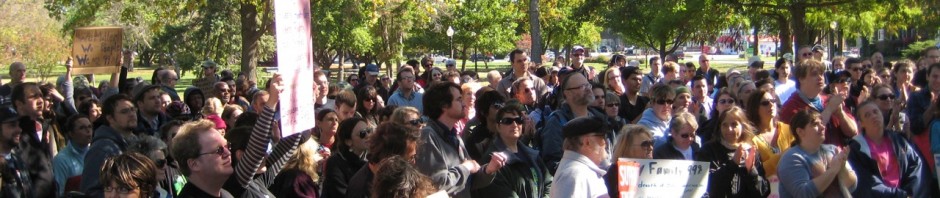
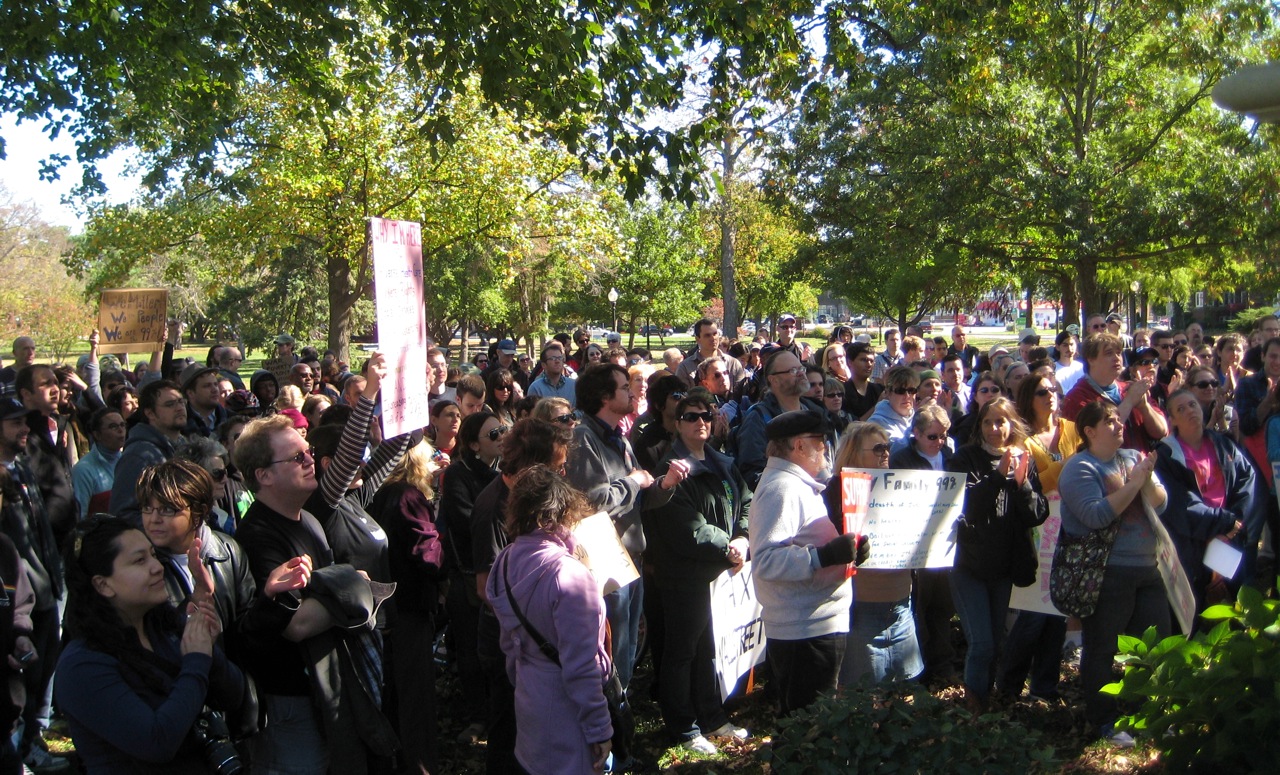
The crowd in West Side Park at the Occupy CU rally

I came out of college almost debt-free, because my parents paid for my education.

I got a job writing software. It was exactly what I wanted to do—the only thing I wanted to do as much as writing prose. I remember being glad that my manager didn’t know that I’d have worked for free, just to get access to the computers. (In 1981, computers were still expensive.)

I started my career right at the moment when software started to became important everywhere. Even though my degree was in economics, I had no trouble finding software jobs.

I got raises, because software went on becoming more important. Even when the companies I worked for fell on bad times, I found a new job without difficulty.

I saw things changing. After about 1990, jobs went away a lot quicker, and when they went away, they didn’t come back.

I was still okay, because software was still important.

I realized that software wasn’t going to remain special. I realized that millions of people around the world could write software just as well as I could. I realized that the ones in China and India could live a middle-class life on one-tenth the money I was earning. I realized that I couldn’t compete with them on price.

I figured I was safe for a while, but only because there were so many managers who were sure that an employee he couldn’t see working probably wasn’t working. But that wouldn’t last. Managers would adapt. And managers who couldn’t adapt would lose their jobs.

I started saving money. I could see that I wasn’t saving it fast enough, so I started living more frugally. That was a double win: Spending less left more money to save, and it also provided me with an existence proof that I could live on less.

I lost my job when Motorola closed its Champaign facility in August of 2007. By then, I had saved and invested a lot of money. Not enough to retire in any ordinary sense, but enough that I figured I could get by without a regular job.

I am a writer now. It’s exactly what I want to do.

I am very lucky. That’s not unusual; there are a lot of lucky people. What’s a little unusual is that I know just how lucky I’ve been.

I am the 99%.

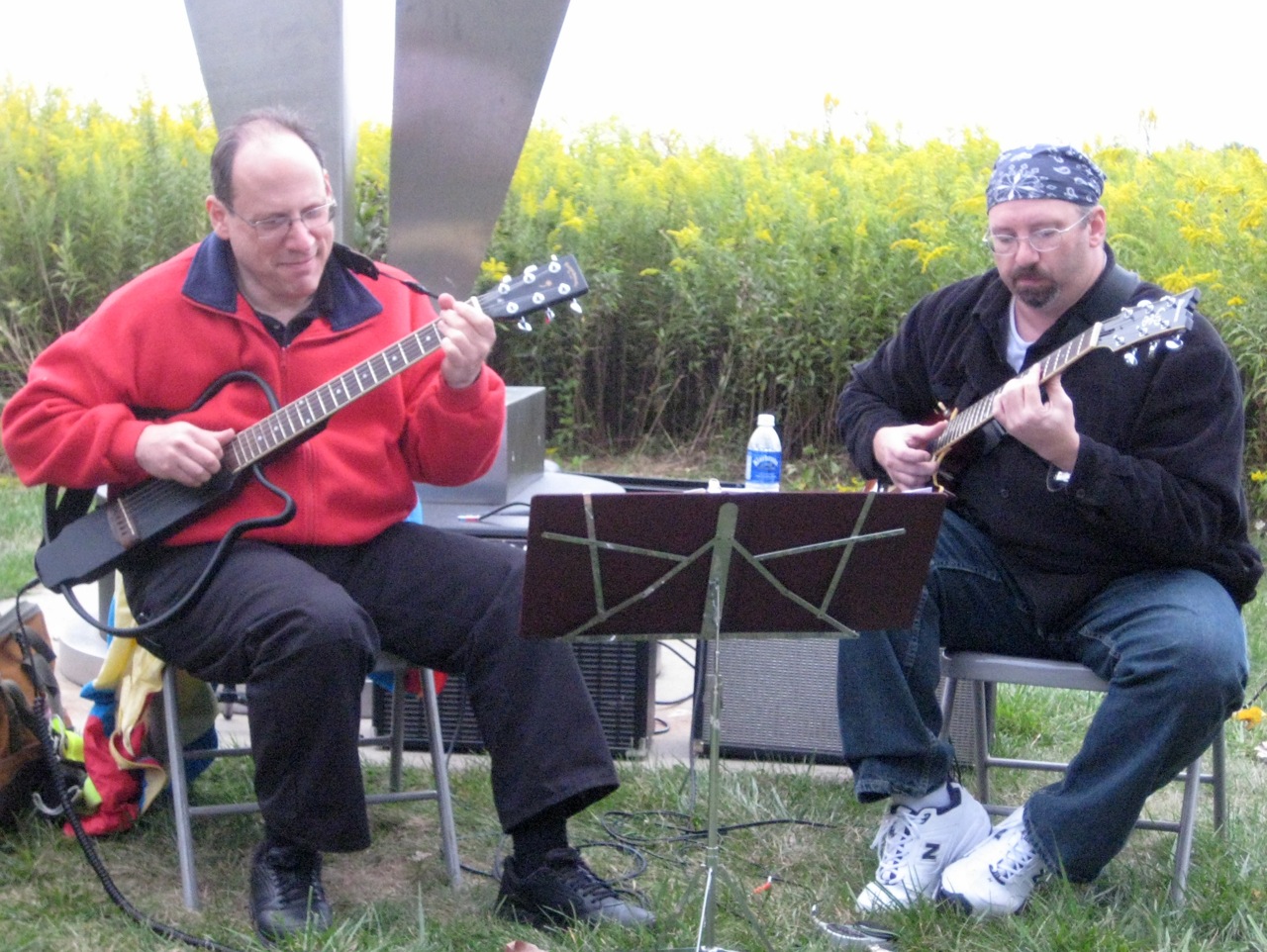
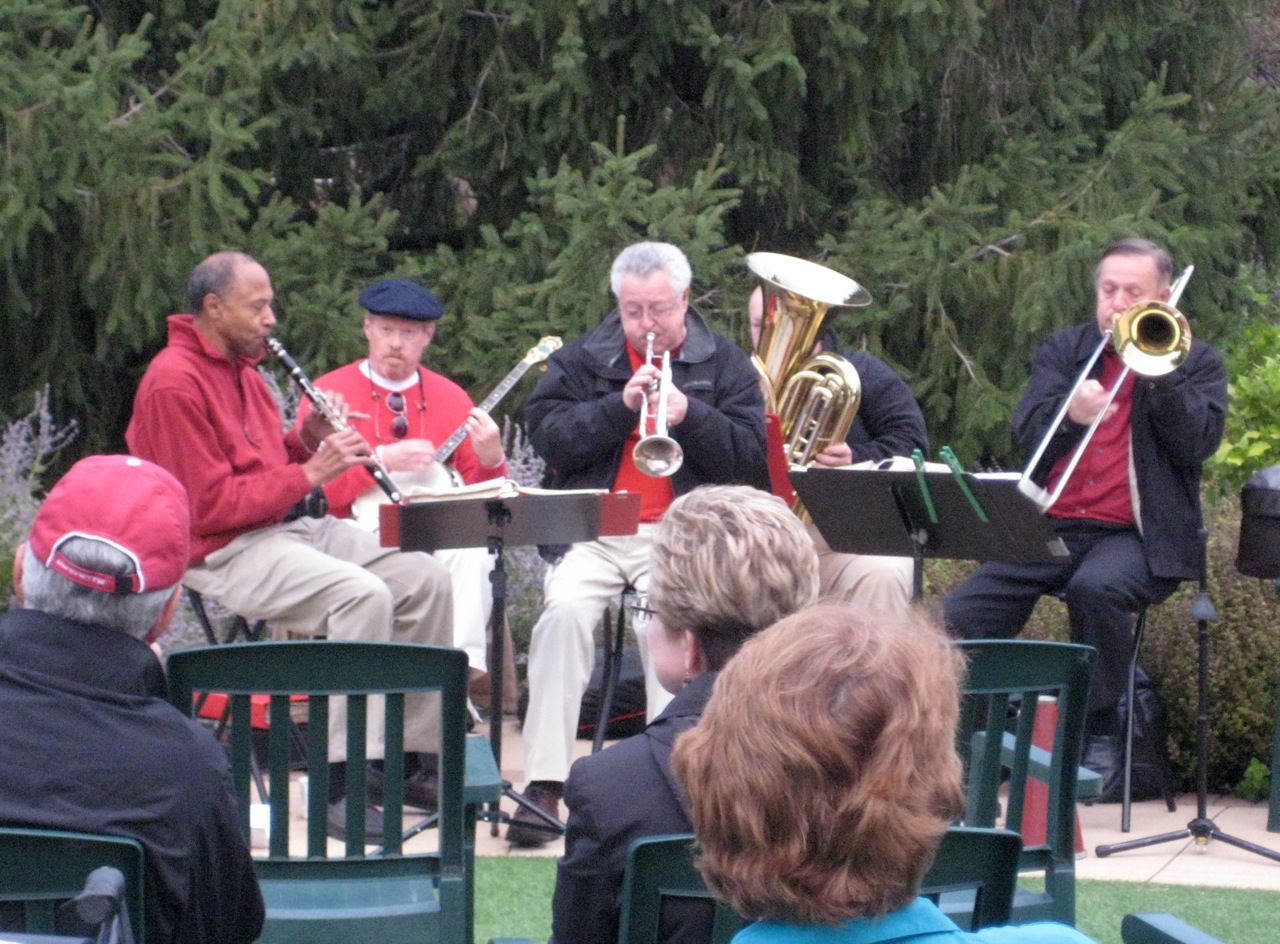
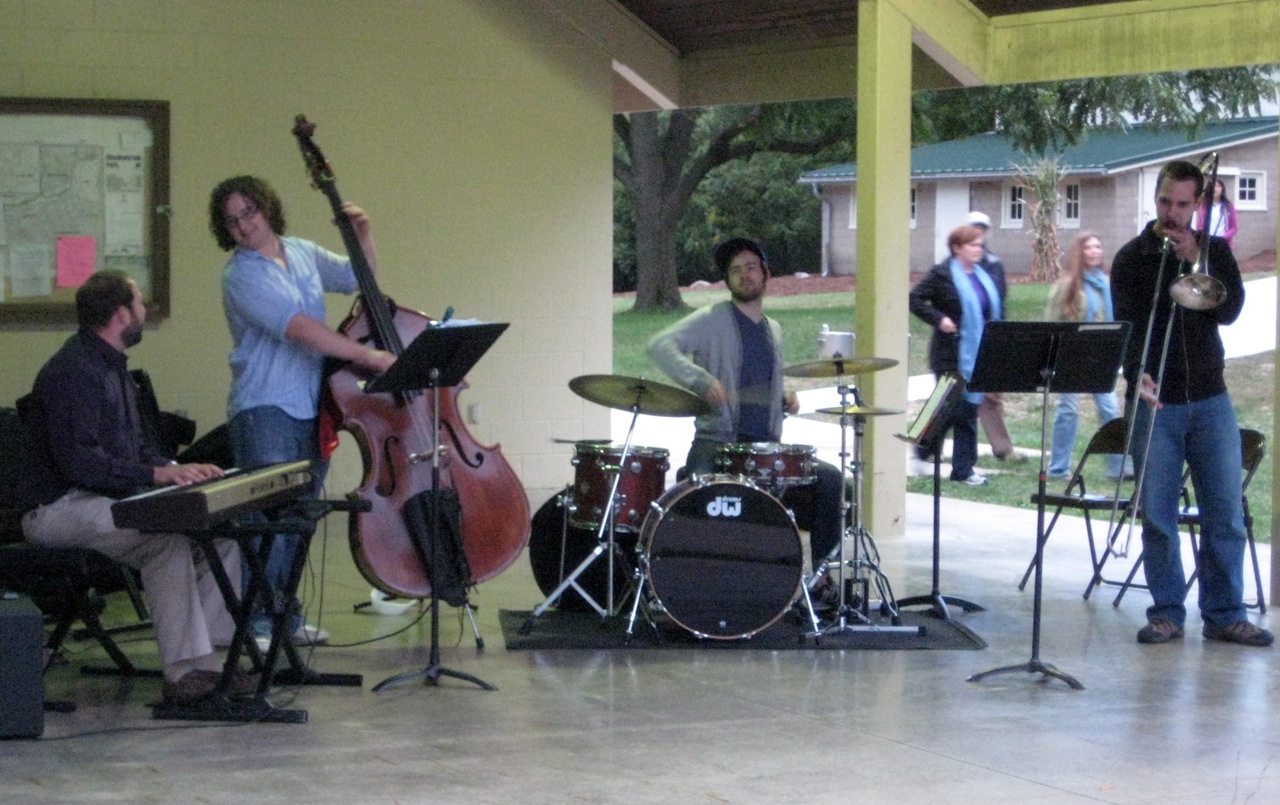
Johnathan Beckett and Young Kim performing at the 2011 Meadowbrook Jazz Walk

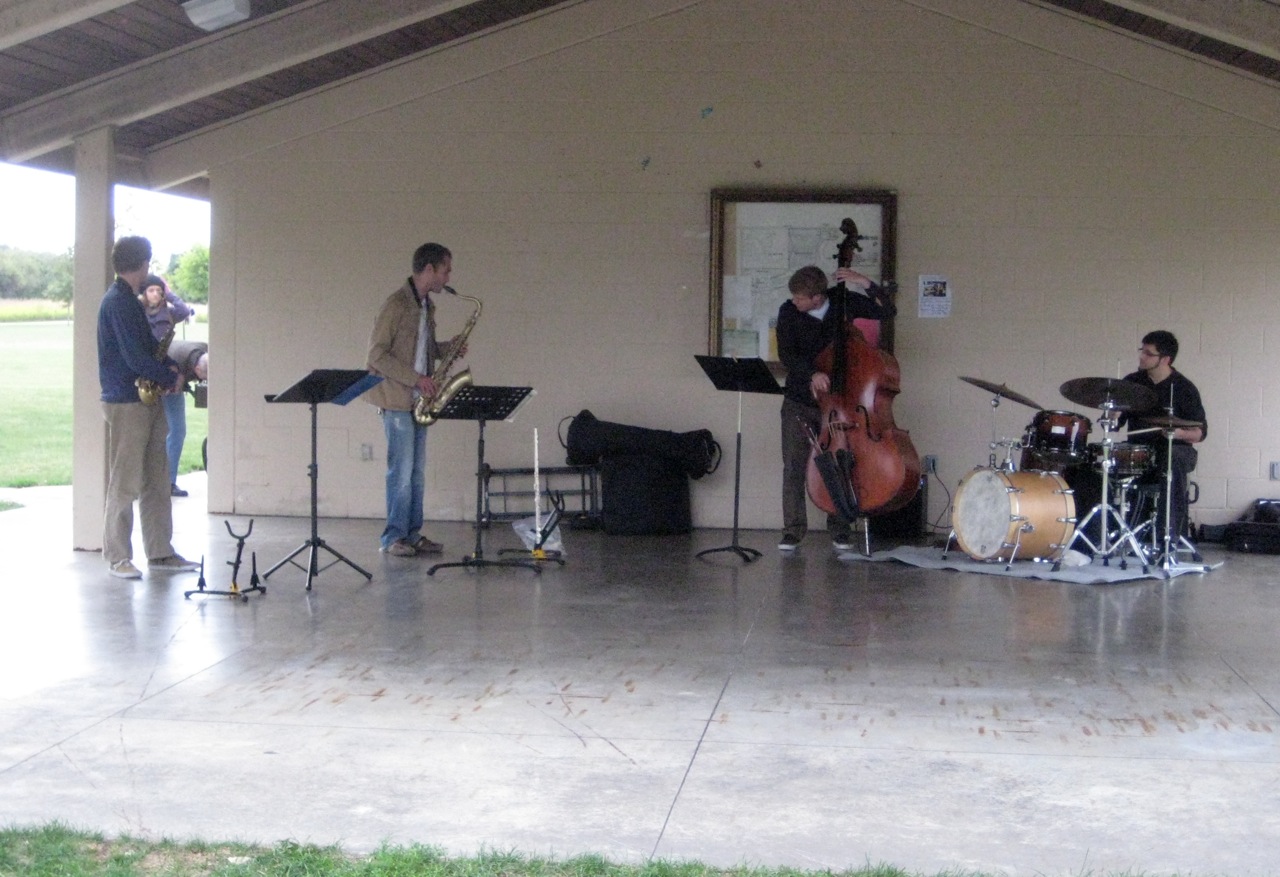
One of the unique events in Champaign-Urbana is the Jazz Walk. Bands (duos and small combos) are scattered across the sculpture garden at Meadowbrook Park, and you walk from one to the next. The result is a series of surprisingly intimate performances. You have each group almost to yourself, sharing one or two or three songs with a shifting mix of perhaps a dozen or so other pedestrians.

You can linger longer if you like, but the event only goes on for two hours, so if you spend too much time with one band it begins to eat into your time to spend with the others.

As a bonus, you get to enjoy the sculpture as well.

I liked all the music, even the groups that didn’t play exactly my sort of jazz had the sort of energy that makes a live performance worth attending.

It was a cool, cloudy evening, and was already getting a little dark for photography, but I thought my camera did pretty well—I got an adequate shot of each group, and a few pretty good ones.

Bluesnik performing at the 2011 Meadowbrook Jazz Walk
Bluesnik
Mark Smart and Mark Ginsberg performing at the 2011 Meadowbrook Jazz Walk
Mark Smart and Mark Ginsberg
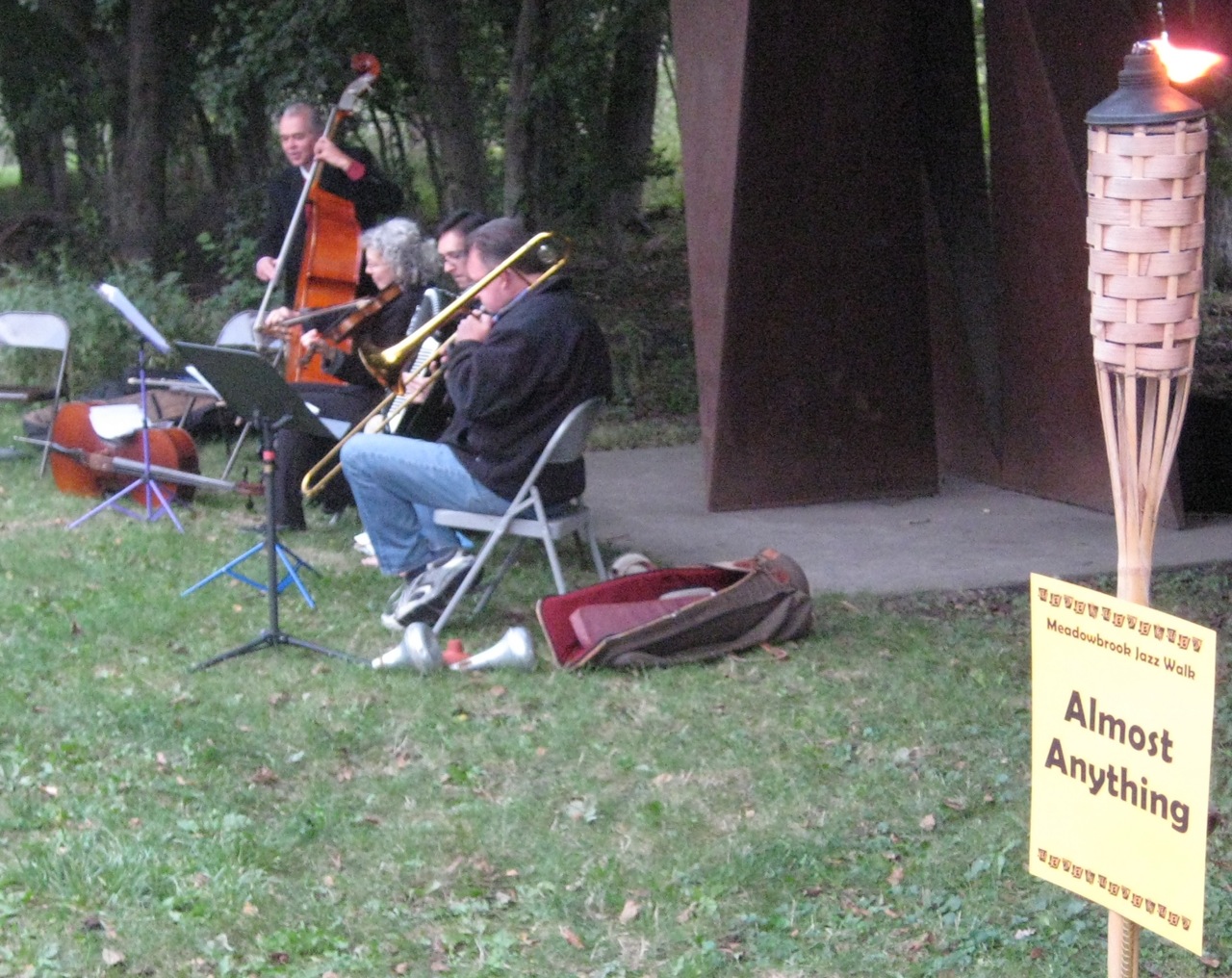
Almost Anything performing at the 2011 Meadowbrook Jazz Walk
Almost Anything
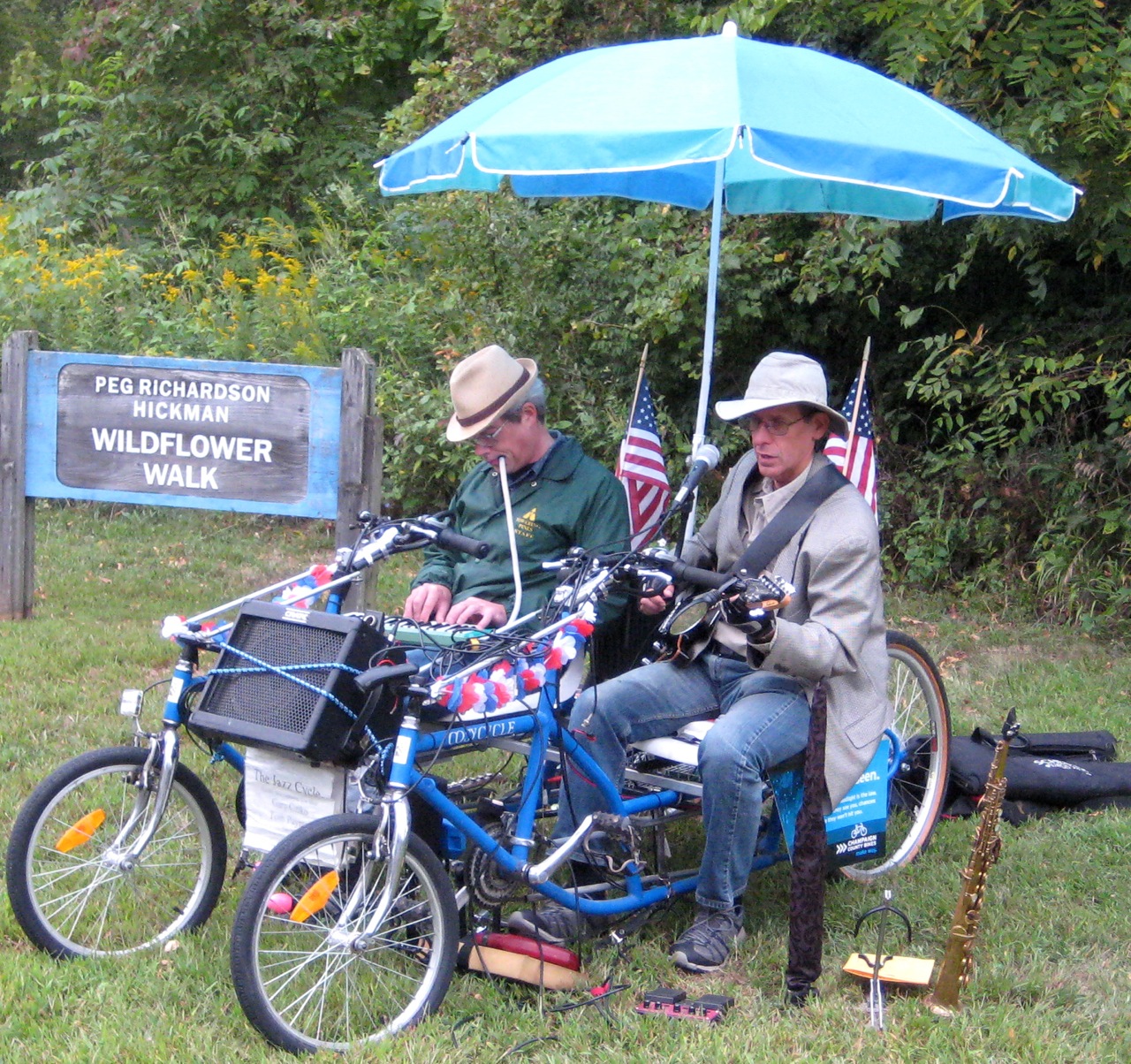
The Jazz Cycle performing at the 2011 Meadowbrook Jazz Walk
The Jazz Cycle
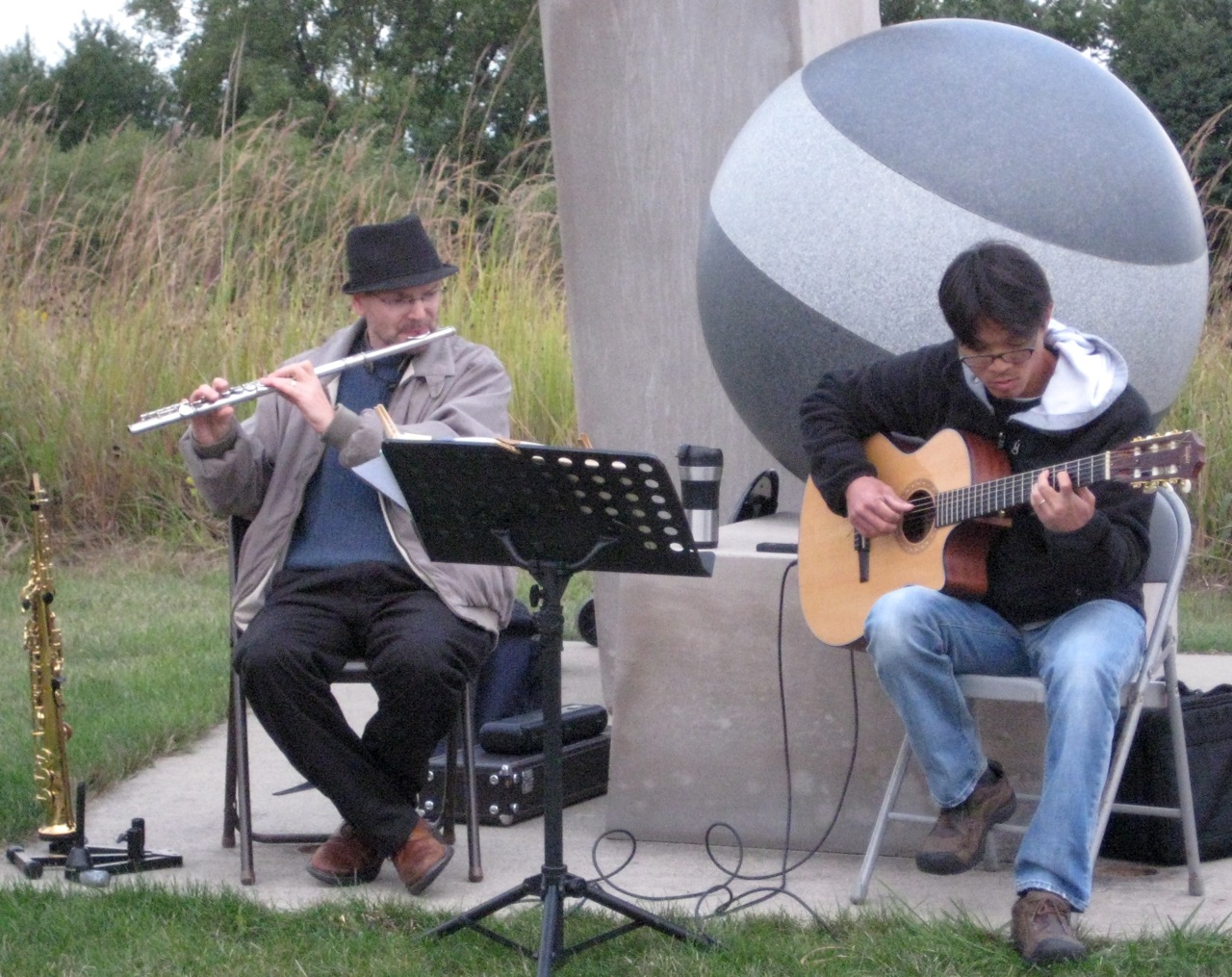
Johnathan Beckett and Young Kim performing at the 2011 Meadowbrook Jazz Walk
Johnathan Beckett and Young Kim
New Orleans Jazz Machine performing at the 2011 Meadowbrook Jazz Walk
New Orleans Jazz Machine
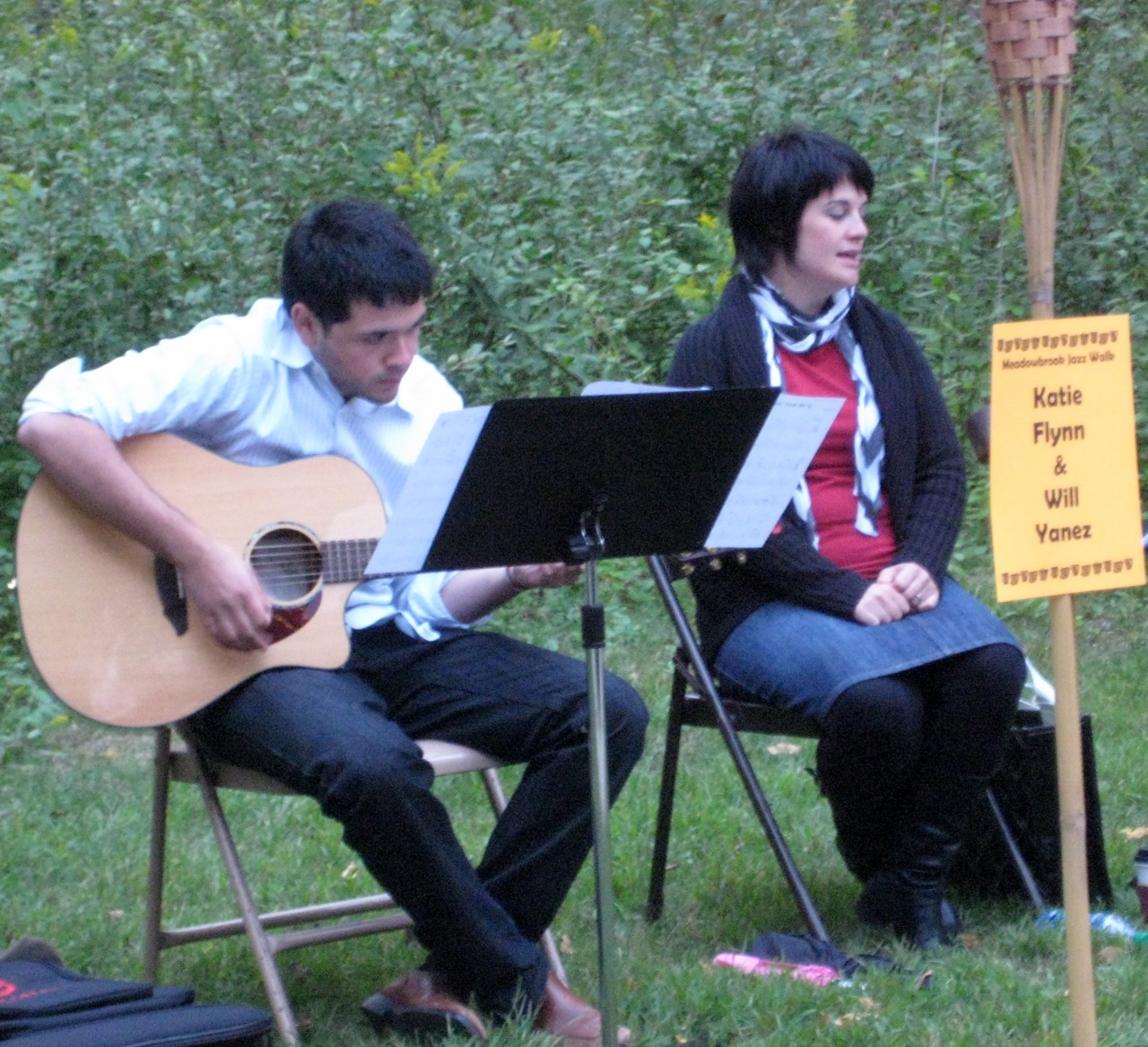
Katy Flynn and Will Yanez performing at the 2011 Meadowbrook Jazz Walk
Katy Flynn and Will Yanez
Peter and the Wolves performing at the 2011 Meadowbrook Jazz Walk
Peter and the Wolves

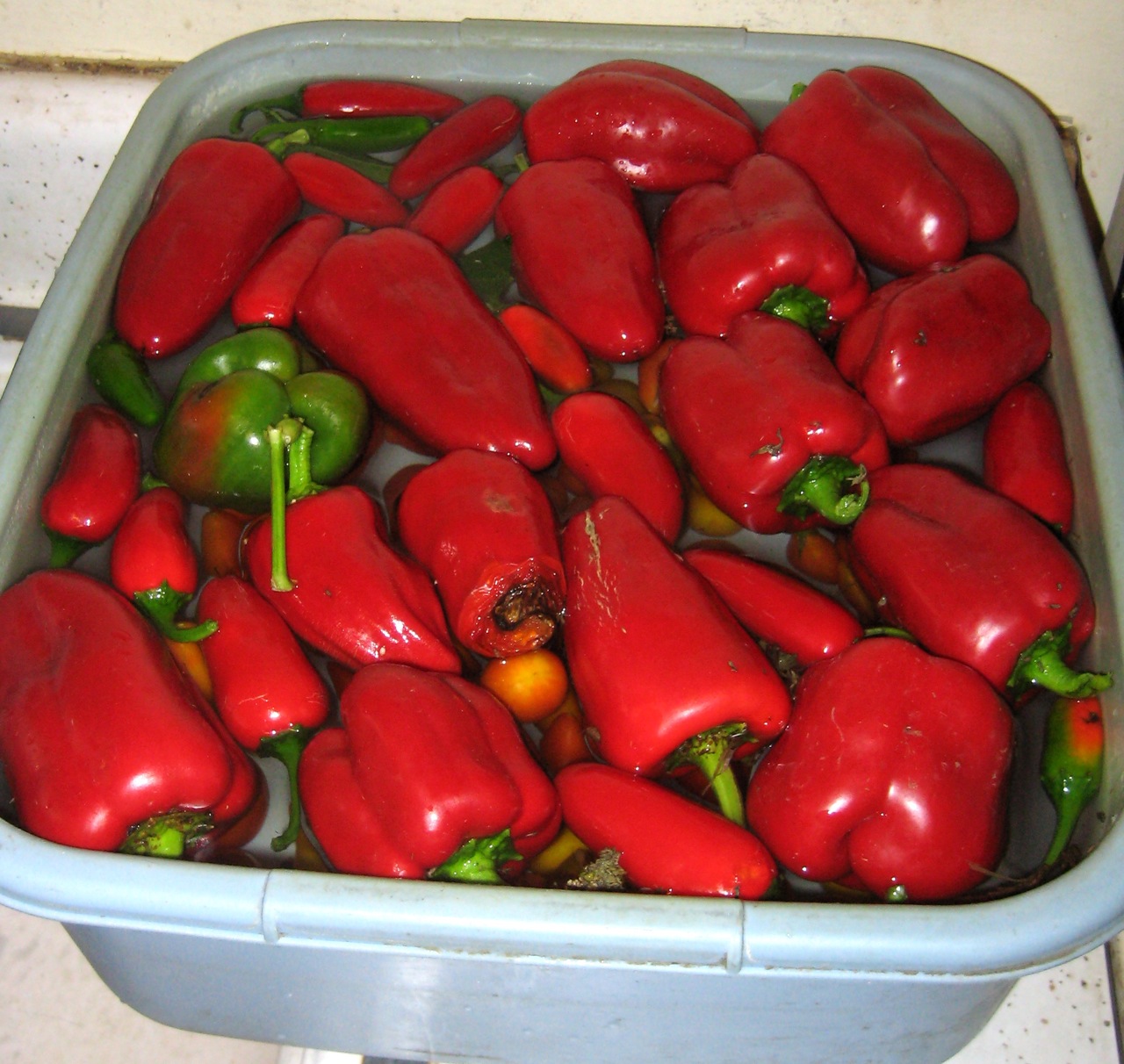
Our 2011 harvest of peppers
Washing our pepper harvest

After Jackie broke her wrist, we quit going to the garden. She couldn’t do that sort of work at all, and I was so busy trying to do the bare minimum of my work plus the necessary fraction of the work she couldn’t do any more, anything extra had to be dropped. The garden was one thing we dropped.

Jackie’s nearly all better now. The splint has been off for several weeks. The hand therapist said she was doing well enough on her own and didn’t need formal physical therapy. (He gave her a bunch of exercises to do.) But we still didn’t go to the garden. It just seemed like it would be too depressing to see the remnants and imagine what our garden might have been.

And yet, we figured there’d probably be some stuff to harvest. We’d had a hot, dry summer, so we didn’t expect the tomatoes to have survived. And without us there to do the weeding, we figured the greens would have been overshadowed terribly by weeds. But the sage should have survived, and perhaps the peppers as well.

As it turns out, it wasn’t even quite that bad. Two of our cherry tomato plants did very well. And, as you see, the peppers produced in great profusion. We also got some sage, some swiss chard, and a some sunflowers.

Now I’m feeling a little silly that we didn’t get to the garden earlier. We’d certainly have gotten a lot more sunflowers—we could have had flowers steadily for all these weeks. We’d also have been able to eat the peppers steadily as they ripened, instead of getting a whole bunch at once that we’re going to have to preserve. But not very silly. We did about the best we could under the circumstances. To have gotten this much of a harvest despite doing no work since early July is kind of a bonus.

Jackie and I went to the Forest Glen Preserve, a nature preserve in eastern Illinois, over near the Indiana border.

We scouted the campgrounds, because the local Esperanto group is planning to some tendumado. We found two, although there’s at least one more.

One is a pretty ordinary Midwestern campground with a mixture of tents and RVs. It was pretty full, but only as crowded as you’d expect on Saturday morning of Memorial Day weekend. It had showers and flush toilets, firewood on sale, etc.

Near that one (but far enough away that noise wouldn’t be a problem) was the “tent campground.” It was different in that it didn’t have parking spaces for the campsites. There was an area just a few yards away where you could leave your car for up to 20 minutes to unload, and then you were supposed to move it to a parking area that was still really quite close—I’ve carried my luggage further in a hotel. Still, it seemed to be enough to discourage campers. Even Memorial Day weekend, there was nobody there—sixteen vacant campsites. (It did lack flush toilets. Also, the recent rain had left some of the campsites under water, although the dry sites were also vacant.)

Once we’d scouted the campgrounds, we went for a hike. We picked the Big Woods trail, which a posted list had described as the most rugged of the preserve’s trails. We took that with a grain of salt. Here in the flatland, pretty much any change in elevation seems to qualify a trail as rugged,  but it was somewhat rugged. The train went down twice into ravines, then back up again, and ended at an observation tower at what I assume is the high point of the preserve.

We saw plenty of neat stuff—sugar maples and tulip trees, white oak, sassafras, ferns, various kinds of mushrooms. (I saw what might be the tallest sassafras tree I’ve ever seen. It was huge. I usually think of sassafras as being scrubby little things.)

The trail was muddy, but only very muddy in a few places (plus, of course, the places where it crossed running water). We ran into three very wet, dirty guys with tools who said they’d been doing trail maintenance.

The trail was only a little more than 1 mile, but out-and-back so we got in maybe 2 ¼ miles of hiking.

We left it at just that much hiking, because we still needed to go to the Viking Reenactment, which was the reason that we were visiting Forest Glen this weekend in particular.

Two of the reenactors seemed to focus on fiber crafts. One is a member of the spinners and weavers guild, and was using some of Jackie’s handspun yarn to demonstrate weaving with a warp-weighted loom. We had a fun chat.

The other fiber-crafty person told us about her theory of mud-colored peasants. Many reenactors, she said, end up with clothing in colors of sheep, because dyeing fabric is another whole skill that you need to learn—and making your own natural dyes is two or three more skills (growing or gathering dye plants, and learning how to prepare them for dye use). However, in her experience meeting actual modern-day poor peasants, even the really poor ones go to considerable effort to not be the color of mud. Hence, she proposed, actual Viking-era villagers probably wore clothing that was as brightly colored as possible, within the limits of the natural dyes that were available to them. (They had several sources of yellow, yellowish green, red, and purplish red. Blue was available. A really good green was tricky, because you had to get a good yellow and then overdye with blue.)

Despite her theories, all the other reenactors seemed to be wearing clothing in natural colors.

What with scouting and hiking and viking, it was already lunch time. We had lunch at Gross’ Burgers, then headed home (pausing just a bit at a rest stop to let a severe thunderstorm pass).

A good outing.
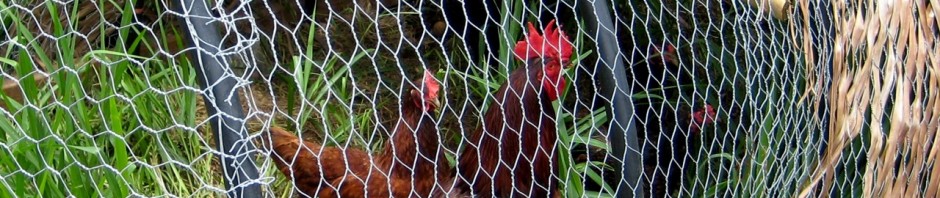
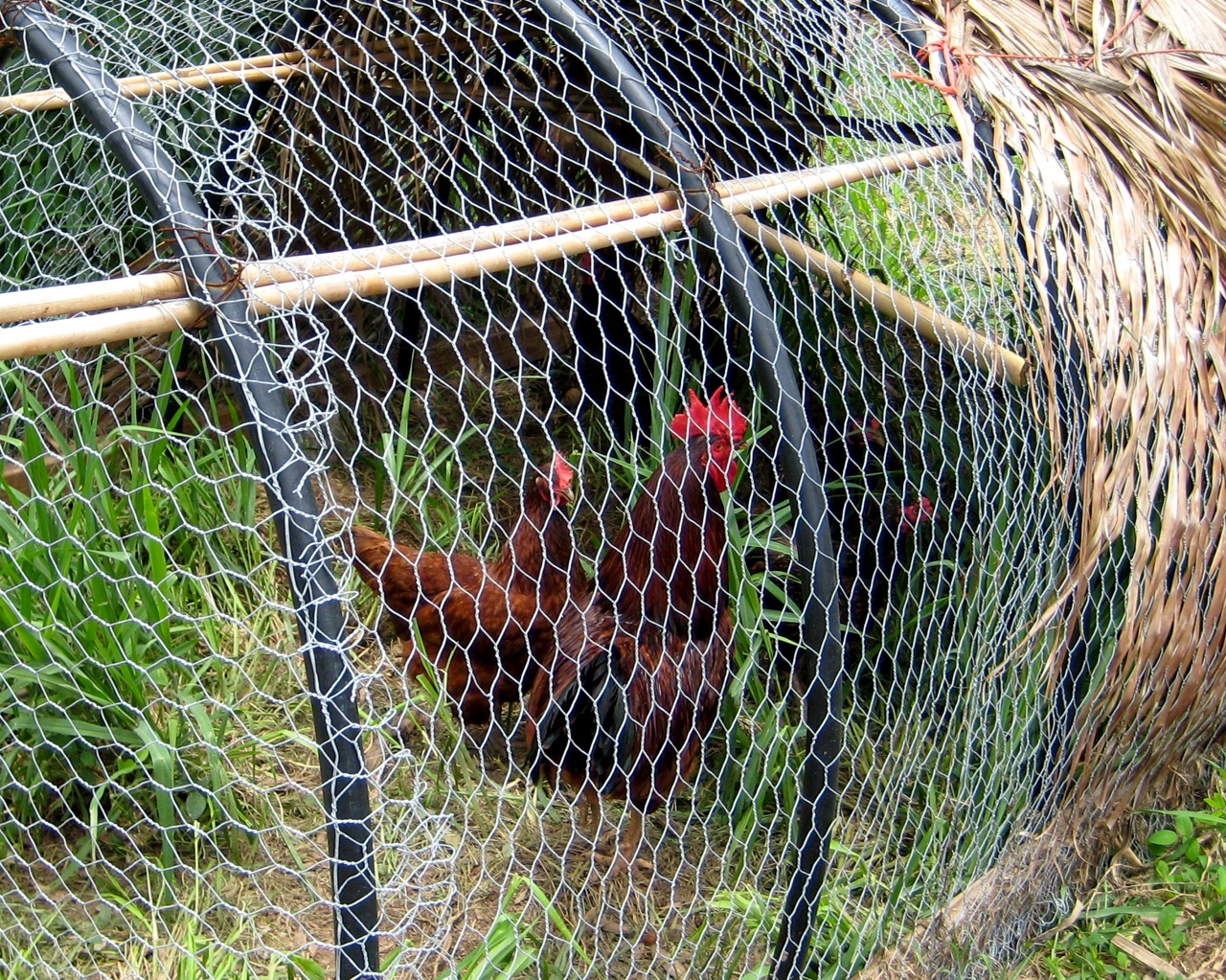
Chickens in chicken-wire enclosure
Sustainable chickens

There’s a letter to the editor in today’s News-Gazette from Clarence Surma advocating for legalizing backyard chickens in Champaign.

In addition, he’s announcing a public meeting on the topic at the Champaign County Farm Bureau on June 2nd at 6:30 PM.

I would have liked to provide some useful links, but the News-Gazette doesn’t seem to have letters to the editor available on-line, Clarence Surma doesn’t seem to have any web presence at all, and I couldn’t find any mention of the meeting on the Farm Bureau’s website. So, not much to link to. I’ve got email in to the Farm Bureau asking for details, and will update here I find learn any more.

If anybody has any links, I hope they’ll share in the comments or by email to me.

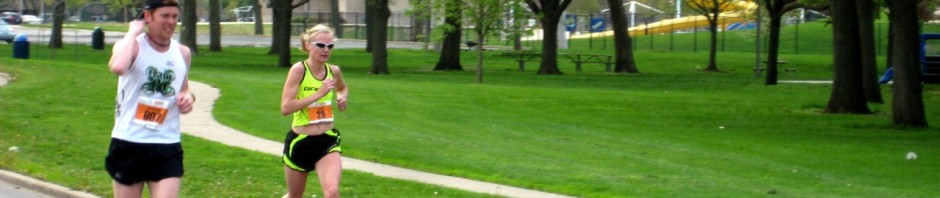
Illinois Marathon runnings near mile 18
Lucie Mays-Sulewski in the lead near mile 18 of the Illinois Marathon

Several miles of the Illinois Marathon course run quite close to our apartment, so I thought I’d wander over and watch some of the elite runners go by.

The people who win a marathon run at about a 5-minute-mile pace. So, with the nearest point along the course being roughly mile 18, I figured they’d come past about an hour and a half after the start. My figuring was just about right, but I was a little slow getting out of the house, so the first two runners went by while we were still a block away.

We got to see the rest of the top men go by. They were pretty spread out—it doesn’t look like this is going to be a tactical race at all.

It was a grey, cool day. A bit windy for anyone hoping to get a great time, but otherwise perfect for running a marathon. It was, however, just a bit chilly for standing still. We watched runners go by in ones and twos until we saw the first of the women go by, then headed back home.

[Update: Checking the results, I see that the woman in the picture is Lucie Mays-Sulewski who went on to finish first among the women (and 24th overall) with a time of 2:52:54.]

Both my brother and the local makerspace’s Brian Duggan shared the link to the EFF’s Why We Need An Open Wireless Movement. Steven, because he’s the only person he knows who actually does run an open access point for his home network, and Brian because the local meshing network access point project is already able to provide this part of the necessary functionality.

At the meeting last night with some of access point folks, we got a quick demo of how to configure an access point running OpenWrt so that it provided both a closed network with access to the LAN and an open network that only had access to the WAN (hence, no access to local servers, printers, etc.).

The demo didn’t go as far as to show how to configure the system with quality of service limitations on the open network (so that random strangers can use your network, but can’t suck down all your bandwidth). Figuring that out will be one of my next steps.

There’s some info on OpenWrt’s quality of service page, but it’d be really nice to have an example with some appropriate settings that would allow some basic email and web surfing while leaving most of the bandwidth of a typical cable or DSL connection available for the connection owner. I haven’t found that yet. (Actually, I think I understand why it doesn’t exist. The upload and download speeds are set in kBits/s, so the correct values depend on the speed of your underlying connection. Values that shared 10% of a fast cable-modem connection could consume a large fraction of a DSL connection. Still, it’d be nice if there were some suggested values for typical configurations.)

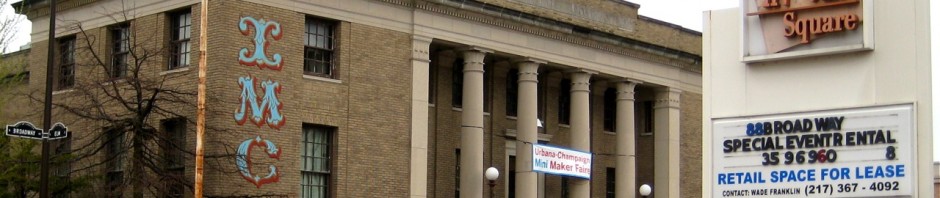
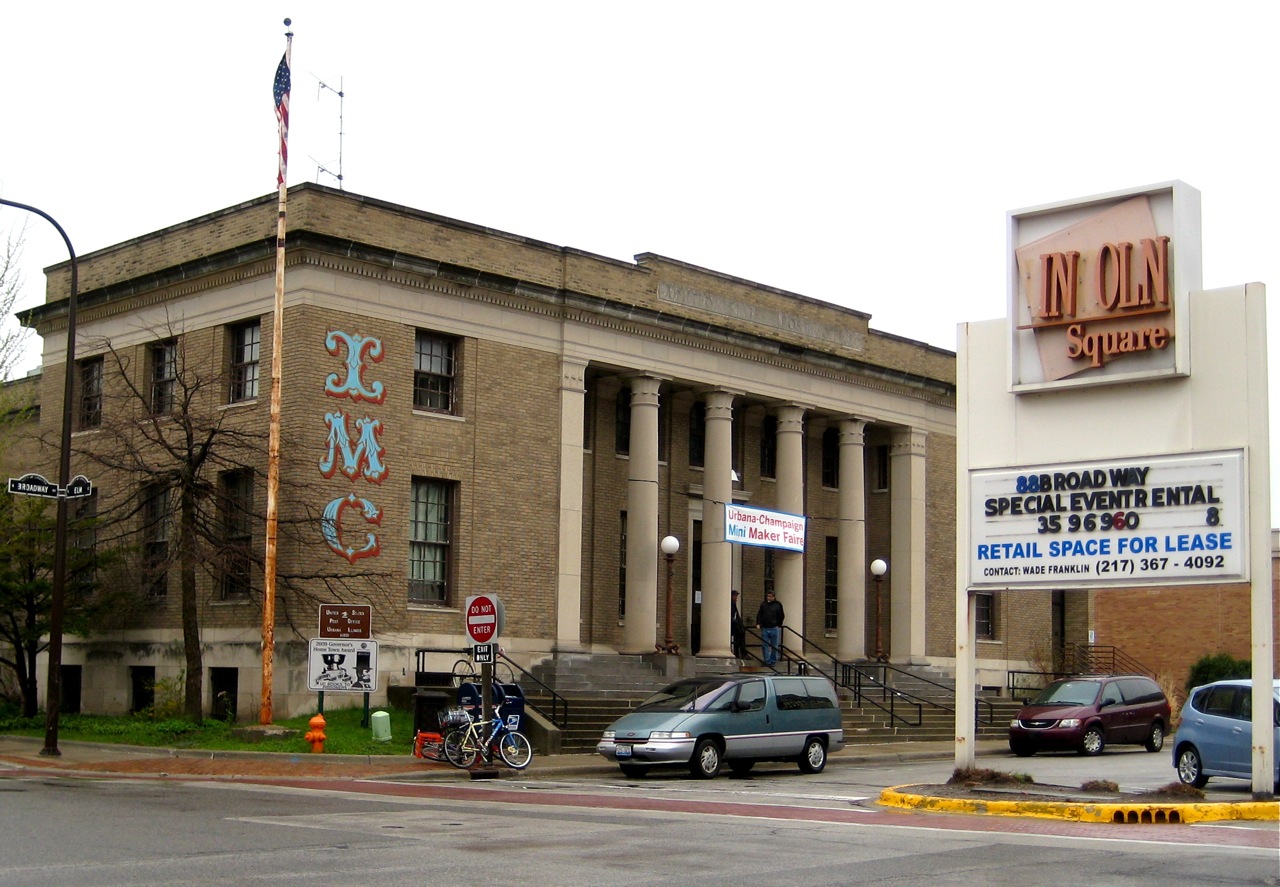
independent Media Center
Independent Media Center in Urbana

Jackie and I spent Saturday morning at the Maker Fair at the Independent Media Center in downtown Urbana.

I’m late to the Maker movement. Being very much not handy, I’ve always avoided making things. It’s part of the reason that both writing and software have always appealed to me—you don’t have to actually make anything.

Gradually, though, I’ve been coming around.

For one thing, I’ve come to appreciate two ideas: Getting help, and starting by learning the narrowest possible skill set (which can then be expanded if you enjoy the activity).

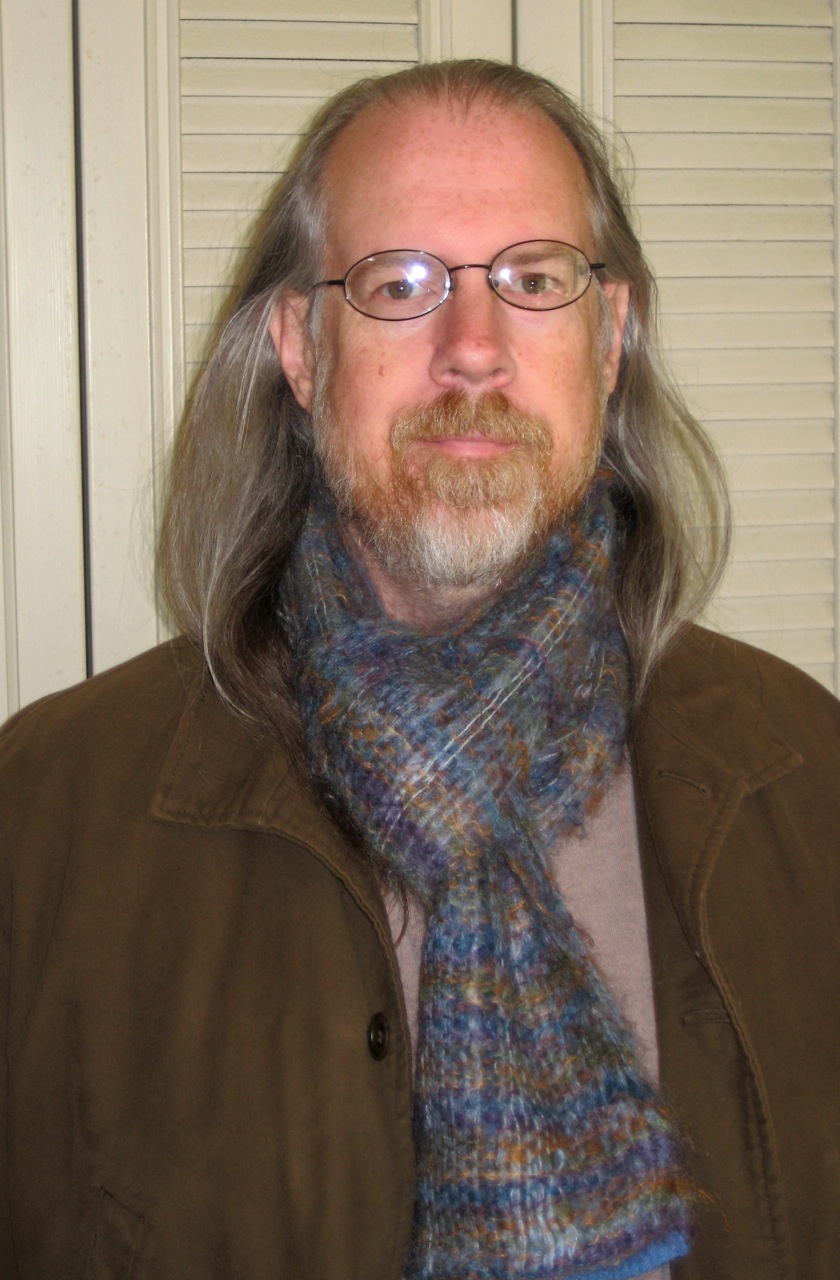
Me wearing the scarf I wove
Me wearing the scarf I wove (photo by Jackie Brewer)

For example, a couple of years ago, I wove a scarf. I say I wove it, and that’s technically true: I did all the weaving. However, I had quite a bit of help with the other parts. In particular, Jackie wound the warp and put it on the loom. (I came up with the design myself, based on some scarves that we saw for sale that were surprisingly inexpensive for handwoven. The key to the modest price was that they used fuzzy yarn set very wide—about 4 threads per inch. That meant that it both used less yarn and took less time.)

If I’d had to wind my own warp and put it on the loom myself, I doubt if I’d have made it. I’d have had to learn three new skills, and I’d have had to execute all three without making any unrecoverable errors. Instead I got gentle introductions to two of those skills, and actually learned the third. And I made a scarf.

The Maker Fair was great. There’s all kinds of cool stuff going on in Champaign-Urbana. We had great fun talking with Jonathan Manton who was making paper polyhedrons using Inkscape images of the flat shapes of the faces, software he’d written that added tabs and slots, and then a digitally controlled paper cutter to cut out the shapes. He called the whole thing the Large Hedron Collider.

One of the most interesting things that I hadn’t been aware of is the FabLab, a community facility sponsored by the University (and many other organizations) that has various fabrication devices—computer-controlled cutters, routers, engravers—available for use by members of the community. We’re definitely going to spend some time there.

Brian Duggan (one of the organizers, and a guy I know from work) told me that there was a group there working on deploying a meshing networking system, an important technology for protecting our rights. (See my recent post on whether civil unrest would threaten our network connectivity).

Lots of other cool stuff: model rockets, zines, art, music, etc. I’m going to have to get more involved with all this. In particular, I’m planning to start going on Thursday evenings to get involved with the meshing networks project.

National Petascale Computing Facility

Jackie and I got a tour of the NCSA’s National Petascale Computing Facility at the University of Illinois today, where they’re getting ready to install the Blue Waters supercomputer.

This picture shows just the power stations—all the space between these units will, over the next few months, be filled with rack after rack of water-cooled POWER7 modules. (A big part of the building houses cooling towers to dissipate that heat).

There are a couple of supercomputers already installed at the other end of the room, including the EcoG, designed and built by students to enter into a contest for energy-efficient supercomputers. (It took 3rd place overall , and was declared the “greenest self-built cluster.”)

It was build on ordinary commercial-grade racks, which turned out not to be quite strong enough to support all the hardware they were installing—you can see where they braced it with two-by-fours.

A week earlier, we’d attended a tour of the NCSA’s Data Visualization Lab, where we’d been treated to a bunch of 3D videos (shown on a very large, very high-res screen) produced on various supercomputers. It was pretty cool, but I didn’t get any photos worth sharing.

Because I’m a big geek about security and related topics, I was particularly interested in the facility’s secure entry. Employees need to swipe a proximity card and submit to an iris scan. Only after the cylinder closes behind them does it open in front—and it won’t do that if a weight sensor suggests that there’s more than one person in the cylinder.

Secure entry at the National Petascale Computing Facility

Those of us on the tour just walked in through a door next to the secure entryway.

Our new "water amenity."

Our new "water amenity."

I was trying to come up with a word to describe the degree of progress they’d made toward finishing the landscaping here. The dirt is there, so it isn’t landless-scaping, and the contours are in place so it isn’t land-scapelessing. With only one remaining word fragment to work with, all I could come up with is landscape-ingless.

(I blame English for using “landscaping” to refer to both the changes made to the land itself and to features like sculptures and plantings.)

Every since they first tried to sell the community on turning Scott Park into a detention pond by claiming that “anyplace else it would be considered a water amenity,” Jackie and I have been using the term “water amenity” for any feature constructed to deal with the runoff from development.

There’s nothing like calling your ditches, impoundments, detentions, and retention ponds “water amenities” to class up the joint.