
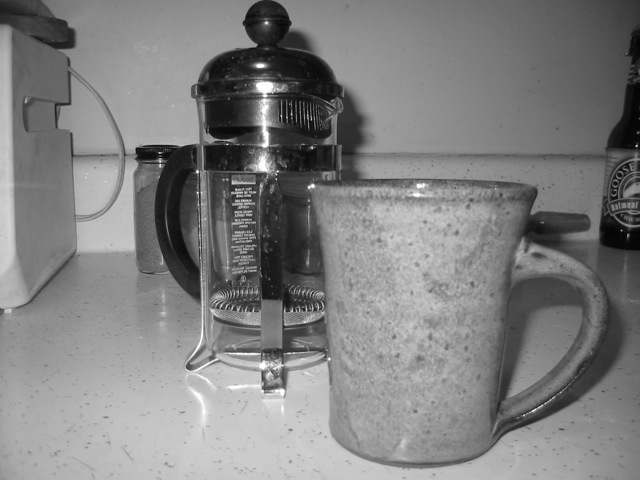
Today is National Gourmet Coffee Day! (Bonus: At Great Harvest Bread Company, where Jackie is working these days, cups of coffee are 50% off today.)

Today is National Gourmet Coffee Day! (Bonus: At Great Harvest Bread Company, where Jackie is working these days, cups of coffee are 50% off today.)
I’d been feeling somewhat glum these past two days, so I decided to take steps. Specifically, I paid a visit to the Conservatory at the Plant Sciences Laboratory at the University of Illinois.
 It’s a nice space to visit on a winter day. It’s warm. It’s humid. It’s full of plants.
I’d been meaning to go since before Christmas, but the University’s closure over the holidays made it seem simpler to just wait, and then my glumness made it seem suddenly rather urgent, so today I just dropped everything to go for a short visit.
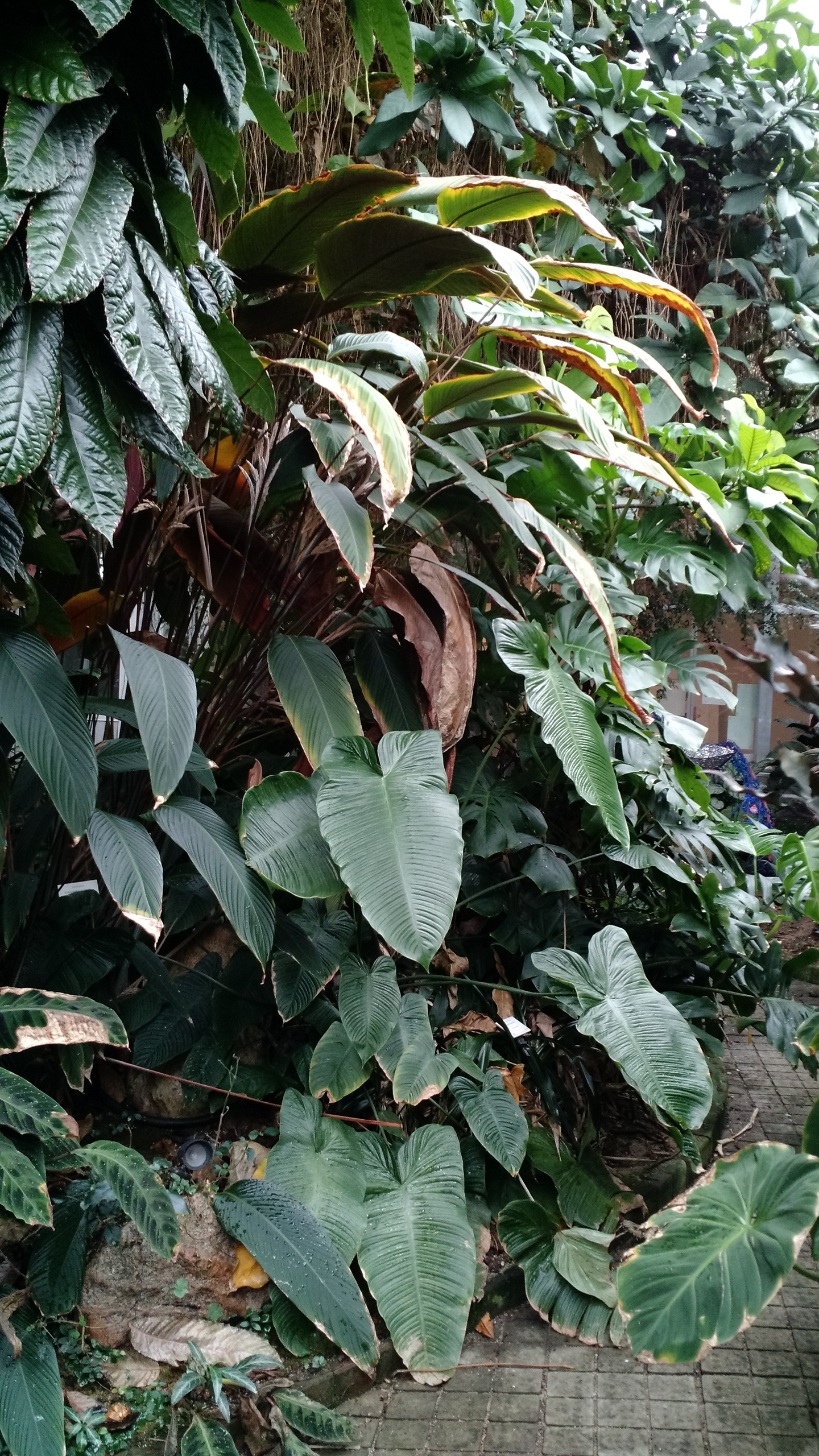 Longer term, I want to return for a more deliberate visit. I want to return on a sunny day, and see what some bright sunshine does to the space. I want to bring art supplies and spend some time drawing, rather than merely taking a few quick snaps the way I did today.
 But today, this is what I had time for, and I think it has been of some help.
 I think the Conservatory, like an art museum, will reward repeated visits.
In the meantime, enjoy these pictures and imagine that you’re someplace warm and humid and filled with tropical plants.
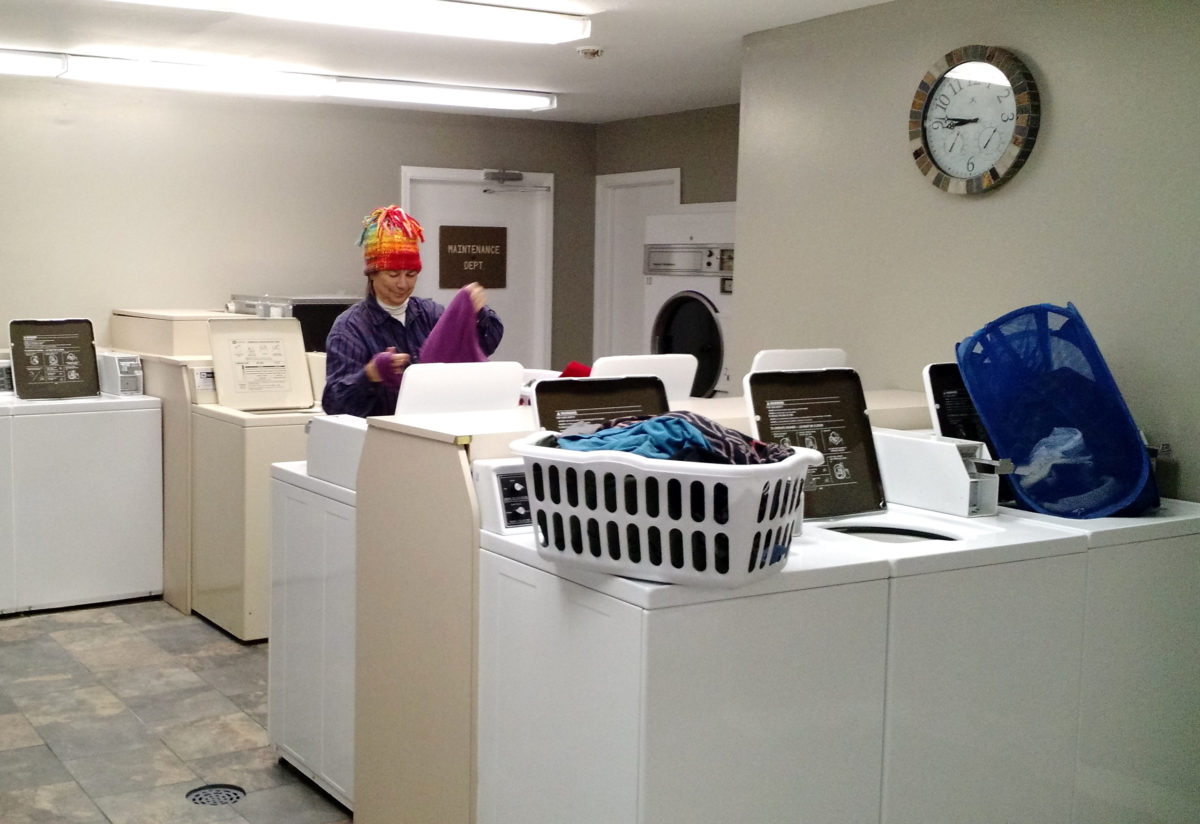
The Winfield Village laundry room is open again, after having been closed for a week to put in new flooring.
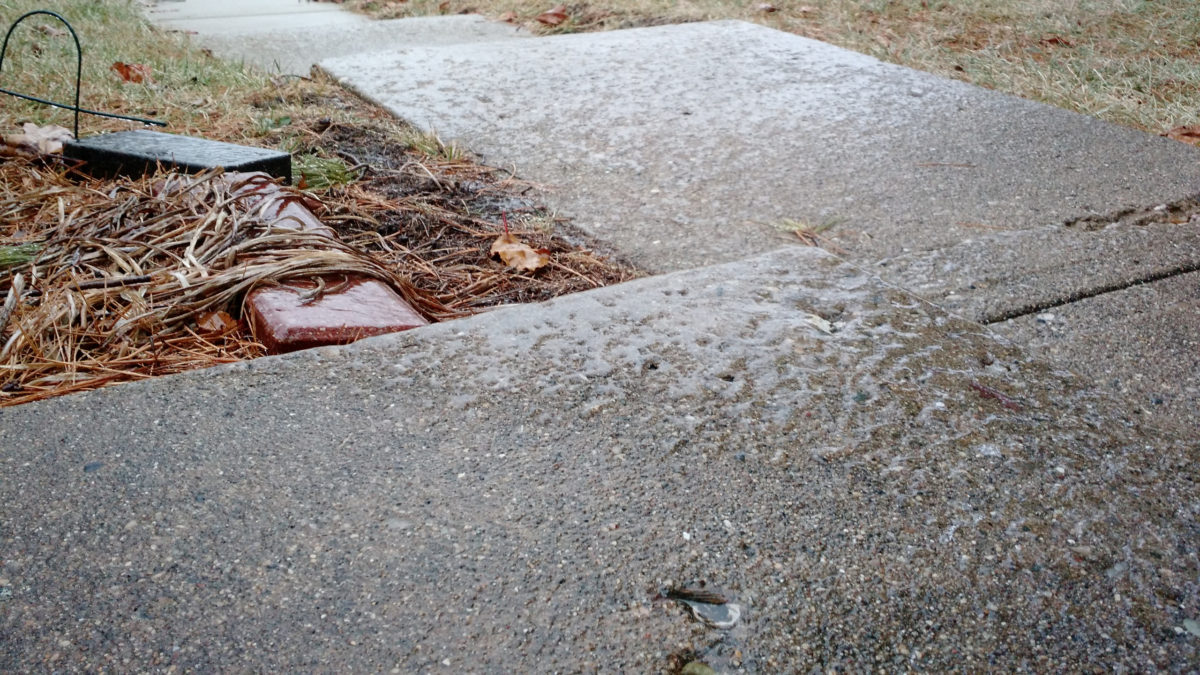
We stocked our pantry yesterday, so we need not go out in the freezing rain.

I have a brother who teases me almost, but not quite, mercilessly / Mi havas fraton, kiu pikmokas min preskaŭ, sed ne tute, senkompate.
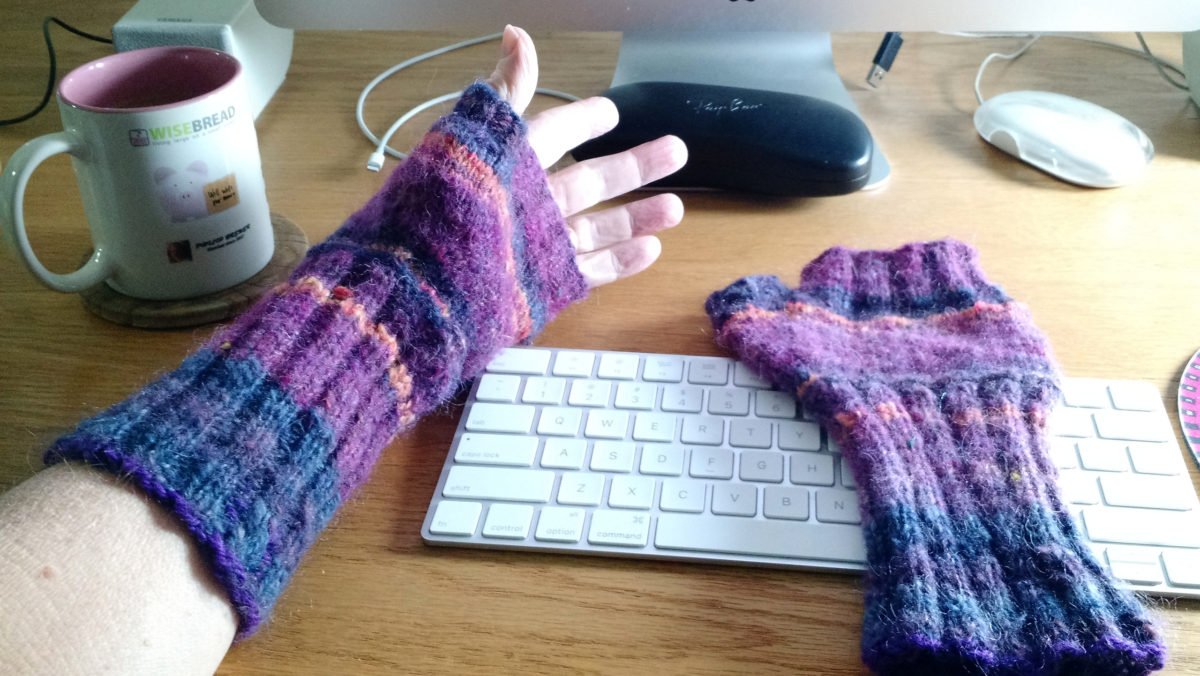
For days when it’s chilly, and yet I want to wear short sleeves, I have purple, blue and orange fingerless gauntlets.
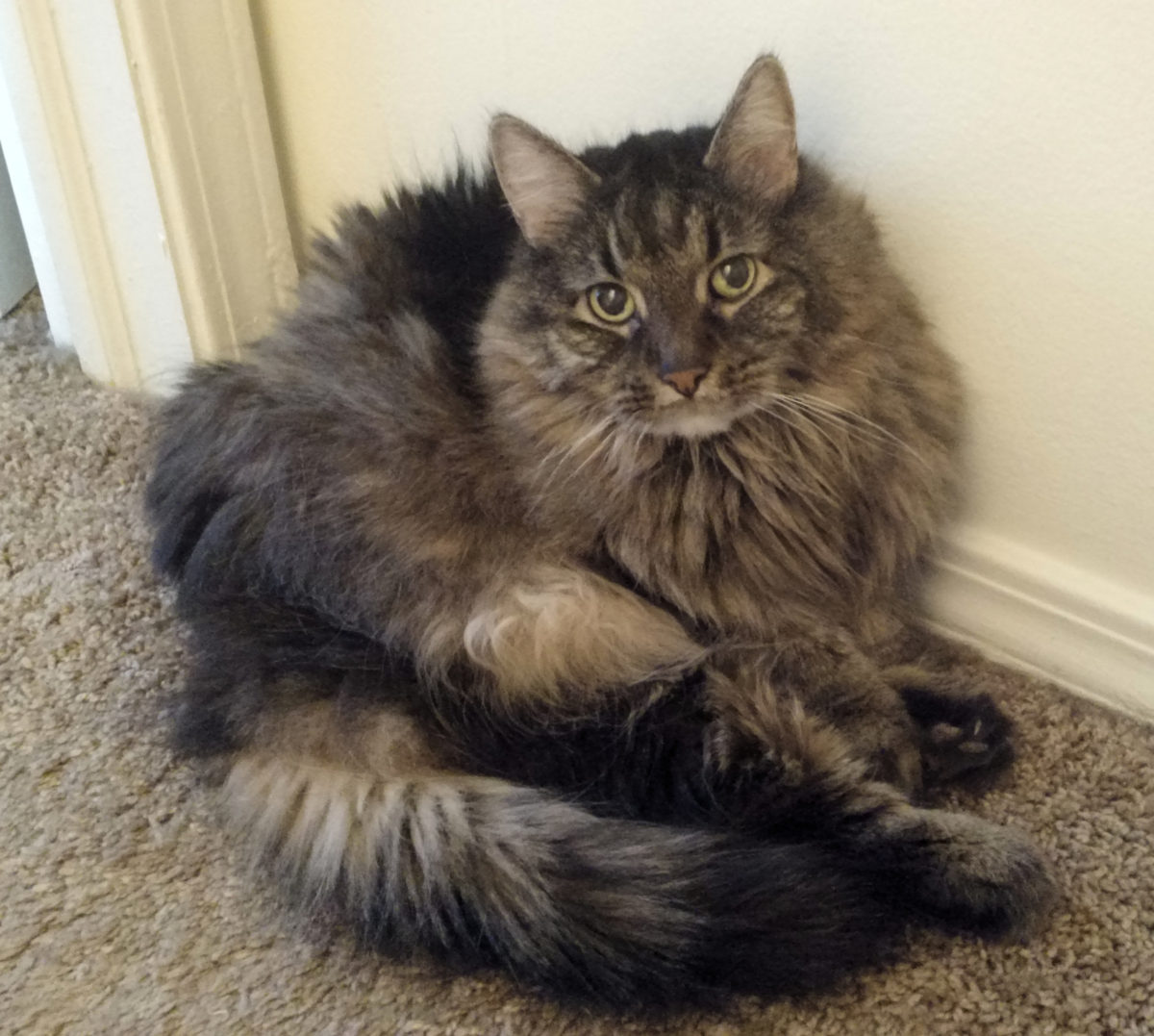
Successfully got ’Punzel’s meds down her gullet for the second day in a row. I think.
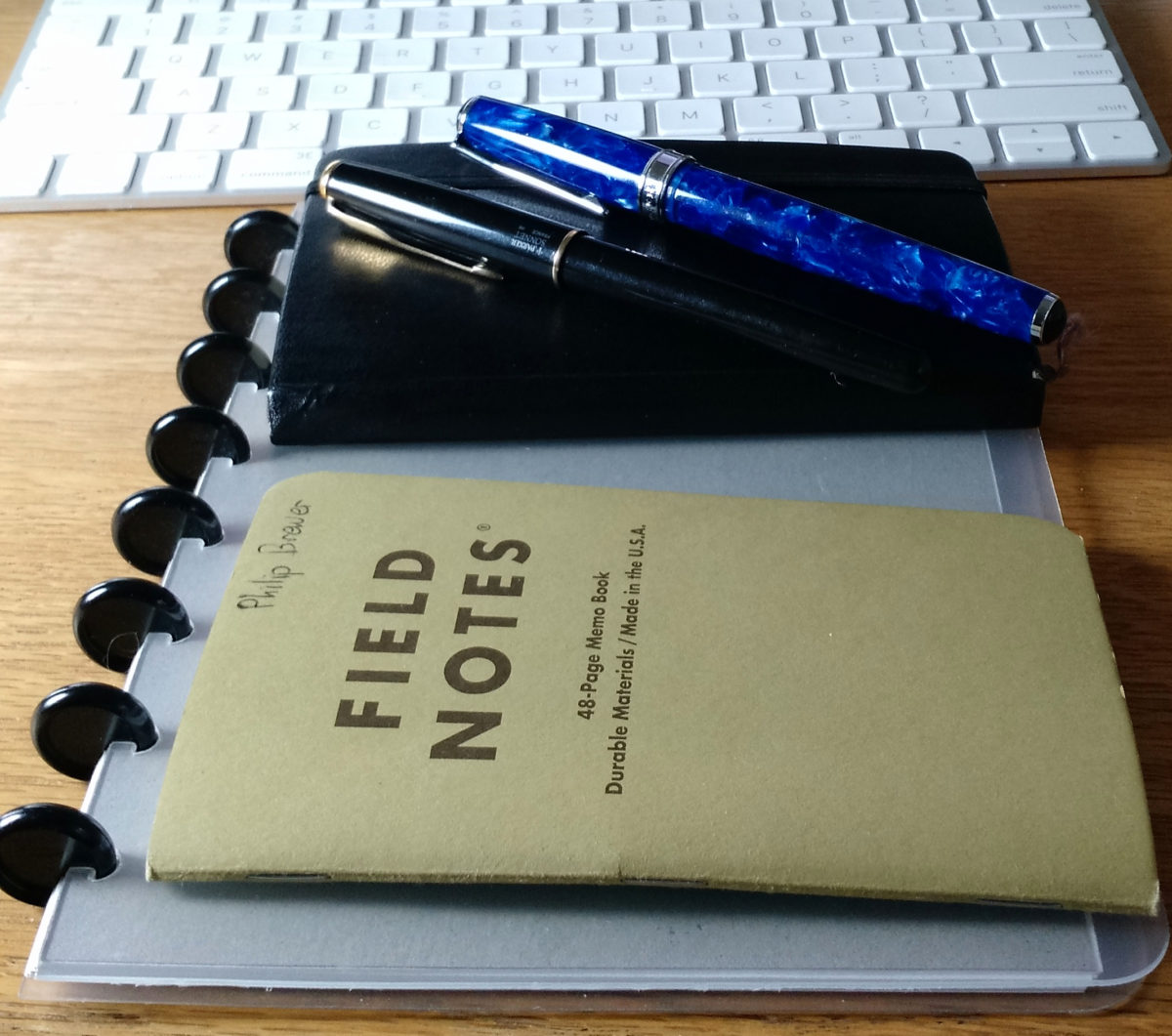
Several things came together to get me started with paper journals again.
My brother suggested that we might write one another actual paper letters. I think that was partially just because it’s fun to receive actual paper letters, but also because we’d been talking about reviving an idea we worked on a while back, for collaborating on an epistolary story in Esperanto, which would involve the characters writing actual paper letters, which put us in the frame of mind of thinking about letters.
At about the same time, Tobias Buckell wrote a post about starting a bullet journal, with links to a couple of videos (one a nice review of a particular notebook designed with bullet journaling in mind, the other a video on starting a bullet journal).
As an aside, let me mention that the main bullet journal site has the “reference guide” for bullet journaling translated into many languages, including Esperanto! (They want you to give them your email address and sign up for their newsletter to get the link to the reference guides.)
I’m perpetually vulnerable to diving too deep down this particular rabbit hole, geeking out over anything and everything related: notebooks, paper, pens, etc. Already I have:
I’m having great fun. It’s probably a big waste of time, but I’m finding it a at least a little bit useful:
I think Steven and I will continue writing one another, at least for a while; it’s fun! I’m continuing my bullet journal—I’m currently on day six. My handwriting has definitely improved.
Basically, it’s all good. Even if there are obvious advantages to just keeping stuff in a computer, it’s not as much fun, and why do stuff if it isn’t fun?
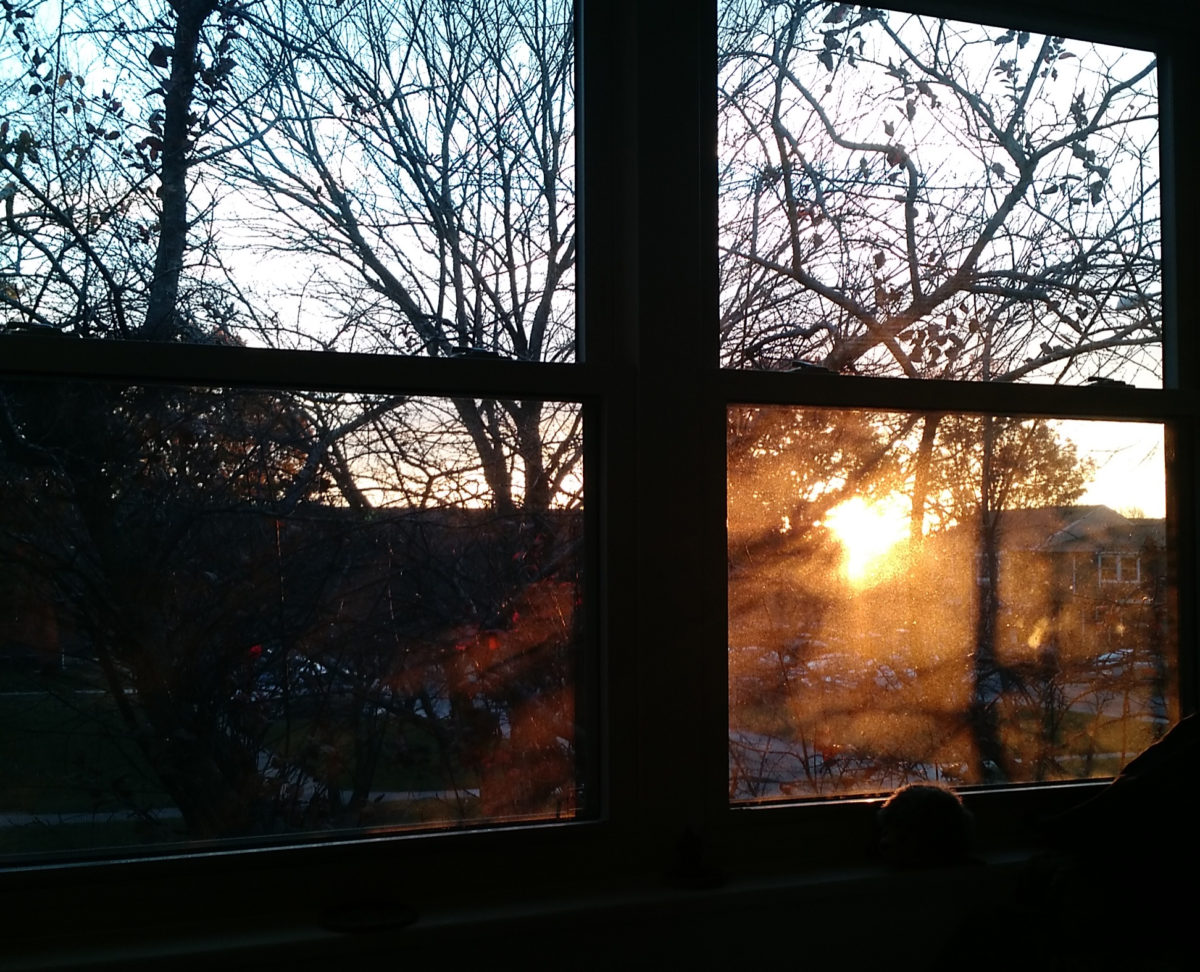
Today is the last day this season that sunrise (where I live) is later than 7:15:00 AM.
Back in the day the telephone network was a regulated monopoly. As long as the phone company kept the regulator happy, they were permitted to earn a profit on their investment. This resulted in a couple of interesting effects.
First of all, the company was incentivized to invest more in infrastructure: The more they invested, the higher their profit (which was a regulated rate times the size of their investment). This is very different from an unregulated company, where investment is viewed as a cost.
Second, while keeping the regulator happy was always a complex dance, the regulator tended to focus on a few key metrics, one of which was network uptime. This incentivized the phone company to use that large infrastructure investment to produce a network of extreme reliability.
And that network was reliable. In my personal experience with wired phones in that era a wired phone always had service: For two decades as a youth I had literally 100% success picking up a phone and getting a dial tone. Likewise, calls did not drop. Service was rated in nines: 99.999% uptime was 5 nines, 99.9999% uptime was 6 nines.
Of course, that sort of reliability is impossible with cell phones. They move around. Worse yet, they go places where radio signals simply can’t reach.
Cell phone reliability is pretty darned good—let’s call it 98%, as long as you’re not trying to get service in places where nobody else cares if there’s service (the middle of the desert, the middle of the ocean, etc.). But people are not surprised when they find a spot where there’s no service, nor are they surprised if a call drops when elevator doors close or they drive into a tunnel.
This is not to say that cell phone service is bad. My point is simply this: To get the advantages of cell phones, people have accepted a drop in telephone service reliability from six nines down to less than two.
I think this is particularly of interest because I see a potential parallel with the power grid.
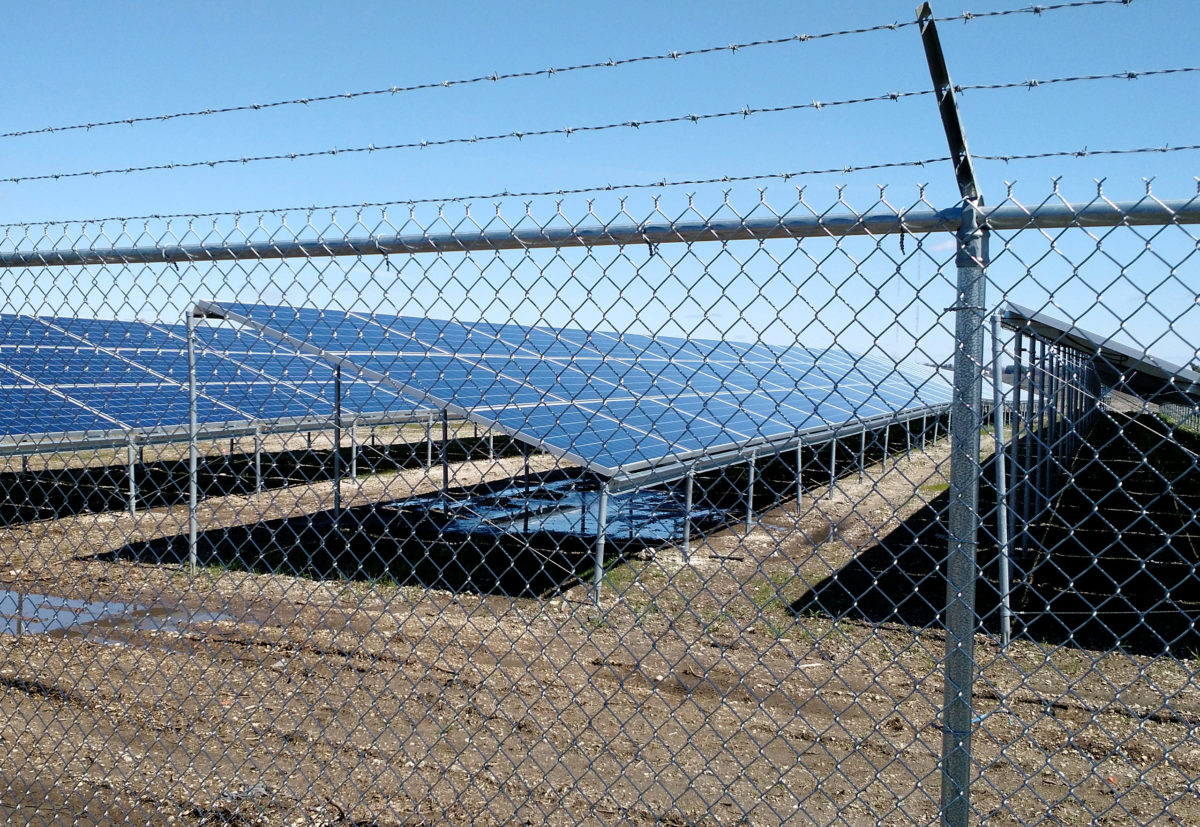
The big problem with solar and wind power is that they’re crappy at providing baseline power, for obvious reasons: nighttime, cloudy days, calm days, etc.
If you want a power grid to provide five or six nines of availability, you really need to have enough fossil fuel (or nuclear) generation capacity to provide a large fraction of your total power needs—at least 80%, probably more if you don’t have considerable diversity in your renewable sources (both diverse sources: solar and wind, and geographic diversity: the wind is always blowing somewhere and the sun shines different hours different places).
But just as people learned to get by with less than two nines of phone network reliability, people could certainly learn get by with a less reliable power grid as well.
Thinking of household use, there are certain things that really need fairly reliable power (refrigerator, freezer, furnace), but beyond those few things, we only require a high-availability grid because we’ve set things up with the expectation that it would be there.
Just two or three modest changes to the way we use power could easily accommodate a less-reliable grid.
The easiest one would be for each household to have a guaranteed level of power—enough to keep your food fresh, your pipes unfrozen, and a couple of lights turned on—and then make additional power available on an as-available basis. Alternatively, you could go with a market-based measure where power was cheap when it was plentiful and expensive when it was scarce. A third option would be to distribute the resiliency, with each household providing its own backup power storage or generation capability.
My point here is not to solve the issues for a smart grid, but just to make this point: For a big enough payoff—like the payoff of a internet-connected supercomputer that you can carry in your pocket—we would accept a considerable downgrade in reliability from our power grid.
The payoffs from renewable energy arguably are that big. (In particular, not rendering the planet uninhabitable for humans. But that’s a payoff that’s uncertain and diffuse, with the gains—especially the early gains—going to people other than the ones who need to make the sacrifices.) But there are payoffs to everybody: less particulates in the air, fewer pipeline and tanker spills, fewer truck and rail accidents hauling coal and oil through towns and cities, fewer worker deaths in the coal-mining and oil-drilling industries. And then there are the cost savings: Renewable power has the potential to be very cheap and very reliable in the out-years, once the infrastructure has earned out its initial capital costs.
It might well be worth getting past the idea that the power grid should provide near-perfect reliability, given the payoffs involved in accepting a bit less.