
Having lunch in Monticello after hiking and running at Allerton Park. Despite what the glasses say we’re both drinking the Half Acre Daisy Cutter. 🏃
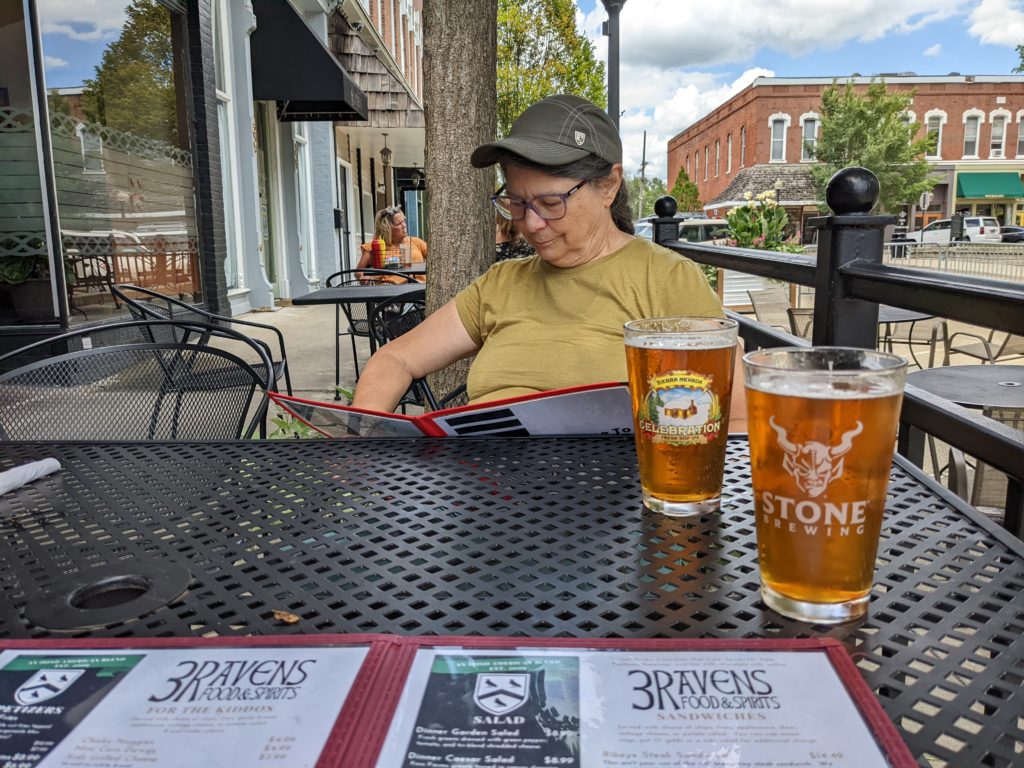


Having lunch in Monticello after hiking and running at Allerton Park. Despite what the glasses say we’re both drinking the Half Acre Daisy Cutter. 🏃
I just wanted to mention that I’ll be attending WorldCon this year. Anybody else here expecting to be there?
I wrote this a while ago, after seeing two articles in two days ragging on fitness tracking devices, and suggesting that they’re bad for you. Both articles warn against outsourcing your intuitive sense of “how you are” to some device. And, sure, I guess you can do that. But if you actually are doing that, I’d suggest that what you have isn’t a harmful device. What you have is a device disorder.
I was going to make an even stronger statement along these lines, comparing a device disorder to an eating disorder. I think the comparison is valid, even though, upon reflection, it weakens my argument. Sure, some people have an eating disorder. But anybody is likely to engage in disordered eating when they eat industrially produced edible food-like substances. Maybe that’s a fair comparison with industrially produced fitness-tracking devices. Unlike with industrial food though, I think the data from fitness trackers can be consumed safely.
“… sometimes I would wake up in the morning and check my app to see how I slept — instead of just taking a moment to notice that I was still tired…”
Source: Opinion | Even the Best Smartwatch Might Be Bad for Your Brain – The New York Times
I get this, because I joke about this myself. My brother will ask how I slept, and I’ll say, “I’m not sure—I haven’t checked with my Oura ring yet.” Or I’ll say something like, “My ring and I agree that I slept well last night!” But I’m just joking. I know how I slept, I know how recovered I am from the recent days’ activities, and how ready I am to take on a physical or mental challenge.
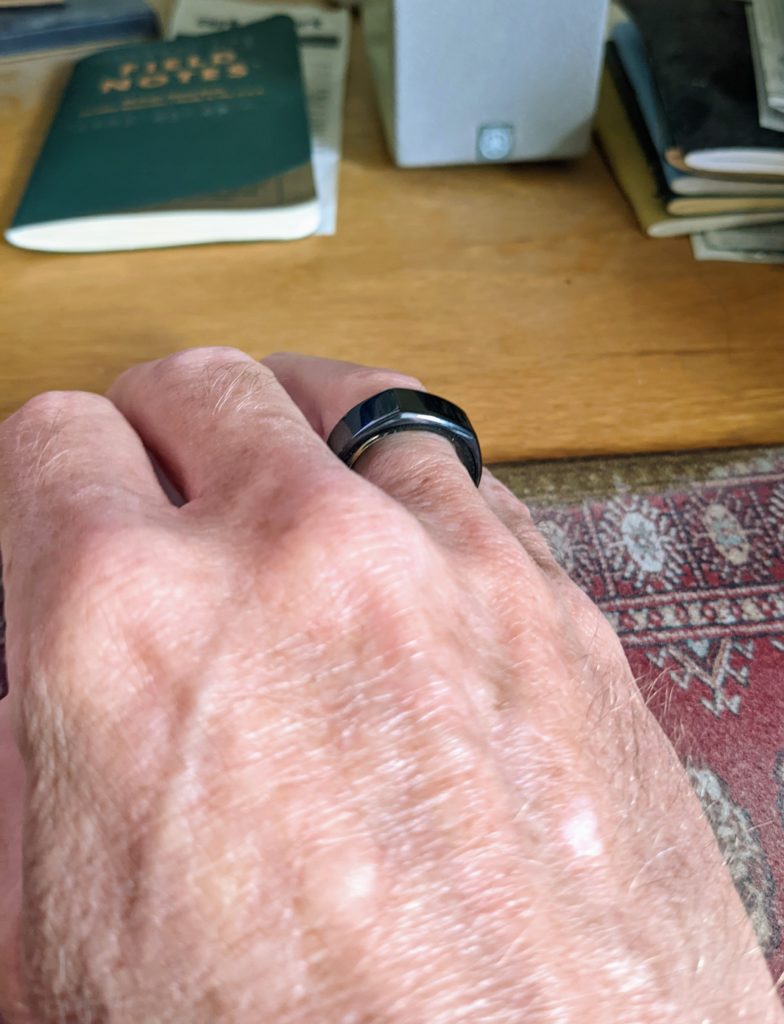
That doesn’t make the data from the Oura ring useless. My intuitive sense of how I am isn’t perfect. Many’s the time I’ve let wishful thinking convince me that I’m ready for a long run or a tough workout not because I really am, but because the weather is especially nice that day and the next few days are forecast to be cold or rainy. Or because I have some free time that day and the next few days are going to be busy. My Oura ring has been a useful counterbalance to that. If I had a hard lifting session yesterday, but I feel great today and my heart rate lowered early last night, maybe I am really ready for a long run today. On the other hand, if my heart rate took the whole night to get down to its minimum, and its minimum was higher than usual, that’s a good sign that I’m not fully recovered, even if I’m feeling pretty good.
If you have an eating disorder, do your best to avoid triggers that lead to disordered eating. Similarly, if you have a device disorder, it makes good sense to avoid using whatever sort of devices lead to disordered behavior. But that doesn’t make the devices bad, any more than eating disorders make food bad. But any particular device might be bad for you, just like any particular food might be bad for you. (And, I admit, industrially produced edible substances are probably bad for everybody.)
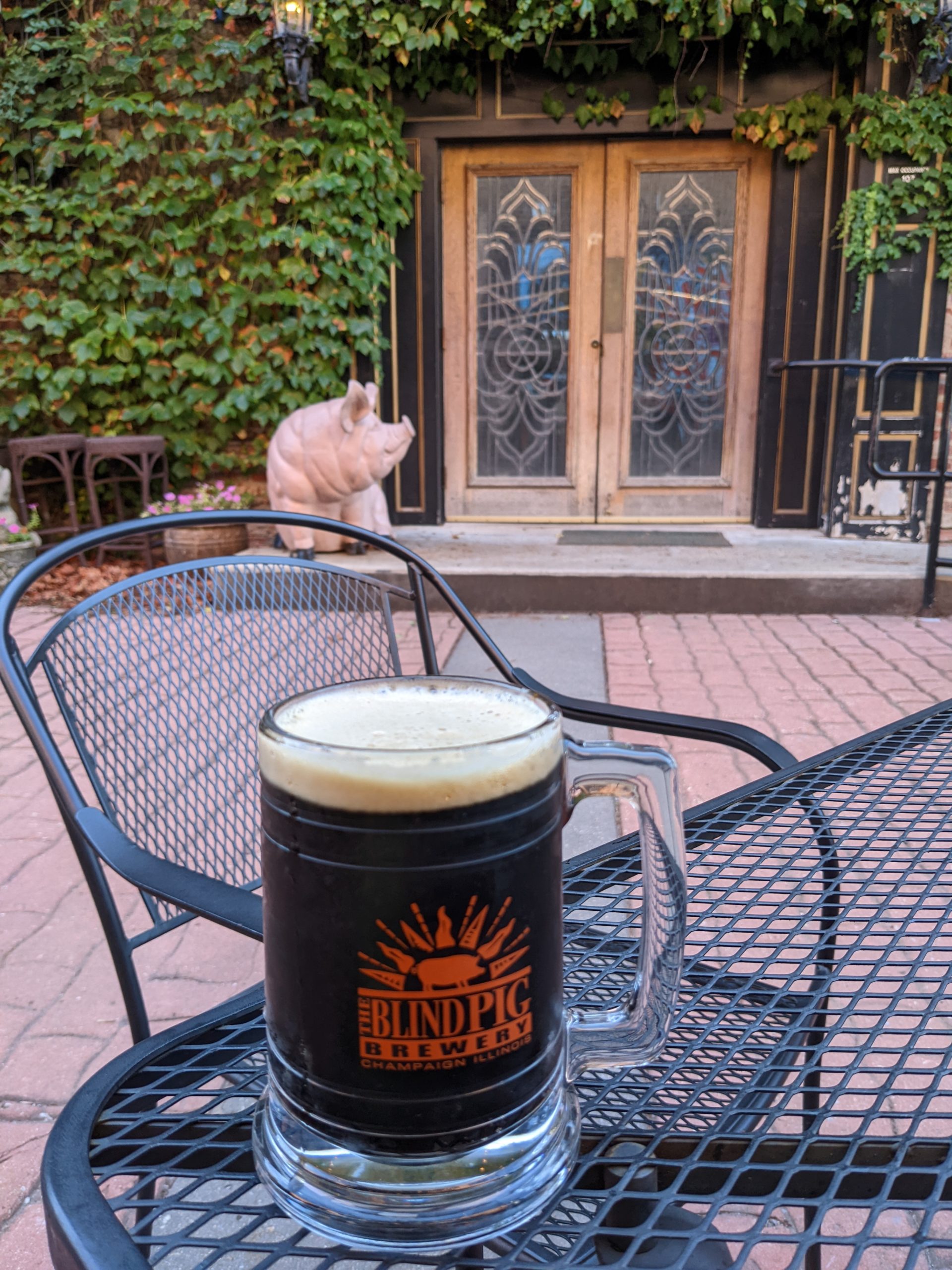
Mi trinkis bieron Wookie Snacks Black Rye IPA dum mi atendis la esperantistoj.
Anybody who follows me knows that I’m all about fitness, gamification, and especially the intersection of fitness and gamification. Add to that a bit of program design, and I’m already patient zero for @TheBioneer’s latest video, even before thinking about larping.
I just shared this with my brother, explaining that The Bioneer was responding to someone who had criticized his whole schtick:
I’m the first to admit that I don’t need to be able to climb a rope. Or sprint really fast. The average Joe just needs to be able to sit and type.
That’s why I coined the phrase “SuperFunctional.” I want to be able to do more stuff than is strictly necessary. Because it’s cool.
He called this “Larping as an Athlete.”
This is preposterous: I am larping as Batman!
Seriously, though. That’s what I’m doing.
Source: Functional Training is NOT a Waste of Time – A Defense – The Bioneer
My brother indicated that he understood, which made me think: We might all be happier if we thought of ourselves as larping at whatever we’re doing.
Best if we do it seriously.
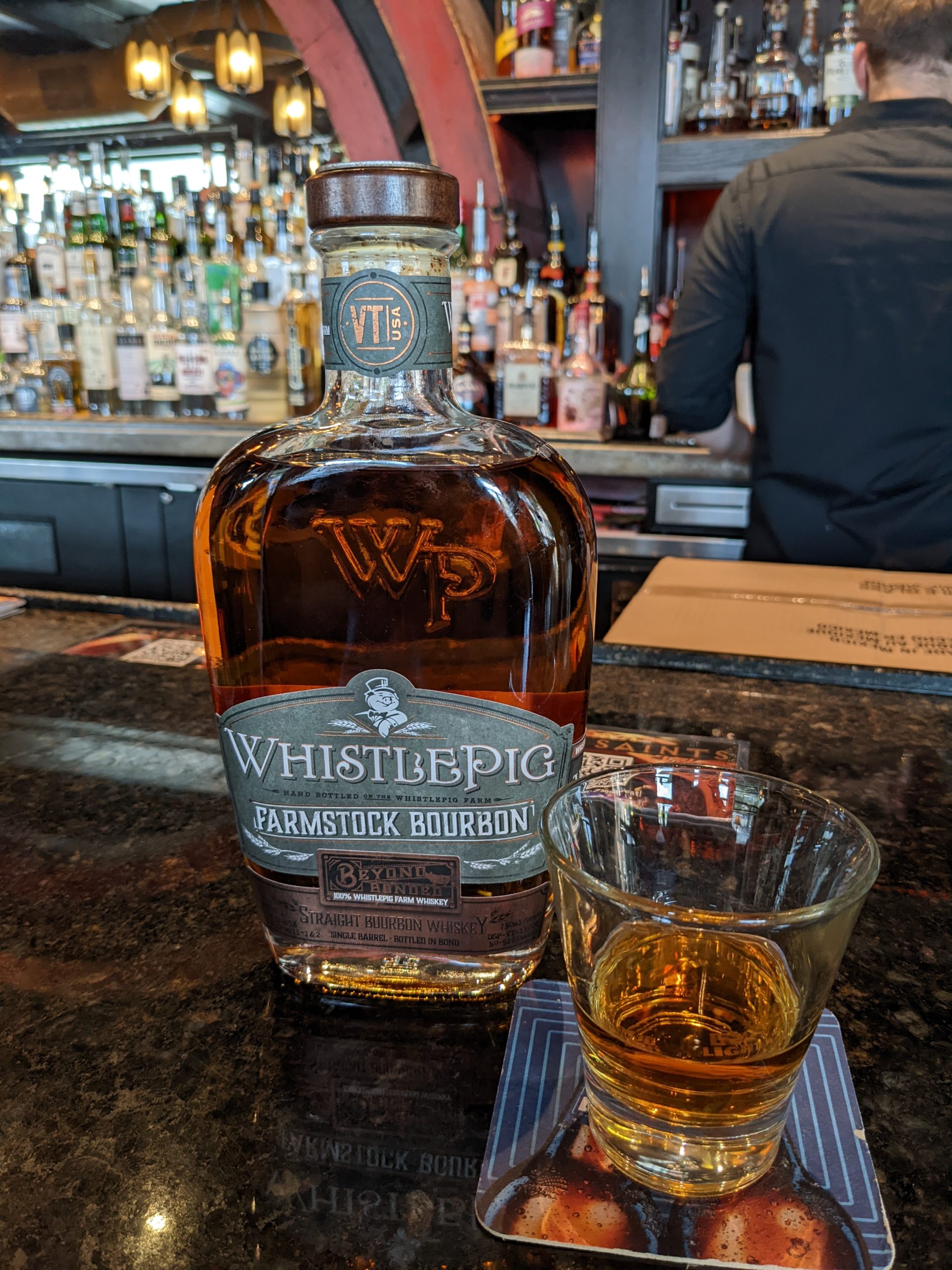
Just our second Whiskey Wednesday since the start of the pandemic. I have the Whistlepig Farmstock Bourbon bottled in bond. Very nice. Sweet. Fruit—maybe apples. @jackieLbrewer has the equivalent rye.
If I’m serious about training to get better at everything—and I am—then I need to think seriously about how to fit in, and recover from, all that training. This post is my first cut at documenting some of my early thinking on how I might do that.
A plan to fit in everything needs to start with eliminating having whole days devoted to just one particular kind of exercise: strength days, running days, etc. Instead, most days will have to have at least two (hopefully complimentary) exercise activities.
I had already started work on thinking about the best ways to combine exercise activities in ways that would reinforce one another, based on the ideas of Adam Sinicki (aka The Bioneer). But more recently the work of Mark Wildman has provided what may be the solution: What he calls “the Tetris of training.” (That’s a link to the first of a series of videos where he talks about program design in those terms.)
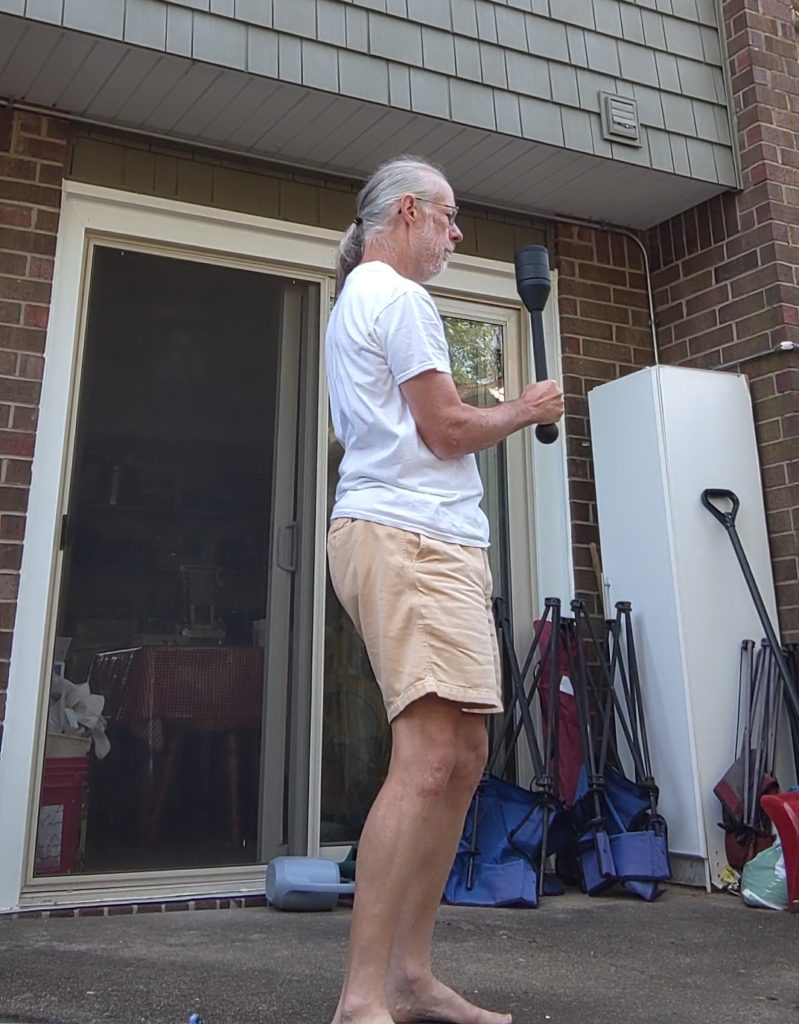
The basic idea here is that you divide your workout into pieces: Maybe a kettlebell squat piece, or a single-arm club-swinging piece, maybe a running piece, etc. Then structure each piece as a specific block that can be done in a specific amount of time, and organize those those blocks into a sequence to make a workout that can be done in 30, 60, or 90 minutes (including a warmup at the beginning and a cooldown at the end), and lay those workouts out on a weekly timeline, with appropriate rest days.
Another key part of the idea is that each of those pieces should be its own progressive program, running on its own schedule, but arranged with the others so that they’re not all progressing upward at the same rate.
This can (and probably should) get pretty fancy, because there are all kinds of considerations. You want to:
Besides all that stuff, I particularly want to include some “skills” training, where I’ll work on things like parkour, HEMA, rock climbing, fencing, etc.
I roughed out a plan along these lines, and gave it a try last week and this week. I have a couple of external constraints that I’m working around. One is that I want to be able to join my tai chi group in our Monday/Wednesday/Friday practice sessions. Another is that I want to include time each week for both a long run, and a long hike with Jackie—and both of those activities require flexibility related to the weather. Last week I ditched two of the tai chi sessions, but got in both a hike with Jackie and a long trail run. This week I couldn’t do one tai chi session because of rain, plus I had to take two unscheduled rest days because I tweaked something in my hip.
Today my hip seems to be recovered. I’ve done my heavy club swinging for the day, and I’ve gotten in a long run. Now I need to look at my draft schedule and see how to restart my workout plan, given all my many constraints.
Today’s loaf has citric acid, acidic acid, salt, diastatic malt powder, boiled cider, olive oil, and honey. Oh, and it has oats, spelt, sprouted whole wheat, medium-grind whole wheat, barley, rye, einkorn, semolina, bread flour, and prairie gold flour. And, of course, it has Bubbles, our sourdough starter.
