The “gig” economy: all the sorts of work arrangements where you’re not a permanent employee and can’t expect that work one day implies that you’ll have work the next day—freelancing, contracting, temp work, casual labor, and most recently, software-mediated contract work like Uber driver.

These sorts of work have been growing as a fraction of all work. In fact, according to the Bureau of Labor Statistics, in the last ten years contingent workers have gone from being 10% of the workforce to being 16%. In fact,

all of the net growth in aggregate employment in the decade leading up to 2015 can be accounted for by contingent work arrangements, which means there has been no net employment growth in traditional work arrangements.

Source: FRB: Brainard, The “Gig” Economy: Implications of the Growth of Contingent Work

This matters to everyone with an interest in the U.S. economy, but it matters particularly to the Federal Reserve, which is charged by Congress to:

promote effectively the goals of maximum employment, stable prices and moderate long-term interest rates.

Source: The Federal Reserve’s Dual Mandate

So this raises the question: Does strong growth in the number of freelancers, on-call temps, and Uber drivers mean that we’re getting closer to maximum employment? Or, that we’re getting further away?

Just from her title I was pretty sure that Christa Whiteman’s post Living simply: reclaiming sanity + authenticity would be right in my sweet spot, and I was not surprised to find more than a little overlap with what I’ve been saying for years at Wise Bread. I’ve talked about living a life of “luxury and splendor,” but recovering our “original opulence” sounds good too.

Christa suggests three starting places: food, movement, and stuff—adding that the proper course to take is a spiral, coming around to the same points over and over. She is right—where you start means little—and yet, her course is so completely different from my own I thought it might be worth pondering those differences to see if they told me something useful about what I’ve been doing, and about how I’ve been writing about it.

As anyone who has read my work at Wise Bread knows, I’m all about the power of frugality as a tool for living a life of full of exactly what you most want: Basically, I started with the “stuff” piece. I probably have a hundred articles on various aspects of figuring out the difference between needs and wants, covering your actual needs, identifying and focusing on those few wants that matter most deeply to you, and dealing with others who care how you satisfy your wants.

I wrote quite a bit about food, too—about how to eat at the intersection of cheap and healthy. I’ve just now reread a few of those posts and I’m pretty pleased with them, even if I’d write them differently now.

Christa’s third piece is about movement, and that is where my writing at Wise Bread falls short. In fact, I’ve really got exactly one post that’s right on topic. The editors gave it the unfortunate title of Get a Great Workout for Free With 11 Simple Moves, but it’s straight-up natural movement advocacy. Before that, I had some good stuff on how walking and bicycling for transportation were frugal and healthy, but it had a pretty limited perspective.

I think I need to write some more pieces on both food and movement for Wise Bread. I can certainly write a new Wise Bread post on how to eat paleo on the cheap. (Not that I eat a paleo diet, but there’s a lot of overlap between what’s expensive in my diet and what’s expensive in the paleo diet.) Maybe I can also write some more movement pieces. What should be the focus, I wonder. The frugality of natural movement for exercise? The frugality of staying healthy? Or the luxury and splendor of being a fully capable human? I guess I’ve done that first one. Hmm.

Anybody who talks about natural movement needs a picture of themselves squatting on a fallen tree in the forest.

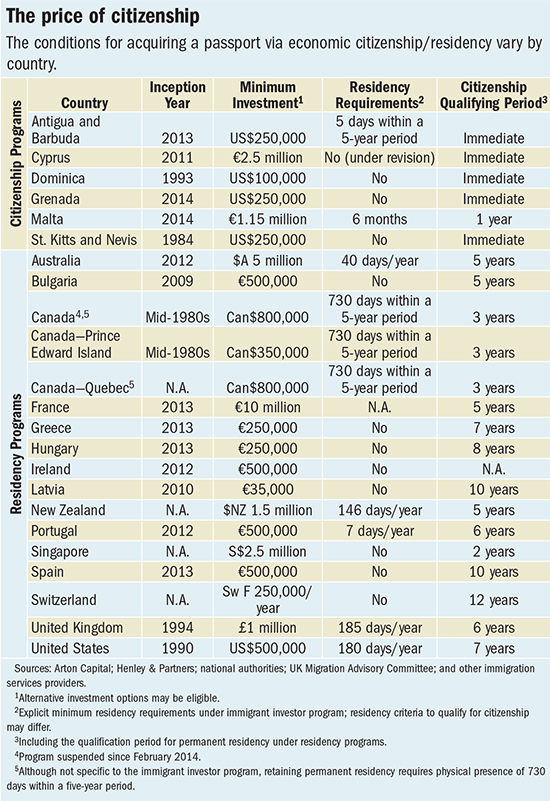
This sort of thing was a fantasy of mine, back in the 1980s. I could see things getting worse in the US, and the idea that a foreign passport and foreign residency could provide an escape if things got too bad was pretty appealing.

Nowadays not so much. It’s not that things have gotten better in the US; it’s that things have gotten worse other places at least as quickly. More to the point, things getting worse in the US seems to make things worse other places, so the conditions that make the idea appealing are the same conditions that make it pointless.

One book that substantially influenced my thinking in this area is Emergency: This book will save your life by Neil Strauss. I recommend it highly. In entertaining and informative prose, he documents his transformation from just the sort of kook I was in the 1980s into somebody with a much more practical perspective.

Still, an EU passport might have its upsides. Anybody got a spare quarter million euros and an interest in learning Greek? (If money is no object, a half million euros will let you buy in to Ireland, and I expect learning Gaelic is optional.)

Graphic from Citizenship for Sale on the International Monetary Fund’s IMFDirect blog.


After our old apartment complex changed hands, our neighbors spent the whole summer worrying aloud that the new management company would raise the rent.

We declined to join in. I expected the rent to go up, but we had been getting such a good deal for so long, I figured that the rent could go up by 20%, maybe even 30%, and still be competitive.

Then we saw the proposed lease from the complex’s new owner, and went straight from “wait and see” to “let’s find a new place to live.”

You see, the new lease (I almost put the word in scare quotes) was an internet-style agreement. You’ve seen them—you’ve probably clicked through to agree to hundreds of them by now. They’re the ones with these two characteristics:

  1. There’s a long list of “terms and conditions” that they can change at any time.
  2. They doesn’t promise that the service they’re providing actually works.

For a broad range of internet stuff—especially stuff that’s free, like an email address or a web tool—a contract of that sort is perfectly reasonable. If someone is kindly letting you use some service for free, it’s fine if they decline to stand behind it, and understandable if they ask you to agree that the service is offered as-is and shouldn’t be relied upon for anything important.

For real-world stuff—especially real-world stuff you’re paying for—signing such an agreement is a terrible idea. Any adult with experience in the real world would know better.

Sadly, young folks don’t have much real-world experience. Worse, the current generation of young folks—having clicked through hundreds or thousands of such contracts—see them as normal.

I bring this up now because the new management company’s so-called lease was my first instance of such a contract for a real world thing.

An Internet-Style Apartment Lease

They raised the rent of course; this was not a surprise—and would even have been okay. But the proposed lease was an internet-style agreement. That was a deal breaker for us.

They Can Change the Terms and Conditions

A lot of internet-style contracts allow the other party to change the terms and conditions at any time, just by updating a document on some website.

This is fine for certain kinds of things, such as an internet service. Specifically, it’s acceptable for any service where you engage in individual transactions. Maybe it’s a video service where you pay $x to stream a video one time. Maybe it’s a service that will print your photo on a t-shirt or a coffee mug for $y. If they change their terms in some way that makes the service no longer attractive, you can just quit ordering.

It’s even true of a service with a subscription format, as long as you can cancel the service at any time. An example might be a service where you get to listen to unlimited music for $z a month. If they change the terms so that it costs too much, or they put limits on the music (or they lose access to the music you most want to listen to), you can just cancel.

Where it becomes completely unacceptable is when it’s a longer-term contract you can’t just cancel, such as a lease.

The contract the management company wanted us to sign said that they could change any of the terms at any time. If we didn’t like it, we’d have 30 days to move out.

That’s not a lease at all! The whole essence of a lease is that I know that I have an apartment I can live in for a year, and I know what I’d have to pay.

This is more like month-to-month renting, where I have to be ready to move out at any time. Except that it’s worse than month-to-month renting, because I’m committed for the full duration of the lease.

In fact, it’s even worse than that—the plain terms of the contract would allow the apartment company to change the duration of the lease as well: They could have come back the day after we signed and said, “We’ve tripled the rent. Oh, and we’ve also changed it from a 1-year lease to a 99-year lease: You have to pay for the rest of your life.”

I doubt if a court would tolerate such a thing, but I’m not going to sign a lease with unacceptable terms and hope that the court will take my side.

They Make No Promises

The other thing that’s common in internet-style contracts is that the party offering the service doesn’t promise anything.

That’s perfectly reasonable for a free service. If a company offers to let me use their cool thing for free, I’m fine with clicking through an agreement that says that they don’t promise that the thing even works and don’t promise to fix it if it breaks.

You know where it’s really not reasonable? In an apartment lease.

The whole point of an apartment lease is that you give them some money every month in exchange for a habitable place to live. They promise to keep it habitable if stuff breaks (you promise to pay for anything you break), and when the term is up, you return the apartment in the same condition you got it, except for normal wear and tear.

The contract the new management company wanted me to sign specifically said that they didn’t promise the apartment would be habitable. They also specifically didn’t promise that it would have any appliances, nor that they’d fix them if they broke.

They would have been within the terms of the lease to show up one day and take down the doors and windows, pull out the fridge and stove, shut off the heat and water, and drain the pipes. (It would probably have been illegal, but it wouldn’t have violated the lease.)

I saw this coming some time ago, and have written about it before. (Specifically, in a post called Reject Variable Terms and Conditions that I wrote for Wise Bread back in 2009.) I didn’t expect that I’d start seeing them in apartment leases this soon, though.

No sane person would sign such a contract—unless they’d been trained by click-through internet contacts that such terms were normal.

An internet-style contract is fine for an internet service. It’s even fine for a real-world service that’s not critical to your life or your business, as long as you can cancel it at any time.

It is not fine for anything you depend on. And it’s never fine for a contract that they can change but that you can’t cancel.

We looked around for a new place to live, and found one easily—one with a real lease.

Other Issues

Most of the above is an edited version of an article I originally wrote for Wise Bread, but that the editors didn’t want. For the Wise Bread article, I was focusing on internet-style agreements and why they’re bad for real-world stuff. The rest of this post is just a short description of the other reasons we decided to move. There were two of them.

First, they were going to start charging separately for utilities that had been included in the rent. This is something that I’d be fine with in theory—we probably use less heat and water than average. Except that heat and water were not metered per apartment. Without actual per-apartment numbers, the plan was for the complex to charge us made-up numbers. (They had hired company to make up the numbers for them, supposedly by allocating the complex’s actual costs to apartments by size. But there was no transparency, so I stand by my characterization of the charges as being made-up numbers.)

Second, they were also going to start charging extra every month because we have a cat. (We had already paid an extra pet deposit to cover any damage the cat caused, including a non-refundable part to pay for a more extensive cleaning.)

All told—higher rent, made-up utilities cost, cat rent—the increase would have been several hundred dollars—something like a 50% increase to our monthly housing cost.

We might even have paid that, to avoid the hassles of a move. But we weren’t going to sign an internet-style not-really-a-lease agreement.

Backyard Eggs
Backyard Eggs

So, the Champaign City Council legalized backyard chickens a while back. You have to file a form, pay a one-time fee, and get a notarized permission slip from your landlord (if you’re a renter), but it all looks quite doable. As I’d mentioned when I wrote about the issue before, this would have been a determining factor in my willingness to buy a house in Champaign, and now it isn’t. The fee isn’t cheap ($50), but figured into the cost of buying a house, it’s insignificant.

But thinking about the fee got me to thinking about why one raises chickens in the first place.

Probably most of the people in Champaign who want to raise backyard chickens are yuppy locavore types looking to reduce their food-miles to minimize their carbon footprint and know that they’re eating organic and cruelty-free. More power to them. But there’s another category of people who might raise backyard chickens: poor people.

Someone who’s poor—someone whose budget barely stretches to cover their other expenses, someone who’s on food stamps, someone who uses a food pantry—is another person who might find raising backyard chickens very attractive. Eggs don’t cost much, but someone who raised chickens might be able to save a few dollars a week and get some high-quality protein and have a surplus that they could share or trade. But a $50 entry fee just about blocks this reason to raise chickens.

I guess I’m not really surprised. Local politicians in Champaign have a lot of incentive to help upper-middle class people eat local and organic—those people vote. They probably don’t feel the same pressure to help poor people get a little high-quality food as cheaply as possible, because poor people don’t vote as much—and when they do vote, the legality of backyard chickens probably isn’t a top issue.

It does bug me just a little that Champaign (which thinks of itself as conservative place) has created this whole big-government scheme with forms and approvals and fees and regulations on chicken coops, while Urbana (which thinks of itself as a liberal place) doesn’t have any of that stuff, just a general rule against letting your animals become a nuisance. But that’s just me, asking for consistency from politicians.

So, half a cheer for Champaign legalizing backyard chickens, even if they came up with a way to do it that only helps yuppy locavores and not poor folks.

In his dedication to educating the public about the zero bound, Paul Krugman has asked several times (most recently today):

. . . what calculation leads to the notion that a target of “close to but less than 2%” is appropriate, as opposed to, say, 3 or 4 percent.

I think I know the answer: An inflation rate of 2% is small enough that price changes due to inflation are unnoticeable in the noise of other price changes, even over periods of a few years.

Among the costs of inflation are those that come from uncertainty about not only future prices, but also about current prices.

When inflation is under 2%, the price of a cookie at the local bakery might remain unchanged for years at a time. I can stop by the bakery with exact change, and be reasonably confident that I’ll be able to buy one. The costs of flour, sugar, and chocolate will vary over time—but some will rise and others will fall, and the bakery will be able to hold the line on the price of a cookie. This is a convenience for me. It’s also good for the bakery, because people who are confident that they have enough cash in their pocket to buy a cookie are more likely to stop and get one. If they had to make a stop at the ATM first to get cash—or worse, be sent away to visit an ATM mid-transaction—they might not.

At some point—and I assert that the point turns out to be slightly above a 2% inflation rate—stores find that it’s necessary to raise prices at least annually, just to keep up with inflation.

Even if the inflation rate is known and not a surprise, there’s still the threshold effect of one day the price is $x and the next day it’s $x+3%.

When the inflation rate is below 2%, prices can remain stable for years at a time—long enough for people to learn what they are. And that knowledge can make their day run more smoothly. They can be sure they have appropriate cash on hand. They don’t need to check prices ahead of each transaction.

When the inflation rate is above 3%, stores might need to raise prices twice a year, to avoid falling behind. When the prices of a hundred things are all being raised more often than annually, it becomes impossible to learn what prices are, and impossible for that knowledge to make the day run more smoothly. All of a sudden, you have to pay attention to price changes, because they’re happening all the time. In advance of every transaction, you need to allow for the fact that maybe today is the day that prices went up several percent.

Some prices change all the time anyway, especially where the item being sold is a single commodity, such as milk or gasoline. For exactly this reason, prices of those items are often prominently displayed—to reduce the transaction effort of the consumer who wants to know what the price is going to be.

I think that’s why 2% inflation is different from 3–4% inflation: Because price changes due to inflation begin to stand out from changes in relative prices, adding another whole layer of informational costs on every purchaser, on every purchase.

I was one of the first people to try to sign up for insurance on healthcare.gov. That turns out to have been a mistake. At least, that’s my theory.

With considerable effort, over a period of a couple of days right at the beginning of October, I’d gotten through the first part (where you verify facts about yourself to confirm that you’re you). Then I’d done the part where they ask about your income, etc.

At that point—when I’d entered all the info about my and Jackie’s contact info, race, ethnicity, income, and so on—I clicked the last “submit” button. . . and waited.

After a long time, the submission timed out.

Not wanting to have to go through all that entering again, I just backed up a screen and clicked submit again. . . and waited again. And it timed out again.

I did that over and over again, hoping that eventually I’d get a successful submission. And at some point I did get one. In fact, I got a bunch—many of those failed submissions had apparently gone through before they failed. But (I now believe), something about them had gotten corrupted at some point.

On the first visit after that, I’d gotten through to the point of seeing what policies were available to me and how much they’d cost. I printed the list and reviewed it with Jackie and investigated the networks offered by a few plans and picked a policy (sticking with Health Alliance, but going for one of their new Silver plans). But when I returned, there was a glitch: I could no longer sign up for insurance for Jackie and myself; it offered me a policy only for myself, with no sign as to whether I’d be able to get Jackie signed up after.

Yesterday, I finally gave up on making my way through the signup process, and called the telephone interface.

Turns out, the people on the other end of the phone go through the exact same interface. So, of course, they ran into the exact same problem I did.

After escalating to the senior tech guys, the proposed solution was to reset my account and have me start over. (Something I would have done a long time before, if that interface were available.)

Sadly, I couldn’t make that work either.

Finally, I started over completely. I created a new account (with a new login name, using a new email address), re-verified my identity, and re-entered all the info about me. This time, having already selected a policy, I pressed straight ahead and enrolled.

So, I have successfully signed up for insurance through Obamacare. It took about an hour, once I started over from scratch. I suspect it would have worked pretty smoothly, if I hadn’t tried so persistently to sign up in those first few busy days.

Despite the aggravations of getting signed up, I’m pretty pleased. Obamacare is going to save me hundreds of dollars a month. Our insurance bill had been our largest bill—quite a bit higher than our rent. Now it will be just another monthly expense—bigger than our phone bill, but less than rent or groceries.

And yet, the cost savings is far from the most important thing. Before, I worried constantly that any major medical problem would ruin us—make it impossible to get affordable insurance; trap us in a policy that all the healthy people had fled, with premiums spirally inexorably higher until they consumed all our money. Now, at last, we have some security on that front. Cheap or expensive, at least our insurance is actually insurance. A major medical problem would still be a big deal—one of us would no longer be healthy. But at least it would just be that, and not that and a financial catastrophe too.

Since there scarcely any thought of building them in the US, it’s silly to worry about the downsides of real high-speed trains, but it’s the sort of thing I tend to worry about. After all, the math is kind of scary.

It’s only 135 miles from Champaign’s Illinois Terminal to Chicago’s Union Station. If your trains can average 135 mph, you could make the commute in an hour—a long commute, but well within the range that many people find acceptable.

On a train that fast, you could depart Champaign at 6:45 and get to your desk anywhere in the Loop by 8:00. Another train that left at 7:45 could get you to Union Station in time to be at your desk at 9:00. Combine those with similar trains that departed shortly after the close of business and got you back to Champaign in time for supper, and suddenly Champaign offers all of its regular attractions plus all the attractions of Chicago.

Personally, I think that would be awful. It could easily attract thousands of new residents to Champaign—and Champaign does not need thousands of new residents.

Happily, the high-speed rail network that the US is actually building operates at a top speed of 110 mph—fast compared to highway speeds, but nothing like an average of 135 mph. I don’t know what sort of average speed that would produce, allowing for congestion and stops along the way, but let’s just pick a number and say we could average 90 mph. That would mean that it would take one hour thirty minutes to get to Chicago.

Suddenly the math for making Champaign a bedroom community is much less compelling. At 90 mph, the furthest you could live from Chicago and still have a one-hour commute would be Gilman. As a practical matter, people who found the idea attractive would probably live in Kankakee instead. Not that I have anything against Kankakee, but better they get thousands of downtown Chicago workers than we do.

While averting the downside of turning Champaign into a bedroom community, moderately high-speed rail service is still great for non-commuters. Amtrak service to Chicago is already pretty good—fine for a day trip to Chicago. I can catch the City of New Orleans at 6:00 AM and get to Chicago before the museums open. After a day in the city I can either leave around 4:00 PM on the Illini and get home in time for supper, or I can have an early supper in Chicago, leave around 8:00, and get home by bedtime. Imagine if those trains averaged 90 mph.

Better, imagine a couple of 110 mph trains making evening runs designed to allow people in Champaign to head into the city after work, arrive early enough for a late dinner—or, if they ate dinner on the train, a show—and then return in time to spend the night in their own bed.

The more I think about it, the happier I am with the (objectively pretty lame) moderately high-speed rail taking shape in the US. It has great potential to make Chicago accessible for half-day or evening visits without the downside of turning Champaign into a bedroom community.

(All these meditations prompted by Andrea Mayeux‘s article Researchers say high-speed rail could fuel U.S. real-estate, economic booms, via Tobias Buckell’s post High speed rail could spark a real estate boom in second tier cities.)

more-st-croix-chickensThe News Gazette had an article yesterday saying that the Champaign City Council has agreed to “schedule a study session” on the topic of legalizing backyard chickens.

Tom Bruno, who was the guy who offered me some encouragement when I inquired earlier seems ready to support the idea. Other members of the council sounded more ambivalent. The comments on the News Gazette article are decidedly mixed as well. (The people who object not because they think the chickens would actually cause any sort of problem, but because they’re afraid that it would make the area seem too “redneck” surprise me.)

So, it’s by no means a sure thing. Time to get organized.

Plaster copy of Venus de Milo.

A hundred-odd years ago, a lot of towns and cities had their own museum. In those days, international travel was beyond the reach of ordinary people, and museums saw it as part of their mission to bring the great artistic and cultural works of the world to a place where ordinary people could see them. To support that, a whole industry existed making molds of the great works of European sculpture, and then casting plaster replicas of those works to be displayed in museums.

After all, the Venus de Milo can only be in one museum, but should only people who can get to the Louvre be able to see it?

A few decades later, fashions changed. Air travel and other changes made it possible for ordinary people to get to Europe after all, so they could see the great works of European art and culture. Rather suddenly, it no longer seemed like a great service to show people copies of the greatest works of art and culture.  Museums decided that they should show people originals—even if they could only afford 3rd rate originals.

julius caeser
Plaster copy of bust of Julius Caeser

Thanks entirely to great good fortune, at the time that this shift was at its peak, a budget crunch at the University of Illinois had virtually shut down the museums that are now known as the Spurlock Museum. They had so little money, they were unable to hire a director, meaning that there was no one in authority to throw out the plaster copies of the great works and replace them with 3rd rate originals.

At museums all over the country, an incredible number of these excellent copies—quite literally museum quality—were simply thrown away. But not those belonging to the Spurlock Museum.

Among other things, we have a fairly complete set of replicas of the Elgin Marbles, made from molds taken before an ill-fated attempt at cleaning did serious damage to the originals. Scholars come from all over the world to study our copies.

elgin marbles
Plaster copy of frieze blocks from the Parthenon

I was going to the Spurlock Museum today, to attend a meditation class by Mary Wolters (an excellent workshop, by the way), and decided to catch an earlier bus so I’d have half an hour to look around the collection. I’d several times wished I had a picture of one or another items from their collection to use to illustrate a Wise Bread post, and I figured this would be a good chance to get a few photos.

Having taken a few, I thought I’d share some here.

spurlock scupture

If you’re local, don’t miss the wonderful Spurlock Museum.