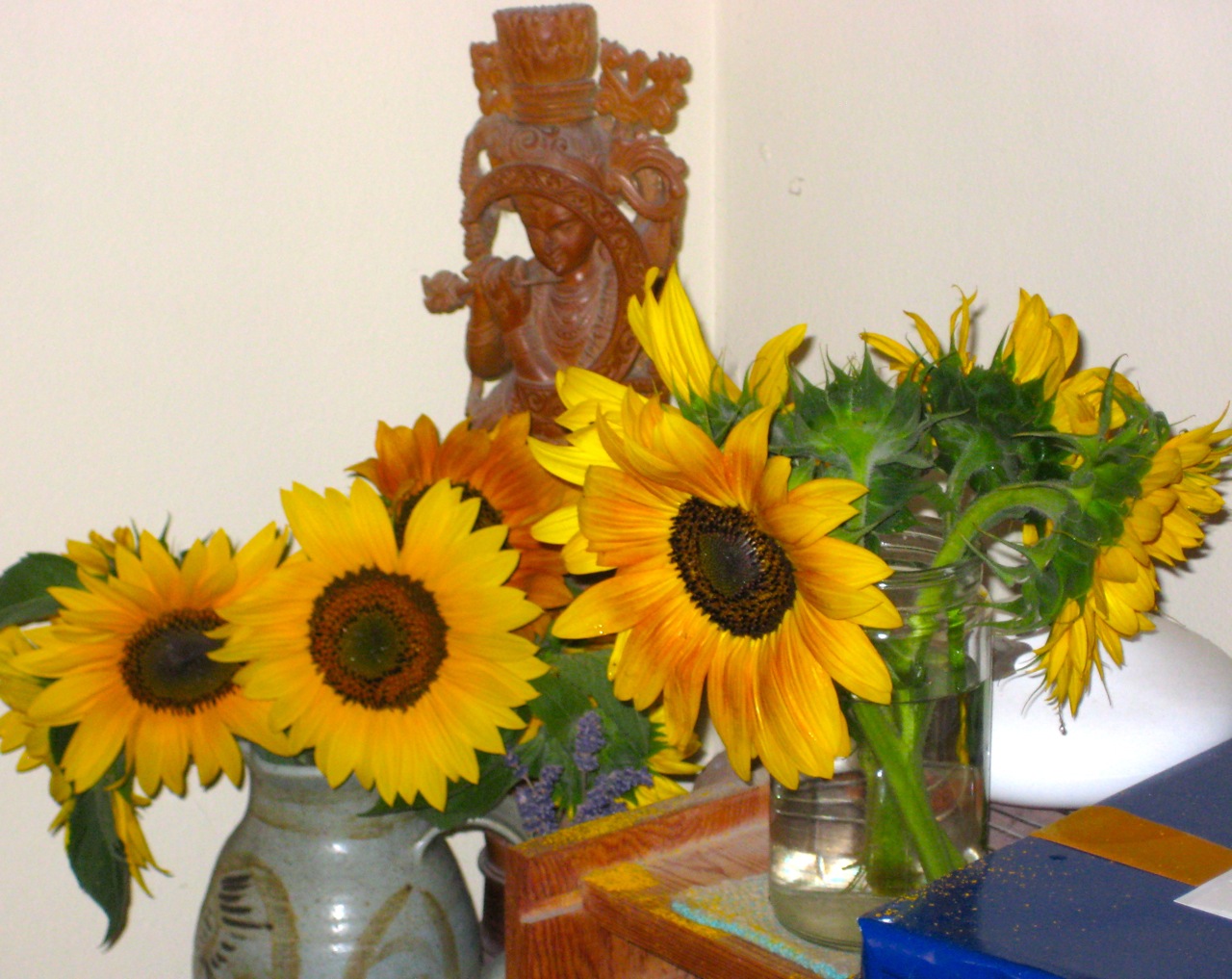
We’ve grown two kinds of sunflowers in our garden. One kind makes one enormous head for seeds. The other kind—this kind—is for cut flowers.

We discovered the first year we grew them that it’s critical to cut off the initial flower at the top of the main stem. Otherwise it just makes that flower as large as it can—not unlike the other kind of sunflower. But if you take that flower, the plants start making numerous medium-sized flowers on side stems. If you have four or six sunflower plants, you can expect to be able to harvest a few flowers every day for most of the summer.

After Jackie broke her wrist last summer, we had to abandon our garden, and our sunflowers didn’t get harvested. Instead, they bloomed, made seeds, and dropped them in the garden. The result is that this year we have lots of volunteer sunflower plants. Lots. I haven’t counted, but it’s more than four or six.

I don’t seem to have any sunflowers in the study yet, but I think every other room in the house has a vase of flowers, and I’m sure the study isn’t far behind.

Tomorrow we’ll have more flowers. And more the day after that.

I like sunflowers.

I just discovered another Champaign-Urbana area writers group for writers of speculative fiction, calling themselves All Writes Reserved. How did I not know this? In any case, it’s great to know that there’s another group of serious writers of speculative fiction in town.

Anyway, I’ve added five blogs to my feed reader—the individual blogs of the group’s members, plus that group blog, which I also added to the list of local writers groups on my Incognitos Writers Group page.

I’ll also try and get in touch with them and raise the possibility that we might do an occasional joint critique session or something. (Getting in touch with a group of people on the net is not as easy as it used to be, now that so many people insist on trying to hide their email address in a futile effort to stave off spammers. And, practicing what I preach, my email address is right there on my Contact page.)

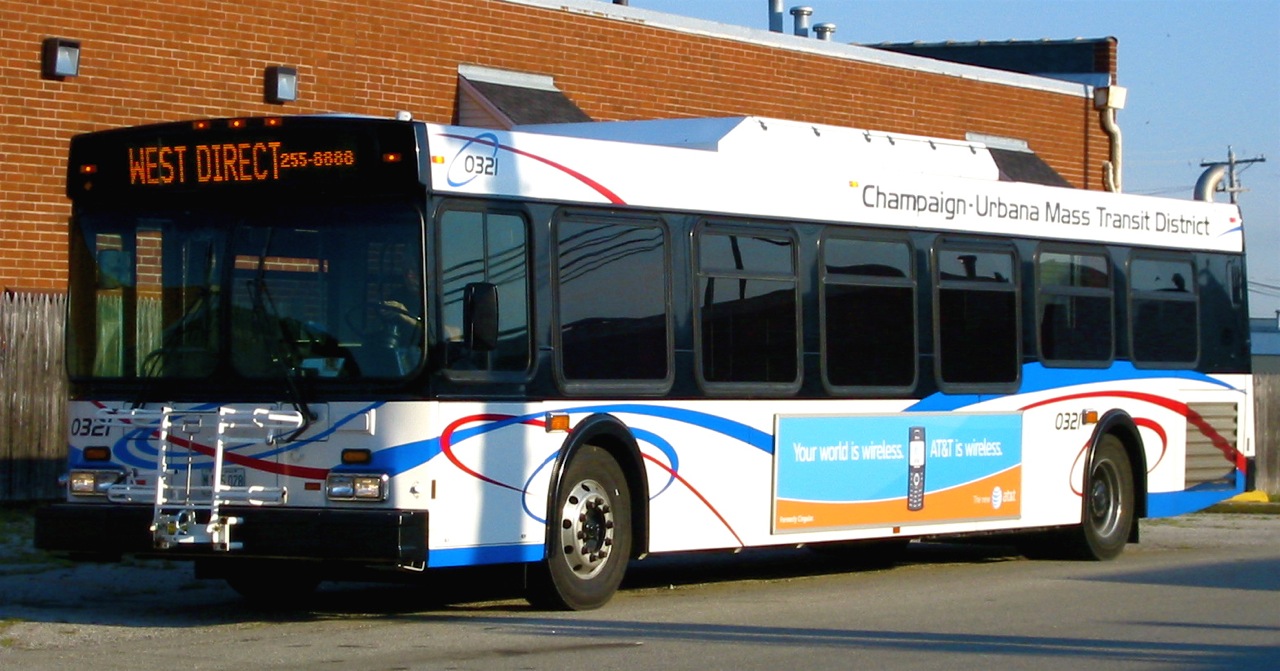
The town of Savoy, just south of Champaign, makes a point of having lower taxes. They do so by not providing many of the amenities that Champaign and Urbana provide—no bus service, no public library, etc. Residents, since they can be free riders on Champaign and Urbana services, like the situation just fine.

A few years back, the Champaign-Urbana Mass Transit District was looking to expand its service area into Savoy. Property owners in Savoy didn’t like that idea.

There are rules allowing taxing districts to annex adjacent areas and begin providing services—and assessing the tax. The rules make it pretty tough for an area to opt out; just about the only way is to already be in the taxing district of another service provider. With that in mind, Savoy created its own mass transit district a few years ago (the Champaign Southwest Mass Transit District). The idea was that it wouldn’t provide any mass transit service and wouldn’t levy any tax.

All very sad, of course, for anyone like me who uses the bus service, along with anyone who thinks that public services are a good idea. Which meant there was a bit of schadenfreude when, as anyone with any sense had foreseen, Savoy’s transit district promptly levied a small tax (to pay the legal cost of fighting CUMTD’s attempt to annex areas within the district anyway). Taxing districts levy taxes. It’s what they do.

Now we’re getting a bit more schadenfreude: People within Savoy’s transit district (the new YMCA and an apartment complex) are asking the district to provide transit services.

It’s funny, but it’s also kind of sad. I mean, the people who built the apartment complex and the YMCA surely knew that they were building in a place where there was no transit service. I’m sure they picked those locations because the land was cheap. Didn’t they stop to think that the reason the land was cheap was because of the lack of services?

On the one hand, I’m glad to see the Savoy transit district getting pressured to provide transit services. Providing transit services are what transit districts are supposed to do. And I have no sympathy for the residents who created the district in the hopes of dodging a tax—only a moron creates a taxing district while expecting not to be taxed.

But I’m still kind of sad. If transit service to the YMCA is important (and the YMCA says the lack of it is their visitor’s number one complaint), wouldn’t it have made more sense to build the new YMCA within the CUMTD service area? Instead, they build where they know there’s no service, and then complain about it: More sprawl and more bickering.

Of course, those are just more reasons why the Champaign Southwest Mass Transit District was a bad idea. I mean, really! Who’s so stupid as to create a taxing district hoping not to be taxed?

The local taiji group that I practice with, Community Tai Chi, recently opened up its formerly closed (password protected) Community Tai Chi student blog.

If you’re local, and you’re interested in studying taiji, the site and the blog together give you a very good idea of what you’d be studying if you studied with us. At the top of the blog are a series of posts with links to videos of the various movements in the 8-movement form we teach beginners (reposted so that they appear in order). Further down is a long post with links to videos of the 24-movement form that the more advanced class is working on (the first 24 of the Chen-style 48 movement form). Further down yet are some older posts with links to taiji resources various other places (including a couple that link back here, to some of my taiji posts).

A perfect day for a hike, so we went to the Forest Glen Preserve, where we not only got our hike, we got it with extra wildlife.

We scoped out several trails, with an eye toward bring Jackie’s mom with us later in the spring. We thought the trail we hiked on last year, the Big Woods trail, would be too rugged, so we wanted to evaluate some of the other trails as possible alternatives.

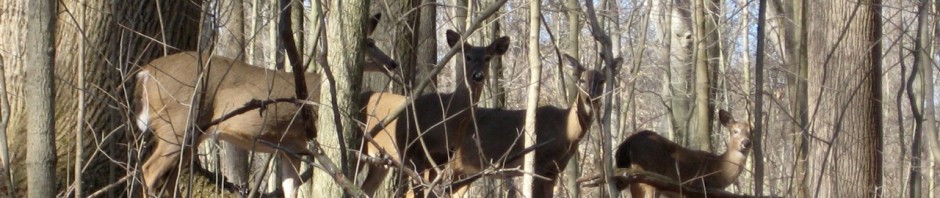
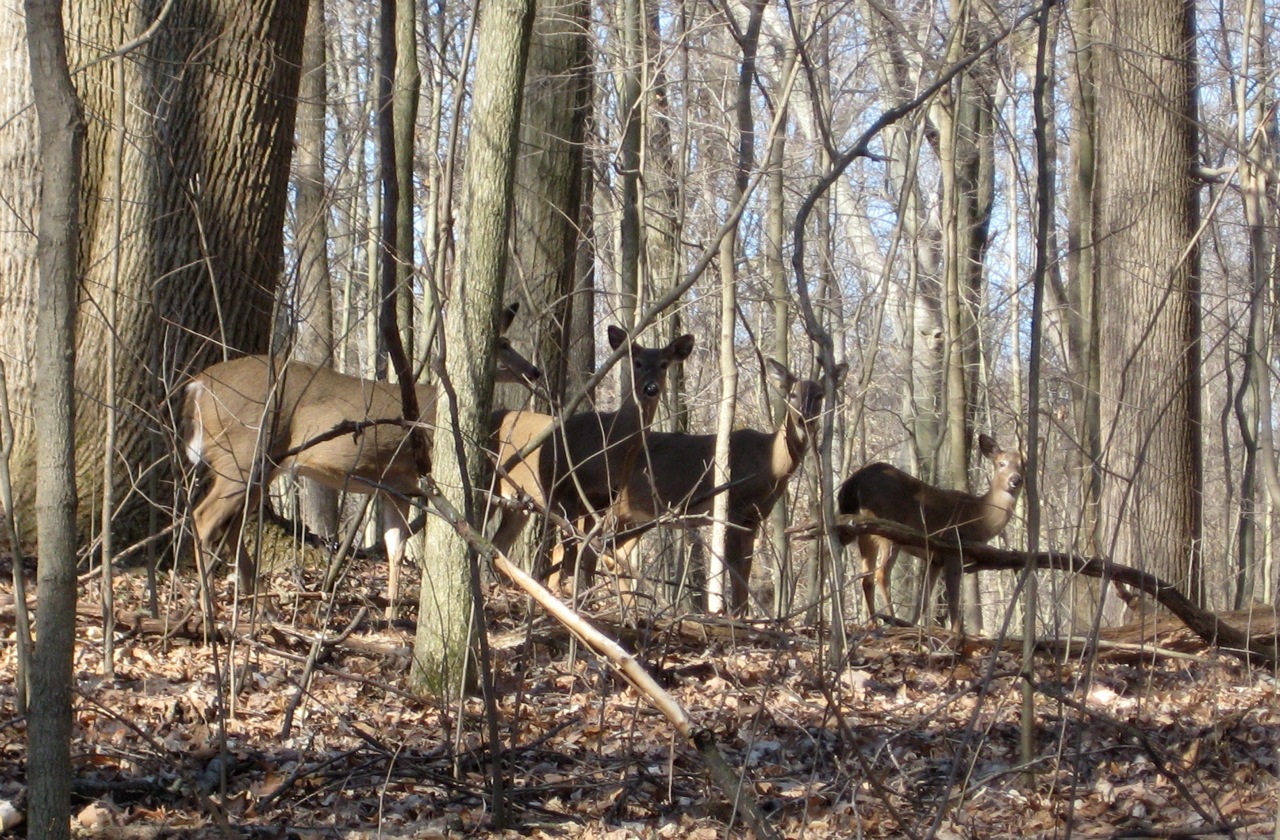
The first trail we tried was the Beach Grove trail, which is short (about a third of a mile) and paved. It’s marked as being handicapped accessible, although seemed a bit rugged for someone in a wheelchair or scooter. It’s the trail where we saw these deer!

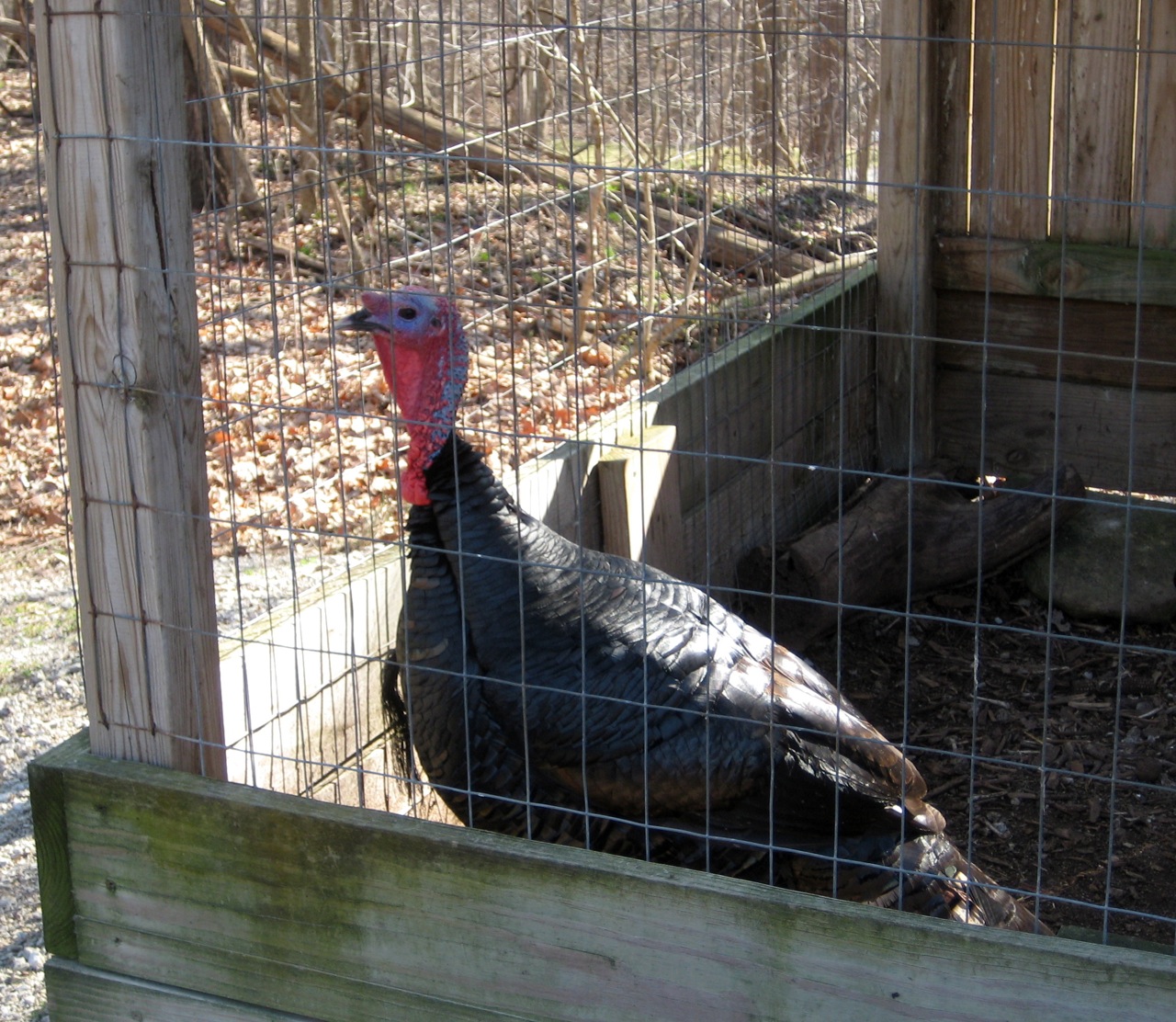
After that, we moved on to the Willow Creek trail. It’s probably closer to what we want for Barbara. It’s not paved, it’s longer (about a mile), and it’s got some change in elevation (without being as rugged as the Big Woods trail). It also had some wildlife! We saw a red-bellied woodpecker before we even got on the trail. Then, just past the trail head, I saw what I assumed would be a hawk—except once he landed right in front of us, I was able to see that it was a barred owl. He sat there for a while, turning his head to look at us, and then off to the side to give us a profile view, and flew off silently the way owls do. We also saw a whole big flock of wild turkeys. They were too coy for me to get a photo of, but near the trail head, we’d seen this guy in a big pen.

Back on one of the park roads, we saw a big male ring-necked pheasant.

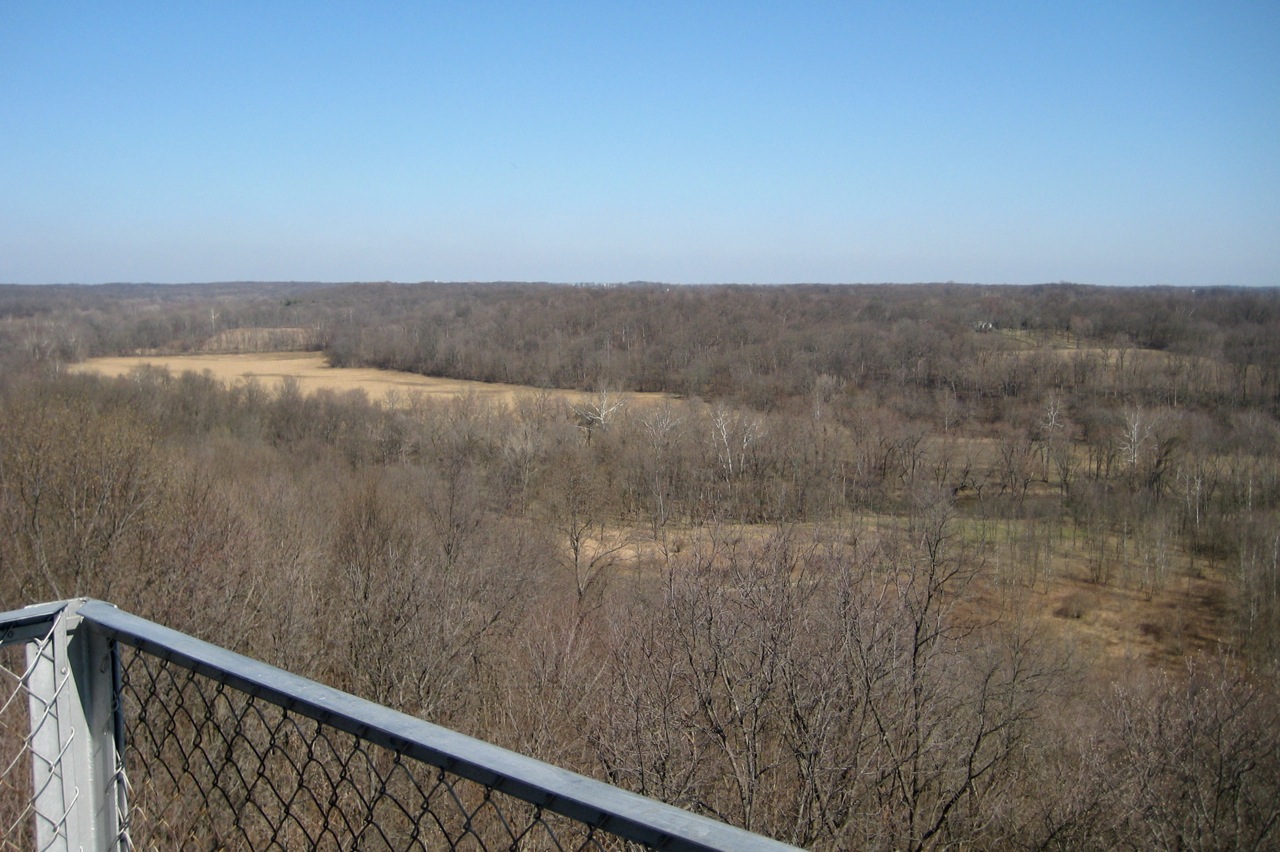
The Big Woods trail leads to an observation tower that we hadn’t climbed on our previous hike, but there’s an easier way to get there, hiking up an “official vehicles only” access road. We hiked up there and climbed to the top of the observation tower, which gave us a great view of the surroundings, and also a particularly good view of the turkey vultures that were soaring all around at just about the same height as the observation platform, often coming close enough that we could see the red of their heads. (Despite the great view we had, I didn’t manage to get a worthwhile picture of the vultures.)

All in all, a great outing, and I think we have a plan for when we bring Barbara—the Willow Creek trail, followed by the Beach Grove trail if we’re all up for more hiking after.

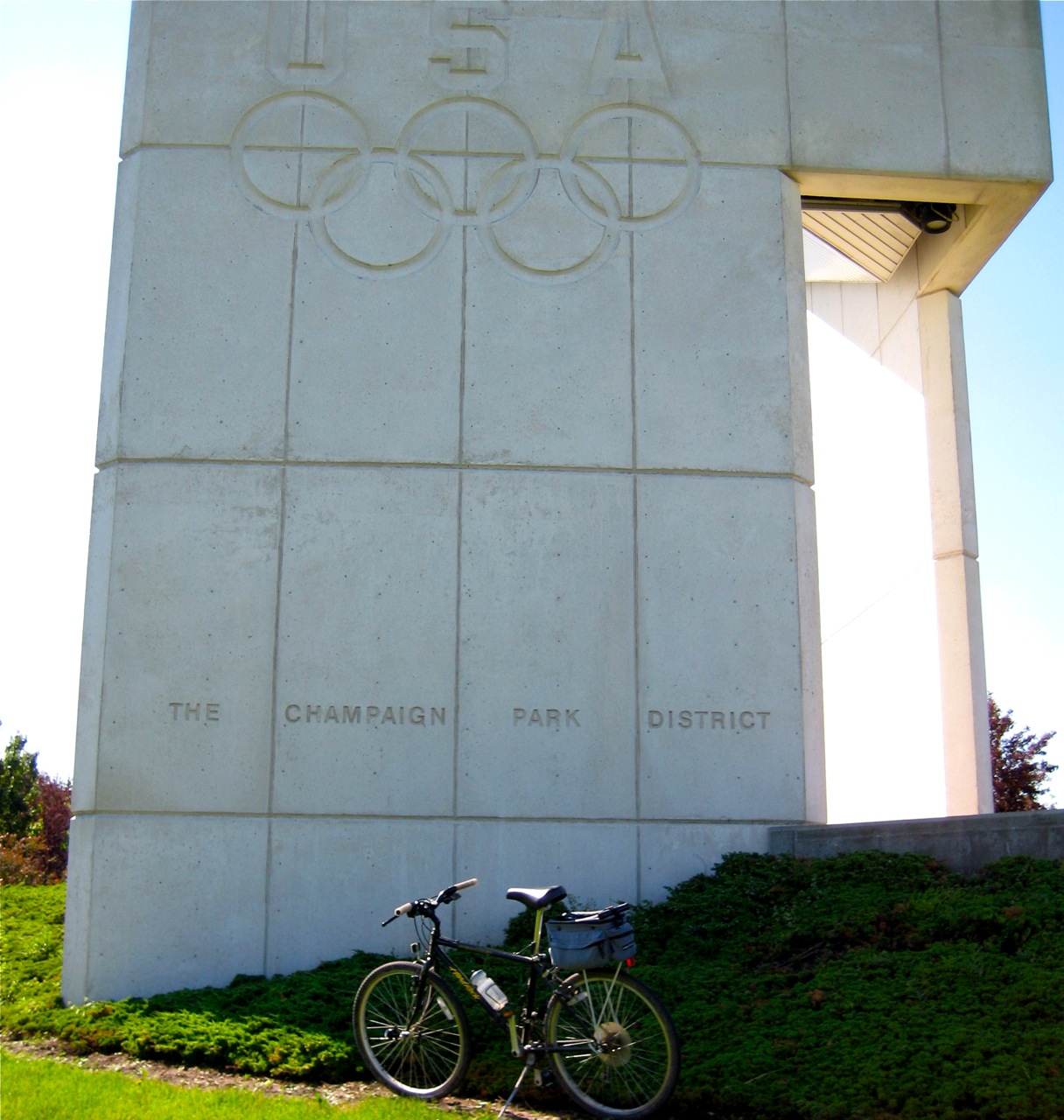
Jackie and I went for our first bike ride of the year. We followed our traditional first-ride route, around Kaufman Lake, past the Olympic Monument, around Parkland College, and then back. This year we went 6.27 miles.

I’d been hearing cardinals for several days, but out on this ride we got definitive expressions of bird spring. The robins are back, as are the red-winged blackbirds. I saw a crow fly up out of Copper Slough with a huge wad of nesting material in its beak.

The ride itself went fine as well. No mechanical problems. No problems with Jackie’s wrist. There had been a couple of previous days when it would have been warm enough to ride, but those days were very windy. It was nice to just wait for today and not have to deal with the headwinds.

I think we’re all set now, to be able to ride whenever we want. In particular, if there’s a day when it’s nice enough to ride first thing in the morning, we could ride to the Fitness Center and then to taiji. (That’s a bit long and complex of a ride to try to combine it with our first “shakedown” ride of the year.)

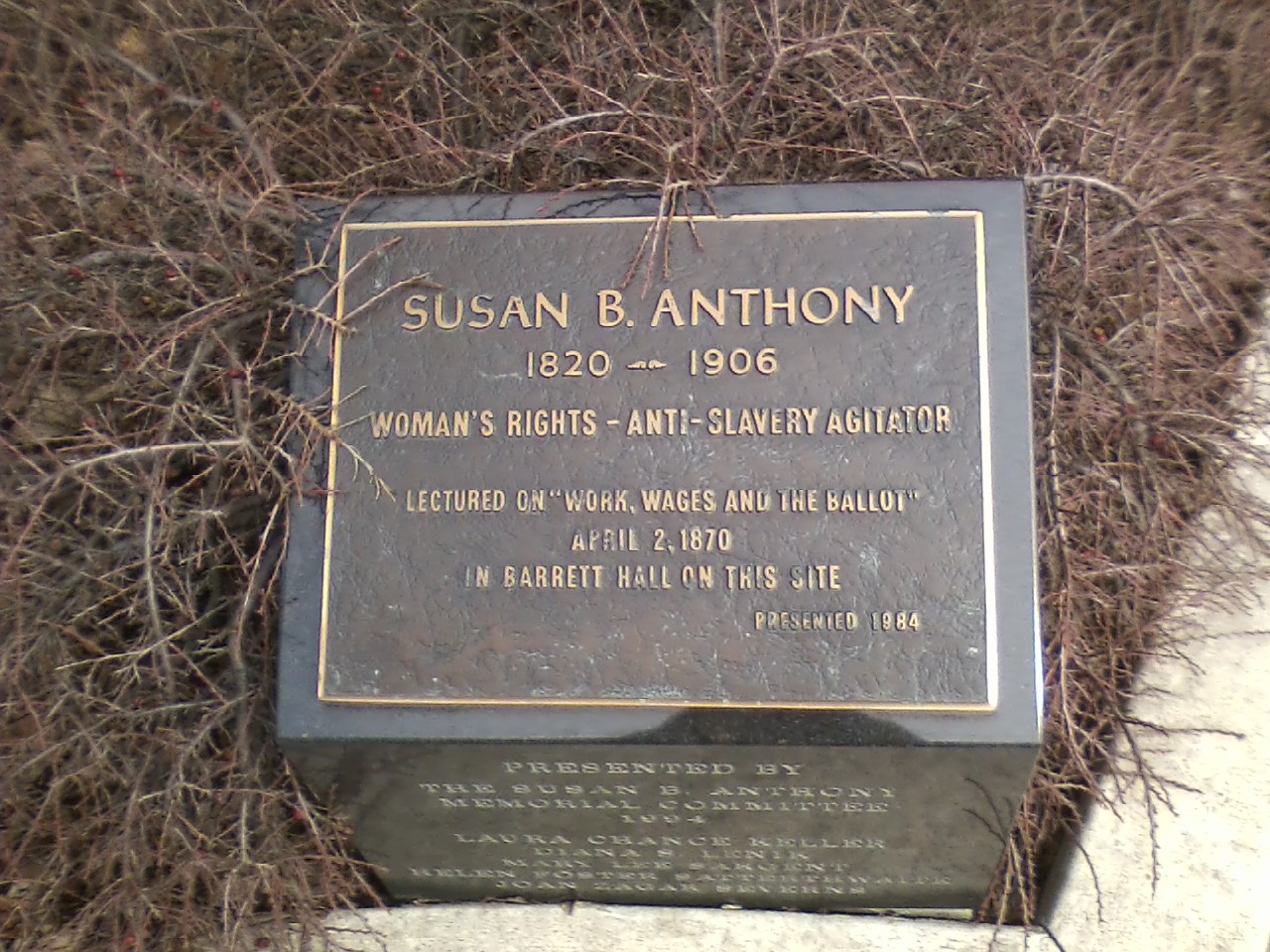
Plaque commemerating a lecture by Susan B. Anthony

Plaque commemorating a lecture by Susan B. AnthonyI’ve long been peeved by how little credit people give to the power of their vote.

So many people seem to think that a vote isn’t effective unless it holds the balance of power, as if their vote only counted when the other voters were equally split, so that their vote would sway the election one way or the other.

This isn’t true for individuals, and it most especially is not true for groups.

Back in the run-up to the 2008 election, I heard a  story on NPR that provided a good counterexample. An Indian tribe in (I think) New Mexico was getting attention from state and national candidates of both parties, because they had started voting. Pretty much all of a sudden, after their voting turnout had shot up, their issues became important to politicians at all levels. And their issues weren’t just important when there was a close election and their votes might make the difference: Because they voted in every election, every politician needed to pay attention to their issues all the time.

If you’re a member of a group that votes, your group’s issues will be taken seriously. You don’t need to be a majority. You don’t even need to vote as a block. (In fact, it’s probably better if you don’t: You want politicians thinking that each individual vote is up for grabs, if they institute the right policies.)

The image at the top of this post is of a plaque in downtown Champaign, commemorating a lecture on “Work, Wages, and the Ballot,” that Susan B. Anthony gave here back in 1870. I’ve seen the plaque many times, but couple of days ago, I thought to take a picture of the plaque, and that prompted me to do a proper search, which yielded some results.

This Project Gutenberg Book Susan B. Anthony: Rebel, Crusader, Humanitarian, by Alma Lutz is pretty good:

She had at hand a perfect example in the unsuccessful strike of Kate Mullaney’s strong, well-organized union of 500 collar laundry workers in Troy, New York. Aware that Kate blamed their defeat on the ruthless newspaper campaign, inspired and paid for by employers, Susan asked her, “If you had been 500 carpenters or 500 masons, do you not think you would have succeeded?”

“Certainly,” Kate Mullaney replied, adding that the striking bricklayers had won everything they demanded. Susan then reminded her that because the bricklayers were voters, newspapers respected them and would hesitate to arouse their displeasure, realizing that in the next election they would need the votes of all union men for their candidates. “If you collar women had been voters,” she told them, “you too would have held the balance of political power in that little city of Troy.”

I turned 18 shortly after the voting age in the US had been lowered to 18. The drinking age had been lowered along with it, so it was legal for me to drink. But a big jump in drunk driving accidents prompted many states to raise their drinking age.

In Michigan it turned out to be an oddly complex process. A state law was passed, raising the drinking age to 19, but grandfathering in people who were already old enough to have started drinking before the law went into effect. After that law was passed, but before it went into effect, a state constitutional amendment was put on the ballot, that would raise the drinking age to 21, without any grandfathering. That would create a whole cohort of people who’d been able to buy alcohol for a year or more, who would lose that right. And all of them could vote.

I voted against it, of course. But nobody else I knew who was going to be in the affected group bothered to vote. They didn’t much care about the issue—it was as easy for under-age drinkers to buy booze then as now—and they didn’t think their vote would count for much. And, as it turned out, they were right. But only because their peers didn’t vote. Not only could a solid voting block of 18-to-20 year olds have affected the outcome, I rather doubt if the issue would have even gone on the ballot, if 18-to-20 year olds voted at the rates that senior citizens do.

The way voting helps is not by winning individual elections (although that does happen and it’s nice when it does). The way voting helps is that if you’re a voter, politicians take your interests into account all the time.

We usually buy our peanut butter from a local health food store that grinds it fresh. The owner comes out from behind the counter, grabs a 1-pound package of peanuts from the cooler, and then takes it back behind the counter and grinds it while you wait. (I think you’re supposed to get the package yourself and bring it to her, but I didn’t know that. Jackie usually does the shopping there.)

Sadly, we just used up our package of freshly ground unsalted unsweetened peanut butter, and for lunch today had to make do with our backup supply—some national brand peanut butter. We keep it on hand for two reasons. It’s less runny than good peanut butter, which is nice when we’re making peanut butter sandwiches to take to a lunchtime lecture at OLLI (or any similar brown-bag event) and want a minimally messy lunch. And it stores well.

It’s not as healthy. It’s salted and sweetened. Worse, some of the healthy peanut oil has been replaced with some less runny oil. (Although they now use less hydrogenated vegetable oil than they used when I was a kid.) But you know what? The commercial stuff tastes good even so.

Still, we’ll get some more freshly ground peanut butter first chance we get.

Weather is a local phenomenon. Oh, weather systems can cover half a continent, but the weather on the north edge of a huge weather system will be entirely different from the weather at the south edge. And any particular spot on the planet sees a unique sequence of weather systems, somewhat different from those seen by other nearby spots, and entirely different from those seen by more distant spots.

This is why I’ve always been completely baffled by celebrity groundhogs.

It makes no more sense to pay attention to the shadows of distant groundhogs than it makes to pay attention to the forecasts of distant meteorologists. In fact, it makes much less sense—a distant meteorologist has the skills and technology to produce a useful forecast for your local area. But I have no more interest in what some celebrity groundhog sees when he emerges from his burrow than I have in the local weather report for Hong Kong or Timbuktu.

What matters is what your local groundhog sees when he emerges from his burrow this morning! Pay no attention to the shadows of distant groundhogs, whatever their celebrity status!

Hereabouts, it’s rather foggy, assuring us of an early spring.

Spotted these decorative brassicas by the front walk of a house near campus, and liked them—a seasonally appropriate floral alternative for December.

Not the best picture ever—my phone had a pretty good camera for its day, but the lens has been riding around in my pocket for 5 years now.

I was near campus to meet some former co-workers for lunch, and took the opportunity to walk over to a Chinese grocery store near University and 5th, where I’d gotten a box of Ceylon tea last summer. That box of tea is just about empty, and I thought I’d look and see if they still carried it—which they do. (I’d checked on the internet, and found that Amazon was selling the same tea for $17 a box. The Chinese grocery store had it for $3.)

Creative Commons License
Decorative Brassicas by Philip Brewer is licensed under a Creative Commons Attribution 3.0 Unported License.
Based on a work at www.philipbrewer.net.