This is the fourth week in a row where I actually did both my “long” run and my “fast” run—always my intention, but rarely achieved earlier in the year. 🏃🏻♂️
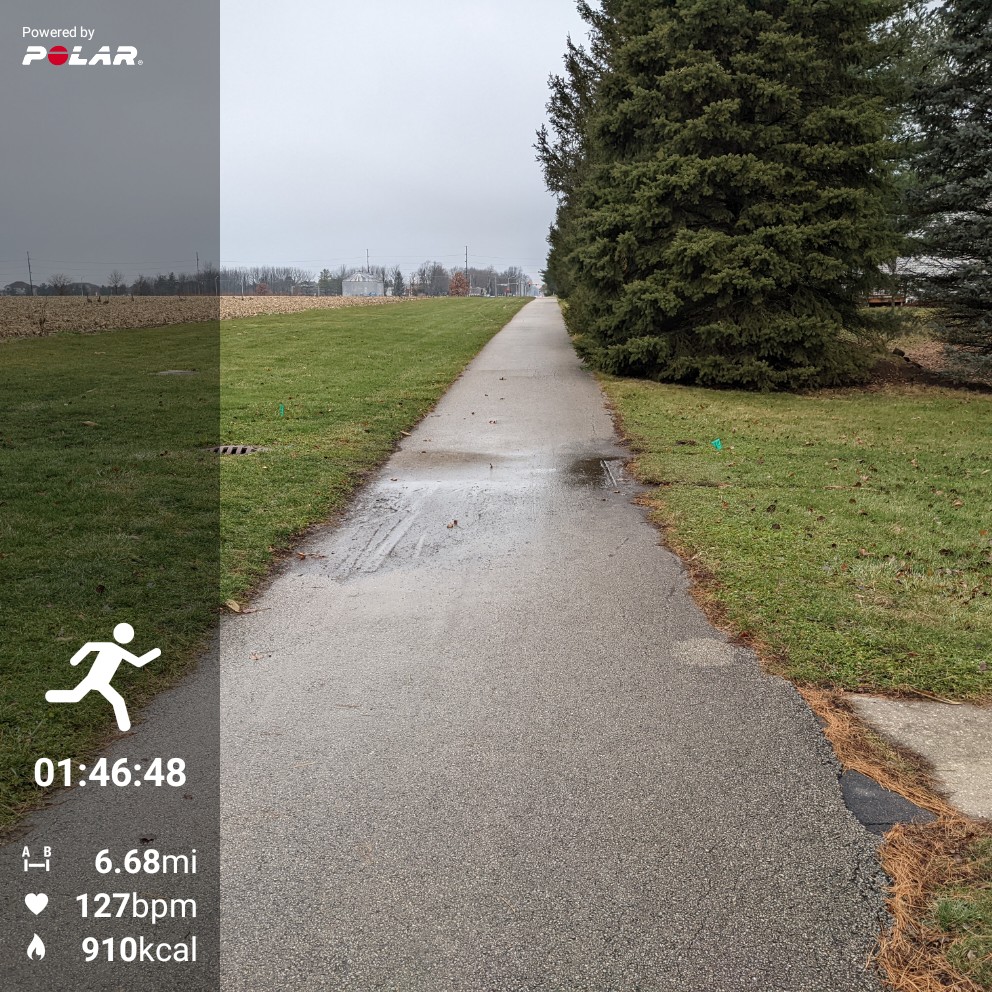

This is the fourth week in a row where I actually did both my “long” run and my “fast” run—always my intention, but rarely achieved earlier in the year. 🏃🏻♂️
I started practicing tai chi in 2009 with a beginner course at OLLI (the OSHER Lifelong Learning Institute). I’d always been attracted to tai chi. I liked the way it looked—the slow, controlled movement. I was also interested in it as a martial art, and I liked the idea of “moving meditation.” Despite all that interest, I had not anticipated how transformative the practice would turn out to be.
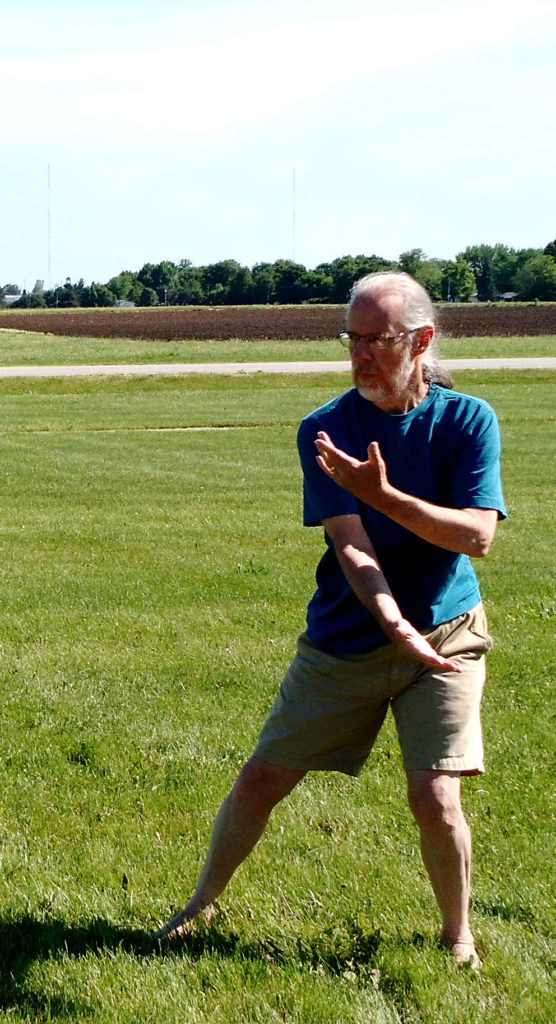
Before I added the tai chi practice to my life, I was all about figuring out the “right” amount of exercise—and in particular, the minimum amount of running, lifting, walking, bicycling, stretching, etc. to become and remain fit enough to be healthy, comfortable, and capable of doing the things I wanted to be able to do.
Pretty quickly after I took up the practice, I found I was no longer worried about that. I found that my body actually knew what the right amount was, and that all I needed to do was move when I felt like moving—and make sure that my movement was diverse.
Because diversity was the key, I did a lot more than just tai chi. I continued running. I dabbled in parkour. I stepped up my lifting practice (and then shifted to mostly bodyweight training when the pandemic made gyms unavailable, and then continued with it because it seemed to work better). I went down a “natural movement” rabbit hole. I walked a lot.
In about 2012 or 2013 my tai chi instructor asked if anyone wanted to “assistant teach” the beginners class with him. I volunteered, and then did so. After six months or so he asked me to take over the evening class that he was teaching for people who couldn’t come to the early classes. I gradually started filling in for him on other classes as well.
In 2015 I formally took over as the tai chi instructor at the Savoy Rec Center. I really enjoyed teaching tai chi, although I found the constraints (having to show up at every class) a bit. . . constraining.
I did some tweaking around the edges (in particular, combining the Wednesday and Friday classes into a single Thursday class, so I could have a three-day weekend), which helped, but only so much.
Then a few weeks ago, the Rec Center wanted me to sign a new contract which would have required me to buy a new insurance policy, naming the Village of Savoy as an “additional insured.” I’m sure I could have done that—there are companies that sell insurance specifically for martial arts and fitness instructors. But as soon as I got set to research such policies, I realized that I really didn’t want to.
Instead, I wanted to retire.
I’d retired from my regular job years before, in 2007. And of course teaching tai chi four or five hours a week was in no way a career. The first few years I was teaching, I found the money I earned a nice supplement to our other retirement income. But with various improvements to our financial situation over the last few years, the money became pretty irrelevant, and the time constraints more. . . constraining. Especially with my parents facing various health challenges, I want to be able to go visit either one if that seems necessary, which has been difficult if I want to honor my obligation to my students.
So a few weeks ago I told the Rec Center and my students that I was retiring from teaching tai chi. My last classes were yesterday.
I’m sad not to be teaching my students any more, but delighted at losing the set of related constraints.
For years now, my students have been gathering in the park (Morrissey Park in Champaign, Illinois) during nice weather for informal group practice sessions, and I expect we’ll keep doing that. At any rate, I plan to be there, starting in the spring, practicing my tai chi. You are welcome to join us.
As I have been saying for years. But the myth that “running will ruin your knees” is pretty tough to get past.
“cartilage is a living tissue that adapts and thrives with regular use”
Source: How to Save Your Knees Without Giving Up Your Workout — NYT
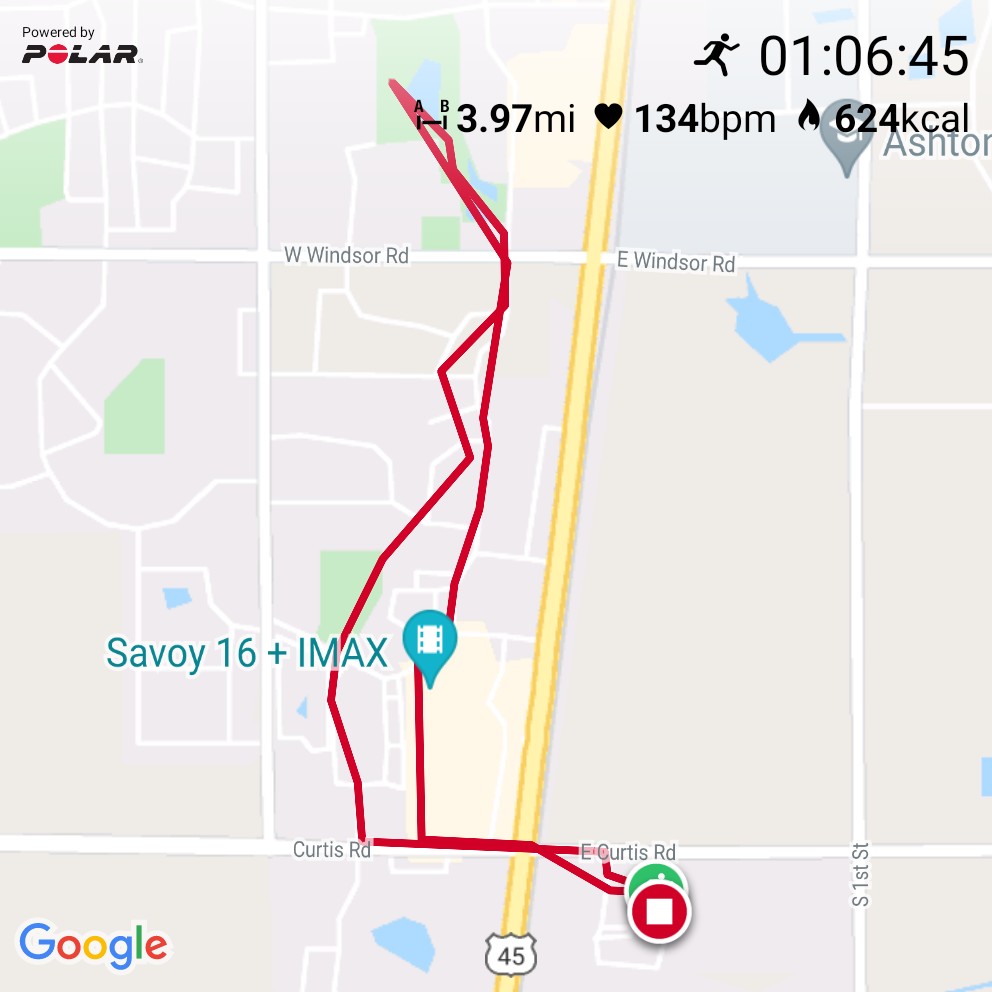
My workout was a medium-length run of 3.97 miles which I ran in 1:06:45, but that was not my only activity. Besides that, I also hiked a similar-length trail at Homer Lake with Jackie.
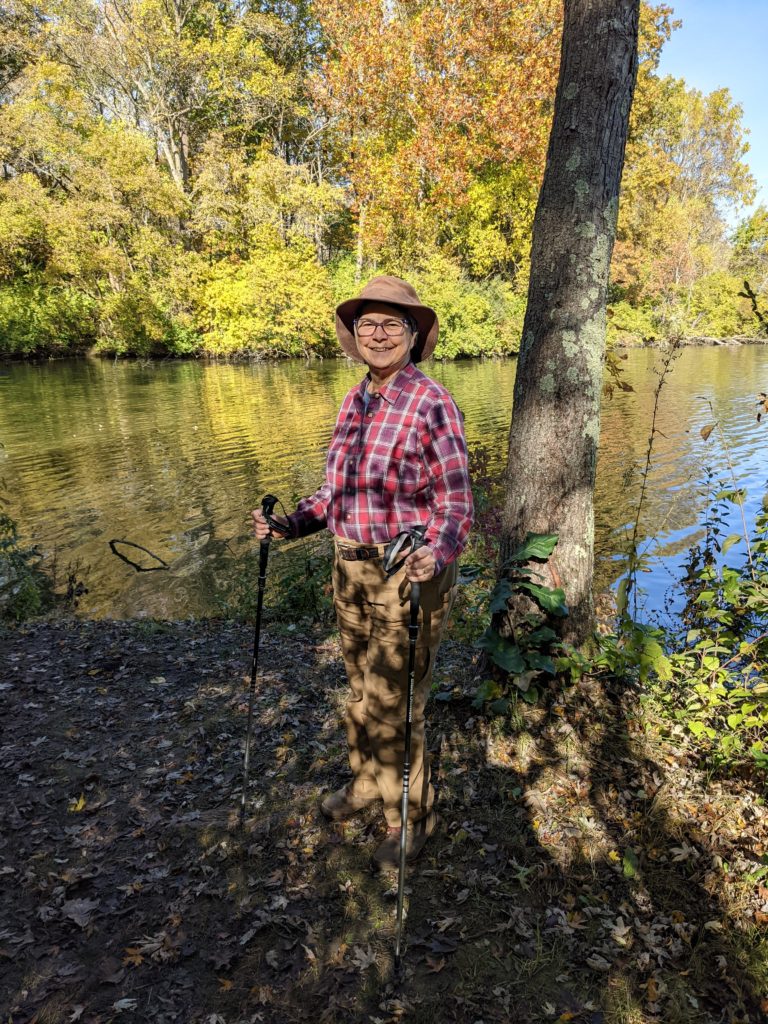
The walk was especially nice, and we’re very pleased that (with her new bionic hip) Jackie is once again able to walk reasonable distances. We walked about 2.72 miles in 1:24. There were some very nice views of Homer Lake, as well as some deer, some blue jays, and a handsome snek that I failed to get a decent picture of.
I did get a decent picture of Jackie:
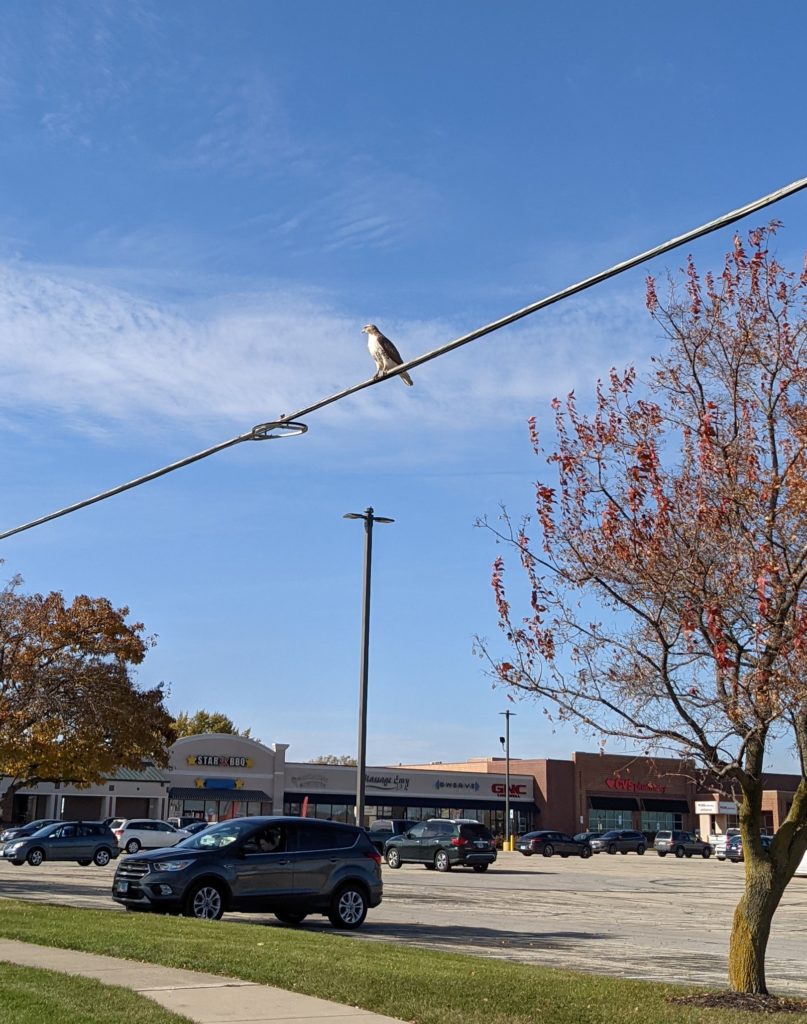
Besides the pictures from Homer Lake, I also got a picture of a handsome Red-tailed Hawk while I was out running, taken quite close to home. (See at the top of this post.) He was still there as I returned home.
I should mention that the run was actually quite a bit longer than my exercise-tracking app gave me credit for. (Google Fit estimates the distance at 4.46 miles.)
You can get an idea of just how much my exercise-tracking app shorted me from this map, if you know that I ran around the lake at the north end of of my run (and not as the map suggests, through it), and that I generally followed roads and paths (without cutting nearly as many corners as the map suggests).
I want to reassure people that I will not be posting all of my workouts going forward. I just wanted to post a representative strength training session and run, so that I’d have then here as examples.
Whether I’m trying to “get enough exercise” (as I tried to do for years), or trying to “fill my days with movement” (which I’ve realized is a much better way to think about my physical activity), training has been a constant. As someone who has only rarely trained as part of a group, or had a teacher or coach, a lot of my training has been solo training.
Often my focus was on endurance training: preparing for very long walks, foot races, or a 100-mile bike ride. I also did strength training. And my training often included skill training—Tai Chi, parkour, tennis (long ago), even fencing (one brief term in college).
Training by yourself is hard. It’s hard to motivate yourself to go out and do it, and it’s hard to push yourself enough to make good progress (and if you’re good at pushing yourself, it’s hard to know when to take time to recover instead). For skills-based training, it’s hard to learn those skills without a teacher or coach. And for activities with any sort of competitive element, such as tennis or fencing, it’s especially hard to train without a partner. This has been particularly acute during the pandemic, but really it’s always true.
And here is where Guy Windor’s new book The Windsor Method: The Principles of Solo Training comes in.
A lot of the specific information in the book is stuff I’ve figured out myself over the years: Some training is just about impossible to do without a teacher (learning your first Tai Chi form) or a partner (practicing return of serve in tennis). But for most activities, that fraction of the training will be much less than half of your training. Much of the rest of your training is either easy to do by yourself (strength and endurance training), or at least possible to do by yourself once you’ve learned the skill well enough to be able to evaluate your own performance (practicing a Tai Chi form, for example).
The key is to spend some time figuring out the entire scope of your training activities, and then think deeply about what category each activity falls into.
To the extent that your access to a teacher, coach, or partner is limited (as during a pandemic), emphasize the things that are easy to train solo (such as strength training and endurance training), then judiciously add those parts of the training that are advantaged by (or require) a teacher or partner as they are available.
What Guy Windsor adds to this sort of intuitive structuring of training is, as the title suggests, a method. He has systematized the structure in a way that makes the decision-making parts of the activity easier to do and easier to get right.
Perhaps even more important than that, he has taken a step back to talk about all the parts of training that aren’t just skills training for your particular activity. That other stuff—sleep, healthy eating, breathing, mobility, flexibility, strength training, endurance training, etc.—are actually more important than this or that skill, while at the same time being the bits that are easiest to train solo. If you’re stuck for a year with no partner, no teacher, and no coach, but you spend that year focusing on health and general physical preparedness, you’ll scarcely fall behind at all, and make yourself ready to jump into your skills training with both feet once that’s possible again.
I should mention that Guy Windsor’s book was written with practitioners of historical European martial arts especially in mind, but that scarcely matters. It is entirely applicable not only to practitioners of any other martial art, it is entirely relevant to literally anyone who trains in anything.
And, since many of my readers are fiction writers, I should also mention another of Guy Windsor’s books Swordfighting for Writers, Game Designers, and Martial Artists. When I signed up for his email list, he offered it as a free download for people who did so.
Being forced into purely solo training for 18 months has made me keenly aware of the many opportunities for non-solo training available here locally. There’s a local fencing club that I’ve had my eye on for some time, and our financial situation is such that now we could afford for me to join and buy fencing gear. Just today I searched for and found a local historical European martial arts club on campus—I’ve asked to be added to their Facebook group and joined their Discord. One of my Tai Chi students teaches an Aikido class with the Urbana Park District—I had started studying with him right as the pandemic began and got in two classes before everything was canceled. And, not sword-related, but cool and great training, is indoor rock climbing at Urbana Boulders.
Just as soon as the pandemic lets up for real, I’ll be doing some of those things.
In the meantime, I’m going over my solo training regimen, taking advantage of the insights that Guy Windsor provides in The Windsor Method: The Principles of Solo Training to figure out what adjustments I should make.
For some time now I’ve been groping toward more “functional” workouts, focused on developing actual useful capabilities—walking & running, crawling, lifting & carrying, balancing, climbing, jumping, throwing, catching, etc. (This in contrast to workouts that focus on capabilities that enable those things, such as pull-ups and dips which help enable climbing.)
This introduces certain complexities into my workouts. Skills-based activities need to be practiced at the start of a workout, when I’m fresh enough to do them with the sort of attention that lets me improve my skills. Likewise, any exercise that involves heavy weights, and any exercise that involves complex multi-joint motions, also needs to be done at the start, to minimize the risk of injury. That’s all well and good, but you can only put so much of a workout at the start before you inevitably find yourself in the middle. And then, what do you put at the end?
Well, one thing you can fairly safely put at the end is MetCon (metabolic conditioning) activity. Today I tried out such a MetCon circuit, with an eye toward doing something similar after my more skills-based workouts.

The workout was circuits of:
I’ve done something similar in the past with 45″ work followed by 15″ rest (and then 2–3 minutes rest between rounds). Today I didn’t feel like fiddling with the timer; I picked those rep counts to hit about the same 45″ duration for each set.
I repeated that circuit for 4 rounds, which took just over 22 minutes. I followed it up with a short suitcase carry of the kettlebell—just one circuit of my patio slab with the kettlebell on one side, and then again with the kettlebell on the other side.
It was a good workout.
Now the question is, can I first do a more skills-based workout and then follow it up with a MetCon circuit, without exhausting myself? If I can make that work, I’ll be a little closer to designing the functional training program that I’m working on.
I just wrote a post about “superhero” workouts, mentioning Anthony Arvanitakis’s Superhero Bodyweight Workout which I did last year. I plan to do it again this year, and this post is about a handful of specific issues I had with the plan last year, and how I’m planning to rejigger things to deal with them this year.
There were a few exercises that I couldn’t quite do—not because I lacked strength or endurance, but just because there was a skill component that I couldn’t master quickly enough to go full-power through the 8-week training program. Here are the specific exercises I identified as ones I had trouble with:
Besides those specific exercises, there are two other issues I had trouble with last time:
Last year I started in late May (when Anthony released his latest version for the program and led the program). That was fine, but this year I think I’d like to start earlier in the spring—just as soon as we get reliably nice-enough weather for me to have some confidence I can put my rings up nearly every day.
It’s an eight-week program, so it would be nice to start around the first or second week of April. Then I’ll have my superhero body by the beginning of June.
There are two, or maybe three, genres of “superhero” workout. There’s the aesthetic workout plan, which aims to make you look like a superhero, and then there’s the practical workout plan, which aims to enable you to function like a superhero.

The latter category is not at all common, because everybody knows it’s impossible—superheros are fictional characters—but The Bioneer still comes up with these sorts of plans because he’s all about producing a highly functional mind and body, and even if actual superhero-level performance is impossible, it’s still something he wants to strive toward. I respect that.
The former category can be divided into two parts, which is why I say “maybe three” genres. Most of the category is filled with workout plans supposedly followed by this or that actor getting into shape to look like a superhero for a role in a movie—except most of those are not actually a plan at all, just a single workout that some celebrity trainer came up with that includes some elements of what the actor did to produce the aesthetics that were wanted for the film. (Some years ago, Nerd Fitness wrote a great takedown of these sorts of “plans,” pointing out that what you really needed to do was choose your parents well to get the genes that would enable the physique you want, and then have a job that provided both lots of free time (for exercising) and lots of money (for hiring trainers, chefs, etc.).)
What I prefer, and what I found a specific useful instance of, is an actual workout plan (not just an individual workout) for producing the physique of a superhero, while allowing for your body type, and starting with your current physique: Anthony Arvanitakis’s Superhero Bodyweight Workout.
I followed that workout plan last year, and am planning to do it again this year (although then I’ll proceed directly to a Bioneer-style superfunctional workout plan). My success last year was limited by a few specific issues, and my next post is about my plan for addressing them this year.
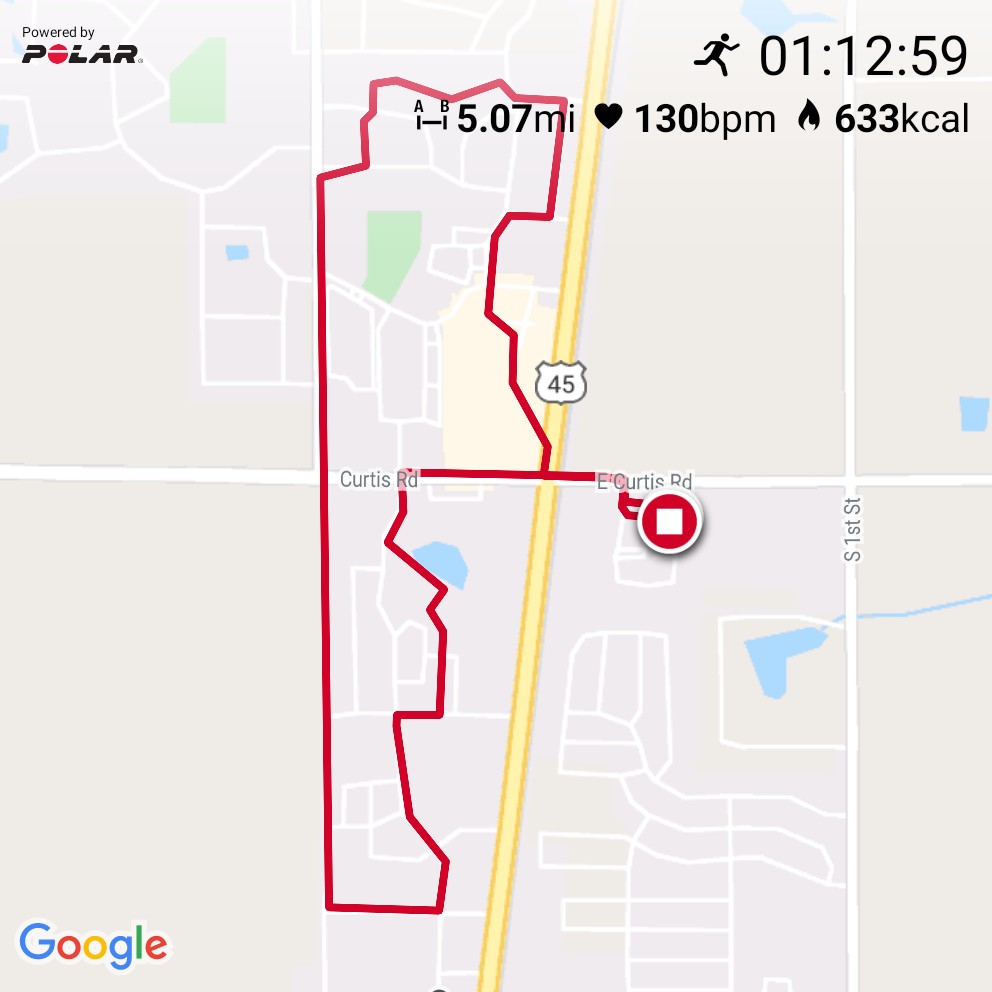
At just over 5 miles, this was my longest run in a very long time. (I just checked: I ran a fraction of a mile farther back in April of last year.) Cold, but I have the clothes for it. 🏃🏻♂️
With typical wry humor, the Bioneer responds to a common criticism of his training style:
“… that it’s impossible to train such a variety of different traits and skills if you have a busy schedule. People accuse me of having no life! Me! The guy talking about Batman on YouTube!”
He then goes on to effectively answer the criticism with a fully worked-out program.
Source: How Would Batman Really Train?