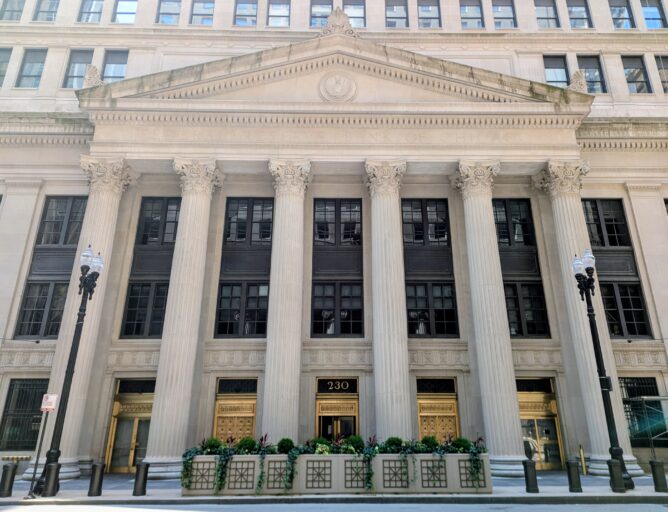
The main entrance of the Federal Reserve Bank of Chicago

I don’t usually worry much about investment bubbles. There have been a lot of them over the past few hundred years, and most of them (railroads, telegraph, dotcom…) were expensive disasters largely only for the people who invested in them. Some though, such as the Great Financial Crisis of 2007–2009, were expensive disasters for lots of other people as well. So it’s worth thinking a bit about whether the current AI bubble is of the former sort or the latter—and how to protect your finances in either case.

Bad just for investors

One big difference between bubbles that are going to be wretched for everybody when they pop and those that’ll end up mostly okay except for the foolish investor’s portfolio, is whether the excess investment got spent on something of enduring value.

For example, railroad lines got enormously overbuilt in the 1840s in the UK and in the 1880s in the US, leading in both cases to a stock market bubble, followed by a stock market crash and a banking panic. But (and this is my point), the enormously overbuilt railroads were of some value. As the firms went bankrupt, the people who had over-invested lost a lot of money, but the railroad tracks, rights-of-way, and rolling stock all still existed. The new firms that got those assets, free of the excess debt, were often viable firms that went on to be successes—hiring workers, providing transportation, and eventually providing a return to the new investors. The people who got screwed were the old investors. (And not even all of them, as the original investors often saw the overbuilding happening early and sold out just as the clueless people who knew nothing about running a railroad, but just saw stocks soaring and wanted to get in on it, started piling in.)

Much the same was true of part of the dotcom bubble. A lot of money got spent on a lot of things. To the extent that it was spent on buying right-of-way and burying fiber, there was something of enduring value that ended up owned by somebody, making it one of the less-bad bubbles.

The key to avoiding catastrophe in bubbles of this sort is largely just a matter of not investing in the bubble yourself.

Bad for the economy

But some bubbles have produced horrible, wretched, prolonged difficulties for the whole economy. The other part of the dotcom bubble, besides the dark fiber build-out, was the bubble in companies with no profits and no prospect of ever having profits, whose stock prices went up 10x based on nothing but a story that sounded compelling until you thought about it for 10 seconds. As usual, that ended up being very bad for the people who invested in those companies, but it also was bad for the whole economy, because when those firms went bankrupt, they left behind nothing of enduring value.

The result was that the imagined wealth of those companies just vanished. The stock market went down, which was bad for (almost) everybody, and it produced a general economic malaise, because post-dotcom crash it became hard even for legit companies with real assets, a real profit, and a real business plan for growth, to raise money, which made actually producing that growth much harder.

Really bad for the economy

There is, however a step beyond just pouring a bunch of money into a bubble that doesn’t actually produce anything of enduring value, like a fiber optic network or a railroad. That’s when the money is raised with leverage (i.e. debt).

The 1929 stock market crash was a rather drastic example. People invested in stocks not because there was an underlying business that was worth what the investors were paying for it, but purely because the stocks were going up. That might have been okay in other times, but stock brokers had recently started allowing ordinary people (as opposed to just rich people) to buy on margin—where you just put up a fraction of the price of the stock you want to buy, and the broker lends you the rest.

In the 1920s you could buy on 90% margin, where you only put down 10% of the price of the shares. That meant that, if the stock price went down by just 10% your whole investment was wiped out, and the broker would sell you out to raise money to pay off (most of) the loan. And of course, all those sales into a falling market produced more losses, leading to the crash.

Since the 1930s you could only buy stocks on 50% margin, making it much less likely that your broker will sell you out into the teeth of a general stock market crash—although it can still happen.

Bubbles with leverage

A great example of a bubble with leverage is the Great Financial Crises of 2007. (Most people date it from 2008, because that’s when Lehman Brothers collapsed. I date it from 2007 because that’s when my former employer closed the site where I worked and I ended up retiring rather earlier than I’d planned.)

That was a particularly bad bubble. A whole lot of money was raised, with leverage, to buy housing. But very little of the money ended up being spent to build more housing (which would have been something of enduring value that would have lasted through the subsequent collapse). Instead, the money was spent bidding up the prices of existing housing, which then fell in value after the bubble popped.

So we had two of the classic producers of bad bubbles: Nothing of enduring value created, and leverage. The whole things was made even worse by the structure of the leverage in question.

This is getting rather far from my main point, so I won’t go into much details, but to raise the large amount of money that was going into houses, the rules on housing market leverage were being eased over a period of time. It used to be that you had to put 20% down on a house. Then you still had to put 20% down, but only half of it had to be cash, with the other half being funded with a second mortgage on the property (at a higher interest rate). Then they started letting people put just 3% down. Then they started letting people with good credit put nothing down. Then they started letting people with no credit put nothing down. At the same time, “structured finance” obscured just how risky all those mortgages were, meaning that when the bubble went pop lots of “mortgage-backed securities” ended up being worth zero.

Which kind is the AI bubble?

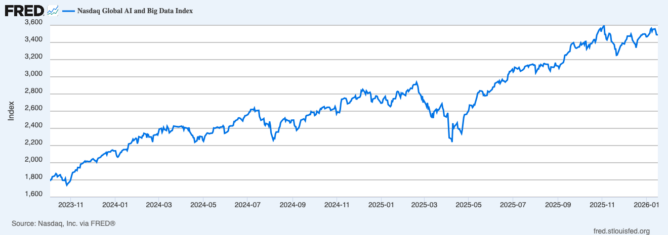
This brings us to the current AI bubble. A whole lot of money is pouring into building two things:

  • Data centers (buildings filled with computer chips of the sort used to train and run AI models)
  • Large language models (non-physical things that are basically just a bunch of numeric weights of a bunch of tokens which can be used to produce streams of plausible-sounding text)

Each of those may have some enduring value.

Data centers will have some. They will probably have a lot less than a network of fiber optic cables, which can be buried and will have value for decades with minimal cost or maintenance. Since newer, faster chips are coming out all the time, a data center is well behind the cutting edge as soon as it’s finished. Plus, training or running an AI model runs those chips hard, meaning that they probably only last a couple of years (due to thermal damage on top of regular aging).

Large language models probably have even less enduring value, because so many people are training new ones all the time. People are always trying to make them bigger (trained on more data) while also making them smaller (so they can run without a giant data center). All that means that your two-year-old LLM probably isn’t worth what you paid to build it, and a four-year-old LLM probably isn’t worth anything.

That’s how things looked a year or so ago—a perfect example of a bubble that would burn the people who sank money into it, but leave the broader economy untouched.

Sadly, that’s been changing.

First, the structure of the leverage has been changing. It used to be rich people and rich companies were building data centers and hiring software engineers to build LLMs. But lately that’s been getting screwy. Those large companies are raising off balance-sheet money with Special Purpose Vehicles (small companies that big companies create and provide some capital to, that then borrow a bunch of money to make something, with the loans collateralized by the things they’re making—but importantly, not an obligation of the big company that created them). Any particular SPV can blow up, if it turns out that the things it built don’t earn enough to pay the interest on the money the borrowed to build them. And large numbers of SPVs can blow up if financial conditions change to make it harder for all the SPVs to roll over their debts as they constantly have to keep their data centers running.

Second, they’re also engaging in weird circular investing and spending arrangements, where company A buys stock in company B which then turns around and pays all that money back to company A to buy chips, letting company A treat it as both income and an investment, while company B can pretend it got its chips for free.

Finally, there’s all the non-financial obstacles that may well throw a wrench into the whole thing. The fact that LLMs are all built on copyright violations. The fact that running data centers requires huge amounts of power and water (that has to be produced and paid for). The fact that producing that water and power brings with it horrible environmental impacts.

What to do

So, if AI is a bubble, and its one of the bad sort that will produce a panic and a recession when it pops, what should you do?

There are a lot of little things you can do that will help. I wrote an article with suggestions at Wise Bread called Are your finances fragile? It talks about what financial moves you can take to put yourself in a better position if there’s a general financial crisis. (If you’re interested in my writing about this stuff more broadly, I wrote a overview of my perspectives on personal finance and frugality called What I’ve been trying to say, that includes a bunch of links to other of my posts at Wise Bread.)

Besides that general advice, there are also a few things to strictly avoid. In particular, strictly avoid thinking that you can find some very clever investment strategy that lets you make money off the popping of the bubble. Yes, after the fact there will be some investments that make a lot of money, but no amount of keen insight will let you find and make those investments, as opposed to the thousands of very reasonable-seeming investments that will blow up just like all the rest.

Along about the end of the Great Financial Crisis I wrote an article called Investing for Collapse, which explains why any such effort is pointless. It holds up pretty well, I think.

Short version? Avoid debt. Keep your fixed expenses as low as possible. Build a diversified investment portfolio that limits your exposure to the most obviously stupid investments, but doesn’t do anything too weird or wacky in an effort to get them to zero—it’s pointless, and will probably do more harm than good.

Good luck when the AI bubble pops!

Let me start by saying that, judging from his previous term, most of what the incoming president says has no particular bearing on what he’s going to do. But I think a few trends look likely enough that it’s worth thinking about the results on the dollar’s value.

The things I’m thinking of are tariffs and tax cuts, which I expect to lead to higher inflation and larger deficits, both of which will lead to higher interest rates.

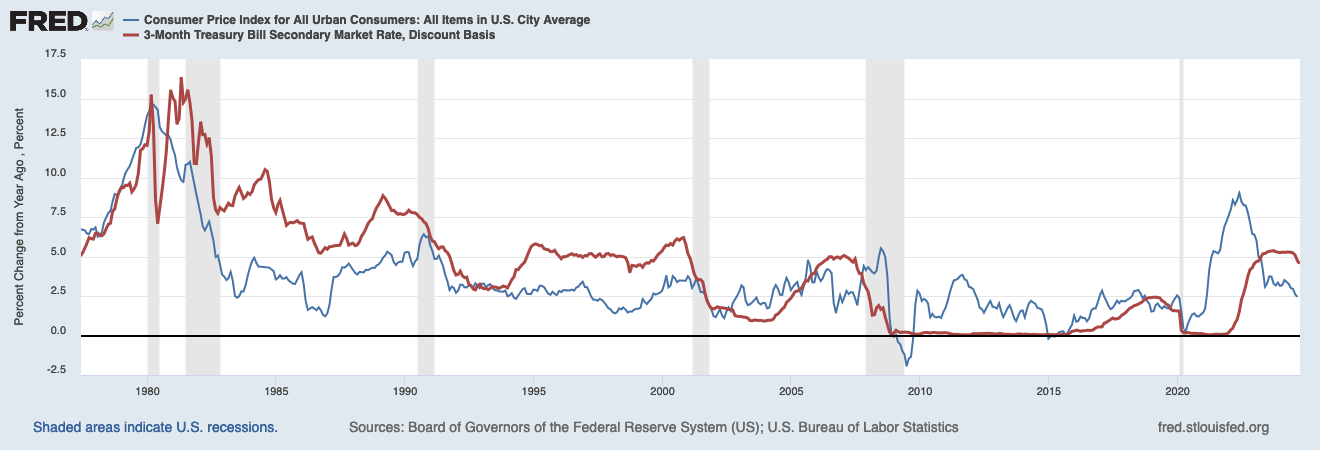
Graph of inflation rate and 3-month t-bill rate going back to June of 1977 (when I graduated from high school
Blue is the historical Inflation rate (CPI vs one year earlier). Red is the historical 3-month T-bill rate (roughly what you could earn in a money market fund). Both are from June, 1977 (when I graduated from high school) through last month.

Tariffs

The president can impose tariffs on his own, with no need for congressional action. Whether we’ll get the proposed 60% tariffs on Chinese goods, or whether that’s just a bargaining chip, I have no idea. But I think some amount of tariff increase will be imposed, which will feed through directly to higher prices.

That’s not to say that tariffs are necessarily bad (although usually they are). But they do feed through to higher prices.

Tax cuts

Tax cuts need to get through Congress. If the Republicans get the House as well as the Senate, it’s highly likely that legislation will preserve the 2017 tax cuts set to expire next year, and probably some additional tax cuts, such as a much lower rate on corporate income. It’s also possible that we’ll see the proposals to cut tax rates on tip income and on overtime pay enacted, although I doubt it. (The incoming president only cares about his own taxes, not about those of random working-class folks.)

The main thing taxes cuts will do is dramatically increase the deficit. The tariffs will bring in some countervailing revenue, but not nearly enough to fill the gap.

Other things that raise inflation and cut revenue

There are all kinds of other proposals that were bandied about during the campaign, such as deporting millions of immigrants, that raise costs both for the government, leading to higher deficits (the labor and logistics both cost money, and not a little) and for employers (they’re employing the immigrants because their wages are lower), which they will try to offset with higher prices.

What this means for our money

Rising costs will feed directly into higher prices, which is going to look like inflation to the Fed, so I think we can expect short-term interest rates (the ones controlled by the Fed) to get stuck as a higher level than we’d otherwise have seen.

At the same time, lower taxes will mean lower government revenues, leading to larger deficits. For years now, the government has been able to get away with rising deficits, but I doubt if the next administration will have as much success in this area. (Why not deserves a post of its own.)

My expectation is that higher deficits will mean higher long-term interest rates, as Treasury buyers insist on higher rates to reward the risks that they’re taking.

So: Higher short rates and higher long rates, along with higher inflation.

What to do

I had already been expecting inflation rates to stick higher than the market has been expecting, so I’d been looking at investing in TIPS (treasury securities whose value is adjusted for inflation). I’m still planning on doing so, but not with as much money as I’d been thinking of, for two reasons.

First, I’d been assuming that money market rates would come down, as the Fed lowered short-term rates. Now that I think short-term rates won’t come down as much or as fast, I’m thinking I can just keep more money in cash, and still earn a reasonable return.

Second, I’d been assuming that treasury securities would definitely pay out—the U.S. has been good for its debts since Alexander Hamilton was the Treasury Secretary. But the incoming president has very odd ideas about bankruptcy. As near as I can tell, he figures the smart move is to borrow as much as possible, and then declare bankruptcy, and then do it again. It worked for him, over and over again. I’m betting that Congress won’t go along with making the United States do the same, but I’m not sure of it.

Of course, if the United States does do that, the whole economy will go down, and my TIPS not getting paid will be the least of my problems.

Assets are called “safe” when they’re free of default risk. But that doesn’t mean their prices can’t drop, or that the financial system is safe if systemically important institutions buy them on margin.

What appears to be a liquidity issue will ultimately become a financial stability issue as investors discover their “safe assets” are not safe.

Source: Solvency Constraints – Fed Guy

It’s a little hard for me to settle on a start date for my personal social distancing. The formal stay-at-home order from the governor didn’t go into effect until March 21st, but the last thing I did that was really inconstant with proper distancing was on March 12th when I attended an aikido class (you really can’t remain distant and practice aikido). So, I’m calling it a month-ish of distancing.

I think of myself as semi-retired (because I am still writing and was still teaching my taiji class), but as a practical matter, I’m really actually retired. I’ve been drawing my pension for something like 5 years now, and Jackie has started drawing her social security.

So our financial circumstances as far as income goes are pretty much just as they were. (It may be that I won’t get paid for the last session of teaching taiji, since I only taught two of the planned eight weeks, but the actual dollar amount in question is pretty small.)

I assume my stock investments got crushed in the early reaction to the pandemic and have since recovered some, but to be honest I’ve not paid much attention. I had lightened up on stocks a couple of times in the past couple of years, and am pretty comfortable with my asset allocation. (I actually checked with Wise Bread to see if they wanted me to pitch them an article on “Investing in Plague Time,” but they said they’d completely shut down commissioning articles due to how the pandemic was hitting their income. I’ll recast the article as a blog post and put it up here pretty soon.)

As far as spending goes, we’re spending quite a bit less. We’re still trying to support local businesses—we’ve been buying groceries during geezer hour at Schnucks, and we restocked our liquor cabinet at Friar Tuck’s, taking advantage of their curb-side pickup scheme—but I’ve stuck to my new policy of only buying prepared food or drinks from businesses that provide paid sick time to everyone who might come into contact with my food, and so far I haven’t heard of any local restaurants or bars that do that. (If you know of any, let me know!) The upshot is that 100% of the food we’ve eaten this month has been prepared by Jackie or by me, which means it’s been both delicious and healthy.

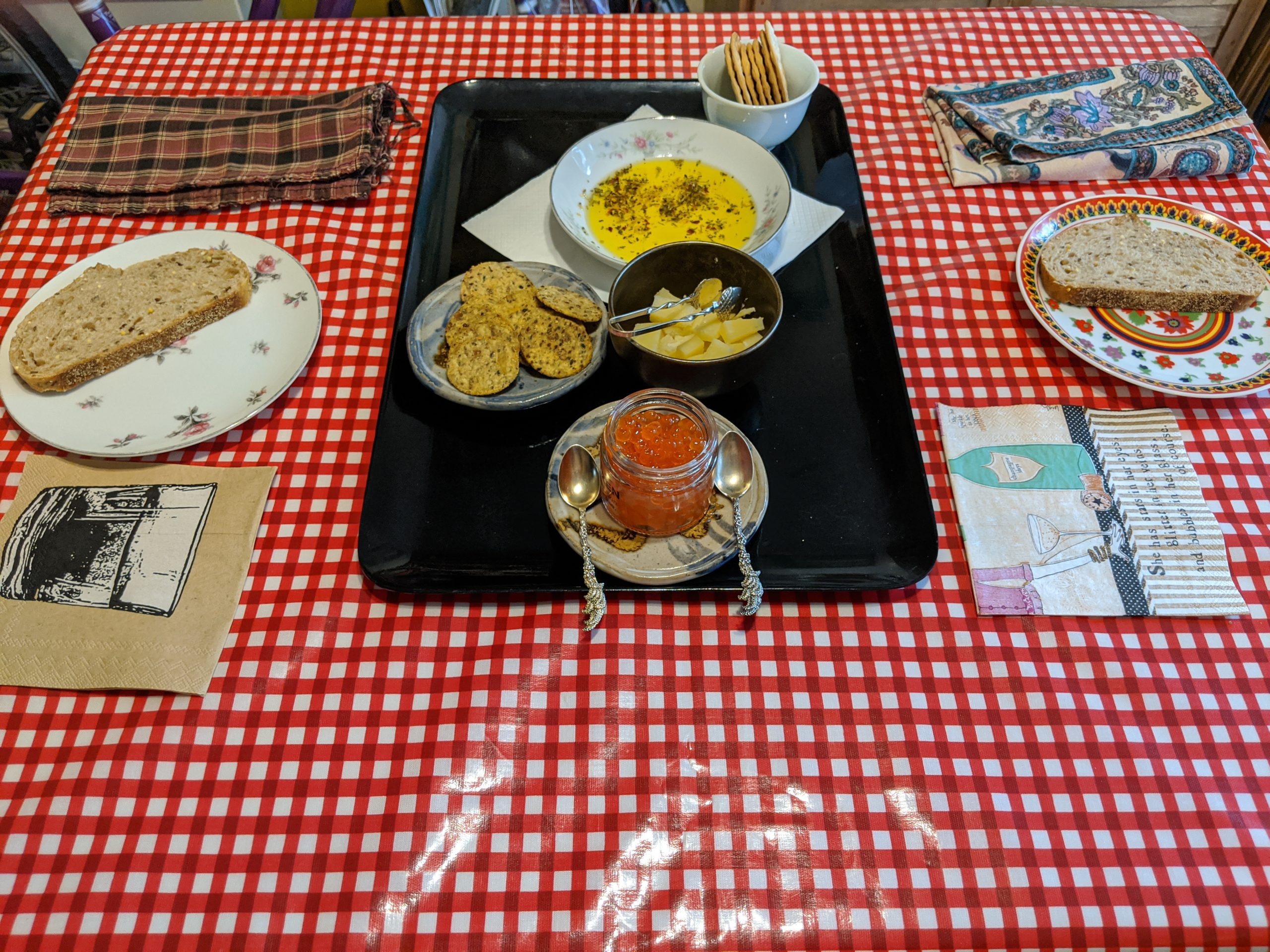
I don’t have many pictures of the great dishes that Jackie has cooked—most recently khema made with grass-fed beef and served with chapatis—and it seems that I failed to get a picture of the lingcod seasoned after the fashion of Kerala roadside chicken (garlic, ginger, fennel, garam masala, turmeric) that I fried in coconut oil in my big cast iron skillet. However, here’s a few recent dishes:

Besides all the great food, we’re also enjoying (perhaps a little too much) our daily cocktail hour—often on-line with my brother and our mom. The folks I meet for coffee on Tuesday morning have been keeping things going by doing that on-line as well.

I’ve been very pleased with my success at maintaining my workout regimen, despite the closure of the fitness room. I’ve been making use of my kettlebell and my jump rope. I’ve been getting my runs in. I’ve been using my new gymnastic rings:

I do my workouts outdoors to the greatest extent possible—runs around the neighborhood, setting the rings up in Winfield Village’s basketball court, jumping rope and swinging the kettlebell in our little patio. Our neighbors all seem to be pretty good about respecting proper distancing practices, so it’s working okay so far.

While I’m on the subject of exercise, I wanted to mention in passing this hilarious tweet:

Just to say that, although getting ripped is perhaps not in the cards, I’m having a great time making the attempt.

Finally, I’m meaning to get back to getting some writing done, and to that end I spent all morning tidying up my desk:

At this moment (a couple of hours later), it is still just about that tidy, and I’ve used it to write this blog post. This afternoon I’ll use it to write a letter to my congressman and senators, urging them to support the post office. And then, I’ll see if I can’t get to work on some fiction.

There’s a whole genre of collapse-oriented investment writing. I’m something of a connoisseur of the form. But one really needs to treat that sort of literature as pornography—interesting to read, if you’re into that sort of thing, but almost nothing in it is stuff you’d actually want to do.

There are two ways most collapse writers go wrong. One is to assume that keen insight into the nature of the problems we face will allow one to make a bunch of smart investment moves in advance—as if there were some advantage to being the richest guy standing in a post-apocalyptic world.

In his recent post Where Should I Put My Money Before Things Collapse? John Robb avoids that trap pretty well. He understands that the systemic nature of the problem makes attempts to align your investments with the underlying trends pointless:

Looking for a safe asset class today, is like a Soviet bureaucrat in 1989, sensing trouble ahead, looking for the directorate with the safest job.

The other is to assume that there will be a collapse event. Those writers seem to suggest that you can spend your time until collapse behaving much as you do now (with some occasional time off to stock your shelter and practice your marksmanship), and then spend the end times hiding out in your shelter. That’s wrong, because there’s no reason to assume that there will be a collapse event. It’s at least as likely that things’ll go on much as they have been, with occasional points where a bunch of people lose their jobs, yet another class of investments suddenly becomes worthless, and various things (such as food or fuel) spike up in price.

John Robb does pretty well avoiding that trap as well. He understands that the only sensible response is to find a lifestyle that works now, and that will continue to work as collapse proceeds.

Just as he indicates, the right responses to problems like peak oil, peak debt, climate change, environmental degradation, habitat loss, and so forth are going to be community-level responses. With that in mind, he’s putting his money into supporting efforts to create that community response and those communities.

Having said all that, four decades of reading collapse literature have convinced me that collapse happens slowly. Very slowly. Slowly enough that we’re going to need to go on investing in ordinary investments for quite some time to come.

It seems like it would make sense to want those investments to be informed by the societal problems that we face, but my experience has been that an understanding of the sources of impending collapse doesn’t lead to useful investment insights.

There are a lot of reasons. First, as I said, collapse happens slowly, meaning that shorter-term trends will end up dominating. Second, a lot of governmental power will be brought to bear in support of pre-collapse norms, meaning the sort of large profits that might be produced if your investments do align with the large trends are prone to being seized or taxed away. Third, the situation is intractably complex, meaning that even a clear understanding of several of the problems may yield predictions that end up being trumped by other problems—no one can say whether peak debt or peak oil will influence the course of the economy more strongly or more suddenly.

The upshot is that investing for collapse is as pointless as Robb points out; I merely disagree with his analogy. Rather than being like a Soviet bureaucrat in 1989, I figure it’s more like being CEO of a department store chain in 1969. There are still opportunities to get ahead following the old arrangements, but all the most powerful forces of society, human nature, and nature itself are arrayed against you. You’d be much better off charting an entirely new course—and Robb’s suggestions are good ones.